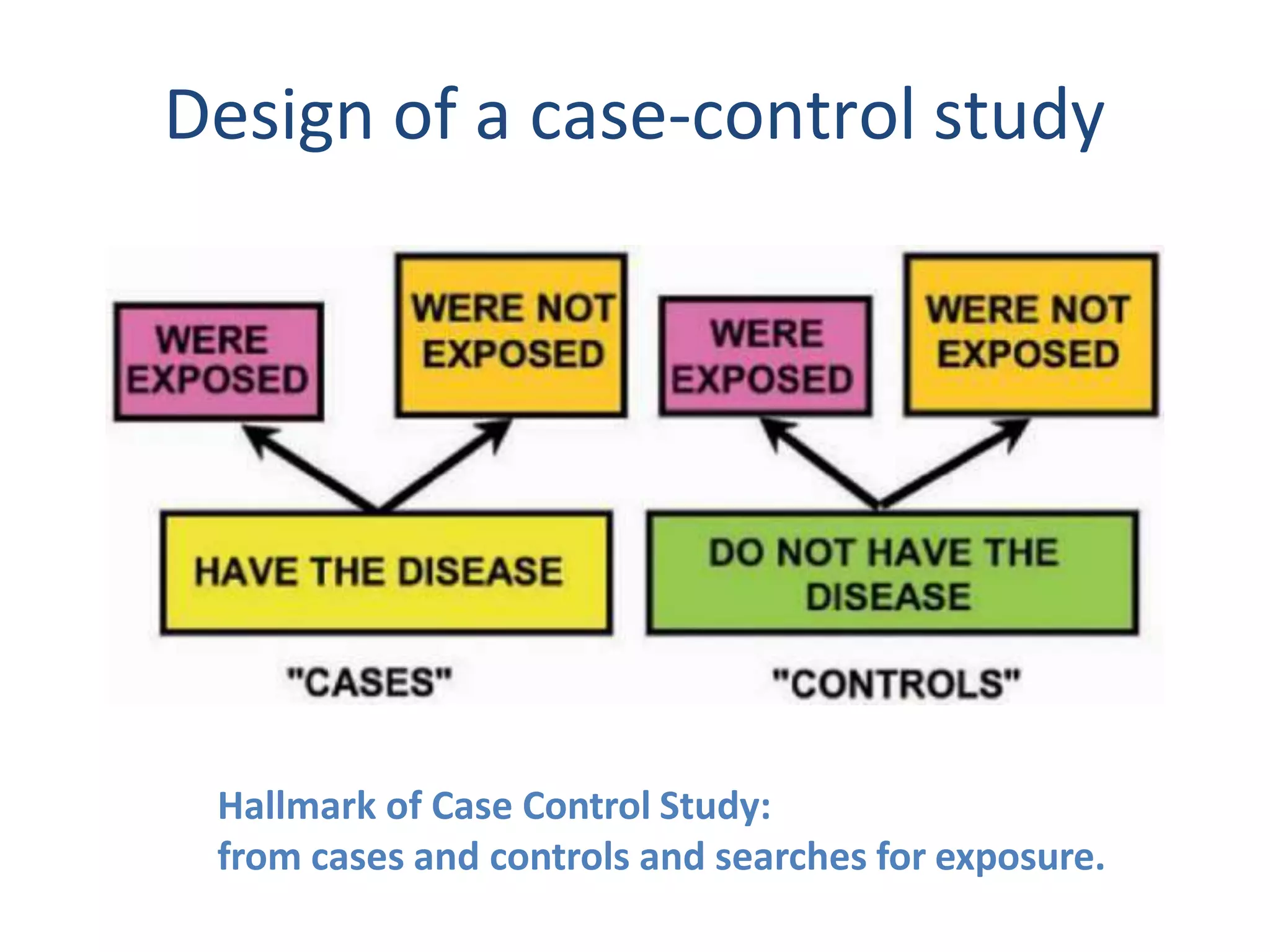
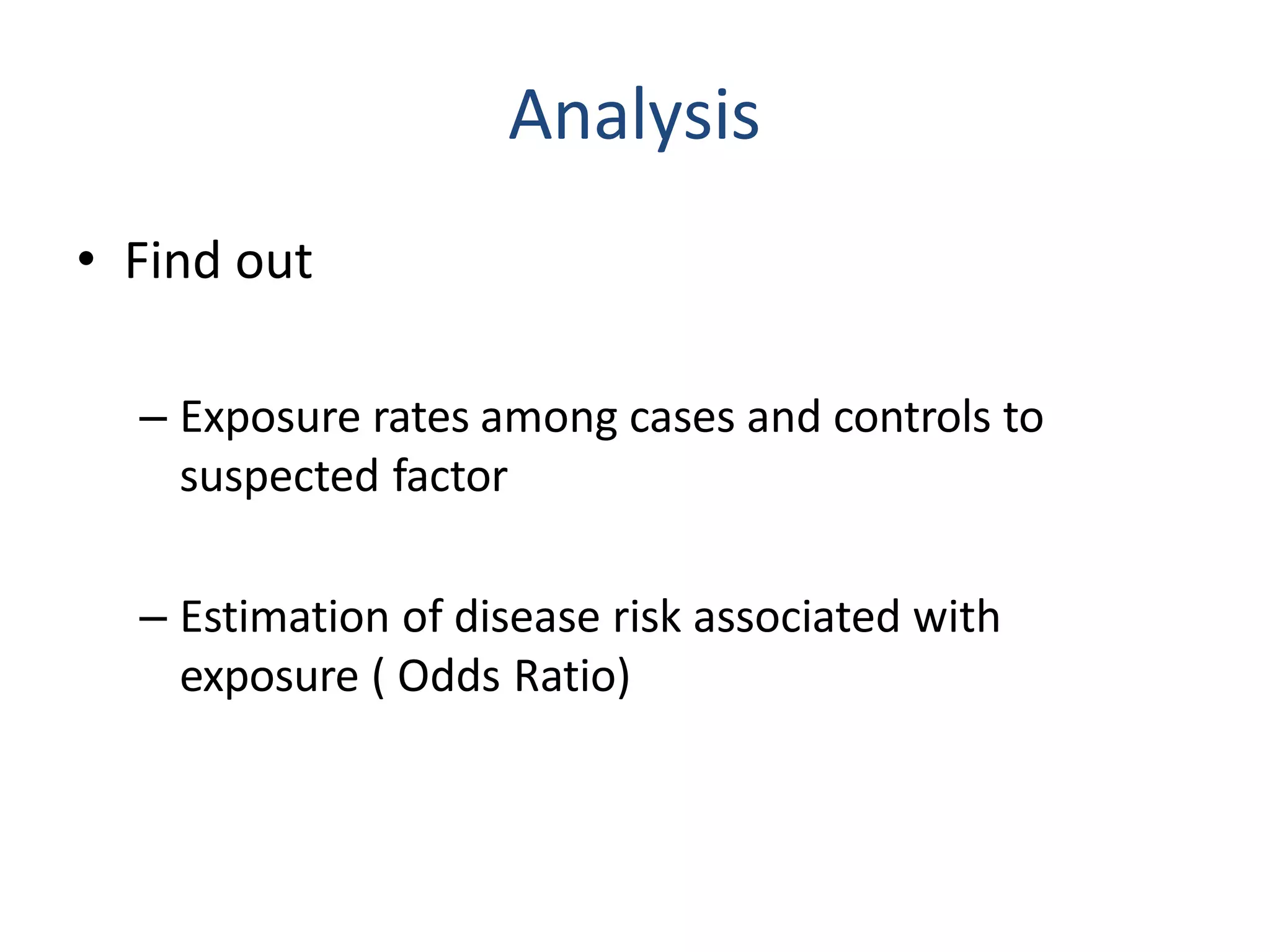
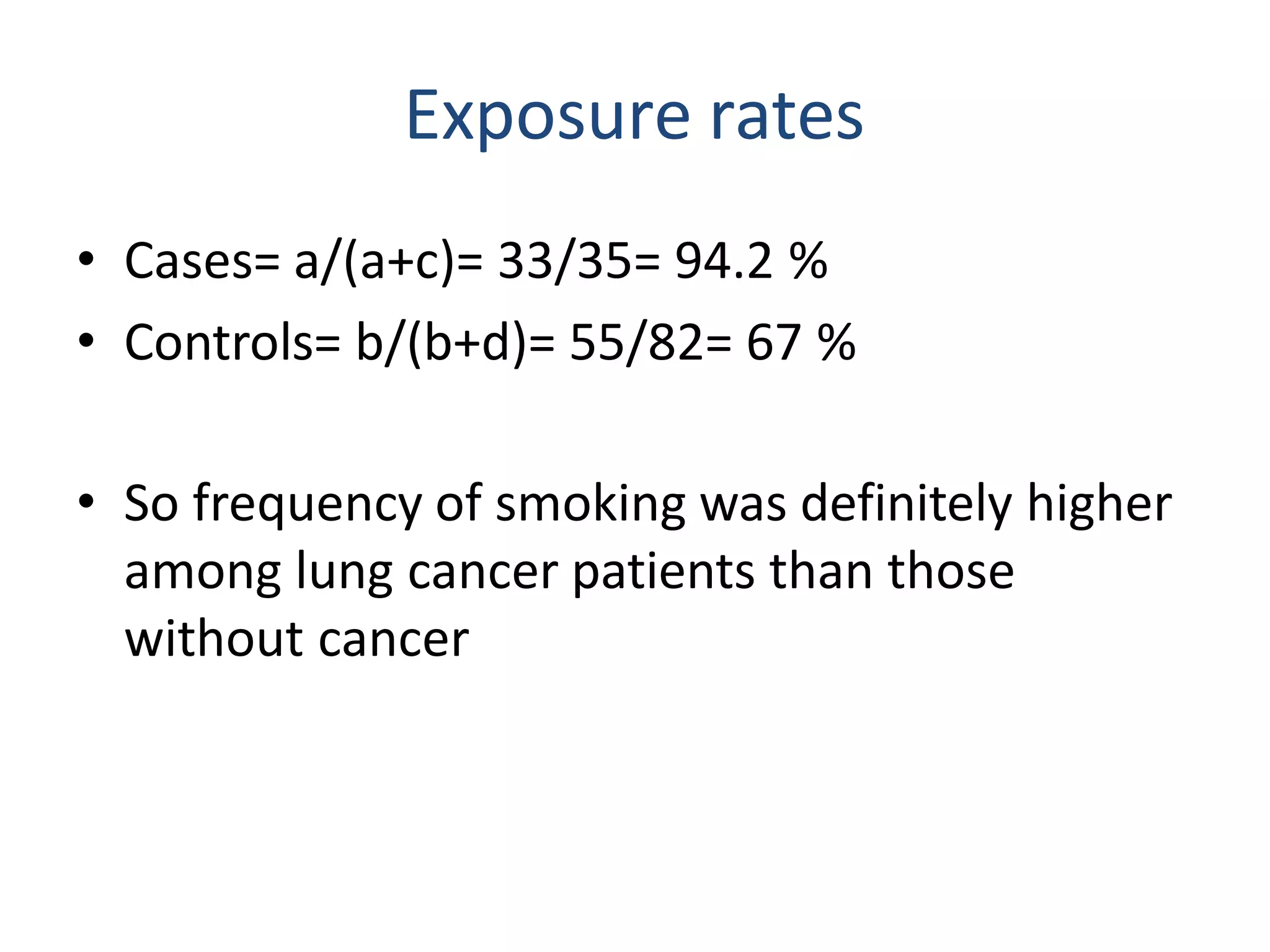
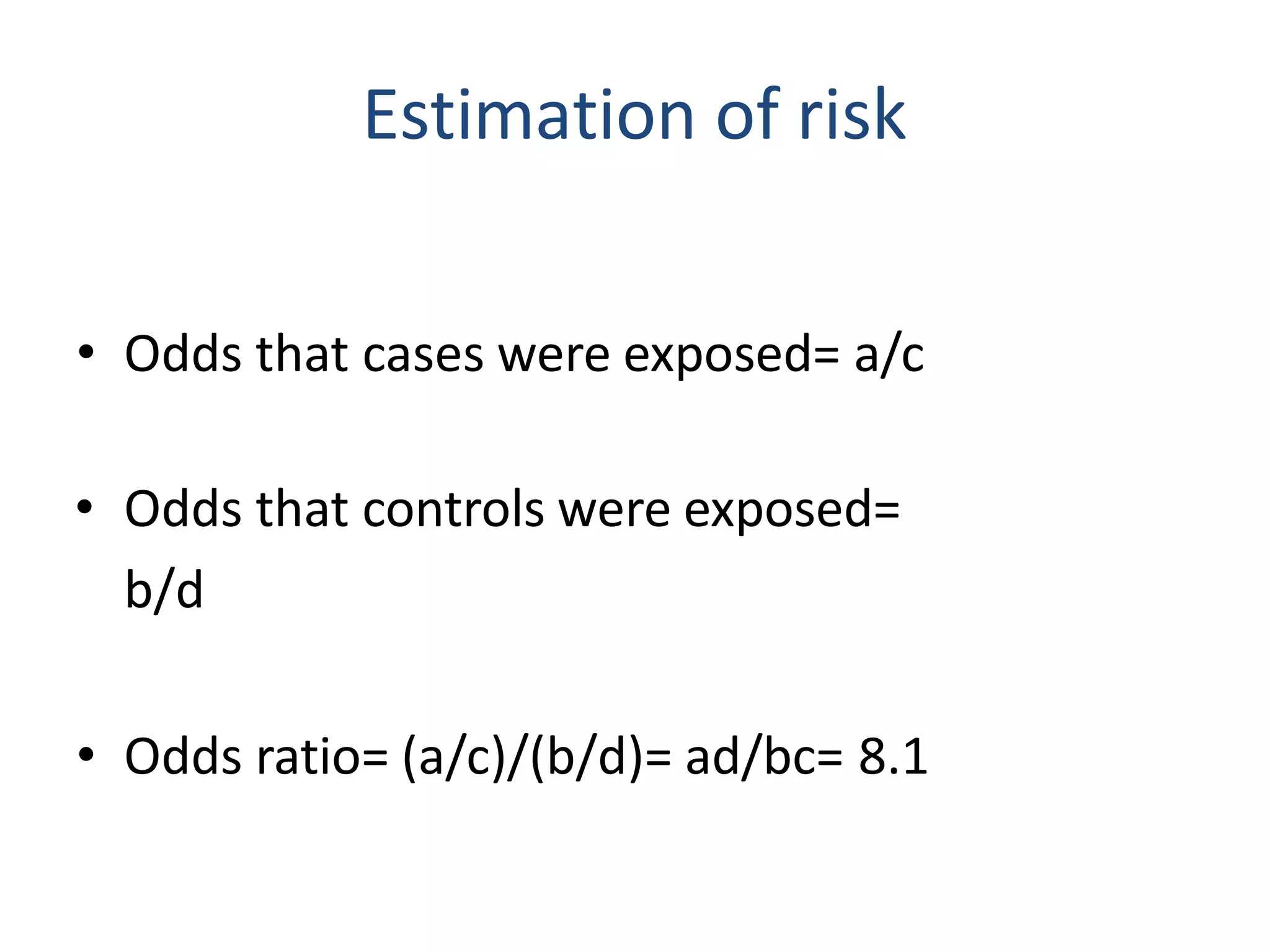
This document summarizes case control and ecological study designs. It describes case control studies as retrospective studies that compare cases (people with a disease) to controls (people without the disease) to determine associations between exposures and outcomes. Key aspects of case control studies discussed include selection of cases and controls, matching, measuring exposure, analyzing exposure rates and estimating risk through odds ratios. Ecological studies are described as comparing aggregate exposure and disease rates between populations without examining individuals. An example ecological study on water fluoridation and dental caries is provided.