Enterobacteriaceae
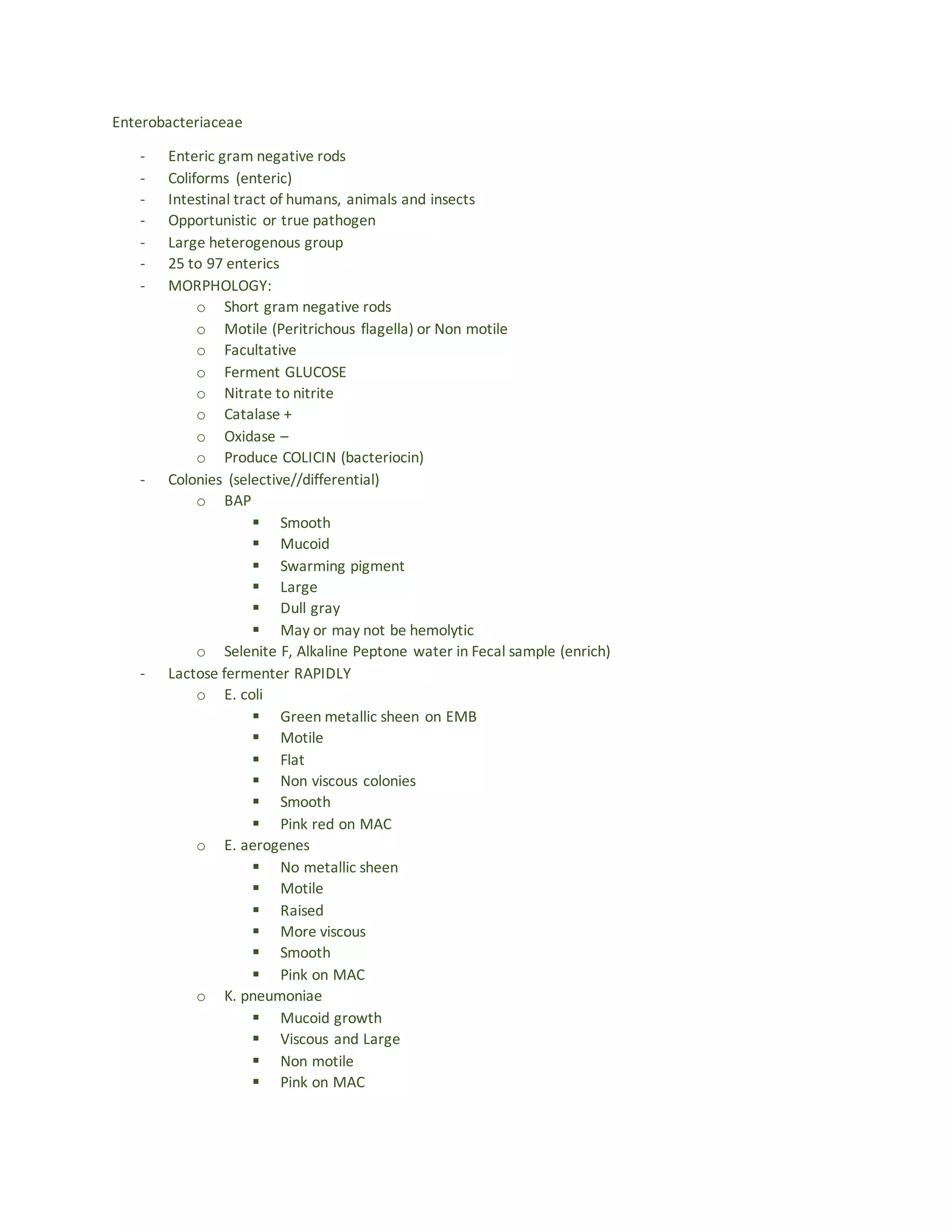
- Enteric gram negative rods
- Coliforms (enteric)
- Intestinal tract of humans, animals and insects
- Opportunistic or true pathogen
- Large heterogenous group
- 25 to 97 enterics
- MORPHOLOGY:
o Short gram negative rods
o Motile (Peritrichous flagella) or Non motile
o Facultative
o Ferment GLUCOSE
o Nitrate to nitrite
o Catalase +
o Oxidase –
o Produce COLICIN (bacteriocin)
- Colonies (selective//differential)
o BAP
 Smooth
 Mucoid
 Swarming pigment
 Large
 Dull gray
 May or may not be hemolytic
o Selenite F, Alkaline Peptone water in Fecal sample (enrich)
- Lactose fermenter RAPIDLY
o E. coli
 Green metallic sheen on EMB
 Motile
 Flat
 Non viscous colonies
 Smooth
 Pink red on MAC
o E. aerogenes
 No metallic sheen
 Motile
 Raised
 More viscous
 Smooth
 Pink on MAC
o K. pneumoniae
 Mucoid growth
 Viscous and Large
 Non motile
 Pink on MAC
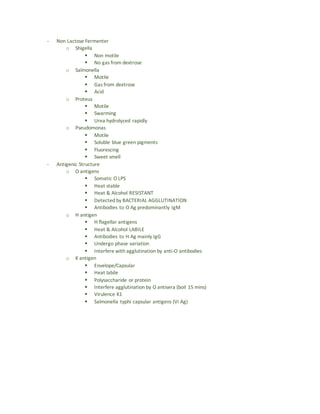
- Non Lactose Fermenter
o Shigella
 Non motile
 No gas from dextrose
o Salmonella
 Motile
 Gas from dextrose
 Acid
o Proteus
 Motile
 Swarming
 Urea hydrolyzed rapidly
o Pseudomonas
 Motile
 Soluble blue green pigments
 Fluorescing
 Sweet smell
- Antigenic Structure
o O antigens
 Somatic O LPS
 Heat stable
 Heat & Alcohol RESISTANT
 Detected by BACTERIAL AGGLUTINATION
 Antibodies to O Ag predominantly IgM
o H antigen
 H flagellar antigens
 Heat & Alcohol LABILE
 Antibodies to H Ag mainly IgG
 Undergo phase variation
 Interfere with agglutination by anti-O antibodies
o K antigen
 Envelope/Capsular
 Heat labile
 Polysaccharide or protein
 Interfere agglutination by O antisera (boil 15 mins)
 Virulence K1
 Salmonella typhi capsular antigens (Vi Ag)
- Escherichia coli
o Inhabitant of GI tract
o Common from colon flora
o Index organism for fecal contamination of water (FECAL COLIFORMS)
o Motile
o Mannitol fermenter
o IMViC [++--]
o BIOCHEMICAL TESTS
 Positive:
 TSI: A/A gas +
 Decarboxylase +
 Indole +
 Beta glucuronidase +
 Negative:
 Urea –
 Citrate –
o VIRULENCE FACTORS
 Lipid A
 Component of endotoxin cause of death in sepsis
 K1 antigen
 Neonatal meningitis
 Enterotoxin (exotoxin)
 Watery diarrhea [ETEC]
 Shiga type toxin 1 & 2 (verotoxin)
 STEC 0157:H7 or EHEC
 Inhibit protein synthesis
 Enteroaggregative ST like toxin
 EAEC
 Hemolysin
 Type III secretion system to deliver effector molecules
 Induced EIEC
 Effacing EPEC by microvilli and pedestal formation
 Adhesins
 Colonization factor
 Antibodies protect from colonization
 Capsule
 Iron capturing ability (enterochelin)
 Outer membrane protein
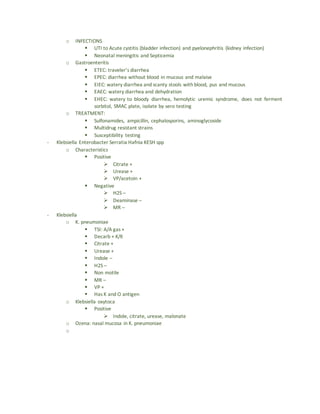
o INFECTIONS
 UTI to Acute cystitis (bladder infection) and pyelonephritis (kidney infection)
 Neonatal meningitis and Septicemia
o Gastroenteritis
 ETEC: traveler’s diarrhea
 EPEC: diarrhea without blood in mucous and malaise
 EIEC: watery diarrhea and scanty stools with blood, pus and mucous
 EAEC: watery diarrhea and dehydration
 EHEC: watery to bloody diarrhea, hemolytic uremic syndrome, does not ferment
sorbitol, SMAC plate, isolate by sero testing
o TREATMENT:
 Sulfonamides, ampicillin, cephalosporins, aminoglycoside
 Multidrug resistant strains
 Susceptibility testing
- Klebsiella Enterobacter Serratia Hafnia KESH spp
o Characteristics
 Positive
 Citrate +
 Urease +
 VP/acetoin +
 Negative
 H2S –
 Deaminase –
 MR –
- Klebsiella
o K. pneumoniae
 TSI: A/A gas +
 Decarb + K/K
 Citrate +
 Urease +
 Indole –
 H2S –
 Non motile
 MR –
 VP +
 Has K and O antigen
o Klebsiella oxytoca
 Positive
 Indole, citrate, urease, malonate
o Ozena: nasal mucosa in K. pneumoniae
o

Enterobacteriaceae

  • 1.
    Enterobacteriaceae - Enteric gramnegative rods - Coliforms (enteric) - Intestinal tract of humans, animals and insects - Opportunistic or true pathogen - Large heterogenous group - 25 to 97 enterics - MORPHOLOGY: o Short gram negative rods o Motile (Peritrichous flagella) or Non motile o Facultative o Ferment GLUCOSE o Nitrate to nitrite o Catalase + o Oxidase – o Produce COLICIN (bacteriocin) - Colonies (selective//differential) o BAP  Smooth  Mucoid  Swarming pigment  Large  Dull gray  May or may not be hemolytic o Selenite F, Alkaline Peptone water in Fecal sample (enrich) - Lactose fermenter RAPIDLY o E. coli  Green metallic sheen on EMB  Motile  Flat  Non viscous colonies  Smooth  Pink red on MAC o E. aerogenes  No metallic sheen  Motile  Raised  More viscous  Smooth  Pink on MAC o K. pneumoniae  Mucoid growth  Viscous and Large  Non motile  Pink on MAC
  • 2.
    - Non LactoseFermenter o Shigella  Non motile  No gas from dextrose o Salmonella  Motile  Gas from dextrose  Acid o Proteus  Motile  Swarming  Urea hydrolyzed rapidly o Pseudomonas  Motile  Soluble blue green pigments  Fluorescing  Sweet smell - Antigenic Structure o O antigens  Somatic O LPS  Heat stable  Heat & Alcohol RESISTANT  Detected by BACTERIAL AGGLUTINATION  Antibodies to O Ag predominantly IgM o H antigen  H flagellar antigens  Heat & Alcohol LABILE  Antibodies to H Ag mainly IgG  Undergo phase variation  Interfere with agglutination by anti-O antibodies o K antigen  Envelope/Capsular  Heat labile  Polysaccharide or protein  Interfere agglutination by O antisera (boil 15 mins)  Virulence K1  Salmonella typhi capsular antigens (Vi Ag)
  • 3.
    - Escherichia coli oInhabitant of GI tract o Common from colon flora o Index organism for fecal contamination of water (FECAL COLIFORMS) o Motile o Mannitol fermenter o IMViC [++--] o BIOCHEMICAL TESTS  Positive:  TSI: A/A gas +  Decarboxylase +  Indole +  Beta glucuronidase +  Negative:  Urea –  Citrate – o VIRULENCE FACTORS  Lipid A  Component of endotoxin cause of death in sepsis  K1 antigen  Neonatal meningitis  Enterotoxin (exotoxin)  Watery diarrhea [ETEC]  Shiga type toxin 1 & 2 (verotoxin)  STEC 0157:H7 or EHEC  Inhibit protein synthesis  Enteroaggregative ST like toxin  EAEC  Hemolysin  Type III secretion system to deliver effector molecules  Induced EIEC  Effacing EPEC by microvilli and pedestal formation  Adhesins  Colonization factor  Antibodies protect from colonization  Capsule  Iron capturing ability (enterochelin)  Outer membrane protein
  • 4.
    o INFECTIONS  UTIto Acute cystitis (bladder infection) and pyelonephritis (kidney infection)  Neonatal meningitis and Septicemia o Gastroenteritis  ETEC: traveler’s diarrhea  EPEC: diarrhea without blood in mucous and malaise  EIEC: watery diarrhea and scanty stools with blood, pus and mucous  EAEC: watery diarrhea and dehydration  EHEC: watery to bloody diarrhea, hemolytic uremic syndrome, does not ferment sorbitol, SMAC plate, isolate by sero testing o TREATMENT:  Sulfonamides, ampicillin, cephalosporins, aminoglycoside  Multidrug resistant strains  Susceptibility testing - Klebsiella Enterobacter Serratia Hafnia KESH spp o Characteristics  Positive  Citrate +  Urease +  VP/acetoin +  Negative  H2S –  Deaminase –  MR – - Klebsiella o K. pneumoniae  TSI: A/A gas +  Decarb + K/K  Citrate +  Urease +  Indole –  H2S –  Non motile  MR –  VP +  Has K and O antigen o Klebsiella oxytoca  Positive  Indole, citrate, urease, malonate o Ozena: nasal mucosa in K. pneumoniae o