Cooling Systems
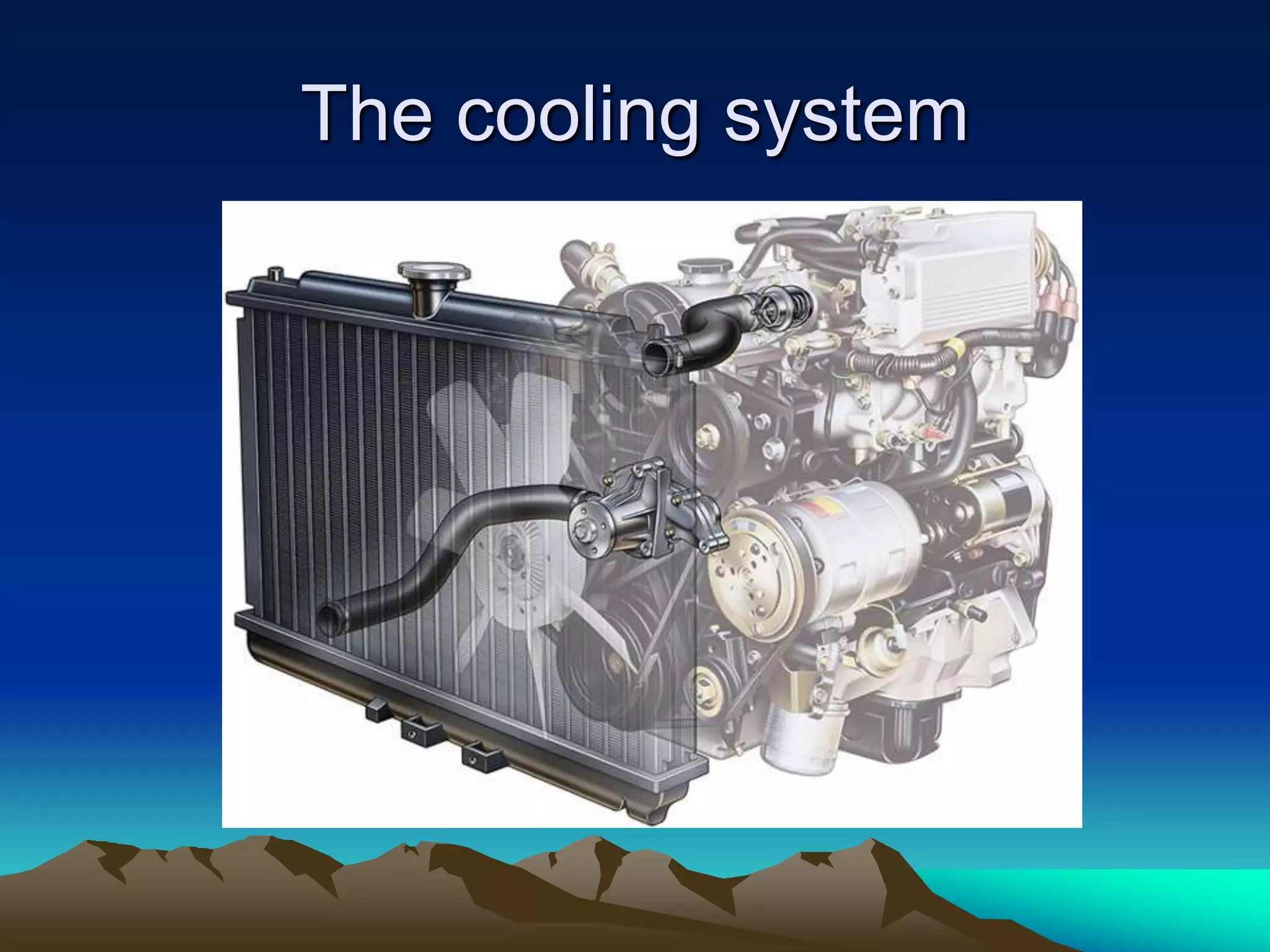
The cooling system
Cooling System Components
• Coolant
• Radiator
• Heater Core
• Radiator Cap
• Water Pump
• Thermostat
• Radiator and Heater Hoses
• Overflow Bottle
• Diagnosis
Coolant-Antifreeze
• 50/50 mix provides:
• Made up of ethylene
glycol (used as
lubricant and freeze
prevention)
• OAT Organic Acid
Technology contains
no silicates or
phosphates
Dex-Cool-Orange
stuff
• HOAT (Hybrid Organic
Acid Technology
Zerex G-05)
• Help maintain correct
pH level
• Coolant should be
serviced every 3 years
or 36,000mi
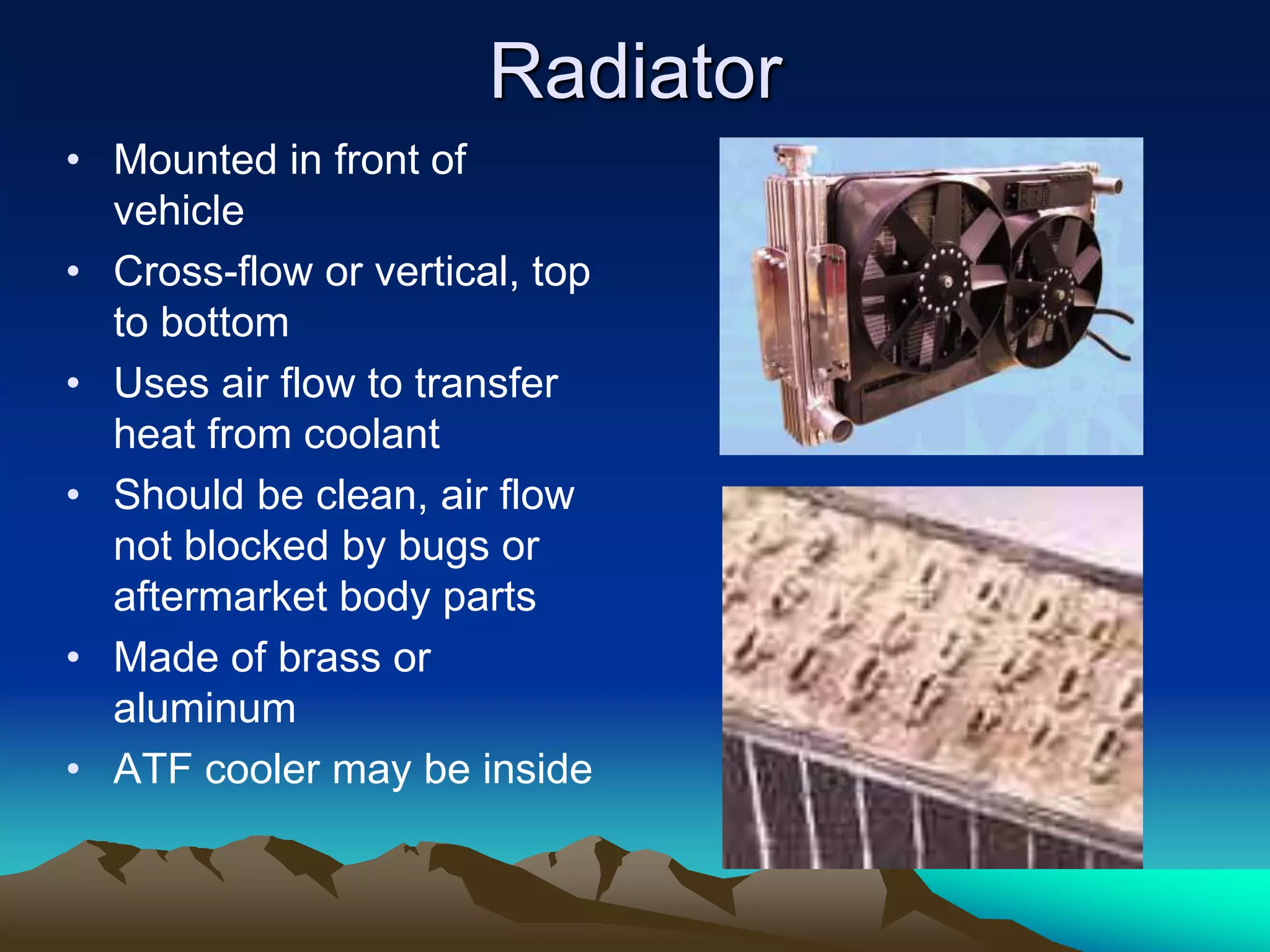
Radiator
• Mounted in front of
vehicle
• Cross-flow or vertical, top
to bottom
• Uses air flow to transfer
heat from coolant
• Should be clean, air flow
not blocked by bugs or
aftermarket body parts
• Made of brass or
aluminum
• ATF cooler may be inside
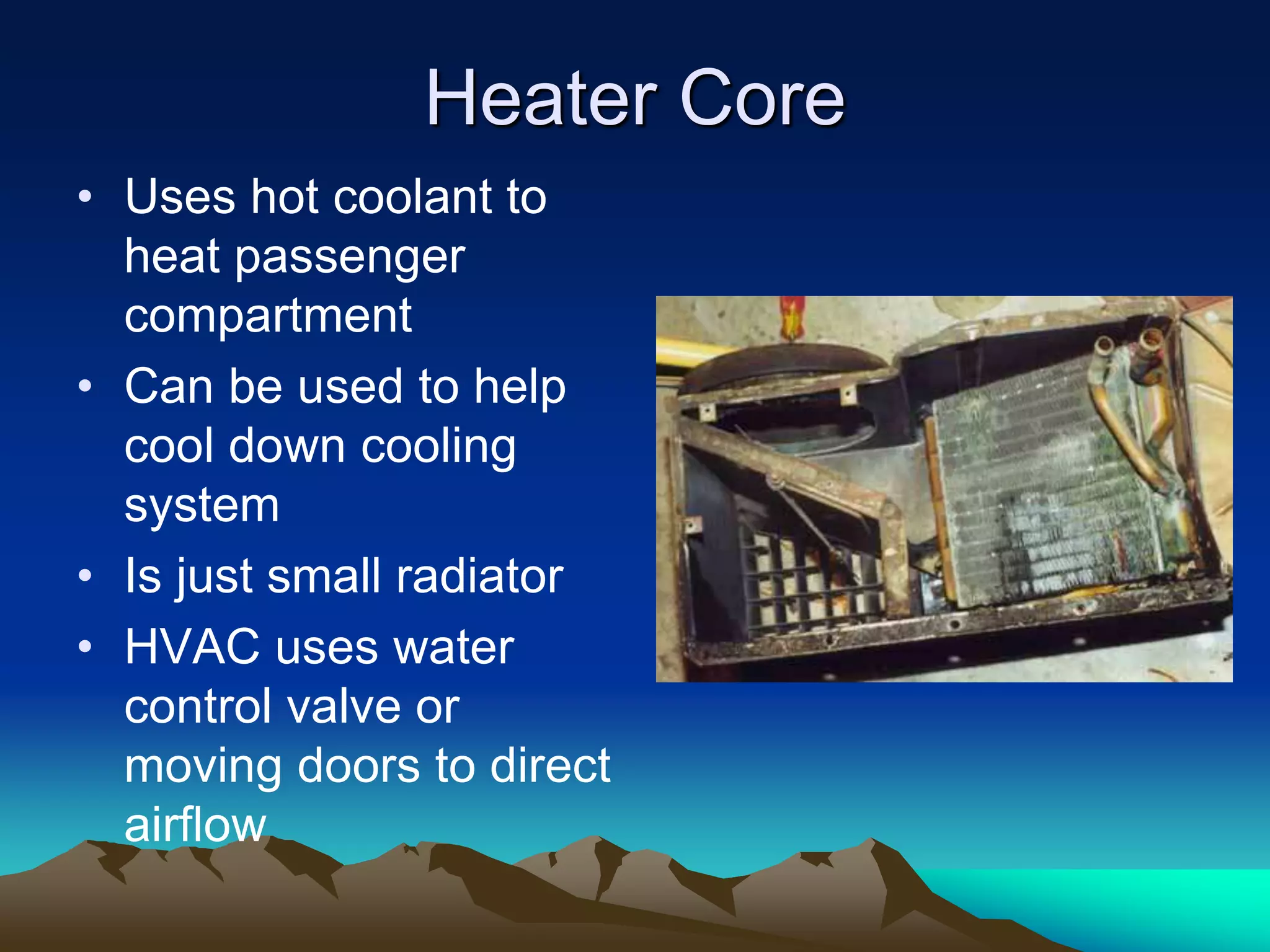
Heater Core
• Uses hot coolant to
heat passenger
compartment
• Can be used to help
cool down cooling
system
• Is just small radiator
• HVAC uses water
control valve or
moving doors to direct
airflow
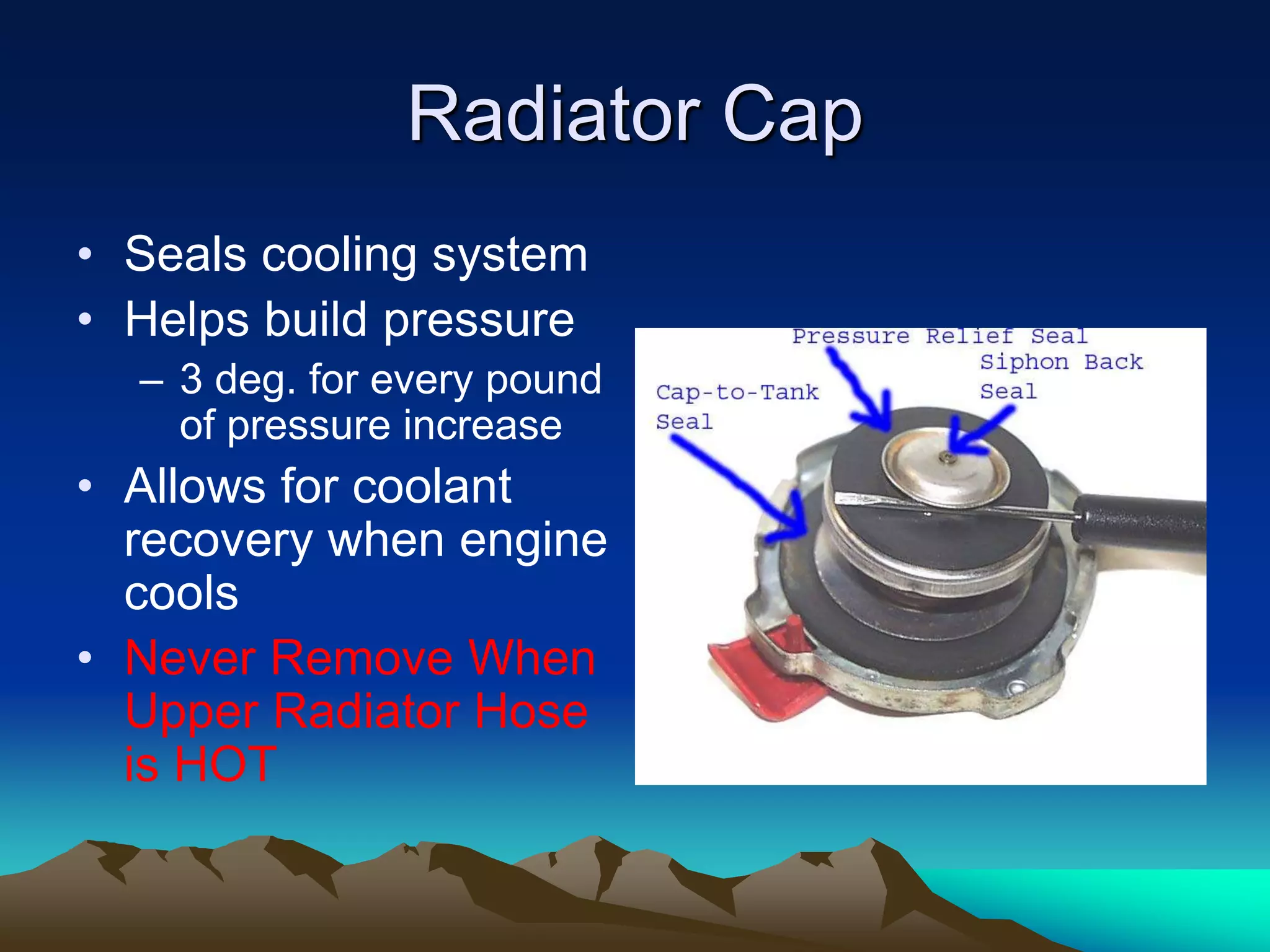
Radiator Cap
• Seals cooling system
• Helps build pressure
– 3 deg. for every pound
of pressure increase
• Allows for coolant
recovery when engine
cools
• Never Remove When
Upper Radiator Hose
is HOT
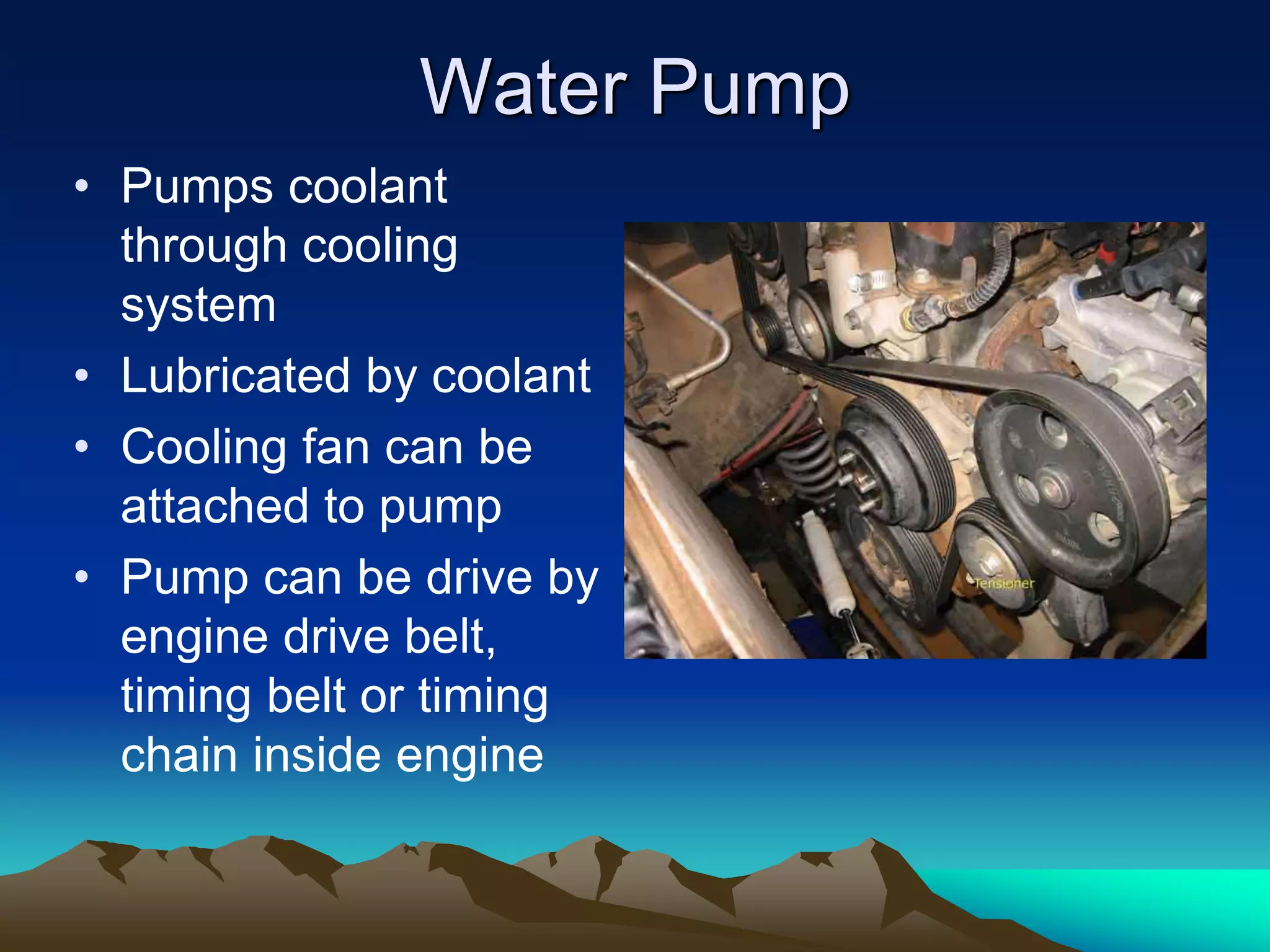
Water Pump
• Pumps coolant
through cooling
system
• Lubricated by coolant
• Cooling fan can be
attached to pump
• Pump can be drive by
engine drive belt,
timing belt or timing
chain inside engine
Cooling Fan
• Can be electric and
turned on by thermal
switch or PCM
• Can be wax pellet
type that is heat
sensitive
• Moves air across
radiator at low speeds
or with A/C on.
Thermostat
• Speeds engine warm-
up and maintains
constant temperature
• Each engine has
specific temperature
at which thermostat
opens
• Slows coolant in
radiator long enough
to remove heat
• Can stick and cause
overheating
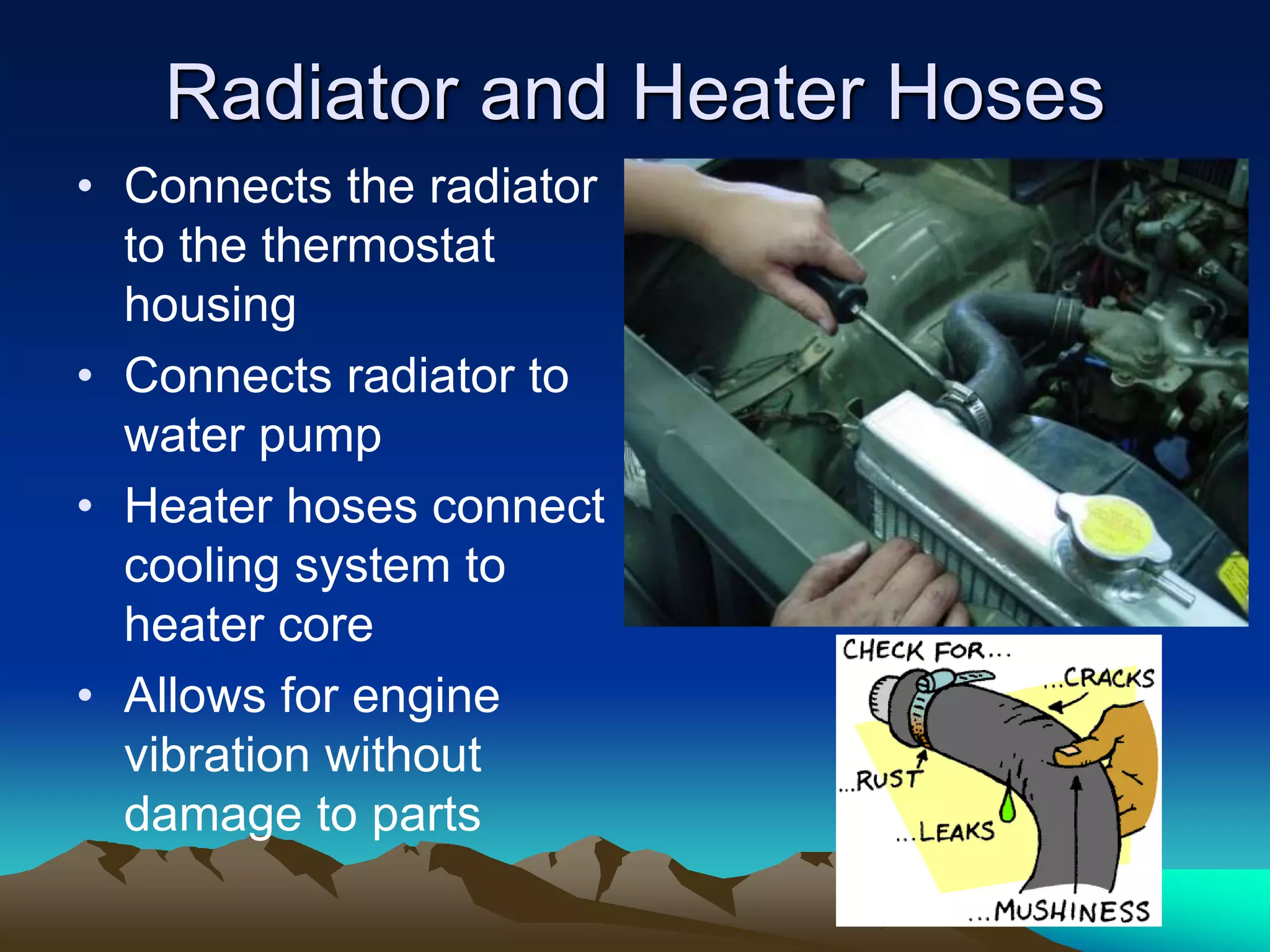
Radiator and Heater Hoses
• Connects the radiator
to the thermostat
housing
• Connects radiator to
water pump
• Heater hoses connect
cooling system to
heater core
• Allows for engine
vibration without
damage to parts
Overflow Bottle
• Collect coolant when
engine gets hot and
then coolant flows
back to radiator when
engine cools
• If empty, fill to
between Hot and
Cold mark on bottle
Cooling System Flow
Cooling System Diagnosis
• Install pressure tester
and pressurize to
system pressure.
• Inspect for leaks
• Don’t forget internal
leaks!!!
• Check radiator cap as
well!
• Check antifreeze
concentration
Using florescent dye
• Add dye to cooling
system
• Pressurize then check
with florescent light
• Inspect while using
black light and proper
black light glasses,
dye will glow Yellow-
Green
End Cooling System

Cooling systems

  • 1.
  • 2.
  • 3.
    Cooling System Components •Coolant • Radiator • Heater Core • Radiator Cap • Water Pump • Thermostat • Radiator and Heater Hoses • Overflow Bottle • Diagnosis
  • 4.
    Coolant-Antifreeze • 50/50 mixprovides: • Made up of ethylene glycol (used as lubricant and freeze prevention) • OAT Organic Acid Technology contains no silicates or phosphates Dex-Cool-Orange stuff • HOAT (Hybrid Organic Acid Technology Zerex G-05) • Help maintain correct pH level • Coolant should be serviced every 3 years or 36,000mi
  • 5.
    Radiator • Mounted infront of vehicle • Cross-flow or vertical, top to bottom • Uses air flow to transfer heat from coolant • Should be clean, air flow not blocked by bugs or aftermarket body parts • Made of brass or aluminum • ATF cooler may be inside
  • 6.
    Heater Core • Useshot coolant to heat passenger compartment • Can be used to help cool down cooling system • Is just small radiator • HVAC uses water control valve or moving doors to direct airflow
  • 7.
    Radiator Cap • Sealscooling system • Helps build pressure – 3 deg. for every pound of pressure increase • Allows for coolant recovery when engine cools • Never Remove When Upper Radiator Hose is HOT
  • 8.
    Water Pump • Pumpscoolant through cooling system • Lubricated by coolant • Cooling fan can be attached to pump • Pump can be drive by engine drive belt, timing belt or timing chain inside engine
  • 9.
    Cooling Fan • Canbe electric and turned on by thermal switch or PCM • Can be wax pellet type that is heat sensitive • Moves air across radiator at low speeds or with A/C on.
  • 10.
    Thermostat • Speeds enginewarm- up and maintains constant temperature • Each engine has specific temperature at which thermostat opens • Slows coolant in radiator long enough to remove heat • Can stick and cause overheating
  • 11.
    Radiator and HeaterHoses • Connects the radiator to the thermostat housing • Connects radiator to water pump • Heater hoses connect cooling system to heater core • Allows for engine vibration without damage to parts
  • 12.
    Overflow Bottle • Collectcoolant when engine gets hot and then coolant flows back to radiator when engine cools • If empty, fill to between Hot and Cold mark on bottle
  • 13.
  • 14.
    Cooling System Diagnosis •Install pressure tester and pressurize to system pressure. • Inspect for leaks • Don’t forget internal leaks!!! • Check radiator cap as well! • Check antifreeze concentration
  • 15.
    Using florescent dye •Add dye to cooling system • Pressurize then check with florescent light • Inspect while using black light and proper black light glasses, dye will glow Yellow- Green
  • 16.