Cholesterol Metabolism
Cardiovascular Block
Overview
• Introduction
• Cholesterol structure
• Cholesteryl esters
• Cholesterol synthesis
• Rate limiting step
• Regulation of cholesterol synthesis
• Regulation of HMG CoA reductase
• Excretion of cholesterol
• Hypercholesterolemia and treatment
Cholesterol
• Most important animal steroid
• Maintains membrane fluidity
• Insulating effect on nerve fibres
• Cholesterol is the parent molecule for
– Bile acids and bile salts
– Steroid hormones
– Vitamin D3
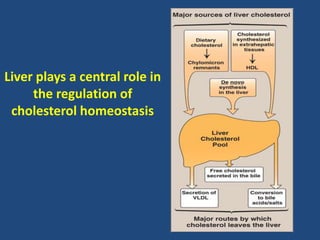
Liver plays a central role in
the regulation of
cholesterol homeostasis
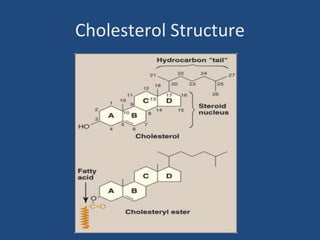
Cholesterol Structure
Cholesteryl esters
• Most plasma cholesterol is esterified with a
fatty acid
• CEs are not present in membranes
• Present in small amounts in most cells
• More hydrophobic than cholesterol
Cholesterol synthesis
• Synthesized in all tissues
• Major sites for synthesis: liver, adrenal cortex,
testes, ovaries and intestine
• All carbon atoms are derived from acetyl CoA
• Enzymes involved in biosynthesis are partly
located in ER and partly in cytoplasm
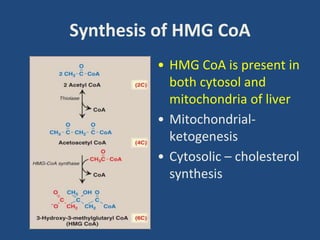
Synthesis of HMG CoA
• HMG CoA is present in
both cytosol and
mitochondria of liver
• Mitochondrial-
ketogenesis
• Cytosolic – cholesterol
synthesis
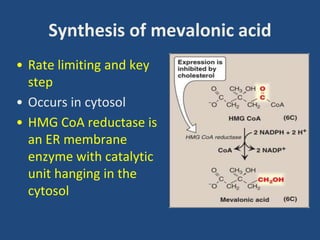
Synthesis of mevalonic acid
• Rate limiting and key
step
• Occurs in cytosol
• HMG CoA reductase is
an ER membrane
enzyme with catalytic
unit hanging in the
cytosol
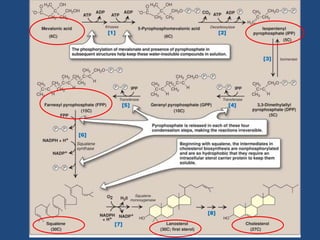
Further steps in synthesis
• Production of a 5-carbon unit:
– Isopentinyl pyrophosphate (IPP)
• Condensation to a 30C compound: squalene
• Cyclization of squalene to 30C lanosterol
• Synthesis of 27-Carbon cholesterol (defect in
this leads to Smith-Lemli-Opitz Syndrome)
Regulation of Cholesterol Synthesis
• HMG CoA reductase is the rate-limiting enzyme
of cholesterol synthesis
HMG CoA Reductase Regulation
Gene
Transcription
Translation
HMG CoA Reductase
HMG CoA
Cholesterol
Cholesterol
Glucagon
Cortisones
Statins
Insulin
Thyroxin
HMG CoA Reductase Regulation
• Sterol-dependent regulation of gene
expression
• Sterol-accelerated enzyme degradation
• Sterol-independent
phosphorylation/dephosphorylation
• Hormonal regulation
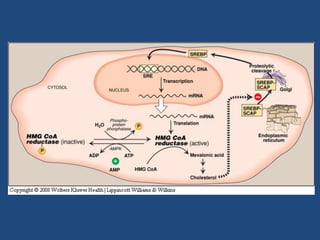
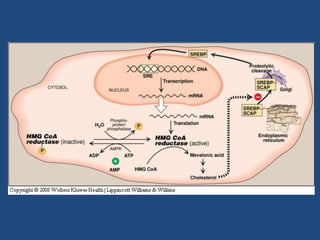
Sterol-dependent regulation of gene
expression of HMG CoA
• When sufficient cholesterol is present,
transcription is suppressed and vice versa
• Sterol Regulatory Element (SRE) is a recognition
sequence in the DNA
• SREBP (SRE binding protein) binding to SRE is
essential for transcription of this gene
• SREBP cleavage-activating protein (SCAP) is an
intracellular cholesterol sensor
Sterol-dependent regulation
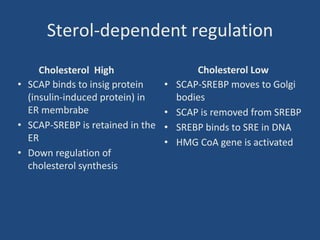
Cholesterol High
• SCAP binds to insig protein
(insulin-induced protein) in
ER membrabe
• SCAP-SREBP is retained in the
ER
• Down regulation of
cholesterol synthesis
Cholesterol Low
• SCAP-SREBP moves to Golgi
bodies
• SCAP is removed from SREBP
• SREBP binds to SRE in DNA
• HMG CoA gene is activated
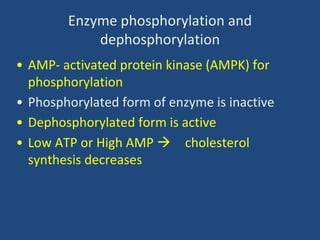
Enzyme phosphorylation and
dephosphorylation
• AMP- activated protein kinase (AMPK) for
phosphorylation
• Phosphorylated form of enzyme is inactive
• Dephosphorylated form is active
• Low ATP or High AMP  cholesterol
synthesis decreases
Hormonal Regulation
• Insulin and thyroxine increase upregulation of
enzyme expression
• Glucagon and cortisol have opposite effect
Excretion of cholesterol
• By conversion into bile acids and bile salts-
excreted in the feces
– Secretion of cholesterol in bile
– Transported to intestine for elimination
• In the intestine, some cholesterol is converted
by bacteria into coprostanol and cholestanol
before excretion
Hypercholesterolemia
• High conc. of cholesterol in blood
• Leads to atherosclerosis
• Statin drugs are used to decrease plasma
cholesterol levels
• Statins are structural analogs of HMG CoA
reductase
• Statins inhibit enzyme activity by competitive
inhibition
β-Sitosterols/ Phytosterols
• Plant sterols and are poorly absorbed by
humans
• Block the absorption of dietary cholesterol
• Clinically useful in the dietary treatment of
hypercholesterolemia

Amer cholesterol metabolism

  • 1.
  • 2.
    Overview • Introduction • Cholesterolstructure • Cholesteryl esters • Cholesterol synthesis • Rate limiting step • Regulation of cholesterol synthesis • Regulation of HMG CoA reductase • Excretion of cholesterol • Hypercholesterolemia and treatment
  • 3.
    Cholesterol • Most importantanimal steroid • Maintains membrane fluidity • Insulating effect on nerve fibres • Cholesterol is the parent molecule for – Bile acids and bile salts – Steroid hormones – Vitamin D3
  • 4.
    Liver plays acentral role in the regulation of cholesterol homeostasis
  • 5.
  • 6.
    Cholesteryl esters • Mostplasma cholesterol is esterified with a fatty acid • CEs are not present in membranes • Present in small amounts in most cells • More hydrophobic than cholesterol
  • 7.
    Cholesterol synthesis • Synthesizedin all tissues • Major sites for synthesis: liver, adrenal cortex, testes, ovaries and intestine • All carbon atoms are derived from acetyl CoA • Enzymes involved in biosynthesis are partly located in ER and partly in cytoplasm
  • 8.
    Synthesis of HMGCoA • HMG CoA is present in both cytosol and mitochondria of liver • Mitochondrial- ketogenesis • Cytosolic – cholesterol synthesis
  • 9.
    Synthesis of mevalonicacid • Rate limiting and key step • Occurs in cytosol • HMG CoA reductase is an ER membrane enzyme with catalytic unit hanging in the cytosol
  • 10.
    Further steps insynthesis • Production of a 5-carbon unit: – Isopentinyl pyrophosphate (IPP) • Condensation to a 30C compound: squalene • Cyclization of squalene to 30C lanosterol • Synthesis of 27-Carbon cholesterol (defect in this leads to Smith-Lemli-Opitz Syndrome)
  • 12.
    Regulation of CholesterolSynthesis • HMG CoA reductase is the rate-limiting enzyme of cholesterol synthesis
  • 13.
    HMG CoA ReductaseRegulation Gene Transcription Translation HMG CoA Reductase HMG CoA Cholesterol Cholesterol Glucagon Cortisones Statins Insulin Thyroxin
  • 14.
    HMG CoA ReductaseRegulation • Sterol-dependent regulation of gene expression • Sterol-accelerated enzyme degradation • Sterol-independent phosphorylation/dephosphorylation • Hormonal regulation
  • 15.
    Sterol-dependent regulation ofgene expression of HMG CoA • When sufficient cholesterol is present, transcription is suppressed and vice versa • Sterol Regulatory Element (SRE) is a recognition sequence in the DNA • SREBP (SRE binding protein) binding to SRE is essential for transcription of this gene • SREBP cleavage-activating protein (SCAP) is an intracellular cholesterol sensor
  • 17.
    Sterol-dependent regulation Cholesterol High •SCAP binds to insig protein (insulin-induced protein) in ER membrabe • SCAP-SREBP is retained in the ER • Down regulation of cholesterol synthesis Cholesterol Low • SCAP-SREBP moves to Golgi bodies • SCAP is removed from SREBP • SREBP binds to SRE in DNA • HMG CoA gene is activated
  • 18.
    Enzyme phosphorylation and dephosphorylation •AMP- activated protein kinase (AMPK) for phosphorylation • Phosphorylated form of enzyme is inactive • Dephosphorylated form is active • Low ATP or High AMP  cholesterol synthesis decreases
  • 20.
    Hormonal Regulation • Insulinand thyroxine increase upregulation of enzyme expression • Glucagon and cortisol have opposite effect
  • 21.
    Excretion of cholesterol •By conversion into bile acids and bile salts- excreted in the feces – Secretion of cholesterol in bile – Transported to intestine for elimination • In the intestine, some cholesterol is converted by bacteria into coprostanol and cholestanol before excretion
  • 22.
    Hypercholesterolemia • High conc.of cholesterol in blood • Leads to atherosclerosis • Statin drugs are used to decrease plasma cholesterol levels • Statins are structural analogs of HMG CoA reductase • Statins inhibit enzyme activity by competitive inhibition
  • 23.
    β-Sitosterols/ Phytosterols • Plantsterols and are poorly absorbed by humans • Block the absorption of dietary cholesterol • Clinically useful in the dietary treatment of hypercholesterolemia