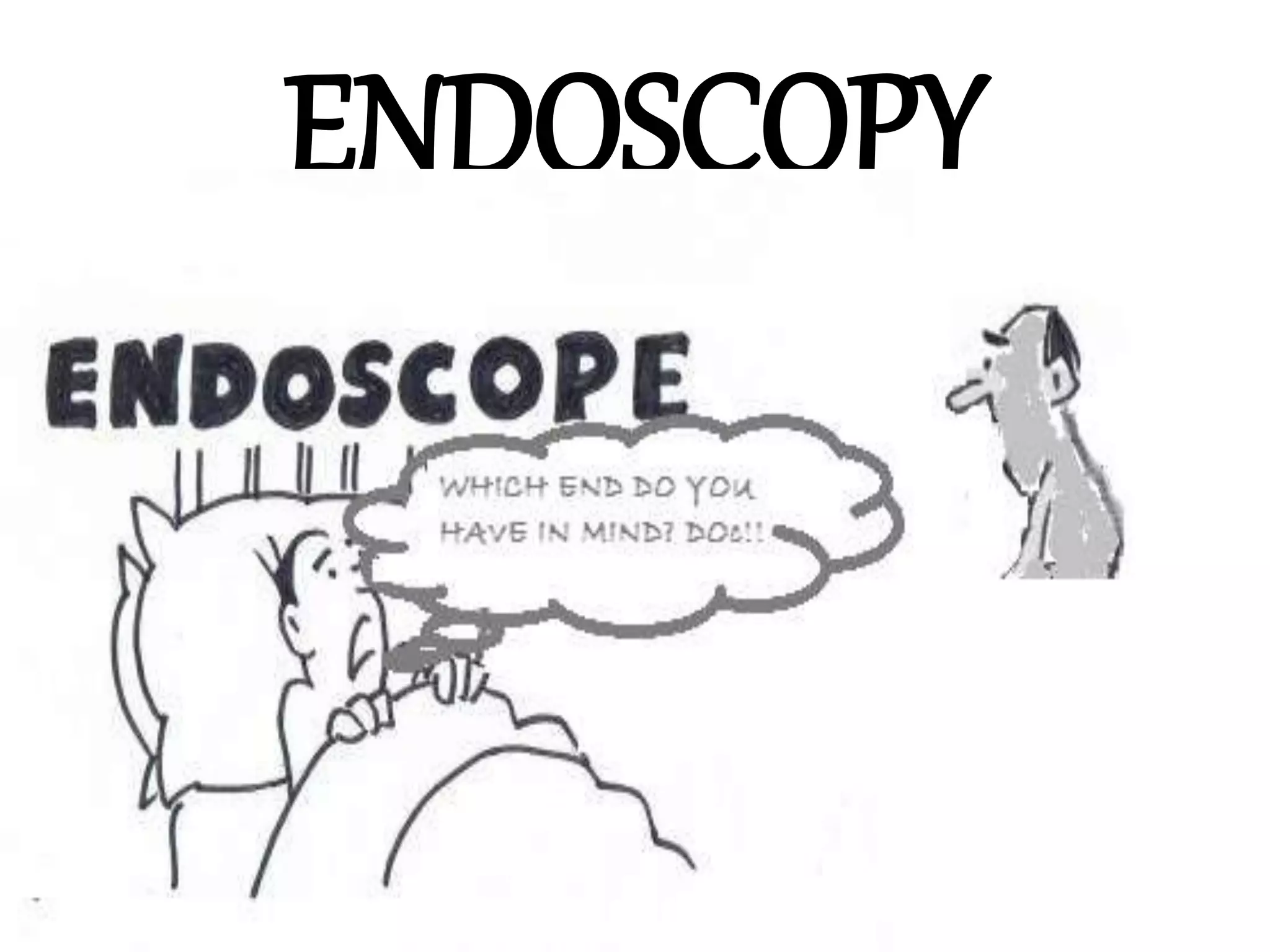
ENDOSCOPY
INTRODUCTION
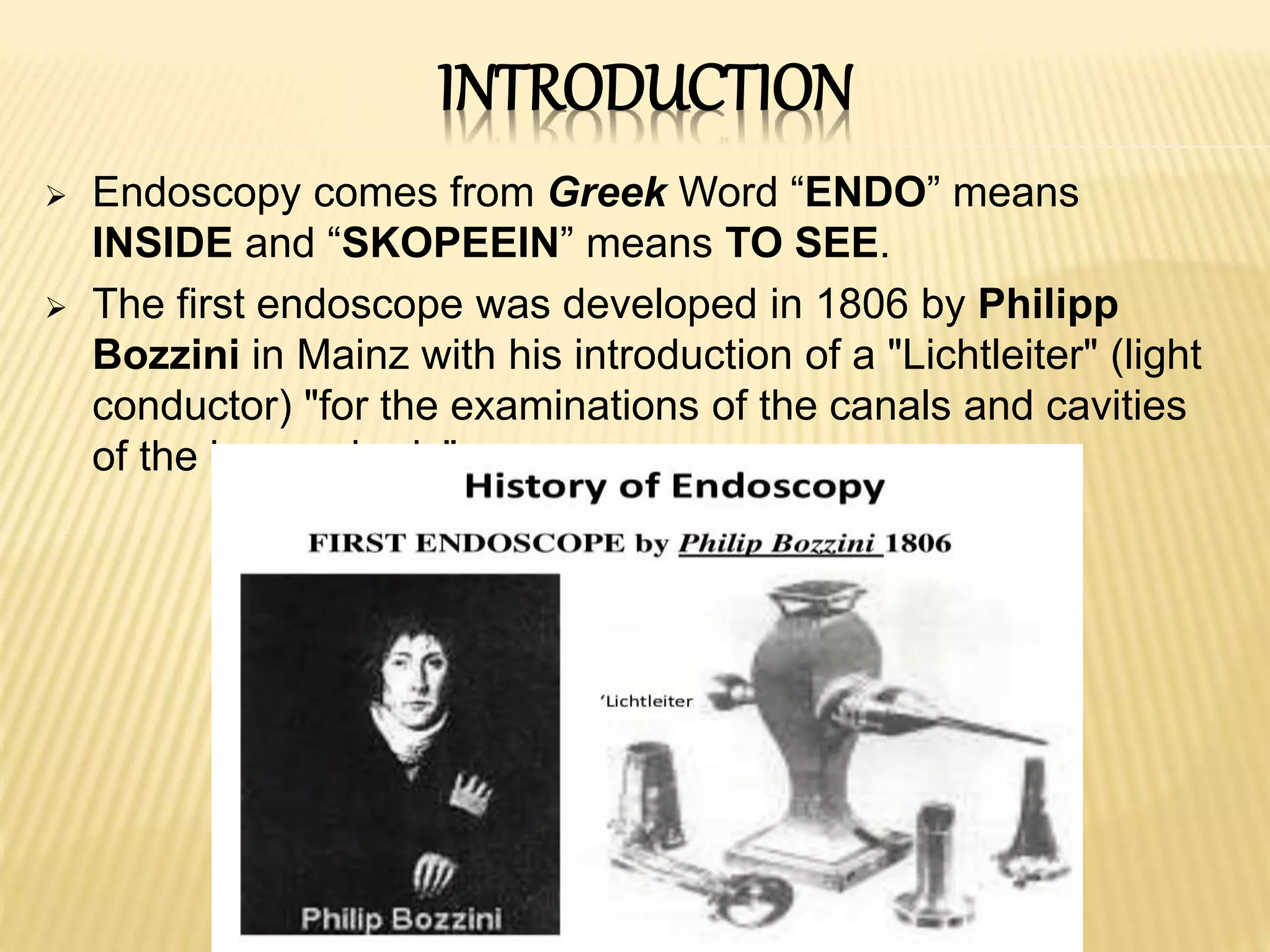
 Endoscopy comes from Greek Word “ENDO” means
INSIDE and “SKOPEEIN” means TO SEE.
 The first endoscope was developed in 1806 by Philipp
Bozzini in Mainz with his introduction of a "Lichtleiter" (light
conductor) "for the examinations of the canals and cavities
of the human body"
WHAT IS AN ENDOSCOPY
 An endoscopy involves examining the inside
of a person’s body by using a machine called
endoscope.
 An endoscope is a medical device consisting
of a long, flexible tube with a light source and
a video camera for video recording.
 It is a minimally invasive diagnostic
procedure and is use to view the interior
surface of different organs or tissues.
COMPONENTS OF AN ENDOSCOPE
An Endoscope is consist of :
i. A flexible or rigid tube.
ii. A light source which is delivered via an
optical fibre system.
iii. A video camera to get the internal view on a
monitor.
iv. A channel for entry of medical instruments
or manipulations.
ENDOSCOPIC COMPONENTS
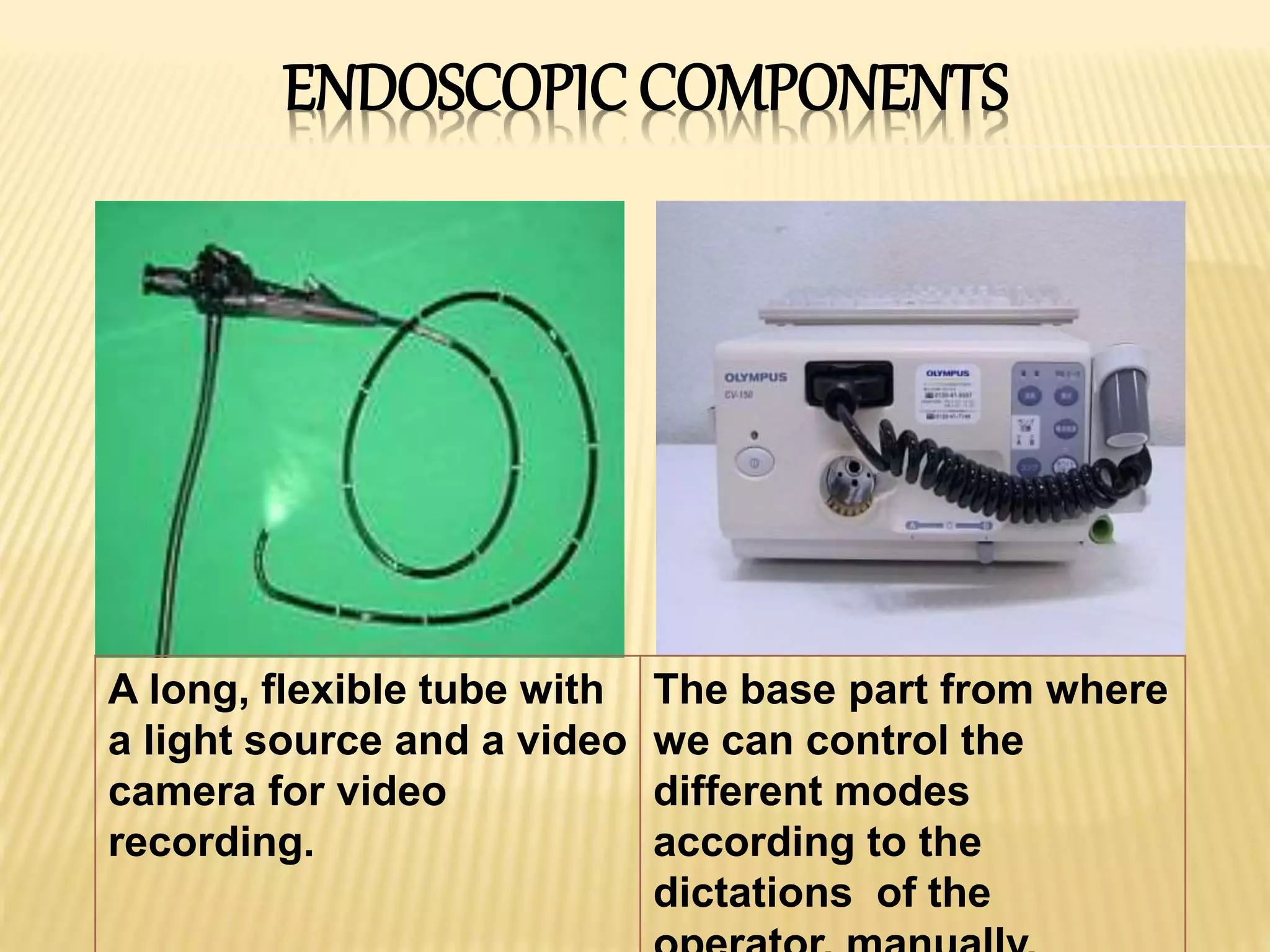
A long, flexible tube with
a light source and a video
camera for video
recording.
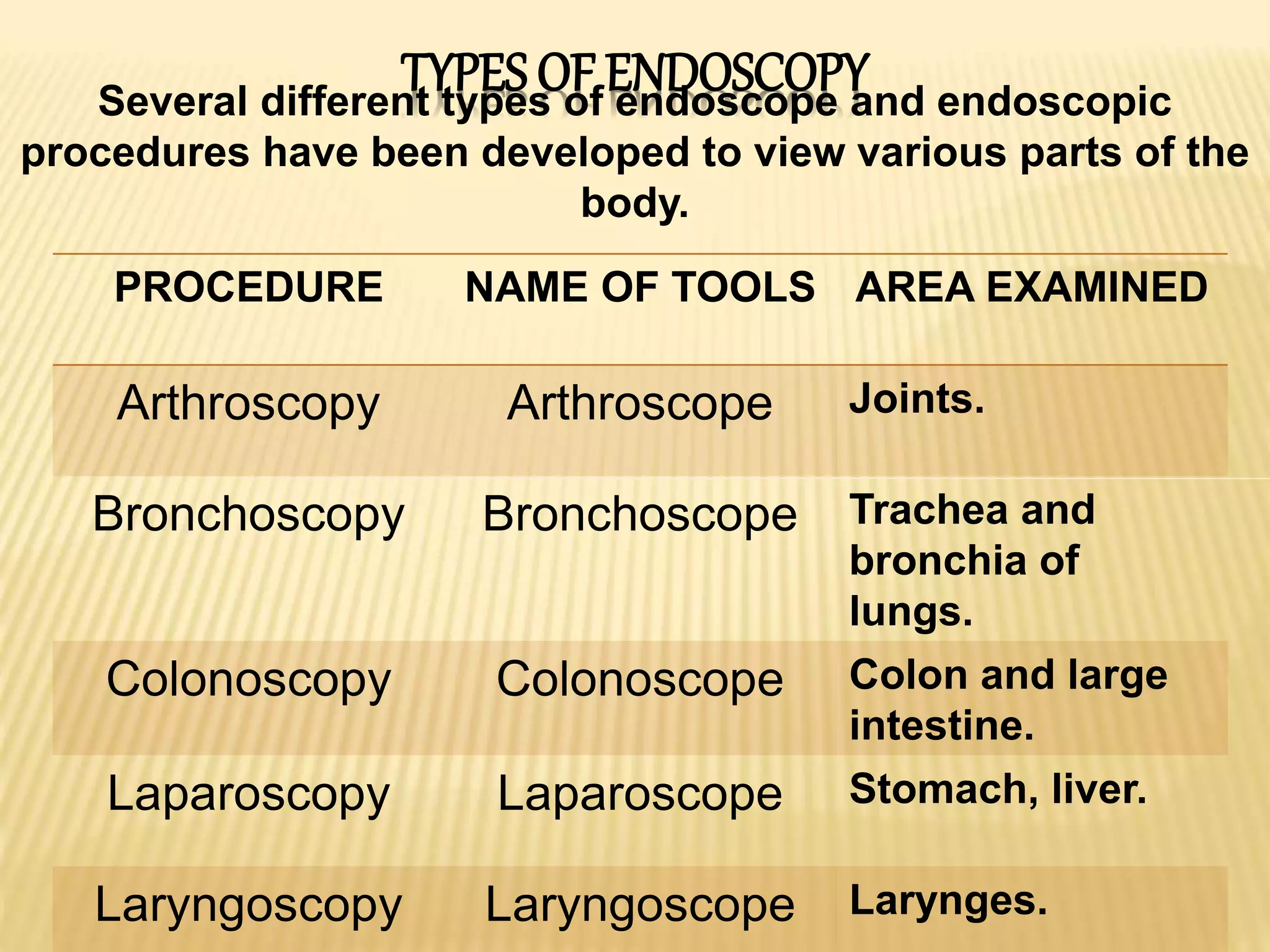
The base part from where
we can control the
different modes
according to the
dictations of the
Several different types of endoscope and endoscopic
procedures have been developed to view various parts of the
body.
TYPES OF ENDOSCOPY
PROCEDURE NAME OF TOOLS AREA EXAMINED
Arthroscopy Arthroscope Joints.
Bronchoscopy Bronchoscope Trachea and
bronchia of
lungs.
Colonoscopy Colonoscope Colon and large
intestine.
Laparoscopy Laparoscope Stomach, liver.
Laryngoscopy Laryngoscope Larynges.
ADVANTAGES OF AN ENDOSCOPY
 Endoscopy helps the doctor to make a
more accurate diagnosis of diseases in
the GI tract.
 Endoscopy can be used to provide
treatment like removing foreign bodies,
benign tumors such as polyps.
 Endoscopy helps stopping active
bleeding from ulcers or from dilated
veins.
DIS-ADVANTAGES OF AN ENDOSCOPY
 There can be more
bleeding than normally
expected after surgery.
 An allergy to the
anesthetic agent used in
an endoscopy.
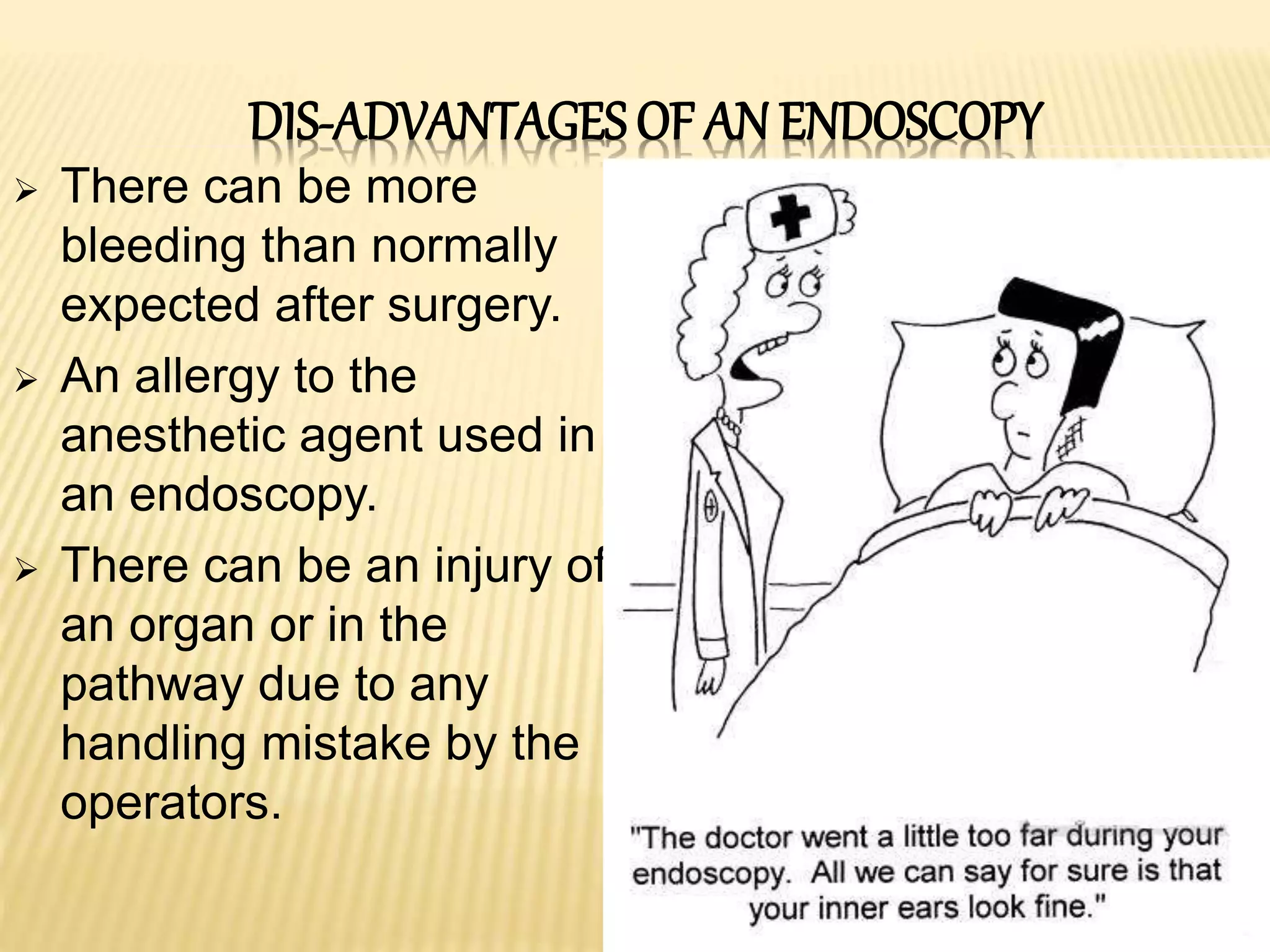
 There can be an injury of
an organ or in the
pathway due to any
handling mistake by the
operators.
There is always a chance of infection, somewhere
along the path of the endoscopy if sterility is not
maintained.
DIS-ADVANTAGES OF AN ENDOSCOPY
APPLICATIONS
 Health care providers can use endoscopy to
review any body parts.
 It is used to view the interior surface of
different organs or tissues.
 Used to determine any internal infections.
 Used in the surgery to determine the right
operating place and condition.
AN EXAMPLE OF ENDOSCOPIC
APPLICATION---SINUS SURGERY
Endoscope

Endoscope

  • 1.
  • 2.
    INTRODUCTION  Endoscopy comesfrom Greek Word “ENDO” means INSIDE and “SKOPEEIN” means TO SEE.  The first endoscope was developed in 1806 by Philipp Bozzini in Mainz with his introduction of a "Lichtleiter" (light conductor) "for the examinations of the canals and cavities of the human body"
  • 3.
    WHAT IS ANENDOSCOPY  An endoscopy involves examining the inside of a person’s body by using a machine called endoscope.  An endoscope is a medical device consisting of a long, flexible tube with a light source and a video camera for video recording.  It is a minimally invasive diagnostic procedure and is use to view the interior surface of different organs or tissues.
  • 4.
    COMPONENTS OF ANENDOSCOPE An Endoscope is consist of : i. A flexible or rigid tube. ii. A light source which is delivered via an optical fibre system. iii. A video camera to get the internal view on a monitor. iv. A channel for entry of medical instruments or manipulations.
  • 5.
    ENDOSCOPIC COMPONENTS A long,flexible tube with a light source and a video camera for video recording. The base part from where we can control the different modes according to the dictations of the
  • 6.
    Several different typesof endoscope and endoscopic procedures have been developed to view various parts of the body. TYPES OF ENDOSCOPY PROCEDURE NAME OF TOOLS AREA EXAMINED Arthroscopy Arthroscope Joints. Bronchoscopy Bronchoscope Trachea and bronchia of lungs. Colonoscopy Colonoscope Colon and large intestine. Laparoscopy Laparoscope Stomach, liver. Laryngoscopy Laryngoscope Larynges.
  • 7.
    ADVANTAGES OF ANENDOSCOPY  Endoscopy helps the doctor to make a more accurate diagnosis of diseases in the GI tract.  Endoscopy can be used to provide treatment like removing foreign bodies, benign tumors such as polyps.  Endoscopy helps stopping active bleeding from ulcers or from dilated veins.
  • 8.
    DIS-ADVANTAGES OF ANENDOSCOPY  There can be more bleeding than normally expected after surgery.  An allergy to the anesthetic agent used in an endoscopy.  There can be an injury of an organ or in the pathway due to any handling mistake by the operators.
  • 9.
    There is alwaysa chance of infection, somewhere along the path of the endoscopy if sterility is not maintained. DIS-ADVANTAGES OF AN ENDOSCOPY
  • 10.
    APPLICATIONS  Health careproviders can use endoscopy to review any body parts.  It is used to view the interior surface of different organs or tissues.  Used to determine any internal infections.  Used in the surgery to determine the right operating place and condition.
  • 11.
    AN EXAMPLE OFENDOSCOPIC APPLICATION---SINUS SURGERY