
Name: Amer
Presentation: blood circulation to
brain
(Anatomy)
Fb: https://www.facebook.com/amer.khan.47
Cerebral circulation
Blood circulation to the Brain
Cerebral circulation is the movement of blood
through the network of cerebral arteries and
veins supplying the brain. The rate of the
cerebral blood flow in the adult is typically 750
milliliters per minute.
• The brain is supplied by two internal carotid
arteries and two vertebral arteries that form a
complex anastomosis (circulus arteriosus, circle of
Willis) on the base of the brain.
Arterial supply of the brain
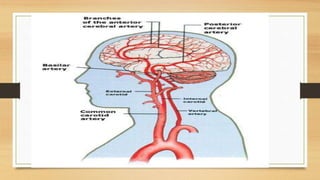
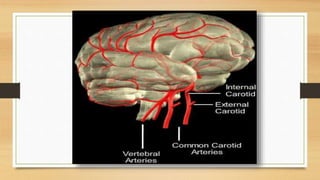
Blood is supplied to the brain, face, and scalp via two
major sets of vessels:
1. the right and left common carotid arteries.
2. the right and left vertebral arteries.
The common carotid arteries have two
divisions.
I. The external carotid arteries supply the face
and scalp with blood.
II. The internal carotid arteries supply blood to
most of the anterior portion of the cerebrum.
The vertebrobasilar arteries supply the
posterior two-fifths of the cerebrum, part of
the cerebellum, and the brain stem.
Any decrease in the flow of blood through
one of the internal carotid arteries brings
about some impairment in the function of
the frontal lobes. This impairment may
result in numbness, weakness, or paralysis
on the side of the body opposite to the
obstruction of the artery.
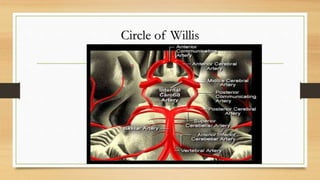
•At the base of the brain, the carotid and
vertebrobasilar arteries form a circle of
communicating arteries known as the
Circle of Willis.
Circle of Willis
Circle of Willis
From this circle, other arteries—
1. the anterior cerebral artery (ACA),
2. the middle cerebral artery (MCA),
3. the posterior cerebral artery (PCA)
Are arise and travel to all parts of the brain.
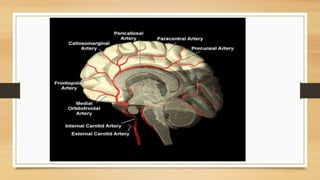
The anterior cerebral artery extends upward and
forward from the internal carotid artery. It supplies
the frontal lobes, the parts of the brain that control
logical thought, personality, and voluntary
movement, especially of the legs.(Stroke in the anterior
cerebral artery results in opposite leg weakness.)
Anterior Cerebral Artery
• The middle cerebral artery is the largest branch of the
internal carotid.
The artery supplies a portion of the frontal lobe and the
lateral surface of the temporal and parietal lobes, including
the primary motor and sensory areas of the face, throat,
hand and arm, and in the dominant hemisphere, the areas
for speech. (The middle cerebral artery is the artery most often occluded in
stroke.)
Middle Cerebral Artery
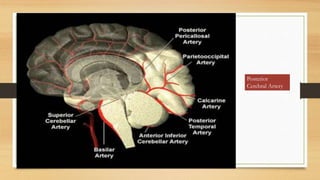
Posterior Cerebral Artery
• The posterior cerebral arteries stem in most individuals
from the basilar artery but sometimes originate from the
ipsilateral internal carotid artery.
• The posterior arteries supply the temporal and occipital
lobes of the left cerebral hemisphere and the right
hemisphere.
Posterior
Cerebral Artery
Cerebral circulation

Cerebral circulation

  • 1.
    Name: Amer Presentation: bloodcirculation to brain (Anatomy) Fb: https://www.facebook.com/amer.khan.47
  • 2.
  • 3.
    Cerebral circulation isthe movement of blood through the network of cerebral arteries and veins supplying the brain. The rate of the cerebral blood flow in the adult is typically 750 milliliters per minute.
  • 4.
    • The brainis supplied by two internal carotid arteries and two vertebral arteries that form a complex anastomosis (circulus arteriosus, circle of Willis) on the base of the brain. Arterial supply of the brain
  • 6.
    Blood is suppliedto the brain, face, and scalp via two major sets of vessels: 1. the right and left common carotid arteries. 2. the right and left vertebral arteries.
  • 8.
    The common carotidarteries have two divisions. I. The external carotid arteries supply the face and scalp with blood. II. The internal carotid arteries supply blood to most of the anterior portion of the cerebrum. The vertebrobasilar arteries supply the posterior two-fifths of the cerebrum, part of the cerebellum, and the brain stem.
  • 9.
    Any decrease inthe flow of blood through one of the internal carotid arteries brings about some impairment in the function of the frontal lobes. This impairment may result in numbness, weakness, or paralysis on the side of the body opposite to the obstruction of the artery.
  • 10.
    •At the baseof the brain, the carotid and vertebrobasilar arteries form a circle of communicating arteries known as the Circle of Willis. Circle of Willis
  • 11.
  • 12.
    From this circle,other arteries— 1. the anterior cerebral artery (ACA), 2. the middle cerebral artery (MCA), 3. the posterior cerebral artery (PCA) Are arise and travel to all parts of the brain.
  • 13.
    The anterior cerebralartery extends upward and forward from the internal carotid artery. It supplies the frontal lobes, the parts of the brain that control logical thought, personality, and voluntary movement, especially of the legs.(Stroke in the anterior cerebral artery results in opposite leg weakness.) Anterior Cerebral Artery
  • 15.
    • The middlecerebral artery is the largest branch of the internal carotid. The artery supplies a portion of the frontal lobe and the lateral surface of the temporal and parietal lobes, including the primary motor and sensory areas of the face, throat, hand and arm, and in the dominant hemisphere, the areas for speech. (The middle cerebral artery is the artery most often occluded in stroke.) Middle Cerebral Artery
  • 16.
    Posterior Cerebral Artery •The posterior cerebral arteries stem in most individuals from the basilar artery but sometimes originate from the ipsilateral internal carotid artery. • The posterior arteries supply the temporal and occipital lobes of the left cerebral hemisphere and the right hemisphere.
  • 17.