Emotional Intelligence
          Andy Novinska, LCPC, CADC
Emotional Intelligence
Dr. Daniel Goleman, Ph.D.
   Mainstream with the 1995 book, Emotional
    Intelligence
        The New York Times bestseller list for 1.5 years
        More than 5,000,000 copies in print worldwide
         in 30 languages


Fundamental Premise of Emotional Intelligence
    Success requires the effectual awareness, control
               and management of emotions
Working Definition
Emotional Intelligence: A form of intelligence
  relating to the emotional side of life and the
  ability to:

    Recognize   and Manage Emotions
    Motivate   Yourself
    Restrain   Impulses
    Relate   Interpersonally
The Research
Dr. Daniel Goleman, Ph.D.
   In every field, your EQ (emotional quotient) is
    twice as important as your cognitive abilities

   Approximately 90% of leading others
    effectively comes from EQ

   Social and Emotional Learning (SEL)
     Improves self-awareness & confidence
     Helps manage disturbing emotions and
       impulses
     Increases empathy
     Improves academic achievement
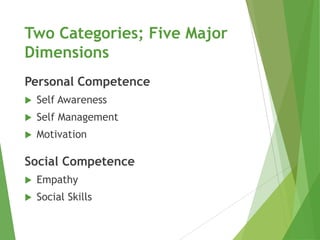
Two Categories; Five Major
Dimensions
Personal Competence
   Self Awareness
   Self Management
   Motivation

Social Competence
   Empathy
   Social Skills
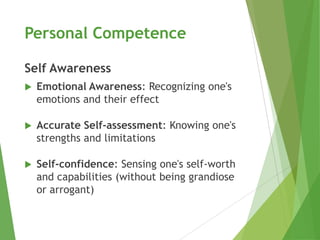
Personal Competence

Self Awareness
   Emotional Awareness: Recognizing one's
    emotions and their effect

   Accurate Self-assessment: Knowing one's
    strengths and limitations

   Self-confidence: Sensing one's self-worth
    and capabilities (without being grandiose
    or arrogant)
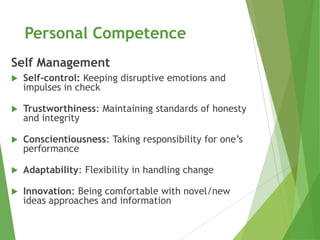
Personal Competence
Self Management
   Self-control: Keeping disruptive emotions and
    impulses in check

   Trustworthiness: Maintaining standards of honesty
    and integrity

   Conscientiousness: Taking responsibility for one’s
    performance

   Adaptability: Flexibility in handling change

   Innovation: Being comfortable with novel/new
    ideas approaches and information
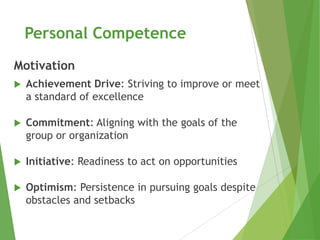
Personal Competence
Motivation
   Achievement Drive: Striving to improve or meet
    a standard of excellence

   Commitment: Aligning with the goals of the
    group or organization

   Initiative: Readiness to act on opportunities

   Optimism: Persistence in pursuing goals despite
    obstacles and setbacks
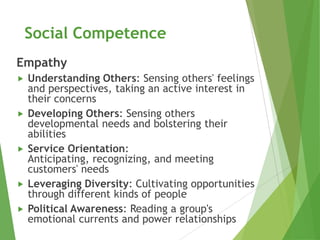
Social Competence
Empathy
   Understanding Others: Sensing others' feelings
    and perspectives, taking an active interest in
    their concerns
   Developing Others: Sensing others
    developmental needs and bolstering their
    abilities
   Service Orientation:
    Anticipating, recognizing, and meeting
    customers' needs
   Leveraging Diversity: Cultivating opportunities
    through different kinds of people
   Political Awareness: Reading a group's
    emotional currents and power relationships
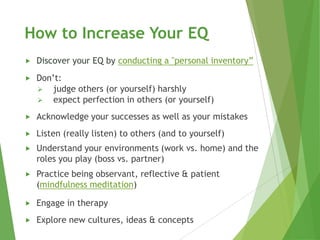
How to Increase Your EQ
   Discover your EQ by conducting a "personal inventory”
   Don’t:
     judge others (or yourself) harshly
     expect perfection in others (or yourself)

   Acknowledge your successes as well as your mistakes
   Listen (really listen) to others (and to yourself)
   Understand your environments (work vs. home) and the
    roles you play (boss vs. partner)
   Practice being observant, reflective & patient
    (mindfulness meditation)

   Engage in therapy
   Explore new cultures, ideas & concepts
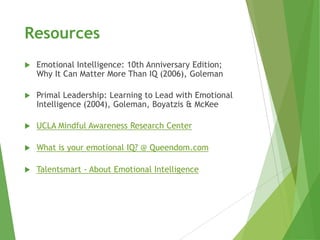
Resources
   Emotional Intelligence: 10th Anniversary Edition;
    Why It Can Matter More Than IQ (2006), Goleman

   Primal Leadership: Learning to Lead with Emotional
    Intelligence (2004), Goleman, Boyatzis & McKee

   UCLA Mindful Awareness Research Center

   What is your emotional IQ? @ Queendom.com

   Talentsmart - About Emotional Intelligence

Emotional Intelligence (EI)

  • 1.
    Emotional Intelligence Andy Novinska, LCPC, CADC
  • 2.
    Emotional Intelligence Dr. DanielGoleman, Ph.D.  Mainstream with the 1995 book, Emotional Intelligence  The New York Times bestseller list for 1.5 years  More than 5,000,000 copies in print worldwide in 30 languages Fundamental Premise of Emotional Intelligence Success requires the effectual awareness, control and management of emotions
  • 3.
    Working Definition Emotional Intelligence:A form of intelligence relating to the emotional side of life and the ability to:  Recognize and Manage Emotions  Motivate Yourself  Restrain Impulses  Relate Interpersonally
  • 4.
    The Research Dr. DanielGoleman, Ph.D.  In every field, your EQ (emotional quotient) is twice as important as your cognitive abilities  Approximately 90% of leading others effectively comes from EQ  Social and Emotional Learning (SEL)  Improves self-awareness & confidence  Helps manage disturbing emotions and impulses  Increases empathy  Improves academic achievement
  • 5.
    Two Categories; FiveMajor Dimensions Personal Competence  Self Awareness  Self Management  Motivation Social Competence  Empathy  Social Skills
  • 6.
    Personal Competence Self Awareness  Emotional Awareness: Recognizing one's emotions and their effect  Accurate Self-assessment: Knowing one's strengths and limitations  Self-confidence: Sensing one's self-worth and capabilities (without being grandiose or arrogant)
  • 7.
    Personal Competence Self Management  Self-control: Keeping disruptive emotions and impulses in check  Trustworthiness: Maintaining standards of honesty and integrity  Conscientiousness: Taking responsibility for one’s performance  Adaptability: Flexibility in handling change  Innovation: Being comfortable with novel/new ideas approaches and information
  • 8.
    Personal Competence Motivation  Achievement Drive: Striving to improve or meet a standard of excellence  Commitment: Aligning with the goals of the group or organization  Initiative: Readiness to act on opportunities  Optimism: Persistence in pursuing goals despite obstacles and setbacks
  • 9.
    Social Competence Empathy  Understanding Others: Sensing others' feelings and perspectives, taking an active interest in their concerns  Developing Others: Sensing others developmental needs and bolstering their abilities  Service Orientation: Anticipating, recognizing, and meeting customers' needs  Leveraging Diversity: Cultivating opportunities through different kinds of people  Political Awareness: Reading a group's emotional currents and power relationships
  • 10.
    How to IncreaseYour EQ  Discover your EQ by conducting a "personal inventory”  Don’t:  judge others (or yourself) harshly  expect perfection in others (or yourself)  Acknowledge your successes as well as your mistakes  Listen (really listen) to others (and to yourself)  Understand your environments (work vs. home) and the roles you play (boss vs. partner)  Practice being observant, reflective & patient (mindfulness meditation)  Engage in therapy  Explore new cultures, ideas & concepts
  • 11.
    Resources  Emotional Intelligence: 10th Anniversary Edition; Why It Can Matter More Than IQ (2006), Goleman  Primal Leadership: Learning to Lead with Emotional Intelligence (2004), Goleman, Boyatzis & McKee  UCLA Mindful Awareness Research Center  What is your emotional IQ? @ Queendom.com  Talentsmart - About Emotional Intelligence