By:
Megha Aggarwal
Shaurya Tiwari
Sushil Thakur
Reena
Emerging Trends and
Technology
Electronic Payment System is a system which
helps the customer or user to make online
payment for their shopping.
 To transfer money over the internet
 Methods of traditional payment :
 check, credit card or cash
 Methods of electronic payment :
 Electronic cash, software wallets, smart cards,
 debit and credit cards.
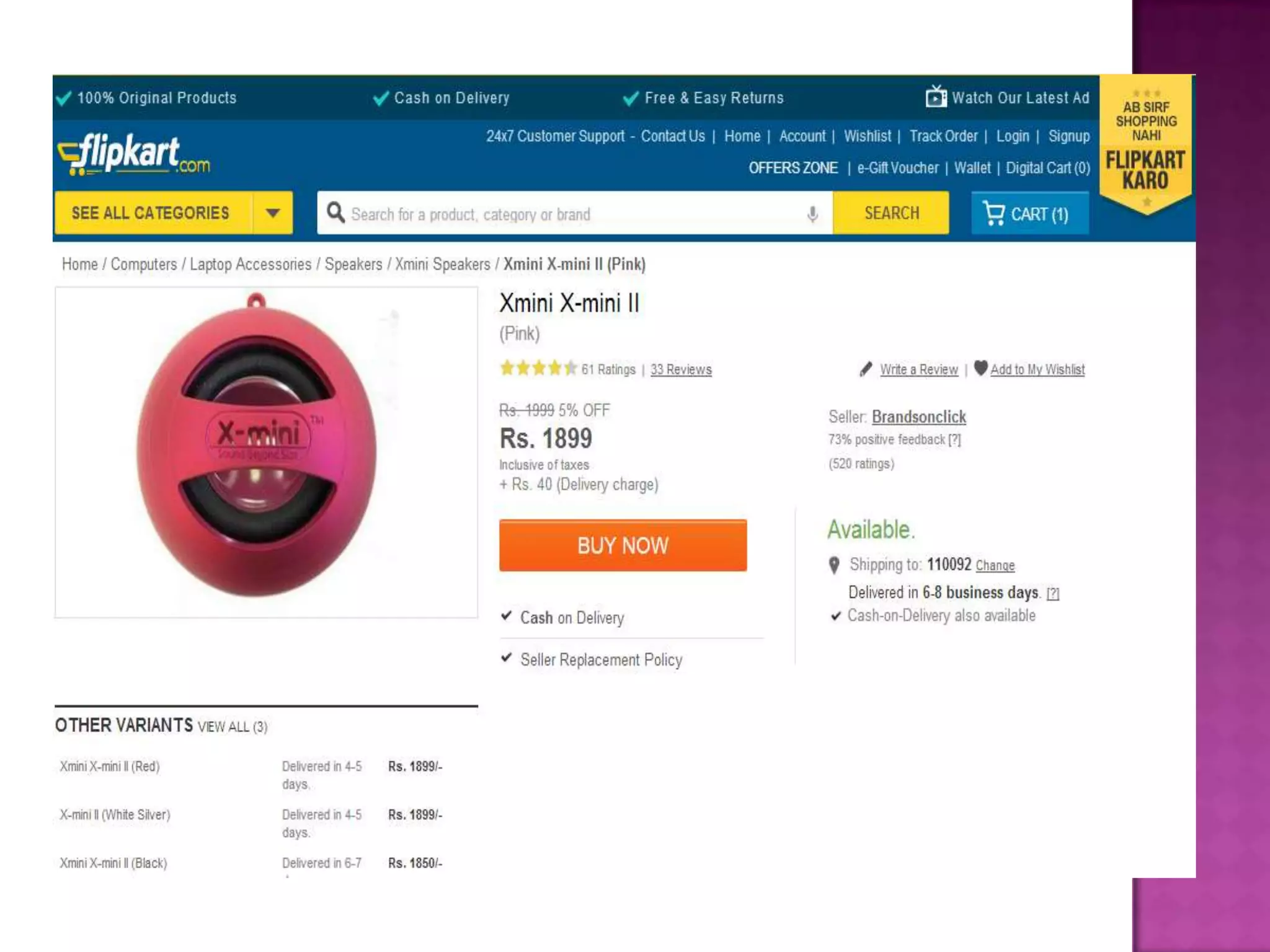
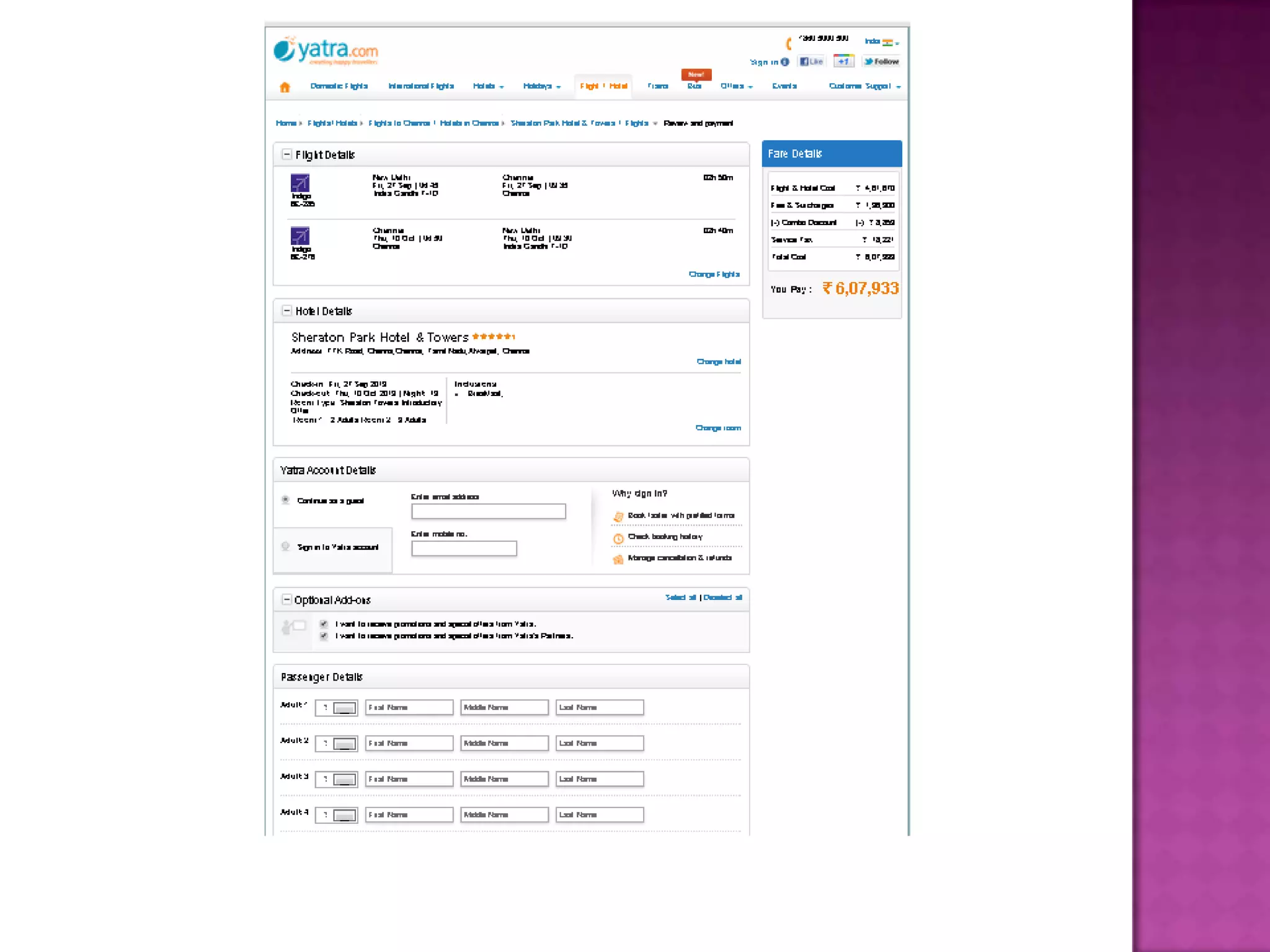
 Online Reservation(yatra.com)
 Online Bill payment
 Online Order Placing (snapdeal.com)
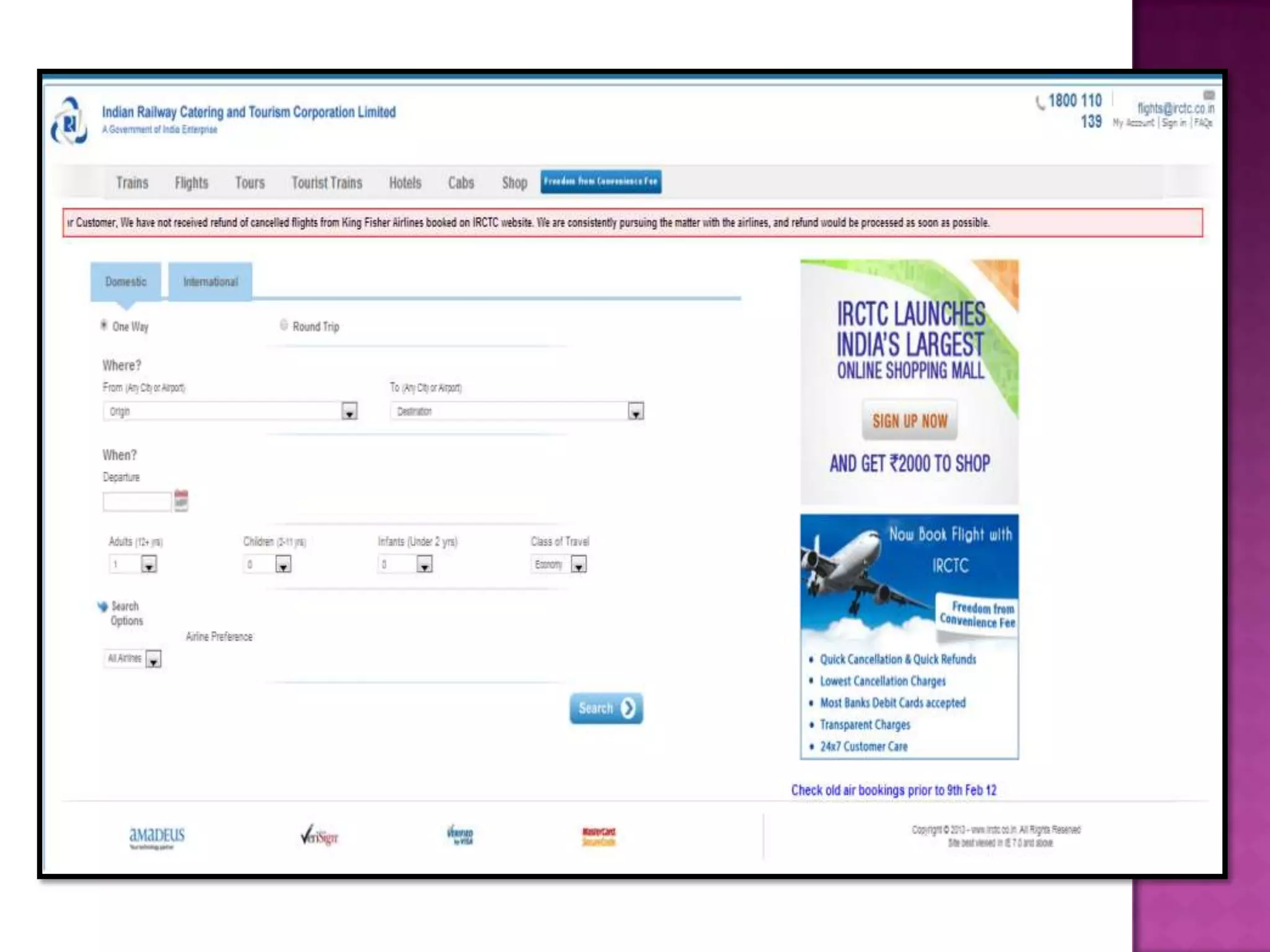
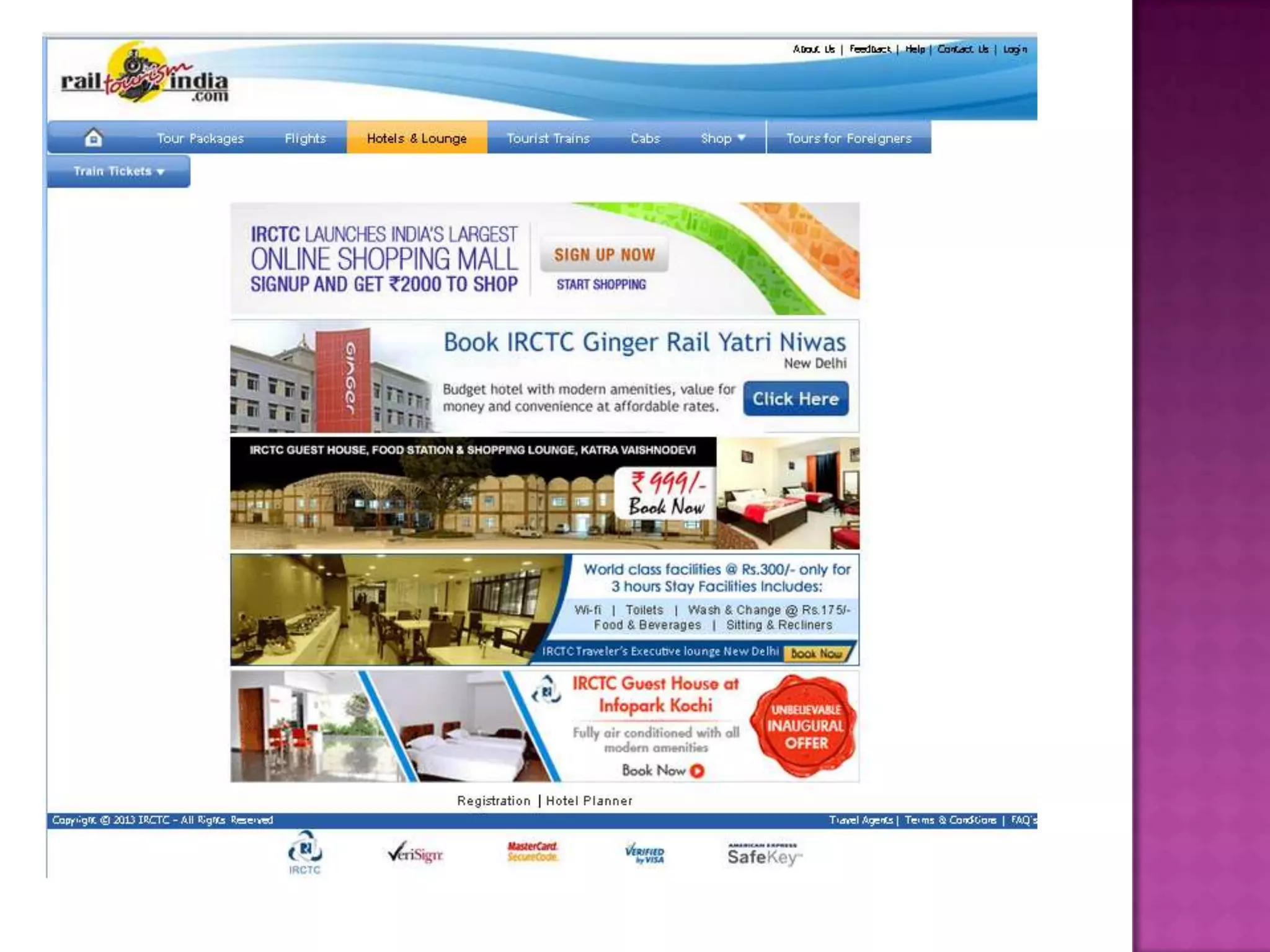
 Online Ticket Booking (irctc.co.in)
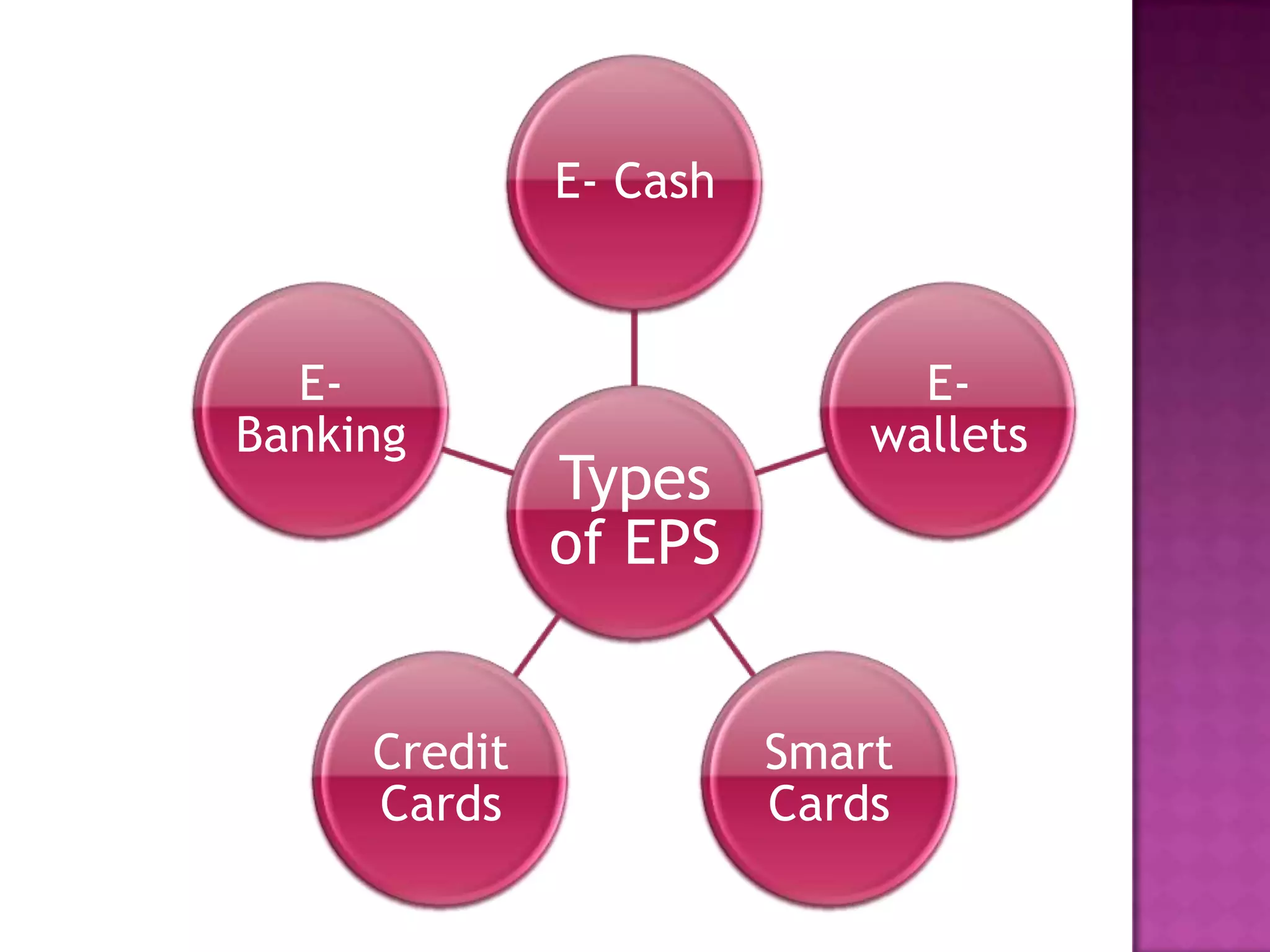
Types
of EPS
E- Cash
E-
wallets
Smart
Cards
Credit
Cards
E-
Banking
 A system that allows a person to pay for goods
or services by transmitting a number from one
computer to another.
 Like the real numbers on real currency
notes, the e-cash numbers are unique.
 This is issued by a bank and represents a
specified sum of real money.
 It is anonymous and reusable.
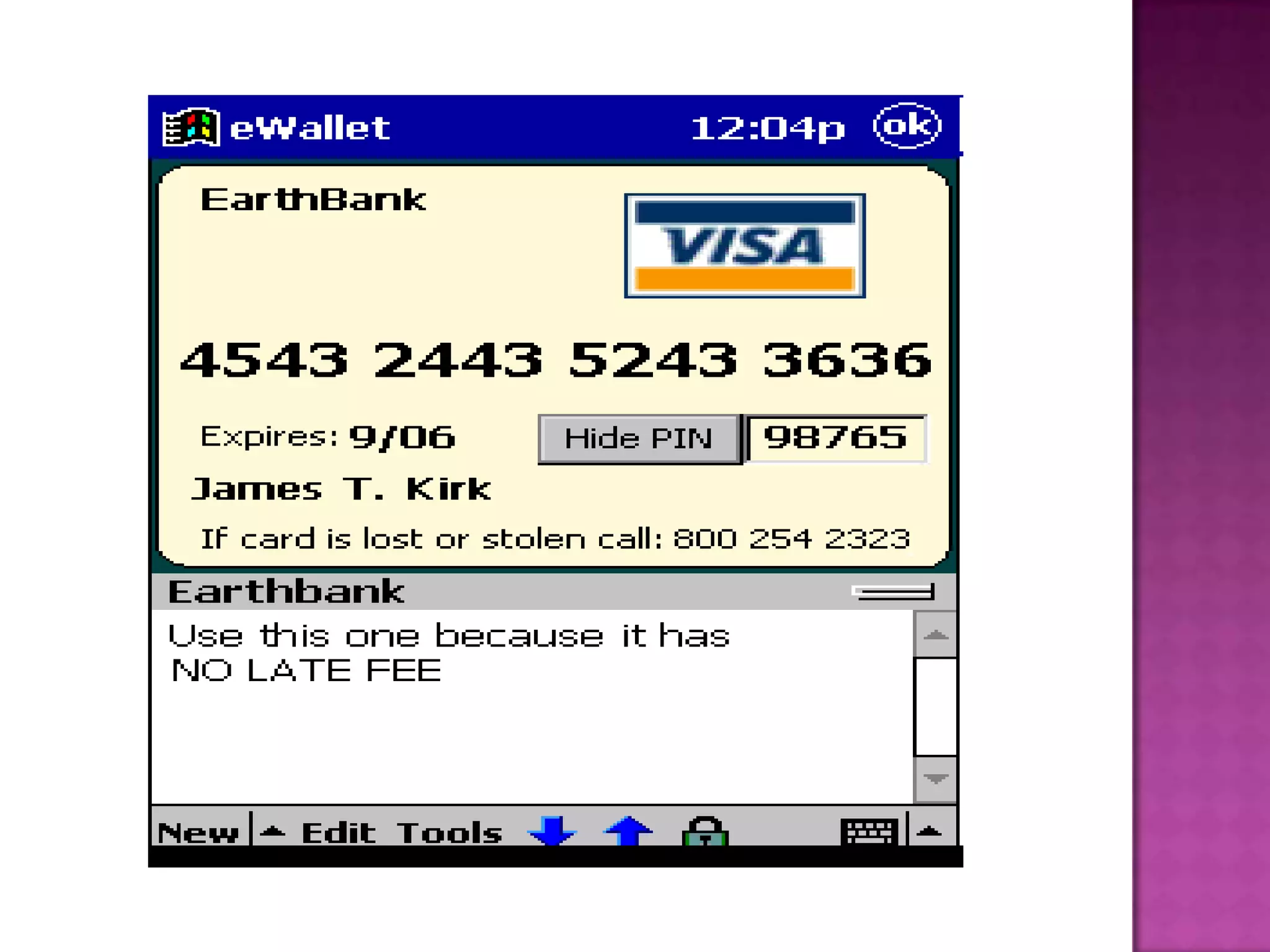
 The E-Wallet is another payment scheme that
operates like a carrier of e-cash and other
information.
 The aim is to give shoppers a simple, single
and a secure way of carrying currency
electronically.
 Trust is the basis of the e-wallet as a form of
electronic payment.
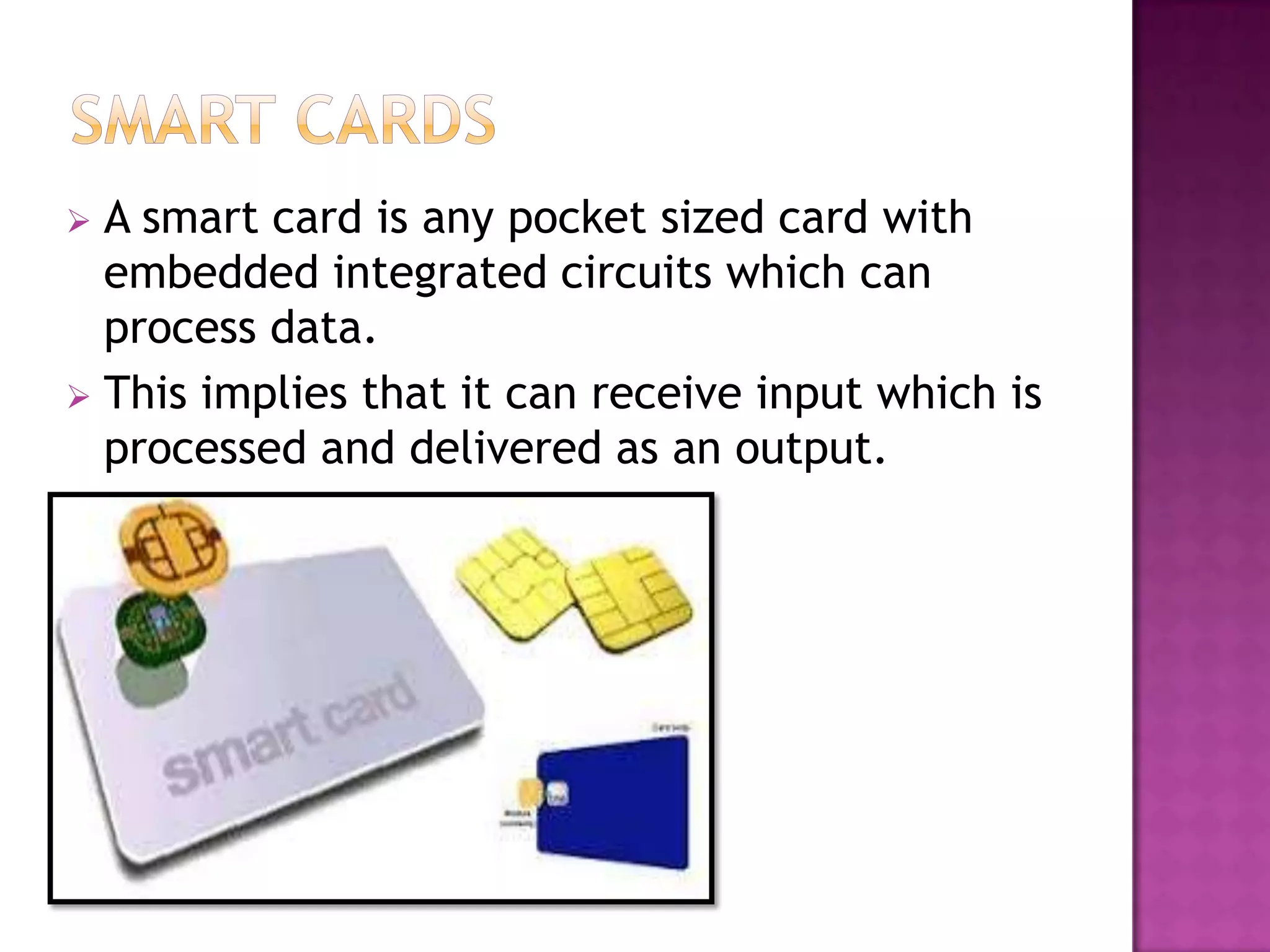
 A smart card is any pocket sized card with
embedded integrated circuits which can
process data.
 This implies that it can receive input which is
processed and delivered as an output.
 Online banking (or Internet banking or E-
banking) allows customers of a financial
institution to conduct financial transactions
on a secure website operated by the
institution, which can be a
retail or virtual bank, credit union or building
society.
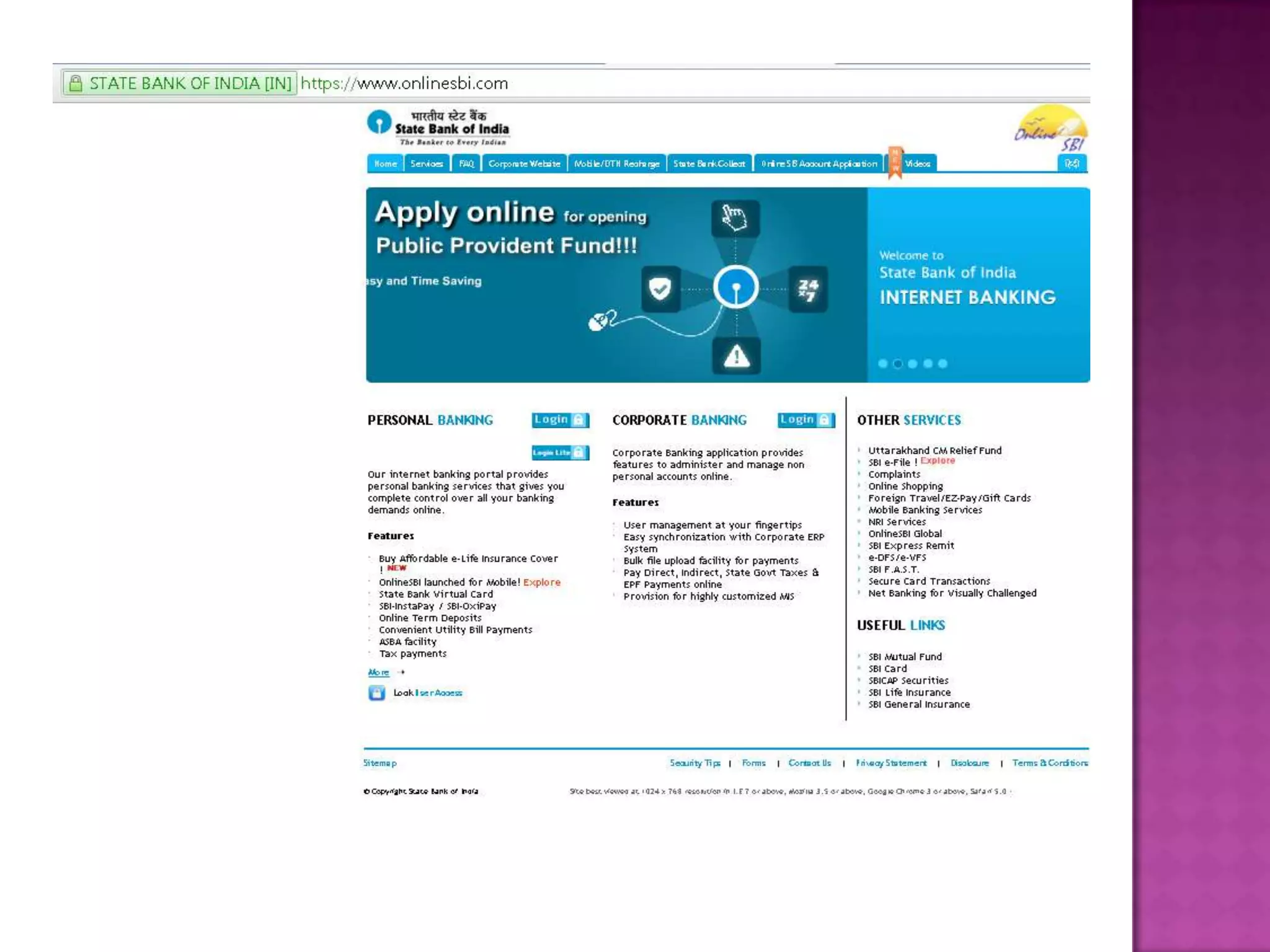
 Now a days almost every bank provide this
facilities. Ex. SBI, ICICI, HDFC
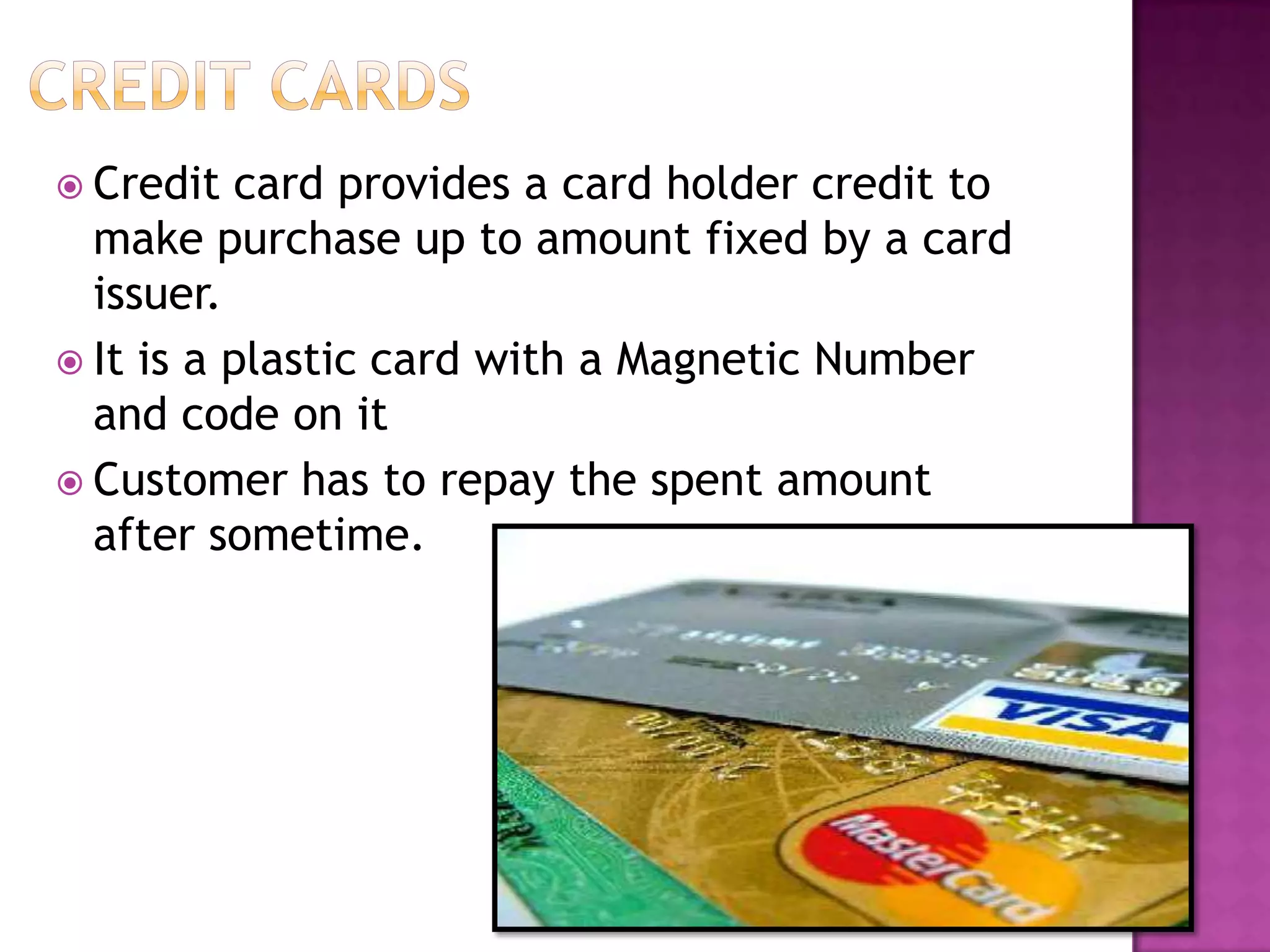
 Credit card provides a card holder credit to
make purchase up to amount fixed by a card
issuer.
 It is a plastic card with a Magnetic Number
and code on it
 Customer has to repay the spent amount
after sometime.
 Customer uses a stolen card or account
number to fraudulently purchase goods or
service online
 Family members use bankcard to
order goods/ services online, but have
not been authorized to do so.
 Customer falsely claims that he or she did
not receive a shipment
 Hackers find the ways into an e-
commerce merchant’s payment processing
system and then issue credits to hacker card
account numbers.
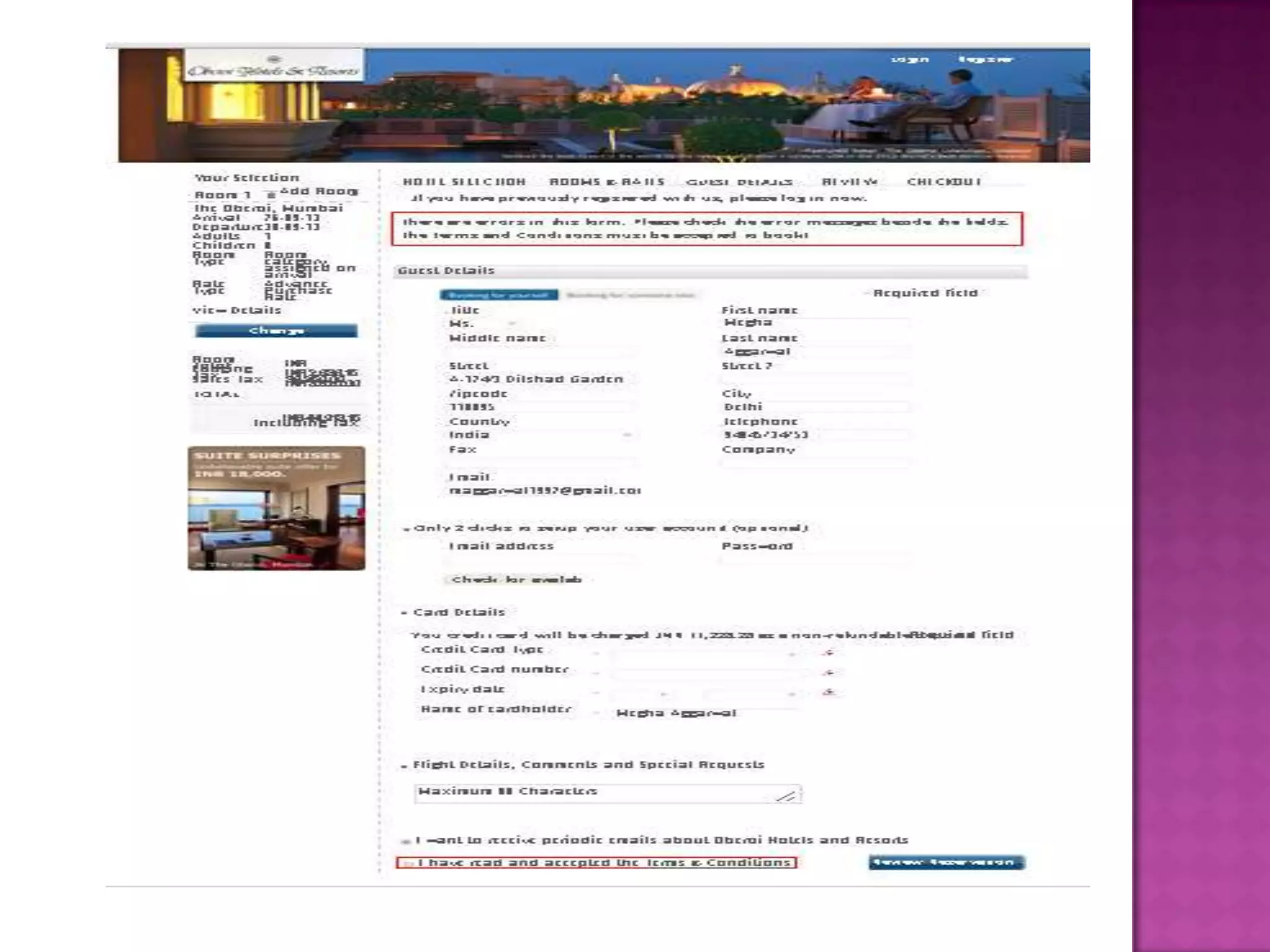
 Hotel Reservations
 Air Tickets
 Bus Tickets
 Taxi Services
 Documentation
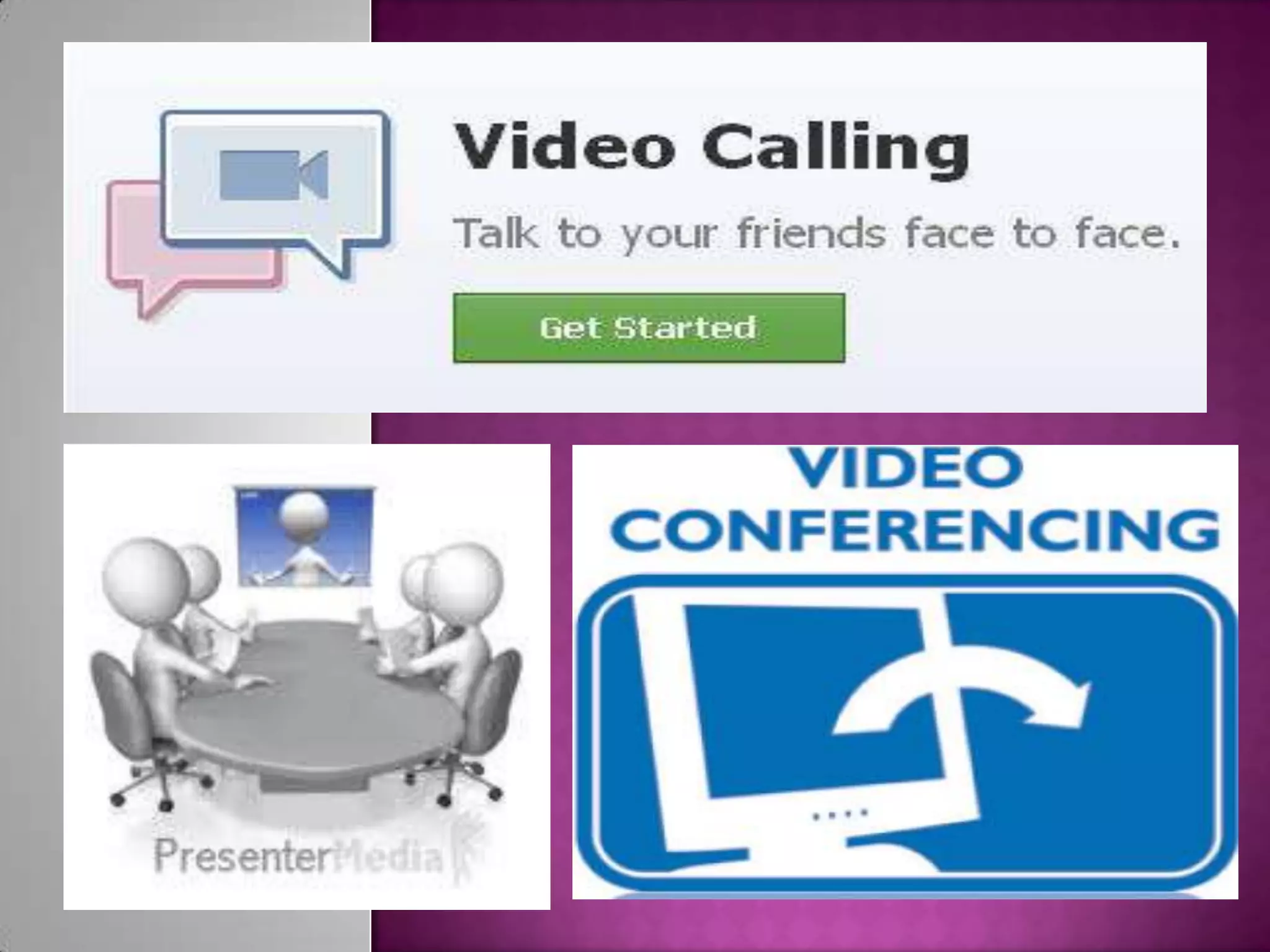
 Is simply a vehicle for interactive
communication.
 Enables one set of people to see and hear people
in a different location.
 In its most basic form is the transmission of
image (video) and speech (audio) back and forth
between two or more physically separate
locations.
 Also known as “Video teleconference”.
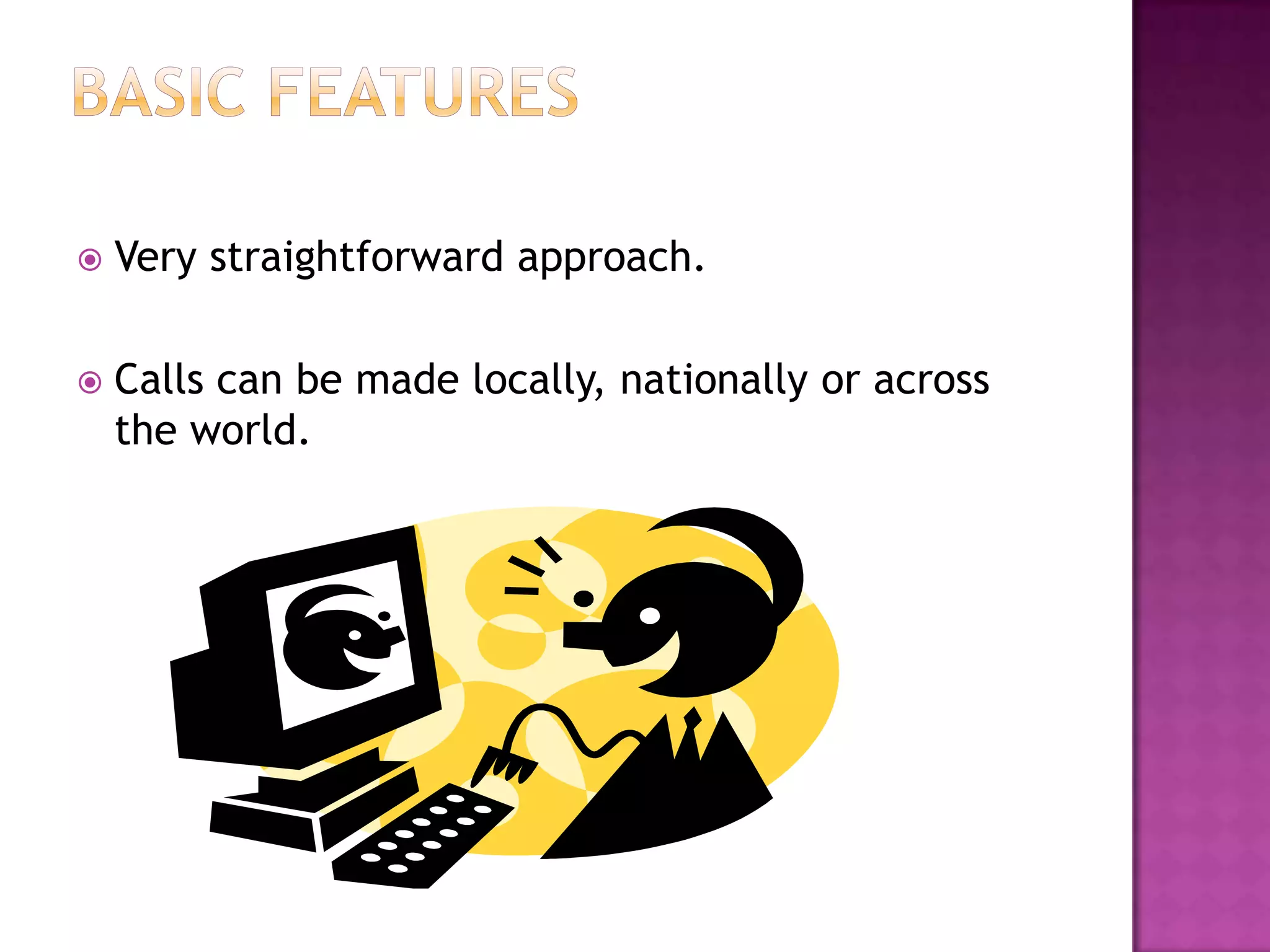
 Very straightforward approach.
 Calls can be made locally, nationally or across
the world.
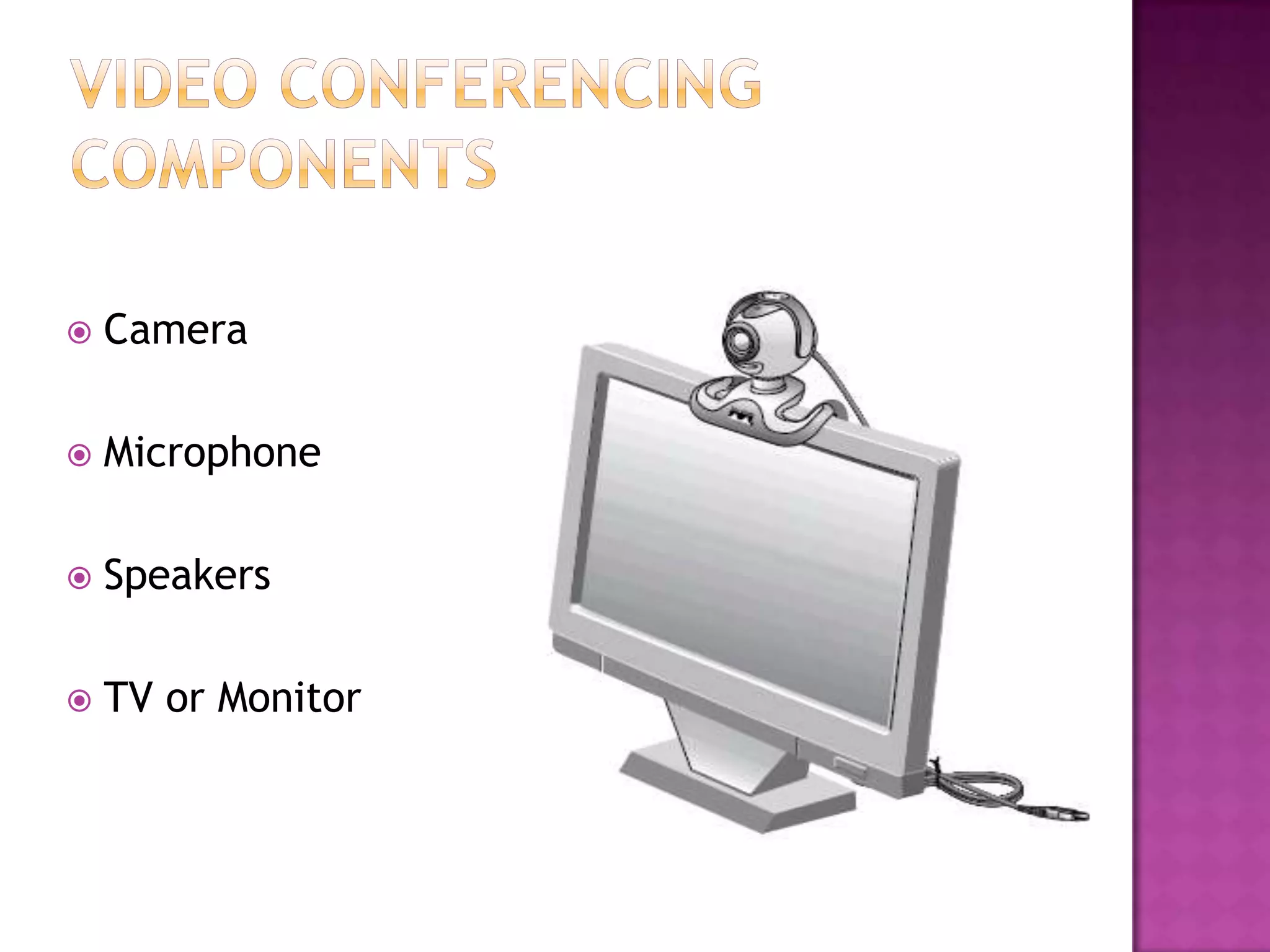
 Camera
 Microphone
 Speakers
 TV or Monitor
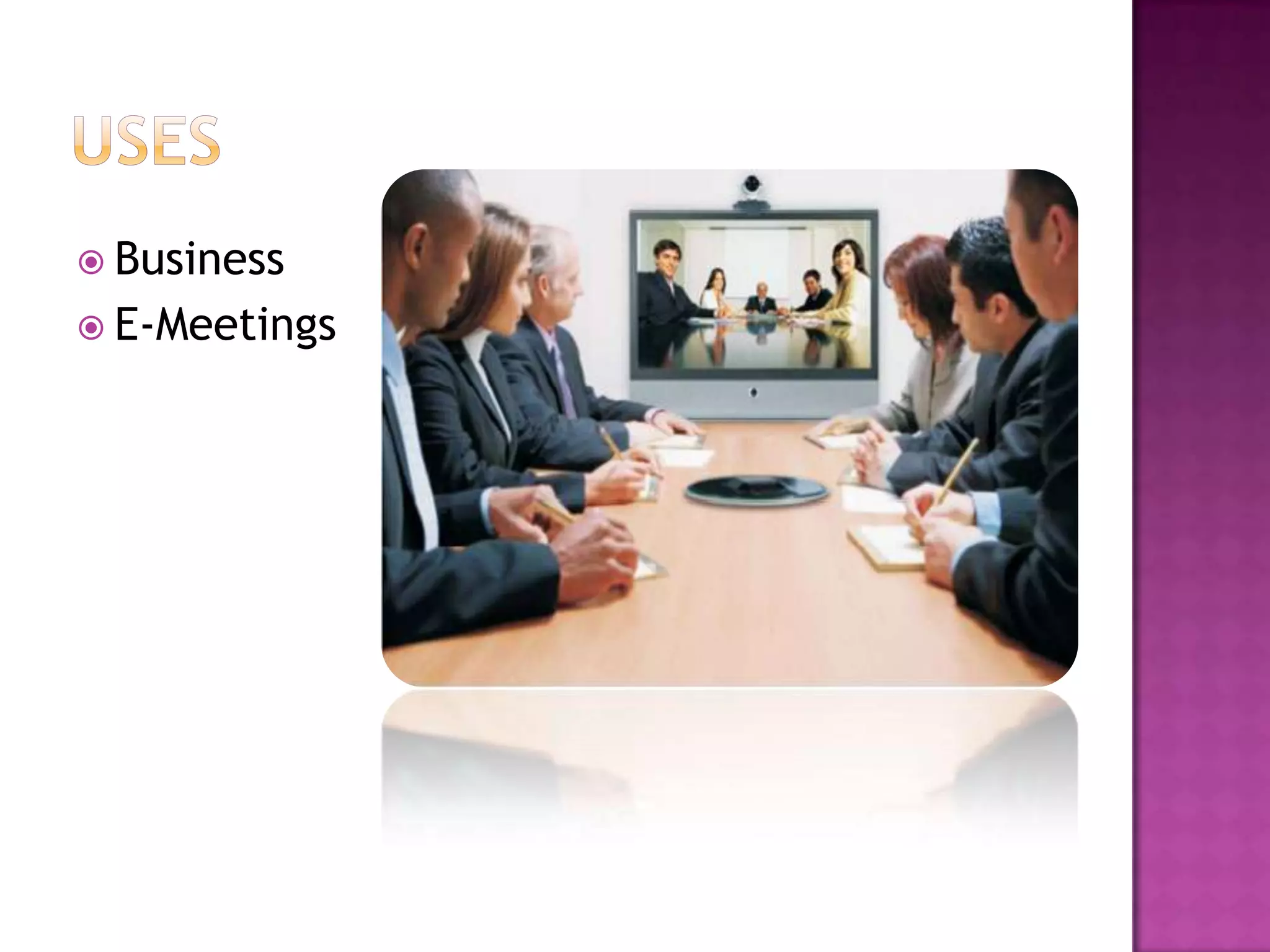
 Business
 E-Meetings
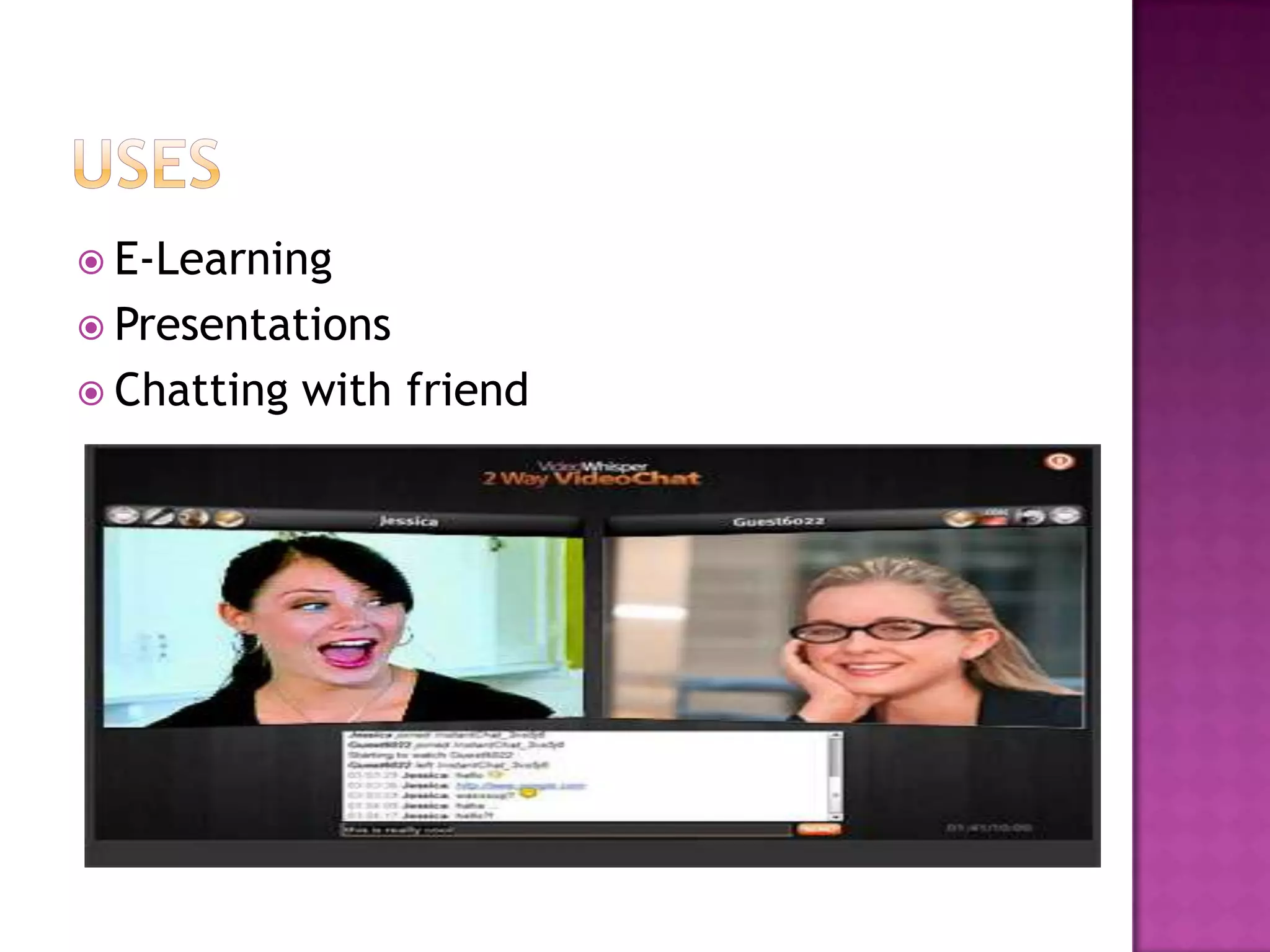
 E-Learning
 Presentations
 Chatting with friend
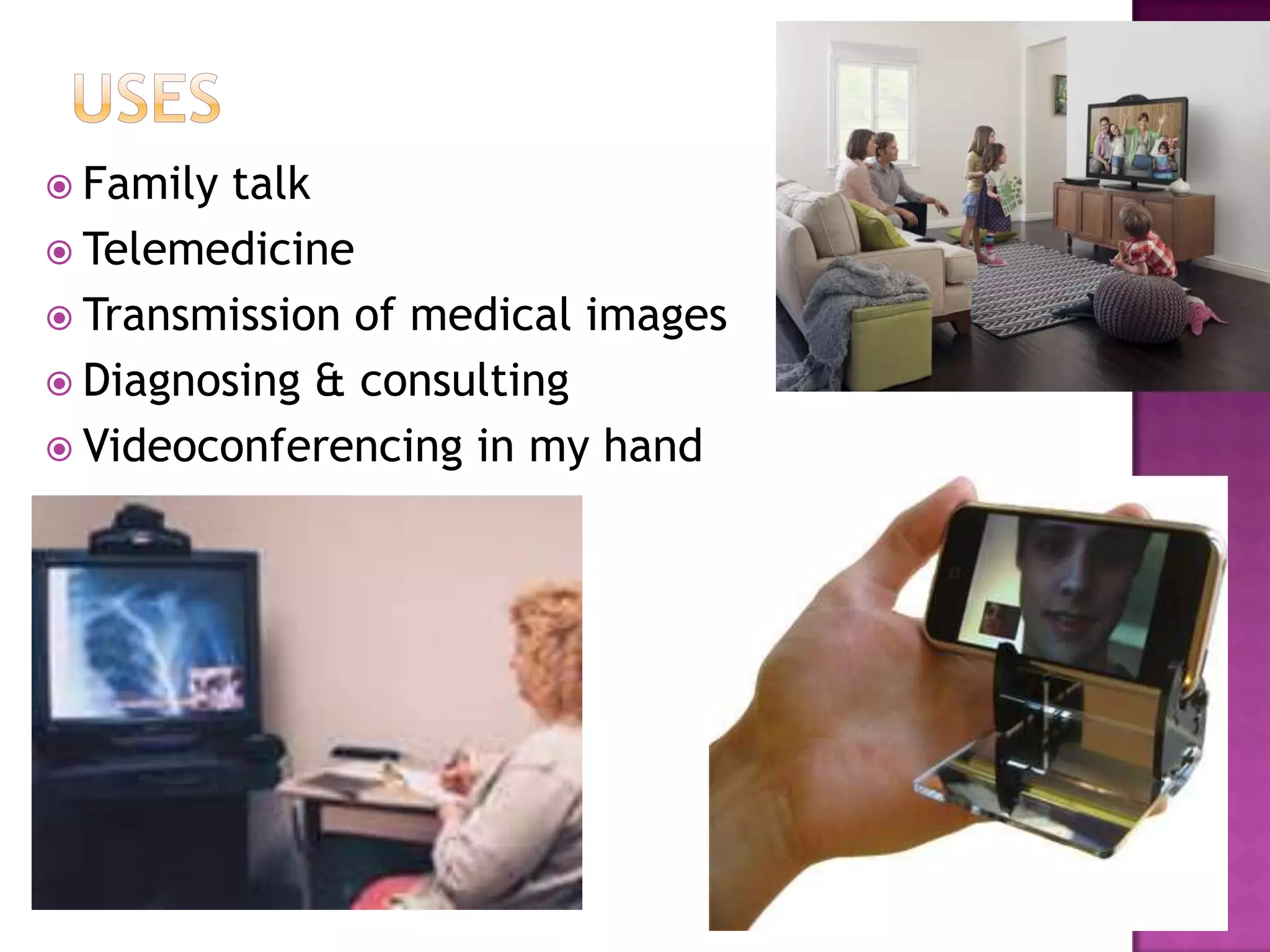
 Family talk
 Telemedicine
 Transmission of medical images
 Diagnosing & consulting
 Videoconferencing in my hand
 Cultural Exchange Programs
 We can encourage the foreigners by giving them
a first hand experience with the help of video
links.
 Glimpse of the Beauty of our country
 We can have more impacts on the tourists if they
can have a glimpse of the beauty with their our
eyes and for that video conferencing can be your
mate for sure.
 Video tours and excursions
 Excursions and adventure trips with the help of
guided video tours is always an added advantage.
 Presenting the Best Packages
 Offers and packages can be showcased to the
interested countries with the help of
teleconferences and seminars, where different
hotels can participate to promote their
packages.
 Encouraging the locals to be paid host for the
foreign guest
 Many hotels have started with the concept of
homemade food prepared by the locals.
 Interested people can be trained to be good host
for the foreign guest via video conferencing.
 This will encourage foreign tourist to have a feel
of the local surroundings.
 This will also create employment opportunities
for the locals.
 Initial cost of the equipment is high.
 Ghost/Blurred images seen when rapid
movement occurs
 Audio echo effect seen when system is not
properly installed
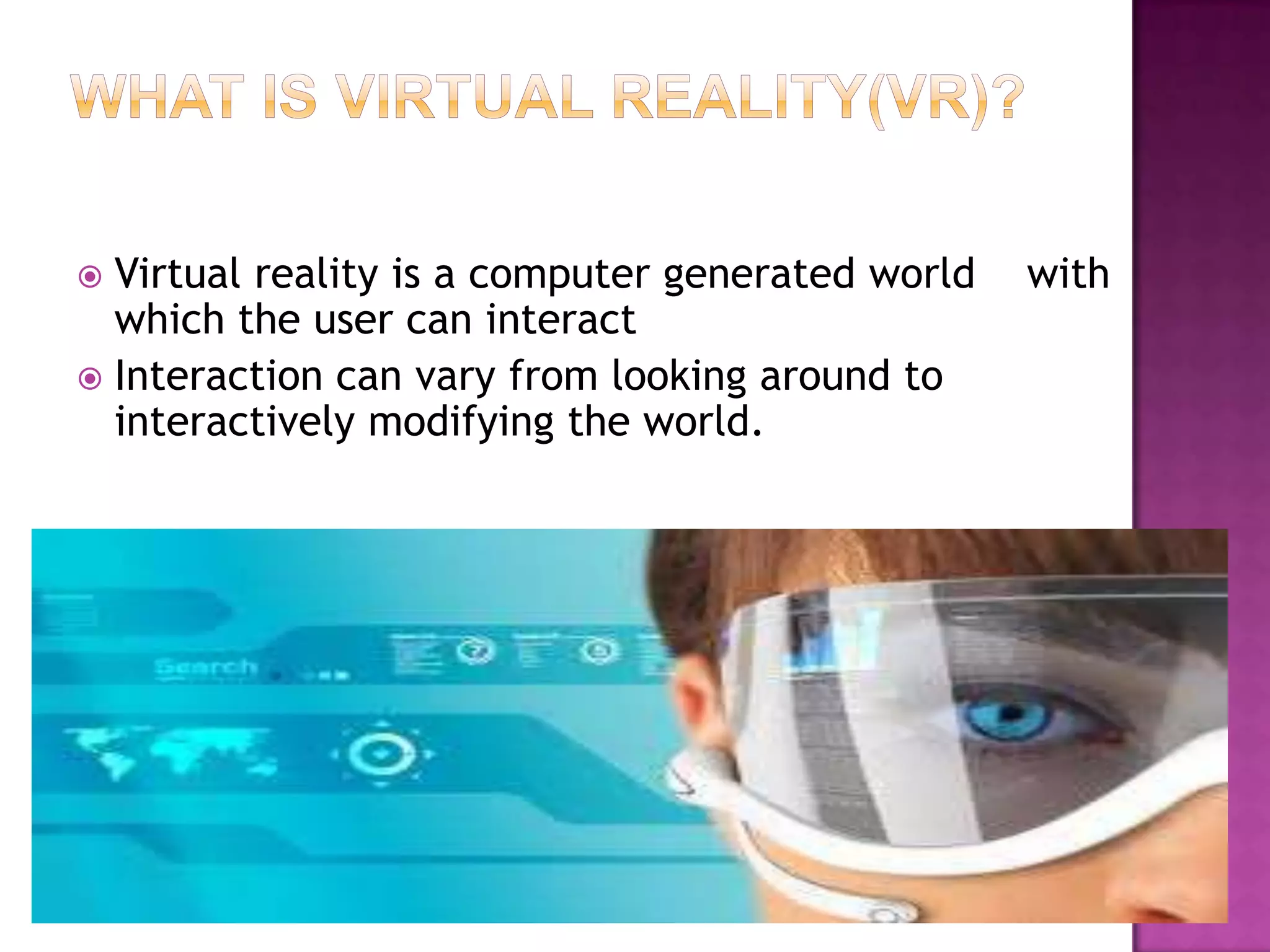
 Virtual reality is a computer generated world with
which the user can interact
 Interaction can vary from looking around to
interactively modifying the world.
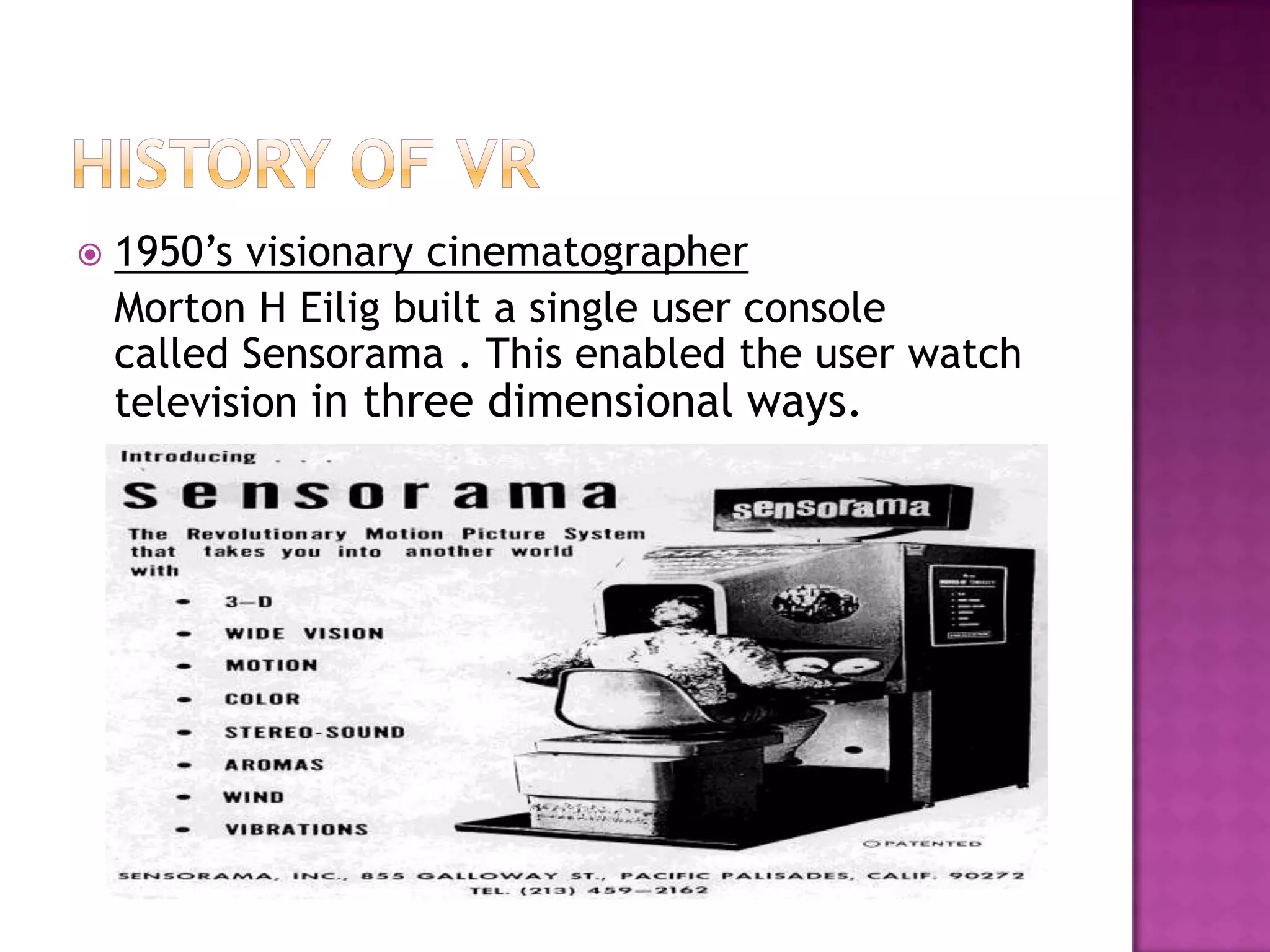
 1950’s visionary cinematographer
Morton H Eilig built a single user console
called Sensorama . This enabled the user watch
television in three dimensional ways.
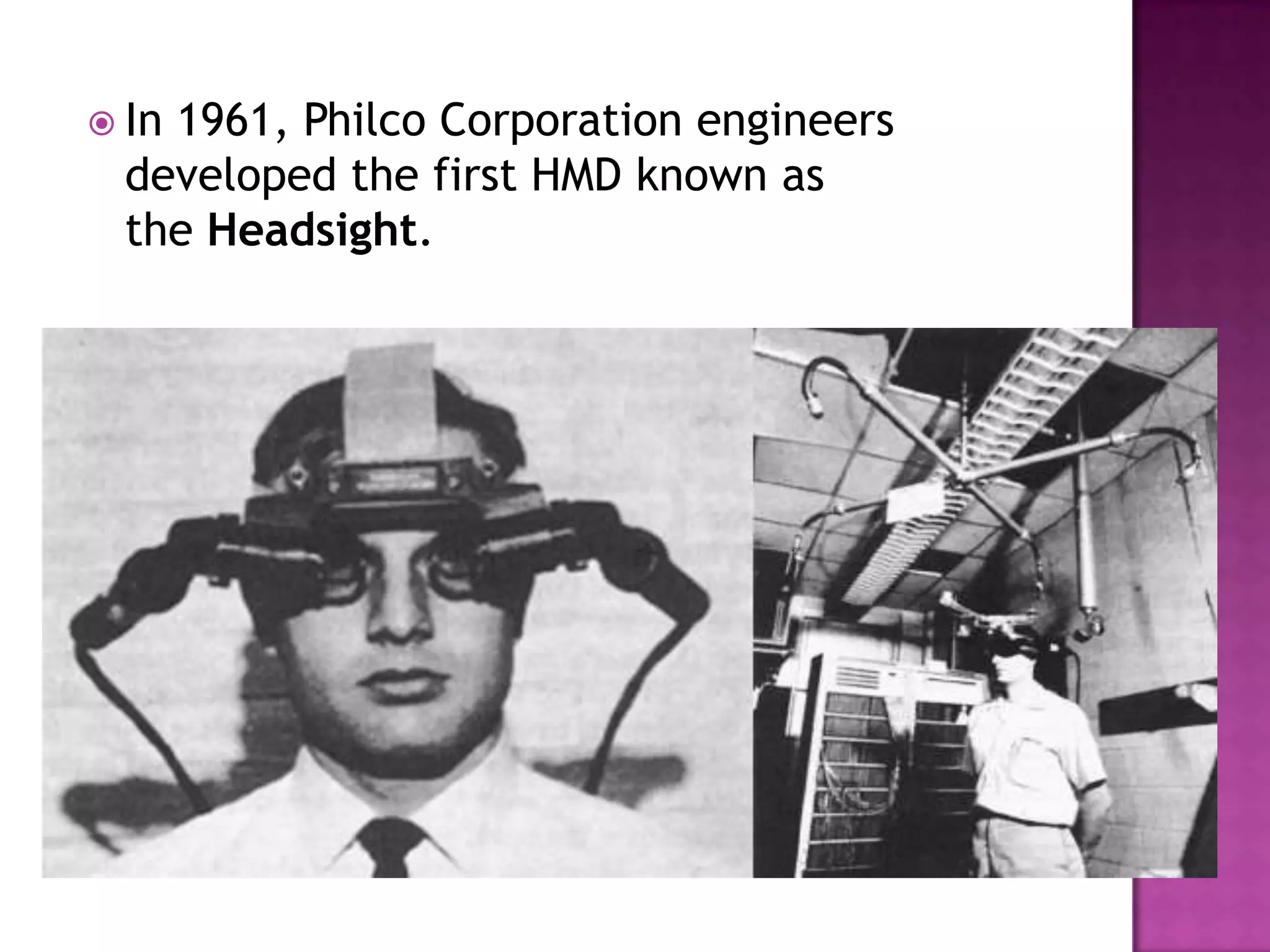
 In 1961, Philco Corporation engineers
developed the first HMD known as
the Headsight.
 It was in 1965 IVAN SUTHERLAND envisioned
what he called the “Ultimate Display.”
 In 1988, commercial development of VR began.
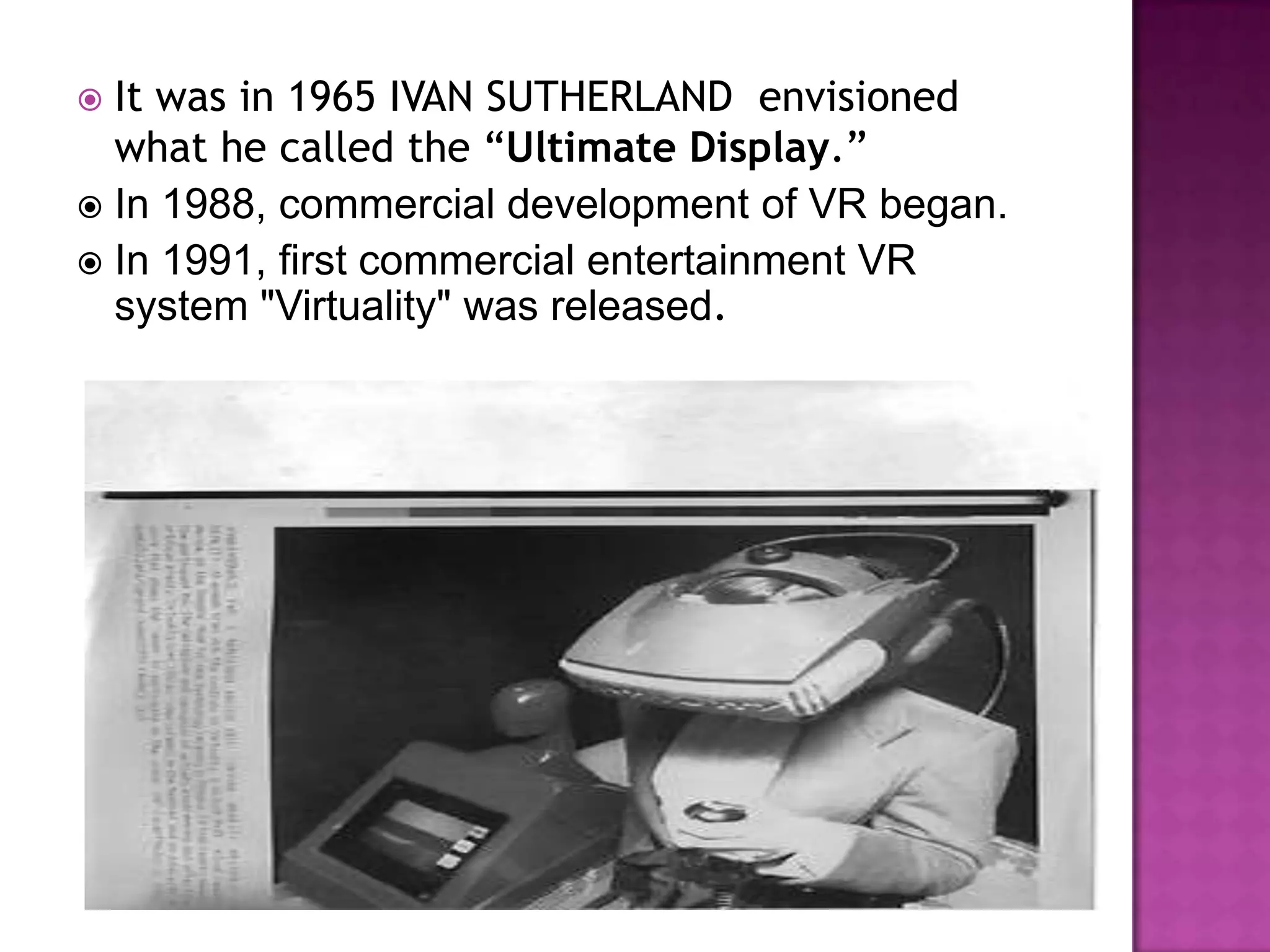
 In 1991, first commercial entertainment VR
system "Virtuality" was released.
 E-Commerce And Business:
 Virtual reality is being used in a number of ways
by the business community which include:
 Virtual tours of a business environment.
 Training of new employees.
 A 360 view of a product.
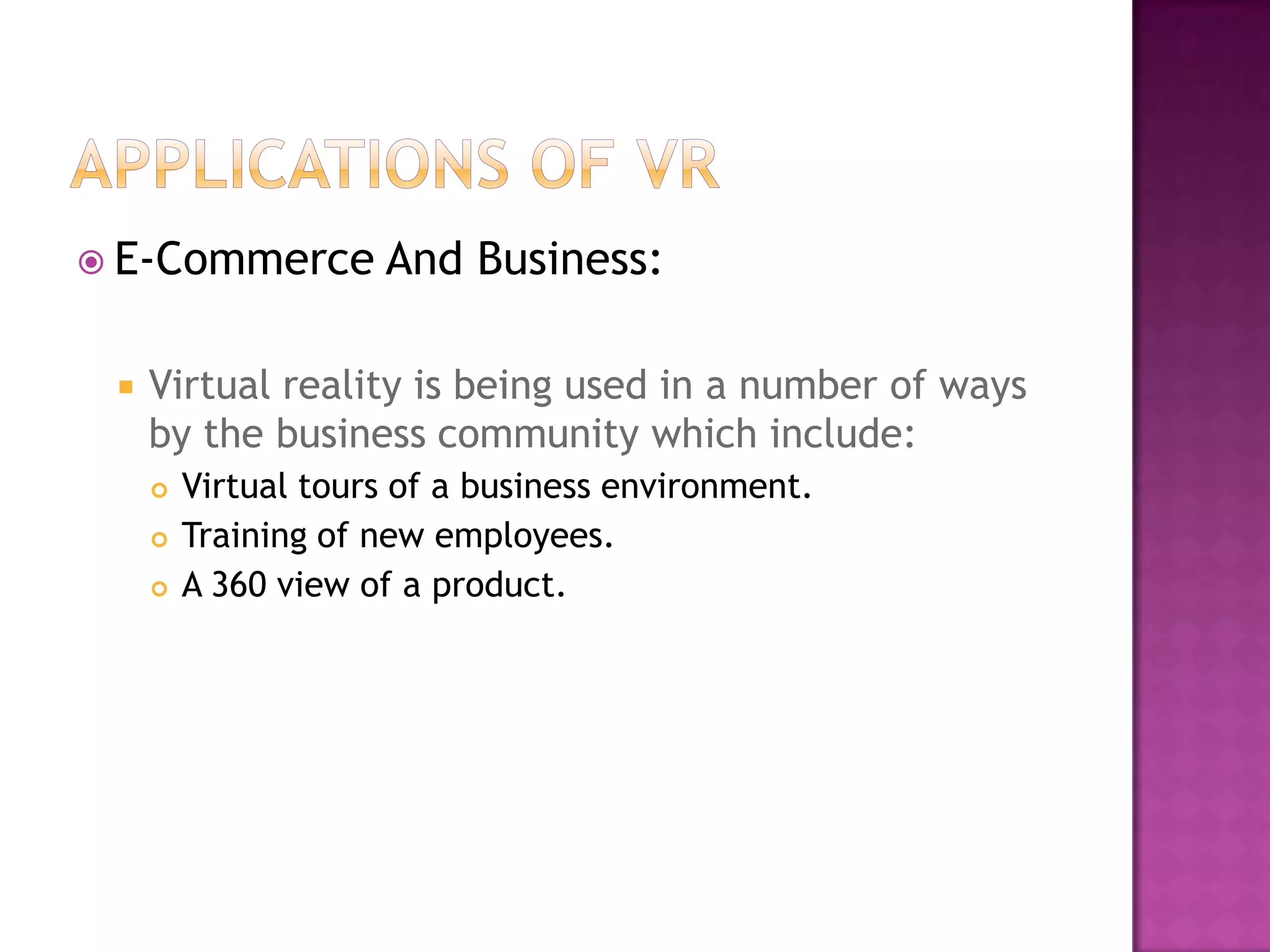
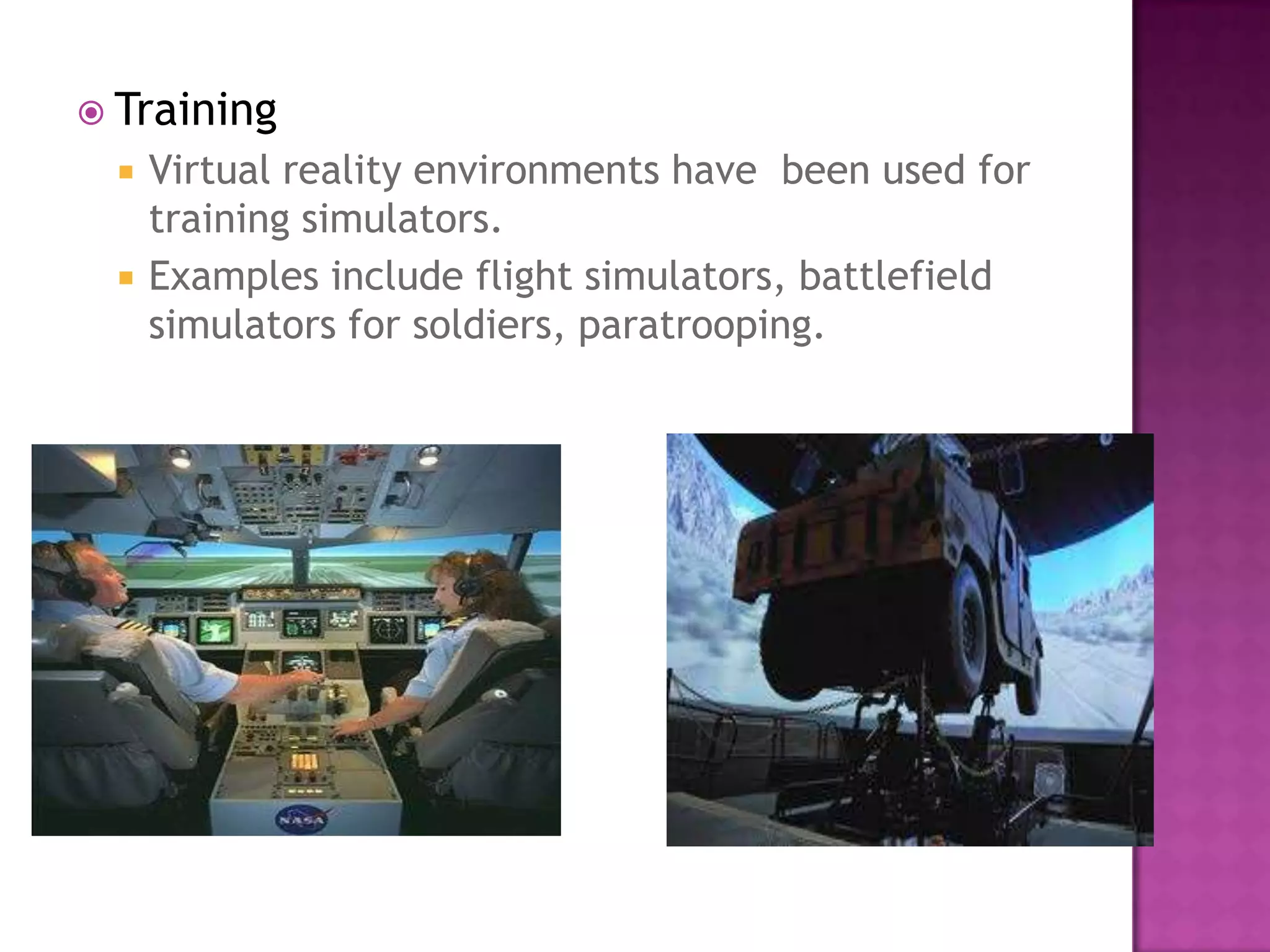
 Training
 Virtual reality environments have been used for
training simulators.
 Examples include flight simulators, battlefield
simulators for soldiers, paratrooping.
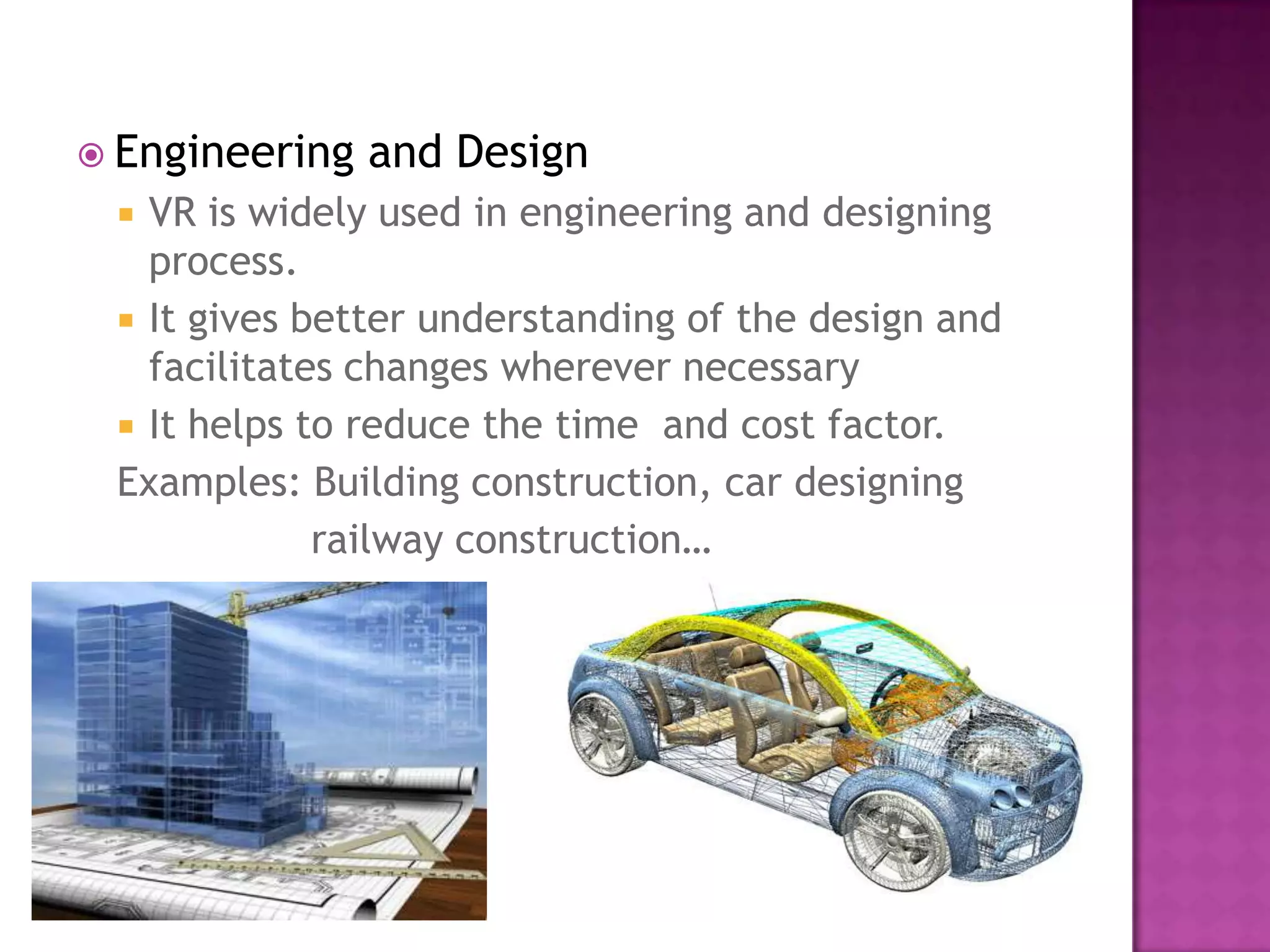
 Engineering and Design
 VR is widely used in engineering and designing
process.
 It gives better understanding of the design and
facilitates changes wherever necessary
 It helps to reduce the time and cost factor.
Examples: Building construction, car designing
railway construction…
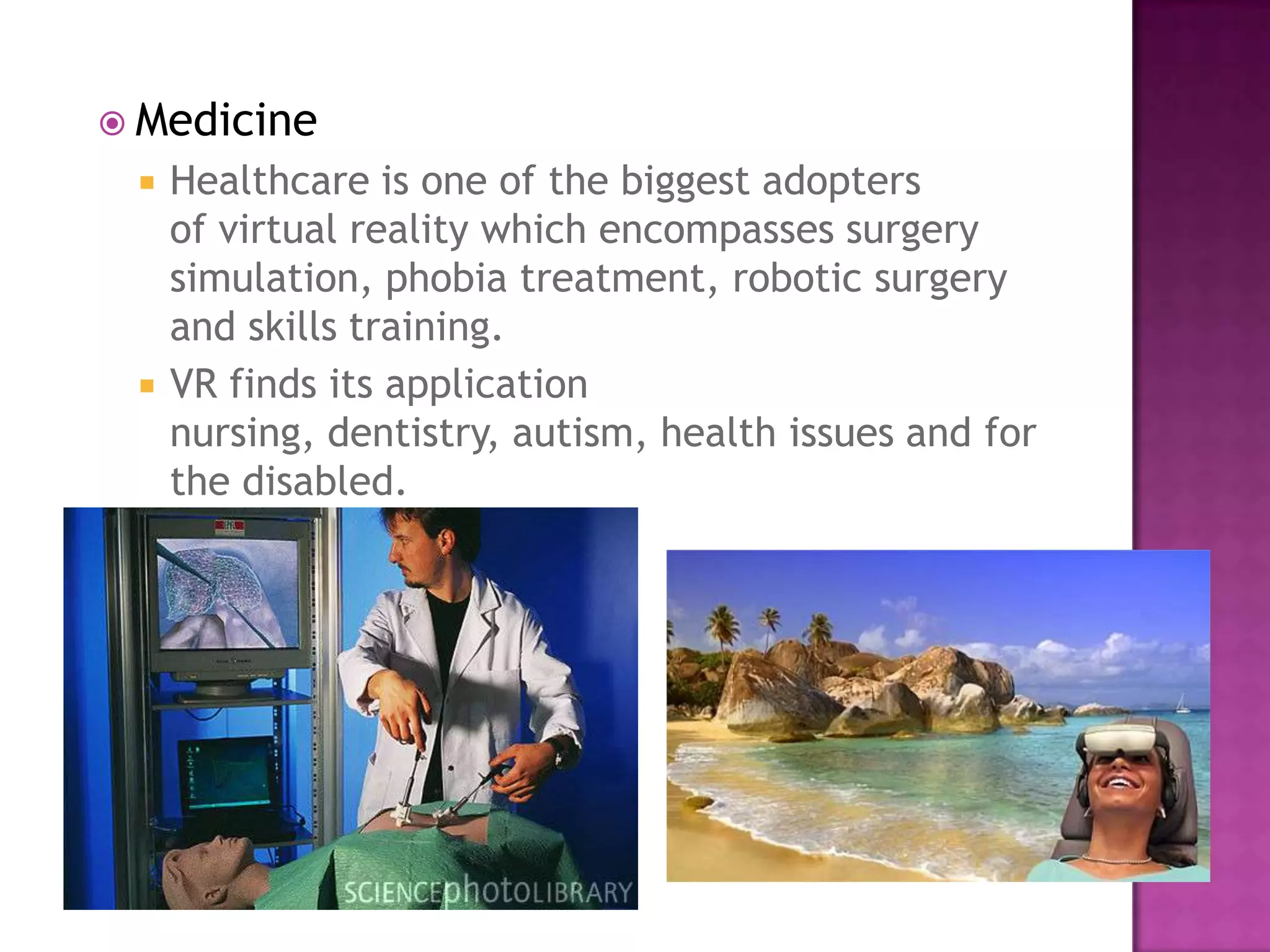
 Medicine
 Healthcare is one of the biggest adopters
of virtual reality which encompasses surgery
simulation, phobia treatment, robotic surgery
and skills training.
 VR finds its application
nursing, dentistry, autism, health issues and for
the disabled.
 Entertainment
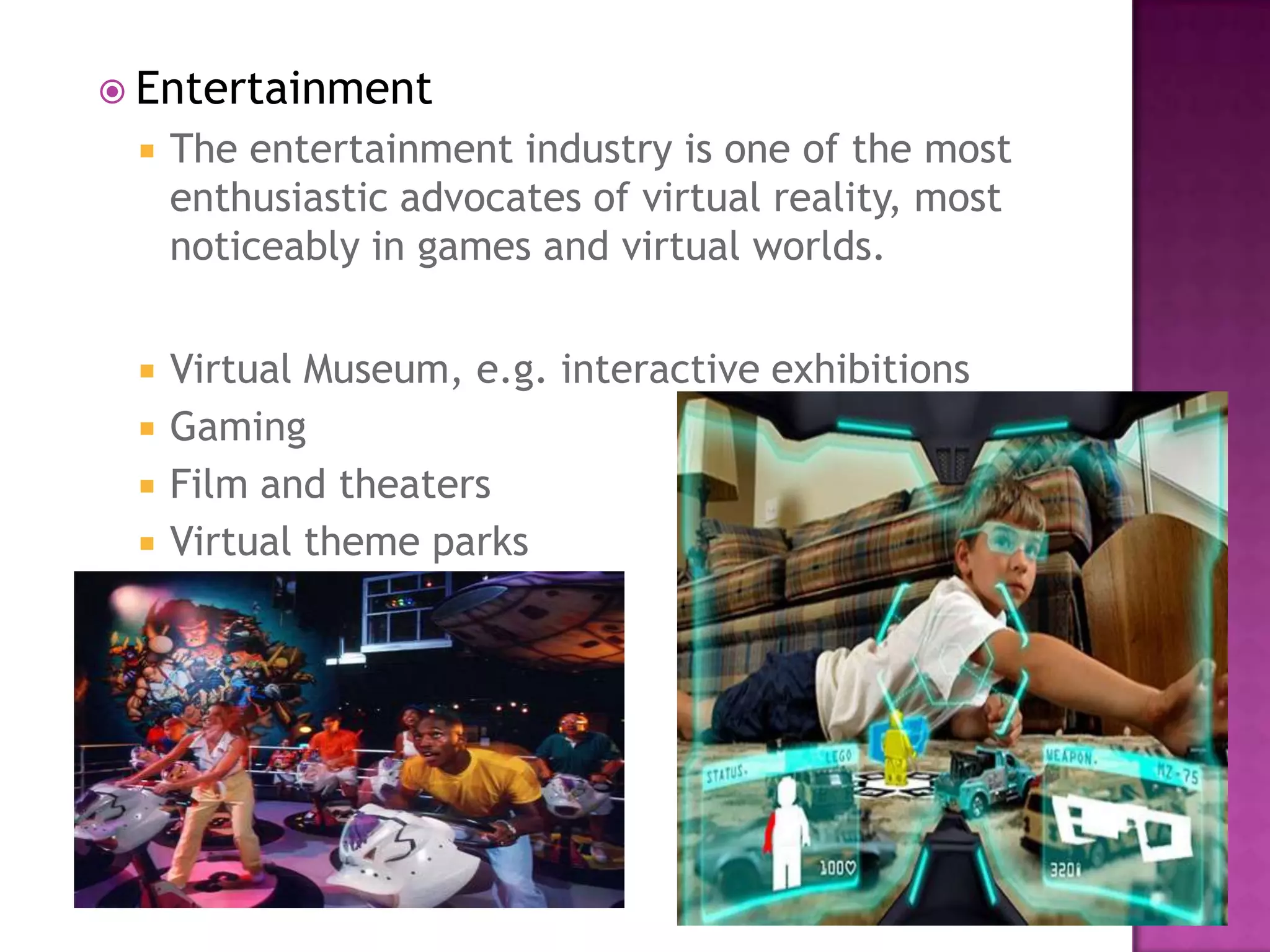
 The entertainment industry is one of the most
enthusiastic advocates of virtual reality, most
noticeably in games and virtual worlds.
 Virtual Museum, e.g. interactive exhibitions
 Gaming
 Film and theaters
 Virtual theme parks
 Tourism
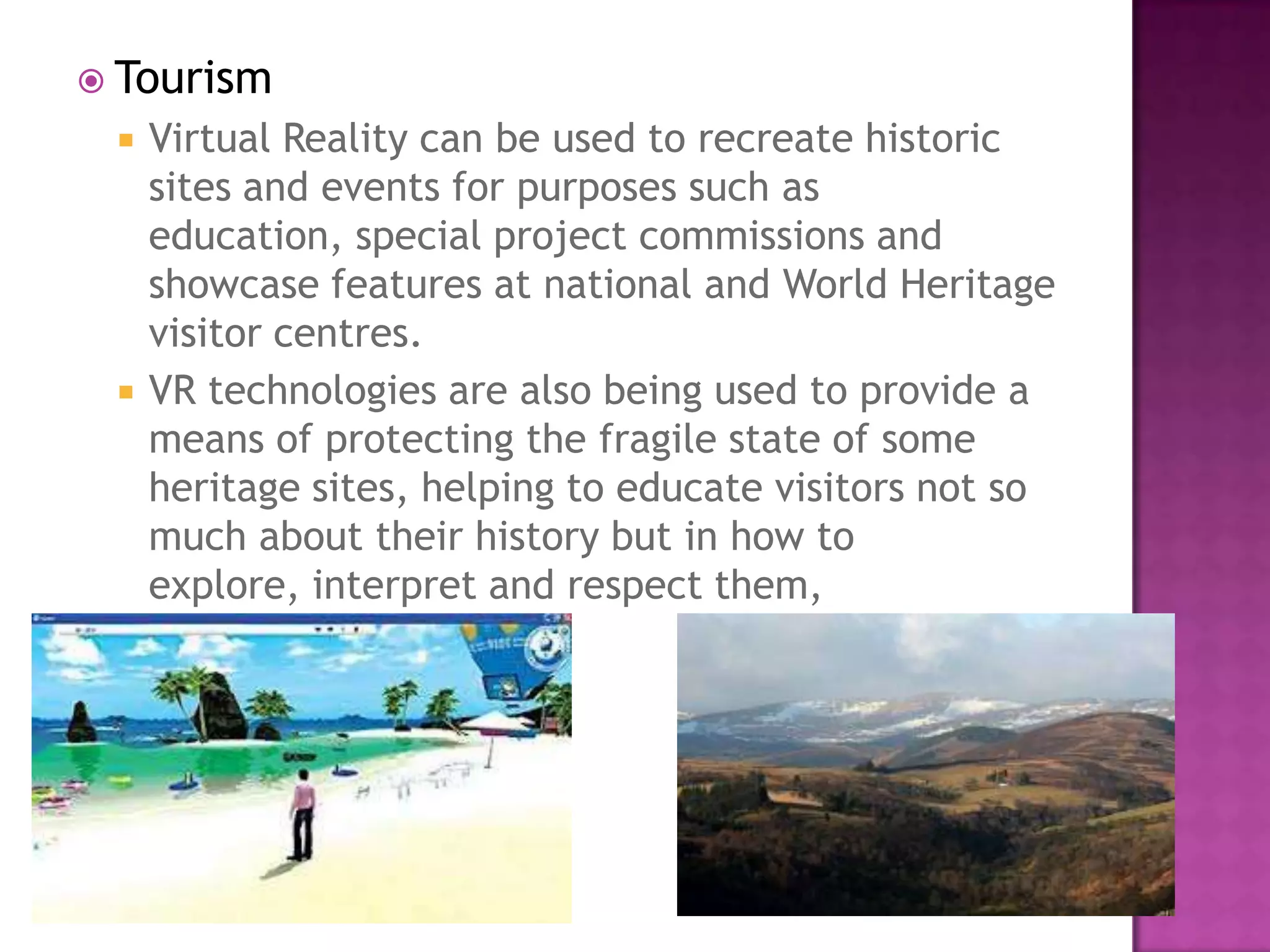
 Virtual Reality can be used to recreate historic
sites and events for purposes such as
education, special project commissions and
showcase features at national and World Heritage
visitor centres.
 VR technologies are also being used to provide a
means of protecting the fragile state of some
heritage sites, helping to educate visitors not so
much about their history but in how to
explore, interpret and respect them,
 1999- 10% of the world's computing power
was non-human.
 2029- 99% of the world’s computing capacity
will be non-human.
 And it is estimated that by 2037 we will be
having a computer powerful enough to run
immersive VR programs.
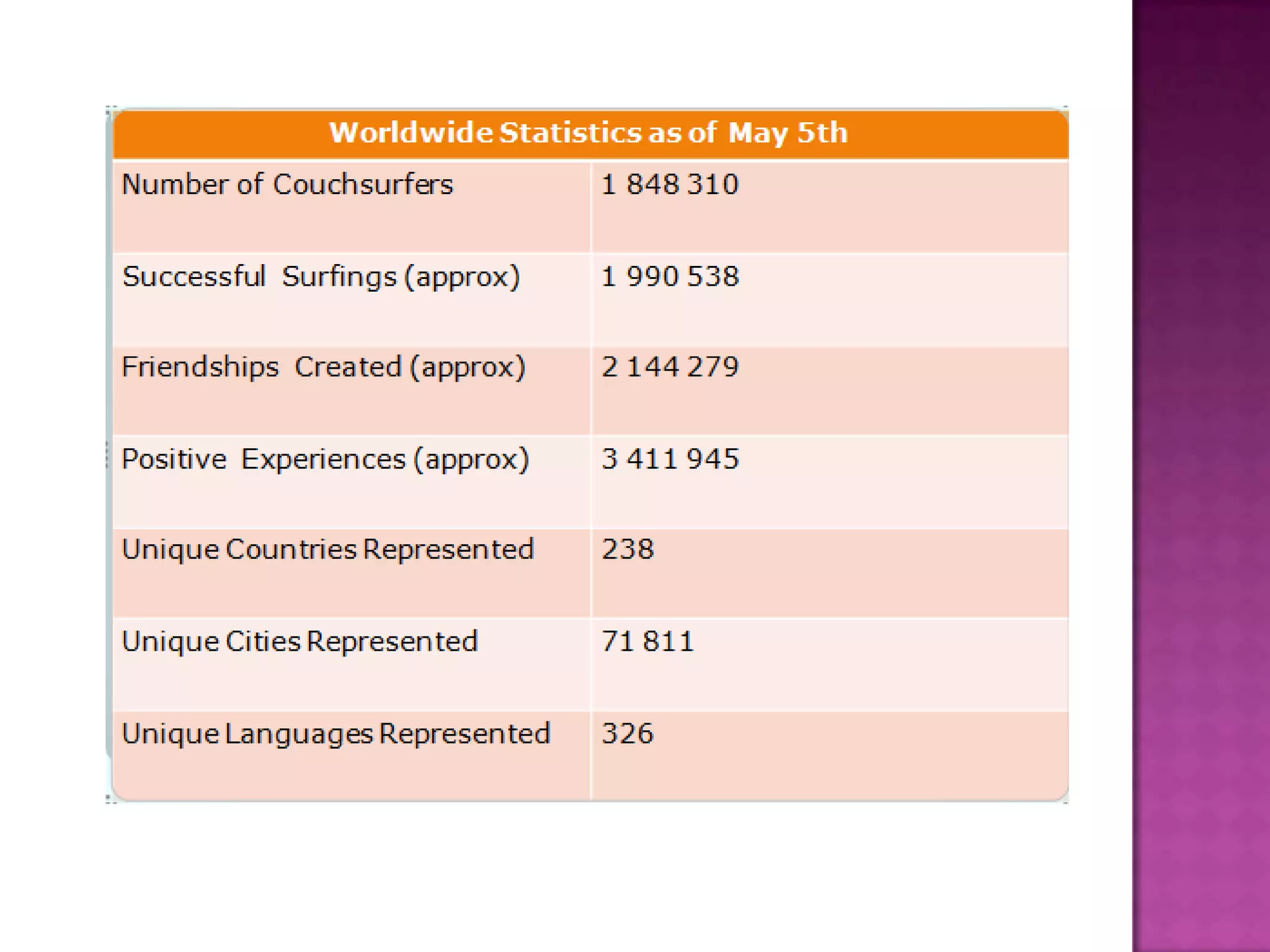
 Couch surfing International Inc. is a
Delaware C corporation based in San
Francisco that offers its users hospitality
exchange and social networking services.
 The website provides a platform for
members to "surf" on couches by staying as a
guest at a host's home, host travellers, or
join an event.
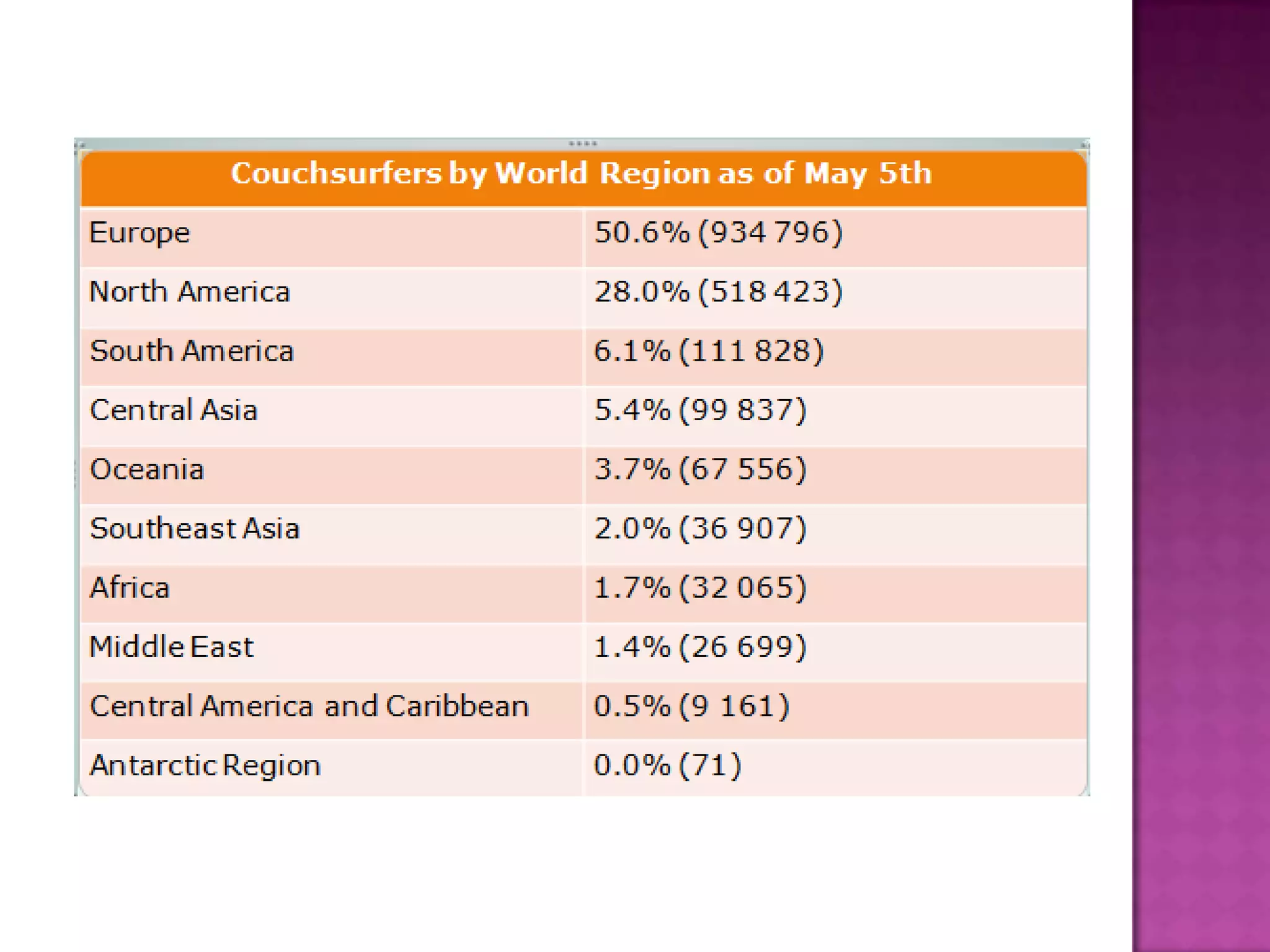
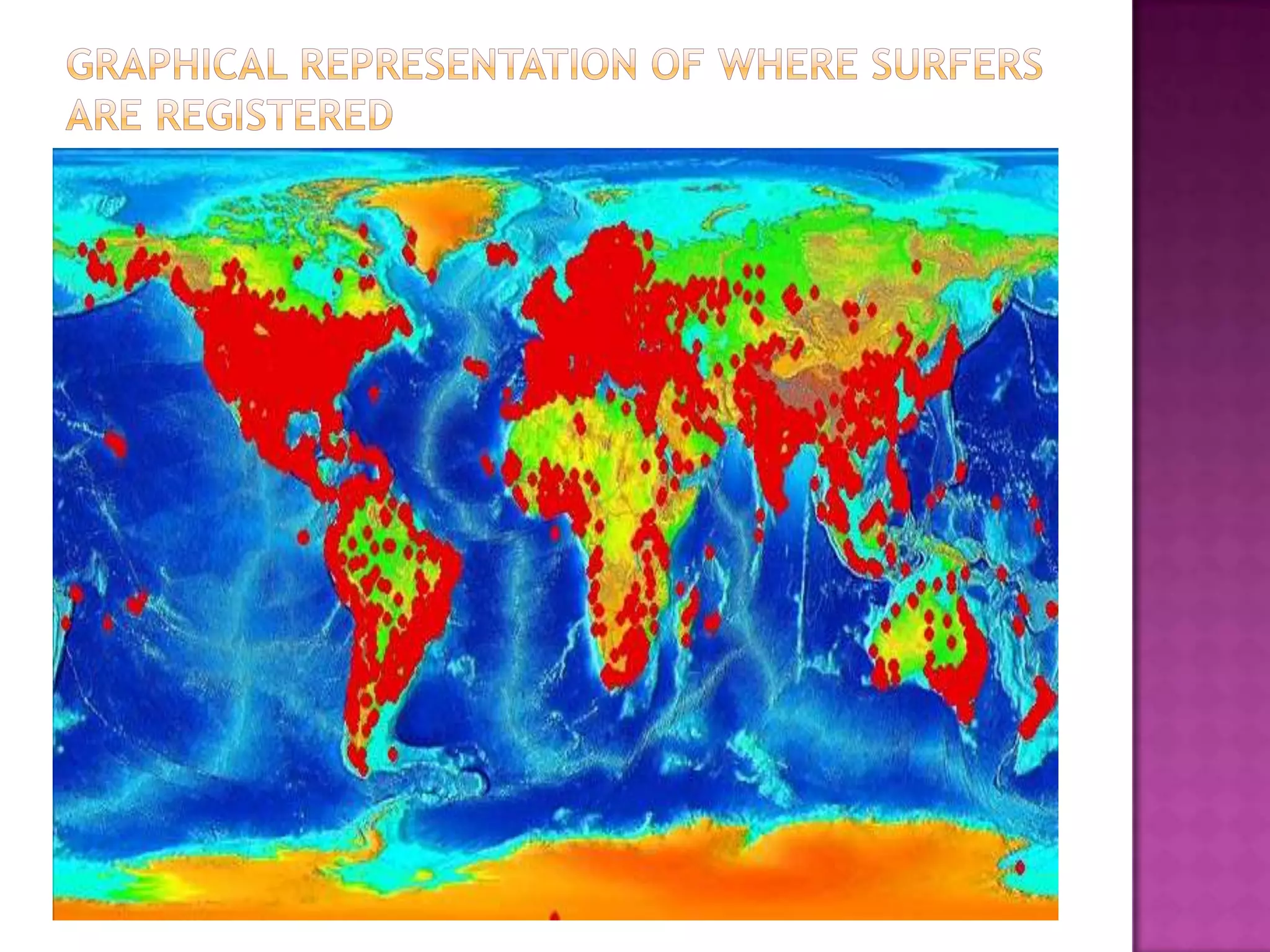
 As of January 2012, the website had 3.6 million
members. In March 2013, the website had 6
million members in 100,000 cities worldwide.
 A gateway to intercultural communication
 Couch surfers share their lives with the people
they encounter, fostering cultural exchange and
mutual respect.
 Travel the World
 With Couch surfing, you can stay with locals in every country on
earth. Travel like a local, stay in someone’s home and experience
the world in a way money can’t buy.
 Rediscover Your City
 There’s a community of Couch surfers near you. Many cities
have weekly language exchanges, dance classes, hikes and dinners.
Make new friends.
 Become a Host
 Give back and open your home to travellers. Learn about a new
culture first-hand or practice a language. Make the world a little
smaller; a little friendlier.
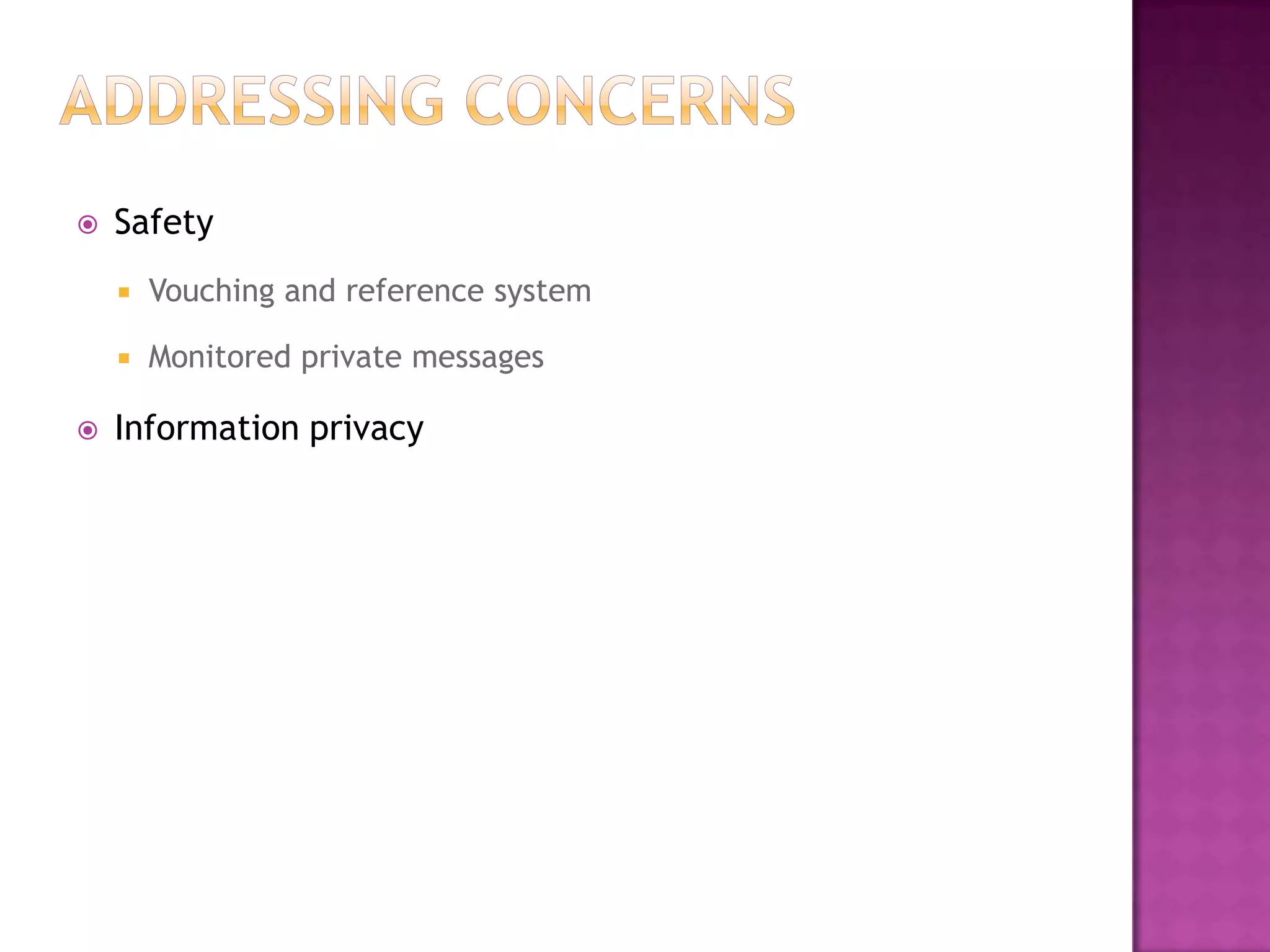
 Safety
 Vouching and reference system
 Monitored private messages
 Information privacy
 A blog is a personal diary.
 A daily pulpit. A collaborative space. A
political soapbox. A breaking-news outlet. A
collection of links. Your own private
thoughts. Memos to the world.
 Your blog is whatever you want it to be.
 There are millions of them, in all shapes and
sizes, and there are no real rules.
 In simple terms, a blog is a Social networking
website, where you write stuff on an ongoing
basis. New stuff shows up at the top, so your
visitors can read what's new.
 Then they comment on it or link to it or
email you. Or not.
 Since Blogger was launched in 1999, blogs
have reshaped the web, impacted
politics, shaken up journalism, and enabled
millions of people to have a voice and
connect with others.
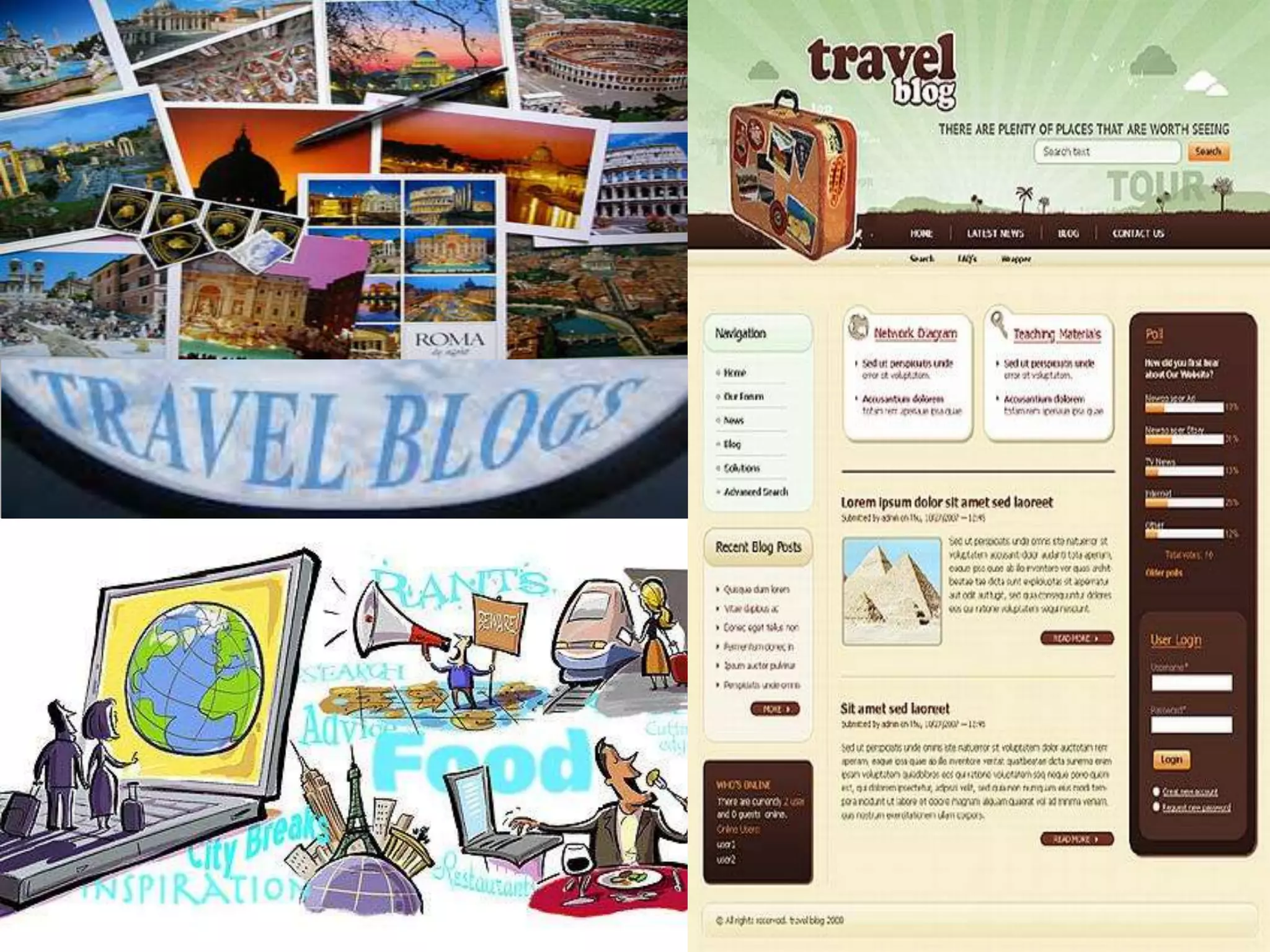
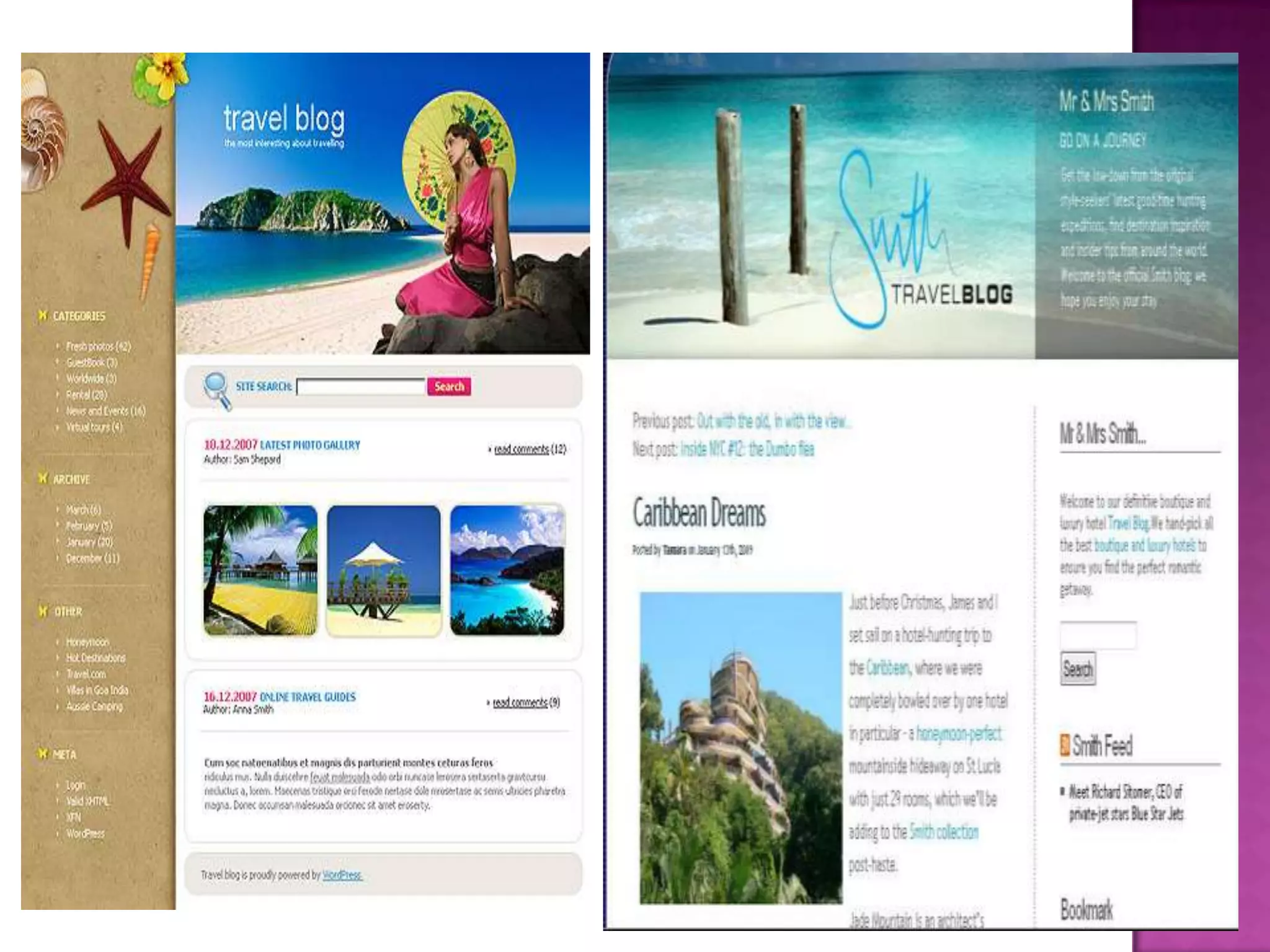
 It’s a blog related to travel and tourism only.
 Where tourist share their travel experiences.
 Potential tourist gets affected by their
statements.
 They are used to promote a particular
destination or an itenary.
 Travel blogs written by famous personalities
helps to tangiblise the destination. For ex.
Amitabh bacchan.
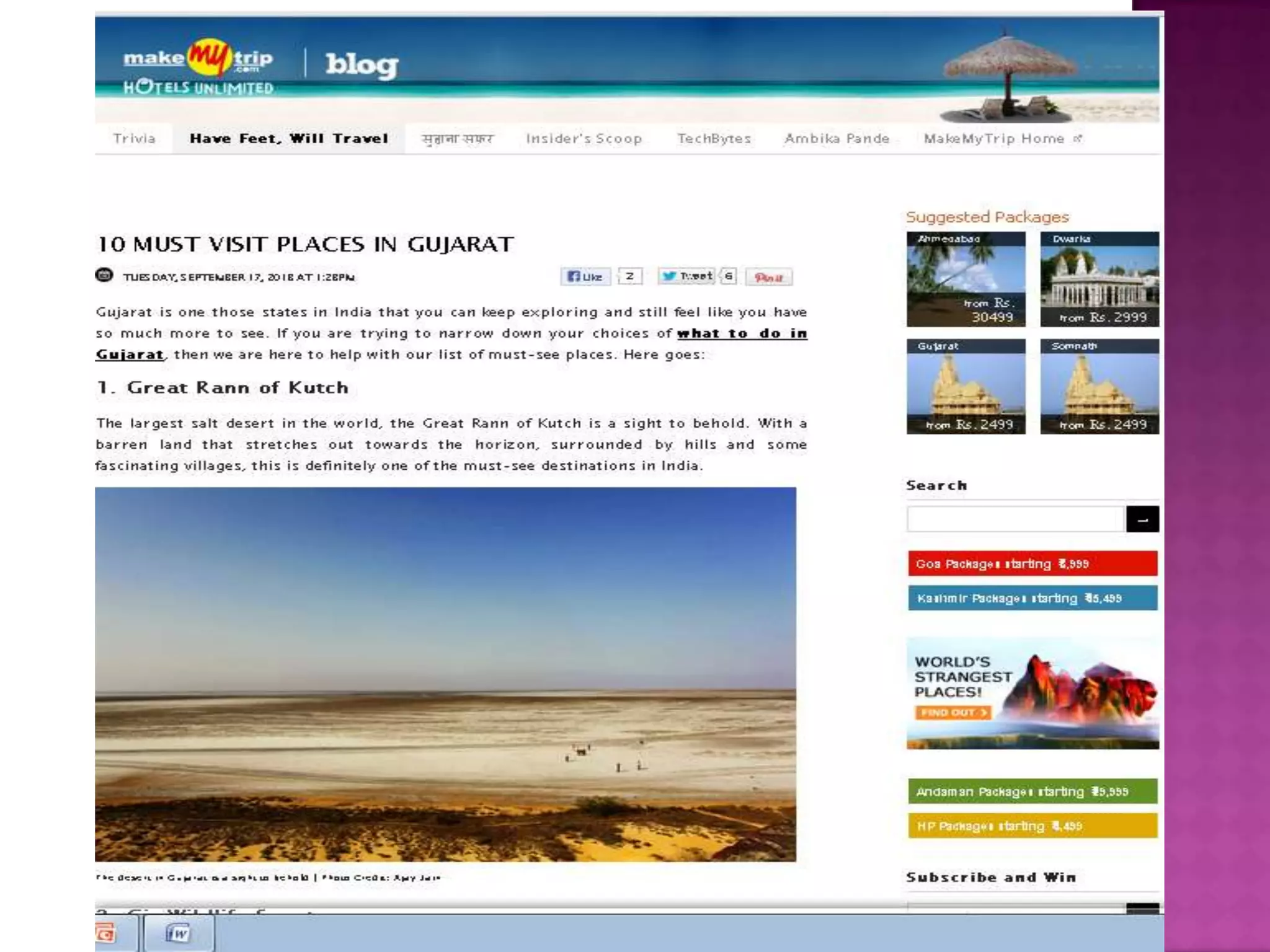
 Companies also uses travel blogs a tool for
promoting their tour packages. Ex.
Yatra.com, make my trip, etc.
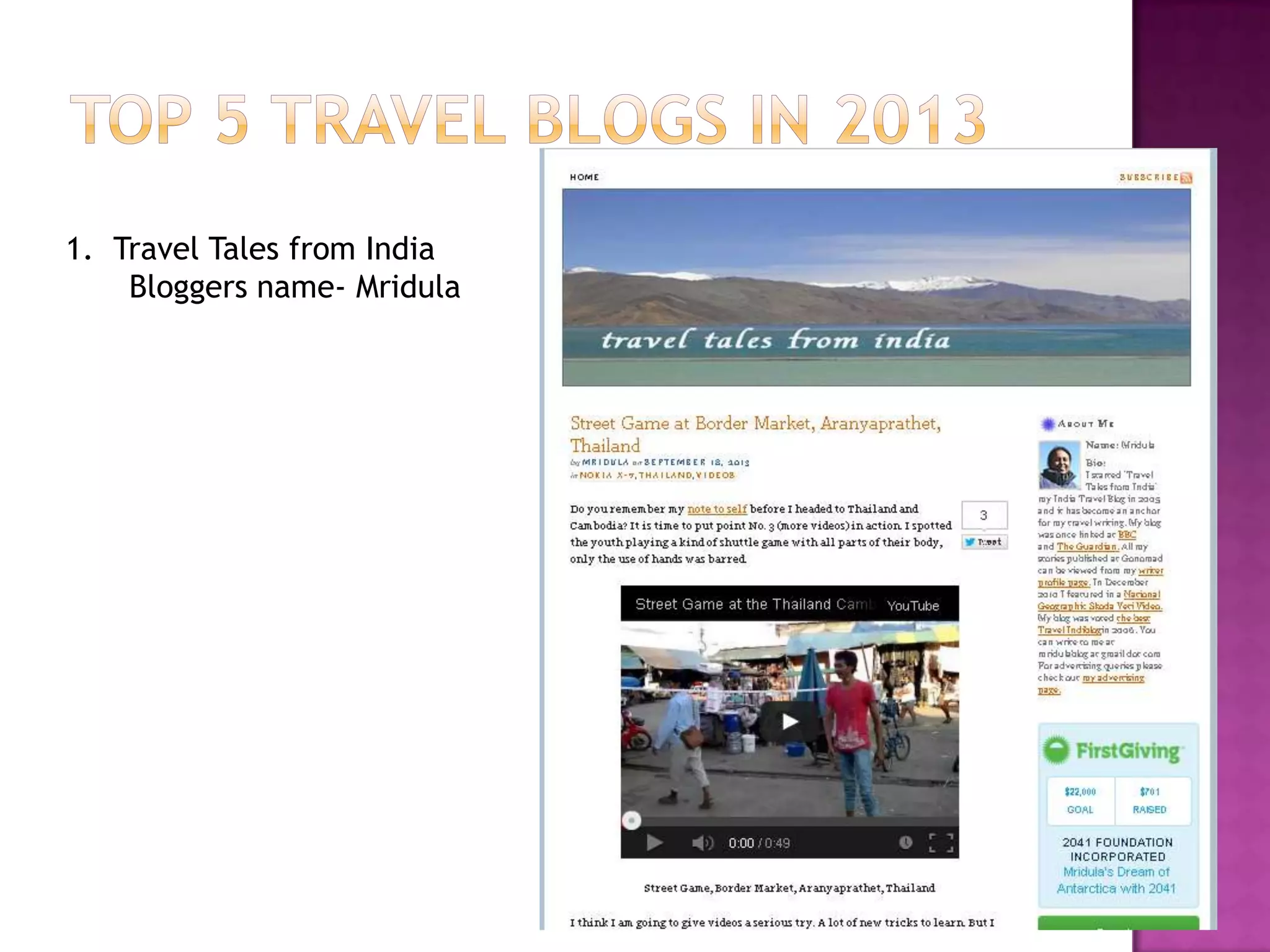
1. Travel Tales from India
Bloggers name- Mridula
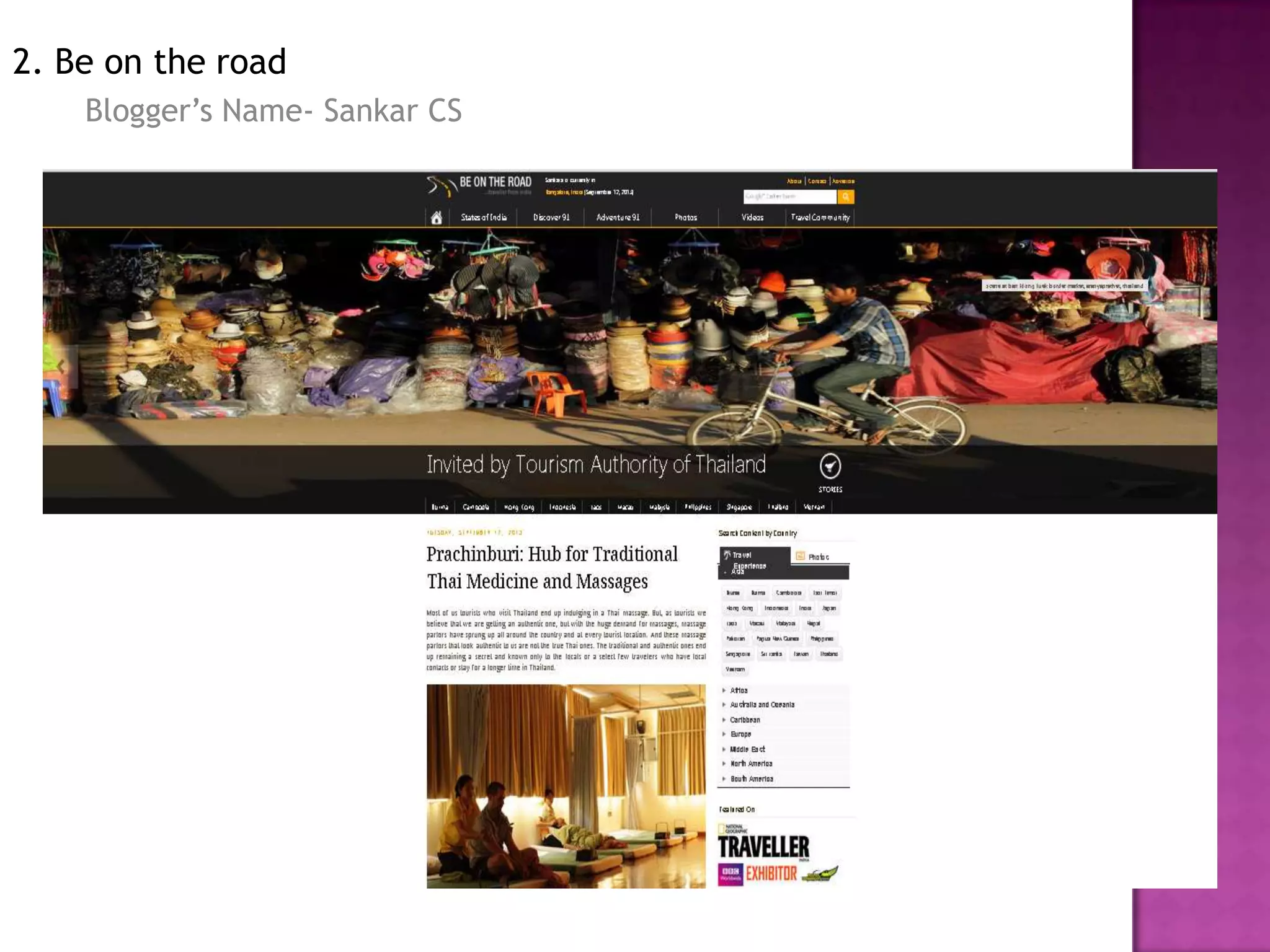
2. Be on the road
Blogger’s Name- Sankar CS
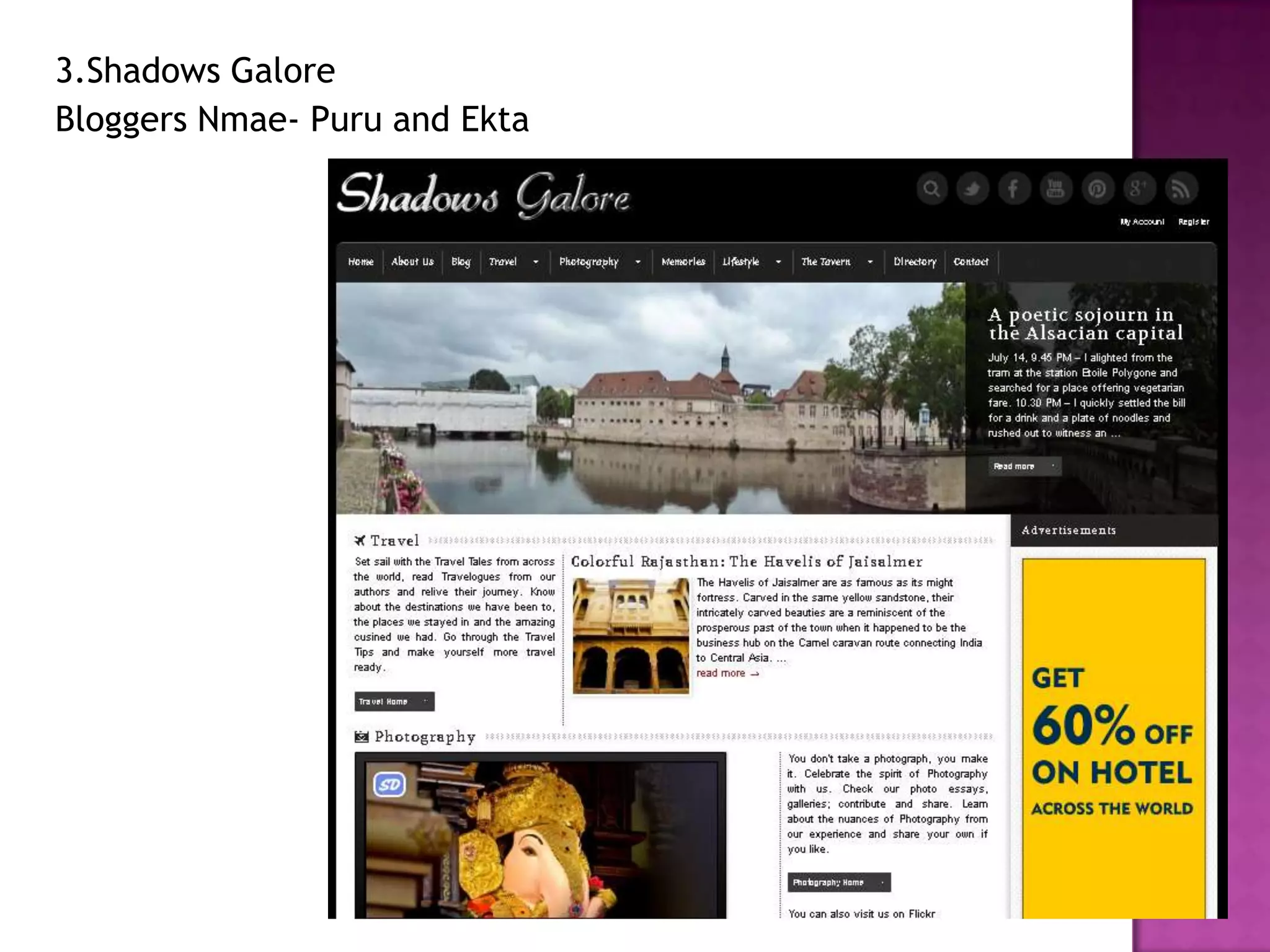
3.Shadows Galore
Bloggers Nmae- Puru and Ekta
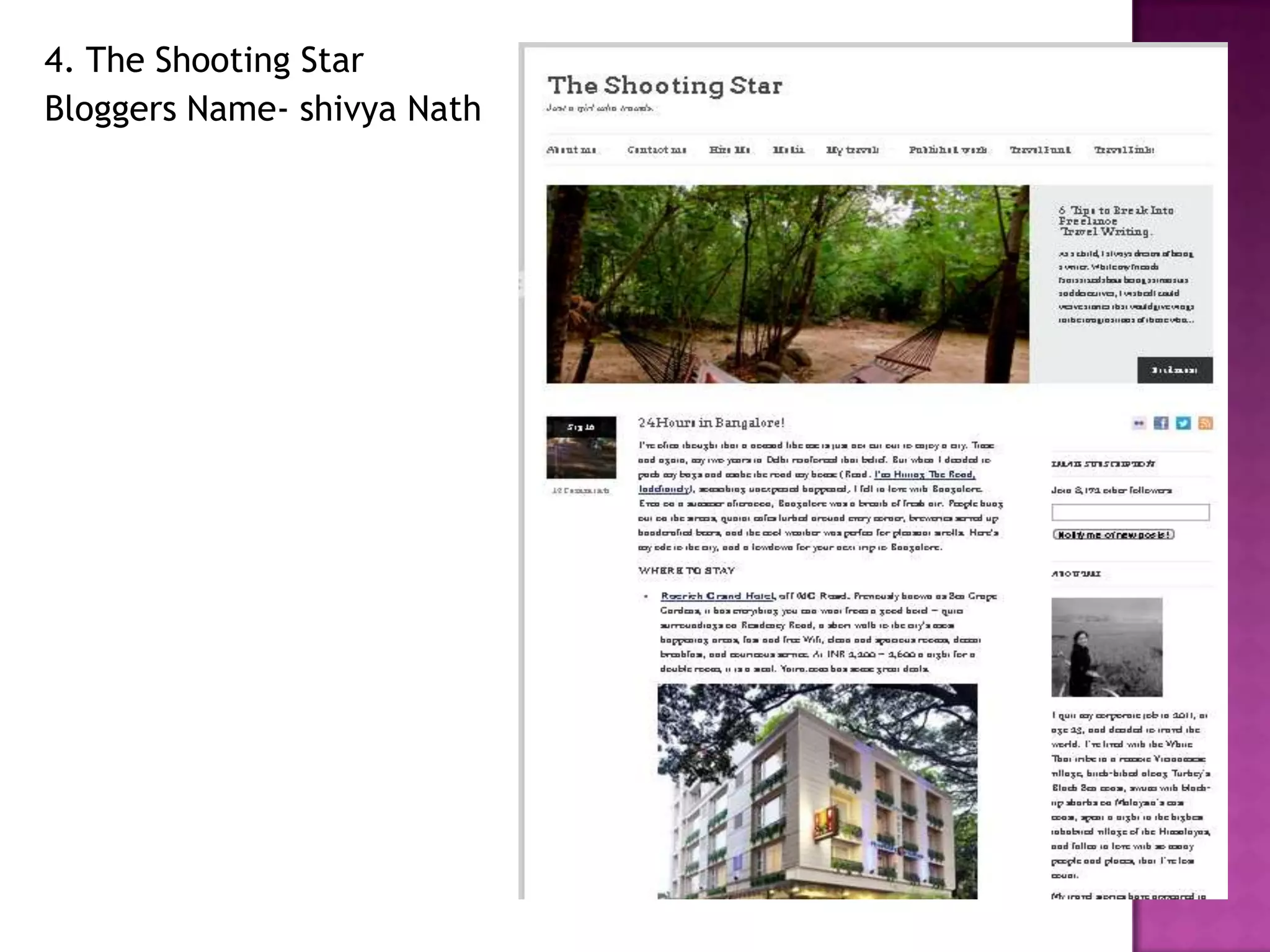
4. The Shooting Star
Bloggers Name- shivya Nath
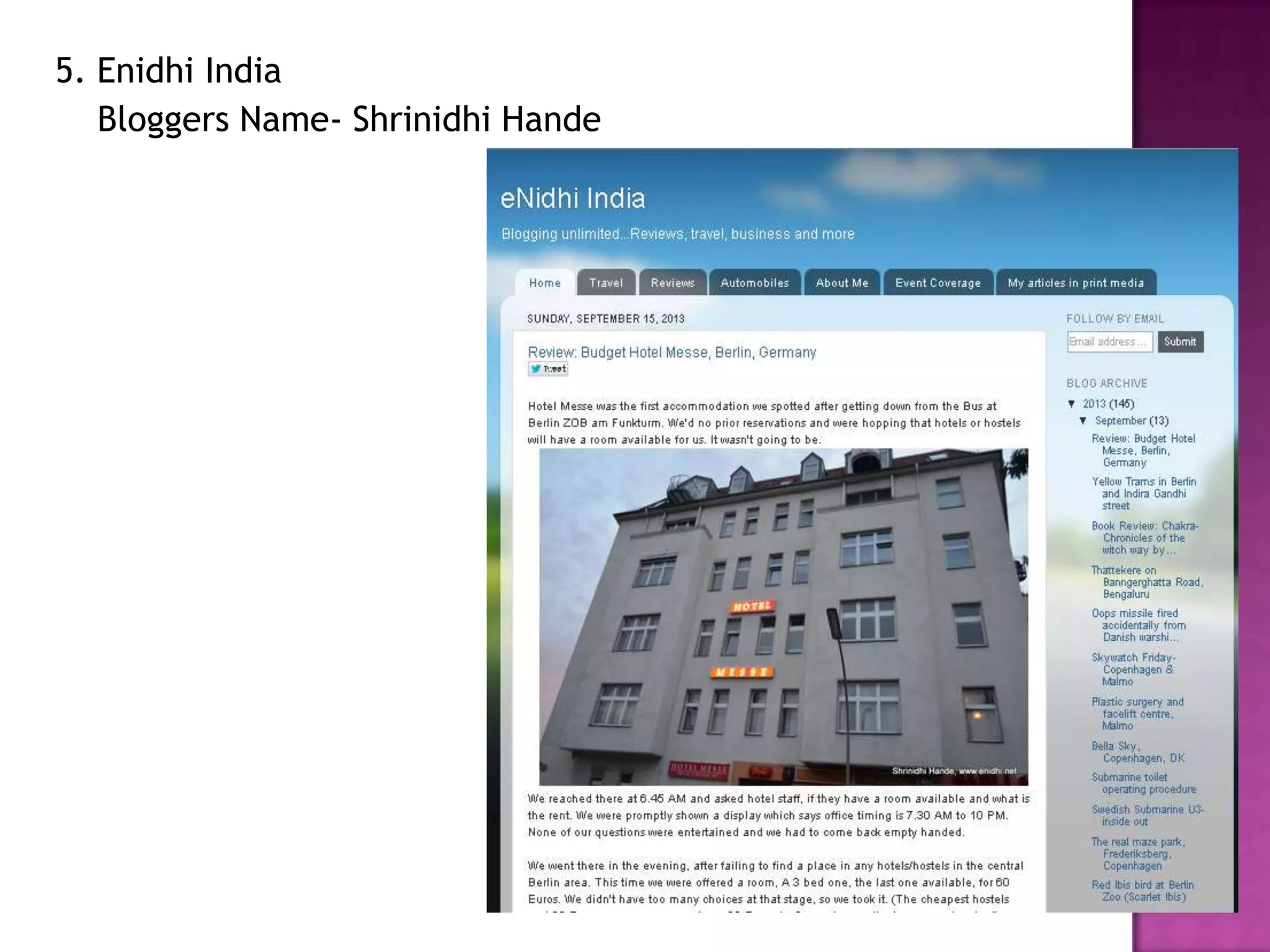
5. Enidhi India
Bloggers Name- Shrinidhi Hande

emerging trends and technologies in tourism

  • 1.
    By: Megha Aggarwal Shaurya Tiwari SushilThakur Reena Emerging Trends and Technology
  • 3.
    Electronic Payment Systemis a system which helps the customer or user to make online payment for their shopping.  To transfer money over the internet  Methods of traditional payment :  check, credit card or cash  Methods of electronic payment :  Electronic cash, software wallets, smart cards,  debit and credit cards.
  • 4.
     Online Reservation(yatra.com) Online Bill payment  Online Order Placing (snapdeal.com)  Online Ticket Booking (irctc.co.in)
  • 7.
  • 8.
     A systemthat allows a person to pay for goods or services by transmitting a number from one computer to another.  Like the real numbers on real currency notes, the e-cash numbers are unique.  This is issued by a bank and represents a specified sum of real money.  It is anonymous and reusable.
  • 10.
     The E-Walletis another payment scheme that operates like a carrier of e-cash and other information.  The aim is to give shoppers a simple, single and a secure way of carrying currency electronically.  Trust is the basis of the e-wallet as a form of electronic payment.
  • 12.
     A smartcard is any pocket sized card with embedded integrated circuits which can process data.  This implies that it can receive input which is processed and delivered as an output.
  • 13.
     Online banking(or Internet banking or E- banking) allows customers of a financial institution to conduct financial transactions on a secure website operated by the institution, which can be a retail or virtual bank, credit union or building society.  Now a days almost every bank provide this facilities. Ex. SBI, ICICI, HDFC
  • 15.
     Credit cardprovides a card holder credit to make purchase up to amount fixed by a card issuer.  It is a plastic card with a Magnetic Number and code on it  Customer has to repay the spent amount after sometime.
  • 16.
     Customer usesa stolen card or account number to fraudulently purchase goods or service online  Family members use bankcard to order goods/ services online, but have not been authorized to do so.  Customer falsely claims that he or she did not receive a shipment  Hackers find the ways into an e- commerce merchant’s payment processing system and then issue credits to hacker card account numbers.
  • 17.
     Hotel Reservations Air Tickets  Bus Tickets  Taxi Services  Documentation
  • 22.
     Is simplya vehicle for interactive communication.  Enables one set of people to see and hear people in a different location.  In its most basic form is the transmission of image (video) and speech (audio) back and forth between two or more physically separate locations.  Also known as “Video teleconference”.
  • 23.
     Very straightforwardapproach.  Calls can be made locally, nationally or across the world.
  • 24.
     Camera  Microphone Speakers  TV or Monitor
  • 25.
  • 26.
  • 27.
     Family talk Telemedicine  Transmission of medical images  Diagnosing & consulting  Videoconferencing in my hand
  • 28.
     Cultural ExchangePrograms  We can encourage the foreigners by giving them a first hand experience with the help of video links.  Glimpse of the Beauty of our country  We can have more impacts on the tourists if they can have a glimpse of the beauty with their our eyes and for that video conferencing can be your mate for sure.  Video tours and excursions  Excursions and adventure trips with the help of guided video tours is always an added advantage.
  • 29.
     Presenting theBest Packages  Offers and packages can be showcased to the interested countries with the help of teleconferences and seminars, where different hotels can participate to promote their packages.  Encouraging the locals to be paid host for the foreign guest  Many hotels have started with the concept of homemade food prepared by the locals.  Interested people can be trained to be good host for the foreign guest via video conferencing.
  • 30.
     This willencourage foreign tourist to have a feel of the local surroundings.  This will also create employment opportunities for the locals.
  • 31.
     Initial costof the equipment is high.  Ghost/Blurred images seen when rapid movement occurs  Audio echo effect seen when system is not properly installed
  • 33.
     Virtual realityis a computer generated world with which the user can interact  Interaction can vary from looking around to interactively modifying the world.
  • 34.
     1950’s visionarycinematographer Morton H Eilig built a single user console called Sensorama . This enabled the user watch television in three dimensional ways.
  • 35.
     In 1961,Philco Corporation engineers developed the first HMD known as the Headsight.
  • 36.
     It wasin 1965 IVAN SUTHERLAND envisioned what he called the “Ultimate Display.”  In 1988, commercial development of VR began.  In 1991, first commercial entertainment VR system "Virtuality" was released.
  • 37.
     E-Commerce AndBusiness:  Virtual reality is being used in a number of ways by the business community which include:  Virtual tours of a business environment.  Training of new employees.  A 360 view of a product.
  • 38.
     Training  Virtualreality environments have been used for training simulators.  Examples include flight simulators, battlefield simulators for soldiers, paratrooping.
  • 39.
     Engineering andDesign  VR is widely used in engineering and designing process.  It gives better understanding of the design and facilitates changes wherever necessary  It helps to reduce the time and cost factor. Examples: Building construction, car designing railway construction…
  • 40.
     Medicine  Healthcareis one of the biggest adopters of virtual reality which encompasses surgery simulation, phobia treatment, robotic surgery and skills training.  VR finds its application nursing, dentistry, autism, health issues and for the disabled.
  • 41.
     Entertainment  Theentertainment industry is one of the most enthusiastic advocates of virtual reality, most noticeably in games and virtual worlds.  Virtual Museum, e.g. interactive exhibitions  Gaming  Film and theaters  Virtual theme parks
  • 42.
     Tourism  VirtualReality can be used to recreate historic sites and events for purposes such as education, special project commissions and showcase features at national and World Heritage visitor centres.  VR technologies are also being used to provide a means of protecting the fragile state of some heritage sites, helping to educate visitors not so much about their history but in how to explore, interpret and respect them,
  • 43.
     1999- 10%of the world's computing power was non-human.  2029- 99% of the world’s computing capacity will be non-human.  And it is estimated that by 2037 we will be having a computer powerful enough to run immersive VR programs.
  • 45.
     Couch surfingInternational Inc. is a Delaware C corporation based in San Francisco that offers its users hospitality exchange and social networking services.  The website provides a platform for members to "surf" on couches by staying as a guest at a host's home, host travellers, or join an event.
  • 46.
     As ofJanuary 2012, the website had 3.6 million members. In March 2013, the website had 6 million members in 100,000 cities worldwide.  A gateway to intercultural communication  Couch surfers share their lives with the people they encounter, fostering cultural exchange and mutual respect.
  • 47.
     Travel theWorld  With Couch surfing, you can stay with locals in every country on earth. Travel like a local, stay in someone’s home and experience the world in a way money can’t buy.  Rediscover Your City  There’s a community of Couch surfers near you. Many cities have weekly language exchanges, dance classes, hikes and dinners. Make new friends.  Become a Host  Give back and open your home to travellers. Learn about a new culture first-hand or practice a language. Make the world a little smaller; a little friendlier.
  • 51.
     Safety  Vouchingand reference system  Monitored private messages  Information privacy
  • 54.
     A blogis a personal diary.  A daily pulpit. A collaborative space. A political soapbox. A breaking-news outlet. A collection of links. Your own private thoughts. Memos to the world.  Your blog is whatever you want it to be.  There are millions of them, in all shapes and sizes, and there are no real rules.
  • 55.
     In simpleterms, a blog is a Social networking website, where you write stuff on an ongoing basis. New stuff shows up at the top, so your visitors can read what's new.  Then they comment on it or link to it or email you. Or not.  Since Blogger was launched in 1999, blogs have reshaped the web, impacted politics, shaken up journalism, and enabled millions of people to have a voice and connect with others.
  • 57.
     It’s ablog related to travel and tourism only.  Where tourist share their travel experiences.  Potential tourist gets affected by their statements.  They are used to promote a particular destination or an itenary.  Travel blogs written by famous personalities helps to tangiblise the destination. For ex. Amitabh bacchan.
  • 58.
     Companies alsouses travel blogs a tool for promoting their tour packages. Ex. Yatra.com, make my trip, etc.
  • 60.
    1. Travel Talesfrom India Bloggers name- Mridula
  • 61.
    2. Be onthe road Blogger’s Name- Sankar CS
  • 62.
  • 63.
    4. The ShootingStar Bloggers Name- shivya Nath
  • 64.
    5. Enidhi India BloggersName- Shrinidhi Hande