Hello…. CT Stone Protocol
Why, How and Pitfalls
Rathachai Kaewlai, MD
Division of Emergency Radiology, Department of Radiology
Ramathibodi Hospital, Bangkok, Thailand
For RCRT-RST Annual Scientific Meeting, 24 Mar 2016
Why – How – Pitfalls
Why NCCT for KUB Stone?
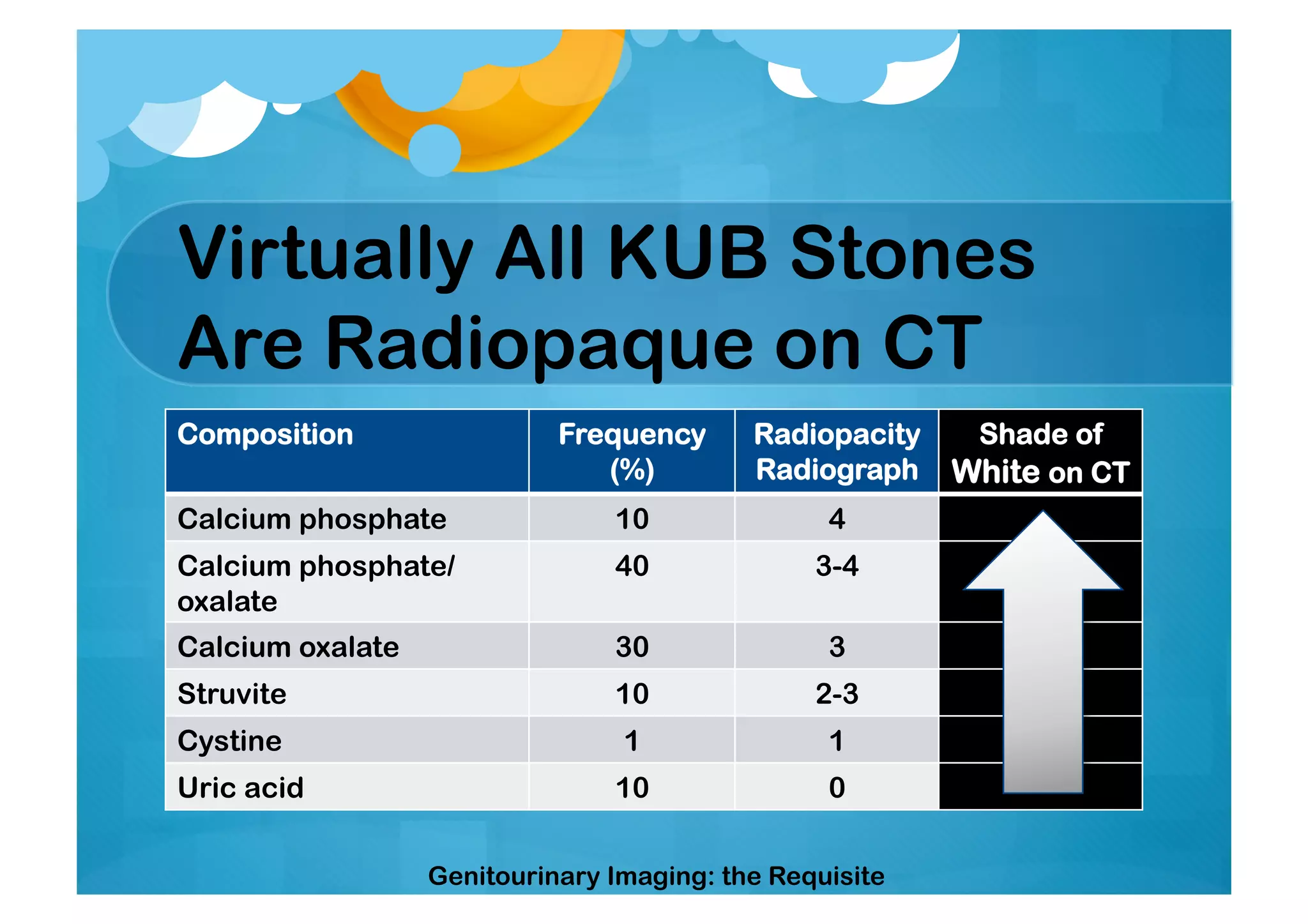
Virtually All KUB Stones
Are Radiopaque on CT
Composition Frequency
(%)
Radiopacity
Radiograph
Shade of
White on CT
Calcium phosphate 10 4
Calcium phosphate/
oxalate
40 3-4
Calcium oxalate 30 3
Struvite 10 2-3
Cystine 1 1
Uric acid 10 0
Genitourinary Imaging: the Requisite
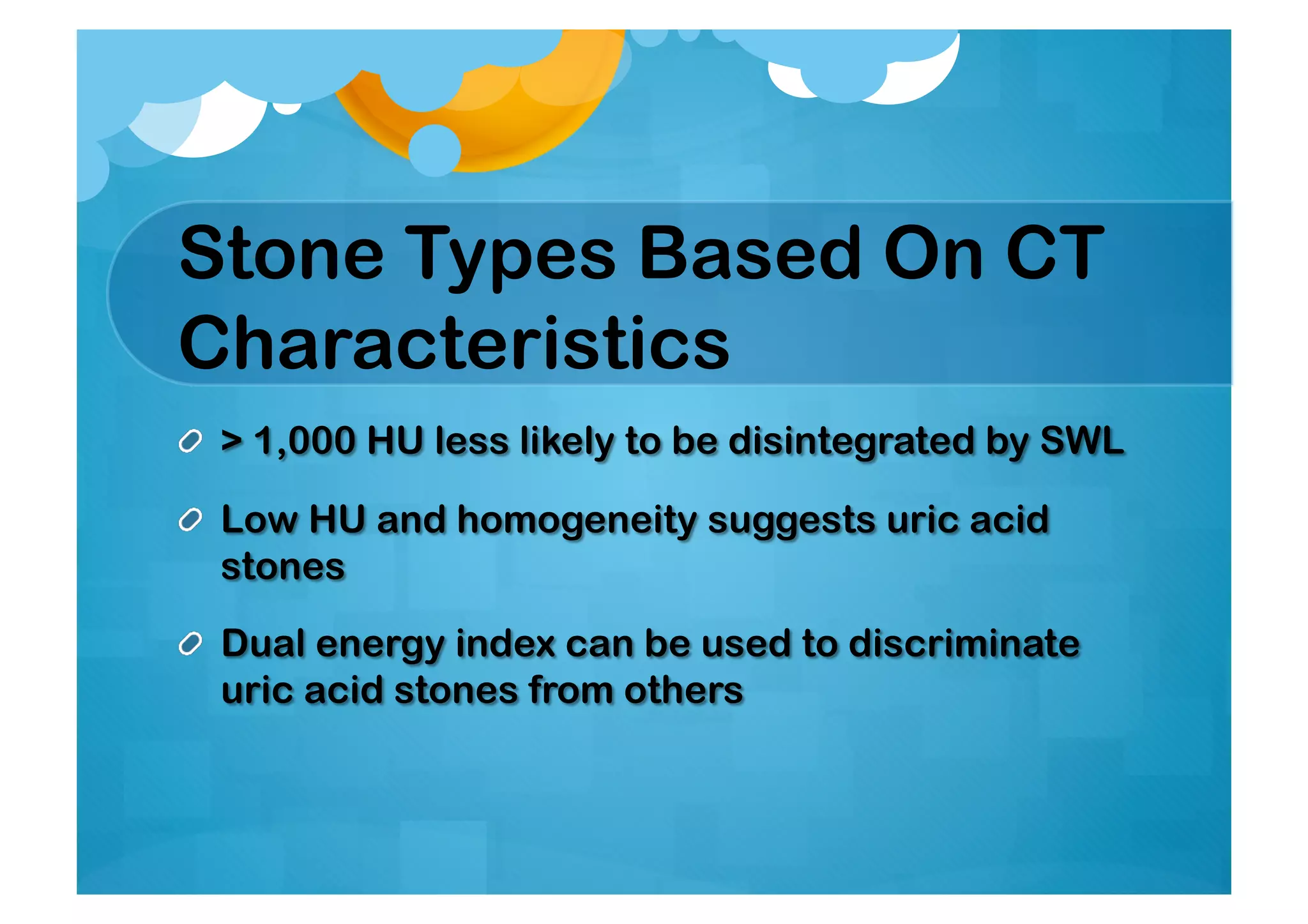
Stone Types Based On CT
Characteristics
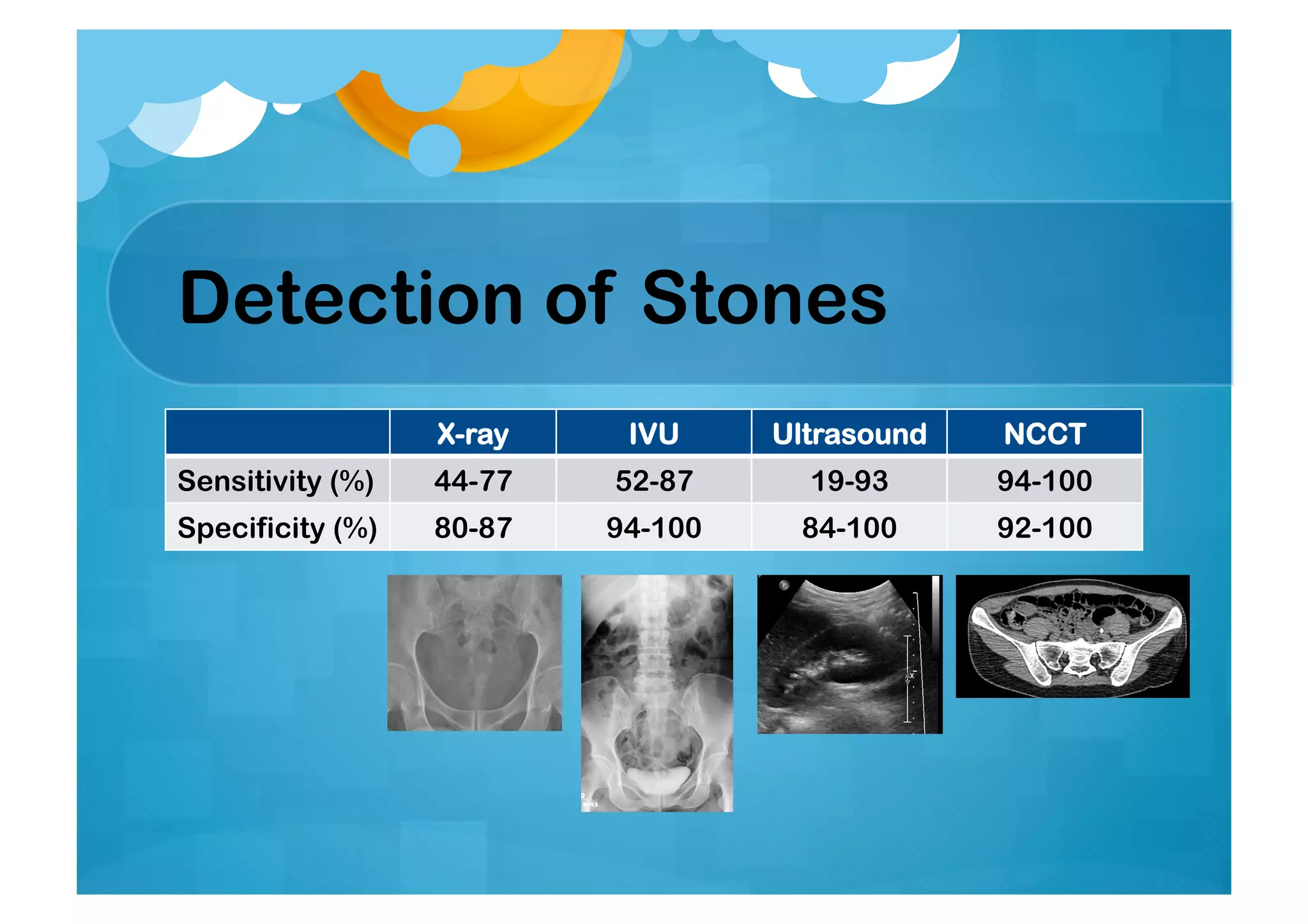
Detection of Stones
X-ray IVU Ultrasound NCCT
Sensitivity (%) 44-77 52-87 19-93 94-100
Specificity (%) 80-87 94-100 84-100 92-100
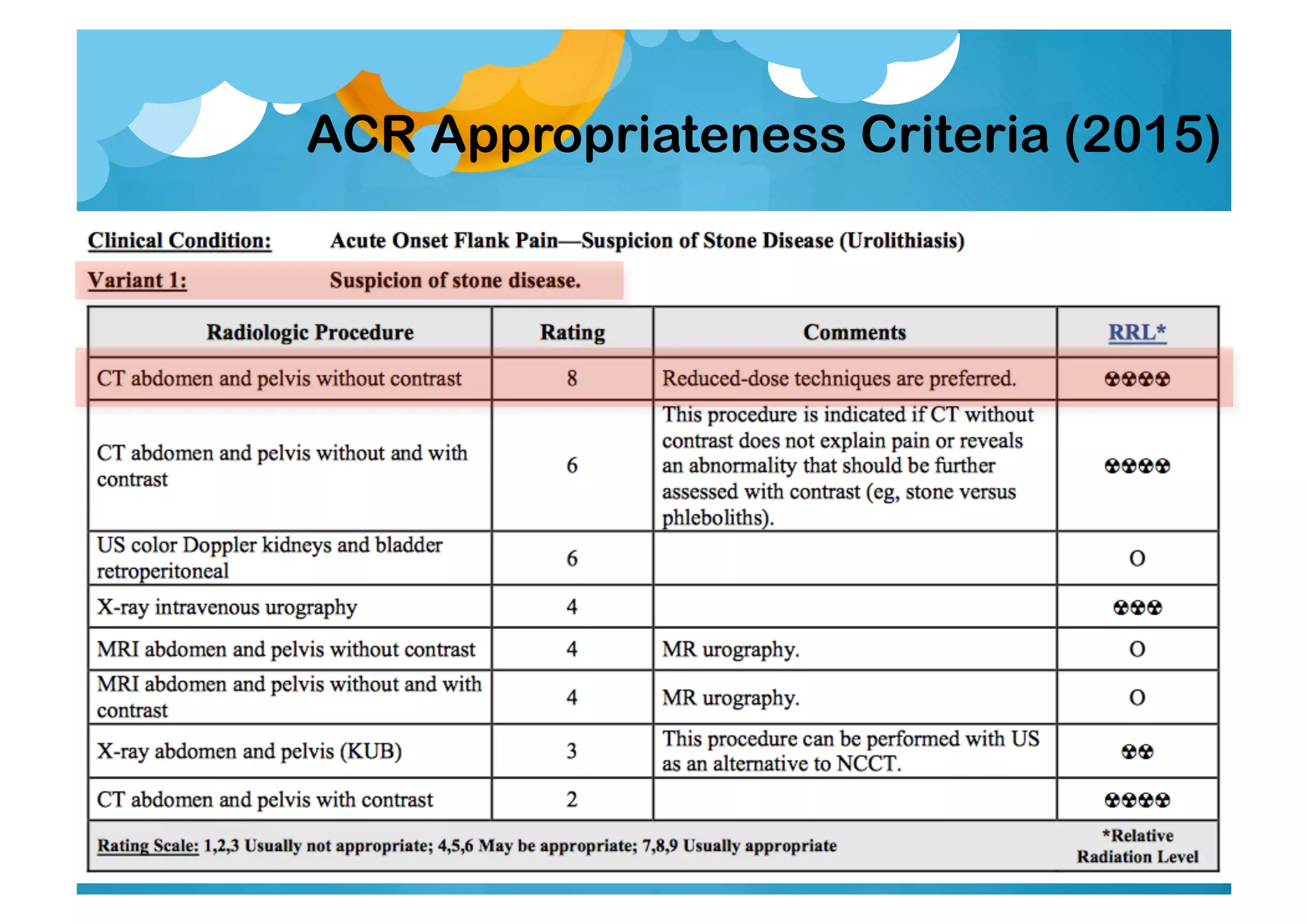
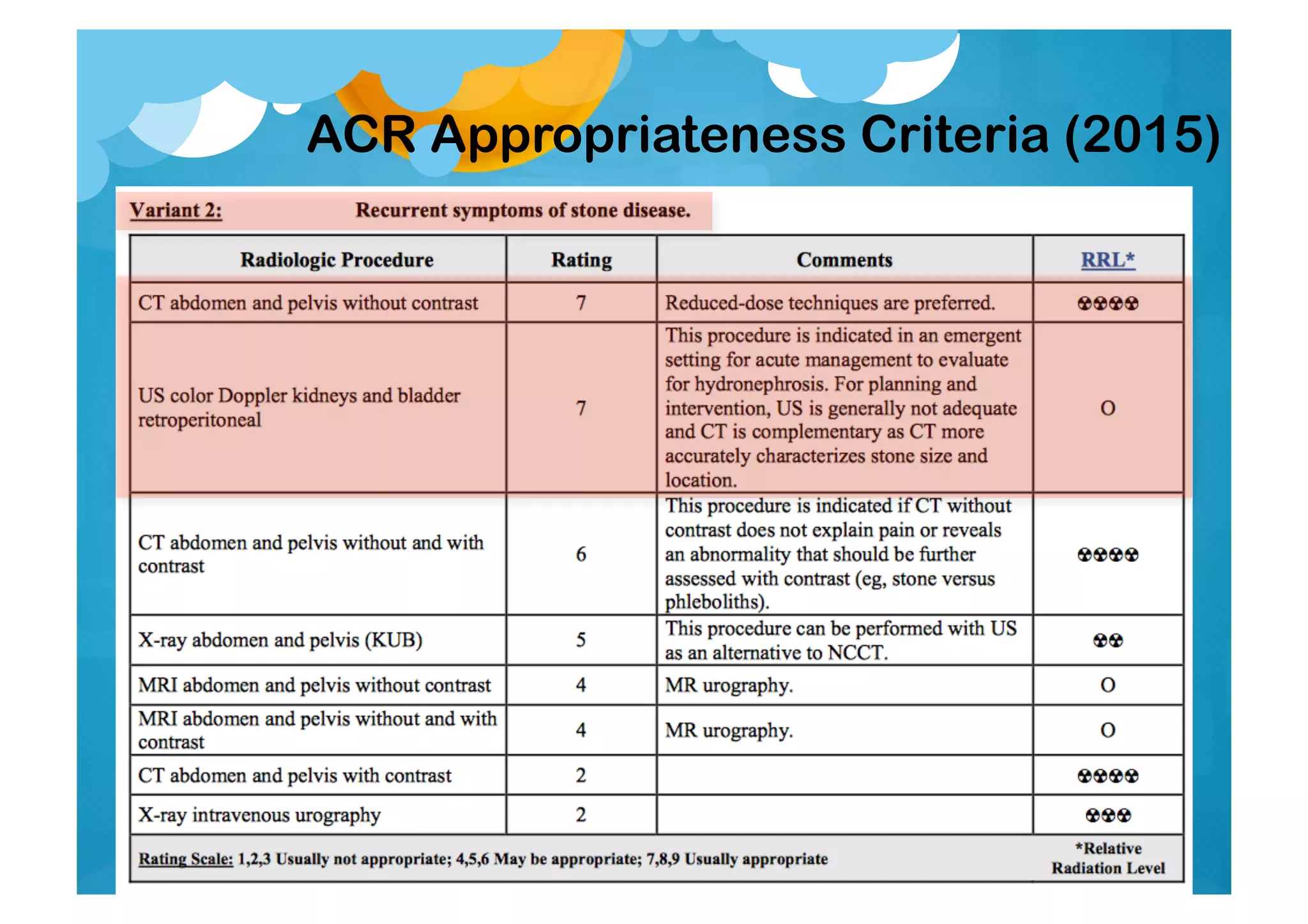
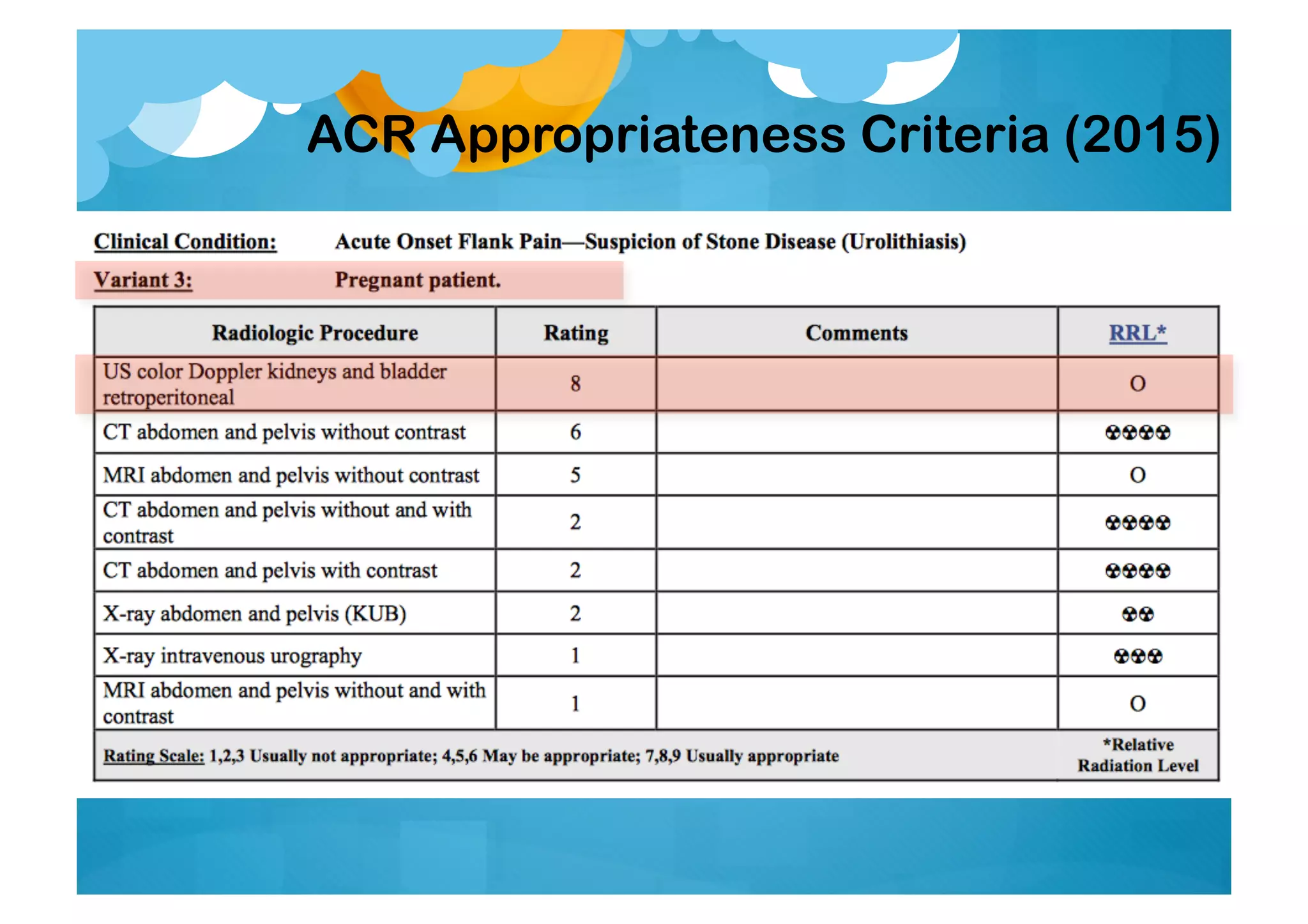
ACR Appropriateness Criteria (2015)
Diagnostic Strategies
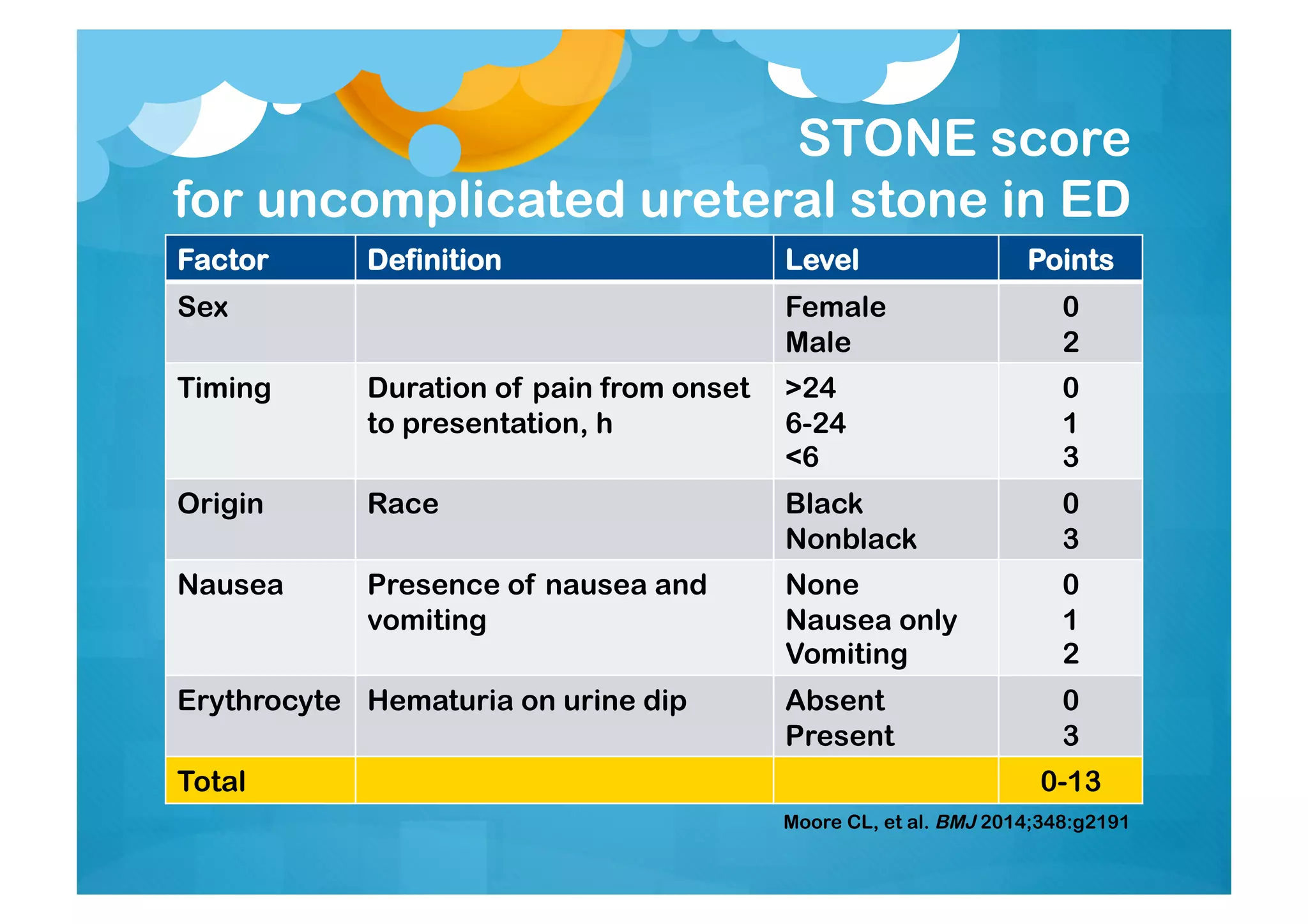
Factor Definition Level Points
Sex Female
Male
0
2
Timing Duration of pain from onset
to presentation, h
>24
6-24
<6
0
1
3
Origin Race Black
Nonblack
0
3
Nausea Presence of nausea and
vomiting
None
Nausea only
Vomiting
0
1
2
Erythrocyte Hematuria on urine dip Absent
Present
0
3
Total 0-13
STONE score
for uncomplicated ureteral stone in ED
Moore CL, et al. BMJ 2014;348:g2191
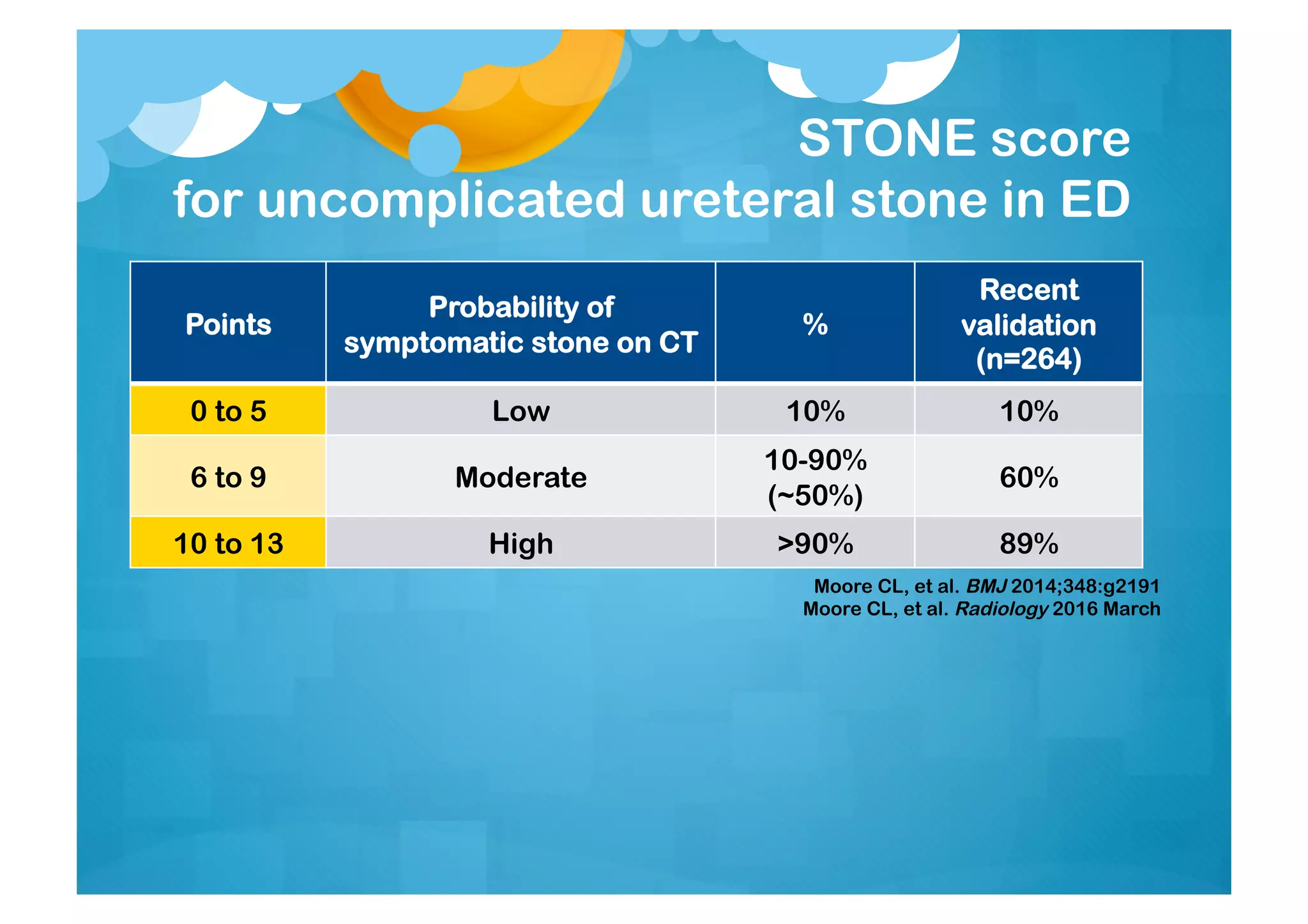
Points
Probability of
symptomatic stone on CT
%
Recent
validation
(n=264)
0 to 5 Low 10% 10%
6 to 9 Moderate
10-90%
(~50%)
60%
10 to 13 High >90% 89%
STONE score
for uncomplicated ureteral stone in ED
Moore CL, et al. BMJ 2014;348:g2191
Moore CL, et al. Radiology 2016 March
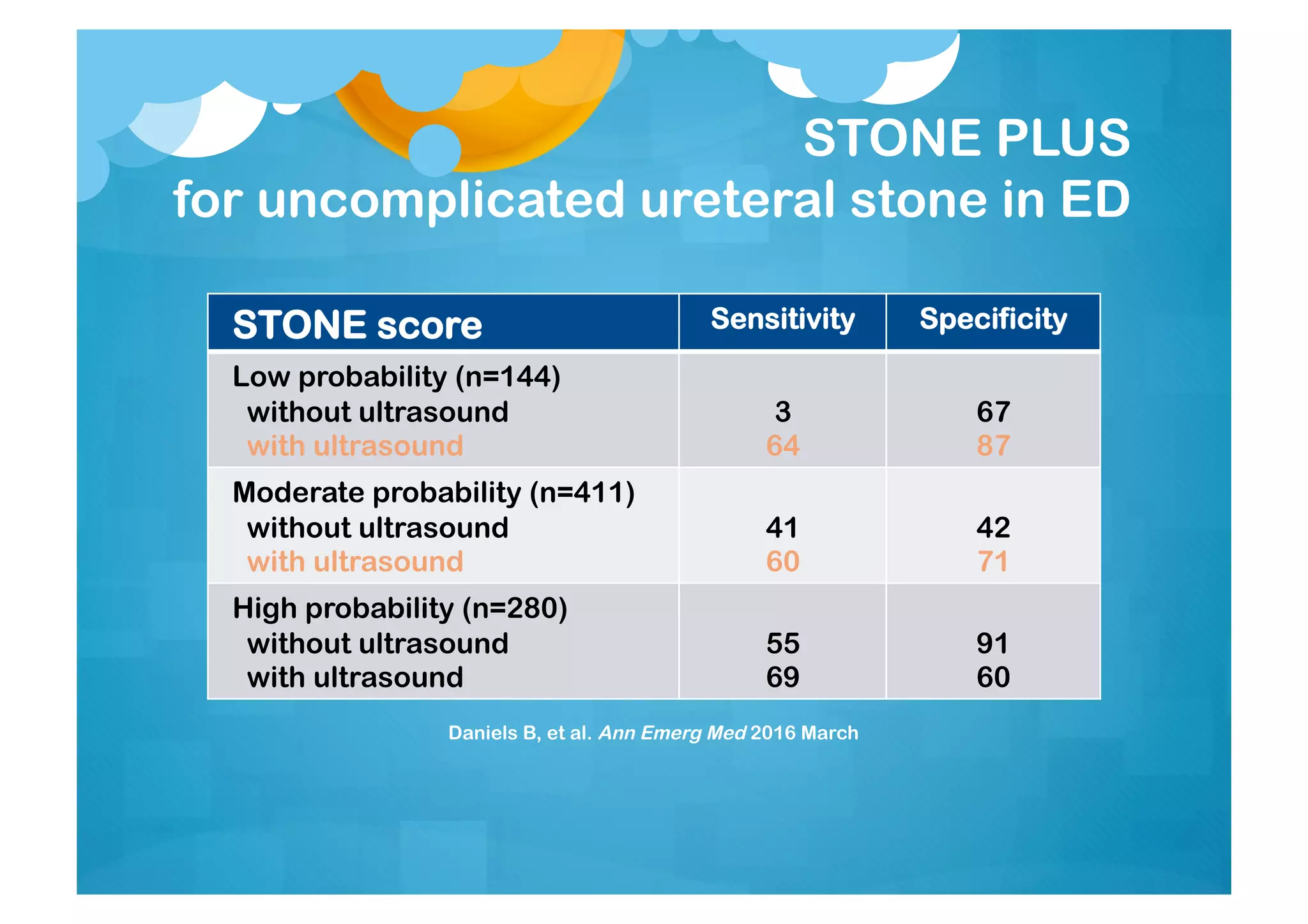
STONE score Sensitivity Specificity
Low probability (n=144)
without ultrasound
with ultrasound
3
64
67
87
Moderate probability (n=411)
without ultrasound
with ultrasound
41
60
42
71
High probability (n=280)
without ultrasound
with ultrasound
55
69
91
60
Daniels B, et al. Ann Emerg Med 2016 March
STONE PLUS
for uncomplicated ureteral stone in ED
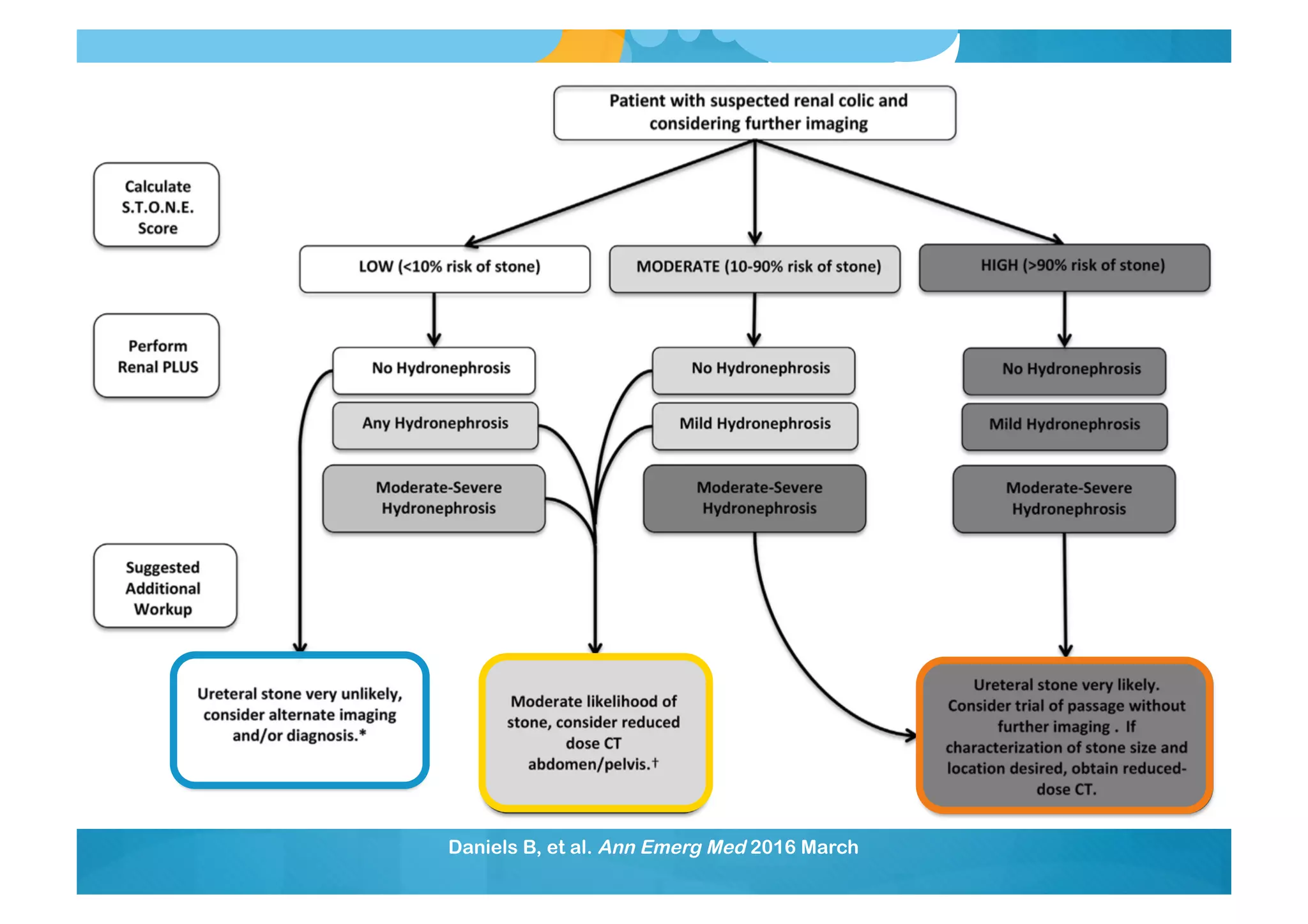
Daniels B, et al. Ann Emerg Med 2016 March
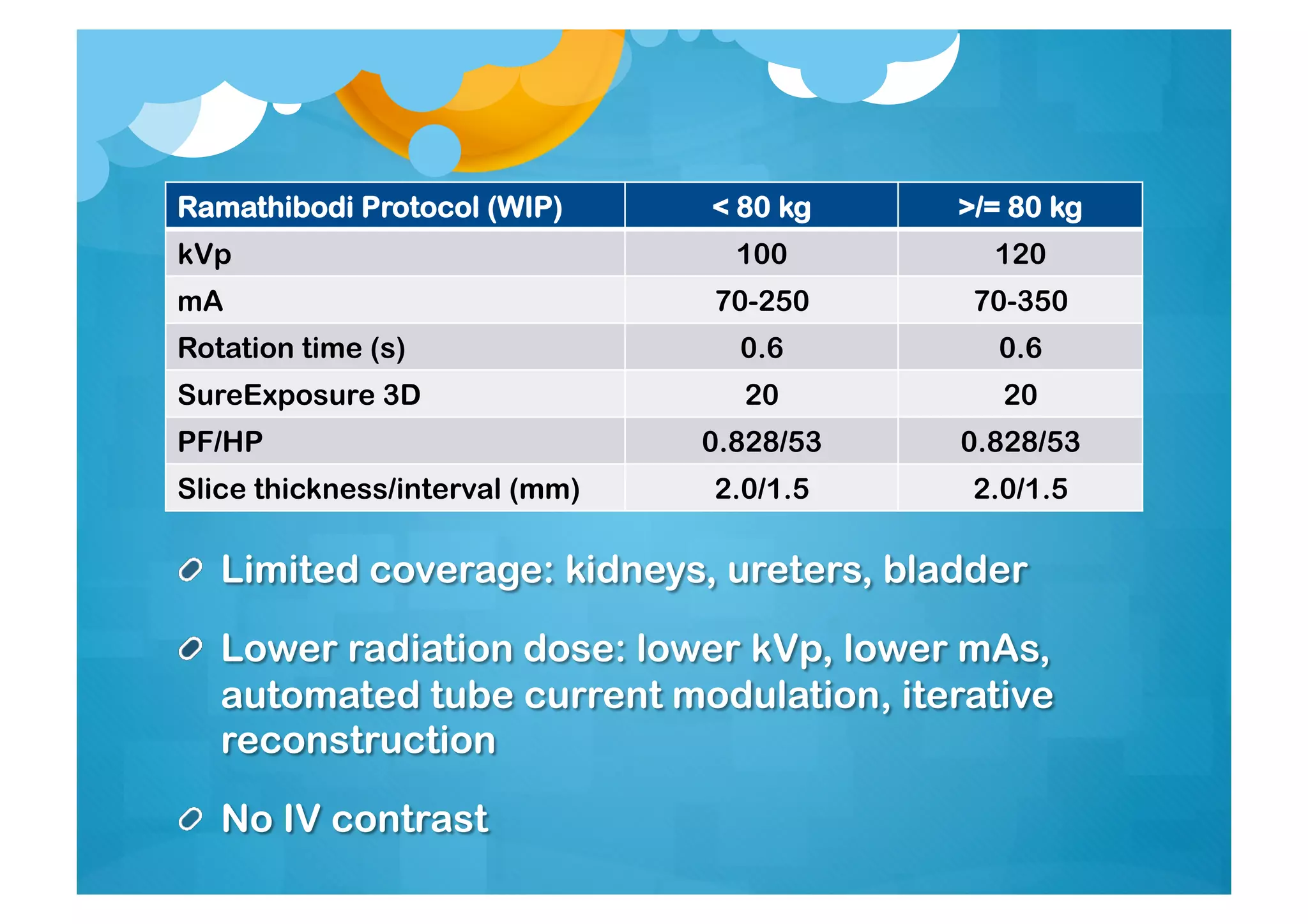
Ramathibodi Protocol (WIP) < 80 kg >/= 80 kg
kVp 100 120
mA 70-250 70-350
Rotation time (s) 0.6 0.6
SureExposure 3D 20 20
PF/HP 0.828/53 0.828/53
Slice thickness/interval (mm) 2.0/1.5 2.0/1.5
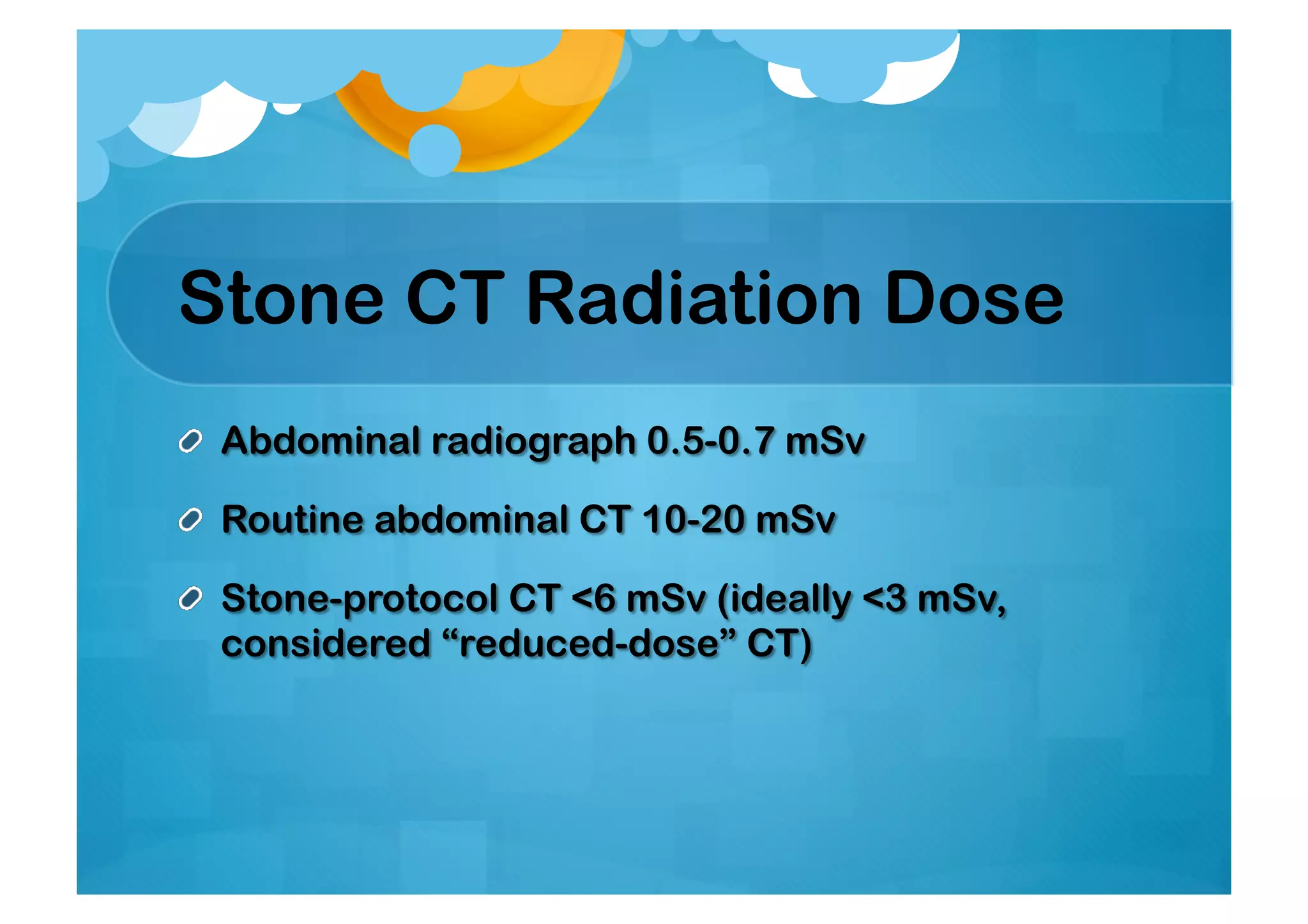
Stone CT Radiation Dose
Stone CT Radiation Dose:
How Low Can We Go?
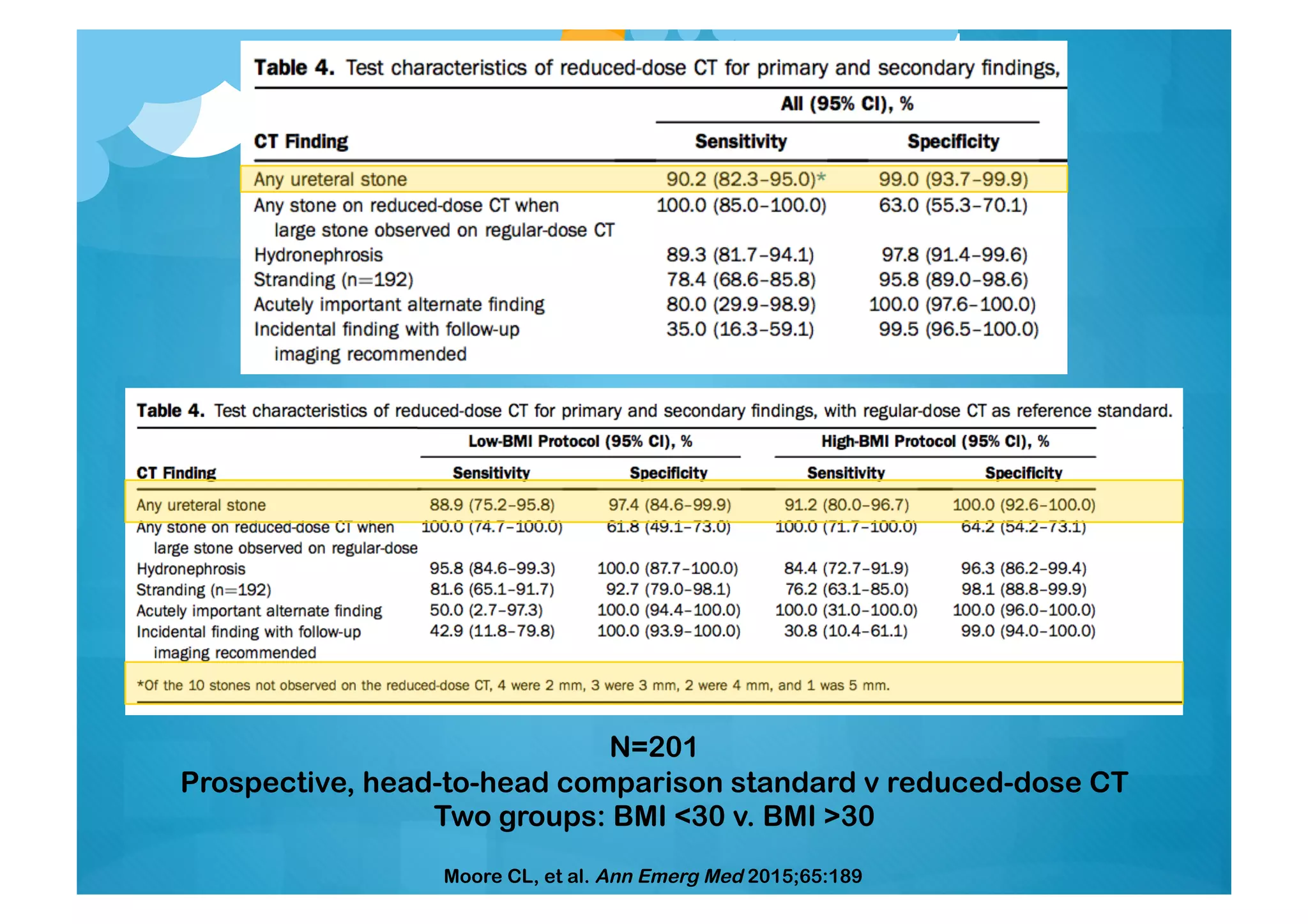
Moore CL, et al. Ann Emerg Med 2015;65:189
N=201
Prospective, head-to-head comparison standard v reduced-dose CT
Two groups: BMI <30 v. BMI >30
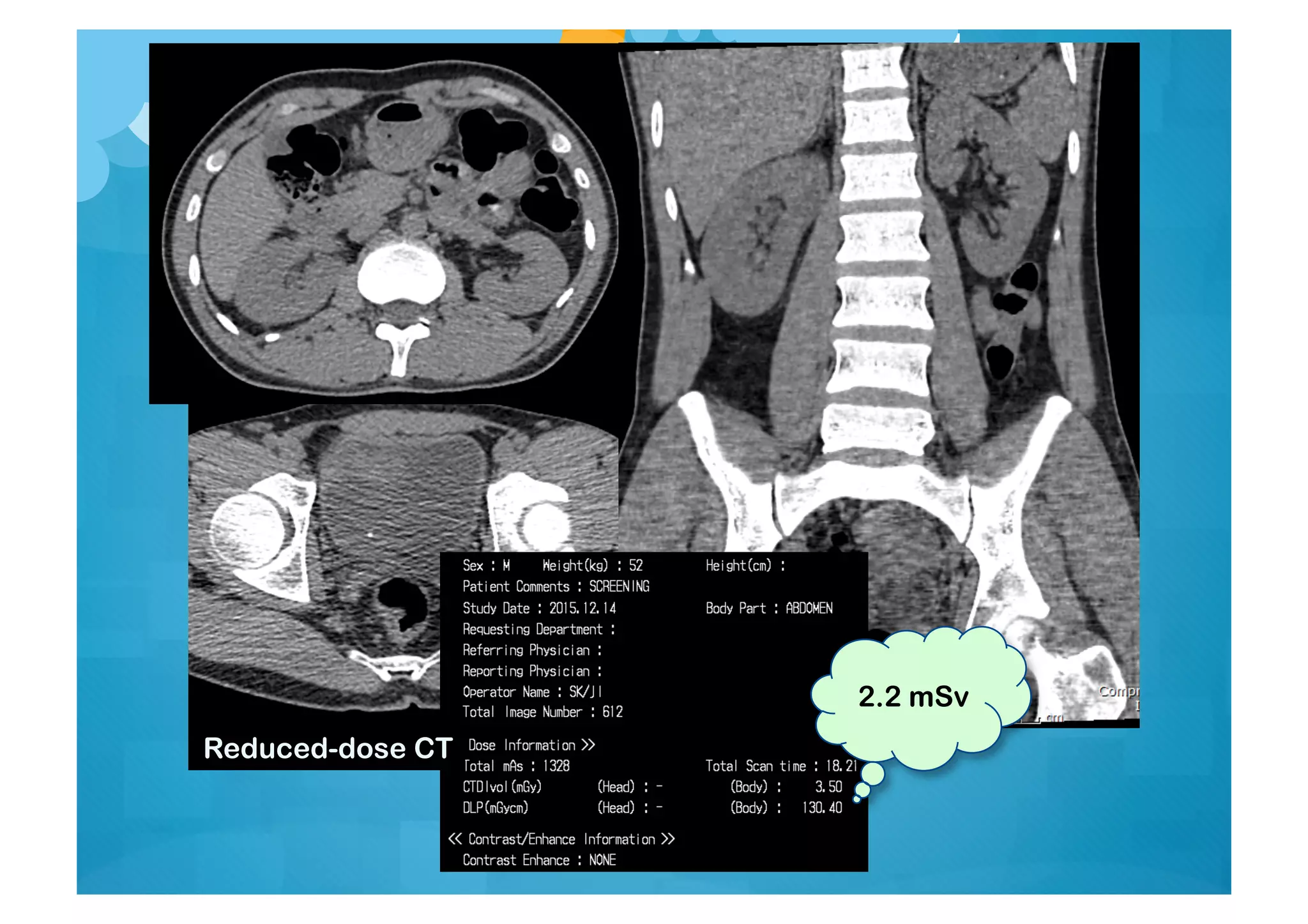
2.2 mSv
Reduced-dose CT
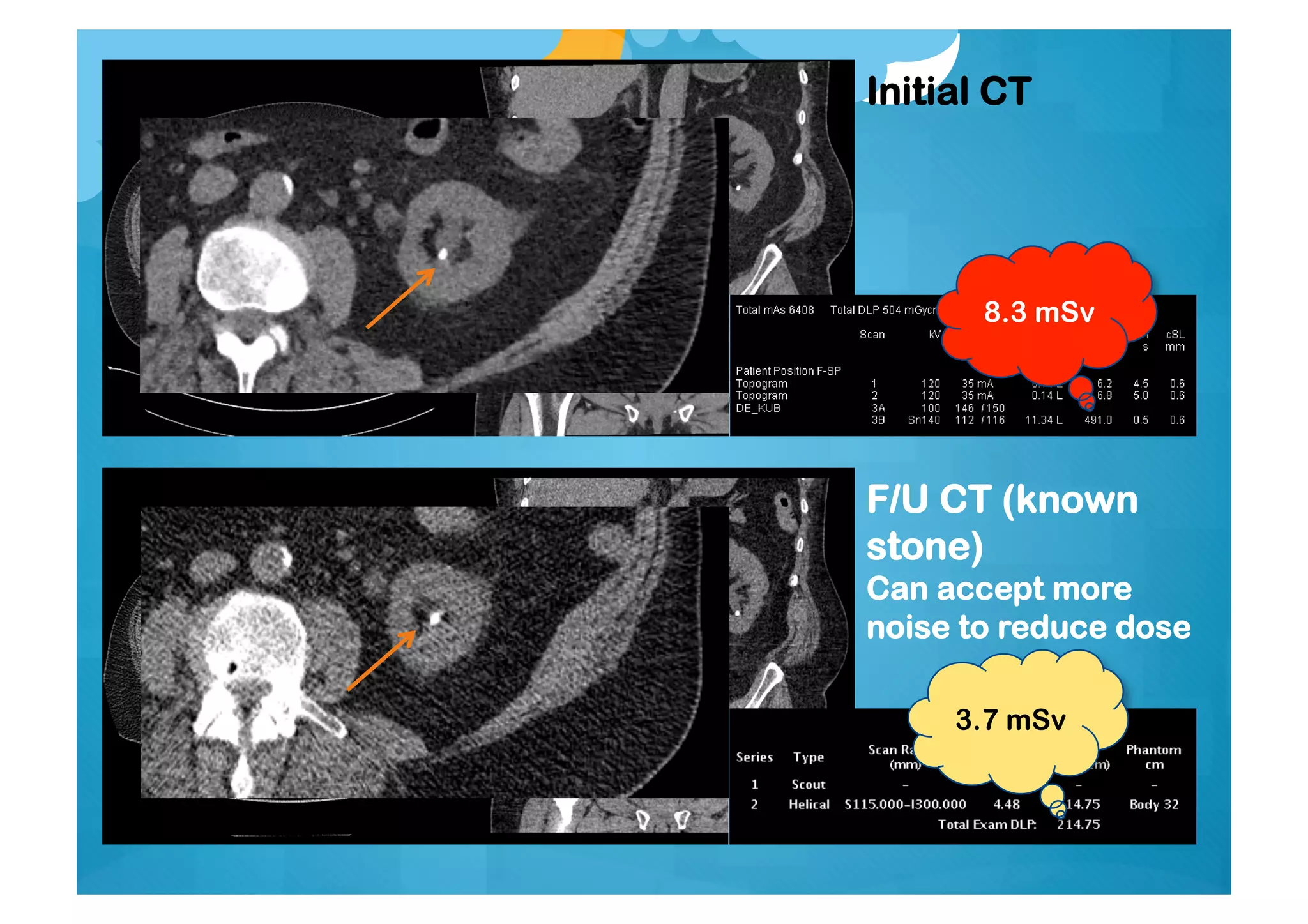
Initial CT
F/U CT (known
stone)
Can accept more
noise to reduce dose
8.3 mSv
3.7 mSv
How About Giving IV
Contrast?
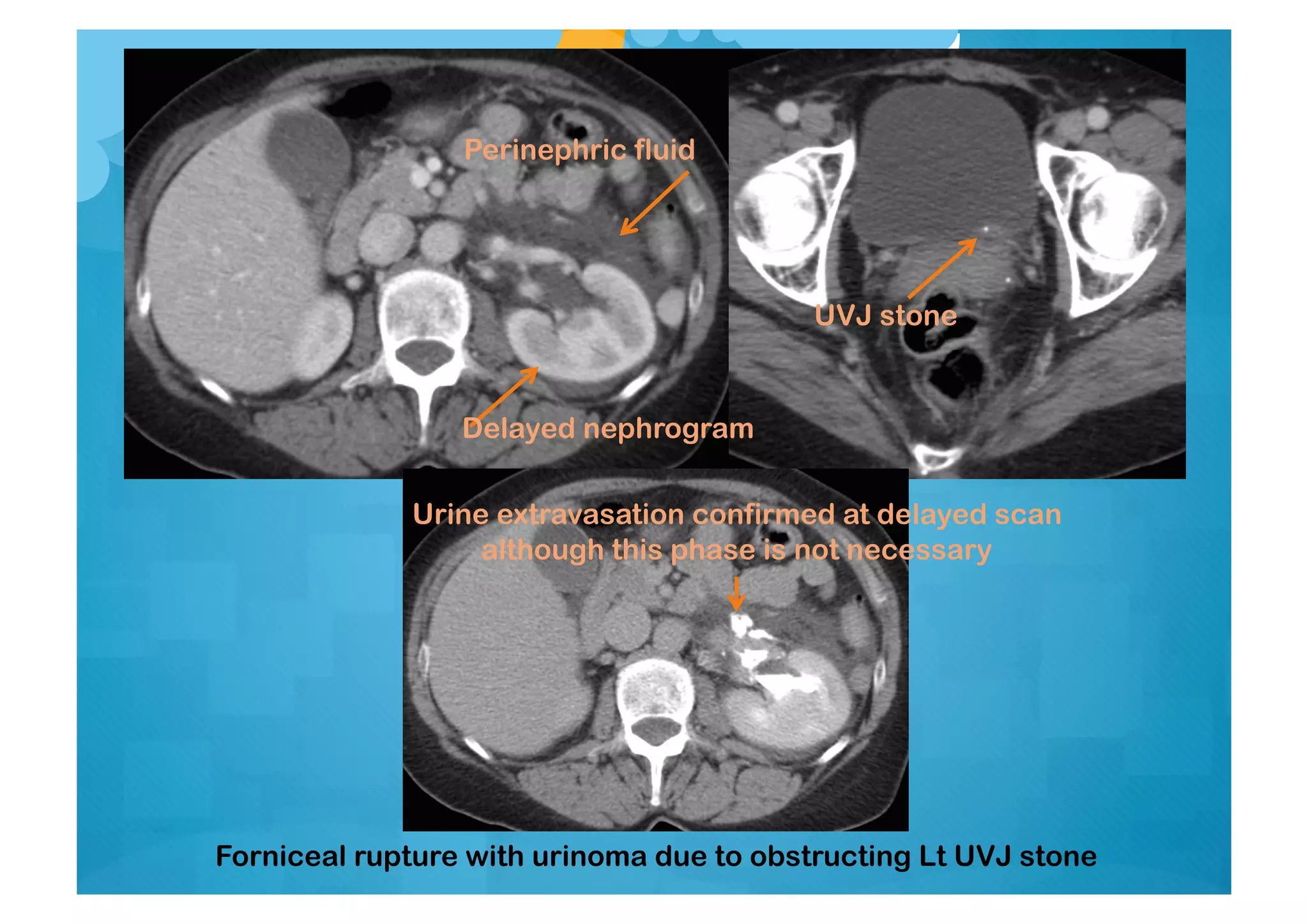
Forniceal rupture with urinoma due to obstructing Lt UVJ stone
UVJ stone
Delayed nephrogram
Perinephric fluid
Urine extravasation confirmed at delayed scan
although this phase is not necessary
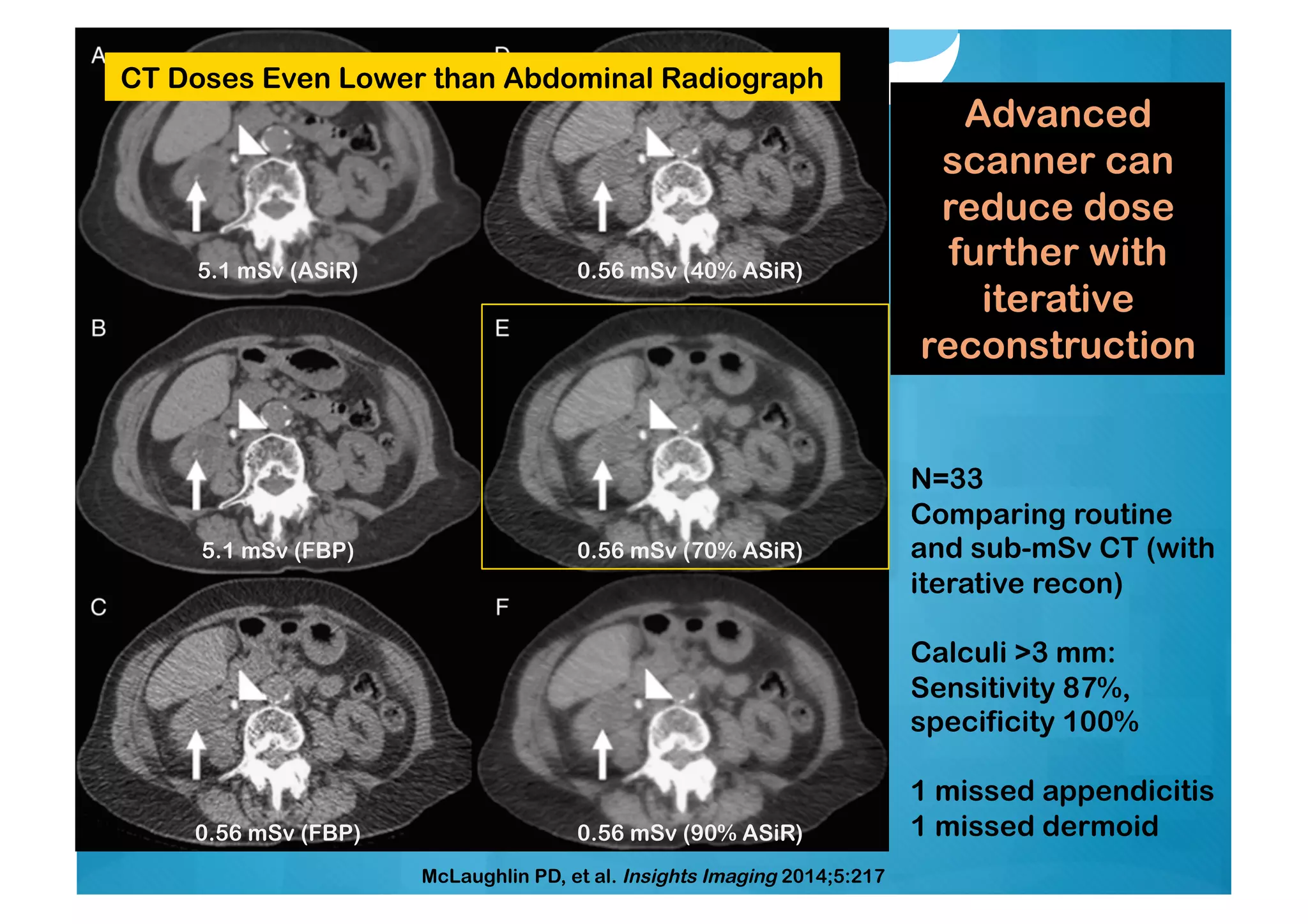
McLaughlin PD, et al. Insights Imaging 2014;5:217
5.1 mSv (ASiR)
5.1 mSv (FBP)
0.56 mSv (FBP)
0.56 mSv (40% ASiR)
0.56 mSv (70% ASiR)
0.56 mSv (90% ASiR)
CT Doses Even Lower than Abdominal Radiograph
N=33
Comparing routine
and sub-mSv CT (with
iterative recon)
Calculi >3 mm:
Sensitivity 87%,
specificity 100%
1 missed appendicitis
1 missed dermoid
Advanced
scanner can
reduce dose
further with
iterative
reconstruction
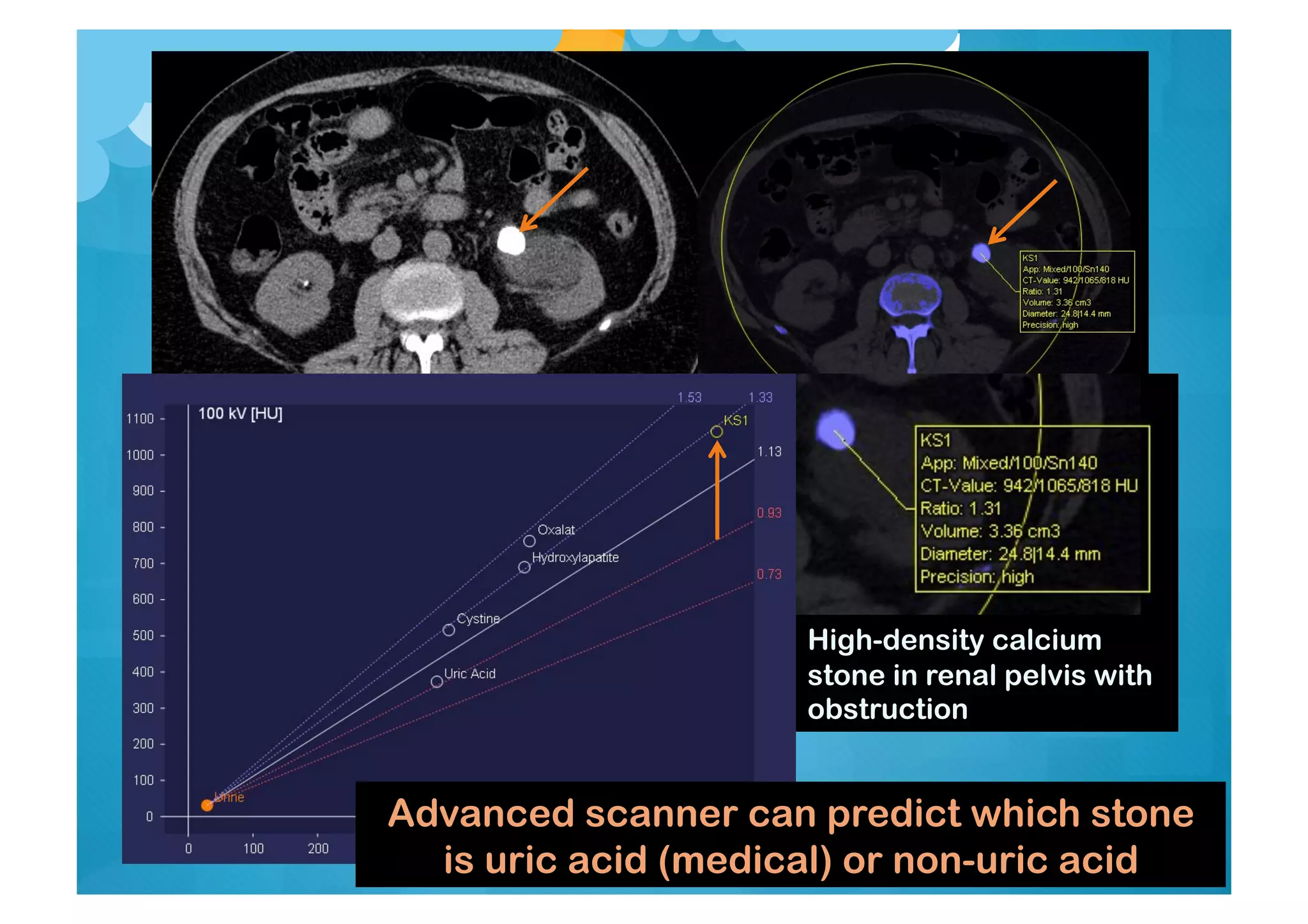
High-density calcium
stone in renal pelvis with
obstruction
Advanced scanner can predict which stone
is uric acid (medical) or non-uric acid
How We Interpret
CT Stone Protocol
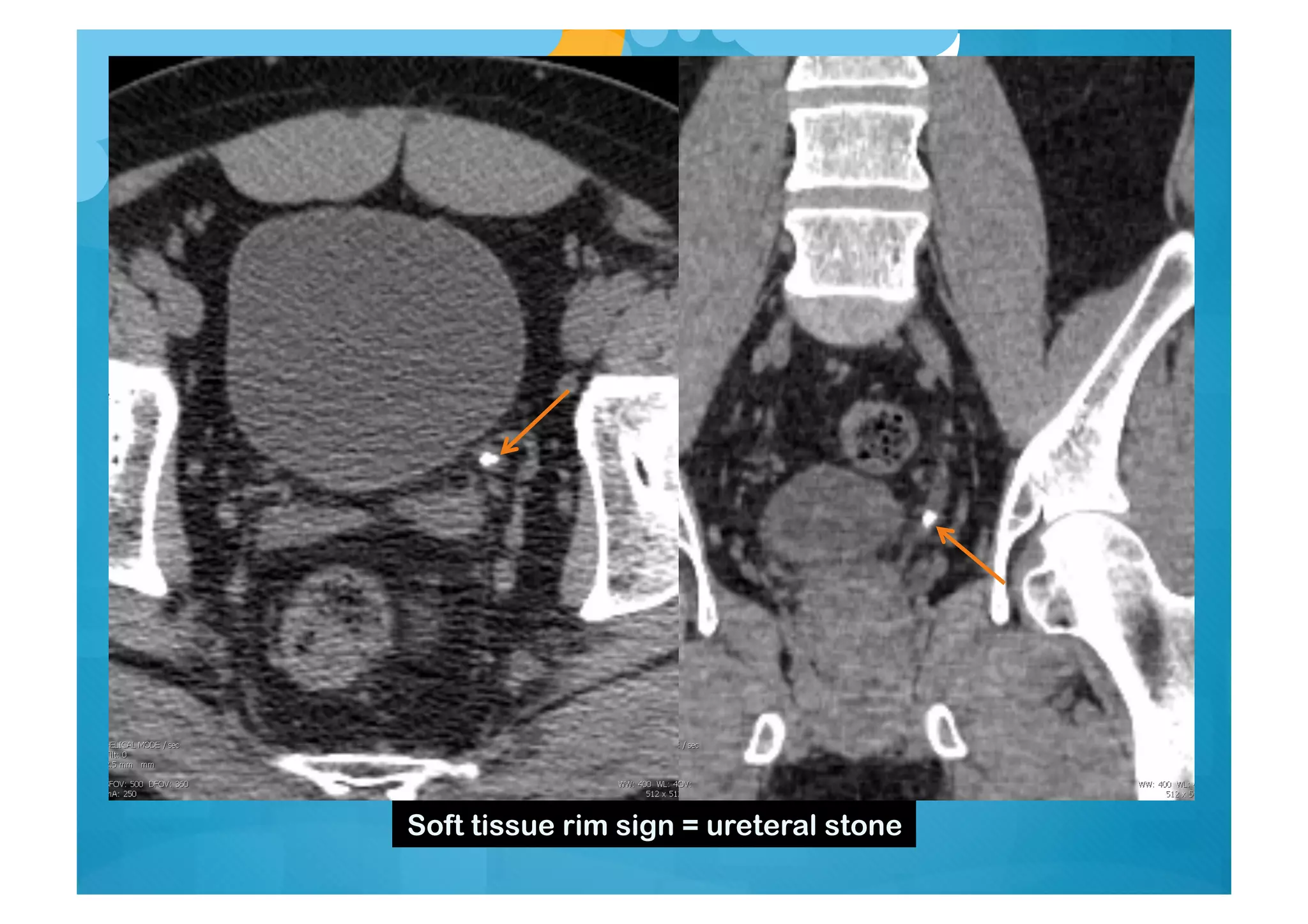
Soft tissue rim sign = ureteral stone
Stone Size and Appearance
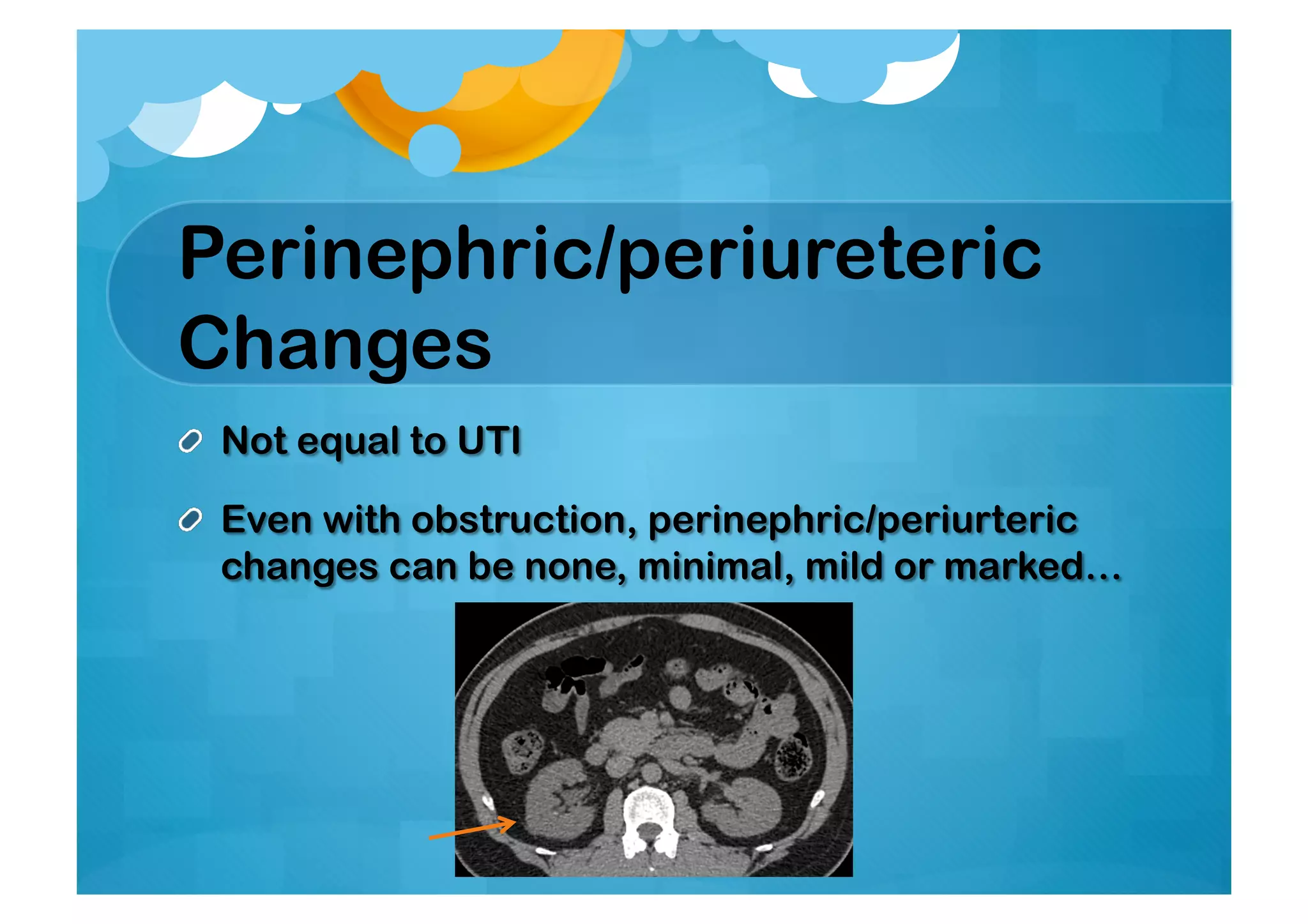
Perinephric/periureteric
Changes
Risks for Stone Formation
Identifiable on Imaging
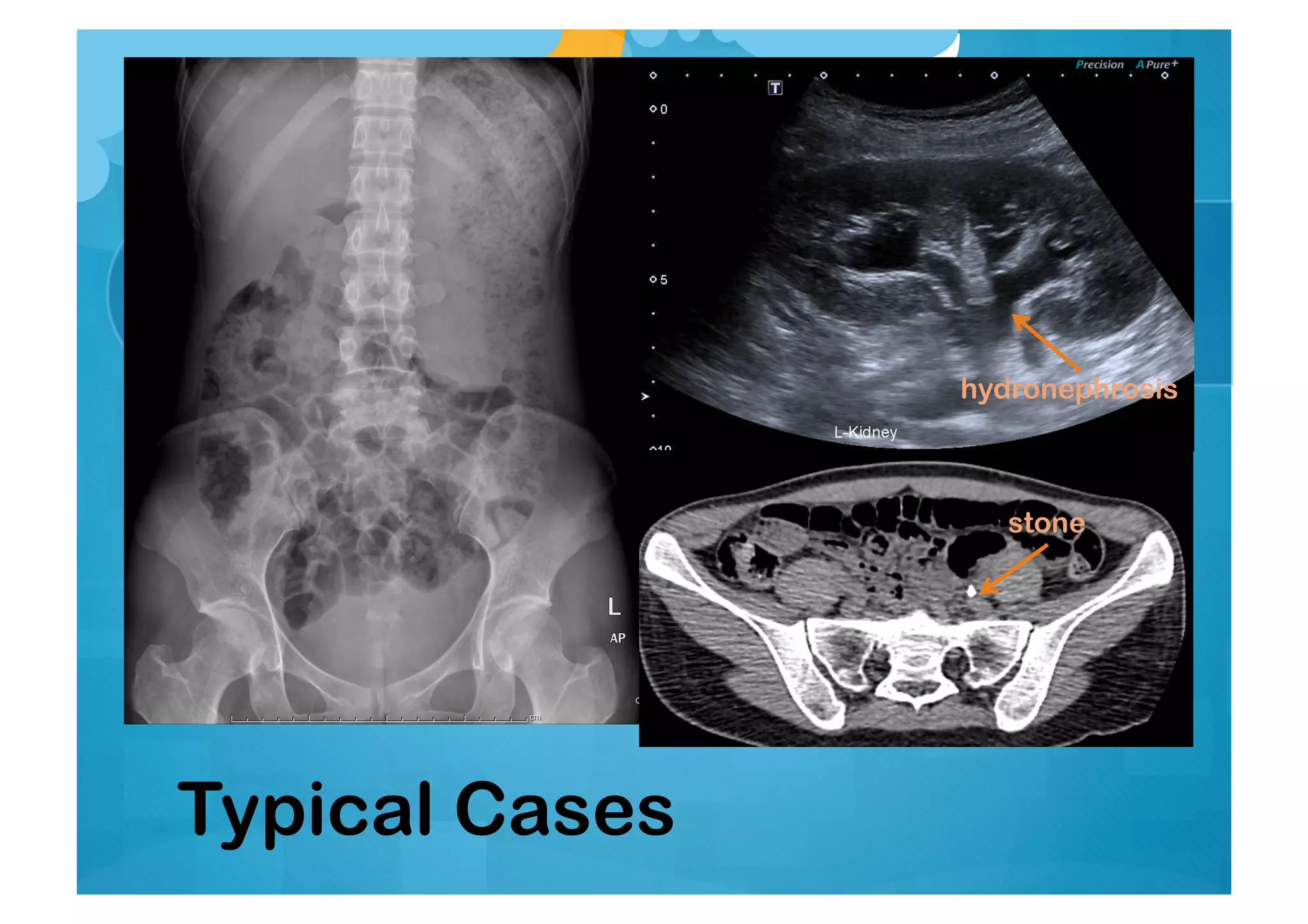
Typical Cases
hydronephrosis
stone
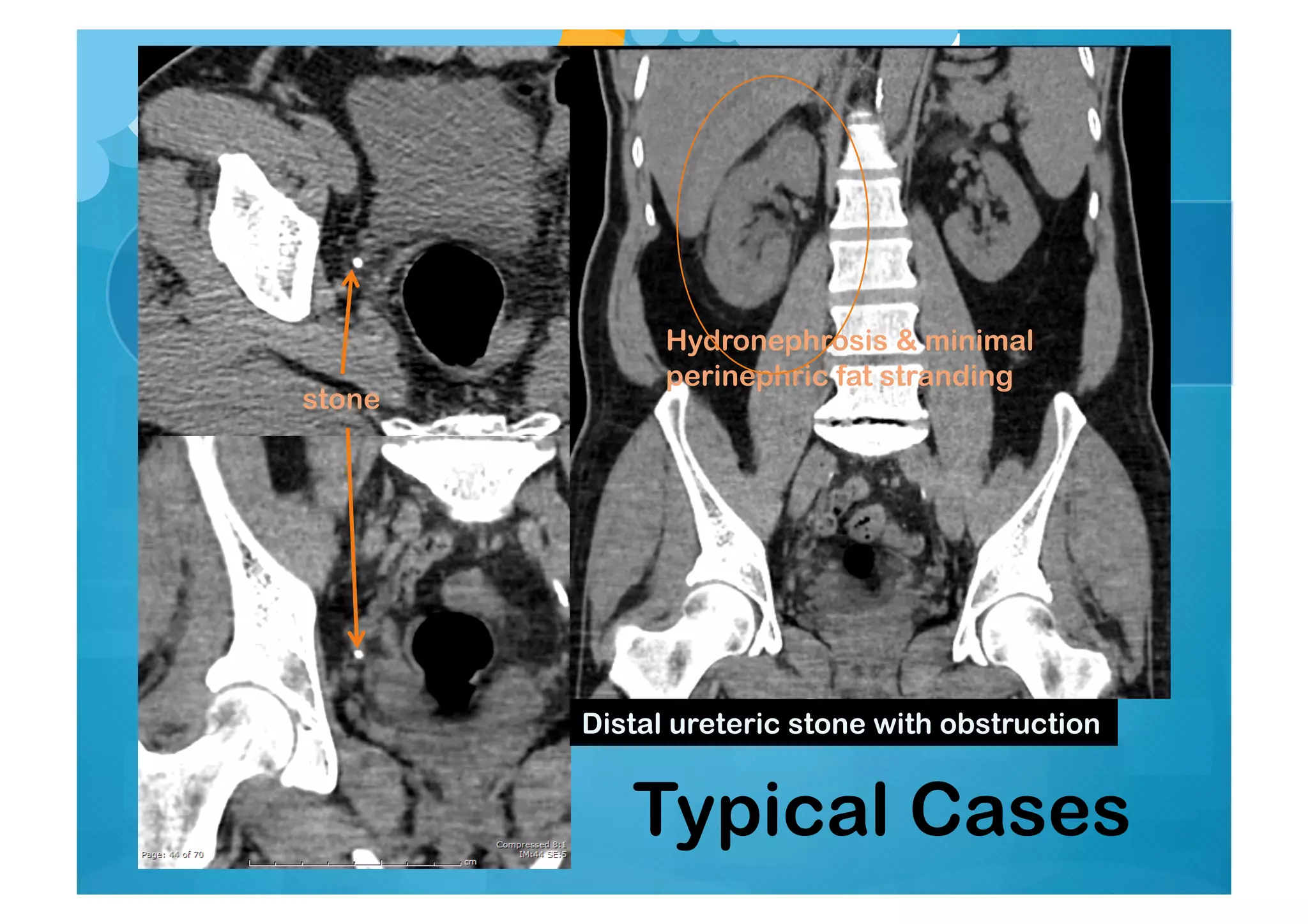
Distal ureteric stone with obstruction
Typical Cases
Hydronephrosis & minimal
perinephric fat stranding
stone
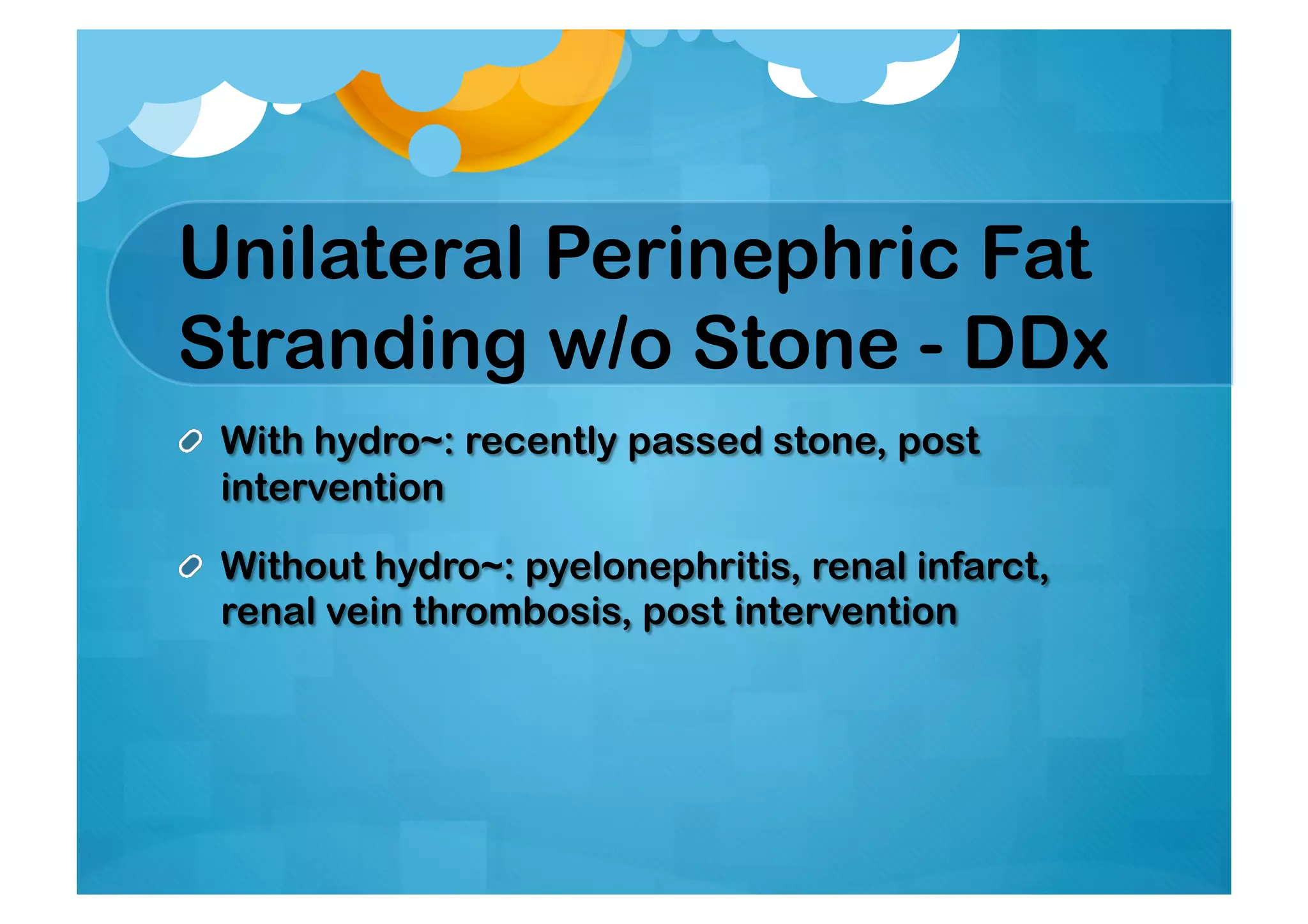
Unilateral Perinephric Fat
Stranding w/o Stone - DDx
Mimickers on CT of:
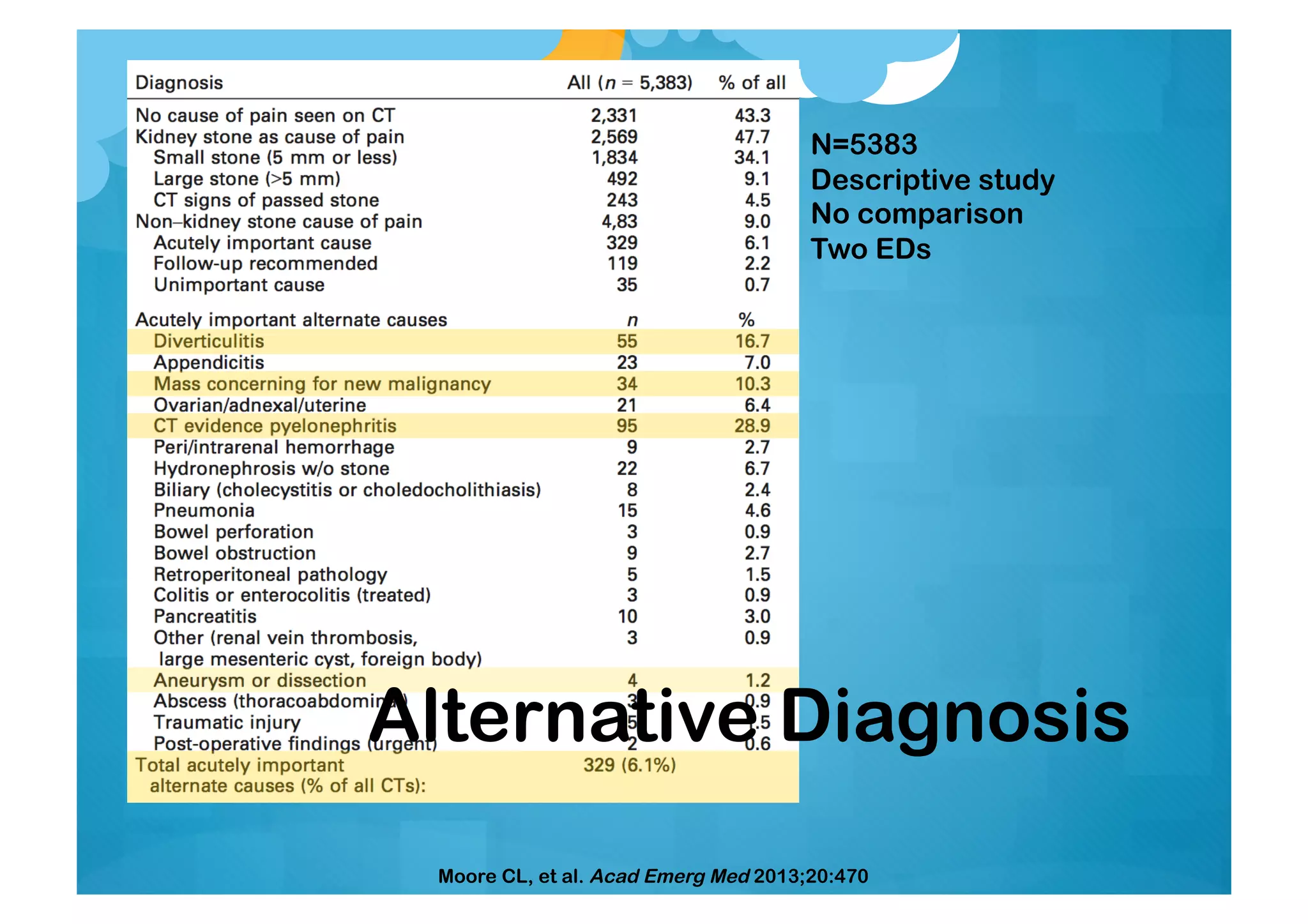
Moore CL, et al. Acad Emerg Med 2013;20:470
N=5383
Descriptive study
No comparison
Two EDs
Alternative Diagnosis
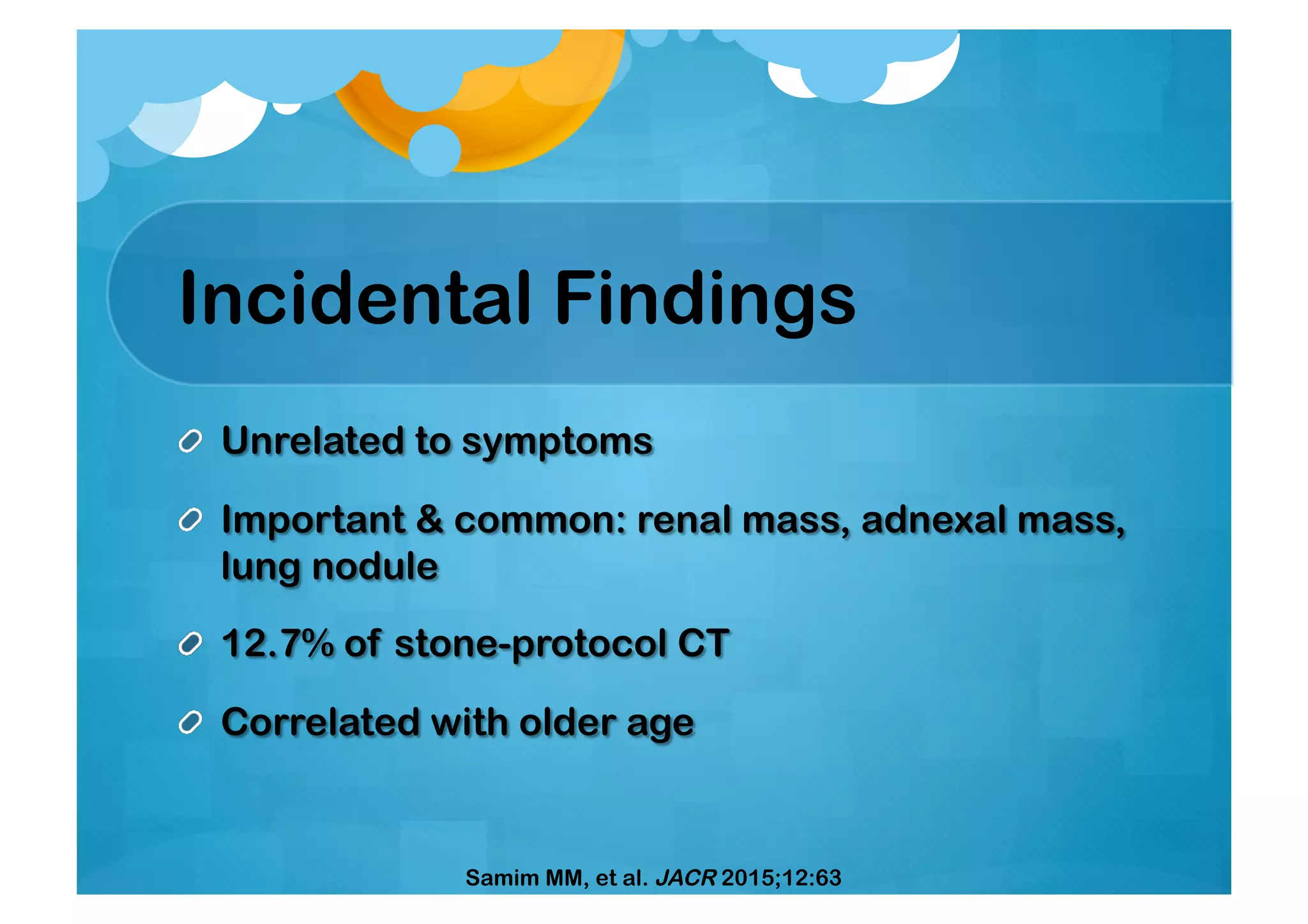
Incidental Findings
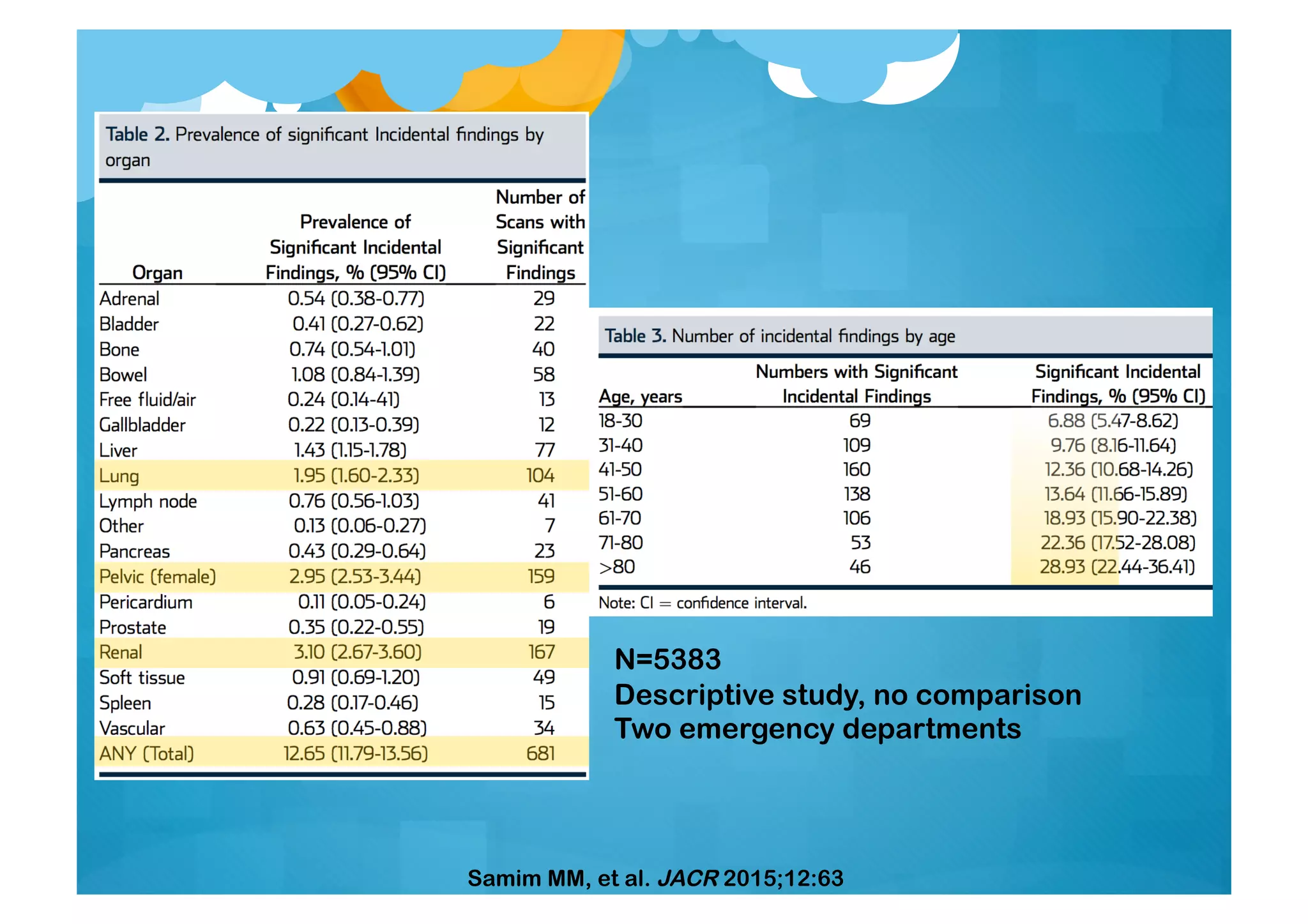
Samim MM, et al. JACR 2015;12:63
N=5383
Descriptive study, no comparison
Two emergency departments
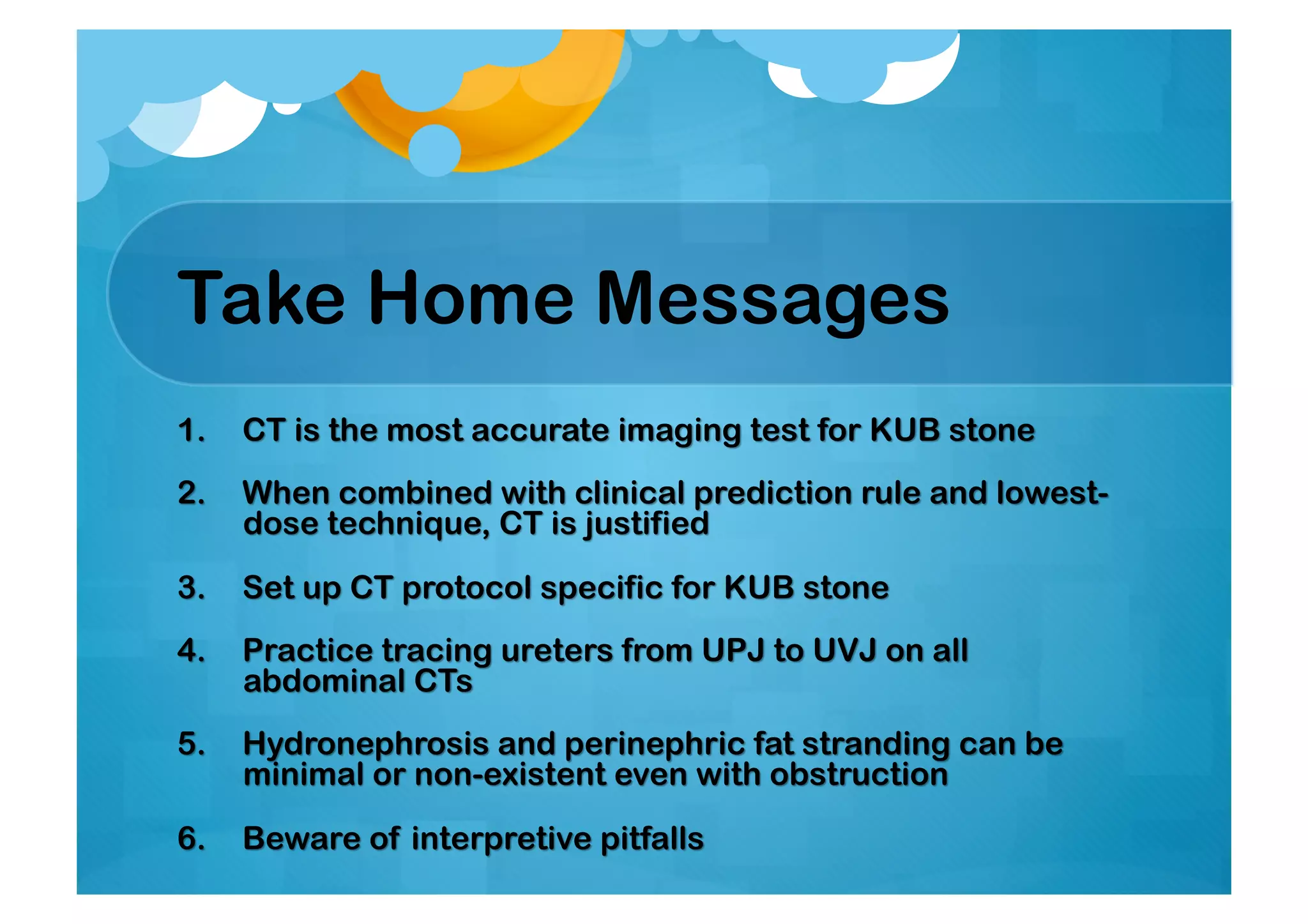
Take Home Messages

Stone protocol CT: Why, How and Pitfalls

  • 1.
    Hello…. CT StoneProtocol Why, How and Pitfalls Rathachai Kaewlai, MD Division of Emergency Radiology, Department of Radiology Ramathibodi Hospital, Bangkok, Thailand For RCRT-RST Annual Scientific Meeting, 24 Mar 2016
  • 2.
    Why – How– Pitfalls
  • 3.
    Why NCCT forKUB Stone?
  • 4.
    Virtually All KUBStones Are Radiopaque on CT Composition Frequency (%) Radiopacity Radiograph Shade of White on CT Calcium phosphate 10 4 Calcium phosphate/ oxalate 40 3-4 Calcium oxalate 30 3 Struvite 10 2-3 Cystine 1 1 Uric acid 10 0 Genitourinary Imaging: the Requisite
  • 5.
    Stone Types BasedOn CT Characteristics
  • 6.
    Detection of Stones X-rayIVU Ultrasound NCCT Sensitivity (%) 44-77 52-87 19-93 94-100 Specificity (%) 80-87 94-100 84-100 92-100
  • 7.
  • 8.
  • 9.
  • 10.
  • 11.
    Factor Definition LevelPoints Sex Female Male 0 2 Timing Duration of pain from onset to presentation, h >24 6-24 <6 0 1 3 Origin Race Black Nonblack 0 3 Nausea Presence of nausea and vomiting None Nausea only Vomiting 0 1 2 Erythrocyte Hematuria on urine dip Absent Present 0 3 Total 0-13 STONE score for uncomplicated ureteral stone in ED Moore CL, et al. BMJ 2014;348:g2191
  • 12.
    Points Probability of symptomatic stoneon CT % Recent validation (n=264) 0 to 5 Low 10% 10% 6 to 9 Moderate 10-90% (~50%) 60% 10 to 13 High >90% 89% STONE score for uncomplicated ureteral stone in ED Moore CL, et al. BMJ 2014;348:g2191 Moore CL, et al. Radiology 2016 March
  • 13.
    STONE score SensitivitySpecificity Low probability (n=144) without ultrasound with ultrasound 3 64 67 87 Moderate probability (n=411) without ultrasound with ultrasound 41 60 42 71 High probability (n=280) without ultrasound with ultrasound 55 69 91 60 Daniels B, et al. Ann Emerg Med 2016 March STONE PLUS for uncomplicated ureteral stone in ED
  • 14.
    Daniels B, etal. Ann Emerg Med 2016 March
  • 15.
    Ramathibodi Protocol (WIP)< 80 kg >/= 80 kg kVp 100 120 mA 70-250 70-350 Rotation time (s) 0.6 0.6 SureExposure 3D 20 20 PF/HP 0.828/53 0.828/53 Slice thickness/interval (mm) 2.0/1.5 2.0/1.5
  • 16.
  • 17.
    Stone CT RadiationDose: How Low Can We Go?
  • 18.
    Moore CL, etal. Ann Emerg Med 2015;65:189 N=201 Prospective, head-to-head comparison standard v reduced-dose CT Two groups: BMI <30 v. BMI >30
  • 19.
  • 20.
    Initial CT F/U CT(known stone) Can accept more noise to reduce dose 8.3 mSv 3.7 mSv
  • 21.
    How About GivingIV Contrast?
  • 22.
    Forniceal rupture withurinoma due to obstructing Lt UVJ stone UVJ stone Delayed nephrogram Perinephric fluid Urine extravasation confirmed at delayed scan although this phase is not necessary
  • 23.
    McLaughlin PD, etal. Insights Imaging 2014;5:217 5.1 mSv (ASiR) 5.1 mSv (FBP) 0.56 mSv (FBP) 0.56 mSv (40% ASiR) 0.56 mSv (70% ASiR) 0.56 mSv (90% ASiR) CT Doses Even Lower than Abdominal Radiograph N=33 Comparing routine and sub-mSv CT (with iterative recon) Calculi >3 mm: Sensitivity 87%, specificity 100% 1 missed appendicitis 1 missed dermoid Advanced scanner can reduce dose further with iterative reconstruction
  • 24.
    High-density calcium stone inrenal pelvis with obstruction Advanced scanner can predict which stone is uric acid (medical) or non-uric acid
  • 25.
    How We Interpret CTStone Protocol
  • 26.
    Soft tissue rimsign = ureteral stone
  • 27.
    Stone Size andAppearance
  • 28.
  • 29.
    Risks for StoneFormation Identifiable on Imaging
  • 30.
  • 31.
    Distal ureteric stonewith obstruction Typical Cases Hydronephrosis & minimal perinephric fat stranding stone
  • 32.
  • 33.
  • 34.
    Moore CL, etal. Acad Emerg Med 2013;20:470 N=5383 Descriptive study No comparison Two EDs Alternative Diagnosis
  • 35.
    Incidental Findings Samim MM,et al. JACR 2015;12:63
  • 36.
    Samim MM, etal. JACR 2015;12:63 N=5383 Descriptive study, no comparison Two emergency departments
  • 37.