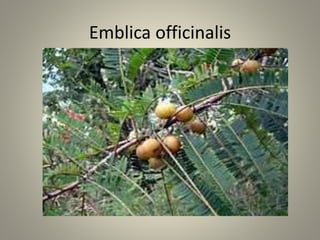
Emblica officinalis
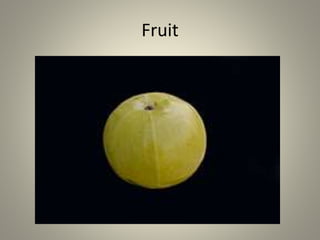
Fruit
Botanical Name(s): Emblica Officinalis
Kingdom: Plantae
Division: Angiosperms
Class: Dicots
Order: Euphorbiales
Family: Euphorbiaceae
Genus: Phyllanthus L
Species: Phyllanthus emblica L.
Popular Name(s): Phyllanthus Emblica, Emblica,
Amla
Parts Used: Fruit
Plant chemicals
•The active ingredient that has significant
pharmacological action in the plant has been
designated 'phyllemblin' by the scientists in
India.
•The other ingredients contained in the herb
are gallic acid, tannins, pectin, and ascorbic
acid (Vitamin C).
Uses & Benefits of Indian Gooseberry
•Indian gooseberry is one of the richest known
sources of vitamin 'C'.
• As such, it proves to be an effective medicine
against scurvy.
• Powdered dry herb is mixed with an equal
quantity of sugar and consumed thrice daily
with milk, to remedy scurvy.
• It serves to tone all the vital organs of the
body and builds health by eradicating the
harmful disease-causing elements from the
body.
•It is considered to be a good remedy against
heart diseases.
•The herb has amazing revitalizing effects on
the body.
•It helps prevent aging and maintain strength
in the old age.
•It also enhances the immunity of body
against diseases.
•The dried fruit of this plant is very useful in
treating diarrhea and dysentery.
•It is also used to treat acute bacillary
dysentery.
•Due to its high vitamin C content, Indian
gooseberry proves to be very effective in
controlling diabetes.
•The juice obtained from its fruit, when
consumed regularly, stimulates the pancreas to
secrete insulin.
•This reduces the sugar level in blood.
•Indian gooseberry is known to be excellent
in preserving eyesight.
•It is also beneficial in treating conjunctivitis
and glaucoma, by reducing intraocular
tension.
•It serves as a very valuable remedy for
enriching hair growth and pigmentation.
•The oil prepared by using this herb is
excellent for hair health and prevents
graying.
•Popularly used in inks, shampoos and hair
oils, the high tannin content of Indian
gooseberry fruit serves as a mordant for
fixing dyes in fabrics.
• Amla shampoos and hair oil are
traditionally believed to nourish the hair
and scalp and prevent premature grey hair
•The culinary uses of Indian gooseberry are many.
In South India, its fruit plant is used to make
pickle.
•Tender varieties of the fruit are used to prepare
dishes as well.
• In some parts of the country, it is traditionally
consumed after meals.
•The herb is also used in shampoos, hair oils, inks
and dyes.

Emblica officinalis

  • 1.
  • 2.
  • 3.
    Botanical Name(s): EmblicaOfficinalis Kingdom: Plantae Division: Angiosperms Class: Dicots Order: Euphorbiales Family: Euphorbiaceae Genus: Phyllanthus L Species: Phyllanthus emblica L. Popular Name(s): Phyllanthus Emblica, Emblica, Amla Parts Used: Fruit
  • 4.
    Plant chemicals •The activeingredient that has significant pharmacological action in the plant has been designated 'phyllemblin' by the scientists in India. •The other ingredients contained in the herb are gallic acid, tannins, pectin, and ascorbic acid (Vitamin C).
  • 5.
    Uses & Benefitsof Indian Gooseberry •Indian gooseberry is one of the richest known sources of vitamin 'C'. • As such, it proves to be an effective medicine against scurvy. • Powdered dry herb is mixed with an equal quantity of sugar and consumed thrice daily with milk, to remedy scurvy.
  • 6.
    • It servesto tone all the vital organs of the body and builds health by eradicating the harmful disease-causing elements from the body. •It is considered to be a good remedy against heart diseases. •The herb has amazing revitalizing effects on the body. •It helps prevent aging and maintain strength in the old age. •It also enhances the immunity of body against diseases.
  • 7.
    •The dried fruitof this plant is very useful in treating diarrhea and dysentery. •It is also used to treat acute bacillary dysentery. •Due to its high vitamin C content, Indian gooseberry proves to be very effective in controlling diabetes. •The juice obtained from its fruit, when consumed regularly, stimulates the pancreas to secrete insulin. •This reduces the sugar level in blood.
  • 8.
    •Indian gooseberry isknown to be excellent in preserving eyesight. •It is also beneficial in treating conjunctivitis and glaucoma, by reducing intraocular tension. •It serves as a very valuable remedy for enriching hair growth and pigmentation. •The oil prepared by using this herb is excellent for hair health and prevents graying.
  • 9.
    •Popularly used ininks, shampoos and hair oils, the high tannin content of Indian gooseberry fruit serves as a mordant for fixing dyes in fabrics. • Amla shampoos and hair oil are traditionally believed to nourish the hair and scalp and prevent premature grey hair
  • 10.
    •The culinary usesof Indian gooseberry are many. In South India, its fruit plant is used to make pickle. •Tender varieties of the fruit are used to prepare dishes as well. • In some parts of the country, it is traditionally consumed after meals. •The herb is also used in shampoos, hair oils, inks and dyes.