PROJECT ON ELECTROPLATING
BY
SLIDE_MAKER4U
(ABHISHEK SHARMA
INTRODUCTION
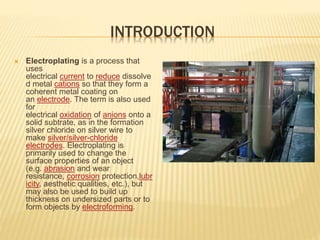
 Electroplating is a process that
uses
electrical current to reduce dissolve
d metal cations so that they form a
coherent metal coating on
an electrode. The term is also used
for
electrical oxidation of anions onto a
solid subtrate, as in the formation
silver chloride on silver wire to
make silver/silver-chloride
electrodes. Electroplating is
primarily used to change the
surface properties of an object
(e.g. abrasion and wear
resistance, corrosion protection,lubr
icity, aesthetic qualities, etc.), but
may also be used to build up
thickness on undersized parts or to
form objects by electroforming.
PROCESS
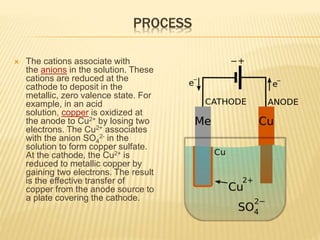
 The cations associate with
the anions in the solution. These
cations are reduced at the
cathode to deposit in the
metallic, zero valence state. For
example, in an acid
solution, copper is oxidized at
the anode to Cu2+ by losing two
electrons. The Cu2+ associates
with the anion SO4
2- in the
solution to form copper sulfate.
At the cathode, the Cu2+ is
reduced to metallic copper by
gaining two electrons. The result
is the effective transfer of
copper from the anode source to
a plate covering the cathode.
 The plating is most commonly a single metallic element,
not an alloy. However, some alloys can be
electrodeposited, notably brass and solder.
 Many plating baths include cyanides of other metals
(e.g., potassium cyanide) in addition to cyanides of the
metal to be deposited. These free cyanides facilitate
anode corrosion, help to maintain a constant metal ion
level and contribute to conductivity. Additionally, non-
metal chemicals such ascarbonates and phosphates may
be added to increase conductivity.
 When plating is not desired on certain areas of the
substrate, stop-offs are applied to prevent the bath from
coming in contact with the substrate. Typical stop-offs
include tape, foil, lacquers, and waxes.
EFFECTS
 Electroplating changes the
chemical, physical, and
mechanical properties of the
workpiece. An example of a
chemical change is when
nickel plating improves
corrosion resistance. An
example of a physical
change is a change in the
outward appearance. An
example of a mechanical
change is a change in tensile
strength or
surface hardness which is a
required attribute in tooling
industry.
USE
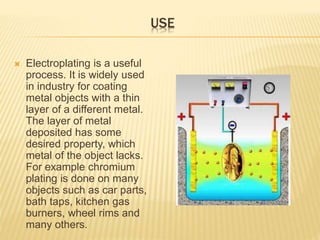
 Electroplating is a useful
process. It is widely used
in industry for coating
metal objects with a thin
layer of a different metal.
The layer of metal
deposited has some
desired property, which
metal of the object lacks.
For example chromium
plating is done on many
objects such as car parts,
bath taps, kitchen gas
burners, wheel rims and
many others.
Here is another creative presentation by your
slide maker on the topic “ELECTROPLATING".
Hope you like it. If you like it then please, *like*,
*Download* and *Share*.
By- Slide_maker4u (Abhishek Sharma)
*******For presentation Orders, contact me on
the Email addresses Written below********
Email- Sharmaabhishek576@gmail.com
or
Sharmacomputers87@gmail.com
*******THANK YOU***************
Electroplating

Electroplating

  • 1.
  • 2.
    INTRODUCTION  Electroplating isa process that uses electrical current to reduce dissolve d metal cations so that they form a coherent metal coating on an electrode. The term is also used for electrical oxidation of anions onto a solid subtrate, as in the formation silver chloride on silver wire to make silver/silver-chloride electrodes. Electroplating is primarily used to change the surface properties of an object (e.g. abrasion and wear resistance, corrosion protection,lubr icity, aesthetic qualities, etc.), but may also be used to build up thickness on undersized parts or to form objects by electroforming.
  • 3.
    PROCESS  The cationsassociate with the anions in the solution. These cations are reduced at the cathode to deposit in the metallic, zero valence state. For example, in an acid solution, copper is oxidized at the anode to Cu2+ by losing two electrons. The Cu2+ associates with the anion SO4 2- in the solution to form copper sulfate. At the cathode, the Cu2+ is reduced to metallic copper by gaining two electrons. The result is the effective transfer of copper from the anode source to a plate covering the cathode.
  • 4.
     The platingis most commonly a single metallic element, not an alloy. However, some alloys can be electrodeposited, notably brass and solder.  Many plating baths include cyanides of other metals (e.g., potassium cyanide) in addition to cyanides of the metal to be deposited. These free cyanides facilitate anode corrosion, help to maintain a constant metal ion level and contribute to conductivity. Additionally, non- metal chemicals such ascarbonates and phosphates may be added to increase conductivity.  When plating is not desired on certain areas of the substrate, stop-offs are applied to prevent the bath from coming in contact with the substrate. Typical stop-offs include tape, foil, lacquers, and waxes.
  • 5.
    EFFECTS  Electroplating changesthe chemical, physical, and mechanical properties of the workpiece. An example of a chemical change is when nickel plating improves corrosion resistance. An example of a physical change is a change in the outward appearance. An example of a mechanical change is a change in tensile strength or surface hardness which is a required attribute in tooling industry.
  • 6.
    USE  Electroplating isa useful process. It is widely used in industry for coating metal objects with a thin layer of a different metal. The layer of metal deposited has some desired property, which metal of the object lacks. For example chromium plating is done on many objects such as car parts, bath taps, kitchen gas burners, wheel rims and many others.
  • 7.
    Here is anothercreative presentation by your slide maker on the topic “ELECTROPLATING". Hope you like it. If you like it then please, *like*, *Download* and *Share*. By- Slide_maker4u (Abhishek Sharma) *******For presentation Orders, contact me on the Email addresses Written below******** Email- Sharmaabhishek576@gmail.com or Sharmacomputers87@gmail.com *******THANK YOU***************