Downloaded 155 times
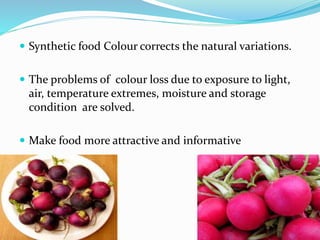
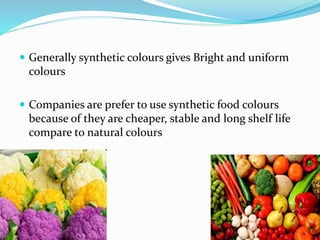
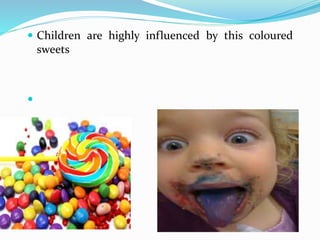
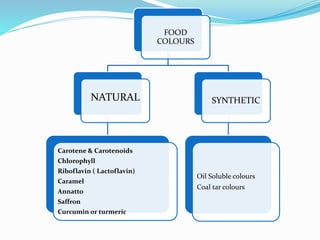
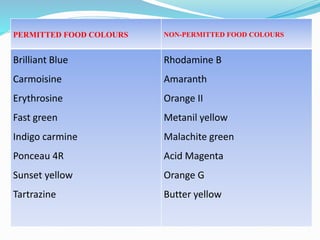
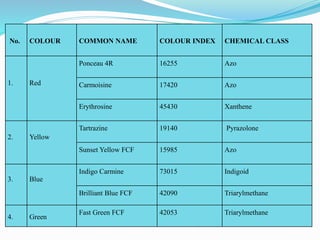
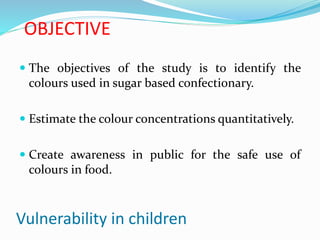
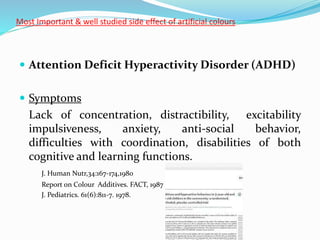
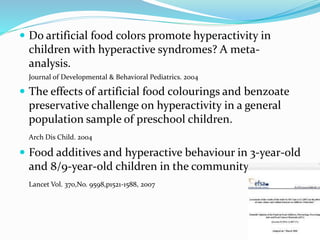
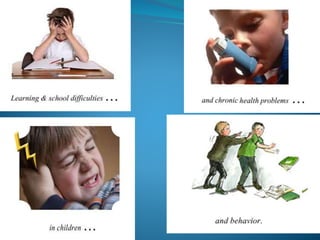
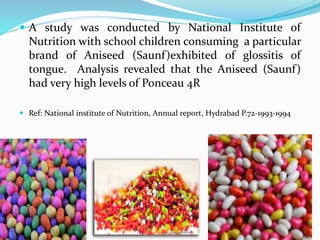
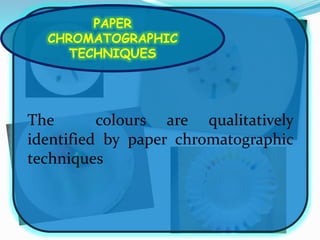
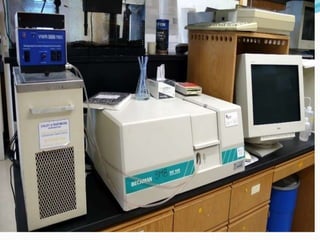
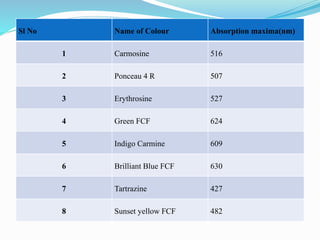
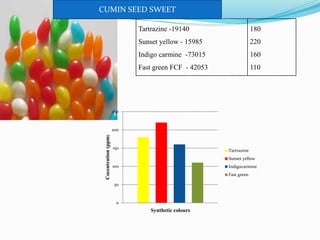
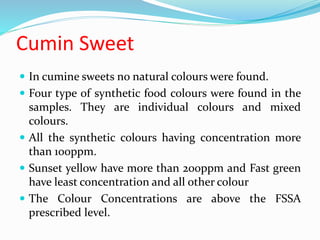
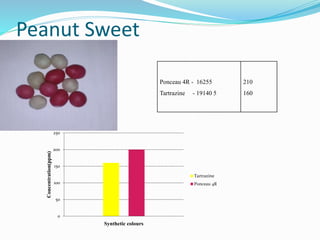
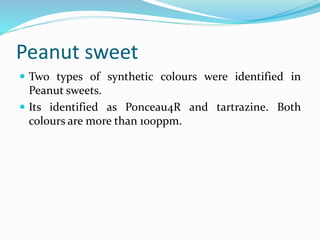
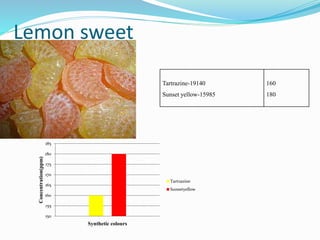
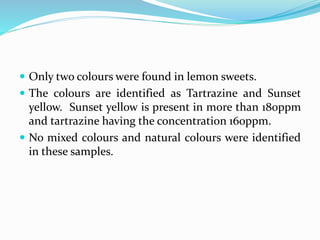
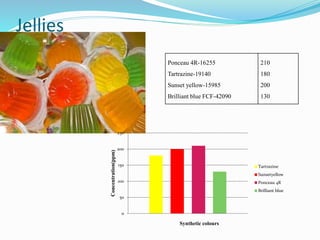
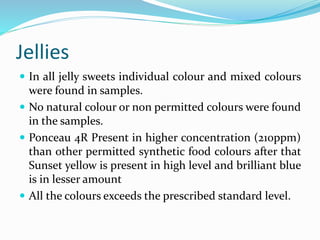
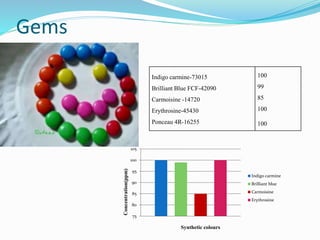
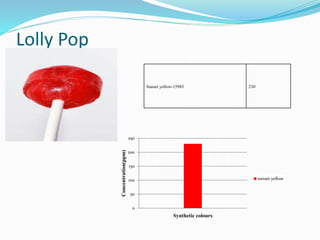
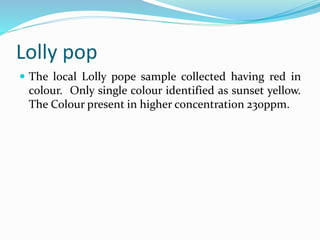
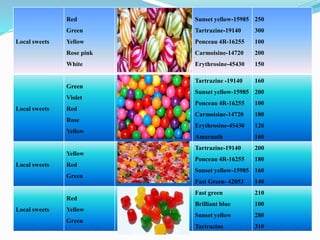
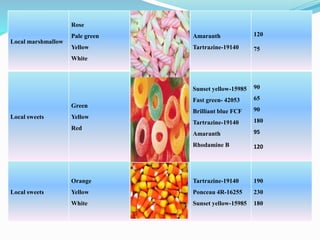
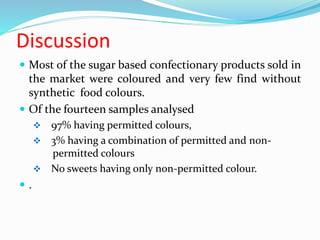
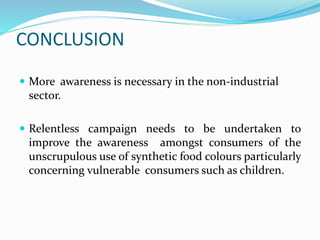


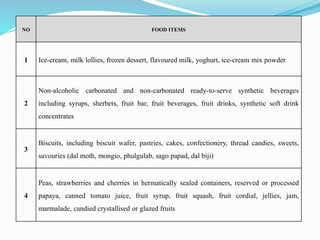
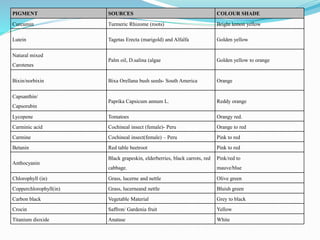

This document discusses the use of synthetic colours in food. It begins by explaining how synthetic colours are added to foods to attract consumers as colour is a major factor in food acceptance. Synthetic colours correct natural variations and solve problems like colour loss during storage. They provide bright, uniform colours and are cheaper and more stable than natural colours. However, synthetic colours can cause issues like attention deficit hyperactivity disorder (ADHD) in children who are more vulnerable. The document then analyses different sweets and finds that most contain synthetic colours above permitted levels, with tartrazine and sunset yellow being most common. It concludes by recommending continued efforts to increase awareness of risks among manufacturers and consumers.


![UK poulmi maam [Autosaved].pptx](https://cdn.slidesharecdn.com/ss_thumbnails/ukpoulmimaamautosaved-221118214236-4ef0cefe-thumbnail.jpg?width=640&height=640&fit=bounds)


