 What is communication
 What is communication skills
 Ways of communication
 Verbal communication
 Non verbal communication
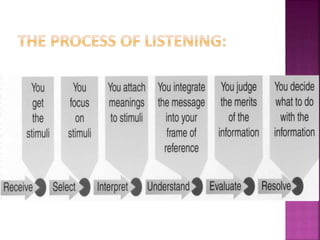
 Listening skills
 Communication styles
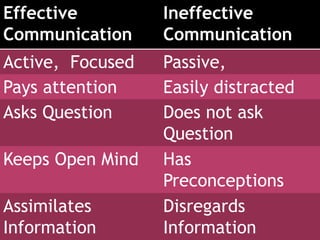
 Effective and ineffective
communication
 Characteristics of a good
communicator
 Barriers to communication
 Ways to overcome these
barriers
 How to improve
communication skills
 Consequences of ineffective
communication
 Communication skills in
clinical settings
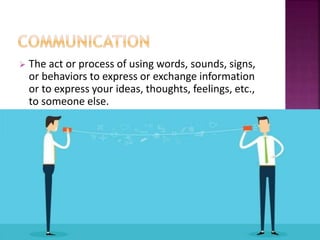
 The act or process of using words, sounds, signs,
or behaviors to express or exchange information
or to express your ideas, thoughts, feelings, etc.,
to someone else.
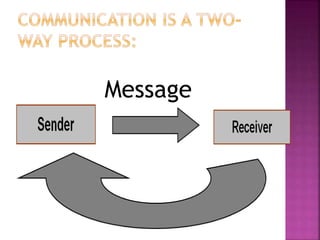
Message
Communication skills are set of skills
required for effective communication
The purpose of communication is to get
your message across to others.
This is a process that involves both the
sender of the message and the receiver.
This process leaves room for error, with
messages often misinterpreted by one or
more of the parties involved. This causes
unnecessary confusion and counter
productivity.
In fact, a message is successful only when
both the sender and the receiver perceive
it in the same way. By successfully getting
your message across, you convey your
thoughts and ideas effectively.
 Verbal communication
 Written communication
 Non verbal communication
 Listening
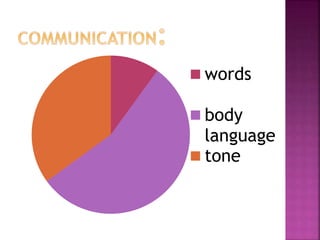
words
body
language
tone
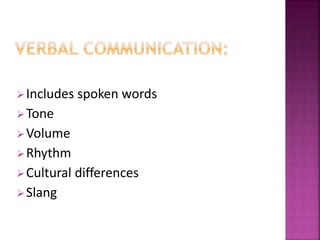
Includes spoken words
Tone
Volume
Rhythm
Cultural differences
Slang
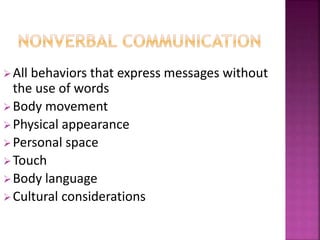
All behaviors that express messages without
the use of words
Body movement
Physical appearance
Personal space
Touch
Body language
Cultural considerations
Active listening sends the message that
you want to understand what is being
said, and the person speaking is
important to you.
Being a good listener builds healthy
relationships
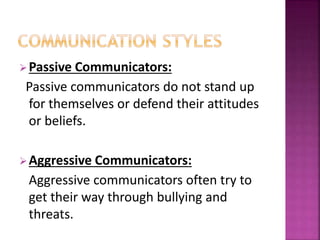
Passive Communicators:
Passive communicators do not stand up
for themselves or defend their attitudes
or beliefs.
Aggressive Communicators:
Aggressive communicators often try to
get their way through bullying and
threats.
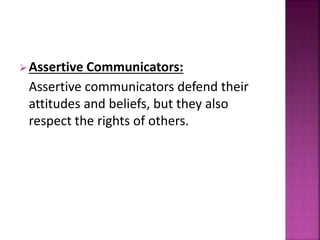
Assertive Communicators:
Assertive communicators defend their
attitudes and beliefs, but they also
respect the rights of others.
Effective
Communication
Ineffective
Communication
Active, Focused Passive,
Pays attention Easily distracted
Asks Question Does not ask
Question
Keeps Open Mind Has
Preconceptions
Assimilates
Information
Disregards
Information
Self-awareness: be aware of the feeling
you have about yourself and others
Empathy: ability to recognize and share
the emotions and state of mind of another
and to understand the meaning and
significance of that person’s behavior
 Genuineness: Convey a sense of care and
truthfulness.
 Respect: shows respect towards the
opinion or thinking of others.
Language
Values and beliefs
Gender and age
Economic status
Educational level
Physical barriers
Attitude
Timing
Understanding of message
Trust
Physical barriers- try to use face-to-face
communication frequently.
Perceptual barriers- recognize we have
different values and try to be acquainted
with other person’s values.
Emotional barriers- try to build trust
Cultural barriers- recognize differences in
meaning, pacing, volume and gesture,
space, and touch.
Language barriers- learn more about
different cultures, relax, try to find a place
where there are not many additional
stimuli to take away from the exchange of
messages
Knowledge of the subject
Know your audience—individuals or
groups
Message--- clear, concise, to the
point, well organized
Channel--- verbal, non verbal
including written
Feedback---verbal or non verbal
Context-----environment setting
Control of anxiety
Etiquettes (manners)
Poor learning--- hindrance in education
Poor performance or in-competency
Misunderstandings and confusions
Psychological problems
Knowledge
Welcome remarks
Calling by name
Shaking hands
Active listening
Positive body language
Questioning
Explaining
Answering the queries
Reassurances and problem solving
attitude
communication skills

communication skills

  • 3.
     What iscommunication  What is communication skills  Ways of communication  Verbal communication  Non verbal communication  Listening skills  Communication styles  Effective and ineffective communication  Characteristics of a good communicator  Barriers to communication  Ways to overcome these barriers  How to improve communication skills  Consequences of ineffective communication  Communication skills in clinical settings
  • 4.
     The actor process of using words, sounds, signs, or behaviors to express or exchange information or to express your ideas, thoughts, feelings, etc., to someone else.
  • 5.
  • 6.
    Communication skills areset of skills required for effective communication The purpose of communication is to get your message across to others. This is a process that involves both the sender of the message and the receiver.
  • 7.
    This process leavesroom for error, with messages often misinterpreted by one or more of the parties involved. This causes unnecessary confusion and counter productivity. In fact, a message is successful only when both the sender and the receiver perceive it in the same way. By successfully getting your message across, you convey your thoughts and ideas effectively.
  • 8.
     Verbal communication Written communication  Non verbal communication  Listening
  • 9.
  • 10.
  • 11.
    All behaviors thatexpress messages without the use of words Body movement Physical appearance Personal space Touch Body language Cultural considerations
  • 12.
    Active listening sendsthe message that you want to understand what is being said, and the person speaking is important to you. Being a good listener builds healthy relationships
  • 14.
    Passive Communicators: Passive communicatorsdo not stand up for themselves or defend their attitudes or beliefs. Aggressive Communicators: Aggressive communicators often try to get their way through bullying and threats.
  • 15.
    Assertive Communicators: Assertive communicatorsdefend their attitudes and beliefs, but they also respect the rights of others.
  • 16.
    Effective Communication Ineffective Communication Active, Focused Passive, Paysattention Easily distracted Asks Question Does not ask Question Keeps Open Mind Has Preconceptions Assimilates Information Disregards Information
  • 17.
    Self-awareness: be awareof the feeling you have about yourself and others Empathy: ability to recognize and share the emotions and state of mind of another and to understand the meaning and significance of that person’s behavior
  • 18.
     Genuineness: Conveya sense of care and truthfulness.  Respect: shows respect towards the opinion or thinking of others.
  • 19.
    Language Values and beliefs Genderand age Economic status Educational level Physical barriers Attitude Timing Understanding of message Trust
  • 20.
    Physical barriers- tryto use face-to-face communication frequently. Perceptual barriers- recognize we have different values and try to be acquainted with other person’s values. Emotional barriers- try to build trust
  • 21.
    Cultural barriers- recognizedifferences in meaning, pacing, volume and gesture, space, and touch. Language barriers- learn more about different cultures, relax, try to find a place where there are not many additional stimuli to take away from the exchange of messages
  • 22.
    Knowledge of thesubject Know your audience—individuals or groups Message--- clear, concise, to the point, well organized Channel--- verbal, non verbal including written Feedback---verbal or non verbal Context-----environment setting Control of anxiety Etiquettes (manners)
  • 23.
    Poor learning--- hindrancein education Poor performance or in-competency Misunderstandings and confusions Psychological problems
  • 24.
    Knowledge Welcome remarks Calling byname Shaking hands Active listening Positive body language Questioning Explaining Answering the queries Reassurances and problem solving attitude