Identity styles of communication.Communication skillsESS 101-3
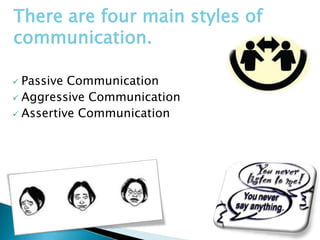
There are four main styles of communication.Passive Communication
Aggressive Communication
Assertive CommunicationPASSIVE COMMUNICATION is a style in which individuals have developed a pattern of avoiding expressing their opinions or feelings, protecting their rights, and identifying and meeting their needs.Passive communication is usually born of low self-esteem. These individuals believe: “I’m not worth taking care of.” Passive Communication.
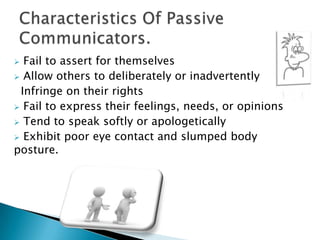
 Fail to assert for themselves
 Allow others to deliberately or inadvertently   Infringe on their rights  Fail to express their feelings, needs, or opinions
 Tend to speak softly or apologetically
 Exhibit poor eye contact and slumped body     posture.  Characteristics Of Passive Communicators.
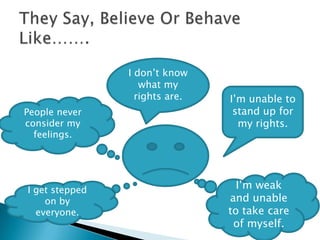
They Say, Believe Or Behave Like…….I don’t know what my rights are.I’m unable to stand up for my rights.People never consider my feelings.I’m weak and unable to take care of myself.I get stepped on by everyone.
Often feel anxious because life seems out of their control
 Often feel depressed because they feel stuck and hopeless
Often feel resentful (but are unaware of it) because their needs are not being met
 Often feel confused because they ignore their own feelings
Are unable to mature because real issues are never addressed Impacts Of Passive Communication.
AGGRESSIVE COMMUNICATION is a style in which individuals express their feelings and opinions and advocate for their needs in a way that violates the rights of others.Thus, aggressive communicators are verbally and/or physically abusive. Aggressive communication is born of low self-esteem, unhealed emotional wounds, and feelings of powerlessness.Aggressive Communication.
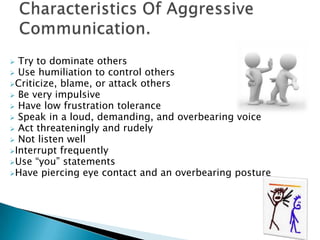
Characteristics Of Aggressive Communication. Try to dominate others
 Use humiliation to control others

Identity styles of communication

  • 1.
    Identity styles ofcommunication.Communication skillsESS 101-3
  • 2.
    There are fourmain styles of communication.Passive Communication
  • 3.
  • 4.
    Assertive CommunicationPASSIVE COMMUNICATIONis a style in which individuals have developed a pattern of avoiding expressing their opinions or feelings, protecting their rights, and identifying and meeting their needs.Passive communication is usually born of low self-esteem. These individuals believe: “I’m not worth taking care of.” Passive Communication.
  • 5.
    Fail toassert for themselves
  • 6.
    Allow othersto deliberately or inadvertently Infringe on their rights Fail to express their feelings, needs, or opinions
  • 7.
    Tend tospeak softly or apologetically
  • 8.
    Exhibit pooreye contact and slumped body posture.  Characteristics Of Passive Communicators.
  • 9.
    They Say, BelieveOr Behave Like…….I don’t know what my rights are.I’m unable to stand up for my rights.People never consider my feelings.I’m weak and unable to take care of myself.I get stepped on by everyone.
  • 10.
    Often feel anxiousbecause life seems out of their control
  • 11.
     Often feel depressedbecause they feel stuck and hopeless
  • 12.
    Often feel resentful(but are unaware of it) because their needs are not being met
  • 13.
     Often feel confusedbecause they ignore their own feelings
  • 14.
    Are unable tomature because real issues are never addressed Impacts Of Passive Communication.
  • 15.
    AGGRESSIVE COMMUNICATION isa style in which individuals express their feelings and opinions and advocate for their needs in a way that violates the rights of others.Thus, aggressive communicators are verbally and/or physically abusive. Aggressive communication is born of low self-esteem, unhealed emotional wounds, and feelings of powerlessness.Aggressive Communication.
  • 16.
    Characteristics Of AggressiveCommunication. Try to dominate others
  • 17.
     Use humiliation tocontrol others