
COMMUNICATING
FOR
RESULTS
Communicate
Clarify the message
Observe body language
Maintain individual self-esteem
Make your point clear, concise, and simple
Understand other points of view
Nurture others’ feelings
Involve yourself in the message
Comprehend the message
Attend to the message
Talk judiciously
Emphasize listening
Meet the objective of the
COMMUNICATION
4
COMMUNICATION
PROCESS
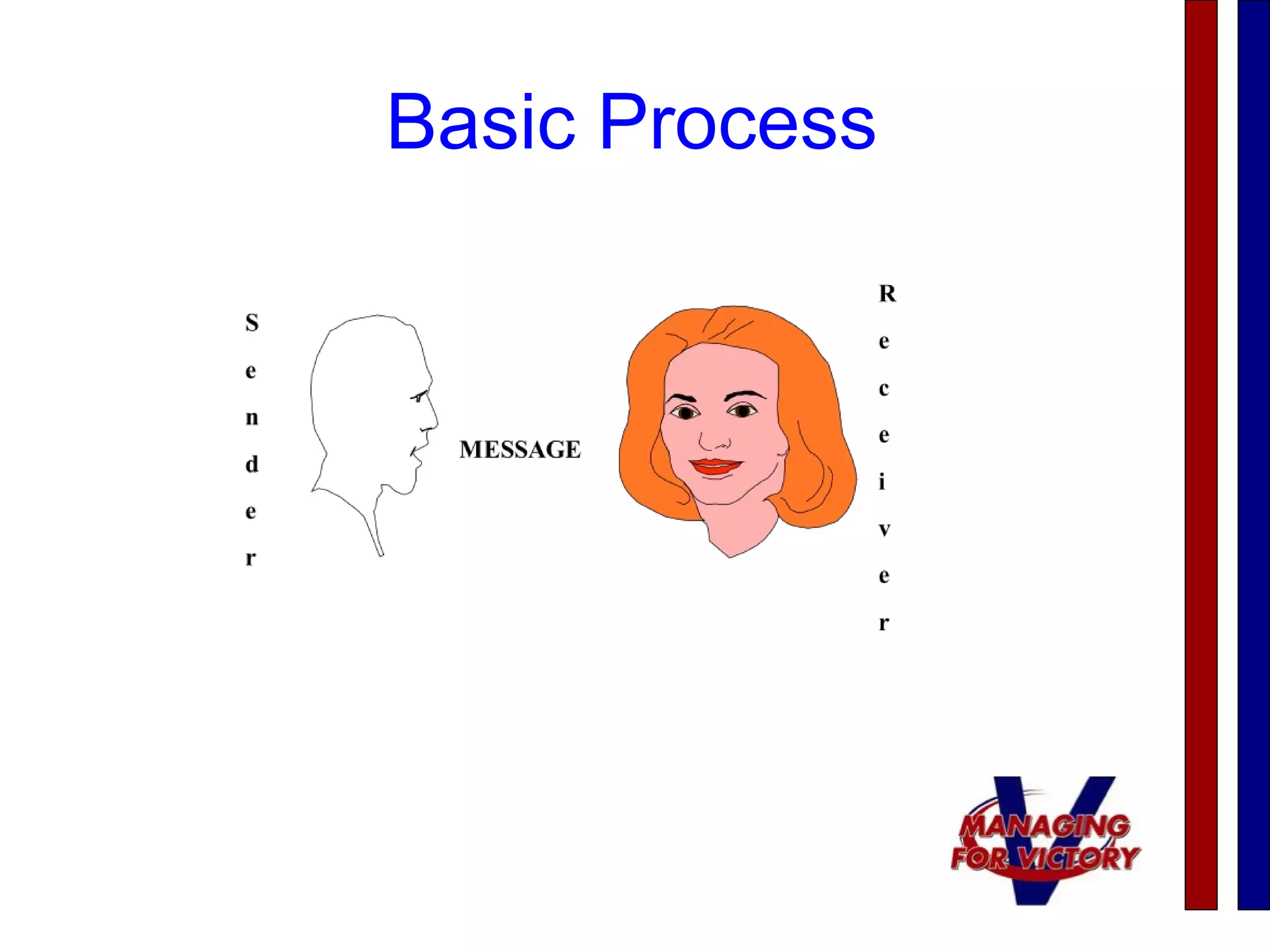
Basic Process
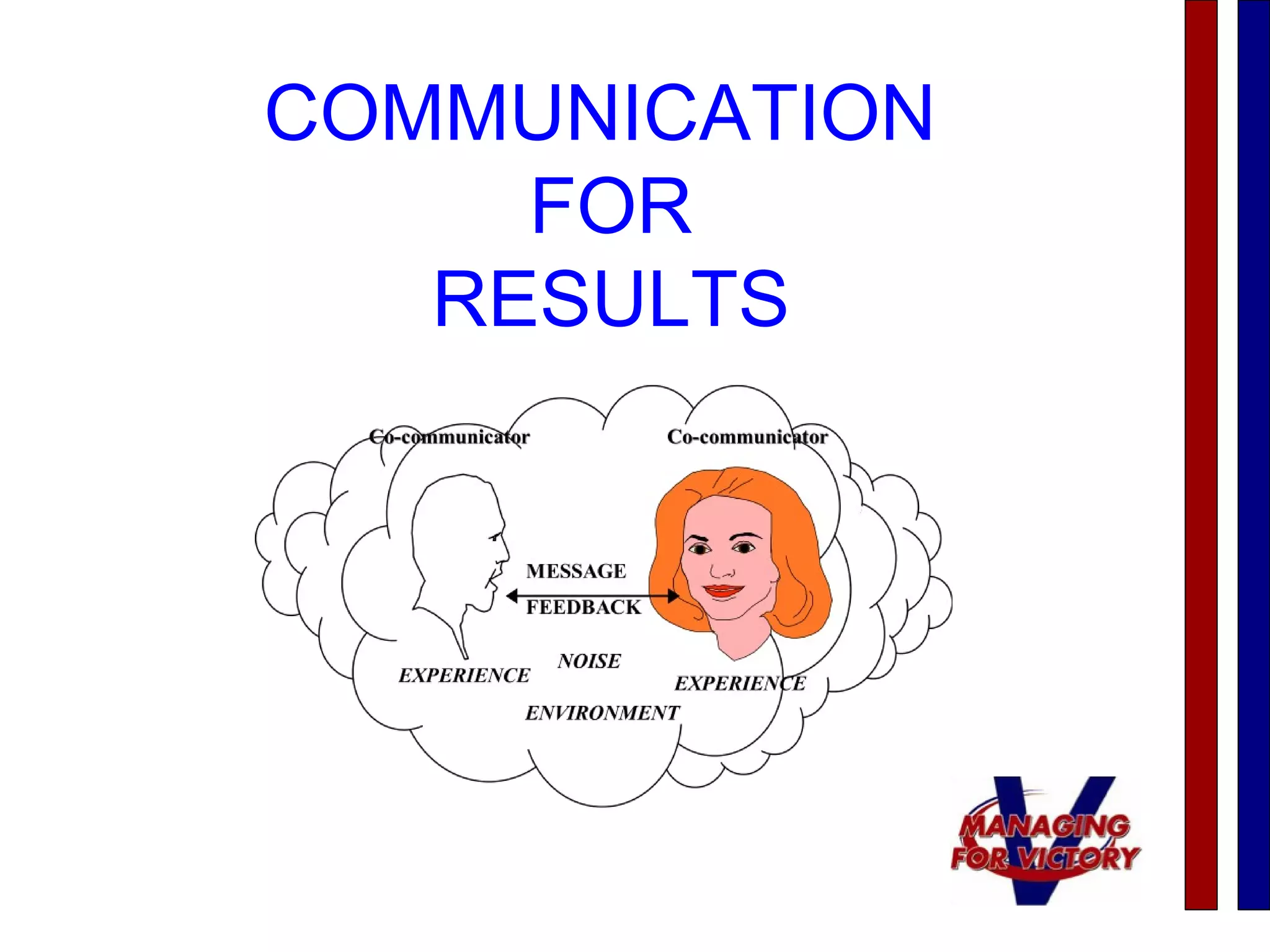
COMMUNICATION
FOR
RESULTS
7
BARRIERS
TO
COMMUNICATING
FOR
RESULTS
Barriers
Bad attitude defensive, negative, or faultfinding
Avoiding “real” issues or problems
Reluctance to be open and honest
Rebutting all discussion
Internalizing negative results or self-esteem
Evaluating the message too critically
Regarding all communication as personal
Semantics and jargon
9
VERBAL COMMUNICATION
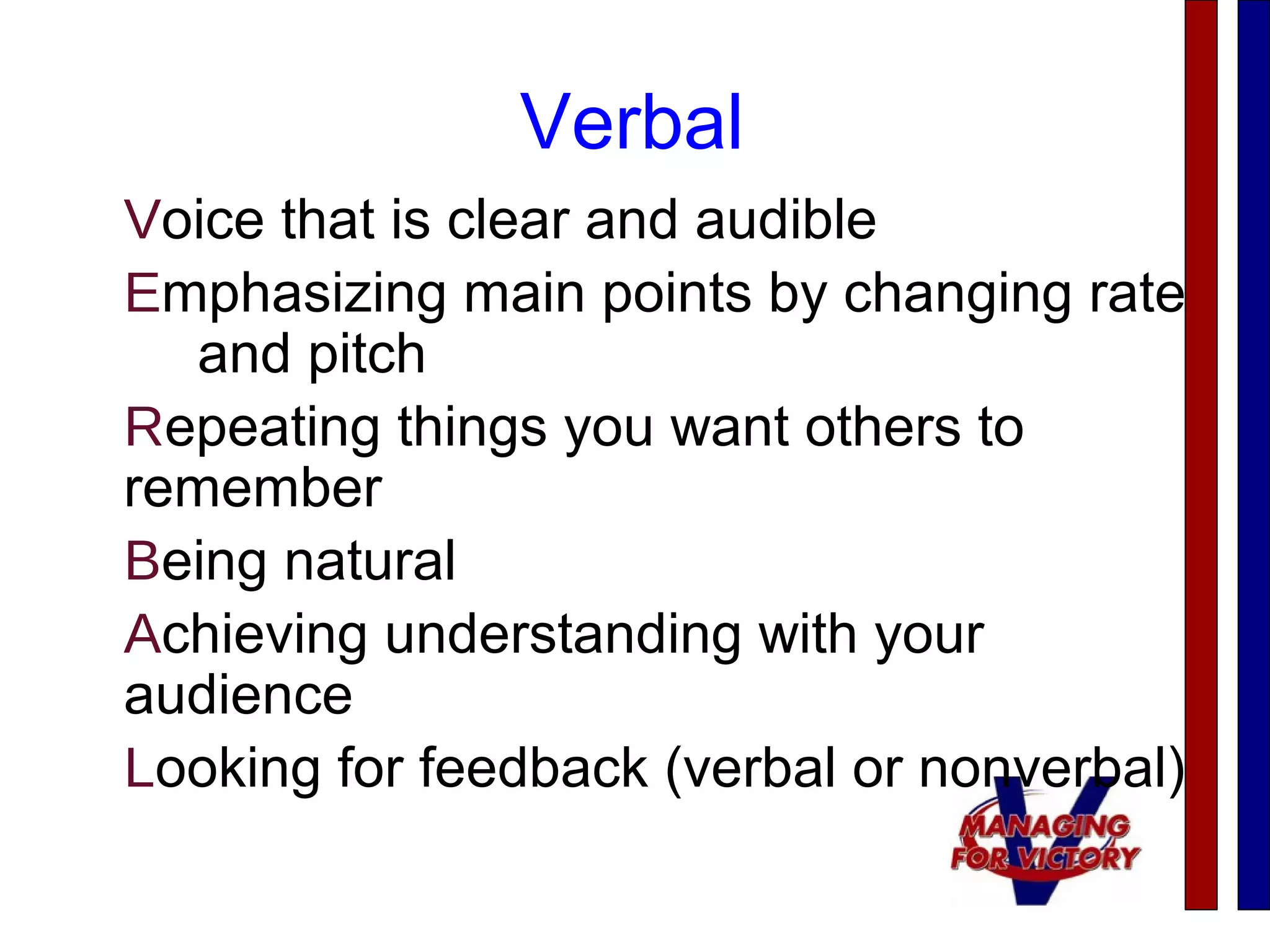
Verbal
Voice that is clear and audible
Emphasizing main points by changing rate
and pitch
Repeating things you want others to
remember
Being natural
Achieving understanding with your
audience
Looking for feedback (verbal or nonverbal)
11
NON-VERBAL
COMMUNICATION
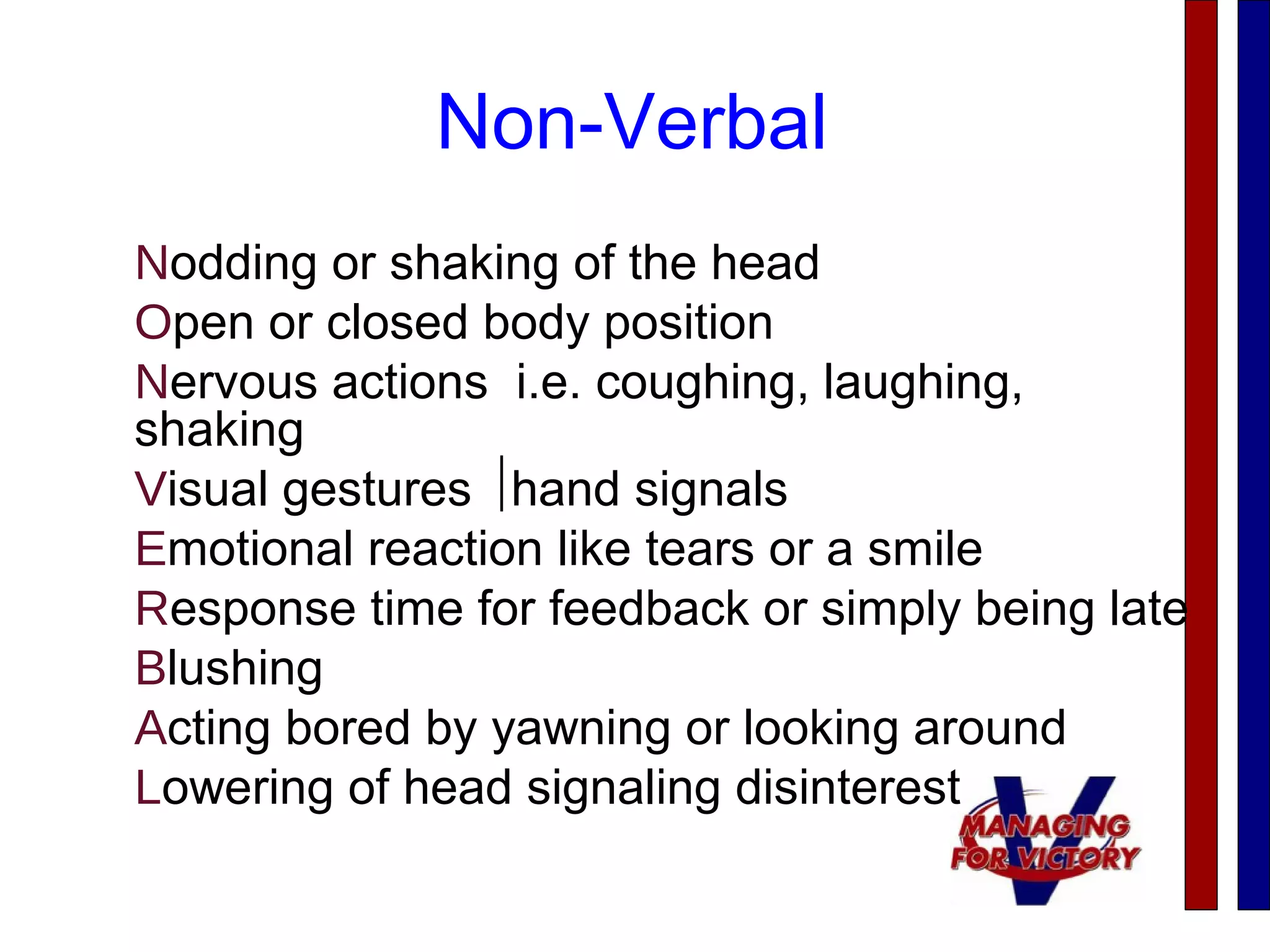
Non-Verbal
Nodding or shaking of the head
Open or closed body position
Nervous actions i.e. coughing, laughing,
shaking
Visual gestures hand signals
Emotional reaction like tears or a smile
Response time for feedback or simply being late
Blushing
Acting bored by yawning or looking around
Lowering of head signaling disinterest
13
ACTIVE
LISTENING
14
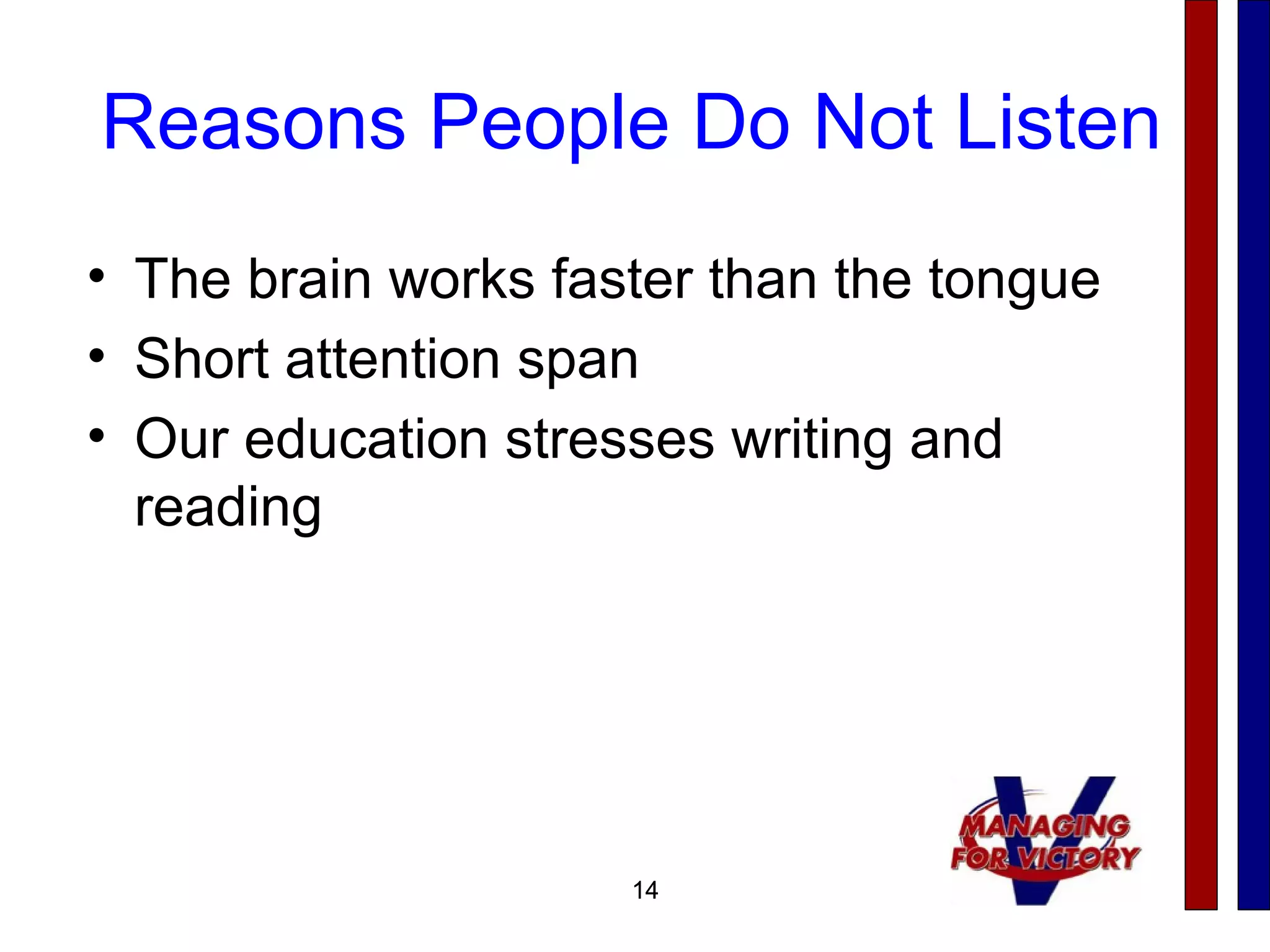
Reasons People Do Not Listen
• The brain works faster than the tongue
• Short attention span
• Our education stresses writing and
reading
14
15
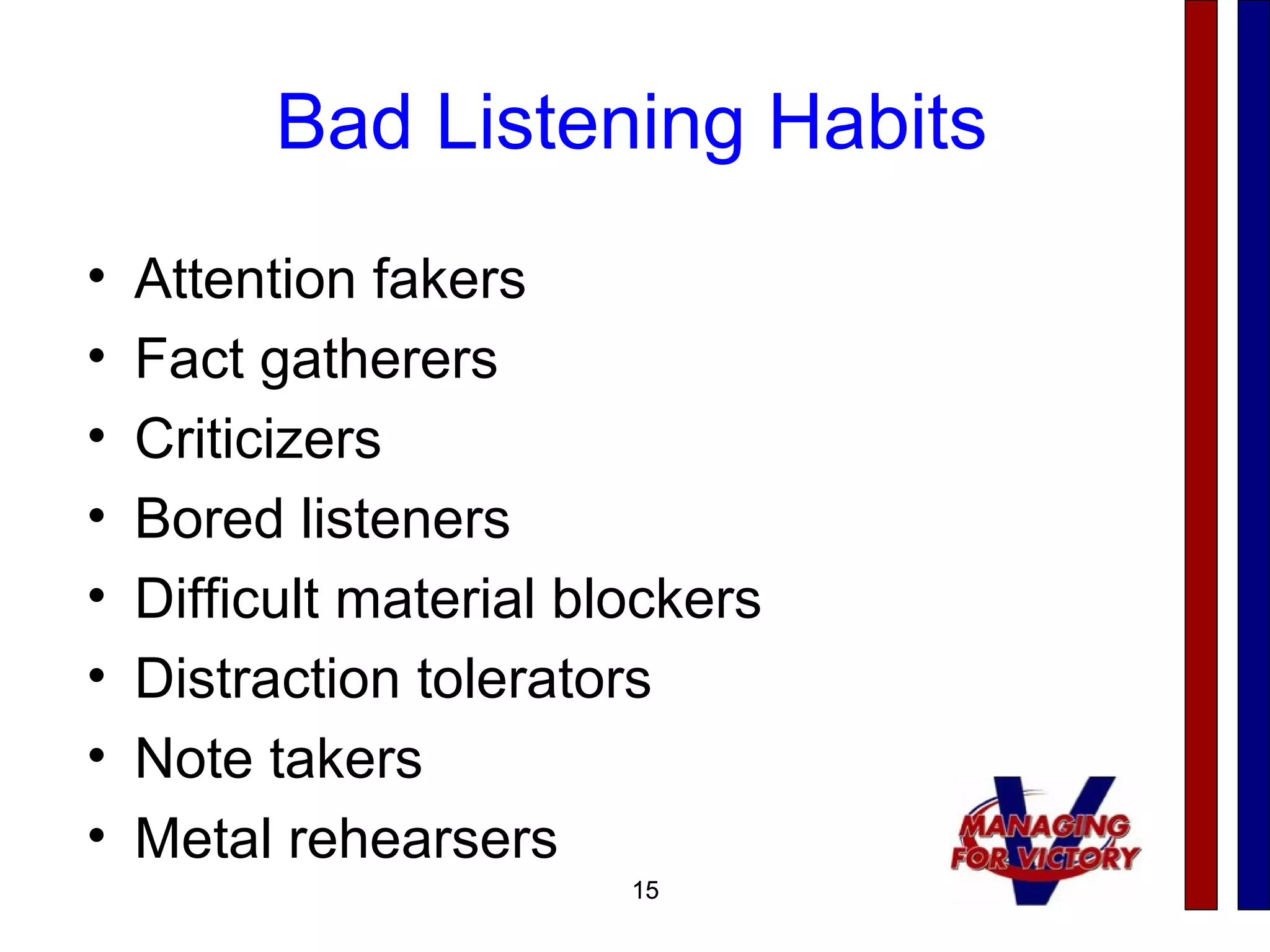
Bad Listening Habits
• Attention fakers
• Fact gatherers
• Criticizers
• Bored listeners
• Difficult material blockers
• Distraction tolerators
• Note takers
• Metal rehearsers
15
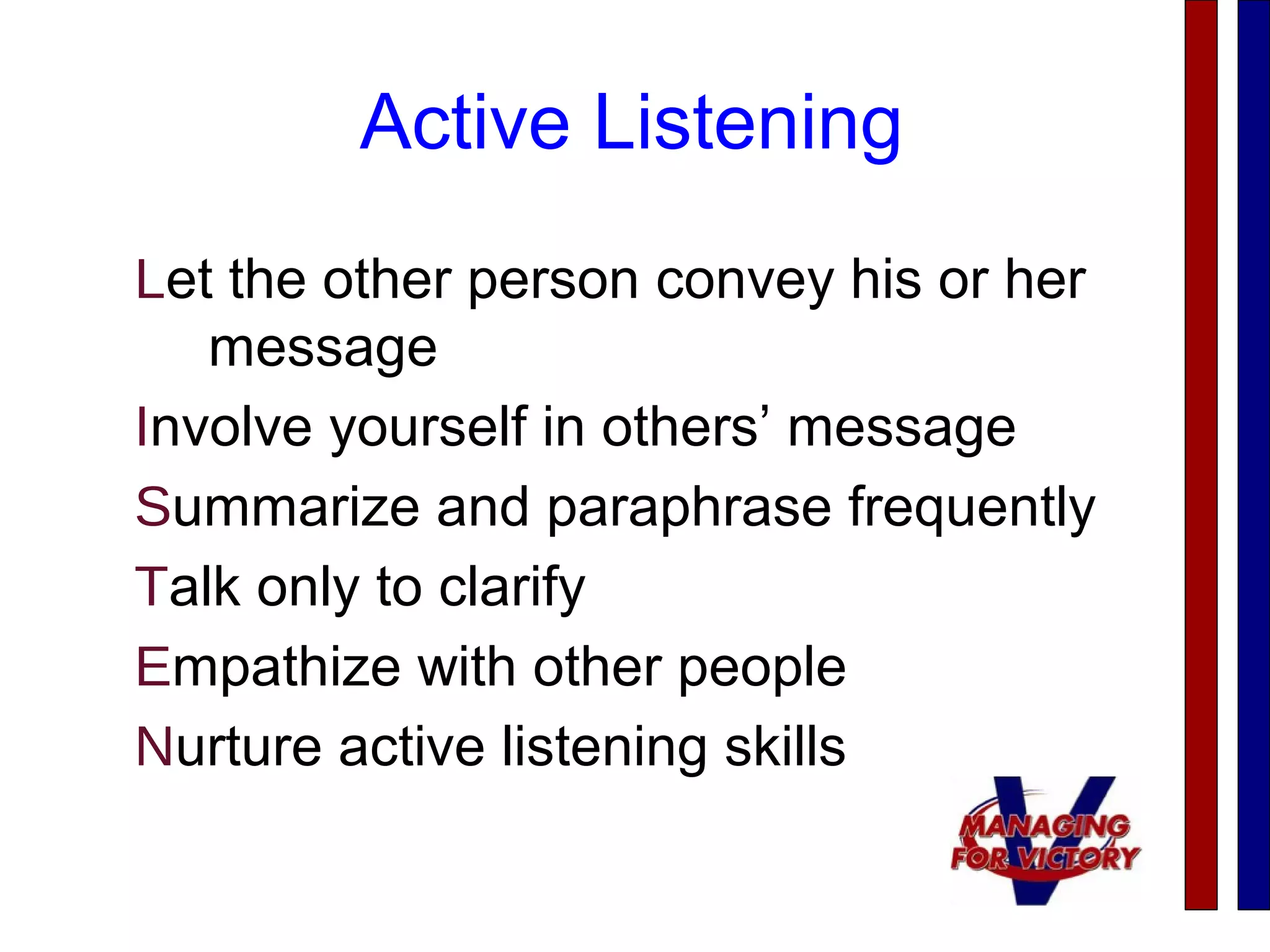
Active Listening
Let the other person convey his or her
message
Involve yourself in others’ message
Summarize and paraphrase frequently
Talk only to clarify
Empathize with other people
Nurture active listening skills
17
FEEDBACK
Feedback
Foster an open environment
Encourage feedback as a matter of
routine
Establish guidelines for feedback
Discuss unclear communications
Be direct, but considerate
Ask questions for better understanding
Consider feelings of others
Keep focused on the objective
19
Feedback Criteria Guidelines
• Provide feedback as soon as possible
• State why feedback is necessary
• Ask the person if they want feedback
• Describe the specific behavior or action
• Tell the reaction to the behavior or action
• Be direct, but considerate
• Owned by sender
• List consequences
• Include feelings and emotions
• Focus on situation and do not make it personal
• Check to make sure feedback is appropriate
• Provide opportunity for receiver to respond
• Work together to make things better
• Determine if behavior is changeable
• Maintain self-esteem of both giver and receiver
• Summarize actions
• Establish follow-up or process for monitoring progress19
20
DEVELOP
ACTION PLAN
21
22

Communicating for results

  • 1.
  • 2.
    Communicate Clarify the message Observebody language Maintain individual self-esteem Make your point clear, concise, and simple Understand other points of view Nurture others’ feelings Involve yourself in the message Comprehend the message Attend to the message Talk judiciously Emphasize listening
  • 3.
    Meet the objectiveof the COMMUNICATION
  • 4.
  • 5.
  • 6.
  • 7.
  • 8.
    Barriers Bad attitude defensive,negative, or faultfinding Avoiding “real” issues or problems Reluctance to be open and honest Rebutting all discussion Internalizing negative results or self-esteem Evaluating the message too critically Regarding all communication as personal Semantics and jargon
  • 9.
  • 10.
    Verbal Voice that isclear and audible Emphasizing main points by changing rate and pitch Repeating things you want others to remember Being natural Achieving understanding with your audience Looking for feedback (verbal or nonverbal)
  • 11.
  • 12.
    Non-Verbal Nodding or shakingof the head Open or closed body position Nervous actions i.e. coughing, laughing, shaking Visual gestures hand signals Emotional reaction like tears or a smile Response time for feedback or simply being late Blushing Acting bored by yawning or looking around Lowering of head signaling disinterest
  • 13.
  • 14.
    14 Reasons People DoNot Listen • The brain works faster than the tongue • Short attention span • Our education stresses writing and reading 14
  • 15.
    15 Bad Listening Habits •Attention fakers • Fact gatherers • Criticizers • Bored listeners • Difficult material blockers • Distraction tolerators • Note takers • Metal rehearsers 15
  • 16.
    Active Listening Let theother person convey his or her message Involve yourself in others’ message Summarize and paraphrase frequently Talk only to clarify Empathize with other people Nurture active listening skills
  • 17.
  • 18.
    Feedback Foster an openenvironment Encourage feedback as a matter of routine Establish guidelines for feedback Discuss unclear communications Be direct, but considerate Ask questions for better understanding Consider feelings of others Keep focused on the objective
  • 19.
    19 Feedback Criteria Guidelines •Provide feedback as soon as possible • State why feedback is necessary • Ask the person if they want feedback • Describe the specific behavior or action • Tell the reaction to the behavior or action • Be direct, but considerate • Owned by sender • List consequences • Include feelings and emotions • Focus on situation and do not make it personal • Check to make sure feedback is appropriate • Provide opportunity for receiver to respond • Work together to make things better • Determine if behavior is changeable • Maintain self-esteem of both giver and receiver • Summarize actions • Establish follow-up or process for monitoring progress19
  • 20.
  • 21.
  • 22.