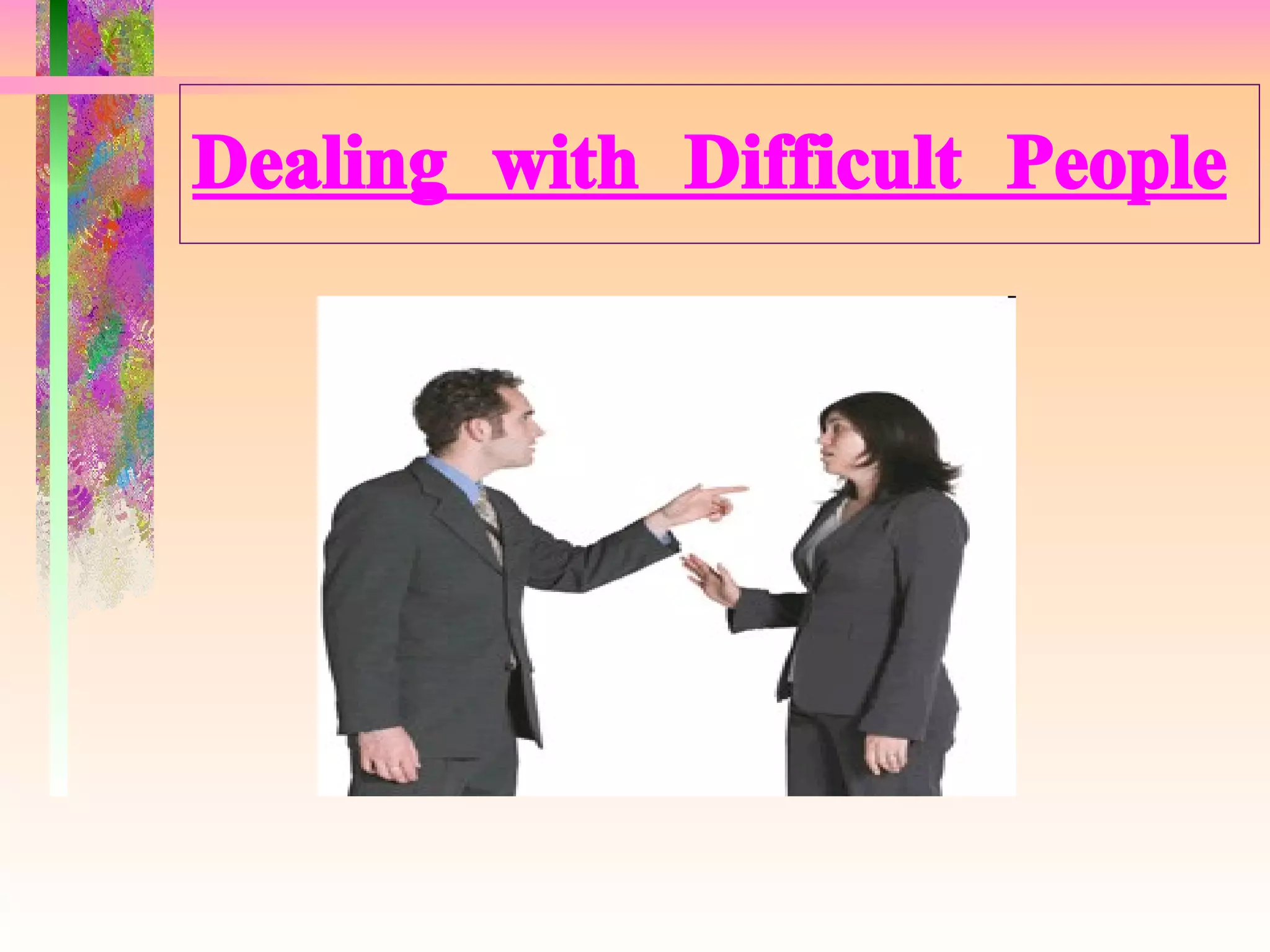
Dealing with Difficult People
Difficult People & Conflict •  Can be anyone –  even YOU! •  People are difficult because it works for them. •  Dealing with them can cause conflict
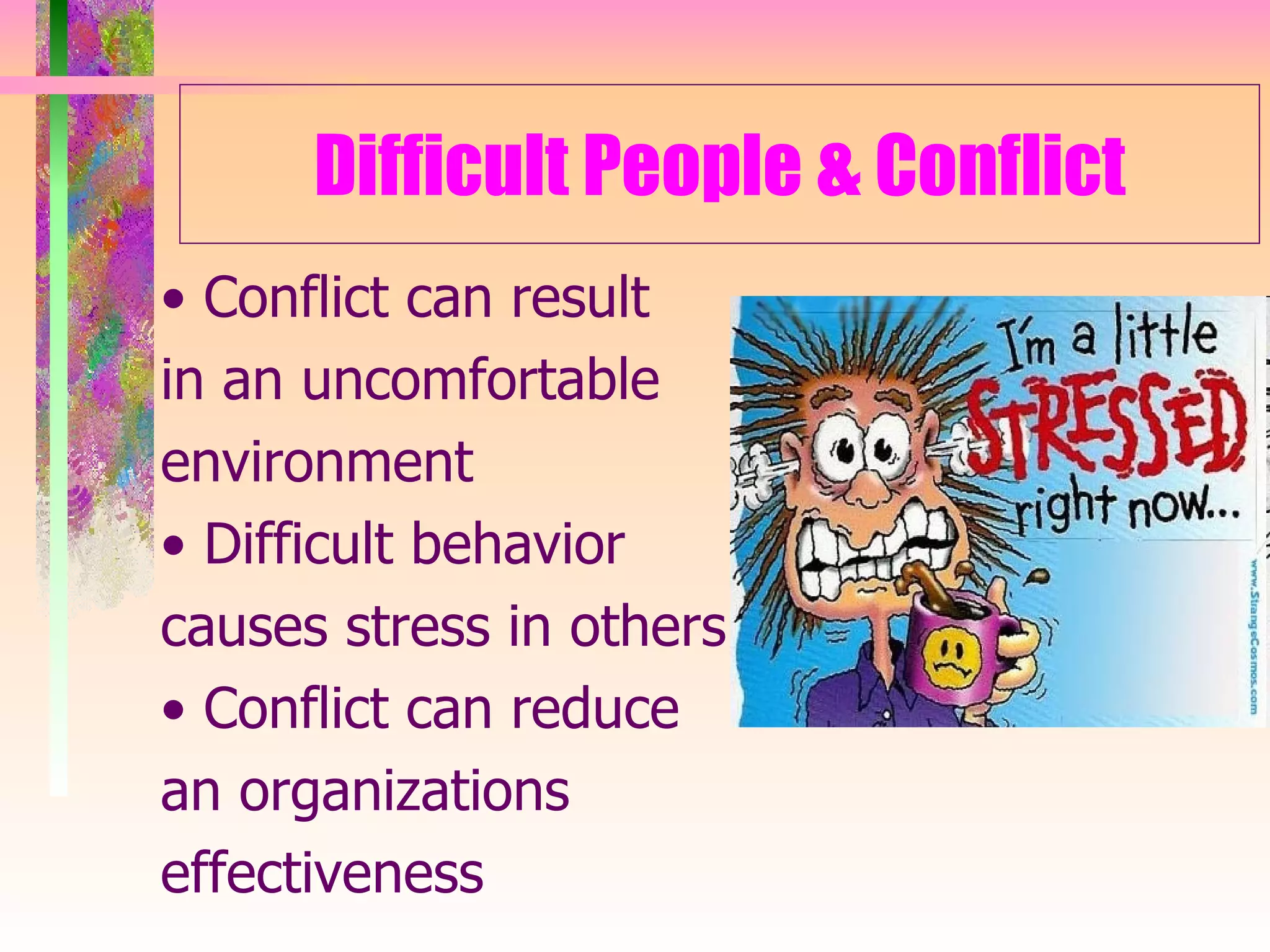
Difficult People & Conflict •  Conflict can result  in an uncomfortable environment •  Difficult behavior  causes stress in others •  Conflict can reduce  an organizations effectiveness
Types of Difficult People Bulldozer Bullies Firehose Stallers/Wafflers Silent Types Indecisives Sniper Control Freak Super-Agreeables It’s Not Up To Me
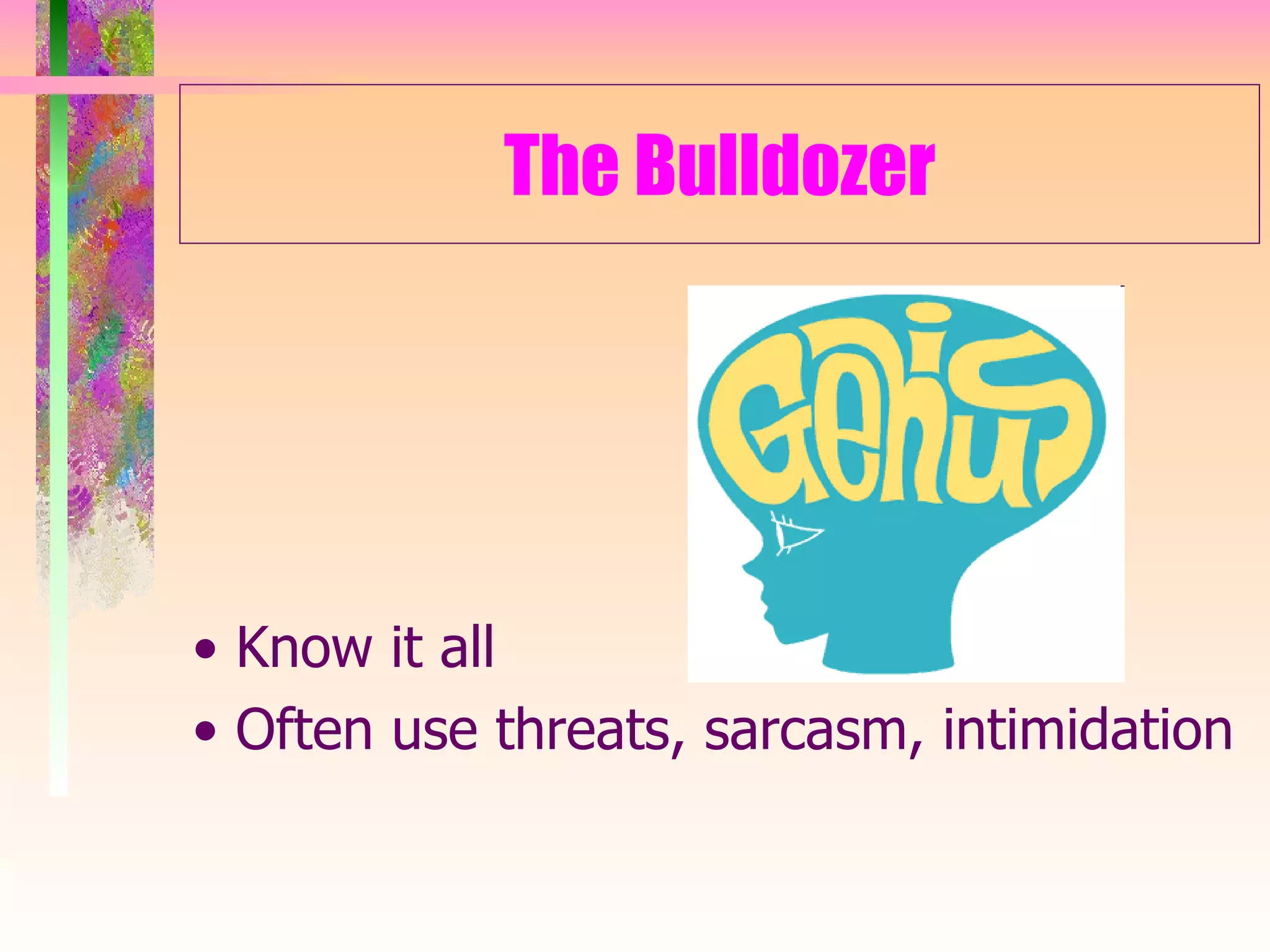
The Bulldozer •  Know it all •  Often use threats, sarcasm, intimidation
Dealing with Dozers Prepare yourself •  Ask questions •  Focus on solution •  Do not confront them
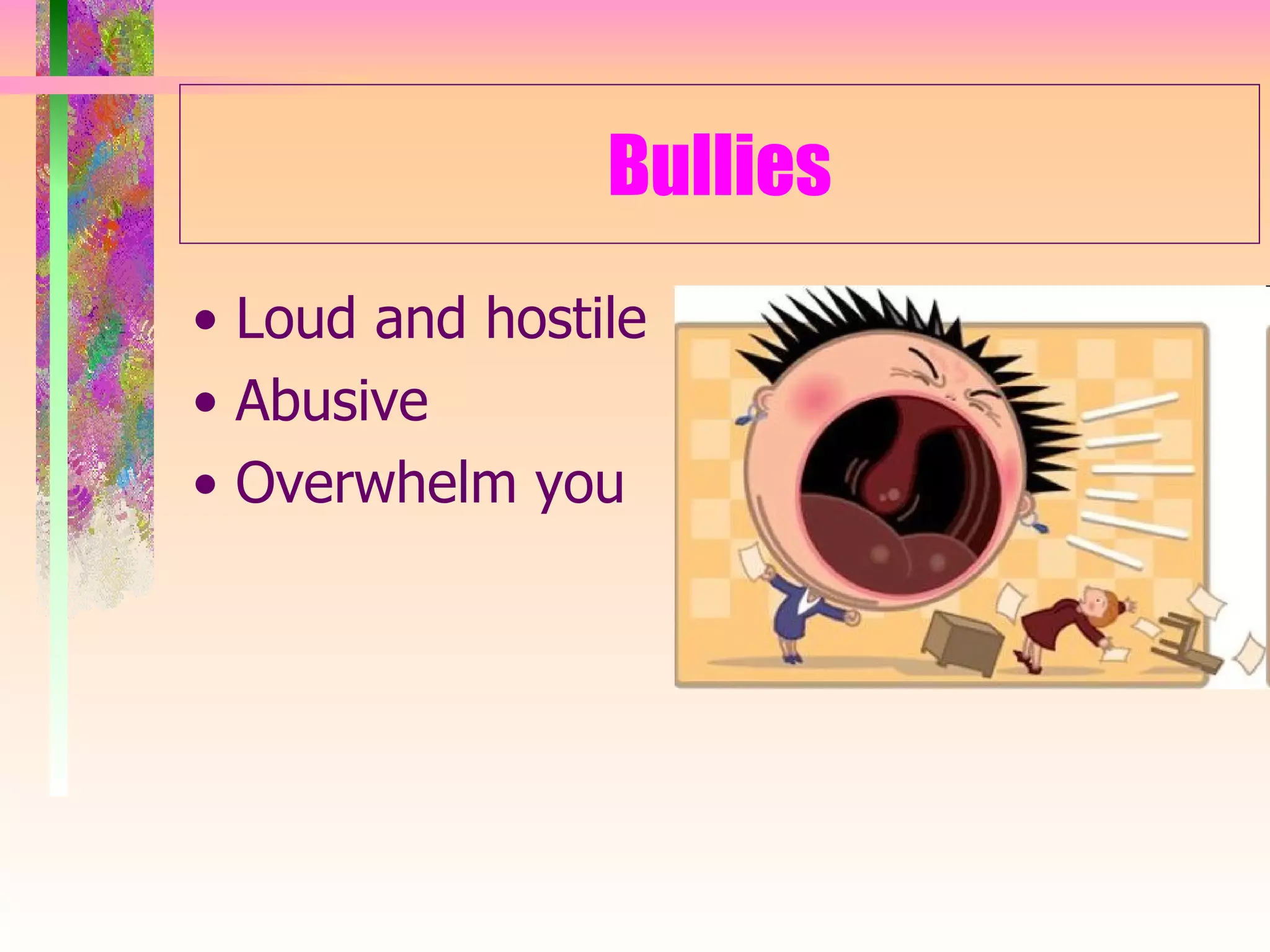
Bullies •  Loud and hostile •  Abusive •  Overwhelm you
Battling Bullies •  Let them run down •  Get their attention •  State your point non-aggressively •  Don’t allow interruptions •  Ask them to leave
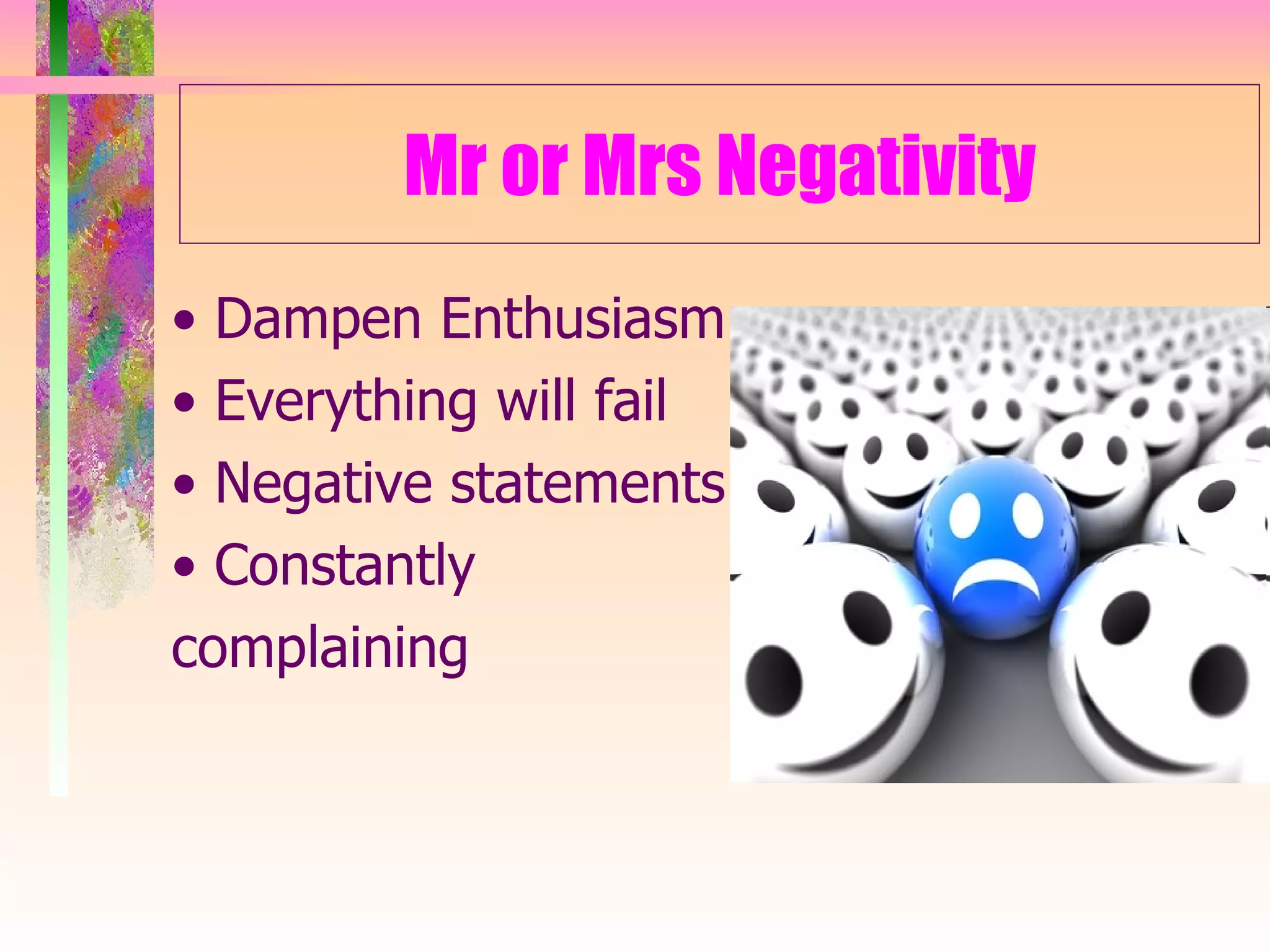
Mr or Mrs Negativity •  Dampen Enthusiasm •  Everything will fail •  Negative statements •  Constantly  complaining
Drain the Fire Hose •  Don’t be dragged down •  Don’t argue •  Listen – then ask for alternatives •  Don’t agree or apologize •  Switch to problem solving •  Take action on your own
Stallers •  Reluctant to turn down requests •  Want to be liked •  Afraid or unable to manage •  Paralyzed by tough decisions
Sideline the Stallers •  Surface hidden concerns •  Help them resolve the problem •  You make the decision – with caution •  Support decisions •  Keep control of situation
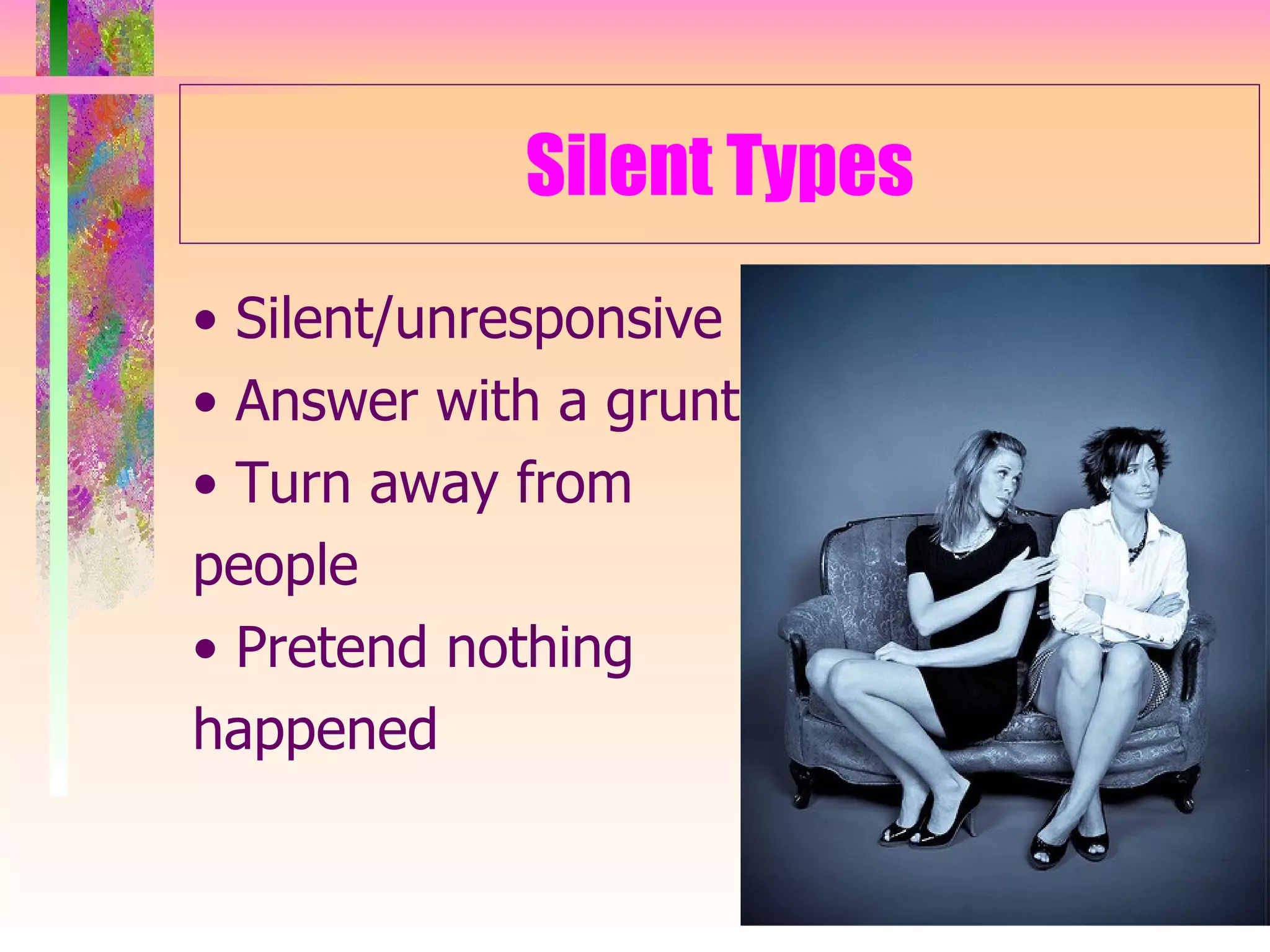
Silent Types •  Silent/unresponsive •  Answer with a grunt •  Turn away from  people •  Pretend nothing  happened
Open the Silent Ones •  Meet with them individually •  Give them time to open up •  Ask open-ended questions •  Wait for a response •  If no comments – comment on what’s happening
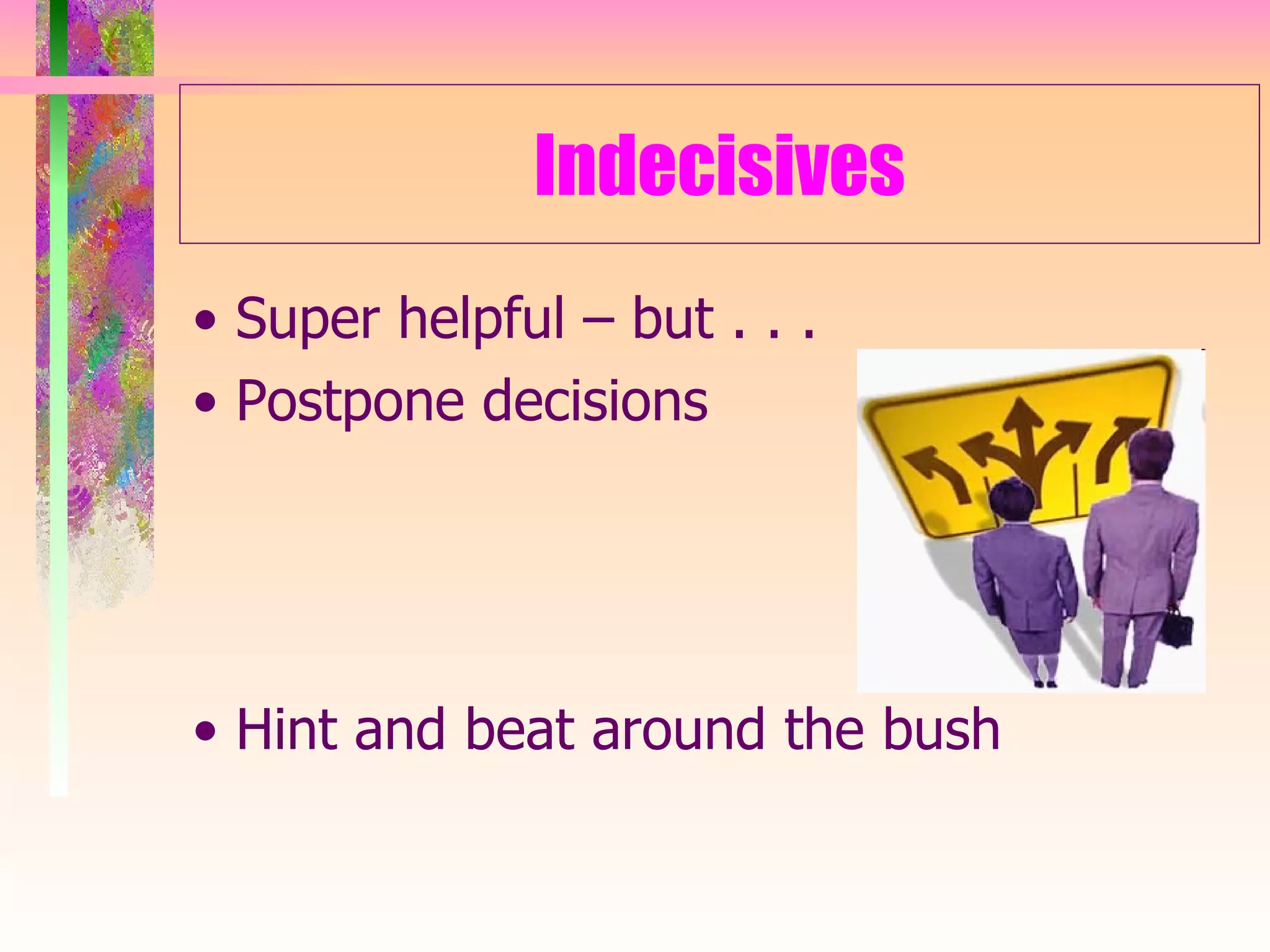
Indecisives •  Super helpful – but . . . •  Postpone decisions •  Hint and beat around the bush
Resolve Indecision •  Address fears with “what if” questions •  Help resolve problems when issues surface •  Help examine facts •  Watch for anger or withdrawal
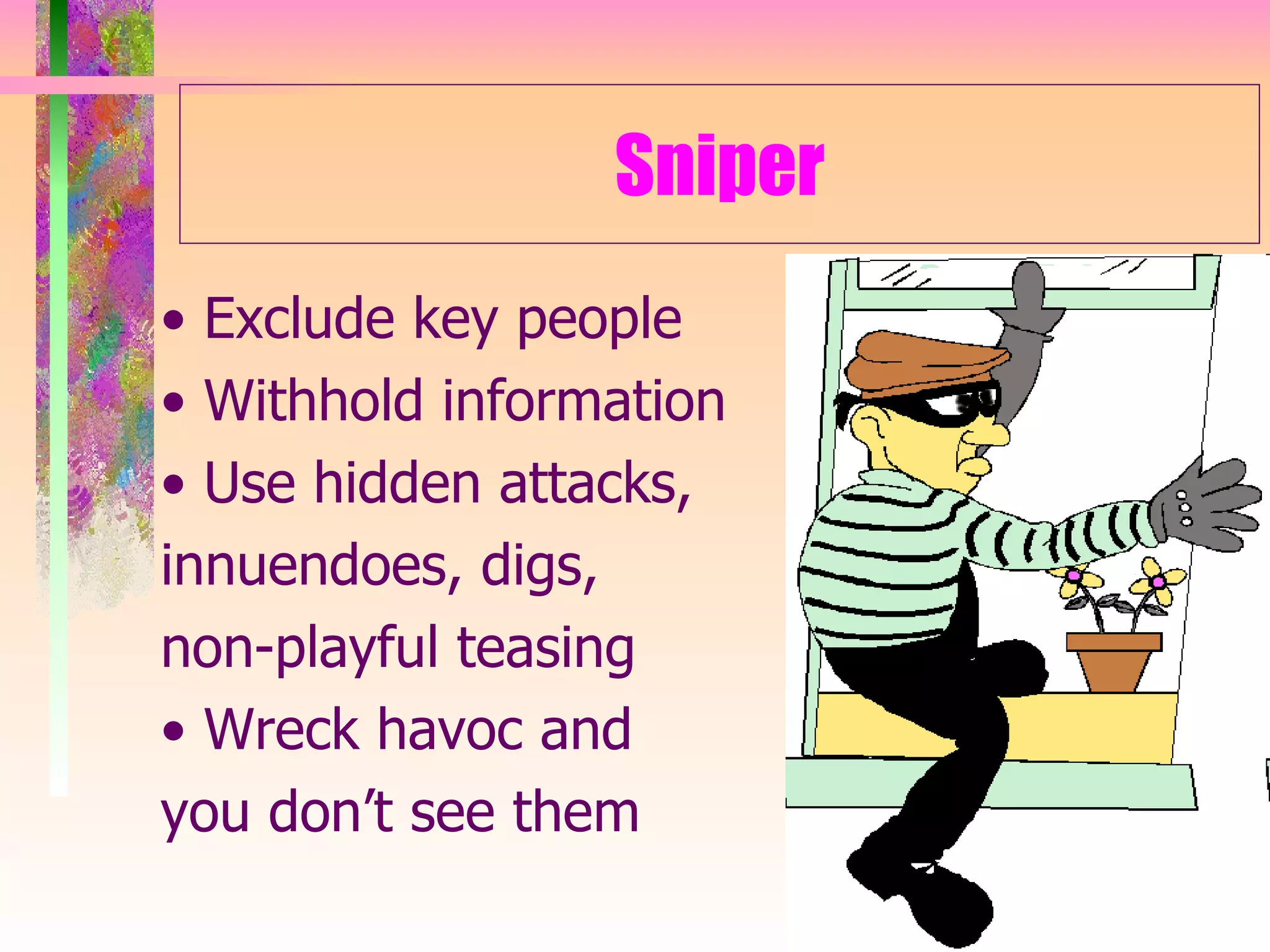
Sniper •  Exclude key people •  Withhold information •  Use hidden attacks,  innuendoes, digs, non-playful teasing •  Wreck havoc and  you don’t see them
Unload the Sniper •  Surface the attack •  Provide peaceful alternative •  Bring resistance into the open •  Seek group confirmation or denial of snipers criticism •  Use coaching/counseling if assigned tasks not done
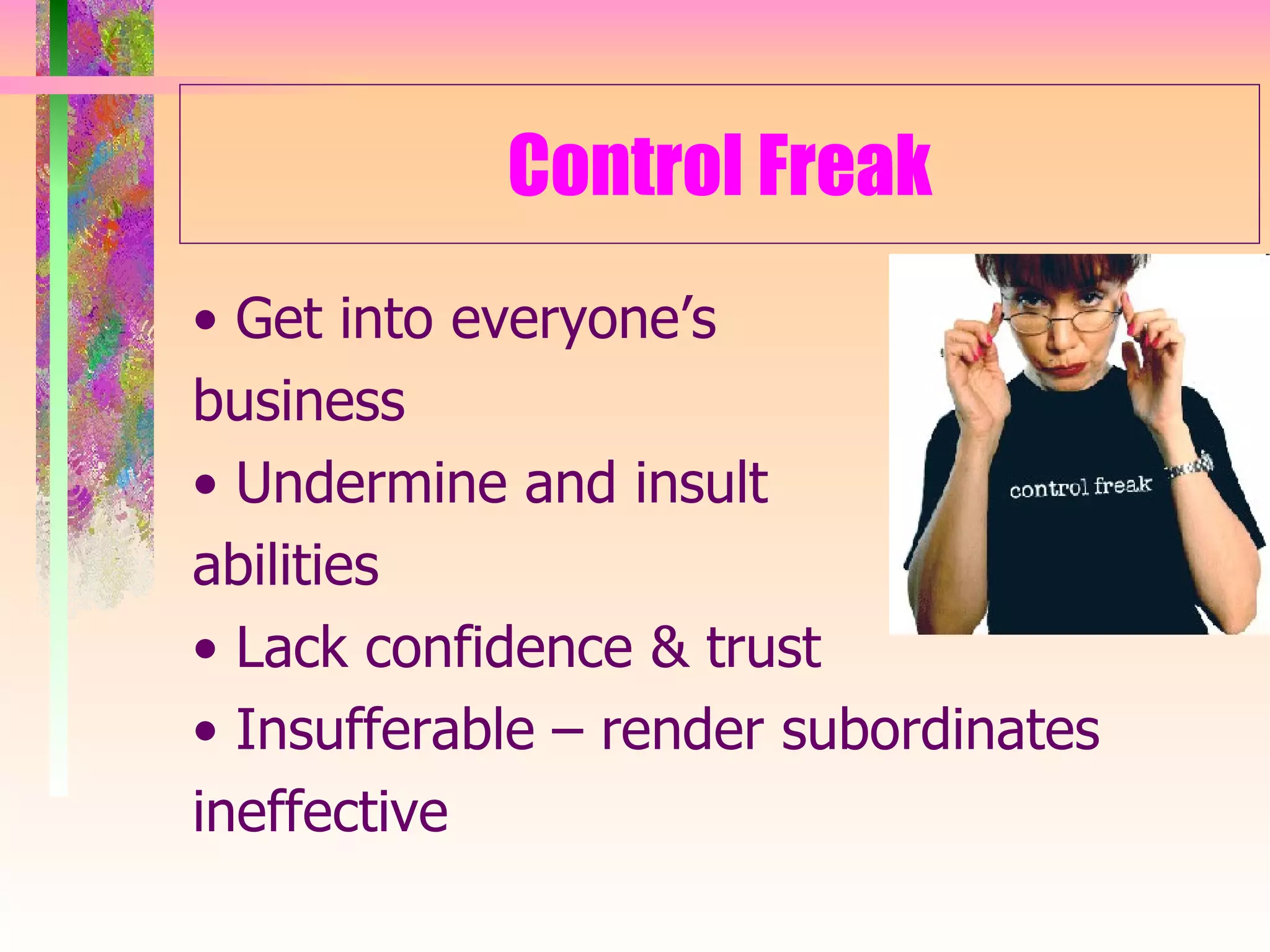
Control Freak •  Get into everyone’s  business •  Undermine and insult  abilities •  Lack confidence & trust •  Insufferable – render subordinates ineffective
Reduce Controllers Build trust •  Take small steps toward more authority •  Keep focused on solution •  Speak from your own view-point •  Don’t let yourself be verbally abused
Super-Agreeables •  Very personable •  Don’t act the  way they say they will •  Supportive but don’t deliver
Dealing with Super-Agreeables •  Show them you like them •  Prevent unrealistic commitments •  Make honesty non-threatening •  Point out inconsistencies  in behavior •  Work for a mutual  benefit •  Listen carefully to jokes
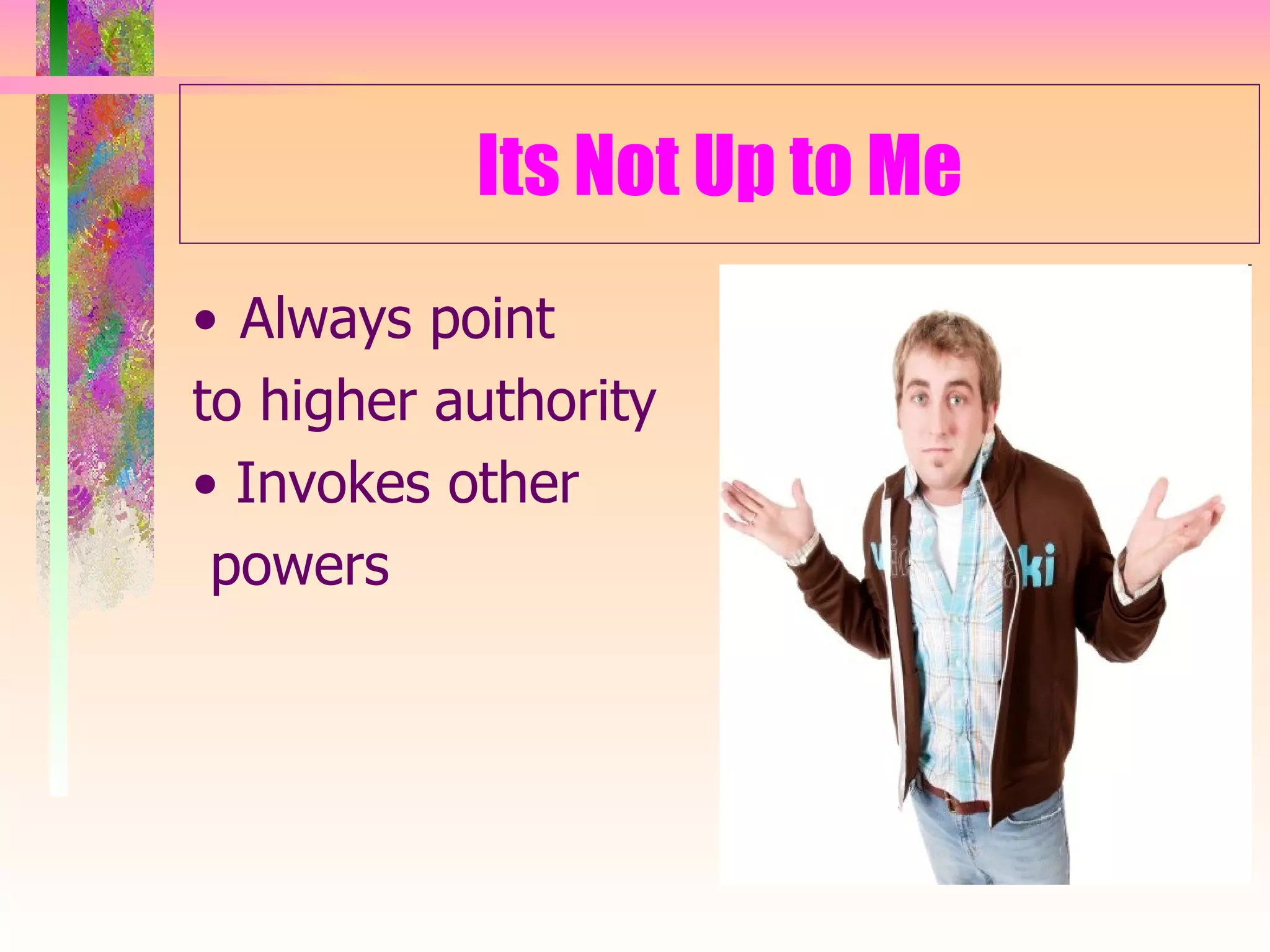
Its Not Up to Me Always point  to higher authority •  Invokes other powers
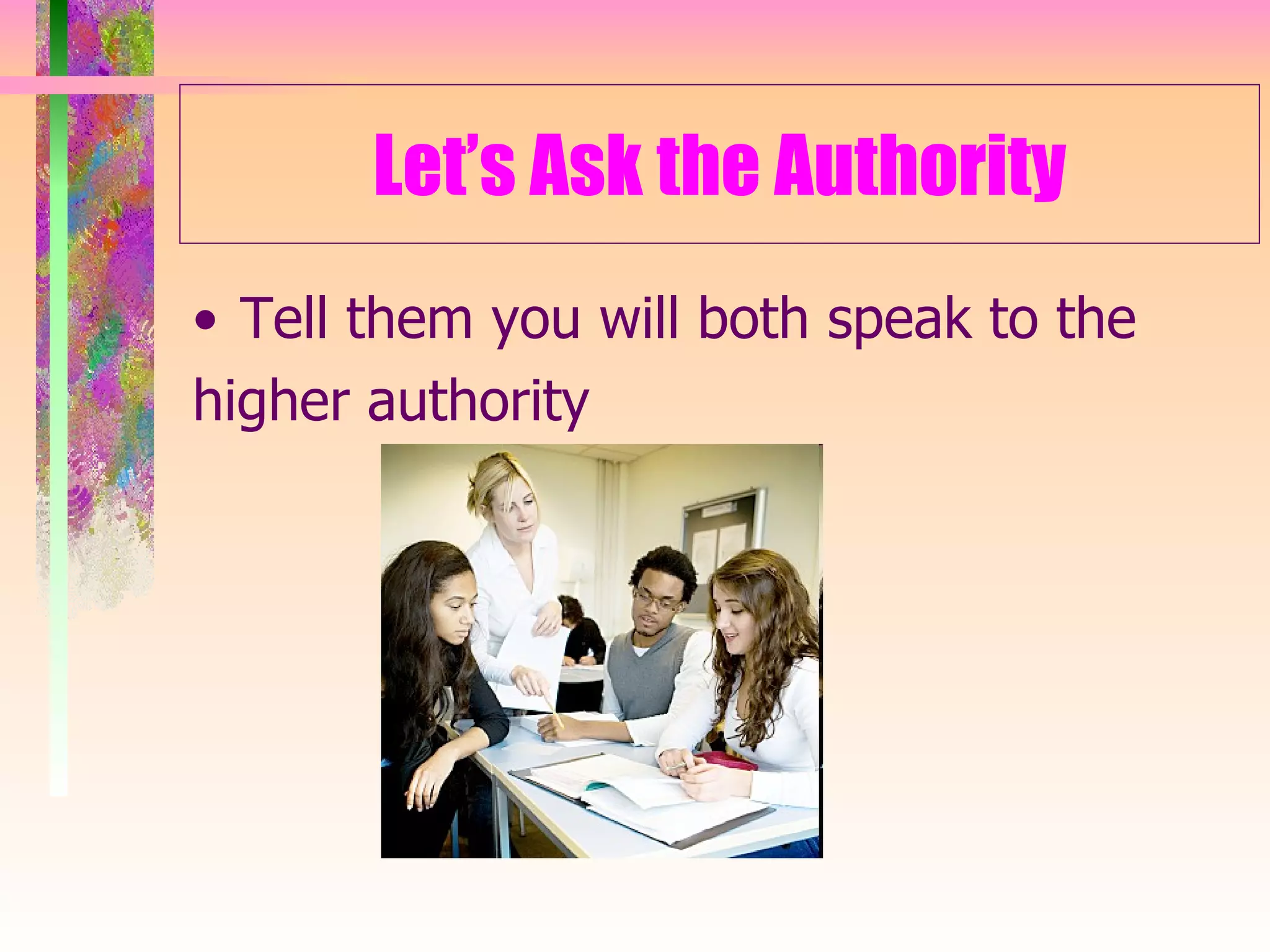
Let’s Ask the Authority Tell them you will both speak to the higher authority
Helpful Hints •  Don’t escalate •  Focus on what a person is trying to say •  Avoid being purposefully hurtful •  Model behavior you want •  Focus on solutions •  Maintain eye contact
More Helpful Hints •  Blame the process, not the person •  Be specific •  Avoid always and never •  Avoid name calling •  Encourage listening •  Confront in private – praise in public •  Use your communication skills!
Resources 14 Workplace Personalities and How to Handle Them – iVillage, http://www.ivillage.com/work/job/succeed/articles/0,,187833_245505, 00.html •  Online Newsletter, Dealing with Difficult People, March 1999, http://www.itstime.com/print/mar99p.htm •  Techniques for Dealing with Difficult People, Ag Decision Maker, John Baker, Iowa State University, Iowa Extension, October 1999 •  Dealing with Difficult People, http://www.bethanyhome.org/dealing_with_difficult_people.htm •  Dealing with Difficult People/Situations: Role of the Extension Committee Member, University of Minnesota Extension Service •  Dealing with Difficult Members, University of Wisconsin-Eau Claire, http://www.uwec.edu/DC/AP/complexthoughts/Dealing_w_Difficult_Mb rs.html •  Games People Play, Presentation to BVHRMA, May 1, 2003, Jan Pfannstiel, SPHR •  Welch, Ben D., Phd, Interpersonal Relations Skills, Presentation at TAMU and Dealing with Difficult People, presentation June 19, 1998
Thank You for Listening

Dealing with difficult people brooke

  • 1.
  • 2.
    Difficult People &Conflict • Can be anyone – even YOU! • People are difficult because it works for them. • Dealing with them can cause conflict
  • 3.
    Difficult People &Conflict • Conflict can result in an uncomfortable environment • Difficult behavior causes stress in others • Conflict can reduce an organizations effectiveness
  • 4.
    Types of DifficultPeople Bulldozer Bullies Firehose Stallers/Wafflers Silent Types Indecisives Sniper Control Freak Super-Agreeables It’s Not Up To Me
  • 5.
    The Bulldozer • Know it all • Often use threats, sarcasm, intimidation
  • 6.
    Dealing with DozersPrepare yourself • Ask questions • Focus on solution • Do not confront them
  • 7.
    Bullies • Loud and hostile • Abusive • Overwhelm you
  • 8.
    Battling Bullies • Let them run down • Get their attention • State your point non-aggressively • Don’t allow interruptions • Ask them to leave
  • 9.
    Mr or MrsNegativity • Dampen Enthusiasm • Everything will fail • Negative statements • Constantly complaining
  • 10.
    Drain the FireHose • Don’t be dragged down • Don’t argue • Listen – then ask for alternatives • Don’t agree or apologize • Switch to problem solving • Take action on your own
  • 11.
    Stallers • Reluctant to turn down requests • Want to be liked • Afraid or unable to manage • Paralyzed by tough decisions
  • 12.
    Sideline the Stallers• Surface hidden concerns • Help them resolve the problem • You make the decision – with caution • Support decisions • Keep control of situation
  • 13.
    Silent Types • Silent/unresponsive • Answer with a grunt • Turn away from people • Pretend nothing happened
  • 14.
    Open the SilentOnes • Meet with them individually • Give them time to open up • Ask open-ended questions • Wait for a response • If no comments – comment on what’s happening
  • 15.
    Indecisives • Super helpful – but . . . • Postpone decisions • Hint and beat around the bush
  • 16.
    Resolve Indecision • Address fears with “what if” questions • Help resolve problems when issues surface • Help examine facts • Watch for anger or withdrawal
  • 17.
    Sniper • Exclude key people • Withhold information • Use hidden attacks, innuendoes, digs, non-playful teasing • Wreck havoc and you don’t see them
  • 18.
    Unload the Sniper• Surface the attack • Provide peaceful alternative • Bring resistance into the open • Seek group confirmation or denial of snipers criticism • Use coaching/counseling if assigned tasks not done
  • 19.
    Control Freak • Get into everyone’s business • Undermine and insult abilities • Lack confidence & trust • Insufferable – render subordinates ineffective
  • 20.
    Reduce Controllers Buildtrust • Take small steps toward more authority • Keep focused on solution • Speak from your own view-point • Don’t let yourself be verbally abused
  • 21.
    Super-Agreeables • Very personable • Don’t act the way they say they will • Supportive but don’t deliver
  • 22.
    Dealing with Super-Agreeables• Show them you like them • Prevent unrealistic commitments • Make honesty non-threatening • Point out inconsistencies in behavior • Work for a mutual benefit • Listen carefully to jokes
  • 23.
    Its Not Upto Me Always point to higher authority • Invokes other powers
  • 24.
    Let’s Ask theAuthority Tell them you will both speak to the higher authority
  • 25.
    Helpful Hints • Don’t escalate • Focus on what a person is trying to say • Avoid being purposefully hurtful • Model behavior you want • Focus on solutions • Maintain eye contact
  • 26.
    More Helpful Hints• Blame the process, not the person • Be specific • Avoid always and never • Avoid name calling • Encourage listening • Confront in private – praise in public • Use your communication skills!
  • 27.
    Resources 14 WorkplacePersonalities and How to Handle Them – iVillage, http://www.ivillage.com/work/job/succeed/articles/0,,187833_245505, 00.html • Online Newsletter, Dealing with Difficult People, March 1999, http://www.itstime.com/print/mar99p.htm • Techniques for Dealing with Difficult People, Ag Decision Maker, John Baker, Iowa State University, Iowa Extension, October 1999 • Dealing with Difficult People, http://www.bethanyhome.org/dealing_with_difficult_people.htm • Dealing with Difficult People/Situations: Role of the Extension Committee Member, University of Minnesota Extension Service • Dealing with Difficult Members, University of Wisconsin-Eau Claire, http://www.uwec.edu/DC/AP/complexthoughts/Dealing_w_Difficult_Mb rs.html • Games People Play, Presentation to BVHRMA, May 1, 2003, Jan Pfannstiel, SPHR • Welch, Ben D., Phd, Interpersonal Relations Skills, Presentation at TAMU and Dealing with Difficult People, presentation June 19, 1998
  • 28.
    Thank You forListening