Overview
What is communication?
Internal and external communication
Factors affecting the choice of
communication
Methods of communication
Oral
Written
Visual
Modern methods of communication
Communication is
The transfer of information(data) from one person to
another.
Internal Communication is
With people inside the organisation.
e.g. Notice Board.
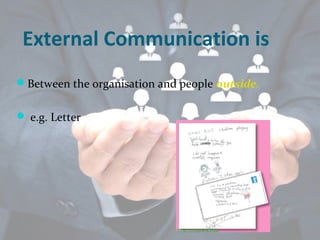
External Communication is
Between the organisation and people outside.
 e.g. Letter
1. Cost
Is the method cheap or dear?
2. Speed
How long will it take to reach its destination?
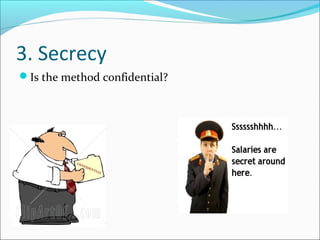
3. Secrecy
Is the method confidential?
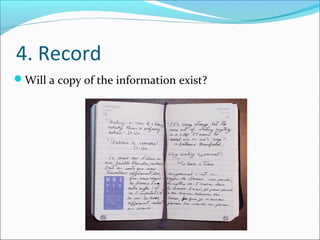
4. Record
Will a copy of the information exist?
5. Destination
Is it internal or internal?
How far is it going?
Types of communication
1. Oral/Verbal
2. Written
3. Visual
Oral Communication is
Sending a verbal message.
Internal Eg. Intercom, face-to-face meeting.
External Eg. Radio, telephone.
Oral Communication
Advantages
Quick
Instant Feedback
Disadvantages
No Record
May be hard to
remember
Types of Meetings
AGM: Annual General Meeting.
EGM: Extra-ordinary General Meeting.
Ad hoc: Informal meeting on the spur of the moment.
Chairperson
Calls meeting to order.
Ensures that meetings
run smoothly.
Secretary
Sends out notices of meetings.
Writes up the Agenda.
Keeps minutes.
Treasurer
Keeps a record of all finances.
Prepare final accounts.
Prepares financial reports.
Written Communication
Some record is kept.
Internal Eg. Notice Board, Memo
External Eg. Letter, e-mail, fax
Written Communication
Advantages
Record kept
Don’t have to
remember everything
Disadvantages
No instant feedback
May not be confidential
e.g. fax
A Memo is
A short note used within a business.
To: Mr. Kelly
From: CSPE Class representative.
Date: 10/10/08
Subject: Recycling paper.
Message: Please place used paper in recycle bins.
Signed: Mary Jones.
A Notice of a Meeting is
Information about a meeting.
Sent by the secretary.
Name: 1st
year PTM
Date: 20/10/08
Place: SHS, Tullamore
Time: 9.00-3.00
Signed: Aoife Malone
An Agenda is
A list of topics that will be discussed at a meeting.
Sample Agenda
1. Minutes Summary of last meeting.
2. Matters Arising Issues that need further discussion.
3. Correspondance Letters of apology etc.
4. Chairpersons
Report
Recap of the years events.
5. Treasurers
Report
Summary of finances.
6. Election of Officers Appointing new officers.
7. AOB Any Other Business
Visual Communication
Using charts, graphs, videos and television to give a
messages internally & externally.
Visual Communication
Advantages
Easy to understand
Shows trends and
comparisons
Disadvantages
Some people may not
understand
Takes time to prepare
Rules for preparing charts/graphs
Give it a title.
Label the Y axis (eg. year)
Label the X axis (eg. quantity)
Bar Chart
 Is a series of bars.
 Used for comparing quantities.
Line/Trend Graph
Is a chart that uses lines.
Used for showing changes over time.
Pie Charts
Is a circle divided into segments.
Used to show percentages or proportions.
Government Agency involved in
communication
An Post
Provides a national & international postal service.
Other services
Publicity post
Delivers leaflets for a small fee.
Swift post
Letter will be delivered quicker for a fee.
Freepost
Special envelopes where customers can reply to
business & they pay the postage.
Private telecommunications
providers
Aircel
Reliance
Perlico
Idea
Airtel
Vodafone
Telecommunication services
Telephones
Freefone
Texting
Answering service
Internet
E-mail
www
social media
Teleconferencing
Up to 20 people can
talk together.
Video-conferencing
TV link up of sound & pictures for meetings without
travel.
Recap
What is communication?
Internal and external communication
Factors affecting the choice of communication
Methods of communication
Oral
Written
Visual
Modern methods of communication

Communication