Ikram Ullah
M.Phil MLSc
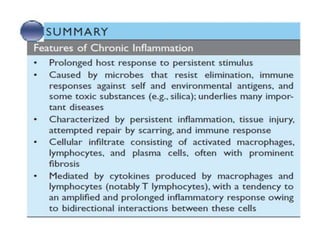
• Chronic inflammation is inflammation of prolonged
duration (weeks to years) in which continuing
inflammation, tissue injury, and healing, often by fibrosis,
proceed simultaneously
• In contrast with acute inflammation, which is
distinguished by vascular changes, edema, and a
predominantly neutrophilic infiltrate, chronic inflammation
is characterized by a different set of reactions
• Infiltration with mononuclear cells, including
macrophages, lymphocytes, and plasma cells
• Tissue destruction, largely induced by the products of the
inflammatory cells
• Repair, involving new vessel proliferation (angiogenesis)
and fibrosis
• Acute inflammation may progress to chronic inflammation
if the acute response cannot be resolved
• Either because of the persistence of the injurious agent
or because of interference with the normal process of
healing
• For example, a peptic ulcer of the duodenum initially
shows acute inflammation followed by the beginning
stages of resolution.
• However, recurrent bouts of duodenal epithelial injury
interrupt this process, resulting in a lesion characterized
by both acute and chronic inflammation
• Persistent infections by microbes that are difficult to
eradicate.
• These include Mycobacterium tuberculosis, Treponema
pallidum, and certain viruses and fungi,
• all of which elicit a T lymphocyte–mediated immune
response called delayed-type hypersensitivity
• Immune-mediated inflammatory diseases (hypersensitivity
diseases)
• Autoimmunity plays an important role in several common
and debilitating chronic inflammatory diseases, such as
rheumatoid arthritis, inflammatory bowel disease, and
psoriasis
• Immune-mediated diseases may show morphologic
patterns of mixed acute and chronic inflammation
because they are characterized by repeated bouts of
inflammation
• Prolonged exposure to potentially toxic agents. Examples
are nondegradable exogenous materials
• Such as inhaled particulate silica, which can induce a
chronic inflammatory response in the lungs
• Macrophages, the dominant cells of chronic inflammation, are
tissue cells derived from circulating blood monocytes after
their emigration from the bloodstream.
• Macrophages are normally diffusely scattered in most
connective tissues and are also found in organs such as
• the liver (where they are called Kupffer cells),
• spleen and lymph nodes (where they are called sinus
histiocytes),
• central nervous system (microglial cells), and lungs (alveolar
macrophages)
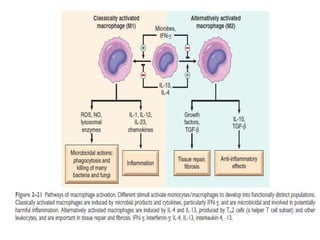
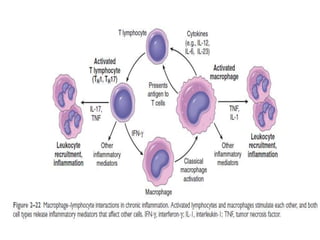
• Two major pathways of macrophage activation, classical and
• Lymphocytes are mobilized in the setting of any specific
immune stimulus (i.e., infections) as well as non–
immunemediated inflammation (e.g., due to ischemic
necrosis or trauma),
• Major drivers of inflammation in many autoimmune and
other chronic inflammatory diseases.
• Both classes of lymphocytes migrate into inflammatory
sites using some of the same adhesion molecule pairs
and chemokines that recruit other leukocytes.
• In the tissues, B lymphocytes may develop into plasma
cells, which secrete antibodies, and CD4+ T lymphocytes
are activated to secrete cytokines
• Other Cells
• Eosinophils are characteristically found in inflammatory
sites around parasitic infections and as part of immune
reactions mediated by IgE, typically associated with
allergies.
• Their recruitment is driven by adhesion molecules similar
to those used by neutrophils, and by specific chemokines
(e.g., eotaxin) derived from leukocytes and epithelial
cells.
• Eosinophil granules contain major basic protein, a highly
charged cationic protein that is toxic to parasites but also
causes epithelial cell necrosis
• Mast cells are sentinel cells widely distributed in
connective tissues throughout the body, and they can
participate in both acute and chronic inflammatory
responses.
• In atopic persons (those prone to allergic reactions), mast
cells are “armed” with IgE antibody specific for certain
environmental antigens.
• When these antigens are subsequently encountered, the
IgE-coated mast cells are triggered to release histamines
that elicit the early vascular changes of acute
inflammation.
• IgE armed mast cells are central players in allergic
• Granulomatous inflammation is a distinctive pattern of
chronic inflammation characterized by aggregates of
activated macrophages with scattered lymphocytes
Granulomas can form under three settings:
• With persistent T-cell responses to certain microbes
(such as Mycobacterium tuberculosis, T. pallidum, or
fungi), in which T cell–derived cytokines are responsible
for chronic macrophage activation
• Granulomas may also develop in some immunemediated
inflammatory diseases, notably Crohn’s disease, which is
one type of inflammatory bowel disease
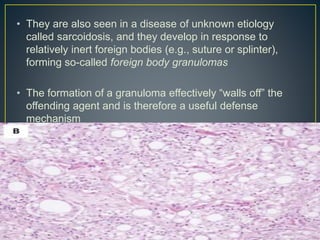
• They are also seen in a disease of unknown etiology
called sarcoidosis, and they develop in response to
relatively inert foreign bodies (e.g., suture or splinter),
forming so-called foreign body granulomas
• The formation of a granuloma effectively “walls off” the
offending agent and is therefore a useful defense
mechanism
Chronic inflammation

Chronic inflammation

  • 1.
  • 2.
    • Chronic inflammationis inflammation of prolonged duration (weeks to years) in which continuing inflammation, tissue injury, and healing, often by fibrosis, proceed simultaneously • In contrast with acute inflammation, which is distinguished by vascular changes, edema, and a predominantly neutrophilic infiltrate, chronic inflammation is characterized by a different set of reactions • Infiltration with mononuclear cells, including macrophages, lymphocytes, and plasma cells • Tissue destruction, largely induced by the products of the inflammatory cells • Repair, involving new vessel proliferation (angiogenesis) and fibrosis
  • 3.
    • Acute inflammationmay progress to chronic inflammation if the acute response cannot be resolved • Either because of the persistence of the injurious agent or because of interference with the normal process of healing • For example, a peptic ulcer of the duodenum initially shows acute inflammation followed by the beginning stages of resolution. • However, recurrent bouts of duodenal epithelial injury interrupt this process, resulting in a lesion characterized by both acute and chronic inflammation
  • 4.
    • Persistent infectionsby microbes that are difficult to eradicate. • These include Mycobacterium tuberculosis, Treponema pallidum, and certain viruses and fungi, • all of which elicit a T lymphocyte–mediated immune response called delayed-type hypersensitivity • Immune-mediated inflammatory diseases (hypersensitivity diseases) • Autoimmunity plays an important role in several common and debilitating chronic inflammatory diseases, such as rheumatoid arthritis, inflammatory bowel disease, and psoriasis
  • 5.
    • Immune-mediated diseasesmay show morphologic patterns of mixed acute and chronic inflammation because they are characterized by repeated bouts of inflammation • Prolonged exposure to potentially toxic agents. Examples are nondegradable exogenous materials • Such as inhaled particulate silica, which can induce a chronic inflammatory response in the lungs
  • 6.
    • Macrophages, thedominant cells of chronic inflammation, are tissue cells derived from circulating blood monocytes after their emigration from the bloodstream. • Macrophages are normally diffusely scattered in most connective tissues and are also found in organs such as • the liver (where they are called Kupffer cells), • spleen and lymph nodes (where they are called sinus histiocytes), • central nervous system (microglial cells), and lungs (alveolar macrophages) • Two major pathways of macrophage activation, classical and
  • 8.
    • Lymphocytes aremobilized in the setting of any specific immune stimulus (i.e., infections) as well as non– immunemediated inflammation (e.g., due to ischemic necrosis or trauma), • Major drivers of inflammation in many autoimmune and other chronic inflammatory diseases. • Both classes of lymphocytes migrate into inflammatory sites using some of the same adhesion molecule pairs and chemokines that recruit other leukocytes. • In the tissues, B lymphocytes may develop into plasma cells, which secrete antibodies, and CD4+ T lymphocytes are activated to secrete cytokines
  • 9.
    • Other Cells •Eosinophils are characteristically found in inflammatory sites around parasitic infections and as part of immune reactions mediated by IgE, typically associated with allergies. • Their recruitment is driven by adhesion molecules similar to those used by neutrophils, and by specific chemokines (e.g., eotaxin) derived from leukocytes and epithelial cells. • Eosinophil granules contain major basic protein, a highly charged cationic protein that is toxic to parasites but also causes epithelial cell necrosis
  • 10.
    • Mast cellsare sentinel cells widely distributed in connective tissues throughout the body, and they can participate in both acute and chronic inflammatory responses. • In atopic persons (those prone to allergic reactions), mast cells are “armed” with IgE antibody specific for certain environmental antigens. • When these antigens are subsequently encountered, the IgE-coated mast cells are triggered to release histamines that elicit the early vascular changes of acute inflammation. • IgE armed mast cells are central players in allergic
  • 12.
    • Granulomatous inflammationis a distinctive pattern of chronic inflammation characterized by aggregates of activated macrophages with scattered lymphocytes Granulomas can form under three settings: • With persistent T-cell responses to certain microbes (such as Mycobacterium tuberculosis, T. pallidum, or fungi), in which T cell–derived cytokines are responsible for chronic macrophage activation • Granulomas may also develop in some immunemediated inflammatory diseases, notably Crohn’s disease, which is one type of inflammatory bowel disease
  • 13.
    • They arealso seen in a disease of unknown etiology called sarcoidosis, and they develop in response to relatively inert foreign bodies (e.g., suture or splinter), forming so-called foreign body granulomas • The formation of a granuloma effectively “walls off” the offending agent and is therefore a useful defense mechanism