IRON DEFICIENCY ANEMIA
Dr. Syed Muhammad Ali Shah
RMO/PGR
Dept. of Medicine, ABSTH/NSMC
ANEMIA
• Anemia refers to a state in which the level of
haemoglobin in the blood is below the
reference range appropriate for age and sex.
• Anemia is present in adults if the hematocrit is
< 41% (hemoglobin < 13.5 g/dL) in males or <
36% (hemoglobin < 12 g/dL) in females.
CLASSIFICATION OF ANEMIA
1. According to pathophysiology
2. According to RBC size/MCV
ACCORDING TO PATHOPHYSIOLOGY
• Decreased red blood cell production (relative or
absolute reticulocytopenia)
– Hemoglobin synthesis lesion: iron deficiency, thalassemia,
anemia of chronic disease, hypoerythropoietinemia
– DNA synthesis lesion: megaloblastic anemia, DNA synthesis
inhibitor drugs
– Hematopoietic stem cell lesion: aplastic anemia, leukemia
– Bone marrow infiltration: carcinoma, lymphoma, fibrosis,
sarcoidosis, Gaucher disease, others
– Immune-mediated inhibition: aplastic anemia, pure red
cell aplasia
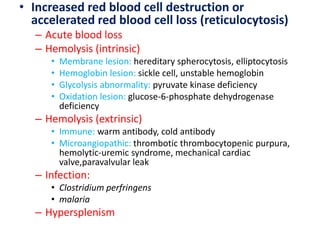
• Increased red blood cell destruction or
accelerated red blood cell loss (reticulocytosis)
– Acute blood loss
– Hemolysis (intrinsic)
• Membrane lesion: hereditary spherocytosis, elliptocytosis
• Hemoglobin lesion: sickle cell, unstable hemoglobin
• Glycolysis abnormality: pyruvate kinase deficiency
• Oxidation lesion: glucose-6-phosphate dehydrogenase
deficiency
– Hemolysis (extrinsic)
• Immune: warm antibody, cold antibody
• Microangiopathic: thrombotic thrombocytopenic purpura,
hemolytic-uremic syndrome, mechanical cardiac
valve,paravalvular leak
– Infection:
• Clostridium perfringens
• malaria
– Hypersplenism
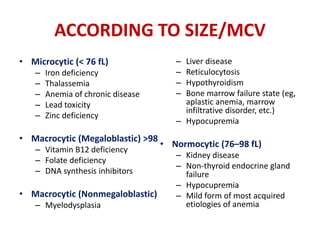
ACCORDING TO SIZE/MCV
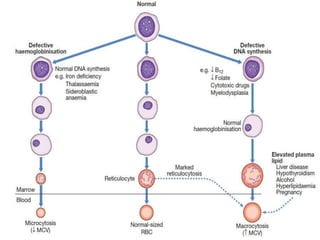
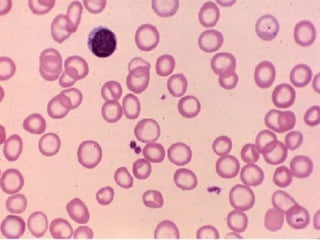
• Microcytic (< 76 fL)
– Iron deficiency
– Thalassemia
– Anemia of chronic disease
– Lead toxicity
– Zinc deficiency
• Macrocytic (Megaloblastic) >98
– Vitamin B12 deficiency
– Folate deficiency
– DNA synthesis inhibitors
• Macrocytic (Nonmegaloblastic)
– Myelodysplasia
– Liver disease
– Reticulocytosis
– Hypothyroidism
– Bone marrow failure state (eg,
aplastic anemia, marrow
infiltrative disorder, etc.)
– Hypocupremia
• Normocytic (76–98 fL)
– Kidney disease
– Non-thyroid endocrine gland
failure
– Hypocupremia
– Mild form of most acquired
etiologies of anemia
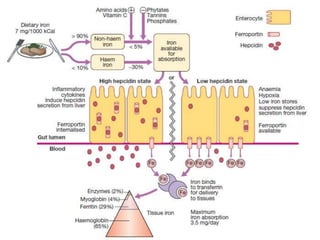
IRON DEFICIENCY ANEMIA
• Most common cause of anemia worldwide.
• Iron metabolism is balanced between
absorption of 1 mg/d and loss of 1 mg/d.
• Pregnancy and lactation – requirements
increase to 2–5 mg of iron per day.
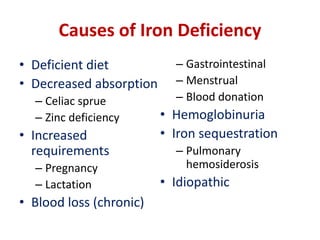
Causes of Iron Deficiency
• Deficient diet
• Decreased absorption
– Celiac sprue
– Zinc deficiency
• Increased
requirements
– Pregnancy
– Lactation
• Blood loss (chronic)
– Gastrointestinal
– Menstrual
– Blood donation
• Hemoglobinuria
• Iron sequestration
– Pulmonary
hemosiderosis
• Idiopathic
CLINICAL ASSESSMENT
HISTORY
• Gastrointestinal history is important
• Menorrhagia is a common cause of anaemia in pre-
menopausal females
• Dietary history should assess the intake of iron and folate
• Past medical history resection of the stomach or small bowel
• Family history and ethnic background may raise suspicion of
haemolytic anaemias
• Drug history may reveal the ingestion of drugs which cause
blood loss (e.g. aspirin and antiinflammatory drugs
Symptoms & Signs
• Easy fatigability
• Tachycardia
• Palpitations
• Dyspnea on exertion
• Pallor
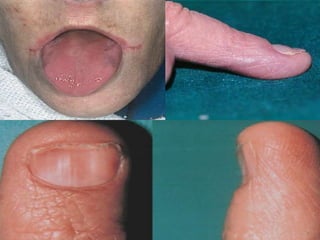
• Smooth tongue
• Brittle nails
• Spooning of nails
(koilonychia)
• Cheilosis
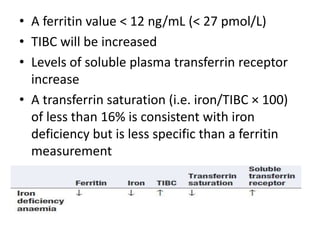
• A ferritin value < 12 ng/mL (< 27 pmol/L)
• TIBC will be increased
• Levels of soluble plasma transferrin receptor
increase
• A transferrin saturation (i.e. iron/TIBC × 100)
of less than 16% is consistent with iron
deficiency but is less specific than a ferritin
measurement
TREATMENT
ORAL IRON
• Ferrous sulfate, 325 mg three times daily on an
empty stomach
• Ferrous gluconate 300 mg twice daily
• Iron therapy should continue for 3–6 months
after restoration of normal hematologic values to
replenish iron stores.
• The haemoglobin should rise by around 10 g/L
every 7–10 days and a reticulocyte response will
be evident within a week.
Parenteral Iron
• The indications are:
– Intolerance to oral iron
– Refractoriness to oral iron
– Gastrointestinal disease (usually inflammatory
bowel disease) precluding the use of oral iron
– Continued blood loss that cannot be corrected,
such as chronic hemodialysis

Iron deficiency anemia

  • 1.
    IRON DEFICIENCY ANEMIA Dr.Syed Muhammad Ali Shah RMO/PGR Dept. of Medicine, ABSTH/NSMC
  • 2.
    ANEMIA • Anemia refersto a state in which the level of haemoglobin in the blood is below the reference range appropriate for age and sex. • Anemia is present in adults if the hematocrit is < 41% (hemoglobin < 13.5 g/dL) in males or < 36% (hemoglobin < 12 g/dL) in females.
  • 3.
    CLASSIFICATION OF ANEMIA 1.According to pathophysiology 2. According to RBC size/MCV
  • 4.
    ACCORDING TO PATHOPHYSIOLOGY •Decreased red blood cell production (relative or absolute reticulocytopenia) – Hemoglobin synthesis lesion: iron deficiency, thalassemia, anemia of chronic disease, hypoerythropoietinemia – DNA synthesis lesion: megaloblastic anemia, DNA synthesis inhibitor drugs – Hematopoietic stem cell lesion: aplastic anemia, leukemia – Bone marrow infiltration: carcinoma, lymphoma, fibrosis, sarcoidosis, Gaucher disease, others – Immune-mediated inhibition: aplastic anemia, pure red cell aplasia
  • 5.
    • Increased redblood cell destruction or accelerated red blood cell loss (reticulocytosis) – Acute blood loss – Hemolysis (intrinsic) • Membrane lesion: hereditary spherocytosis, elliptocytosis • Hemoglobin lesion: sickle cell, unstable hemoglobin • Glycolysis abnormality: pyruvate kinase deficiency • Oxidation lesion: glucose-6-phosphate dehydrogenase deficiency – Hemolysis (extrinsic) • Immune: warm antibody, cold antibody • Microangiopathic: thrombotic thrombocytopenic purpura, hemolytic-uremic syndrome, mechanical cardiac valve,paravalvular leak – Infection: • Clostridium perfringens • malaria – Hypersplenism
  • 6.
    ACCORDING TO SIZE/MCV •Microcytic (< 76 fL) – Iron deficiency – Thalassemia – Anemia of chronic disease – Lead toxicity – Zinc deficiency • Macrocytic (Megaloblastic) >98 – Vitamin B12 deficiency – Folate deficiency – DNA synthesis inhibitors • Macrocytic (Nonmegaloblastic) – Myelodysplasia – Liver disease – Reticulocytosis – Hypothyroidism – Bone marrow failure state (eg, aplastic anemia, marrow infiltrative disorder, etc.) – Hypocupremia • Normocytic (76–98 fL) – Kidney disease – Non-thyroid endocrine gland failure – Hypocupremia – Mild form of most acquired etiologies of anemia
  • 8.
    IRON DEFICIENCY ANEMIA •Most common cause of anemia worldwide. • Iron metabolism is balanced between absorption of 1 mg/d and loss of 1 mg/d. • Pregnancy and lactation – requirements increase to 2–5 mg of iron per day.
  • 10.
    Causes of IronDeficiency • Deficient diet • Decreased absorption – Celiac sprue – Zinc deficiency • Increased requirements – Pregnancy – Lactation • Blood loss (chronic) – Gastrointestinal – Menstrual – Blood donation • Hemoglobinuria • Iron sequestration – Pulmonary hemosiderosis • Idiopathic
  • 12.
    CLINICAL ASSESSMENT HISTORY • Gastrointestinalhistory is important • Menorrhagia is a common cause of anaemia in pre- menopausal females • Dietary history should assess the intake of iron and folate • Past medical history resection of the stomach or small bowel • Family history and ethnic background may raise suspicion of haemolytic anaemias • Drug history may reveal the ingestion of drugs which cause blood loss (e.g. aspirin and antiinflammatory drugs
  • 13.
    Symptoms & Signs •Easy fatigability • Tachycardia • Palpitations • Dyspnea on exertion • Pallor • Smooth tongue • Brittle nails • Spooning of nails (koilonychia) • Cheilosis
  • 15.
    • A ferritinvalue < 12 ng/mL (< 27 pmol/L) • TIBC will be increased • Levels of soluble plasma transferrin receptor increase • A transferrin saturation (i.e. iron/TIBC × 100) of less than 16% is consistent with iron deficiency but is less specific than a ferritin measurement
  • 16.
    TREATMENT ORAL IRON • Ferroussulfate, 325 mg three times daily on an empty stomach • Ferrous gluconate 300 mg twice daily • Iron therapy should continue for 3–6 months after restoration of normal hematologic values to replenish iron stores. • The haemoglobin should rise by around 10 g/L every 7–10 days and a reticulocyte response will be evident within a week.
  • 17.
    Parenteral Iron • Theindications are: – Intolerance to oral iron – Refractoriness to oral iron – Gastrointestinal disease (usually inflammatory bowel disease) precluding the use of oral iron – Continued blood loss that cannot be corrected, such as chronic hemodialysis