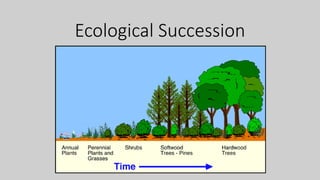
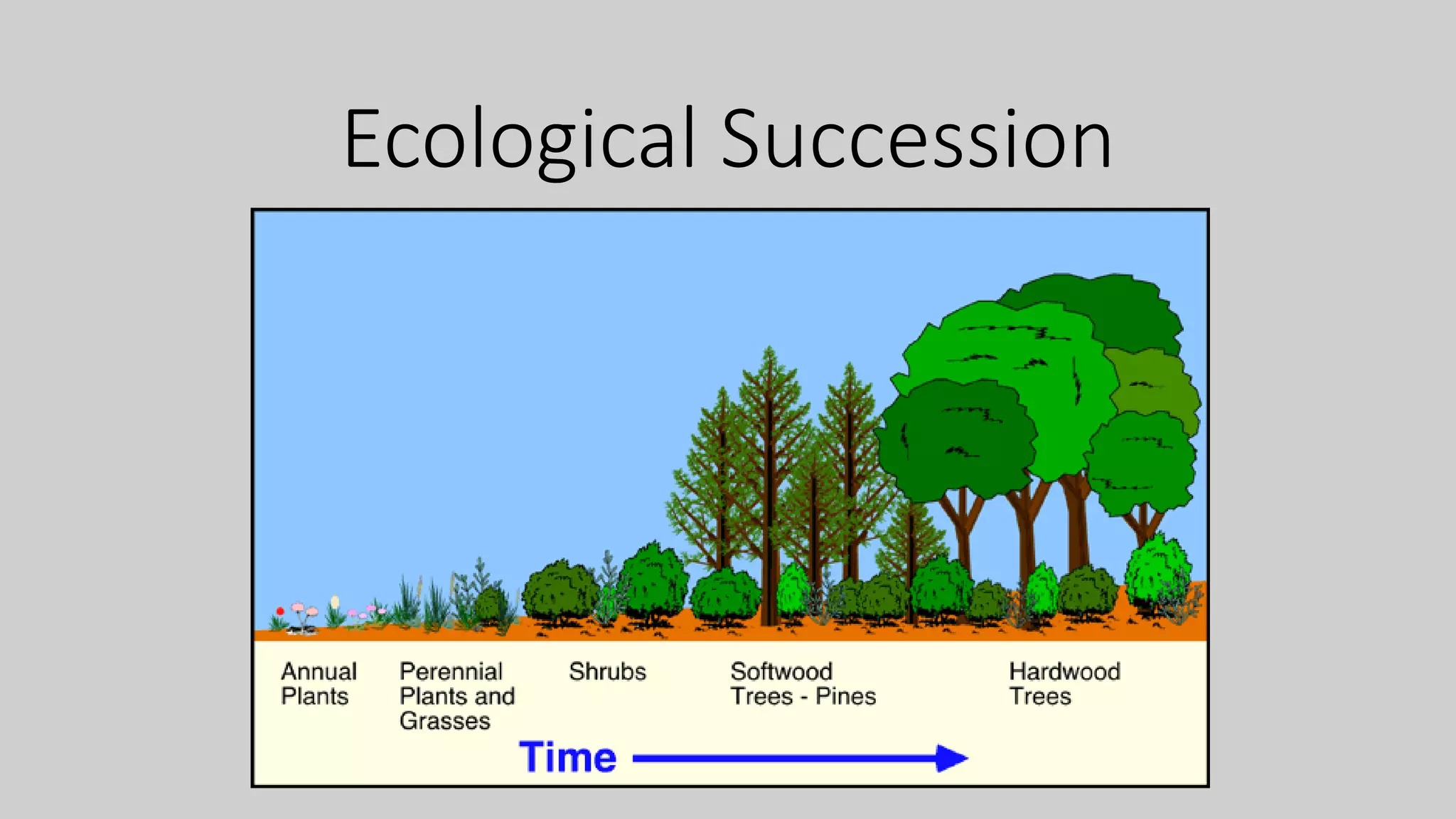
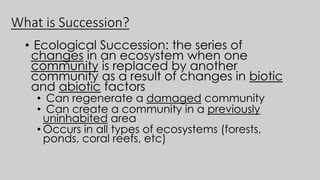
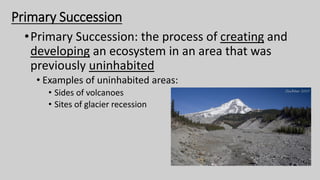
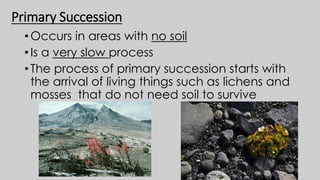
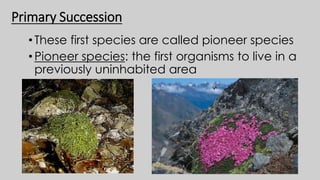
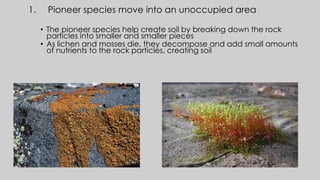
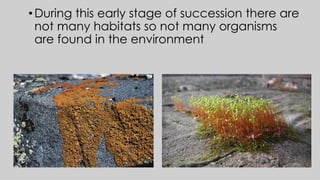
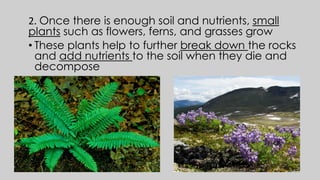
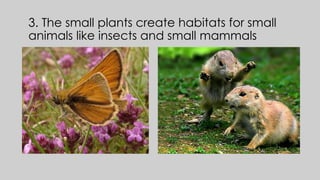
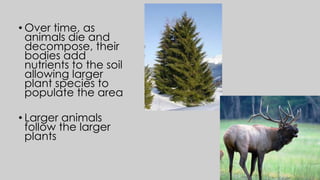
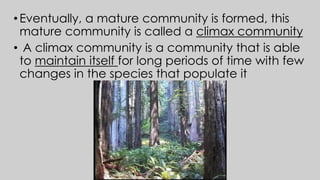
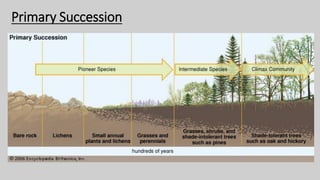
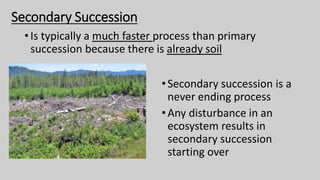
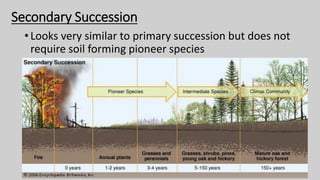
Ecological succession is the process by which one ecological community replaces another over time. There are two types of succession: primary and secondary. Primary succession occurs in areas without soil, like volcanic slopes, and involves pioneer species that help form soil and allow other plants and animals to move in over time. Secondary succession occurs in areas with existing soil that has been disturbed, like after a forest fire, and the process of the community reestablishing is faster since soil is already present. Both primary and secondary succession follow a similar pattern of colonization from small pioneer species to larger plants and animals that make up a climax community.



![Temperature – limiting factor [autosaved] new](https://cdn.slidesharecdn.com/ss_thumbnails/temperaturelimitingfactorautosavednew-160718170804-thumbnail.jpg?width=640&height=640&fit=bounds)


