Rounak Choudhary
M.Sc. (Gold Medalist), UGC-NET & ICAR-ASRB NET Environmental Science, DCB Ornithology, PGD Industrial Safety, Health and Environment
r - and K -selection
• One way of classifying environments (or species
habitats) relates to their variability in time. We can
envision two contrasting types of habitats: (1) those
that are variable in time or short-lived, and (2) those
that are relatively stable (long-lived and constant), with
few random environmental fluctuations.
• The ecologists Robert MacArthur of Princeton
University, E. O. Wilson of Harvard University, and later
E. Pianka of the University of Texas used this
dichotomy to develop the concept of r - and K -
selection.
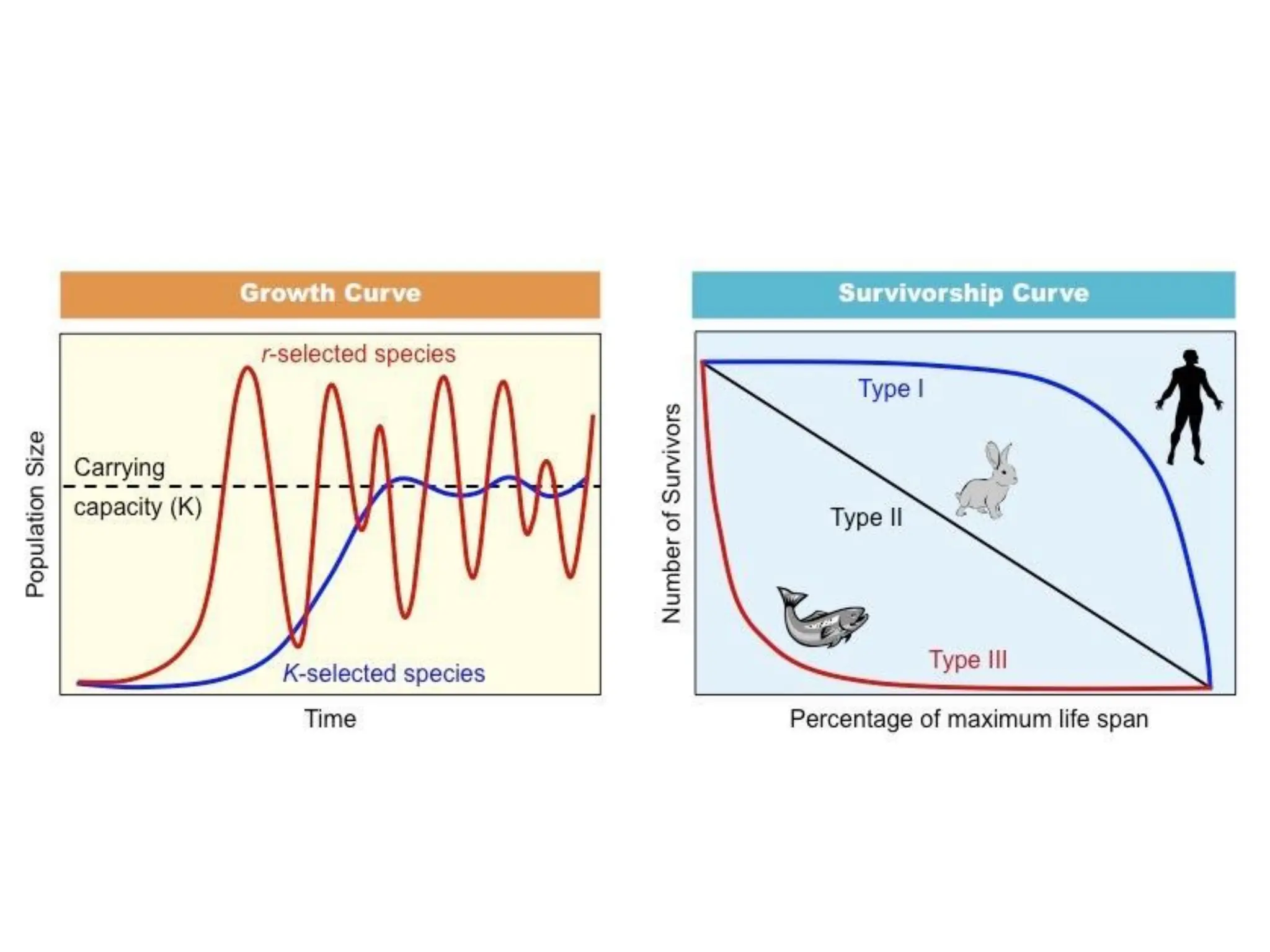
• The theory of r - and K -selection predicts that
species adapted to these two different
environments will differ in life history traits
such as size, productiveness, age at first
reproduction, number of reproductive events
during a lifetime, and total life span.
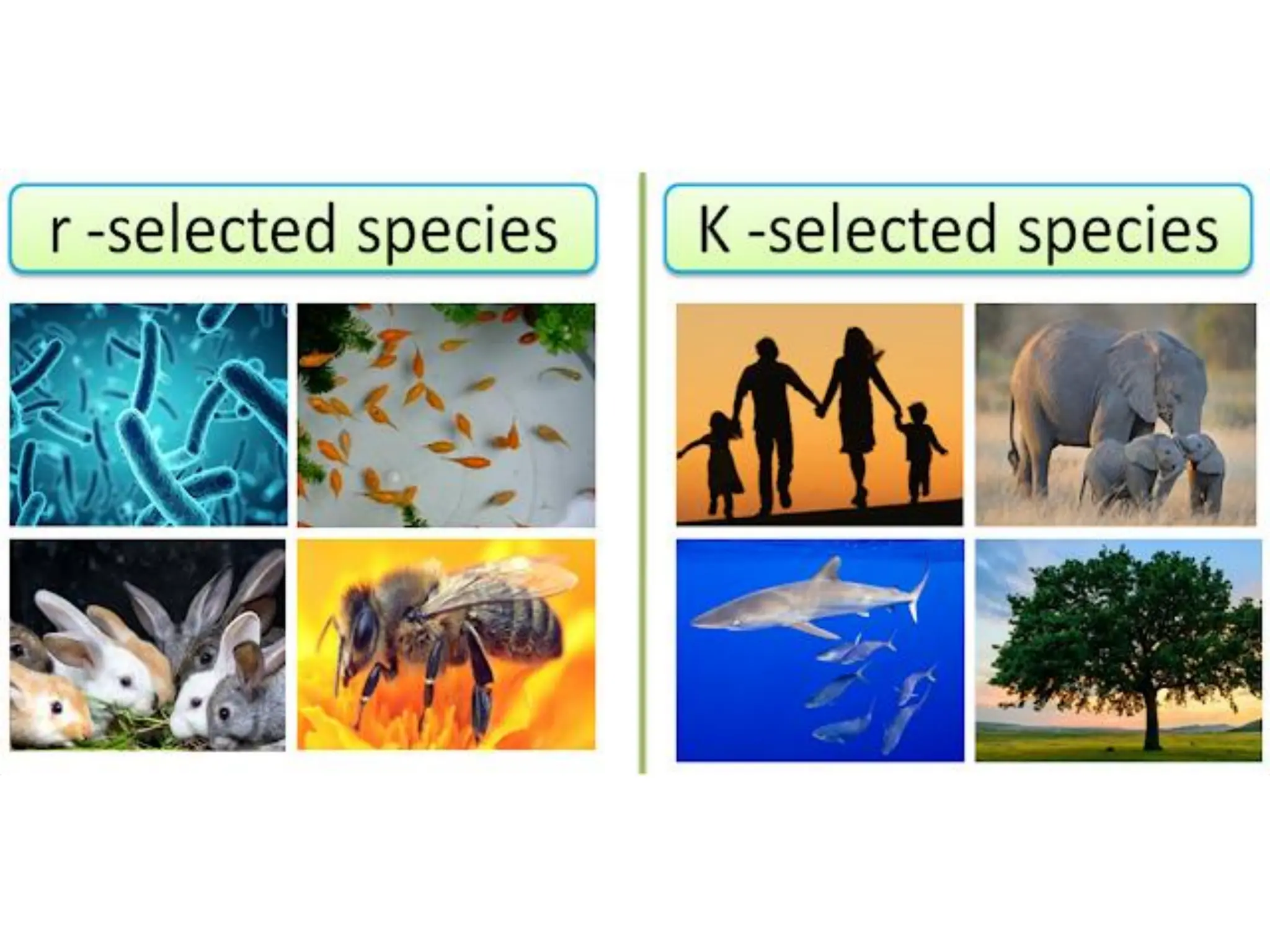
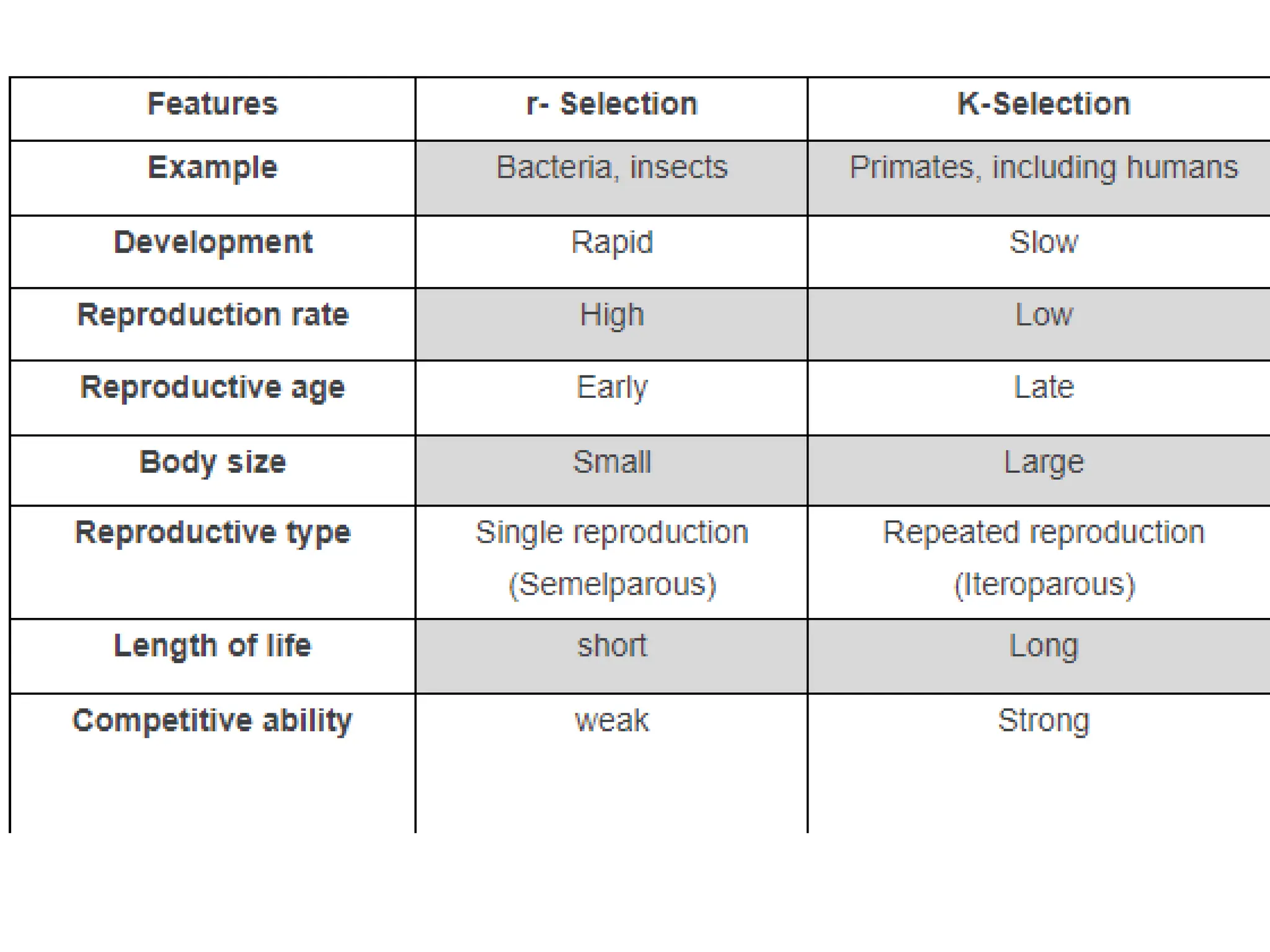
• Species popularly known as r -strategists are
typically short-lived.
• They have high reproductive rates, rapid
development, small body size, large number of
offspring (with low survival), and minimal
parental care.
• They make use of temporary habitats. Many
inhabit unstable or unpredictable environments
that can cause catastrophic mortality
independent of population density.
• Environmental resources are rarely limiting. They
exploit noncompetitive situations. Some r -
strategists, such as weedy species, have means of
wide dispersal, are good colonizers, and respond
rapidly to disturbance.
• K -strategists are competitive species with stable
populations of long-lived individuals.
• They have a slower growth rate.
• K -strategists can cope with physical and biotic pressures.
• They possess both delayed and repeated reproduction and
have a larger body size and slower development.
• They produce few seeds, eggs, or young. Among animals,
parents care for the young; among plants, seeds possess
stored food that gives the seedlings a strong start.
• Mortality relates more to density than to unpredictable
environmental conditions. They are specialists, efficient
users of a particular environment, but their populations are
at or near carrying capacity (maximum sustainable
population size) and are resource limited.
• These qualities, combined with their lack of means for wide
dispersal, make K -strategists poor colonizers of new and
empty habitats.
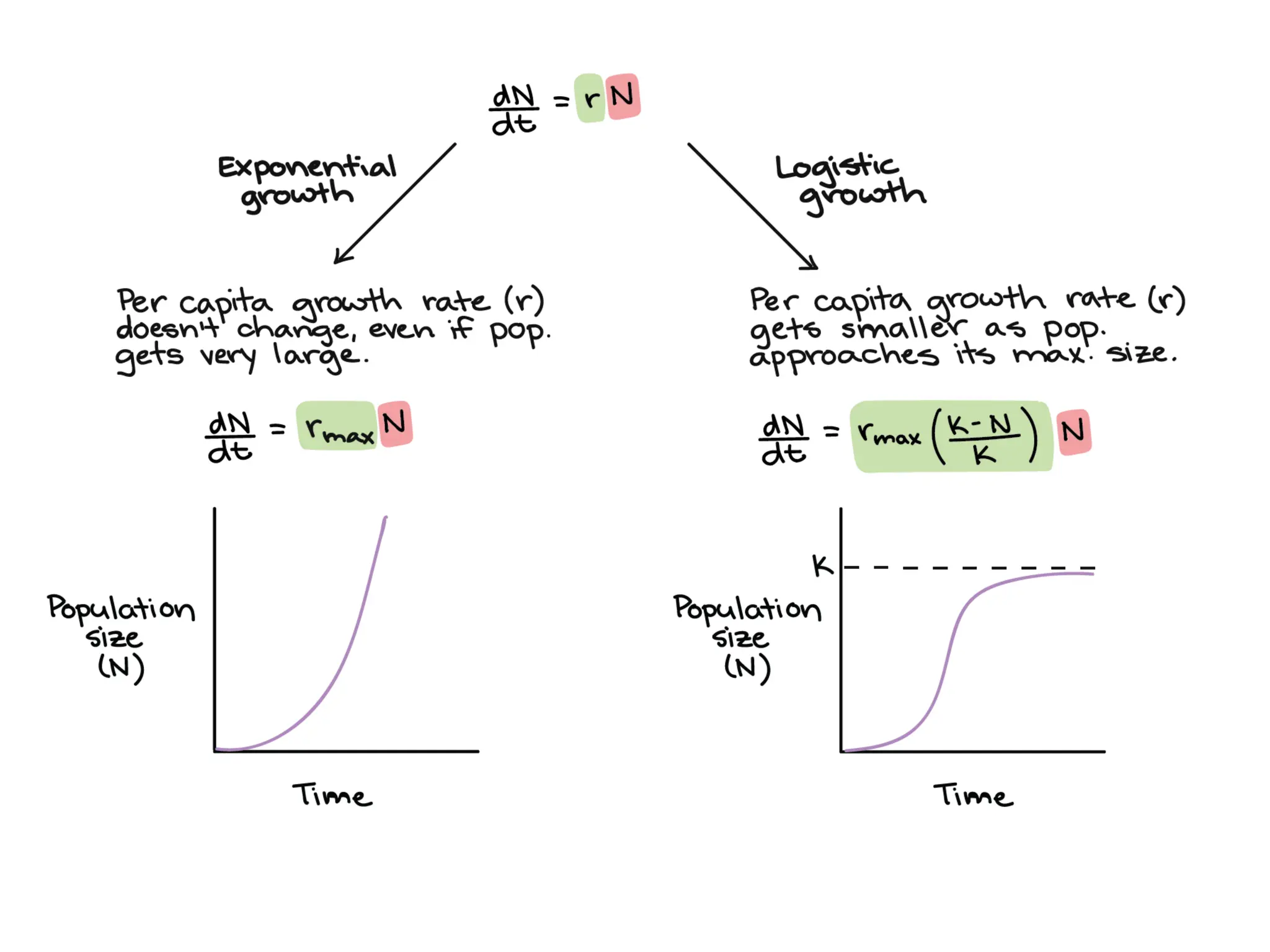
• The terms r and K used to characterize these
two contrasting strategies relate to the
parameters of the logistic model of population
growth.
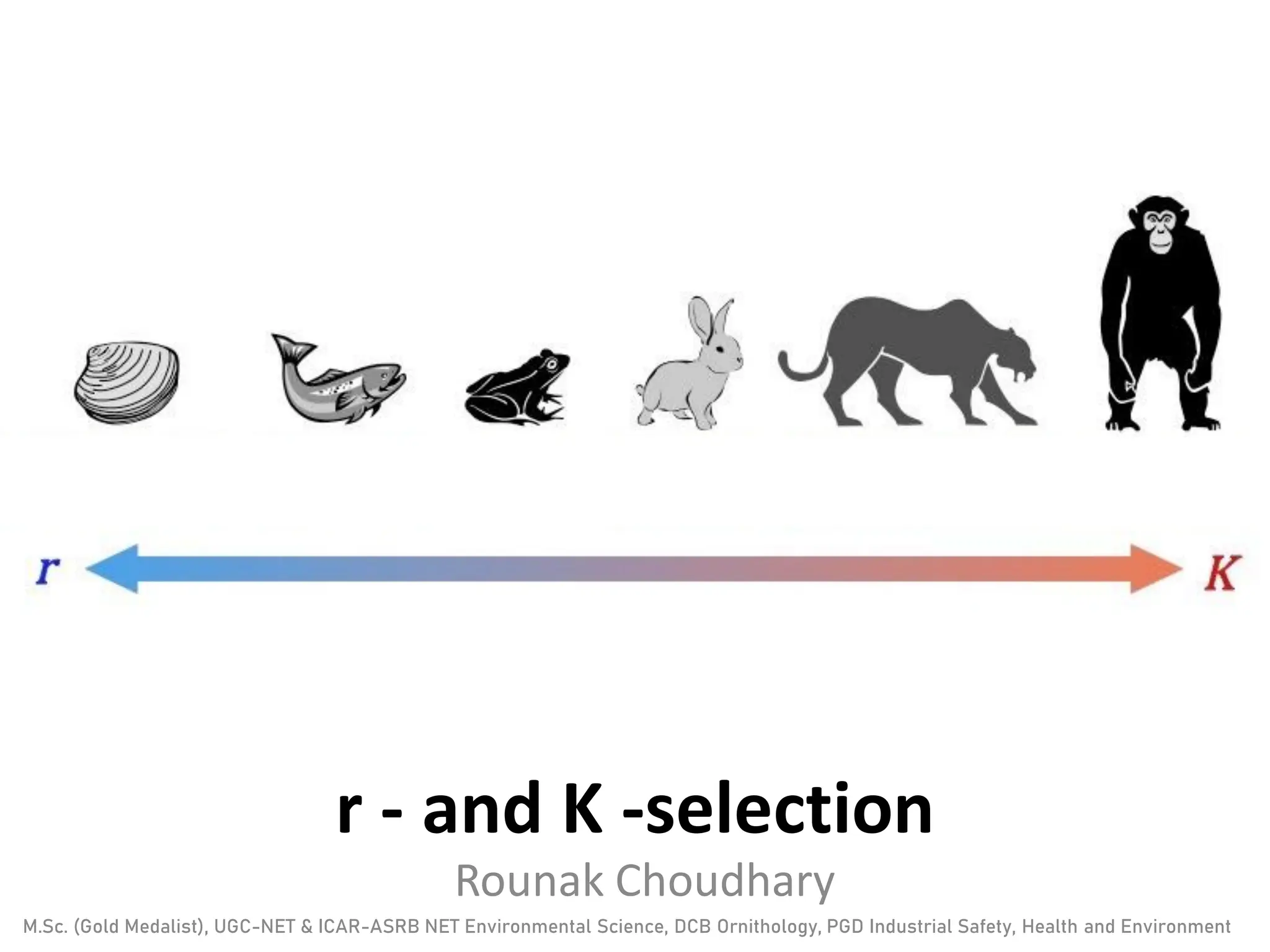
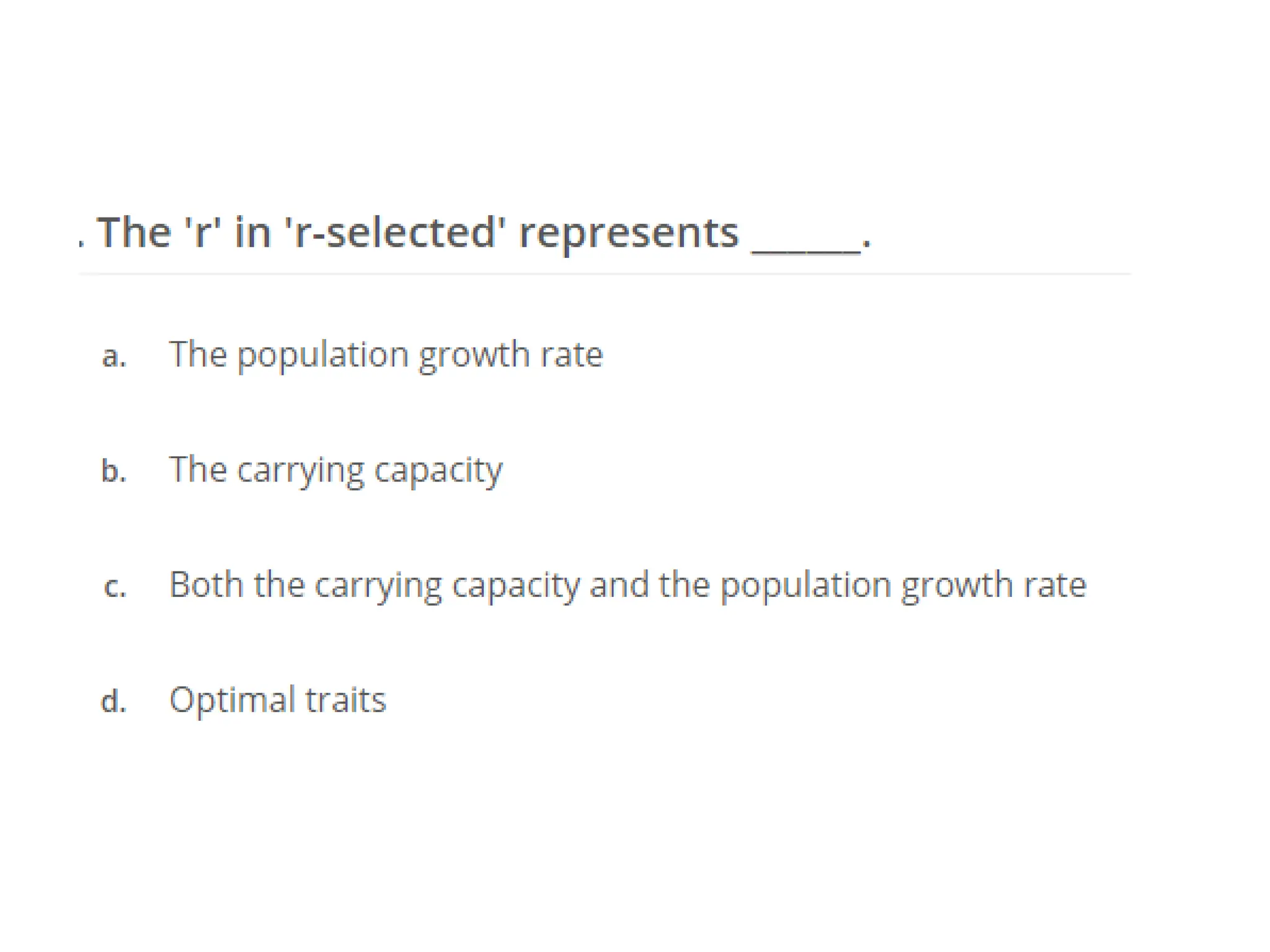
• r is the per capita rate of growth, and K is the
carrying capacity (maximum sustainable
population size).
MCQs
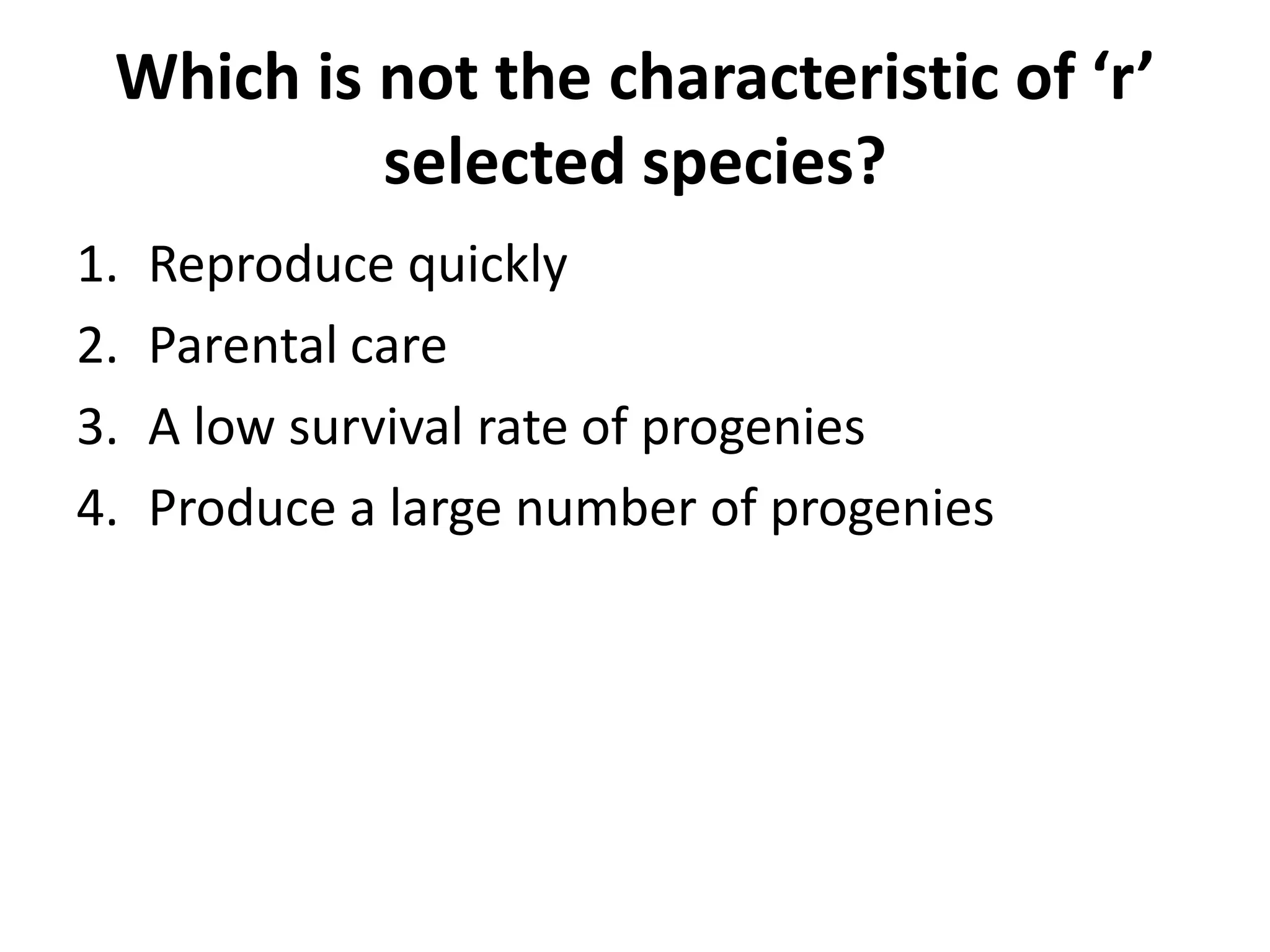
Which is not the characteristic of ‘r’
selected species?
1. Reproduce quickly
2. Parental care
3. A low survival rate of progenies
4. Produce a large number of progenies
r and K selection.pdf

r and K selection.pdf

  • 1.
    Rounak Choudhary M.Sc. (GoldMedalist), UGC-NET & ICAR-ASRB NET Environmental Science, DCB Ornithology, PGD Industrial Safety, Health and Environment r - and K -selection
  • 2.
    • One wayof classifying environments (or species habitats) relates to their variability in time. We can envision two contrasting types of habitats: (1) those that are variable in time or short-lived, and (2) those that are relatively stable (long-lived and constant), with few random environmental fluctuations. • The ecologists Robert MacArthur of Princeton University, E. O. Wilson of Harvard University, and later E. Pianka of the University of Texas used this dichotomy to develop the concept of r - and K - selection.
  • 3.
    • The theoryof r - and K -selection predicts that species adapted to these two different environments will differ in life history traits such as size, productiveness, age at first reproduction, number of reproductive events during a lifetime, and total life span.
  • 4.
    • Species popularlyknown as r -strategists are typically short-lived. • They have high reproductive rates, rapid development, small body size, large number of offspring (with low survival), and minimal parental care. • They make use of temporary habitats. Many inhabit unstable or unpredictable environments that can cause catastrophic mortality independent of population density. • Environmental resources are rarely limiting. They exploit noncompetitive situations. Some r - strategists, such as weedy species, have means of wide dispersal, are good colonizers, and respond rapidly to disturbance.
  • 5.
    • K -strategistsare competitive species with stable populations of long-lived individuals. • They have a slower growth rate. • K -strategists can cope with physical and biotic pressures. • They possess both delayed and repeated reproduction and have a larger body size and slower development. • They produce few seeds, eggs, or young. Among animals, parents care for the young; among plants, seeds possess stored food that gives the seedlings a strong start. • Mortality relates more to density than to unpredictable environmental conditions. They are specialists, efficient users of a particular environment, but their populations are at or near carrying capacity (maximum sustainable population size) and are resource limited. • These qualities, combined with their lack of means for wide dispersal, make K -strategists poor colonizers of new and empty habitats.
  • 6.
    • The termsr and K used to characterize these two contrasting strategies relate to the parameters of the logistic model of population growth. • r is the per capita rate of growth, and K is the carrying capacity (maximum sustainable population size).
  • 11.
  • 14.
    Which is notthe characteristic of ‘r’ selected species? 1. Reproduce quickly 2. Parental care 3. A low survival rate of progenies 4. Produce a large number of progenies