Changes in Ecosystems: Ecological Succession
Definition: Natural, gradual changes in the types of species that live in an area; can be primary or secondary  The gradual replacement of one plant community by another through natural processes over time
Primary Succession Begins in a place without any soil  Sides of volcanoes Landslides Flooding Starts with the arrival of living things such as lichens that do not need soil to survive Called  PIONEER SPECIES
http://botit.botany.wisc.edu   http://www.saguaro-juniper.com/
Primary Succession Soil starts to form as lichens and the forces of weather and erosion help break down rocks into smaller pieces When lichens die, they decompose, adding small amounts of organic matter to the rock to make soil
http://www.life.uiuc.edu
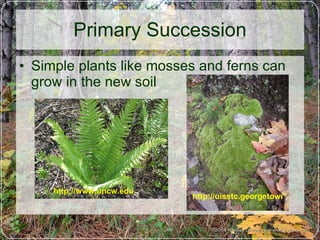
Primary Succession Simple plants like mosses and ferns can grow in the new soil  http://uisstc.georgetown.edu   http://www.uncw.edu
Primary Succession The simple plants die, adding more organic material The soil layer thickens, and grasses, wildflowers, and other plants begin to take over  http://www.cwrl.utexas.edu
Primary Succession These plants die, and they add more nutrients to the soil Shrubs and tress can survive now http://www.rowan.edu
Primary Succession Insects, small birds, and mammals have begun to move in What was once bare rock now supports a variety of life  http://p2-raw.greenpeace.org
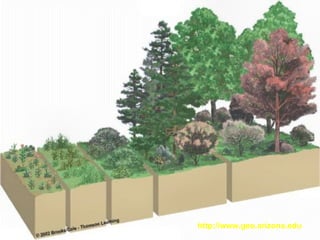
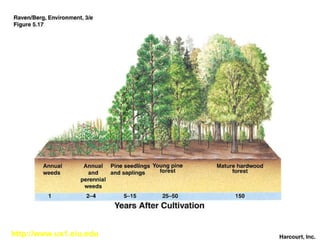
Secondary Succession Begins in a place that already has soil and was once the home of living organisms  Occurs faster and has different pioneer species than primary succession  Example:  after forest fires
http://www.geo.arizona.edu
http://www.ux1.eiu.edu
http://www.agen.ufl.edu
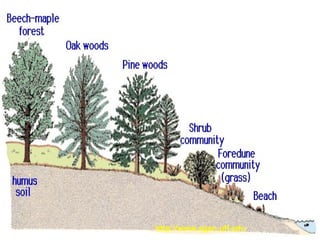
Climax Community A  stable group of plants and animals that is the end result of the succession   process Does not always mean big trees Grasses in prairies Cacti in deserts

Ecological succession (1)

  • 1.
    Changes in Ecosystems:Ecological Succession
  • 2.
    Definition: Natural, gradualchanges in the types of species that live in an area; can be primary or secondary The gradual replacement of one plant community by another through natural processes over time
  • 3.
    Primary Succession Beginsin a place without any soil Sides of volcanoes Landslides Flooding Starts with the arrival of living things such as lichens that do not need soil to survive Called PIONEER SPECIES
  • 4.
    http://botit.botany.wisc.edu http://www.saguaro-juniper.com/
  • 5.
    Primary Succession Soilstarts to form as lichens and the forces of weather and erosion help break down rocks into smaller pieces When lichens die, they decompose, adding small amounts of organic matter to the rock to make soil
  • 6.
  • 7.
    Primary Succession Simpleplants like mosses and ferns can grow in the new soil http://uisstc.georgetown.edu http://www.uncw.edu
  • 8.
    Primary Succession Thesimple plants die, adding more organic material The soil layer thickens, and grasses, wildflowers, and other plants begin to take over http://www.cwrl.utexas.edu
  • 9.
    Primary Succession Theseplants die, and they add more nutrients to the soil Shrubs and tress can survive now http://www.rowan.edu
  • 10.
    Primary Succession Insects,small birds, and mammals have begun to move in What was once bare rock now supports a variety of life http://p2-raw.greenpeace.org
  • 11.
    Secondary Succession Beginsin a place that already has soil and was once the home of living organisms Occurs faster and has different pioneer species than primary succession Example: after forest fires
  • 12.
  • 13.
  • 14.
  • 15.
    Climax Community A stable group of plants and animals that is the end result of the succession process Does not always mean big trees Grasses in prairies Cacti in deserts