Mangalore University
MSc. In Environmental Science
Environmental Biolog
Limiting Factors
Prepared by: Abdullah Mahajir
Introduction
• Limiting factors are theorized under Liebig’s Law of the Minimum, which states
that “growth is not controlled by the total amount of resources available, but by the
scarcest resource”.
• A limiting factor is anything that constrains a population's size and slow-stops it
from growing.
• Limiting factors are usually expressed as a lack of a particular resource.
• limiting factors determine a habitat's carrying capacity, which is the maximum
size of the population it can support.
• There can be many different limiting factors at work in a single habitat, and the
same limiting factors can affect the populations of both plant and animal species.
Definition
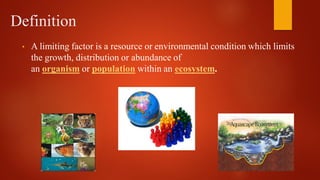
• A limiting factor is a resource or environmental condition which limits
the growth, distribution or abundance of
an organism or population within an ecosystem.
Continue…
• These can be either physical or biological factors, which can be identified
through a response of increased or decreased growth, abundance, or
distribution of a population, when the factor is changed and when the other
factors necessary to life are not.
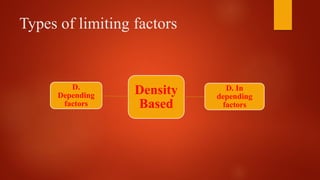
Types of limiting factors
Density
Based
D. In
depending
factors
D.
Depending
factors
Continue…
1. Density Depending factors:
are those which effects population, while determined by the total size of
the population.
e.g.
• Diseases
• Resource availability
• Predators and etc.
Continue…
2. Density In-depending factors
are those which limits the size of the population, while determined by the
number of individuals.
e.g.
• Earthquakes
• Tsunami
• Climate change
• Volcanoes
• Droughts and etc.
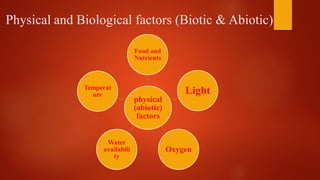
Physical and Biological factors (Biotic & Abiotic)
physical
(abiotic)
factors
Food and
Nutrients
Light
Oxygen
Water
availabili
ty
Temperat
ure
Temperature
• Temperature is the degree or intensity of heat or coldness present in substance,
object or an organism.
• After light, temperature is one of the major limiting factors, as it limits the
growth of plants, animal, human and micro-organisms.
• Maximum and minimum temperature effects the life of all organism on earth.
Effects of temperature on plants and animals
Temperature
Metabolism
Reproduction
Fecundity
Growth and
Development
Morphology
Sex-ratio
Coloration
Light
• About 10% of the sunlight which falls over the water surface, is reflected
back and rest 90% of that pass down in the water .The phytoplankton,
zooplankton, suspended organic and inorganic particles either reflect or
absorb the light rays.
• Without light, many of the plants would not be able to produce the
energy needs to grow,
• Sunlight provides the energy that green plants use to create sugars, which
release energy into the living things
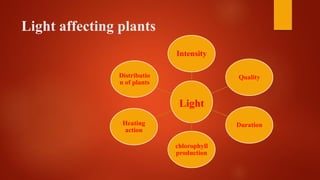
• Light effects on plants based on its intensity, quality and duration which
are also known as limiting factor for plant growth.
Light affecting plants
Light
Intensity
Quality
Duration
chlorophyll
production
Heating
action
Distributio
n of plants
Water
• Water exhibits cyclic flow between atmosphere , land and sea , and
between living organisms and their environment referred as water
cycle or hydrological cycle.
• Without cycling of water ecosystem could not function , and life
could not maintained.
Importance of water to plants
• Effect on intensity of solar radiations
• Effects on evaporation and transpiration
• Source of soil moisture
• Direct use by plants
Availability of Food
• In the natural world, limiting factors like the availability of food, can change
animal and plant populations.
• Some changes may cause a population to increase. If there are more plants than
usual in an area, populations of animals that eat that plant may increase. If one
animal's population increases, the population of animals that eats that animal
might also increase.
• Increases in population aren't always good. Sometimes a population will grow too
large for the environment to support. Other changes in limiting factors will cause
a population to decrease.
Continue…
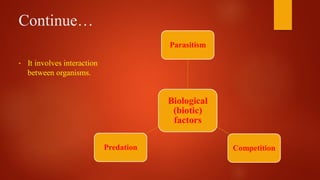
• It involves interaction
between organisms.
Biological
(biotic)
factors
Parasitism
CompetitionPredation
Predation
• Predation is the ecological process by which energy is transferred from living
animal to living animal based on the behavior of a predator that captures and
kills a prey before eating it.
• Predators occupy the upper levels of food chains.
• In terms of conservation, this is sometimes critical for the survival of local
predator populations.
• e.g. lions feeding on Zebra cougars eating deer, snakes consuming mice and
birds are eating insects.
Competition
• Competition is a relationship between organisms in which one is harmed
when both are trying to use the same resource related to growth,
reproduction, or survivability.
• Competition stems from the fact that resources are limited.
• There are simply not enough of some resources for all individuals to have
equal access and supply.
• Competition between species can either lead to the extinction of one of the
species, or a decline in both of the species.
Parasitism
• Parasitism is a type of symbiotic relationship, or long-term relationship
between two species, where one member, the parasite, gains benefits
that come at the expense of the host member.
• Parasitism is a relationship where one symbiont benefits (the parasite)
and the other (the host) is harmed in some way and may eventually die.
• Parasites can damage their hosts or sicken them and make them weak.
• A tapeworm in the digestive tract of a human or other animal is an
example of a parasitic relationship.
Conclusion
• Limiting factors can effect on the number of species in their environment,
which is directly dependent on the environmental carrying capacity.
• It means that, each and every environment and habitat has their own
limited resource and capacity, which can support and nourish its
population
• While the limiting factors are getting less or high, it will effect directly for
the existing population. Which may cause problems and even extinction.
• For the conservation purpose we must take care of biodiversity and
sustainable use of resources.
Limiting factors

Limiting factors

  • 1.
    Mangalore University MSc. InEnvironmental Science Environmental Biolog Limiting Factors Prepared by: Abdullah Mahajir
  • 2.
    Introduction • Limiting factorsare theorized under Liebig’s Law of the Minimum, which states that “growth is not controlled by the total amount of resources available, but by the scarcest resource”. • A limiting factor is anything that constrains a population's size and slow-stops it from growing. • Limiting factors are usually expressed as a lack of a particular resource. • limiting factors determine a habitat's carrying capacity, which is the maximum size of the population it can support. • There can be many different limiting factors at work in a single habitat, and the same limiting factors can affect the populations of both plant and animal species.
  • 3.
    Definition • A limitingfactor is a resource or environmental condition which limits the growth, distribution or abundance of an organism or population within an ecosystem.
  • 4.
    Continue… • These canbe either physical or biological factors, which can be identified through a response of increased or decreased growth, abundance, or distribution of a population, when the factor is changed and when the other factors necessary to life are not.
  • 5.
    Types of limitingfactors Density Based D. In depending factors D. Depending factors
  • 6.
    Continue… 1. Density Dependingfactors: are those which effects population, while determined by the total size of the population. e.g. • Diseases • Resource availability • Predators and etc.
  • 7.
    Continue… 2. Density In-dependingfactors are those which limits the size of the population, while determined by the number of individuals. e.g. • Earthquakes • Tsunami • Climate change • Volcanoes • Droughts and etc.
  • 8.
    Physical and Biologicalfactors (Biotic & Abiotic) physical (abiotic) factors Food and Nutrients Light Oxygen Water availabili ty Temperat ure
  • 9.
    Temperature • Temperature isthe degree or intensity of heat or coldness present in substance, object or an organism. • After light, temperature is one of the major limiting factors, as it limits the growth of plants, animal, human and micro-organisms. • Maximum and minimum temperature effects the life of all organism on earth.
  • 10.
    Effects of temperatureon plants and animals Temperature Metabolism Reproduction Fecundity Growth and Development Morphology Sex-ratio Coloration
  • 11.
    Light • About 10%of the sunlight which falls over the water surface, is reflected back and rest 90% of that pass down in the water .The phytoplankton, zooplankton, suspended organic and inorganic particles either reflect or absorb the light rays. • Without light, many of the plants would not be able to produce the energy needs to grow, • Sunlight provides the energy that green plants use to create sugars, which release energy into the living things • Light effects on plants based on its intensity, quality and duration which are also known as limiting factor for plant growth.
  • 12.
  • 13.
    Water • Water exhibitscyclic flow between atmosphere , land and sea , and between living organisms and their environment referred as water cycle or hydrological cycle. • Without cycling of water ecosystem could not function , and life could not maintained.
  • 14.
    Importance of waterto plants • Effect on intensity of solar radiations • Effects on evaporation and transpiration • Source of soil moisture • Direct use by plants
  • 15.
    Availability of Food •In the natural world, limiting factors like the availability of food, can change animal and plant populations. • Some changes may cause a population to increase. If there are more plants than usual in an area, populations of animals that eat that plant may increase. If one animal's population increases, the population of animals that eats that animal might also increase. • Increases in population aren't always good. Sometimes a population will grow too large for the environment to support. Other changes in limiting factors will cause a population to decrease.
  • 16.
    Continue… • It involvesinteraction between organisms. Biological (biotic) factors Parasitism CompetitionPredation
  • 17.
    Predation • Predation isthe ecological process by which energy is transferred from living animal to living animal based on the behavior of a predator that captures and kills a prey before eating it. • Predators occupy the upper levels of food chains. • In terms of conservation, this is sometimes critical for the survival of local predator populations. • e.g. lions feeding on Zebra cougars eating deer, snakes consuming mice and birds are eating insects.
  • 18.
    Competition • Competition isa relationship between organisms in which one is harmed when both are trying to use the same resource related to growth, reproduction, or survivability. • Competition stems from the fact that resources are limited. • There are simply not enough of some resources for all individuals to have equal access and supply. • Competition between species can either lead to the extinction of one of the species, or a decline in both of the species.
  • 19.
    Parasitism • Parasitism isa type of symbiotic relationship, or long-term relationship between two species, where one member, the parasite, gains benefits that come at the expense of the host member. • Parasitism is a relationship where one symbiont benefits (the parasite) and the other (the host) is harmed in some way and may eventually die. • Parasites can damage their hosts or sicken them and make them weak. • A tapeworm in the digestive tract of a human or other animal is an example of a parasitic relationship.
  • 20.
    Conclusion • Limiting factorscan effect on the number of species in their environment, which is directly dependent on the environmental carrying capacity. • It means that, each and every environment and habitat has their own limited resource and capacity, which can support and nourish its population • While the limiting factors are getting less or high, it will effect directly for the existing population. Which may cause problems and even extinction. • For the conservation purpose we must take care of biodiversity and sustainable use of resources.