ECG
COMPRESSION
 USING FFT
ECG
The ECG (electrocardiogram)is a diagnostic
 tool that is routinely used to assess the
 electrical and muscular functions of the heart.
Sometimes it is required to send the ECG
 signals from one place to another place. The
 ECG signals are compressed at first to reduce
 the amplitude and frequency and then
 transferred.
FFT
• ECG signals are compressed by using many
  techniques. One of the most important
  technique is FFT.
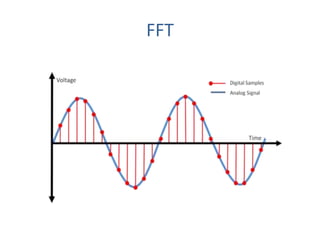
•            FFT (Fast Fourier Transform) is a
  technique used to convert analog signal to
  digital signal.
FFT
Five Stages
    In FFT, The total process takes five steps:-
1)   Input signal
2)   Compression (counter A)
3)   Compression (counter B)
4)   Recovery of the original signal by using IFFT
5)   Error checking
First stage
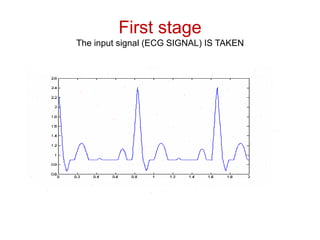
The input signal (ECG SIGNAL) IS TAKEN
Compression stage
              (counter A)
 There are two stages for compression. In first
  stage of compression there is a counter A. It
  identifies the non-zero values of the signal
  before compression.
 After compression length of the compressed
  signal is compared with the length of the
  actual signal.
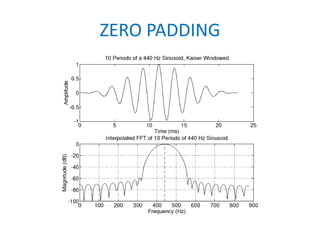
ZERO PADDING
• If the length of the compressed signal is less
  than the length of the actual signal, then zero
  padding is done to make equal the lengths of
  compressed and actual signal.
ZERO PADDING
COMPRESSION STAGE
             (COUNTER B)
• Now the signal is passed through the counter
  B. It identifies the non-zero values after the
  compression of the signal.
• After compression length of the compressed
  signal is compared with the length of the
  actual signal
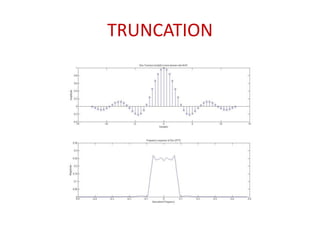
TRUNCATION


                 Now after compression if the
length of the compressed signal is greater
than the length of the actual signal, then
TRUNCATION of the signal is done.
TRUNCATION
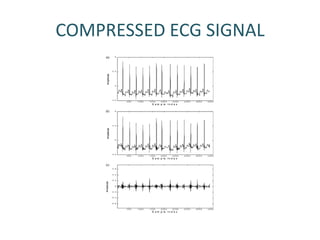
COMPRESSED ECG SIGNAL
Recovery of the original signal by
          using IFFT

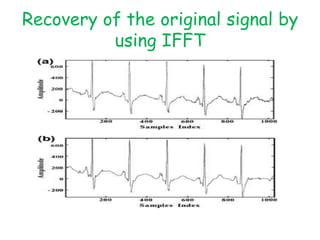
                    Now by applying IFFT
 (Inverse Fast Fourier Transform) the original
 ECG signal is recovered.
Recovery of the original signal by
          using IFFT
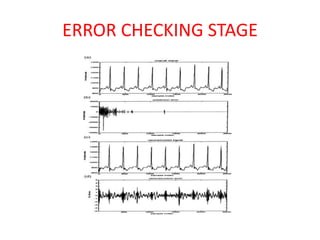
ERROR CHECKING STAGE
The recovered signal y’(t) is compared with
 the original signal y(t).
Error is given by
      e(t)=y(t)-y’(t)
   e(t)=error in the recovered signal
   y(t)= original signal
   y’(t)=recovered signal
ERROR CHECKING STAGE
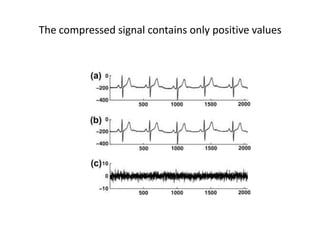
The compressed signal contains only positive values
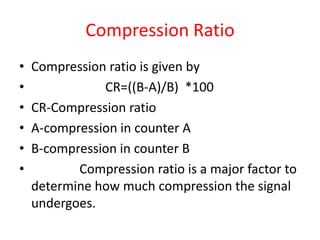
Compression Ratio
•   Compression ratio is given by
•              CR=((B-A)/B) *100
•   CR-Compression ratio
•   A-compression in counter A
•   B-compression in counter B
•          Compression ratio is a major factor to
    determine how much compression the signal
    undergoes.
Applications


               It finds application in
hospitals, when a patient’s report is to be
send to another doctor in prenominal place.
Ecg compression using fft

Ecg compression using fft

  • 1.
  • 2.
    ECG The ECG (electrocardiogram)isa diagnostic tool that is routinely used to assess the electrical and muscular functions of the heart. Sometimes it is required to send the ECG signals from one place to another place. The ECG signals are compressed at first to reduce the amplitude and frequency and then transferred.
  • 3.
    FFT • ECG signalsare compressed by using many techniques. One of the most important technique is FFT. • FFT (Fast Fourier Transform) is a technique used to convert analog signal to digital signal.
  • 4.
  • 5.
    Five Stages  In FFT, The total process takes five steps:- 1) Input signal 2) Compression (counter A) 3) Compression (counter B) 4) Recovery of the original signal by using IFFT 5) Error checking
  • 6.
    First stage The inputsignal (ECG SIGNAL) IS TAKEN
  • 7.
    Compression stage (counter A)  There are two stages for compression. In first stage of compression there is a counter A. It identifies the non-zero values of the signal before compression.  After compression length of the compressed signal is compared with the length of the actual signal.
  • 8.
    ZERO PADDING • Ifthe length of the compressed signal is less than the length of the actual signal, then zero padding is done to make equal the lengths of compressed and actual signal.
  • 9.
  • 10.
    COMPRESSION STAGE (COUNTER B) • Now the signal is passed through the counter B. It identifies the non-zero values after the compression of the signal. • After compression length of the compressed signal is compared with the length of the actual signal
  • 11.
    TRUNCATION Now after compression if the length of the compressed signal is greater than the length of the actual signal, then TRUNCATION of the signal is done.
  • 12.
  • 13.
  • 14.
    Recovery of theoriginal signal by using IFFT Now by applying IFFT (Inverse Fast Fourier Transform) the original ECG signal is recovered.
  • 15.
    Recovery of theoriginal signal by using IFFT
  • 16.
    ERROR CHECKING STAGE Therecovered signal y’(t) is compared with the original signal y(t). Error is given by e(t)=y(t)-y’(t) e(t)=error in the recovered signal y(t)= original signal y’(t)=recovered signal
  • 17.
  • 18.
    The compressed signalcontains only positive values
  • 19.
    Compression Ratio • Compression ratio is given by • CR=((B-A)/B) *100 • CR-Compression ratio • A-compression in counter A • B-compression in counter B • Compression ratio is a major factor to determine how much compression the signal undergoes.
  • 20.
    Applications It finds application in hospitals, when a patient’s report is to be send to another doctor in prenominal place.