Download to read offline
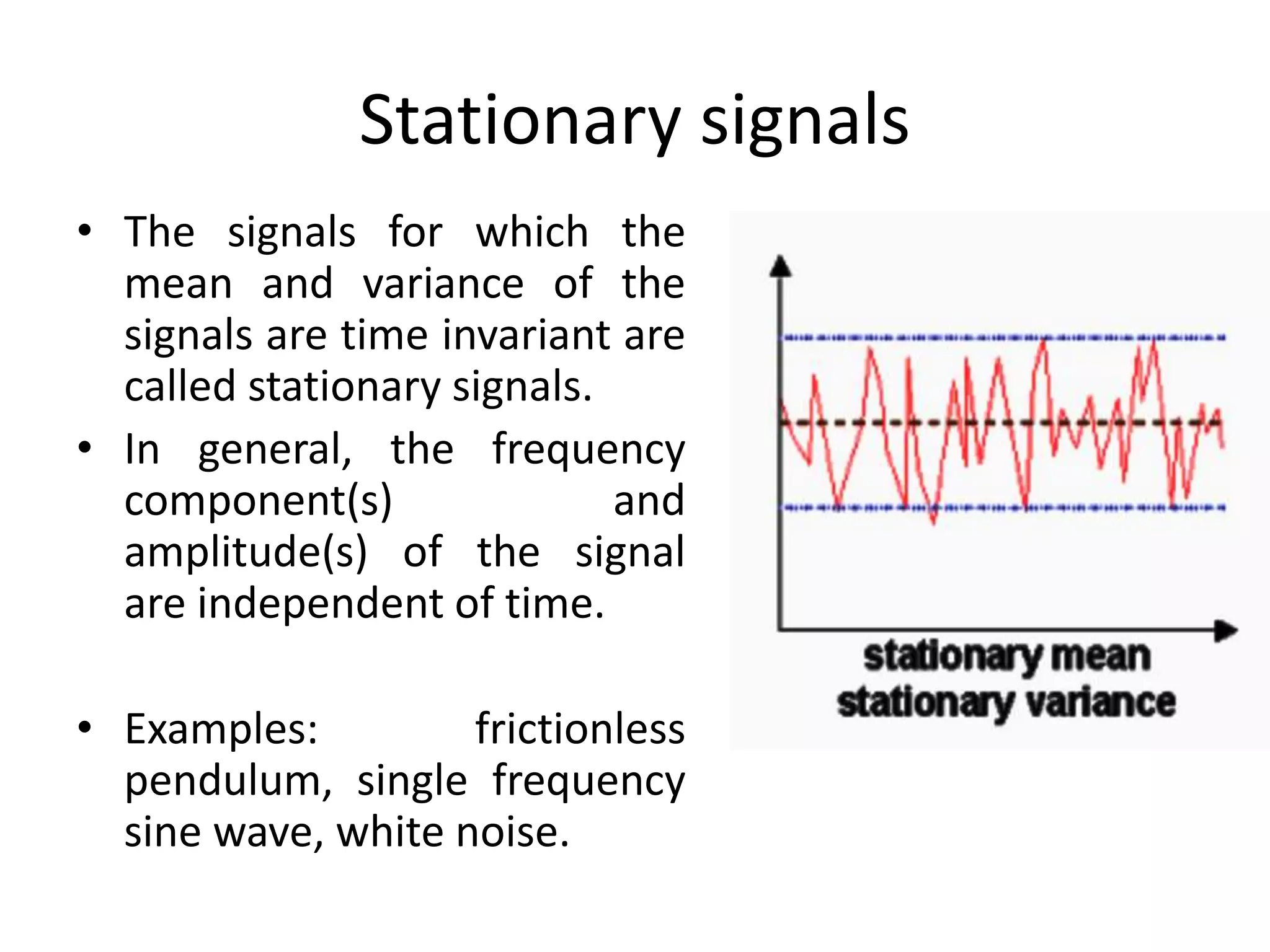
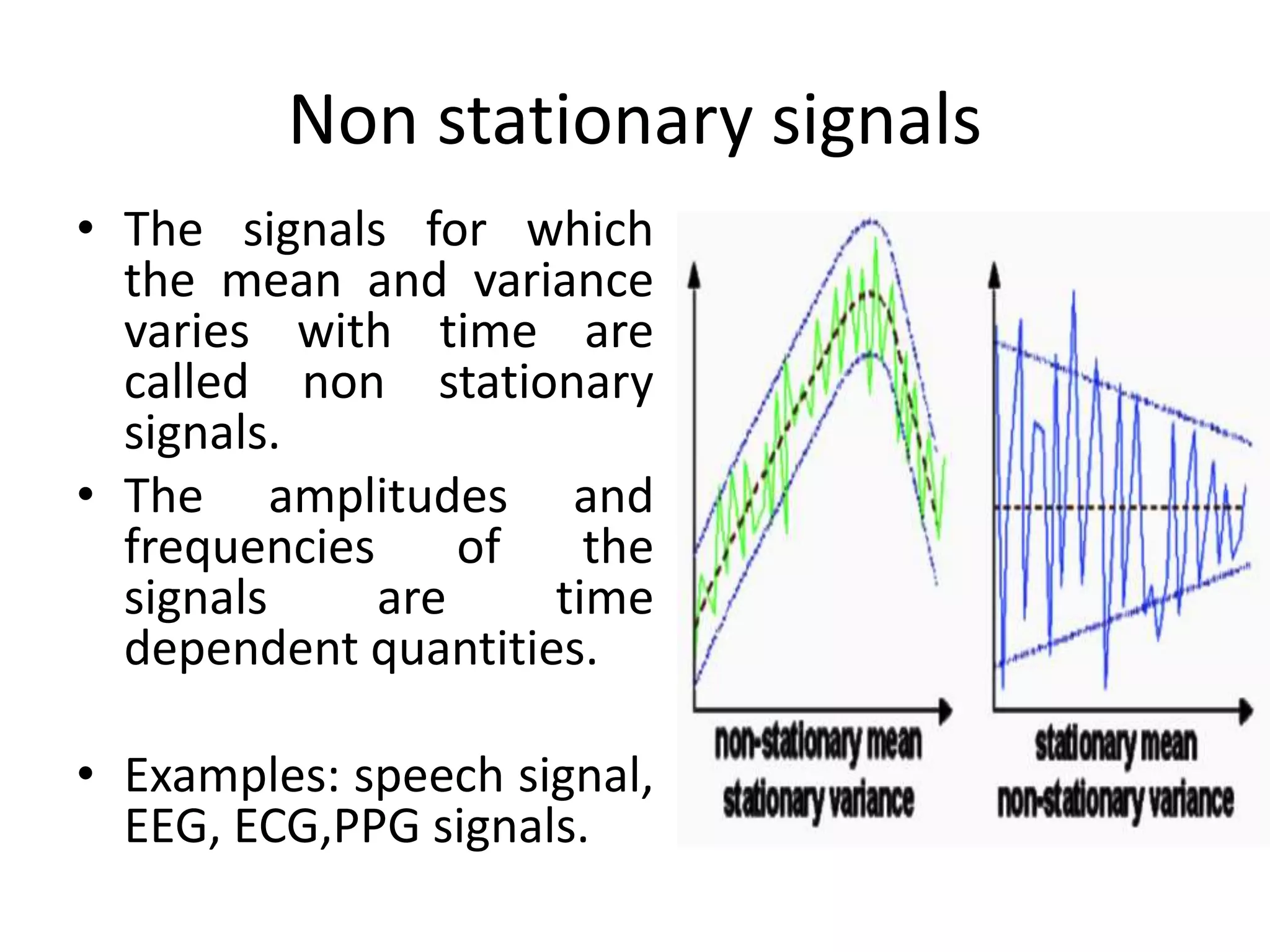

Stationary signals have a mean and variance that do not change over time. Their frequency components and amplitudes remain constant. Examples include a frictionless pendulum, single frequency sine waves, and white noise. Non-stationary signals have a mean and variance that vary over time, so their amplitudes and frequencies are time-dependent. Examples of non-stationary signals include speech, EEG, ECG, and PPG recordings.


