Tuesday, March 8
Do Now:
Lay out your homework (or choice card) on
the table.
1. Explain what technology can be used to
detect a tsunami.
 TODAYS PLAN
 Explain how technology can be used to
predict and prepare for natural disasters.
 Define and identify the components of the
spheres of Earth (atmosphere, biosphere,
hydrosphere, geosphere)
 TODAYS DO
 We will discuss the Save Our City Homework.
 We will discuss the different spheres of Earth.
Why do we need to know about
Earth’s spheres?
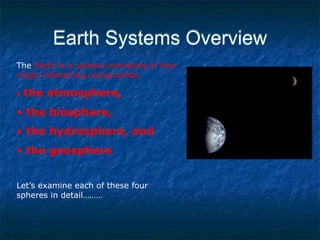
Earth Systems Overview
The Earth is a system consisting of four
major interacting components:
• the atmosphere,
• the biosphere,
• the hydrosphere, and
• the geosphere
Let’s examine each of these four
spheres in detail………
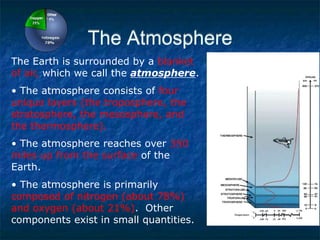
The Atmosphere
The Earth is surrounded by a blanket
of air, which we call the atmosphere.
• The atmosphere consists of four
unique layers (the troposphere, the
stratosphere, the mesosphere, and
the thermosphere).
• The atmosphere reaches over 350
miles up from the surface of the
Earth.
• The atmosphere is primarily
composed of nitrogen (about 78%)
and oxygen (about 21%). Other
components exist in small quantities.
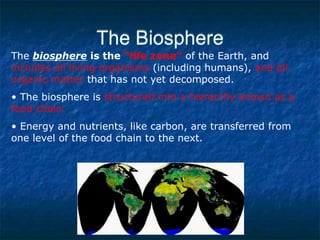
The Biosphere
The biosphere is the “life zone” of the Earth, and
includes all living organisms (including humans), and all
organic matter that has not yet decomposed.
• The biosphere is structured into a hierarchy known as a
food chain.
• Energy and nutrients, like carbon, are transferred from
one level of the food chain to the next.
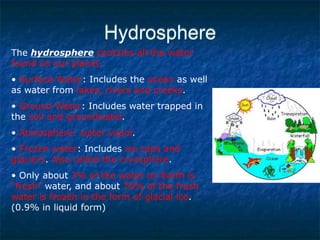
Hydrosphere
The hydrosphere contains all the water
found on our planet.
• Surface Water: Includes the ocean as well
as water from lakes, rivers and creeks.
• Ground Water: Includes water trapped in
the soil and groundwater.
• Atmosphere: water vapor.
• Frozen water: Includes ice caps and
glaciers. Also called the cryosphere.
• Only about 3% of the water on Earth is
“fresh” water, and about 70% of the fresh
water is frozen in the form of glacial ice.
(0.9% in liquid form)
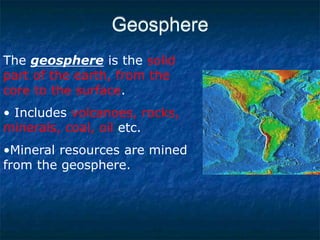
Geosphere
The geosphere is the solid
part of the earth, from the
core to the surface.
• Includes volcanoes, rocks,
minerals, coal, oil etc.
•Mineral resources are mined
from the geosphere.
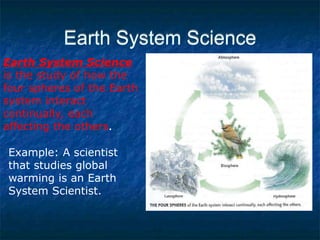
Earth System Science
is the study of how the
four spheres of the Earth
system interact
continually, each
affecting the others.
Example: A scientist
that studies global
warming is an Earth
System Scientist.
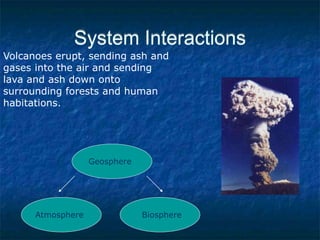
System Interactions
Volcanoes erupt, sending ash and
gases into the air and sending
lava and ash down onto
surrounding forests and human
habitations.
Geosphere
Atmosphere Biosphere
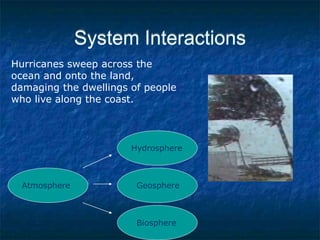
System Interactions
Hurricanes sweep across the
ocean and onto the land,
damaging the dwellings of people
who live along the coast.
Atmosphere
Hydrosphere
Geosphere
Biosphere
System Interactions
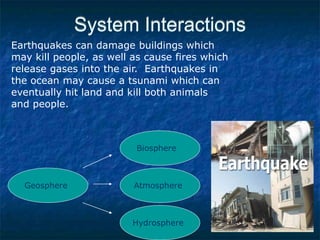
Earthquakes can damage buildings which
may kill people, as well as cause fires which
release gases into the air. Earthquakes in
the ocean may cause a tsunami which can
eventually hit land and kill both animals
and people.
Geosphere
Biosphere
Atmosphere
Hydrosphere
CFA
1. Name the four main earth systems.
2. Which branch of science studies the
interactions between these earth systems?
3. A forest fire would effect which earth
systems?
Atmosphere, Biosphere, Hydrosphere and
Geosphere
Earth System Science: Example is a scientist that
studies global warming.
All four: Fires (Biosphere) will destroy plant and animal life
while releasing smoke and other contaminants into the
atmosphere, hydrosphere and geosphere.
Tasks:
 Complete the Earth’s sphere worksheet.

earth systems spheres use.ppt

  • 1.
    Tuesday, March 8 DoNow: Lay out your homework (or choice card) on the table. 1. Explain what technology can be used to detect a tsunami.
  • 2.
     TODAYS PLAN Explain how technology can be used to predict and prepare for natural disasters.  Define and identify the components of the spheres of Earth (atmosphere, biosphere, hydrosphere, geosphere)  TODAYS DO  We will discuss the Save Our City Homework.  We will discuss the different spheres of Earth.
  • 3.
    Why do weneed to know about Earth’s spheres?
  • 4.
    Earth Systems Overview TheEarth is a system consisting of four major interacting components: • the atmosphere, • the biosphere, • the hydrosphere, and • the geosphere Let’s examine each of these four spheres in detail………
  • 5.
    The Atmosphere The Earthis surrounded by a blanket of air, which we call the atmosphere. • The atmosphere consists of four unique layers (the troposphere, the stratosphere, the mesosphere, and the thermosphere). • The atmosphere reaches over 350 miles up from the surface of the Earth. • The atmosphere is primarily composed of nitrogen (about 78%) and oxygen (about 21%). Other components exist in small quantities.
  • 6.
    The Biosphere The biosphereis the “life zone” of the Earth, and includes all living organisms (including humans), and all organic matter that has not yet decomposed. • The biosphere is structured into a hierarchy known as a food chain. • Energy and nutrients, like carbon, are transferred from one level of the food chain to the next.
  • 7.
    Hydrosphere The hydrosphere containsall the water found on our planet. • Surface Water: Includes the ocean as well as water from lakes, rivers and creeks. • Ground Water: Includes water trapped in the soil and groundwater. • Atmosphere: water vapor. • Frozen water: Includes ice caps and glaciers. Also called the cryosphere. • Only about 3% of the water on Earth is “fresh” water, and about 70% of the fresh water is frozen in the form of glacial ice. (0.9% in liquid form)
  • 8.
    Geosphere The geosphere isthe solid part of the earth, from the core to the surface. • Includes volcanoes, rocks, minerals, coal, oil etc. •Mineral resources are mined from the geosphere.
  • 9.
    Earth System Science EarthSystem Science is the study of how the four spheres of the Earth system interact continually, each affecting the others. Example: A scientist that studies global warming is an Earth System Scientist.
  • 10.
    System Interactions Volcanoes erupt,sending ash and gases into the air and sending lava and ash down onto surrounding forests and human habitations. Geosphere Atmosphere Biosphere
  • 11.
    System Interactions Hurricanes sweepacross the ocean and onto the land, damaging the dwellings of people who live along the coast. Atmosphere Hydrosphere Geosphere Biosphere
  • 12.
    System Interactions Earthquakes candamage buildings which may kill people, as well as cause fires which release gases into the air. Earthquakes in the ocean may cause a tsunami which can eventually hit land and kill both animals and people. Geosphere Biosphere Atmosphere Hydrosphere
  • 13.
    CFA 1. Name thefour main earth systems. 2. Which branch of science studies the interactions between these earth systems? 3. A forest fire would effect which earth systems? Atmosphere, Biosphere, Hydrosphere and Geosphere Earth System Science: Example is a scientist that studies global warming. All four: Fires (Biosphere) will destroy plant and animal life while releasing smoke and other contaminants into the atmosphere, hydrosphere and geosphere.
  • 14.
    Tasks:  Complete theEarth’s sphere worksheet.