Lesson 1 Origin and Structure of the
Earth – The Subsystem
 System is a set of interconnected components that are
interacting to form a unified whole.
 Ex: Solar System, all the body system, ecosystem and the earth
system
Subsystems of the Earth
Earth is sometimes
called the “water
planet” or the “blue
planet” because
seas cover more than
two-thirds of its
surface.
Earth is the only
planet or moon in the
solar
system with rain that
falls from clouds, runs
over the land, and
collects in extensive
oceans.
It is also the only body
we know that
supports life.
Earth is a complex
system of interrelating
physical, chemical
and biological
processes
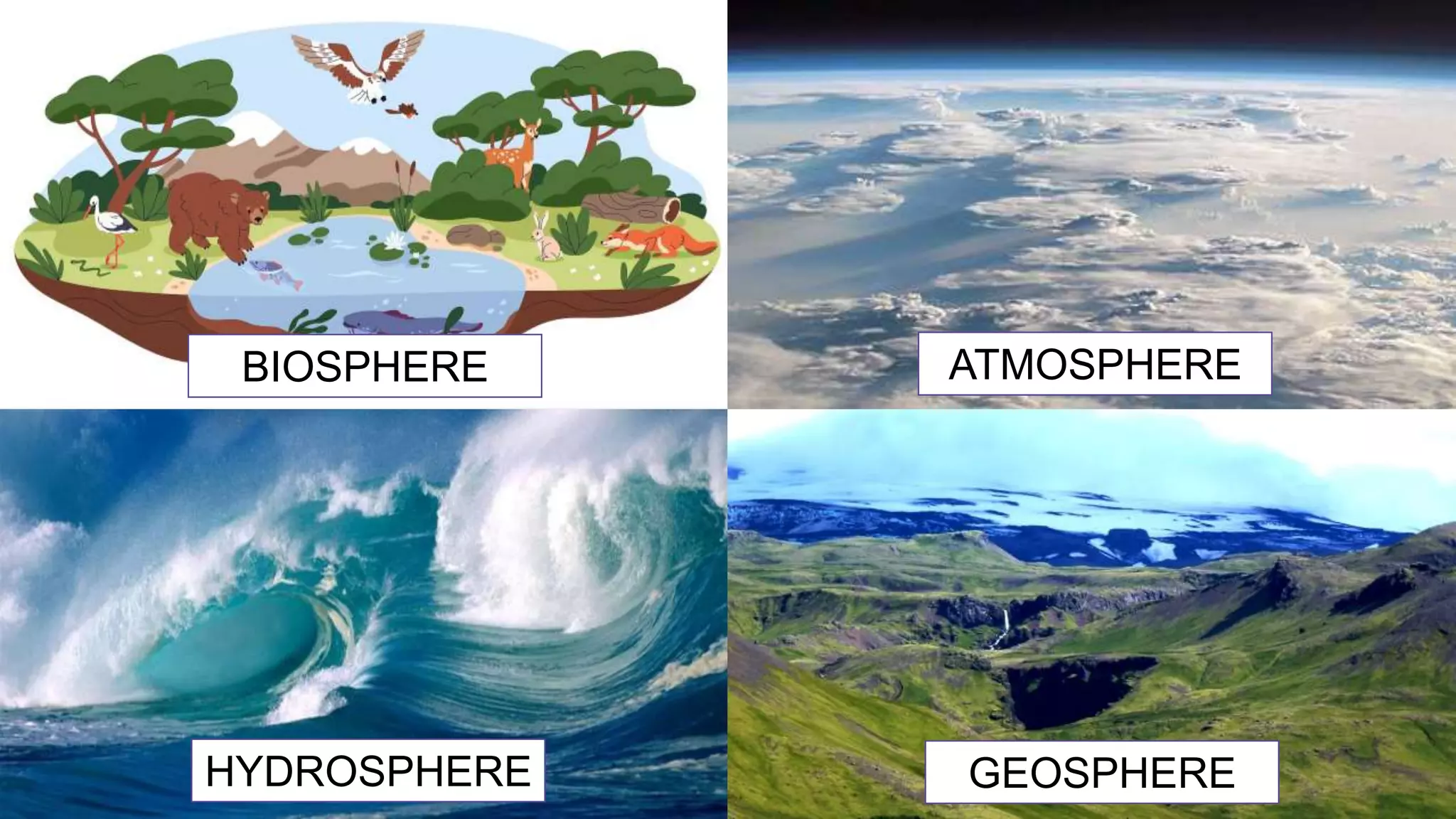
Spheres of the Earth
ATMOSPHERE
GEOSPHERE
BIOSPHERE
HYDROSPHERE
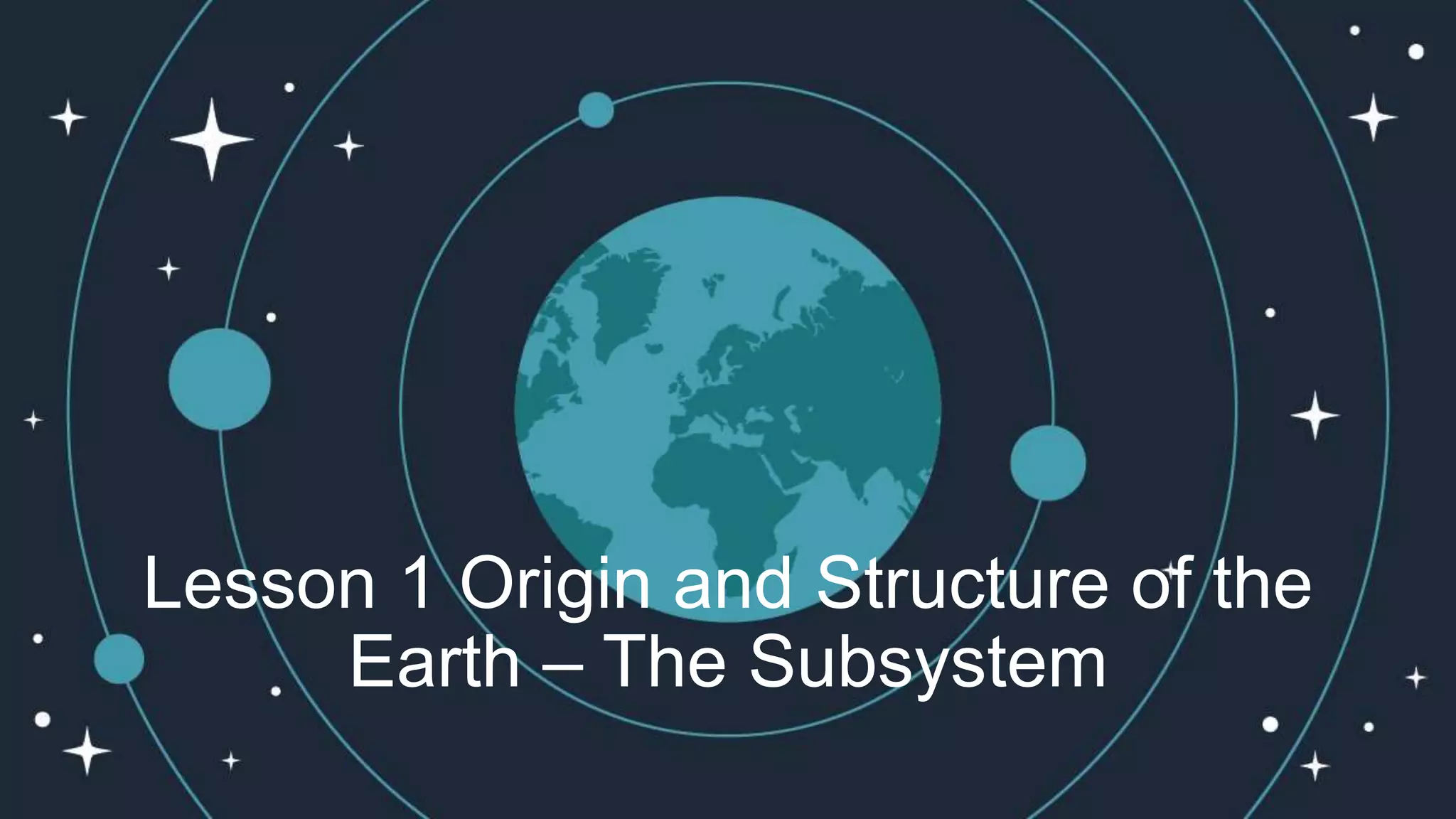
Atmosphere
 It serves as the earth’s blanket
 Greek word “atmos” means gas and “spyra” means globe or ball.
 it is the gaseous layer above the Earth’s surface, primarily composed of
78% nitrogen and 21% oxygen.
 Other gases like argon 0.9%, carbon dioxide, carbon monoxide, ozone,
and other inert gases made the remaining 1%.
 The atmosphere supports life because animals and oxygen, and plants
need both carbon dioxide and oxygen.
 the atmosphere supports life indirectly by regulating climate.
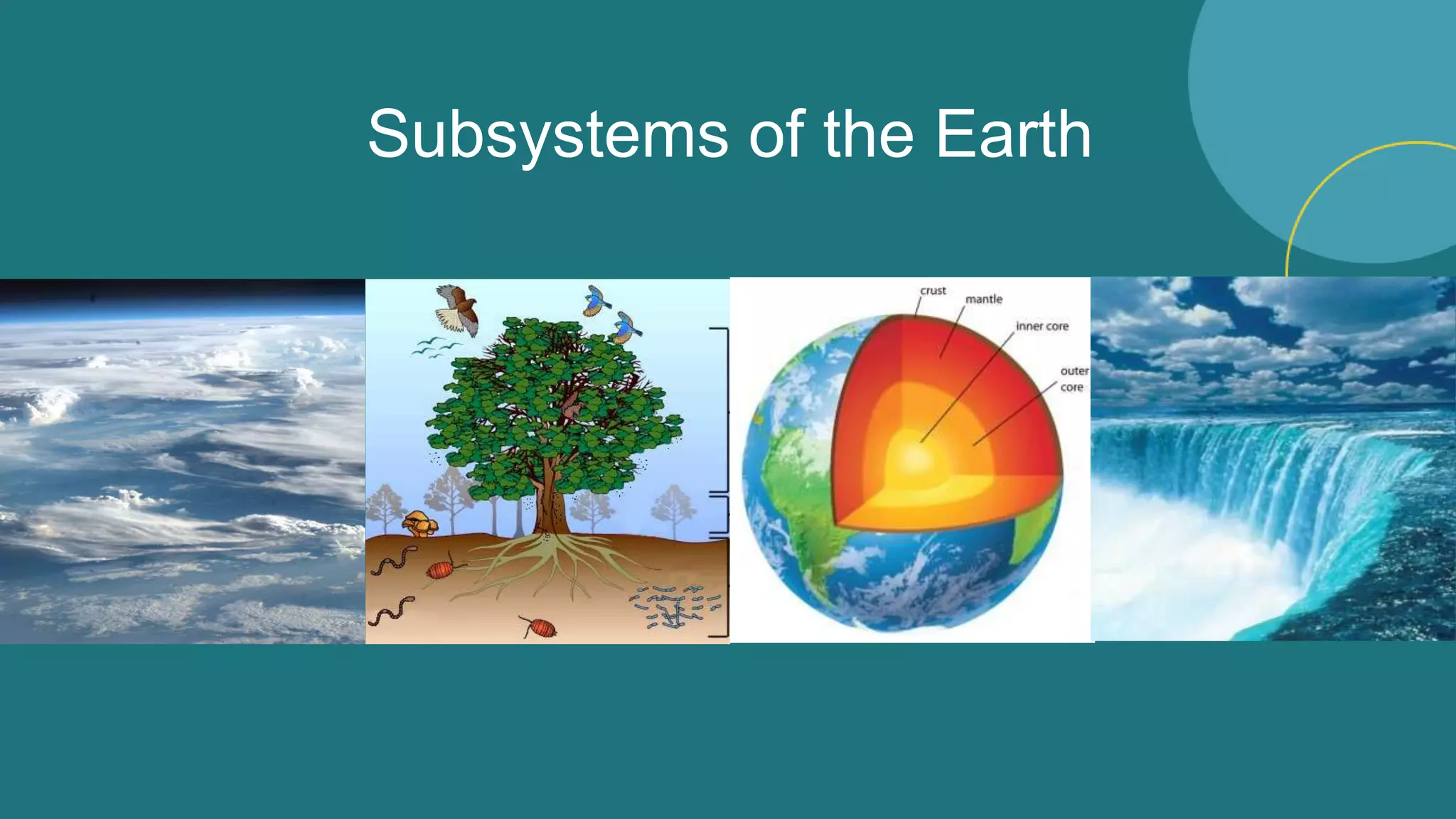
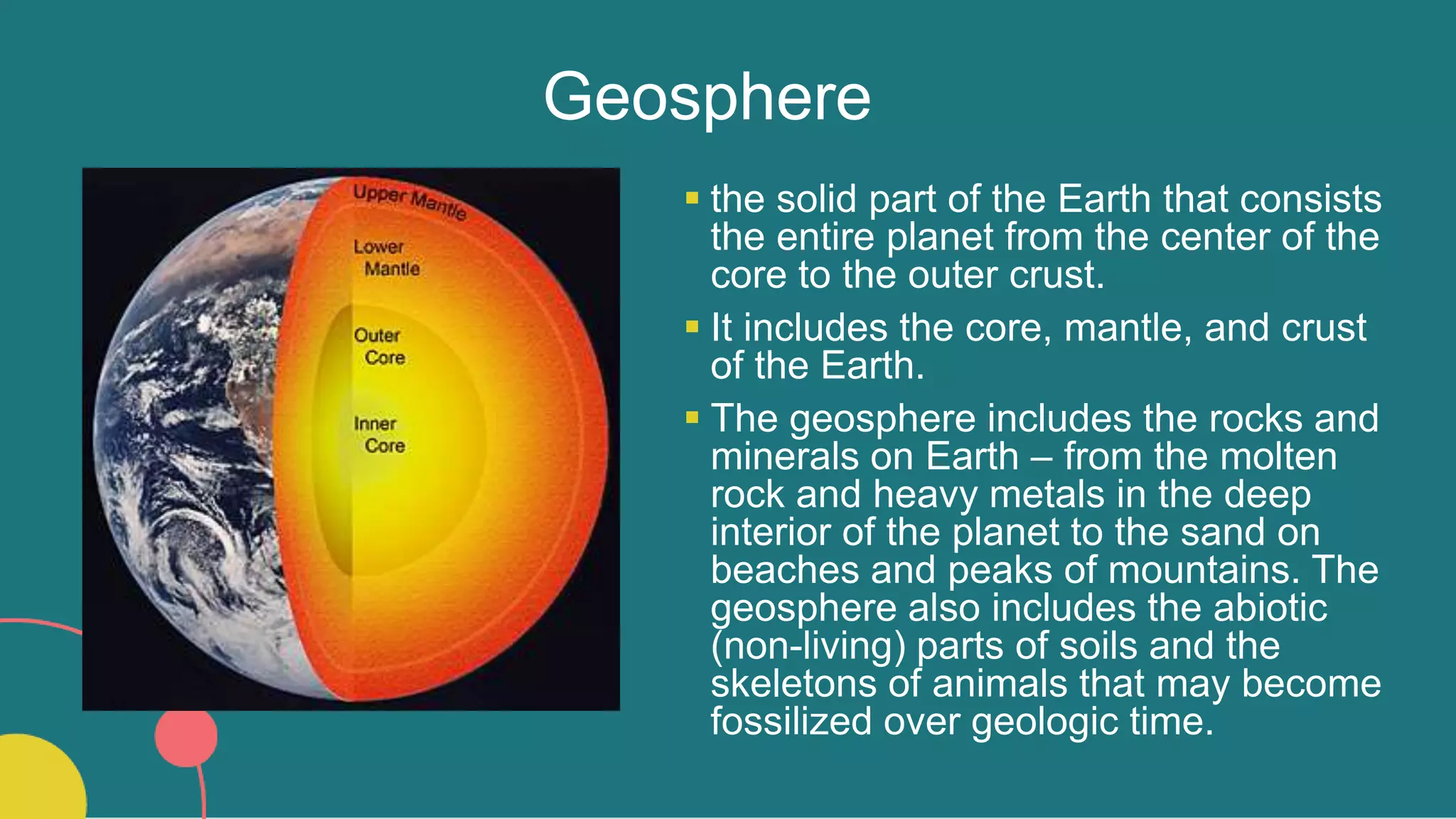
Geosphere
 the solid part of the Earth that consists
the entire planet from the center of the
core to the outer crust.
 It includes the core, mantle, and crust
of the Earth.
 The geosphere includes the rocks and
minerals on Earth – from the molten
rock and heavy metals in the deep
interior of the planet to the sand on
beaches and peaks of mountains. The
geosphere also includes the abiotic
(non-living) parts of soils and the
skeletons of animals that may become
fossilized over geologic time.
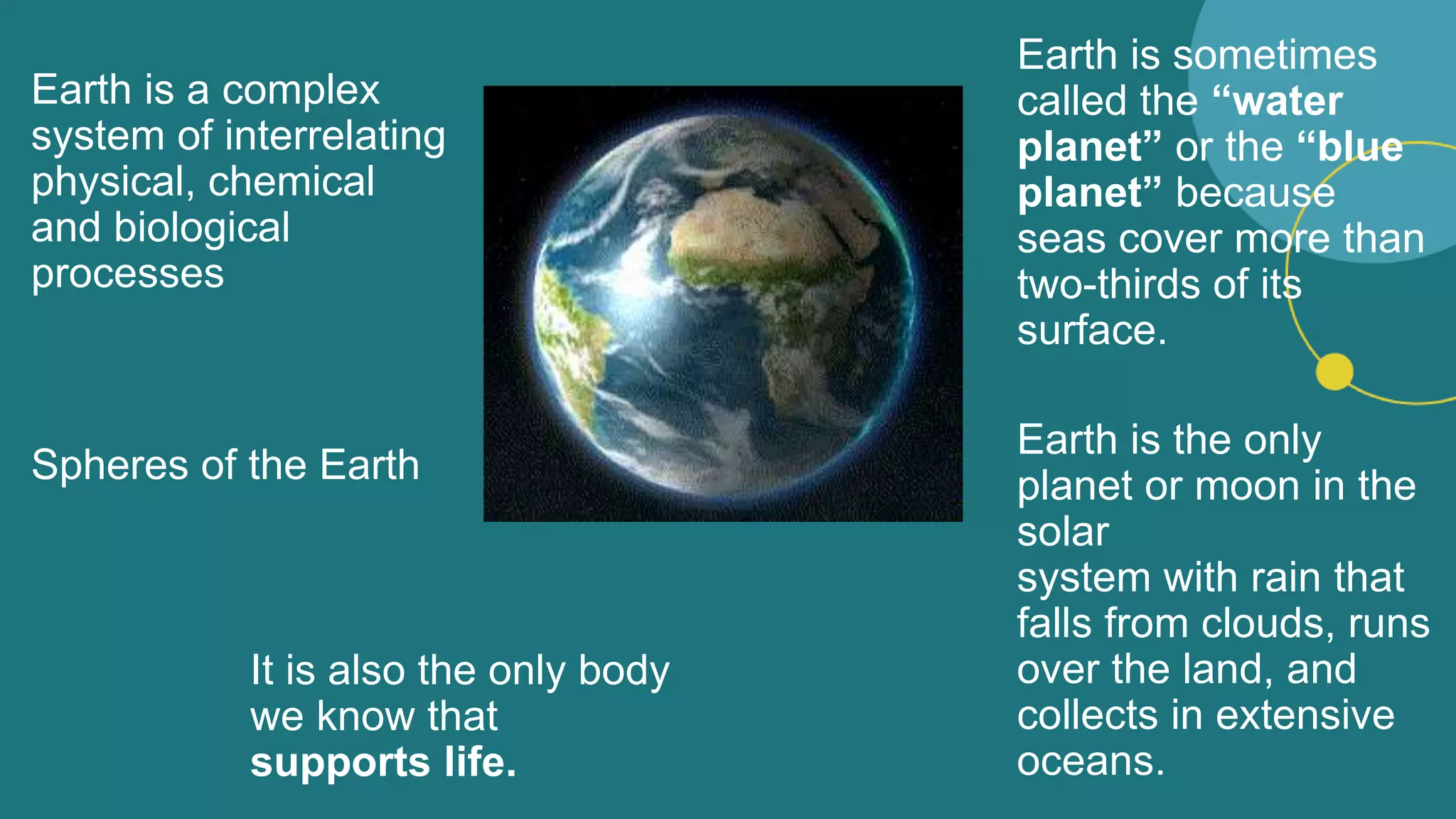
Hydrosphere
 The water part of the Earth which circulates
among oceans, continents, glaciers, and
atmosphere. A planet's hydrosphere can
be liquid, vapor, or ice.
 Oceans cover 71% of the Earth and contain
97.5% of its water.
 The frozen part of Earth's hydrosphere is
made of ice: glaciers, ice caps and icebergs.
The frozen part of the hydrosphere has its own
name, the cryosphere.
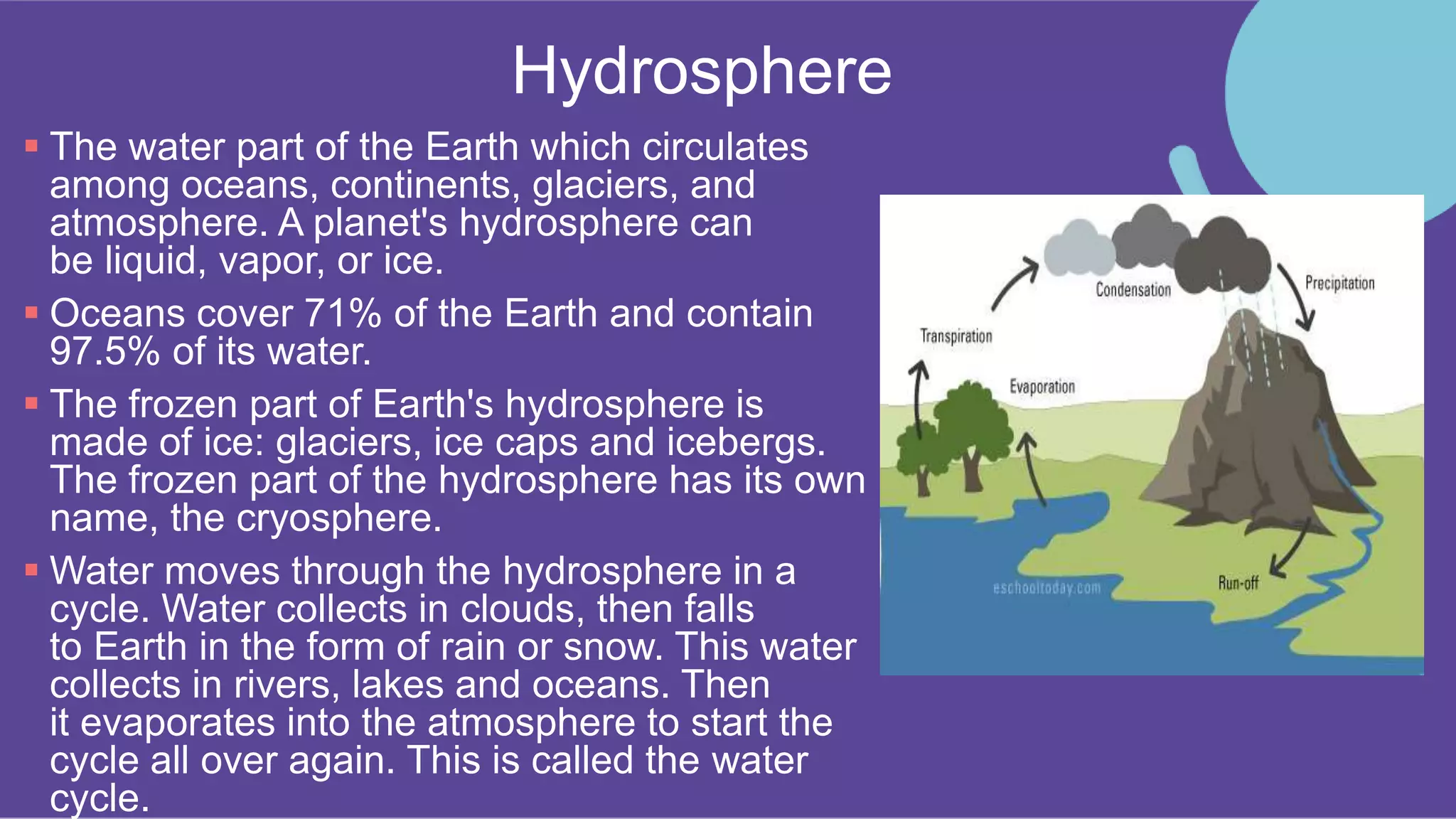
 Water moves through the hydrosphere in a
cycle. Water collects in clouds, then falls
to Earth in the form of rain or snow. This water
collects in rivers, lakes and oceans. Then
it evaporates into the atmosphere to start the
cycle all over again. This is called the water
cycle.
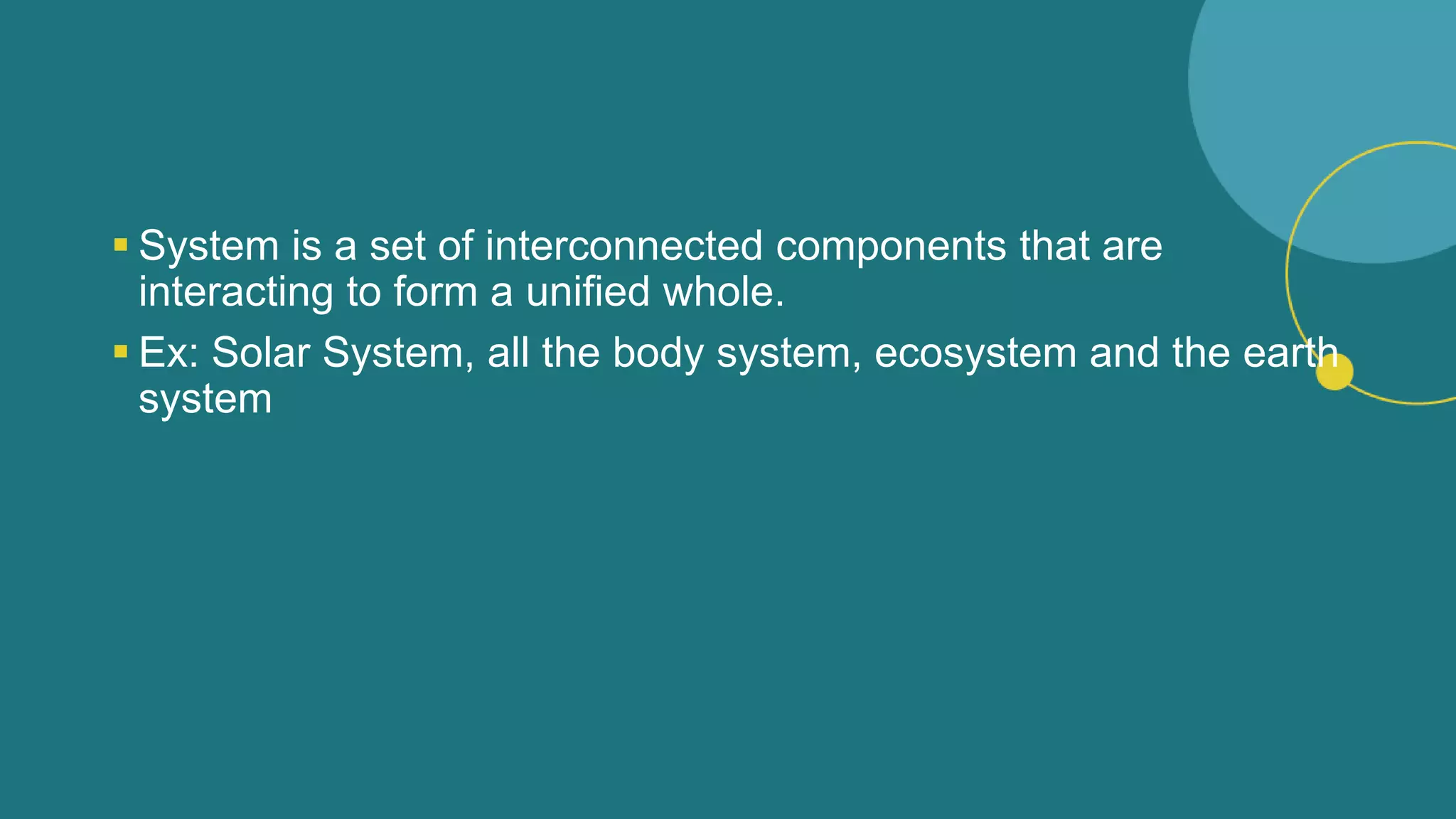
Biosphere
 The biosphere is made up of
the parts of Earth where life
exists. The biosphere extends
from the deepest root systems
of trees, to the dark
environment of ocean
trenches, to lush rainforests
and high mountaintops.
Scientists describe Earth in
terms of spheres. The solid
surface layer of Earth is the
lithosphere
The atmosphere provides
the geosphere with heat and
energy needed for rock
breakdown and erosion. The
biosphere receives gases,
heat, and sunlight (energy)
from the atmosphere. It
receives water from the
hydrosphere and a living
medium from the geosphere.
Earth is a complex system made up of many smaller
systems through which matter and energy are continuously
cycled. Energy and matter flow through Earth’s spheres:
geosphere, hydrosphere, atmosphere, and biosphere. Energy
flows through the atmosphere mostly by convection.
How does matter and energy flow across the four subsystems of
the Earth?
The Earth consists of four subsystems, across whose
boundaries matter and energy flows, the atmosphere (air),
biosphere (living things), hydrosphere (water), and geosphere
(land). The atmosphere provides the geosphere with heat and
energy needed for rock breakdown and erosion. The biosphere
receives gases, heat, and sunlight (energy) from the atmosphere.
It receives water from the hydrosphere and a living medium from
the geosphere.

Module 2 The Subsystem.pptx

  • 1.
    Lesson 1 Originand Structure of the Earth – The Subsystem
  • 2.
     System isa set of interconnected components that are interacting to form a unified whole.  Ex: Solar System, all the body system, ecosystem and the earth system
  • 3.
  • 4.
    Earth is sometimes calledthe “water planet” or the “blue planet” because seas cover more than two-thirds of its surface. Earth is the only planet or moon in the solar system with rain that falls from clouds, runs over the land, and collects in extensive oceans. It is also the only body we know that supports life. Earth is a complex system of interrelating physical, chemical and biological processes Spheres of the Earth
  • 5.
  • 6.
    Atmosphere  It servesas the earth’s blanket  Greek word “atmos” means gas and “spyra” means globe or ball.  it is the gaseous layer above the Earth’s surface, primarily composed of 78% nitrogen and 21% oxygen.  Other gases like argon 0.9%, carbon dioxide, carbon monoxide, ozone, and other inert gases made the remaining 1%.  The atmosphere supports life because animals and oxygen, and plants need both carbon dioxide and oxygen.  the atmosphere supports life indirectly by regulating climate.
  • 7.
    Geosphere  the solidpart of the Earth that consists the entire planet from the center of the core to the outer crust.  It includes the core, mantle, and crust of the Earth.  The geosphere includes the rocks and minerals on Earth – from the molten rock and heavy metals in the deep interior of the planet to the sand on beaches and peaks of mountains. The geosphere also includes the abiotic (non-living) parts of soils and the skeletons of animals that may become fossilized over geologic time.
  • 8.
    Hydrosphere  The waterpart of the Earth which circulates among oceans, continents, glaciers, and atmosphere. A planet's hydrosphere can be liquid, vapor, or ice.  Oceans cover 71% of the Earth and contain 97.5% of its water.  The frozen part of Earth's hydrosphere is made of ice: glaciers, ice caps and icebergs. The frozen part of the hydrosphere has its own name, the cryosphere.  Water moves through the hydrosphere in a cycle. Water collects in clouds, then falls to Earth in the form of rain or snow. This water collects in rivers, lakes and oceans. Then it evaporates into the atmosphere to start the cycle all over again. This is called the water cycle.
  • 9.
    Biosphere  The biosphereis made up of the parts of Earth where life exists. The biosphere extends from the deepest root systems of trees, to the dark environment of ocean trenches, to lush rainforests and high mountaintops. Scientists describe Earth in terms of spheres. The solid surface layer of Earth is the lithosphere
  • 10.
    The atmosphere provides thegeosphere with heat and energy needed for rock breakdown and erosion. The biosphere receives gases, heat, and sunlight (energy) from the atmosphere. It receives water from the hydrosphere and a living medium from the geosphere.
  • 11.
    Earth is acomplex system made up of many smaller systems through which matter and energy are continuously cycled. Energy and matter flow through Earth’s spheres: geosphere, hydrosphere, atmosphere, and biosphere. Energy flows through the atmosphere mostly by convection. How does matter and energy flow across the four subsystems of the Earth? The Earth consists of four subsystems, across whose boundaries matter and energy flows, the atmosphere (air), biosphere (living things), hydrosphere (water), and geosphere (land). The atmosphere provides the geosphere with heat and energy needed for rock breakdown and erosion. The biosphere receives gases, heat, and sunlight (energy) from the atmosphere. It receives water from the hydrosphere and a living medium from the geosphere.