Earth’s Cycles Students will be able to Analyze each cycle and state its importance
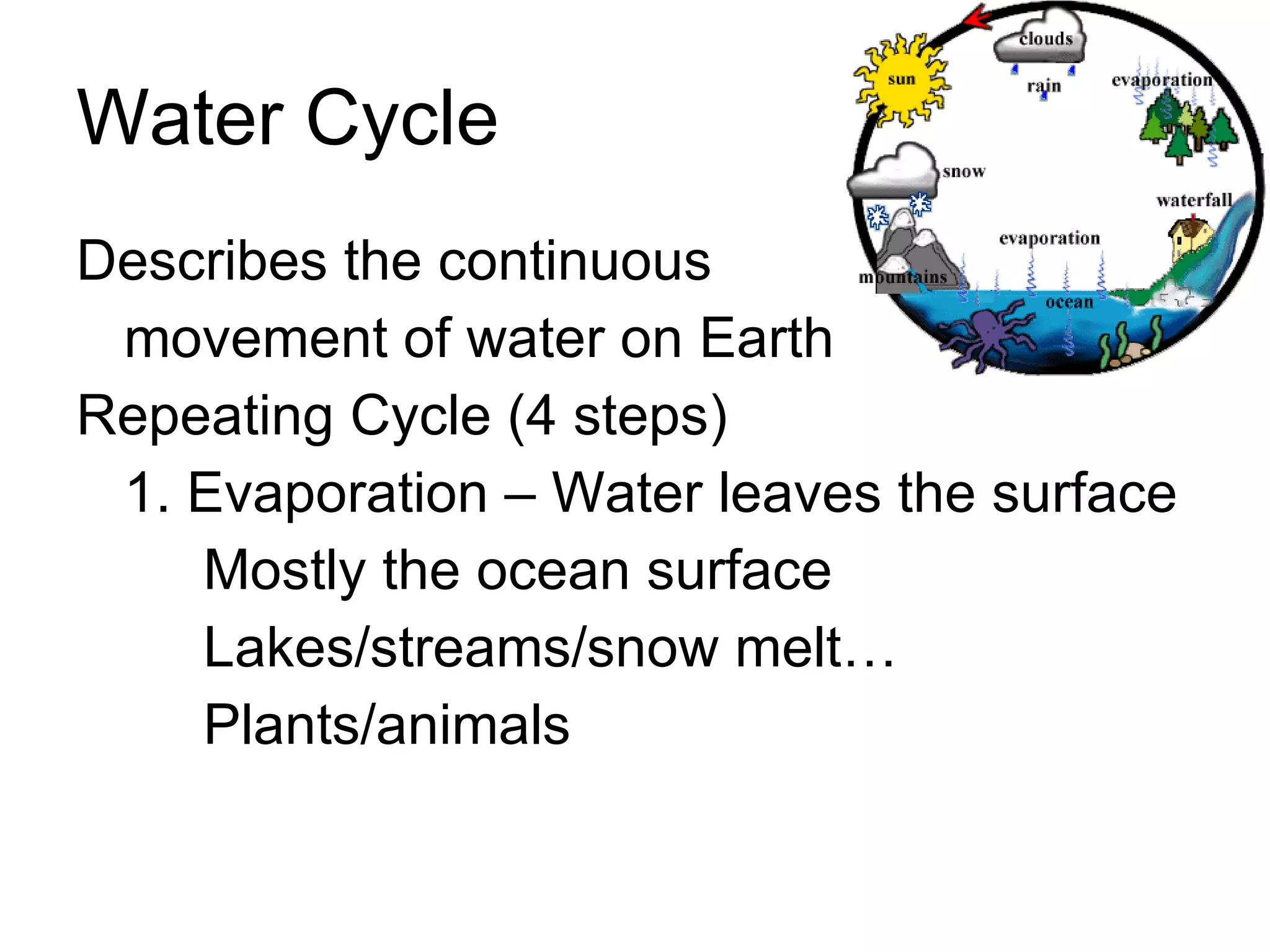
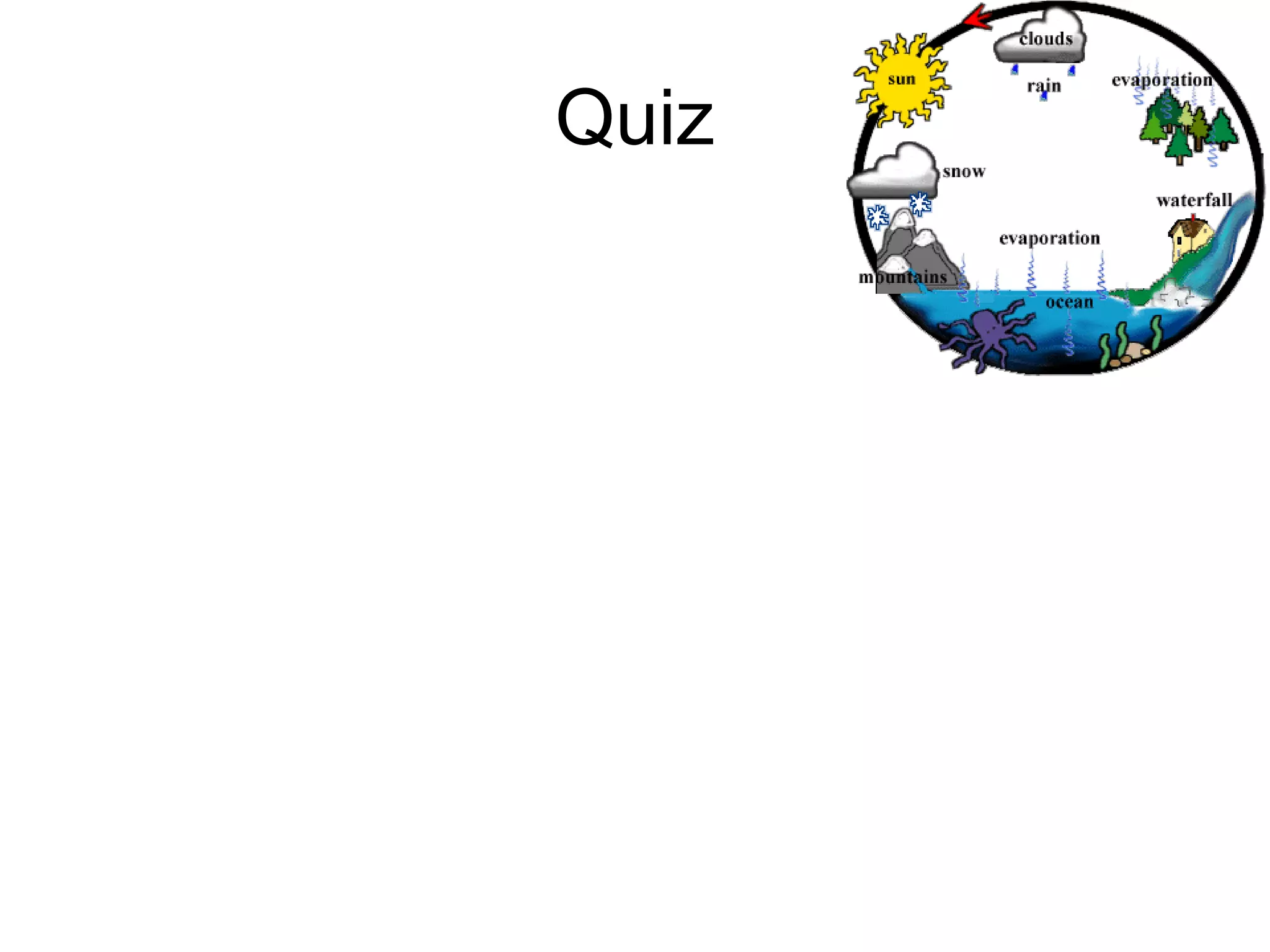
Water Cycle Describes the continuous  movement of water on Earth Repeating Cycle (4 steps) 1. Evaporation – Water leaves the surface Mostly the ocean surface Lakes/streams/snow melt… Plants/animals
Water Cycle 2. Condensation Water gas cools to form liquid (cloud) 3. Precipitation Water starts to fall back to Earth Rain, snow, sleet, hail… 4. Run off Water returns to ocean *Most water is found in the ocean*
 
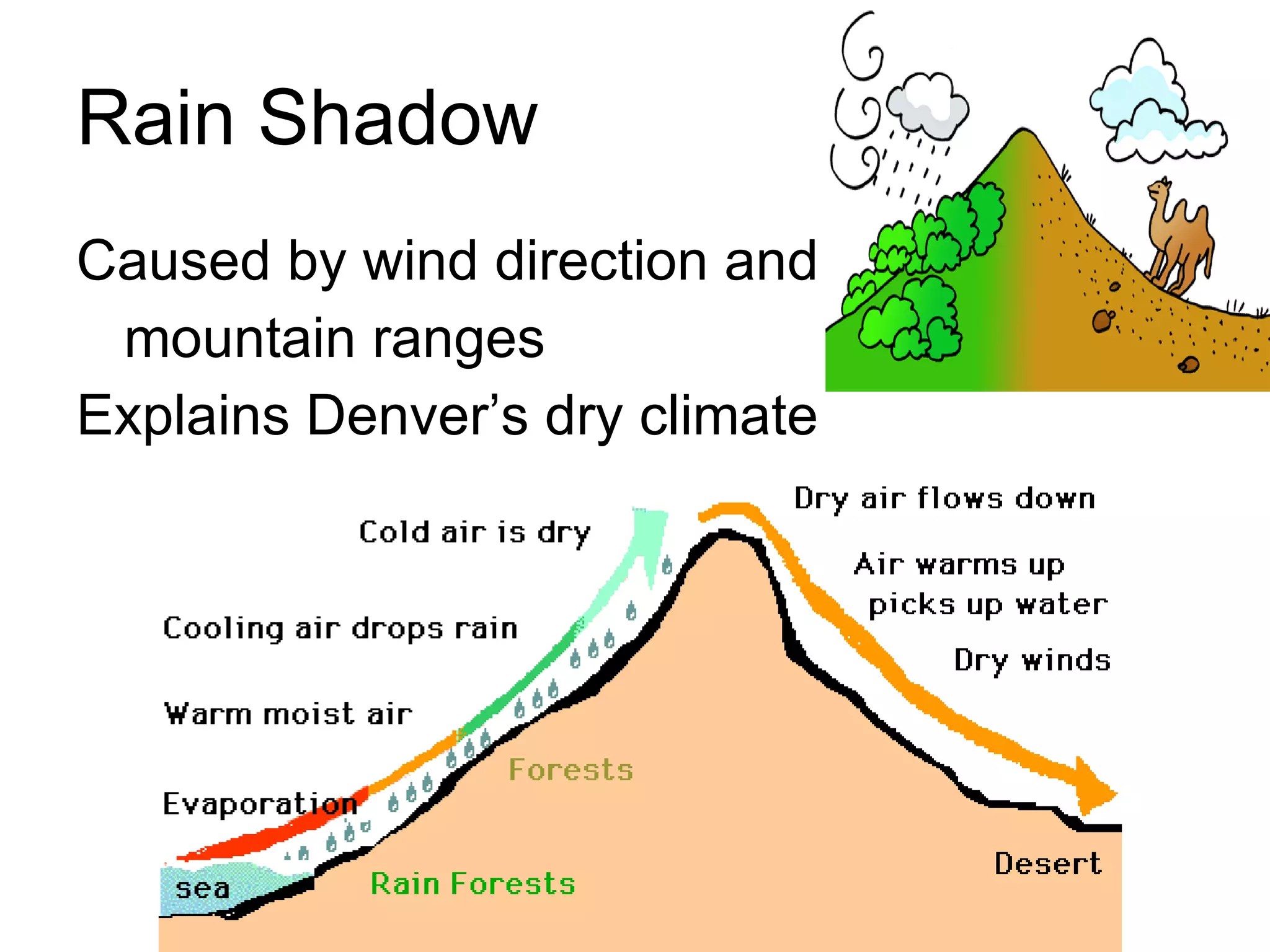
Rain Shadow Caused by wind direction and mountain ranges Explains Denver’s dry climate
Global Weather
Carbon Cycle 1. Carbon taken from air by plants Used for growth to make sugars Most is used by small ocean plants (plankton) 2. Carbon released into air Animals digest sugars and release carbon to air Decomposers release carbon Burning of plant material (wood, gasoline…) Volcanic activity *Most carbon is found in Earth plants/soil/ocean*
 
Carbon Cycle
Carbon Cycle Effect Green House Effect Water, CO 2 , other gases trap heat Required to prevent water from freezing
 
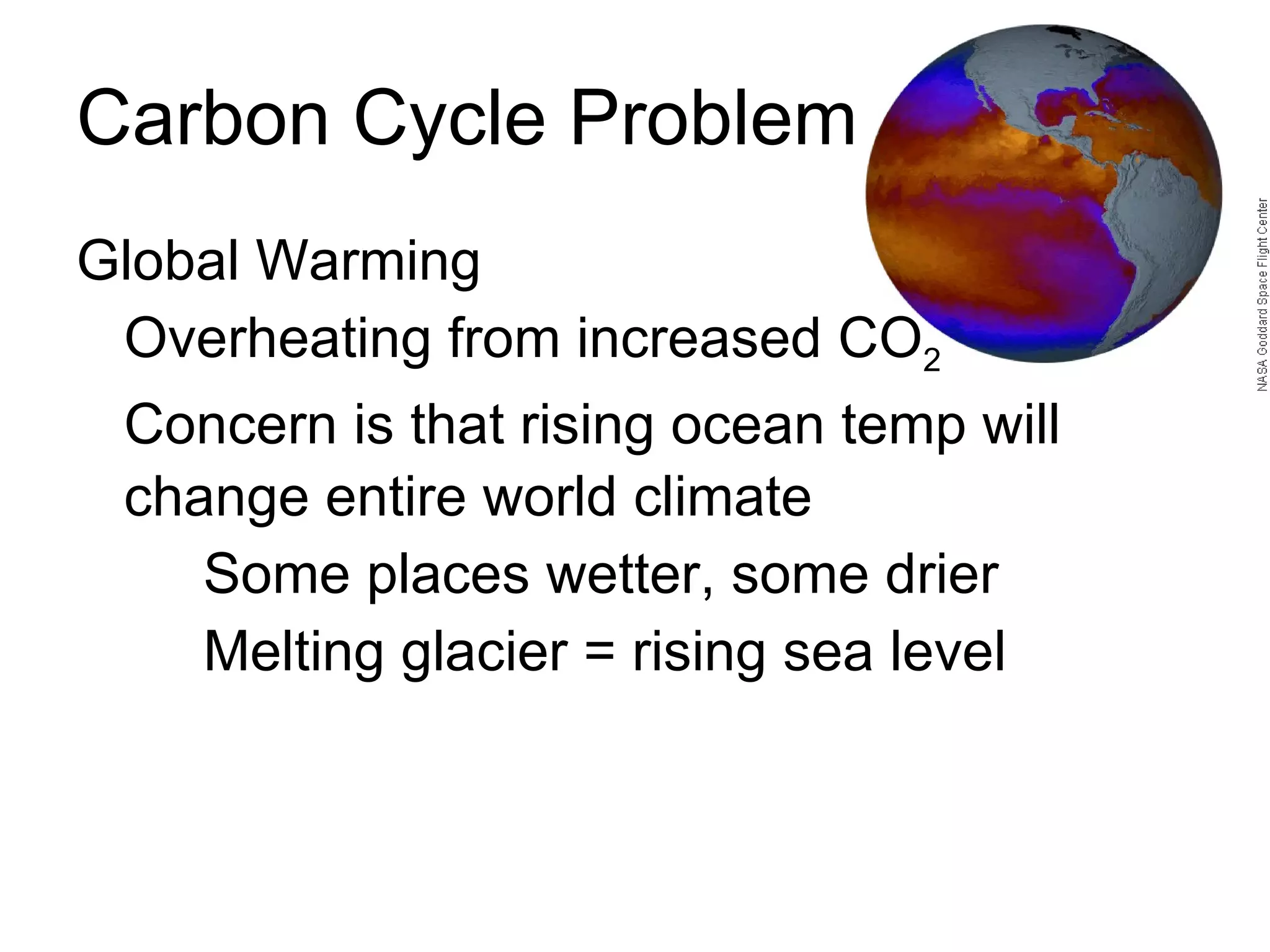
Carbon Cycle Problem Global Warming Overheating from increased CO 2 Concern is that rising ocean temp will change entire world climate Some places wetter, some drier Melting glacier = rising sea level
Nitrogen Cycle Special bacteria in soil trap nitrogen in soil “ Nitrogen Fixation” - Key chemical needed to make DNA - Also key component in explosives Decomposers release nitrogen back to air *Most Nitrogen is found in atmosphere*
 
 
Poor Nitrogen Soils Carnivorous plants Digest insects for nitrogen
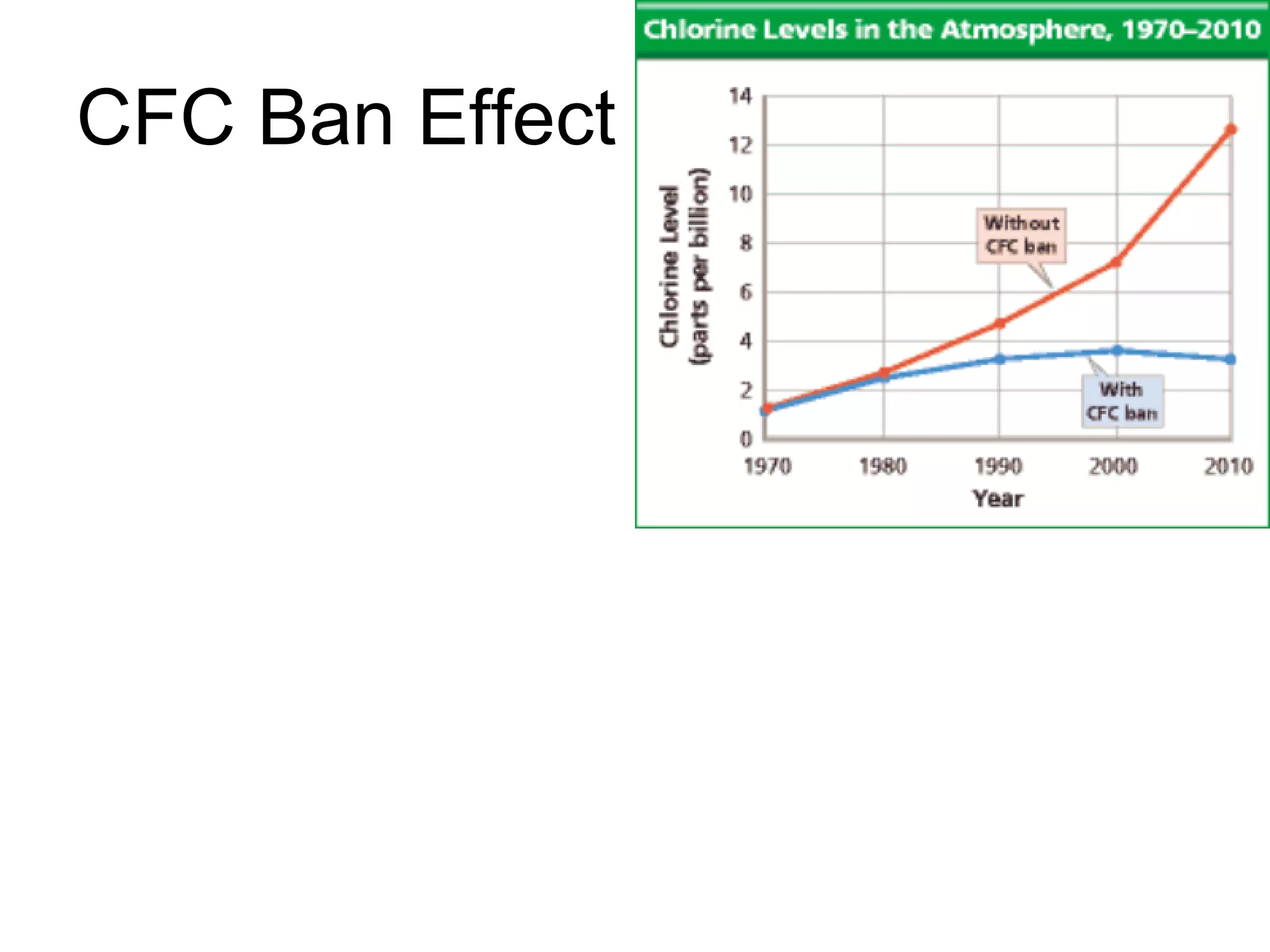
Ozone Layer Ozone blocks UV light Scientist noticed thinning Linked to chlorofluorocarbons (CFC)
CFC Ban Effect
Quiz
Homework Pick an Earth cycle and describe how it works. List where the main source would be found in that cycle.

Earth’S Cycles

  • 1.
    Earth’s Cycles Studentswill be able to Analyze each cycle and state its importance
  • 2.
    Water Cycle Describesthe continuous movement of water on Earth Repeating Cycle (4 steps) 1. Evaporation – Water leaves the surface Mostly the ocean surface Lakes/streams/snow melt… Plants/animals
  • 3.
    Water Cycle 2.Condensation Water gas cools to form liquid (cloud) 3. Precipitation Water starts to fall back to Earth Rain, snow, sleet, hail… 4. Run off Water returns to ocean *Most water is found in the ocean*
  • 4.
  • 5.
    Rain Shadow Causedby wind direction and mountain ranges Explains Denver’s dry climate
  • 6.
  • 7.
    Carbon Cycle 1.Carbon taken from air by plants Used for growth to make sugars Most is used by small ocean plants (plankton) 2. Carbon released into air Animals digest sugars and release carbon to air Decomposers release carbon Burning of plant material (wood, gasoline…) Volcanic activity *Most carbon is found in Earth plants/soil/ocean*
  • 8.
  • 9.
  • 10.
    Carbon Cycle EffectGreen House Effect Water, CO 2 , other gases trap heat Required to prevent water from freezing
  • 11.
  • 12.
    Carbon Cycle ProblemGlobal Warming Overheating from increased CO 2 Concern is that rising ocean temp will change entire world climate Some places wetter, some drier Melting glacier = rising sea level
  • 13.
    Nitrogen Cycle Specialbacteria in soil trap nitrogen in soil “ Nitrogen Fixation” - Key chemical needed to make DNA - Also key component in explosives Decomposers release nitrogen back to air *Most Nitrogen is found in atmosphere*
  • 14.
  • 15.
  • 16.
    Poor Nitrogen SoilsCarnivorous plants Digest insects for nitrogen
  • 17.
    Ozone Layer Ozoneblocks UV light Scientist noticed thinning Linked to chlorofluorocarbons (CFC)
  • 18.
  • 19.
  • 20.
    Homework Pick anEarth cycle and describe how it works. List where the main source would be found in that cycle.