Presentation
on
I.C ENGINE
PREPARED BY:
GADHAVI POOJA( EN. NO: 131150106013)
PATEL MANSI (EN. NO: 131150106048)
SOLANKI KRISHMA( EN. NO: 131150106067)
TRIVEDI HIRAL (EN. NO: 131150106072)
SUB: E.M.E
DEPARTMENT: CIVIL
SWAMINARAYAN COLLEGE OF ENGG. & TECH.,SAIJ
 The brief history of internal combustion engines.
 What is an internal combustion engine?
 Why do we need them in today’s world?
 What do we use them for?
 How do they work?
 A brief discussion on diesel engines.
 Many designs have been made over the last 4
centuries but only a few men were recognized as
inventors.
 The first person to invent a working internal
combustion engine automobile was Francois Isaac
de Rivaz of Switzerland in 1807. Mixing hydrogen
and oxygen for fuel.
 The first gasoline powered engine was built in 1864
by a man named Siegfried Marcus and was said to
be the forerunner to the modern automobile. It
reached speeds up to ten mph.
 In 1876 two of the greatest engines were invented.
The two and four stroke engine by Nikolaus August
Otto and Sir Dougald clerk. Starting the rise of
even better and more efficient machine.
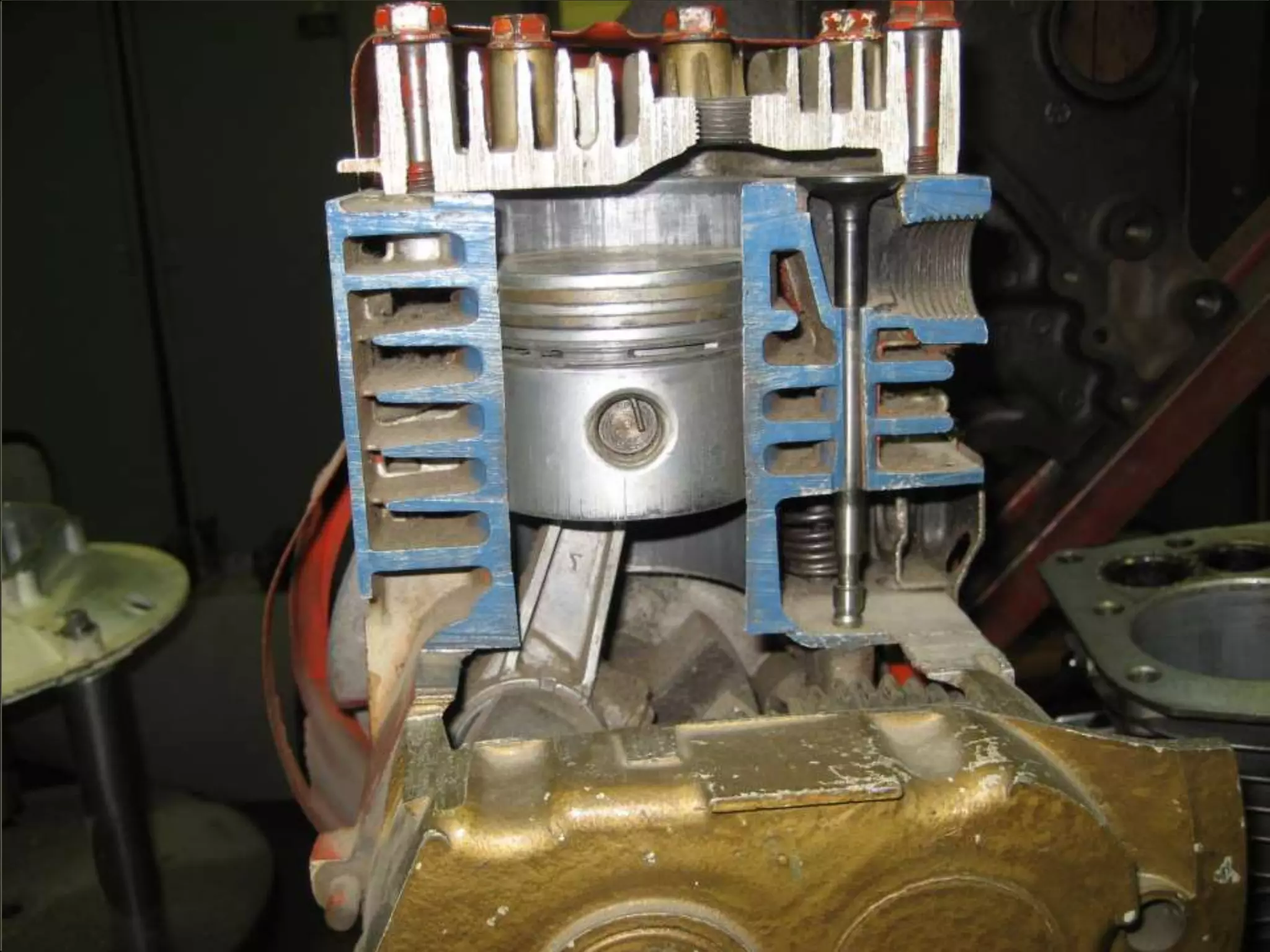
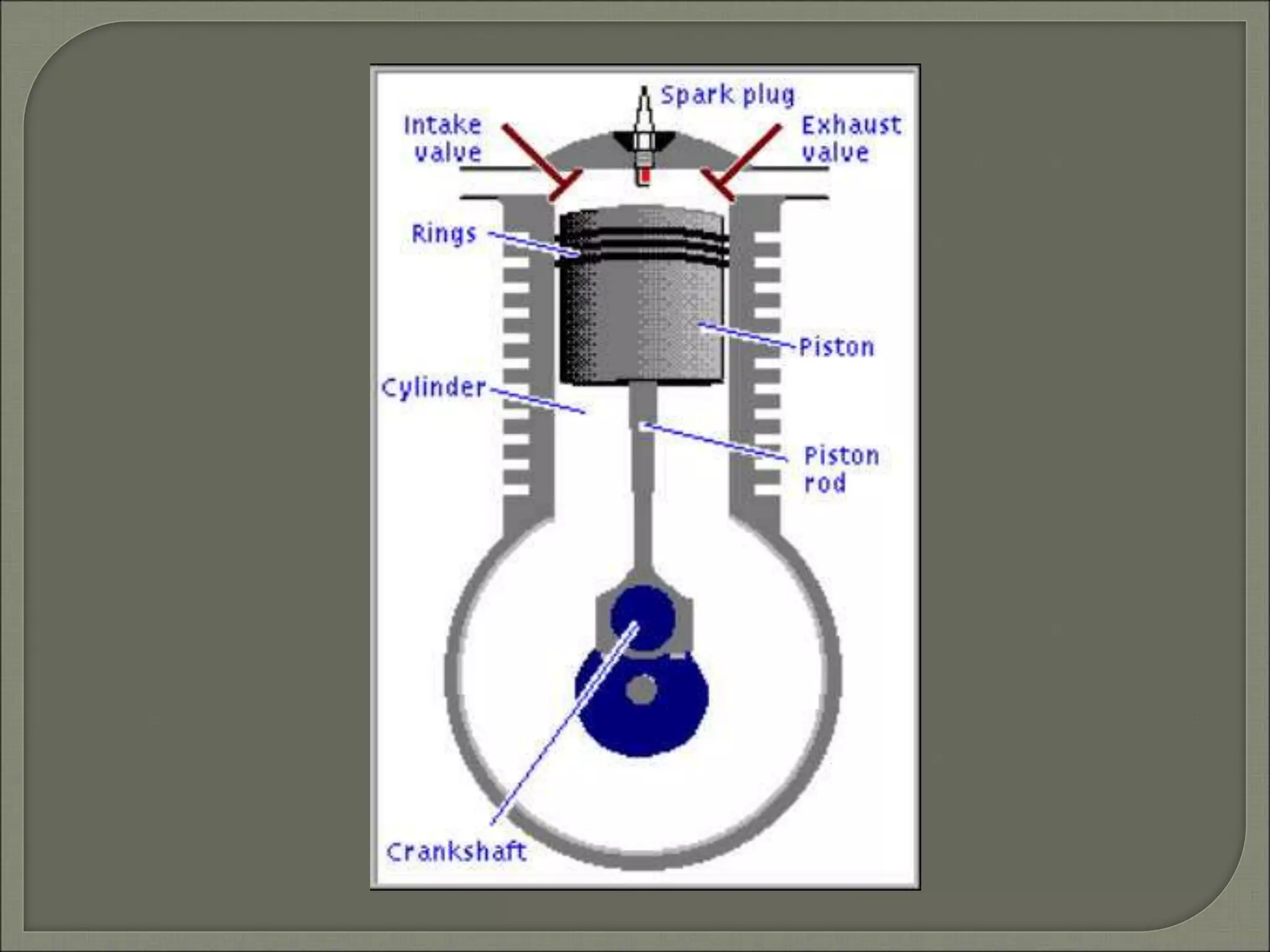
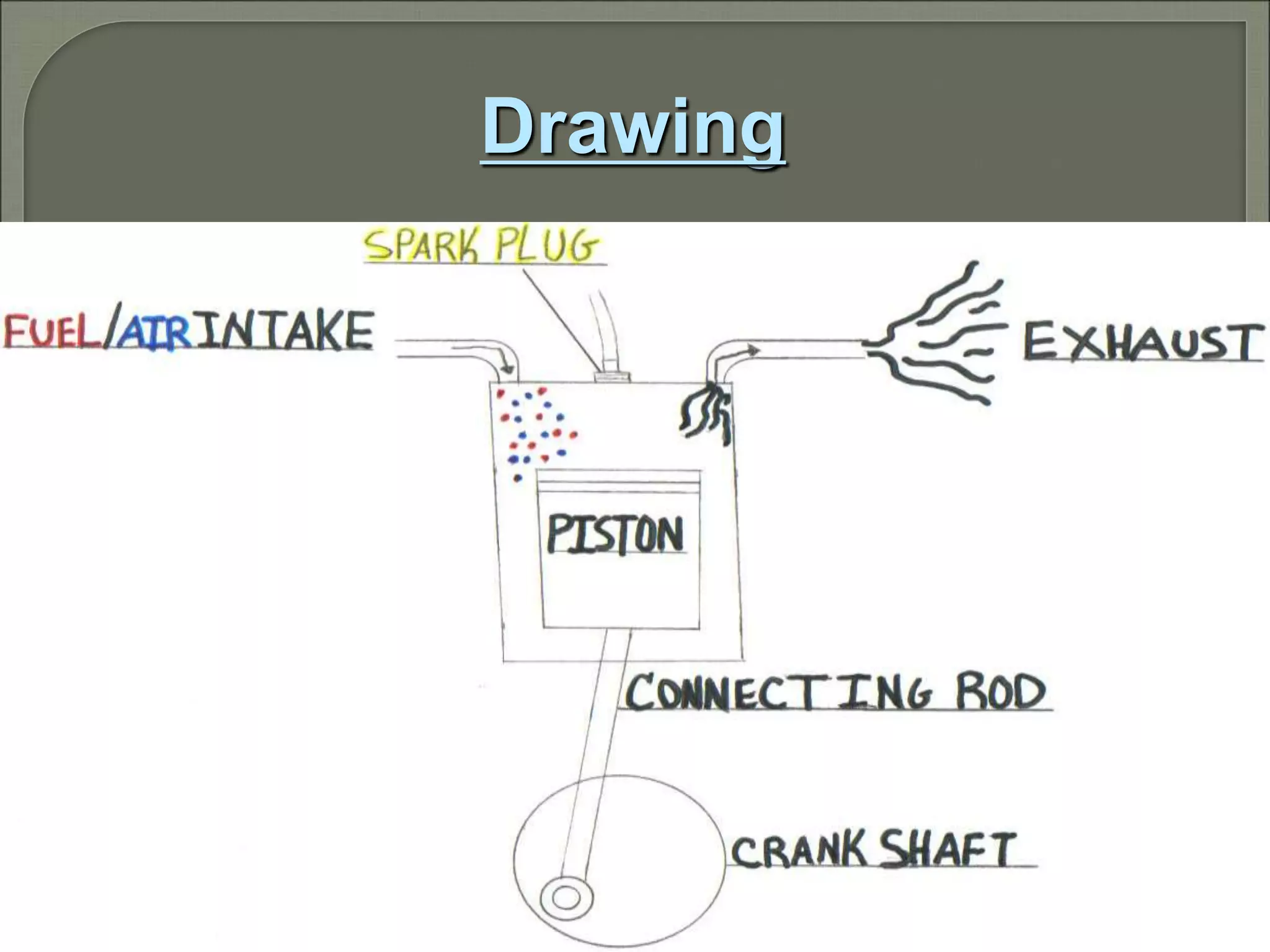
 Spark plug
 Piston
 Piston rings
 Intake valve
 Crankshaft
 Cylinder
 Piston rod
 Exhaust valve
 The internal combustion of an engine is
considered to be the heart of the automobile.
 They are defined as any engine that uses an
explosive combustion of fuel and air to push a
piston within a cylinder. Forming the repeating
cycle known as the strokes.
 Intake, Compression, Power Stroke, and Exhaust
are the four actions of one stroke.
 The difference between the two cycle and four
cycle engine is the number of strokes it uses to
start the fuel reaction of internal combustion.
 Diesel engines unlike gasoline do not need spark
plugs to ignite the fuel. Instead it uses
compression but undergoes the same principle of
a stroke.
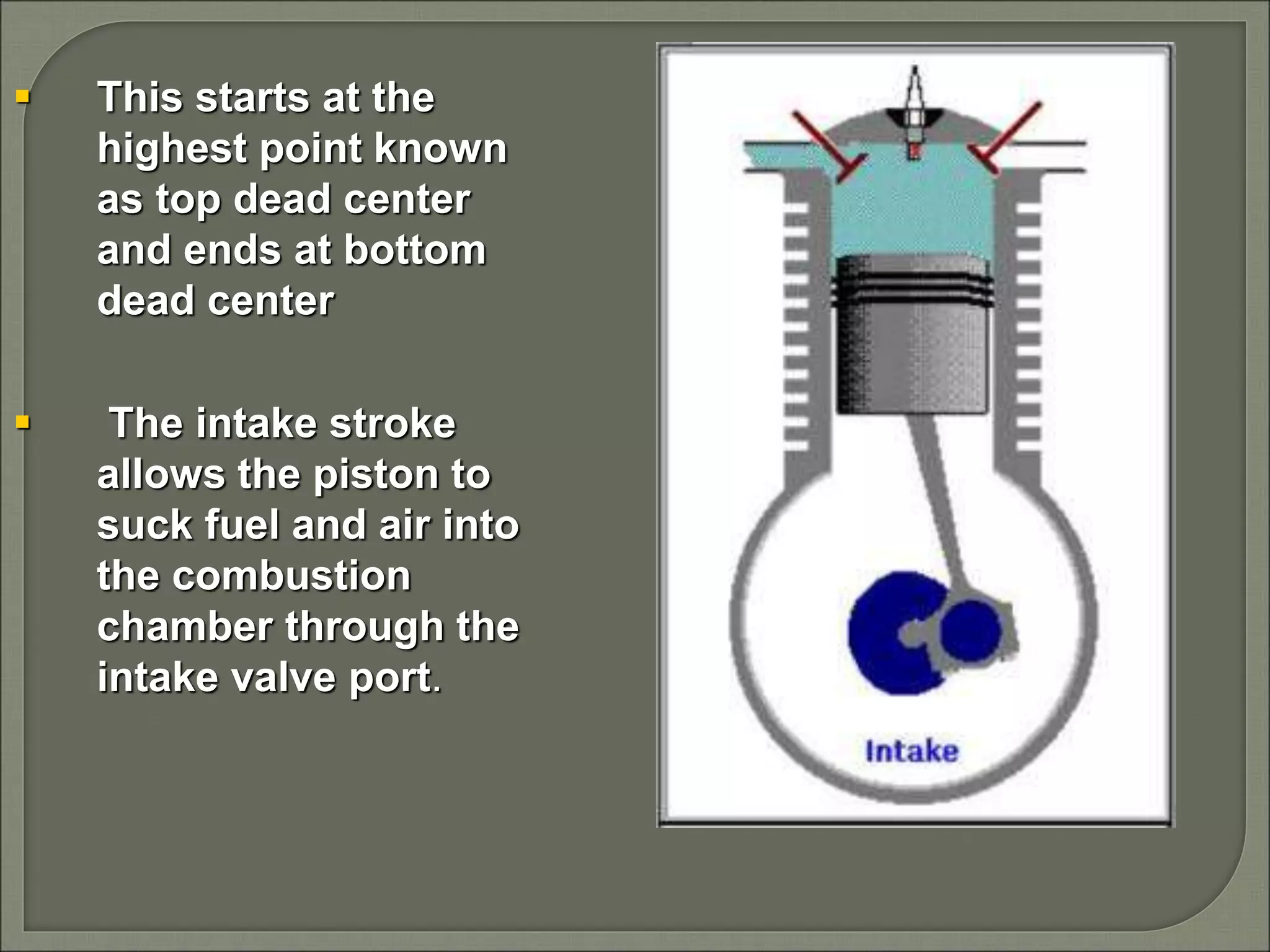
 This starts at the
highest point known
as top dead center
and ends at bottom
dead center
 The intake stroke
allows the piston to
suck fuel and air into
the combustion
chamber through the
intake valve port.
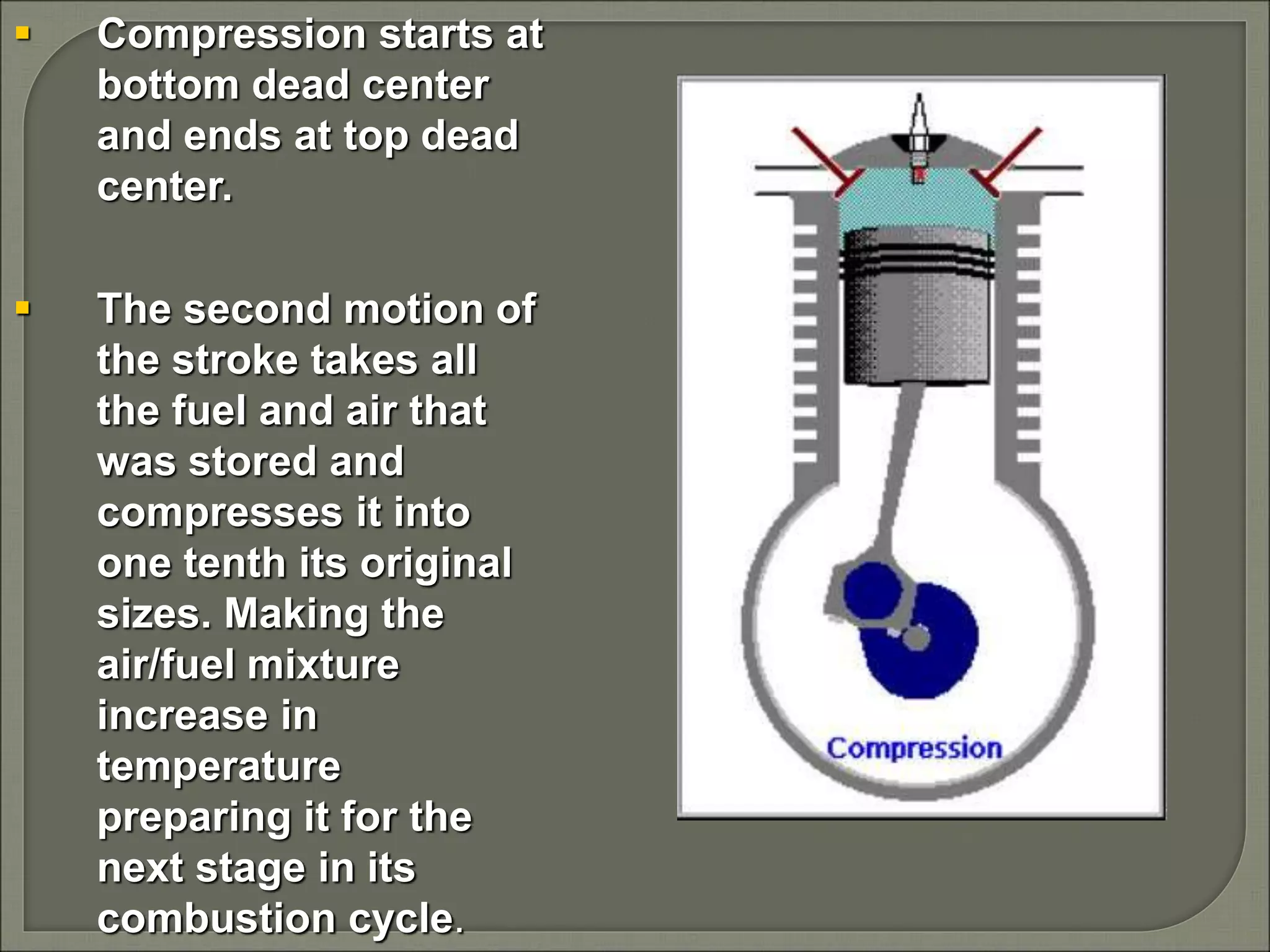
 Compression starts at
bottom dead center
and ends at top dead
center.
 The second motion of
the stroke takes all
the fuel and air that
was stored and
compresses it into
one tenth its original
sizes. Making the
air/fuel mixture
increase in
temperature
preparing it for the
next stage in its
combustion cycle.
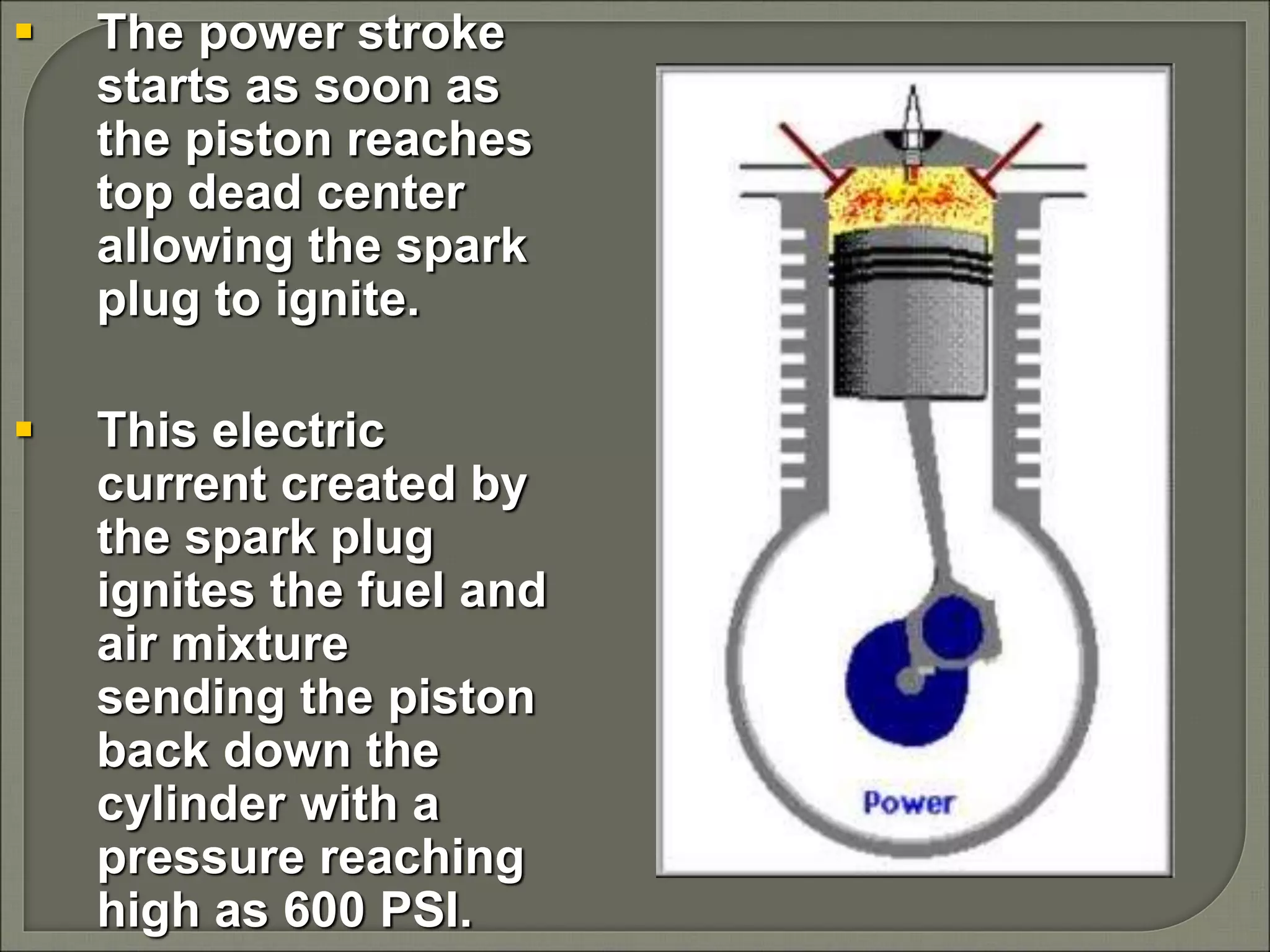
 The power stroke
starts as soon as
the piston reaches
top dead center
allowing the spark
plug to ignite.
 This electric
current created by
the spark plug
ignites the fuel and
air mixture
sending the piston
back down the
cylinder with a
pressure reaching
high as 600 PSI.
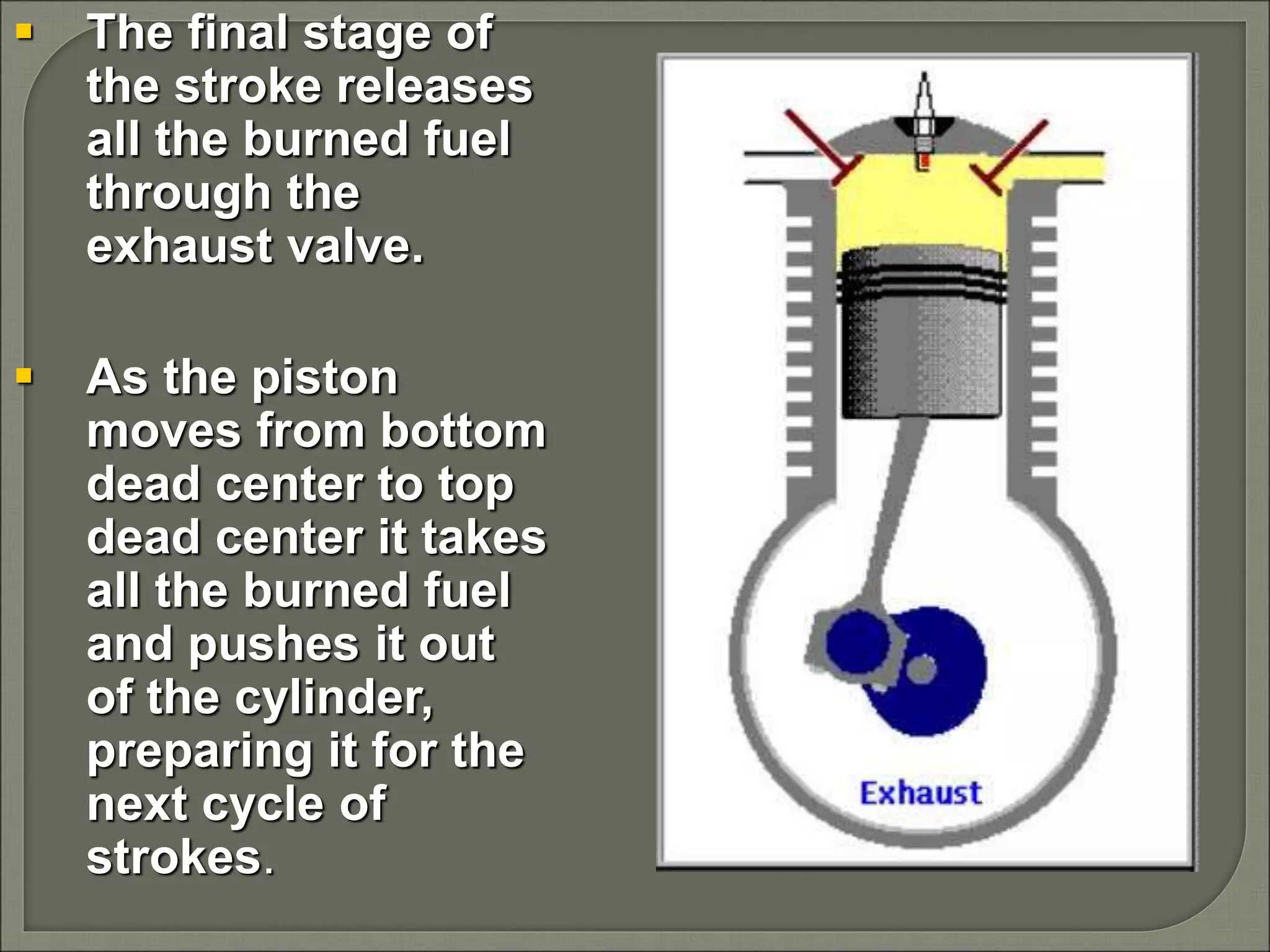
 The final stage of
the stroke releases
all the burned fuel
through the
exhaust valve.
 As the piston
moves from bottom
dead center to top
dead center it takes
all the burned fuel
and pushes it out
of the cylinder,
preparing it for the
next cycle of
strokes.
Drawing
Diesel engines work on the same principle
as the two and four stroke engines. They do
not need a spark plug to ignite the fuel.
During the intake stroke, air does not mixed
with the fuel in the cylinder. Instead as the
air reaches high enough compression Fuel
is then sprayed into the cylinder creating
ignition. This pushes the piston down the
cylinder at a pressure of 500 PSI, starting
the stroke all over again.
 Internal combustion engines have ultimately
revolutionized the way we live.
 With the small and light weight design of the two
cycle engine tasks like trimming the hedges and
cutting down weeds became easier and more
efficient. With the power of the four stroke we are
now able to dig up dirt and cut down trees with out
even breaking a sweat. Internal combustion
engines have made life easier since the first one
was built in the early 1800’s .

Internal Combustion Engines.ppt

  • 1.
    Presentation on I.C ENGINE PREPARED BY: GADHAVIPOOJA( EN. NO: 131150106013) PATEL MANSI (EN. NO: 131150106048) SOLANKI KRISHMA( EN. NO: 131150106067) TRIVEDI HIRAL (EN. NO: 131150106072) SUB: E.M.E DEPARTMENT: CIVIL SWAMINARAYAN COLLEGE OF ENGG. & TECH.,SAIJ
  • 5.
     The briefhistory of internal combustion engines.  What is an internal combustion engine?  Why do we need them in today’s world?  What do we use them for?  How do they work?  A brief discussion on diesel engines.
  • 7.
     Many designshave been made over the last 4 centuries but only a few men were recognized as inventors.  The first person to invent a working internal combustion engine automobile was Francois Isaac de Rivaz of Switzerland in 1807. Mixing hydrogen and oxygen for fuel.  The first gasoline powered engine was built in 1864 by a man named Siegfried Marcus and was said to be the forerunner to the modern automobile. It reached speeds up to ten mph.  In 1876 two of the greatest engines were invented. The two and four stroke engine by Nikolaus August Otto and Sir Dougald clerk. Starting the rise of even better and more efficient machine.
  • 10.
     Spark plug Piston  Piston rings  Intake valve  Crankshaft  Cylinder  Piston rod  Exhaust valve
  • 12.
     The internalcombustion of an engine is considered to be the heart of the automobile.  They are defined as any engine that uses an explosive combustion of fuel and air to push a piston within a cylinder. Forming the repeating cycle known as the strokes.  Intake, Compression, Power Stroke, and Exhaust are the four actions of one stroke.  The difference between the two cycle and four cycle engine is the number of strokes it uses to start the fuel reaction of internal combustion.  Diesel engines unlike gasoline do not need spark plugs to ignite the fuel. Instead it uses compression but undergoes the same principle of a stroke.
  • 14.
     This startsat the highest point known as top dead center and ends at bottom dead center  The intake stroke allows the piston to suck fuel and air into the combustion chamber through the intake valve port.
  • 16.
     Compression startsat bottom dead center and ends at top dead center.  The second motion of the stroke takes all the fuel and air that was stored and compresses it into one tenth its original sizes. Making the air/fuel mixture increase in temperature preparing it for the next stage in its combustion cycle.
  • 18.
     The powerstroke starts as soon as the piston reaches top dead center allowing the spark plug to ignite.  This electric current created by the spark plug ignites the fuel and air mixture sending the piston back down the cylinder with a pressure reaching high as 600 PSI.
  • 20.
     The finalstage of the stroke releases all the burned fuel through the exhaust valve.  As the piston moves from bottom dead center to top dead center it takes all the burned fuel and pushes it out of the cylinder, preparing it for the next cycle of strokes.
  • 21.
  • 24.
    Diesel engines workon the same principle as the two and four stroke engines. They do not need a spark plug to ignite the fuel. During the intake stroke, air does not mixed with the fuel in the cylinder. Instead as the air reaches high enough compression Fuel is then sprayed into the cylinder creating ignition. This pushes the piston down the cylinder at a pressure of 500 PSI, starting the stroke all over again.
  • 25.
     Internal combustionengines have ultimately revolutionized the way we live.  With the small and light weight design of the two cycle engine tasks like trimming the hedges and cutting down weeds became easier and more efficient. With the power of the four stroke we are now able to dig up dirt and cut down trees with out even breaking a sweat. Internal combustion engines have made life easier since the first one was built in the early 1800’s .