AUTOMOBILE ENGINEERING
PRESENTATION ON - FUEL SUPPLY SYSTEM
PRESENTED BY; ALTAMASH ALI
AUTOMOBILE ENGINEERING
Topics covered ;
 Fuel Supply System
 MPFI
 Diesel Fuel System
 CRDI
Presented By – Arsalan Hassan
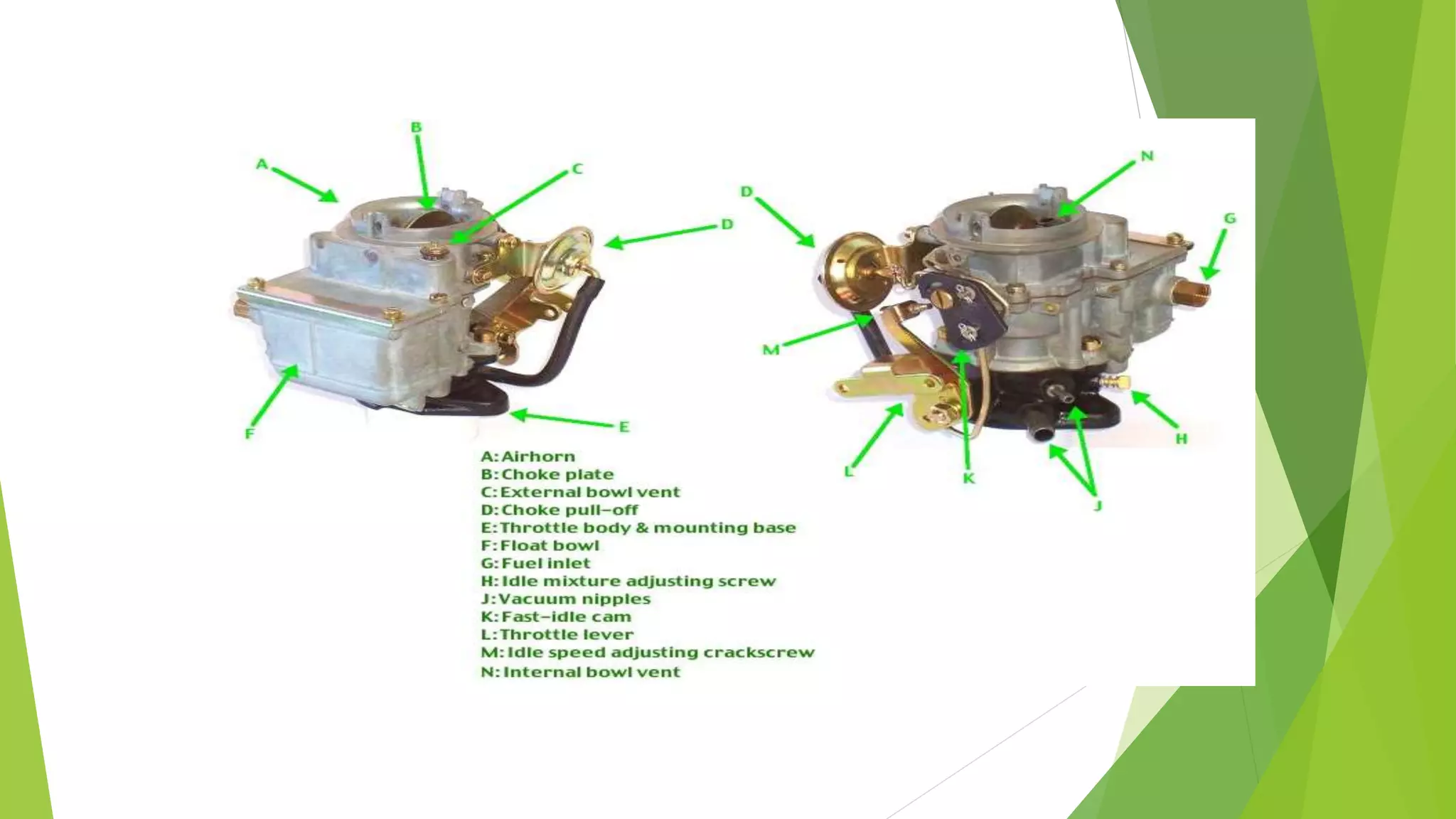
CARBURETION
 The process of formation of combustible fuel-air mixture by mixing the proper amount
of fuel with air before admission to the engine cylinder is called carburetion and the
divide which does this job is called carburetor.
 Spark ignition engines normally use volatile liquid fuels. Preparation of fuel-air mixture
is done outside the engine cylinder and formation of a homogenous mixture is normally
not completed in the inlet manifold. Fuel droplets which remain in suspension continue
to evaporate and mix with air even during suction and compression processes. The
process of mixture preparation is extremely important for spark-ignition engines. The
purpose of carburetion is to provide a combustible mixture of fuel and air in the
required quantity and quality for efficient operation of the engines under all conditions.
Factors affecting carburetion
 Engine Speed
 Vaporization Characteristics of the Fuel
 Temperature of Incoming Air
 Design of the Carburetor
 Time available of the mixture preparation
Multi Point Fuel Injection (MPFI)
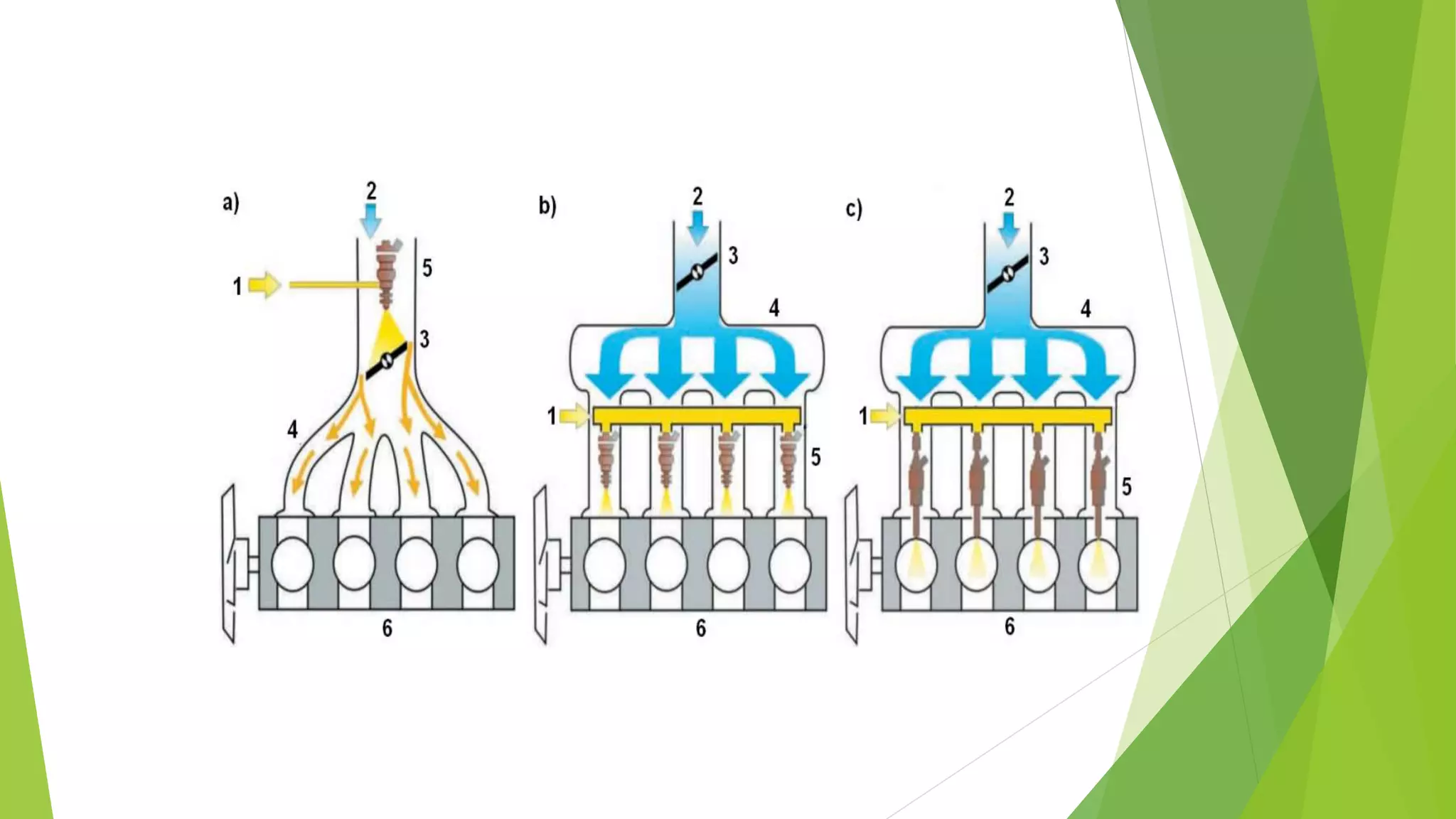
 MPFI System is a system which uses a small computer (yes, a small computer
without keyboard or mouse, it’s more like a microchip) to control the Car’s Engine.
A Petrol car’s engine usually has three or more cylinders or fuel burning zones. So
in case of an MPFI engine, there is one fuel –injector installed near each cylinder
that is why they call it Multi-point (more than one points) Fuel Injection.
 MPFI emerged an intelligent way to do what the Carburetor does. In MPFI system,
each cylinder has one injector (which makes it multi-point). Each of these Injectors
is controlled by one central car computer. This computer is a small micro-
processor, which keeps telling each Injector about how much petrol and at what
time it needs to inject near the cylinder so that only the required amount of petrol
goes into the cylinder at the right moment.
.
 The working of MPFI is similar to Carburetor, but in an improved way,
because now each cylinder is treated independently unlike Carburetor. But one
major Key difference is that MPFI is an intelligent system and Carburetor is
not.
 Based on all these inputs from the sensors, the computer in the MPFI system
decides what amount of fuel to inject. Thus it makes it fuel efficient as it
knows what amount of petrol should go in
DIESEL FUEL SYSTEM
 The function of the diesel fuel system is to inject a precise
amount of atomized and pressurized fuel into each engine
cylinder at the proper time. Combustion in a diesel engine occurs
when this rush of fuel is mixed with hot compressed air. (No
electrical spark is used as in a gasoline engine.)
 A diesel fuel system is a critical component of any diesel engine
and its optimum operation is essential for peak performance.
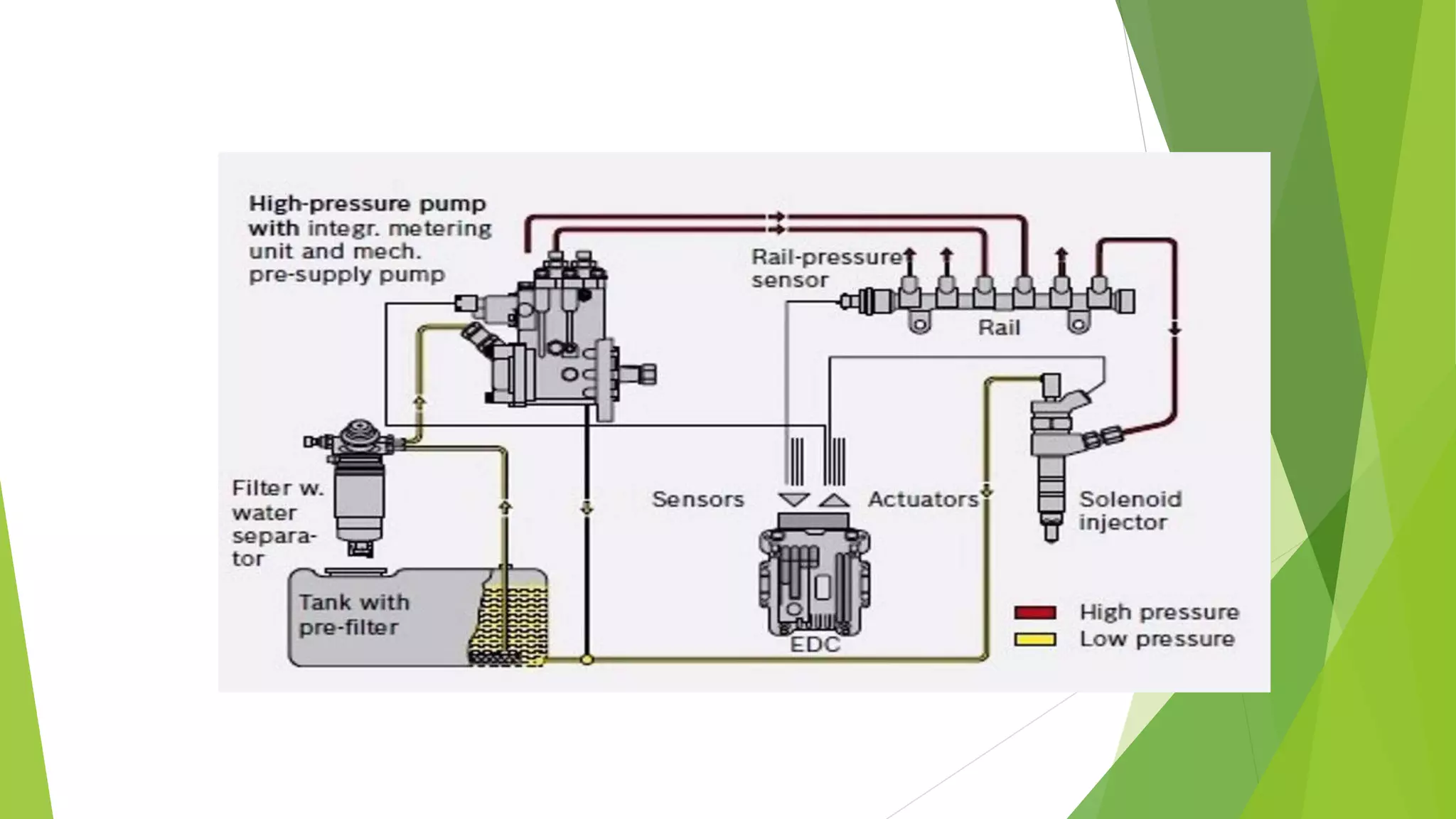
Common Rail Direct Injection (CRDI)
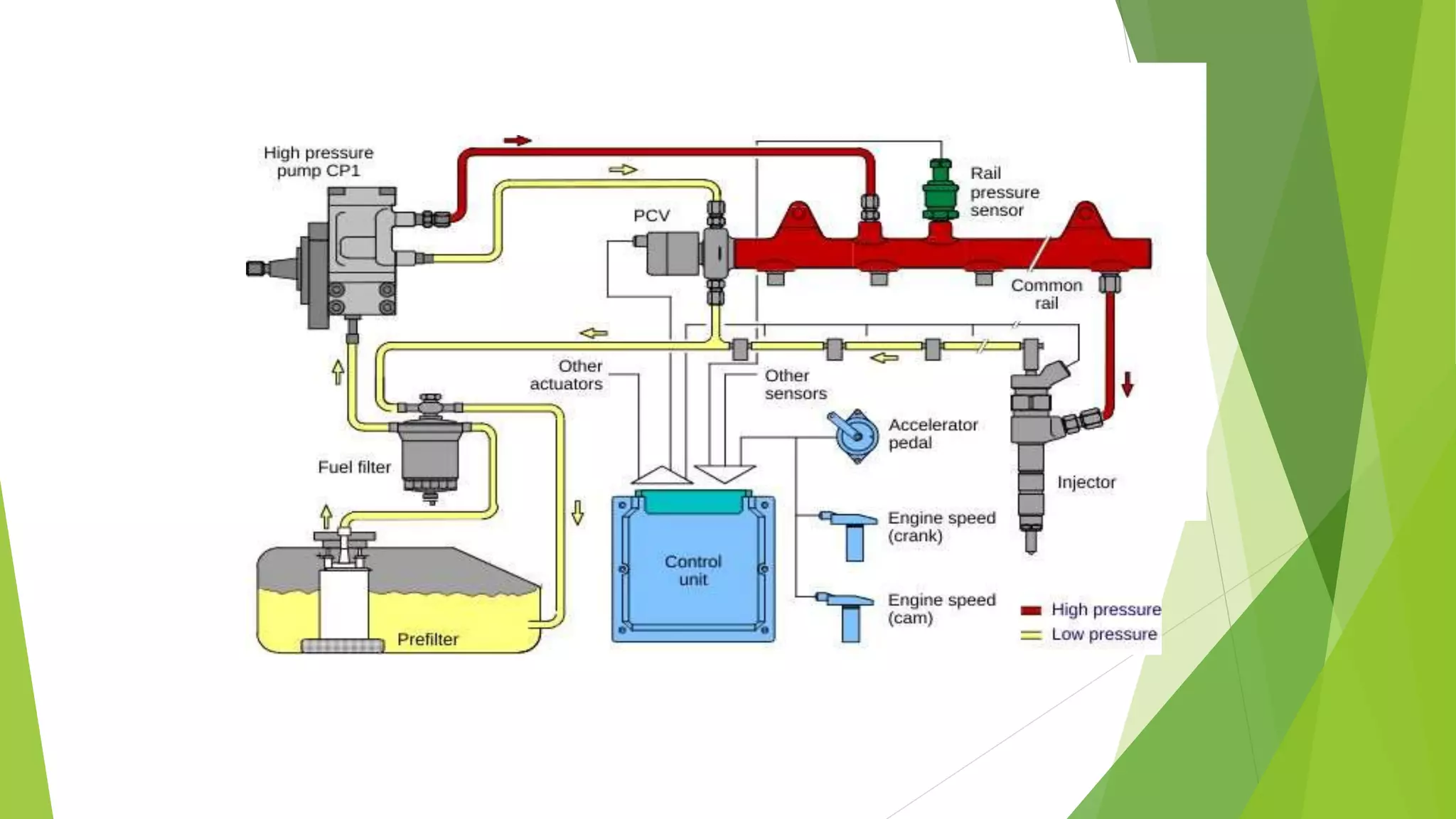
 Common rail direct fuel injection is a modern variant of direct fuel injection system
for petrol and engines. On diesel engines, it features a high-pressure (over
1,000 bar or 15,000 psi) fuel rail feeding individual solenoid valves, as opposed to
low-pressure fuel pump feeding unit injectors.
 Third-generation common rail diesels now feature piezoelectric injectors for
increased precision, with fuel pressures up to 2,000 bars or 29,000 psi. In gasoline
engines, it is used in gasoline direct injection engine technology.
 Solenoid or piezoelectric valves make possible fine electronic control over the fuel
injection time and quantity, and the higher pressure that the common rail
technology makes available provides better fuel atomisation. In order to lower
engine noise, the engine's electronic control unit can inject a small amount of diesel
just before the main injection event ("pilot" injection), thus reducing its
explosiveness and vibration, as well as optimizing injection timing and quantity for
variations in fuel quality, cold starting and so on. Some advanced common rail fuel
systems perform as many as five injections per stroke.
THANK YOU
.

Automobile engineering - FUEL SUPPLY SYSTEM

  • 1.
    AUTOMOBILE ENGINEERING PRESENTATION ON- FUEL SUPPLY SYSTEM PRESENTED BY; ALTAMASH ALI
  • 2.
    AUTOMOBILE ENGINEERING Topics covered;  Fuel Supply System  MPFI  Diesel Fuel System  CRDI Presented By – Arsalan Hassan
  • 3.
    CARBURETION  The processof formation of combustible fuel-air mixture by mixing the proper amount of fuel with air before admission to the engine cylinder is called carburetion and the divide which does this job is called carburetor.  Spark ignition engines normally use volatile liquid fuels. Preparation of fuel-air mixture is done outside the engine cylinder and formation of a homogenous mixture is normally not completed in the inlet manifold. Fuel droplets which remain in suspension continue to evaporate and mix with air even during suction and compression processes. The process of mixture preparation is extremely important for spark-ignition engines. The purpose of carburetion is to provide a combustible mixture of fuel and air in the required quantity and quality for efficient operation of the engines under all conditions.
  • 4.
    Factors affecting carburetion Engine Speed  Vaporization Characteristics of the Fuel  Temperature of Incoming Air  Design of the Carburetor  Time available of the mixture preparation
  • 6.
    Multi Point FuelInjection (MPFI)  MPFI System is a system which uses a small computer (yes, a small computer without keyboard or mouse, it’s more like a microchip) to control the Car’s Engine. A Petrol car’s engine usually has three or more cylinders or fuel burning zones. So in case of an MPFI engine, there is one fuel –injector installed near each cylinder that is why they call it Multi-point (more than one points) Fuel Injection.  MPFI emerged an intelligent way to do what the Carburetor does. In MPFI system, each cylinder has one injector (which makes it multi-point). Each of these Injectors is controlled by one central car computer. This computer is a small micro- processor, which keeps telling each Injector about how much petrol and at what time it needs to inject near the cylinder so that only the required amount of petrol goes into the cylinder at the right moment.
  • 7.
    .  The workingof MPFI is similar to Carburetor, but in an improved way, because now each cylinder is treated independently unlike Carburetor. But one major Key difference is that MPFI is an intelligent system and Carburetor is not.  Based on all these inputs from the sensors, the computer in the MPFI system decides what amount of fuel to inject. Thus it makes it fuel efficient as it knows what amount of petrol should go in
  • 9.
    DIESEL FUEL SYSTEM The function of the diesel fuel system is to inject a precise amount of atomized and pressurized fuel into each engine cylinder at the proper time. Combustion in a diesel engine occurs when this rush of fuel is mixed with hot compressed air. (No electrical spark is used as in a gasoline engine.)  A diesel fuel system is a critical component of any diesel engine and its optimum operation is essential for peak performance.
  • 11.
    Common Rail DirectInjection (CRDI)  Common rail direct fuel injection is a modern variant of direct fuel injection system for petrol and engines. On diesel engines, it features a high-pressure (over 1,000 bar or 15,000 psi) fuel rail feeding individual solenoid valves, as opposed to low-pressure fuel pump feeding unit injectors.  Third-generation common rail diesels now feature piezoelectric injectors for increased precision, with fuel pressures up to 2,000 bars or 29,000 psi. In gasoline engines, it is used in gasoline direct injection engine technology.  Solenoid or piezoelectric valves make possible fine electronic control over the fuel injection time and quantity, and the higher pressure that the common rail technology makes available provides better fuel atomisation. In order to lower engine noise, the engine's electronic control unit can inject a small amount of diesel just before the main injection event ("pilot" injection), thus reducing its explosiveness and vibration, as well as optimizing injection timing and quantity for variations in fuel quality, cold starting and so on. Some advanced common rail fuel systems perform as many as five injections per stroke.
  • 13.