What is radiography…
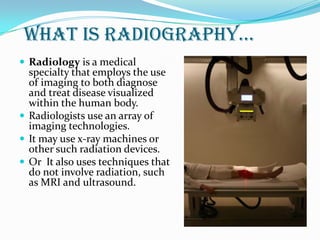
 Radiology is a medical
specialty that employs the use
of imaging to both diagnose
and treat disease visualized
within the human body.
 Radiologists use an array of
imaging technologies.
 It may use x-ray machines or
other such radiation devices.
 Or It also uses techniques that
do not involve radiation, such
as MRI and ultrasound.
types…
 Radiology can refer to two sub-fields, diagnostic
radiology and therapeutic radiology.
 Diagnostic radiology is concerned with the use of
various imaging modalities to aid in the diagnosis
of disease.
 Therapeutic radiology—or, as it is now called,
radiation oncology uses radiation to treat diseases
such as cancer using a form of treatment called
radiation therapy.
 Commonly used techniques for diagnostic radiology
includes
Computed tomography (CT)
Magnetic resonance imaging (MRI)
Ultrasound
X-rays
Nuclear imaging techniques
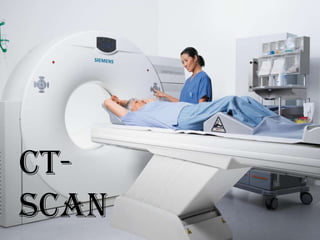
CT-
SCAN
CT scan
 Computed tomography (CT) is a type of imaging.
It uses special x-ray equipment to make cross-
sectional pictures of your body.
 Doctors use CT scans to look for
Broken bones
Cancers
Blood clots
Signs of heart disease
Internal bleeding
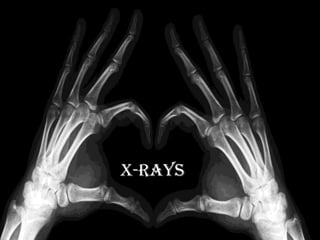
X-RAYS
X-rays
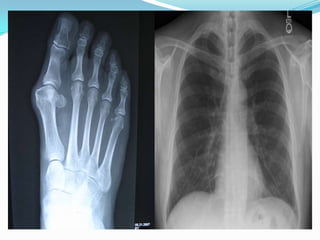
 X-rays are basically electromagnetic radiations which
are used to create images of inside your body.
 The images show the parts of your body in different
shades of black and white due to different level of
absorption of x-rays by different tissues
 Calcium in bones absorbs x-rays the most, so bones
look white. Fat and other soft tissues absorb less, and
look gray.
 Air absorbs the least, so lungs look black.
 The most familiar use of x-rays is checking for broken
bones
 However, x-rays are also used in other ways.
 For example, chest x-rays can spot pneumonia.
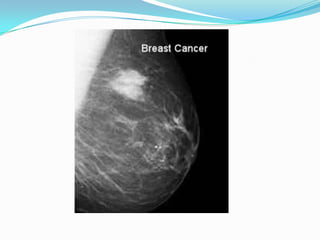
 Mammograms use x-rays to look for breast cancer.
MRI
MRI scans
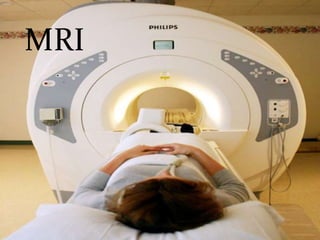
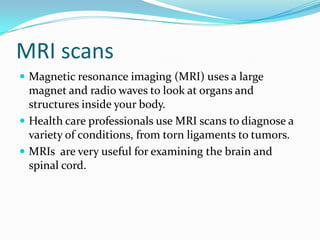
 Magnetic resonance imaging (MRI) uses a large
magnet and radio waves to look at organs and
structures inside your body.
 Health care professionals use MRI scans to diagnose a
variety of conditions, from torn ligaments to tumors.
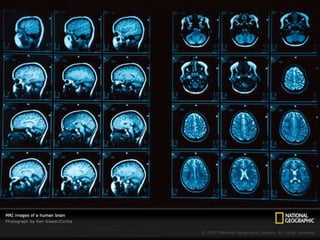
 MRIs are very useful for examining the brain and
spinal cord.
Nuclear medicine
 Nuclear scans use radioactive substances to see
structures and functions inside your body.
 They use a special camera that detects radioactivity.
 Nuclear scans can help doctors diagnose many
conditions, including cancers, injuries, and infections.
 They can also show how organs like your heart and
lungs are working.
 The heart, lungs, thyroid, liver, gallbladder, and bones
are commonly evaluated for particular conditions
using these techniques.
Ultrasound
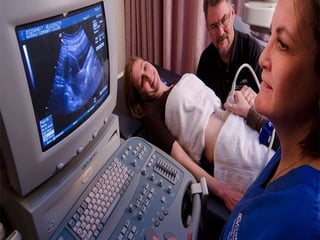
 Ultrasound is a type of imaging. It uses high-frequency
sound waves to look at organs and structures inside
the body.
 Health care professionals use it to view the heart,
blood vessels, kidneys, liver, and other organs.
 During pregnancy, doctors use ultrasound to view the
fetus. Unlike x-rays, ultrasound does not expose you to
radiation.
Thank
you !!!

Diagnostic radiology

  • 2.
    What is radiography… Radiology is a medical specialty that employs the use of imaging to both diagnose and treat disease visualized within the human body.  Radiologists use an array of imaging technologies.  It may use x-ray machines or other such radiation devices.  Or It also uses techniques that do not involve radiation, such as MRI and ultrasound.
  • 3.
    types…  Radiology canrefer to two sub-fields, diagnostic radiology and therapeutic radiology.  Diagnostic radiology is concerned with the use of various imaging modalities to aid in the diagnosis of disease.  Therapeutic radiology—or, as it is now called, radiation oncology uses radiation to treat diseases such as cancer using a form of treatment called radiation therapy.
  • 4.
     Commonly usedtechniques for diagnostic radiology includes Computed tomography (CT) Magnetic resonance imaging (MRI) Ultrasound X-rays Nuclear imaging techniques
  • 5.
  • 6.
    CT scan  Computedtomography (CT) is a type of imaging. It uses special x-ray equipment to make cross- sectional pictures of your body.  Doctors use CT scans to look for Broken bones Cancers Blood clots Signs of heart disease Internal bleeding
  • 7.
  • 8.
    X-rays  X-rays arebasically electromagnetic radiations which are used to create images of inside your body.  The images show the parts of your body in different shades of black and white due to different level of absorption of x-rays by different tissues  Calcium in bones absorbs x-rays the most, so bones look white. Fat and other soft tissues absorb less, and look gray.  Air absorbs the least, so lungs look black.
  • 10.
     The mostfamiliar use of x-rays is checking for broken bones  However, x-rays are also used in other ways.  For example, chest x-rays can spot pneumonia.  Mammograms use x-rays to look for breast cancer.
  • 12.
  • 13.
    MRI scans  Magneticresonance imaging (MRI) uses a large magnet and radio waves to look at organs and structures inside your body.  Health care professionals use MRI scans to diagnose a variety of conditions, from torn ligaments to tumors.  MRIs are very useful for examining the brain and spinal cord.
  • 15.
    Nuclear medicine  Nuclearscans use radioactive substances to see structures and functions inside your body.  They use a special camera that detects radioactivity.  Nuclear scans can help doctors diagnose many conditions, including cancers, injuries, and infections.  They can also show how organs like your heart and lungs are working.  The heart, lungs, thyroid, liver, gallbladder, and bones are commonly evaluated for particular conditions using these techniques.
  • 17.
    Ultrasound  Ultrasound isa type of imaging. It uses high-frequency sound waves to look at organs and structures inside the body.  Health care professionals use it to view the heart, blood vessels, kidneys, liver, and other organs.  During pregnancy, doctors use ultrasound to view the fetus. Unlike x-rays, ultrasound does not expose you to radiation.
  • 18.