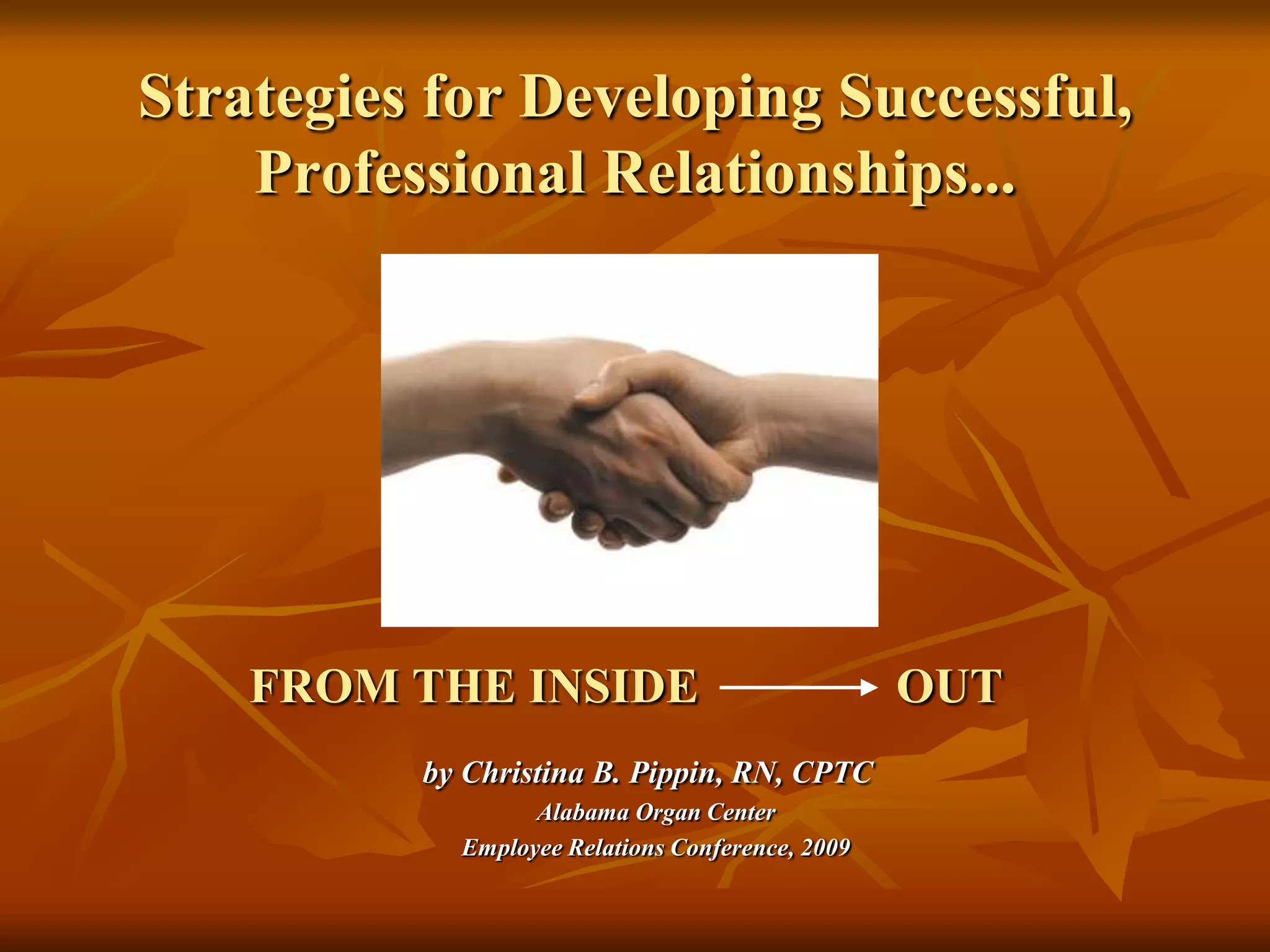
Strategies for Developing Successful, Professional Relationships...FROM THE INSIDE                OUTby Christina B. Pippin, RN, CPTCAlabama Organ CenterEmployee Relations Conference, 2009
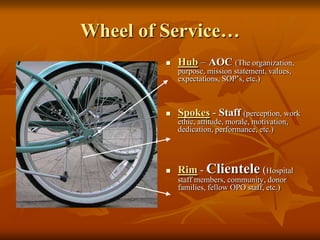
Wheel of Service…Hub – AOC(The organization, purpose, mission statement, values, expectations, SOP’s, etc.)Spokes - Staff (perception, work ethic, attitude, morale, motivation, dedication, performance, etc.)Rim - Clientele (Hospital staff members, community, donor families, fellow OPO staff, etc.)
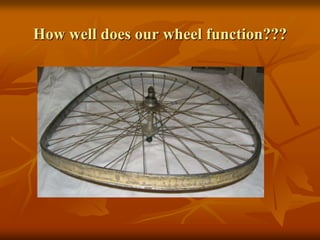
How well does our wheel function???
Factors that affect function…Organizational “set-up”, structure, and valuesHub: The organization / Center of activity or “central point”.Employee morale, dedication, work ethic, and leadershipSpokes: Employees / Any of the small radiating bars connected 		to the hub of the wheel and provide support forthe rim.CLIENT PERCEPTION!!!Rim:  Clientele / The outer portion of the wheel secured to the hub by spokes... Where the rubber meets the road!!!
Internal MarketingStabilizing the “wheel” through employee satisfaction…Spokes: The spokes are responsible for the “function” of the wheel.  When a single spoke is bent or damaged, eventually it will affect the surrounding spokes.  The unfortunate result is progressive damage.
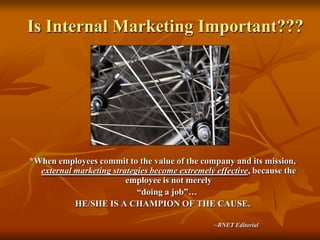
Is Internal Marketing Important???*When employees commit to the value of the company and its mission, external marketing strategies become extremely effective, because the employee is not merely     “doing a job”…HE/SHE IS A CHAMPION OF THE CAUSE.  							~BNET Editorial
Defining MoraleMorale:  1.) the mental and emotional attitude of an individual to the function or tasks expected of him by his group and loyalty to it;	2.) a sense of common purpose with respect to a group; 	3.) a state of individual psychological well-being based on factors such as a sense of purpose and confidence in the future .~Webster’s Dictionary, 1969
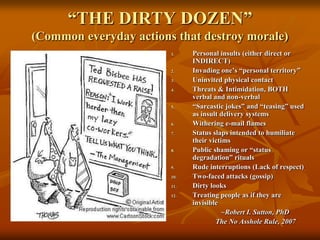
“THE DIRTY DOZEN”(Common everyday actions that destroy morale)Personal insults (either direct or INDIRECT)Invading one’s “personal territory”Uninvited physical contactThreats & Intimidation, BOTH verbal and non-verbal“Sarcastic jokes” and “teasing” used as insult delivery systemsWithering e-mail flamesStatus slaps intended to humiliate their victimsPublic shaming or “status degradation” ritualsRude interruptions (Lack of respect)Two-faced attacks (gossip)Dirty looksTreating people as if they are invisible          ~Robert I. Sutton, PhD           		       The No Asshole Rule, 2007
“EIGHT IS ENOUGH”(eight steps to improving relationships)Focus on what you can control, Not on what you can’t.Do “The Big Three”…  Notice what colleagues do right, listen, and show appreciation.Engage one another in ongoing conversations about improving morale.Ask for feedback, especially after difficult interactions (show you care).Ask yourself: “Am I inspired?”Ask yourself: “AM I INSPIRING?”Learn Which Factors And Practices Make The Biggest Difference In Morale And Productivity, And Commit To Executing Them.Learn more about human nature and commit to working for it, not against it. (Maslow’s hierarchy of needs)					    “8 ways managers can improve morale”					     The Employment Times – April 19, 2004					                            By David Lee					                  humannatureatwork.com
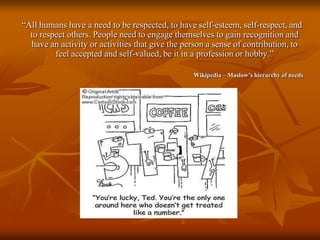
   “All humans have a need to be respected, to have self-esteem, self-respect, and to respect others. People need to engage themselves to gain recognition and have an activity or activities that give the person a sense of contribution, to feel accepted and self-valued, be it in a profession or hobby.”Wikipedia – Maslow’s hierarchy of needs
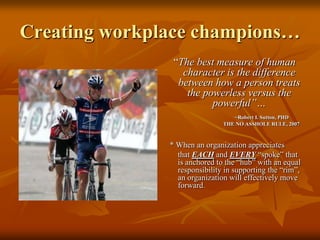
Creating workplace champions… “The best measure of human character is the difference between how a person treats the powerless versus the powerful”… 			   ~Robert I. Sutton, PHD		                   THE NO ASSHOLE RULE, 2007  * When an organization appreciates       that EACH and EVERY “spoke” that is anchored to the “hub” with an equal responsibility in supporting the “rim”, an organization will effectively move forward.
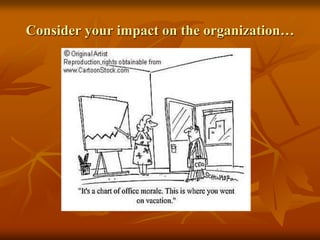
Consider your impact on the organization…
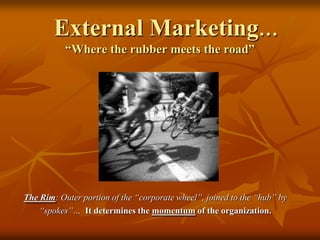
  External Marketing…“Where the rubber meets the road”The Rim: Outer portion of the “corporate wheel”, joined to the “hub” by “spokes”…  Itdetermines the momentum of the organization.
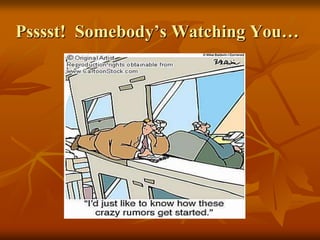
Psssst!  Somebody’s Watching You…
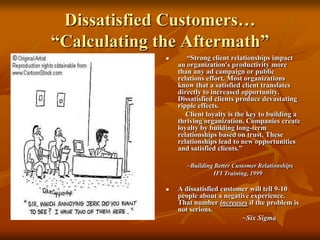
Dissatisfied Customers…“Calculating the Aftermath”     “Strong client relationships impact an organization's productivity more than any ad campaign or public relations effort. Most organizations know that a satisfied client translates directly to increased opportunity. Dissatisfied clients produce devastating ripple effects.            Client loyalty is the key to building a thriving organization. Companies create loyalty by building long-term relationships based on trust. These relationships lead to new opportunities and satisfied clients.”~Building Better Customer RelationshipsIFI Training, 1999A dissatisfied customer will tell 9-10 people about a negative experience.  That number increases if the problem is not serious.~Six Sigma
Hearing vs. ListeningRepetition, Repetition, Repetition…CALL GOLDBERG…  800-600-______ !Lookie!  Lookie!  Lookie!  Here comes _________ !Plop, Plop - Fizz, Fizz, Oh what a ______________ !“Teaching something repetitively strengthens horizontal connections in the brain's cortex, where the circuitry of long-term memory operates.”~Nature Neuroscience, July 1998
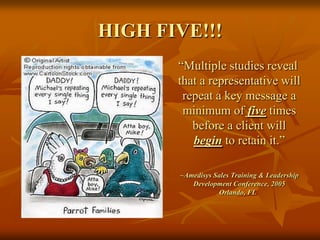
HIGH FIVE!!!“Multiple studies reveal that a representative will repeat a key message a minimum of five times before a client will begin to retain it.”	~Amedisys Sales Training & Leadership Development Conference, 2005     Orlando, FL
FIVE RULES FOR GREAT REFERALS…Earn trust(Delivery of services)Be specific about what you want(Ask probing questions)Ask for action (be direct)Find creative ways to repeat the message (innovative marketing strategies)Follow-up three times (express Gratitude)…*Express gratitude for the referral within 24 hours. This is not only polite, but  gracefully reminds the client of your commitment to service & helps solidify client relations.		* Send a thank-you e-mail / thank-you note to the referral source, give a brief status report, and reinforce appreciation.* If a referral converts to a donor, follow-up with a donor letter/thank you.Geoffrey James					~Sales Machine, September 2007
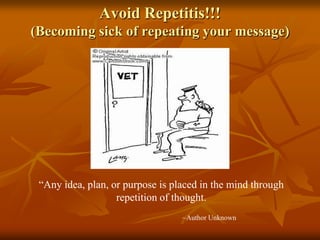
Avoid Repetitis!!!(Becoming sick of repeating your message)“Any idea, plan, or purpose is placed in the mind through repetition of thought. ~Author Unknown
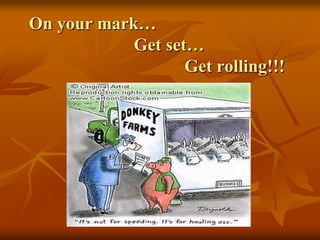
 On your mark… 			   Get set…					Get rolling!!!

Developing Professional Relationships

  • 1.
    Strategies for DevelopingSuccessful, Professional Relationships...FROM THE INSIDE OUTby Christina B. Pippin, RN, CPTCAlabama Organ CenterEmployee Relations Conference, 2009
  • 2.
    Wheel of Service…Hub– AOC(The organization, purpose, mission statement, values, expectations, SOP’s, etc.)Spokes - Staff (perception, work ethic, attitude, morale, motivation, dedication, performance, etc.)Rim - Clientele (Hospital staff members, community, donor families, fellow OPO staff, etc.)
  • 3.
    How well doesour wheel function???
  • 4.
    Factors that affectfunction…Organizational “set-up”, structure, and valuesHub: The organization / Center of activity or “central point”.Employee morale, dedication, work ethic, and leadershipSpokes: Employees / Any of the small radiating bars connected to the hub of the wheel and provide support forthe rim.CLIENT PERCEPTION!!!Rim: Clientele / The outer portion of the wheel secured to the hub by spokes... Where the rubber meets the road!!!
  • 5.
    Internal MarketingStabilizing the“wheel” through employee satisfaction…Spokes: The spokes are responsible for the “function” of the wheel. When a single spoke is bent or damaged, eventually it will affect the surrounding spokes. The unfortunate result is progressive damage.
  • 6.
    Is Internal MarketingImportant???*When employees commit to the value of the company and its mission, external marketing strategies become extremely effective, because the employee is not merely “doing a job”…HE/SHE IS A CHAMPION OF THE CAUSE. ~BNET Editorial
  • 7.
    Defining MoraleMorale: 1.) the mental and emotional attitude of an individual to the function or tasks expected of him by his group and loyalty to it; 2.) a sense of common purpose with respect to a group; 3.) a state of individual psychological well-being based on factors such as a sense of purpose and confidence in the future .~Webster’s Dictionary, 1969
  • 8.
    “THE DIRTY DOZEN”(Commoneveryday actions that destroy morale)Personal insults (either direct or INDIRECT)Invading one’s “personal territory”Uninvited physical contactThreats & Intimidation, BOTH verbal and non-verbal“Sarcastic jokes” and “teasing” used as insult delivery systemsWithering e-mail flamesStatus slaps intended to humiliate their victimsPublic shaming or “status degradation” ritualsRude interruptions (Lack of respect)Two-faced attacks (gossip)Dirty looksTreating people as if they are invisible ~Robert I. Sutton, PhD The No Asshole Rule, 2007
  • 9.
    “EIGHT IS ENOUGH”(eightsteps to improving relationships)Focus on what you can control, Not on what you can’t.Do “The Big Three”… Notice what colleagues do right, listen, and show appreciation.Engage one another in ongoing conversations about improving morale.Ask for feedback, especially after difficult interactions (show you care).Ask yourself: “Am I inspired?”Ask yourself: “AM I INSPIRING?”Learn Which Factors And Practices Make The Biggest Difference In Morale And Productivity, And Commit To Executing Them.Learn more about human nature and commit to working for it, not against it. (Maslow’s hierarchy of needs) “8 ways managers can improve morale” The Employment Times – April 19, 2004 By David Lee humannatureatwork.com
  • 10.
    “All humans have a need to be respected, to have self-esteem, self-respect, and to respect others. People need to engage themselves to gain recognition and have an activity or activities that give the person a sense of contribution, to feel accepted and self-valued, be it in a profession or hobby.”Wikipedia – Maslow’s hierarchy of needs
  • 11.
    Creating workplace champions…“The best measure of human character is the difference between how a person treats the powerless versus the powerful”… ~Robert I. Sutton, PHD THE NO ASSHOLE RULE, 2007 * When an organization appreciates that EACH and EVERY “spoke” that is anchored to the “hub” with an equal responsibility in supporting the “rim”, an organization will effectively move forward.
  • 12.
    Consider your impacton the organization…
  • 13.
    ExternalMarketing…“Where the rubber meets the road”The Rim: Outer portion of the “corporate wheel”, joined to the “hub” by “spokes”… Itdetermines the momentum of the organization.
  • 14.
    Psssst! Somebody’sWatching You…
  • 15.
    Dissatisfied Customers…“Calculating theAftermath” “Strong client relationships impact an organization's productivity more than any ad campaign or public relations effort. Most organizations know that a satisfied client translates directly to increased opportunity. Dissatisfied clients produce devastating ripple effects. Client loyalty is the key to building a thriving organization. Companies create loyalty by building long-term relationships based on trust. These relationships lead to new opportunities and satisfied clients.”~Building Better Customer RelationshipsIFI Training, 1999A dissatisfied customer will tell 9-10 people about a negative experience. That number increases if the problem is not serious.~Six Sigma
  • 16.
    Hearing vs. ListeningRepetition,Repetition, Repetition…CALL GOLDBERG… 800-600-______ !Lookie! Lookie! Lookie! Here comes _________ !Plop, Plop - Fizz, Fizz, Oh what a ______________ !“Teaching something repetitively strengthens horizontal connections in the brain's cortex, where the circuitry of long-term memory operates.”~Nature Neuroscience, July 1998
  • 17.
    HIGH FIVE!!!“Multiple studiesreveal that a representative will repeat a key message a minimum of five times before a client will begin to retain it.” ~Amedisys Sales Training & Leadership Development Conference, 2005 Orlando, FL
  • 18.
    FIVE RULES FORGREAT REFERALS…Earn trust(Delivery of services)Be specific about what you want(Ask probing questions)Ask for action (be direct)Find creative ways to repeat the message (innovative marketing strategies)Follow-up three times (express Gratitude)…*Express gratitude for the referral within 24 hours. This is not only polite, but gracefully reminds the client of your commitment to service & helps solidify client relations. * Send a thank-you e-mail / thank-you note to the referral source, give a brief status report, and reinforce appreciation.* If a referral converts to a donor, follow-up with a donor letter/thank you.Geoffrey James ~Sales Machine, September 2007
  • 19.
    Avoid Repetitis!!!(Becoming sickof repeating your message)“Any idea, plan, or purpose is placed in the mind through repetition of thought. ~Author Unknown
  • 20.
    On yourmark… Get set… Get rolling!!!