Introduction to NetworkingRaul RupsinghMScCEO PointerWare Innovations Ltd.June 2010
Why Network?What is “networking”?Connecting with others to build professional relationships and gather informationWhy should I be networking?70-90% of all jobs are not posted
Survey of 45 large companies suggests1…

Most positions are filled internally but…
Referrals are the #1 source of external hires1Source: Crispin, G. & Mehler, M. (Feb 2009). CareerXroads 8th Annual Source of Hire Study: What Happened in 2008 and What It Means for 2009.Accessed October 8, 2009 at: http://www.careerxroads.com/news/SourcesofHire09.pdf
Where to StartPreparation is Key!Business Networking in PersonOnline Networking
So what did she do wrong?
How to PrepareWhat are your goals?Make them known to your network (Friends, Family)Business cardsJoin Professional Organizations and Associations, Alumni NetworksAttend ConferencesPractice
What to practice? Sound BytesLittle segments about yourselfEx. Self Pitch:15 second description of yourself Can tailor it a bit to your audienceEx. Last job, career ambitions, etcBut don’t sound rehearsed!
CommunicationListen don’t just talkDon’t assume the other person knows your industry or industry specific technical jargonAsking questions shows interestGet people to open upCan be easier than getting them interested in you!Maintain eye contactSay the person’s name
Business AttireProfessional dress (Blue, Grey, Black), Business Casual (More color, jacket, no-jacket)Cater to eventGuideline: dress a bit better than what you think the norm is at the event
HandshakeHand in handFirmAffects your first impressionIntroduce yourself simultaneously
Body LanguageBodyWhere do your feet point -> indicates where you/they are thinking of goingYour faceYour bodyHandsFoodBe positiveConfident not arrogant
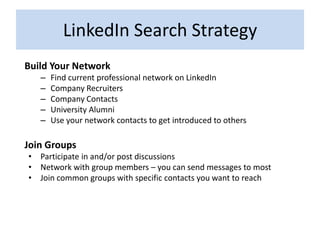
Business CardsKeep it somewhere where you can find it When you accept someone else’s business card treat it with respectOne pocket for your cards, one pocket for cards you receiveMake notes on back of business cardHelps to remember them later, follow up notes, etcProfessional website and email address
Spending Your TimeDon’t spend too much time! ~10 minutesDon’t linger too much with friends or acquaintancesIf things are going wellsetup an appointment for 1 on 1 laterDon’t spend an entire evening with a single personBUT, be genuine, focus on quality of conversation not quantity
Networking StyleDon’t be too pushyDon’t try to close a deal on the spotRemember you are trying to build a relationship, not acquire a customerBe sensitive to the nature of the event you are attending
Networking – Other AdviceVolunteerVolunteer at relevant corporations, associations to help expand your networkCan also volunteer for a particular event, to be a host or ambassadorEx. At your local Chamber of CommerceActing as a facilitator can be a great way to meet people
Networking – Other AdviceListen for how you can help themMaintain your connections: 1 in 3 job seekers get employment connections from a previous employerRemember: make a good impressionCome across as ProfessionalPrepare: Identify prospectsAsk people what other events they attend
Networking – Other AdviceAt first you may have to kiss a lot of frogsRandom events, random peopleLikely uncomfortableDon’t network for the sake of networkingIn the beginning you may need to do thisBut after you find more personally relevant events or individuals, focus your time on themDon’t be afraid to ask for help
Approach AnxietyAre they involved in a conversation with someone else?Put your hand out to say hello, shake hands, make introductions (can you tell me a bit about what you do?)But have to take initiativeIt is easier to approach lone people, not groups
Approach AnxietyEnvironmental comment, situation, setting, interesting news itemsPay attention to their body languageYou should have open body language (people will want to talk to you)Open with low risk questionsMake a comment about the speakerHow did you come to be invited tonight?
So now what?
AfterwardsHow to Follow UpEmail (the norm now)Phone callLunch?Don’t add them on Facebook but LinkedIn is fineBe organizedRemember to follow through on anything you said you would doRemember to write down information on cardsGood to be keenBut not over-eager, and don’t pester!
AfterwardsIf someone helps you…remember to thank them!Social etiquette with following upIf they introduce you to someone else, be sure to follow up with that person and let the original referrer know how it went
Networking - PeopleFind “Connectors”These are the social butterflies of the business worldKnowing them / adding them online can help you get introduced to the people you actually want to talk toTalk to ProfessorsIn a technical / research capacity or otherwise Professors love talking about their work and exploring new opportunities
Networking - PeopleUseful job contactsStay in touch with people in your industry or with jobs you find interesting and suggest meeting up again to learn moreDon’t worry about rejectionMost people are at a networking event in order to meet people
Networking - PeopleDon’t discount people too quicklyYou never know who they know
Break Time!
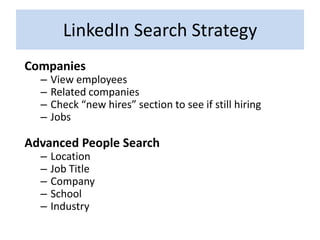
Networking OnlineWhat is “social media”?Online networking platforms like…FacebookLinkedInTwitterMySpaceYouTubeBlogsWhy network online?Easy to connect with those you know (and those you want to know)Personal marketing tools – promote yourself
Networking OnlineAre employers really looking for me online?45% surveyed by CareerBuilder are screening candidates on social networking sites235% dismissed a candidate based on negative online information18% solidified a hiring decision based on positive online information2CareerBuilder.com (2009). Forty-five Percent of Employers Use Social Networking Sites to Research Job Candidates, CareerBuilder Survey Finds.Accessed October 9, 2009 at: http://tiny.cc/I1bXi
Networking OnlineClean up your online image…Google yourself – what’s out there?Delete inactive accounts & update active onesRemove any “dirt”Utilize privacy settingsAsk contacts to “keep it clean”
Networking OnlineBuild your personal brand…Who is your target audience? What can you offer these people?How can I connect with them online?
LinkedIn ProfileStatus:  Your status message allows you to share professional updates with your networkPhoto:  Your professional photo allows those you’ve met and previously worked with to quickly identify you. Summary:  Summarizing your professional experience and goals allows other users to quickly learn about your background and interests. Experience:  Your professional experience is displayed along with any recommendations you have received.  Similar to your resume.Education: Your educational background is displayed along with associated activities and honors.Additional Information:  Your websites, interests, groups & associations and honors & awards.Recommendations:Recommendations help illustrate your achievements, project credibility, and show why people enjoy working with you.  Similar to references.Q&A:  LinkedIn Answers allows you to showcase your knowledge and interests. Contact Settings:Your preferences for contact, types of opportunities interested in and privacy settings.
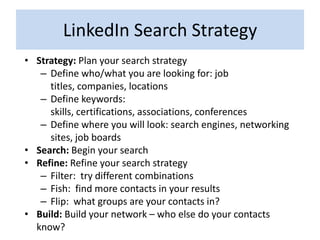
LinkedIn Search StrategyStrategy: Plan your search strategyDefine who/what you are looking for: job titles, companies, locationsDefine keywords: skills, certifications, associations, conferencesDefine where you will look: search engines, networking sites, job boardsSearch: Begin your searchRefine: Refine your search strategyFilter:  try different combinations Fish:  find more contacts in your resultsFlip:  what groups are your contacts in?Build: Build your network – who else do your contacts know?

Introduction To Networking

  • 1.
    Introduction to NetworkingRaulRupsinghMScCEO PointerWare Innovations Ltd.June 2010
  • 2.
    Why Network?What is“networking”?Connecting with others to build professional relationships and gather informationWhy should I be networking?70-90% of all jobs are not posted
  • 3.
    Survey of 45large companies suggests1…
  • 4.
    Most positions arefilled internally but…
  • 5.
    Referrals are the#1 source of external hires1Source: Crispin, G. & Mehler, M. (Feb 2009). CareerXroads 8th Annual Source of Hire Study: What Happened in 2008 and What It Means for 2009.Accessed October 8, 2009 at: http://www.careerxroads.com/news/SourcesofHire09.pdf
  • 6.
    Where to StartPreparationis Key!Business Networking in PersonOnline Networking
  • 8.
    So what didshe do wrong?
  • 9.
    How to PrepareWhatare your goals?Make them known to your network (Friends, Family)Business cardsJoin Professional Organizations and Associations, Alumni NetworksAttend ConferencesPractice
  • 10.
    What to practice?Sound BytesLittle segments about yourselfEx. Self Pitch:15 second description of yourself Can tailor it a bit to your audienceEx. Last job, career ambitions, etcBut don’t sound rehearsed!
  • 13.
    CommunicationListen don’t justtalkDon’t assume the other person knows your industry or industry specific technical jargonAsking questions shows interestGet people to open upCan be easier than getting them interested in you!Maintain eye contactSay the person’s name
  • 14.
    Business AttireProfessional dress(Blue, Grey, Black), Business Casual (More color, jacket, no-jacket)Cater to eventGuideline: dress a bit better than what you think the norm is at the event
  • 15.
    HandshakeHand in handFirmAffectsyour first impressionIntroduce yourself simultaneously
  • 16.
    Body LanguageBodyWhere doyour feet point -> indicates where you/they are thinking of goingYour faceYour bodyHandsFoodBe positiveConfident not arrogant
  • 18.
    Business CardsKeep itsomewhere where you can find it When you accept someone else’s business card treat it with respectOne pocket for your cards, one pocket for cards you receiveMake notes on back of business cardHelps to remember them later, follow up notes, etcProfessional website and email address
  • 19.
    Spending Your TimeDon’tspend too much time! ~10 minutesDon’t linger too much with friends or acquaintancesIf things are going wellsetup an appointment for 1 on 1 laterDon’t spend an entire evening with a single personBUT, be genuine, focus on quality of conversation not quantity
  • 20.
    Networking StyleDon’t betoo pushyDon’t try to close a deal on the spotRemember you are trying to build a relationship, not acquire a customerBe sensitive to the nature of the event you are attending
  • 21.
    Networking – OtherAdviceVolunteerVolunteer at relevant corporations, associations to help expand your networkCan also volunteer for a particular event, to be a host or ambassadorEx. At your local Chamber of CommerceActing as a facilitator can be a great way to meet people
  • 22.
    Networking – OtherAdviceListen for how you can help themMaintain your connections: 1 in 3 job seekers get employment connections from a previous employerRemember: make a good impressionCome across as ProfessionalPrepare: Identify prospectsAsk people what other events they attend
  • 23.
    Networking – OtherAdviceAt first you may have to kiss a lot of frogsRandom events, random peopleLikely uncomfortableDon’t network for the sake of networkingIn the beginning you may need to do thisBut after you find more personally relevant events or individuals, focus your time on themDon’t be afraid to ask for help
  • 24.
    Approach AnxietyAre theyinvolved in a conversation with someone else?Put your hand out to say hello, shake hands, make introductions (can you tell me a bit about what you do?)But have to take initiativeIt is easier to approach lone people, not groups
  • 25.
    Approach AnxietyEnvironmental comment,situation, setting, interesting news itemsPay attention to their body languageYou should have open body language (people will want to talk to you)Open with low risk questionsMake a comment about the speakerHow did you come to be invited tonight?
  • 26.
  • 27.
    AfterwardsHow to FollowUpEmail (the norm now)Phone callLunch?Don’t add them on Facebook but LinkedIn is fineBe organizedRemember to follow through on anything you said you would doRemember to write down information on cardsGood to be keenBut not over-eager, and don’t pester!
  • 28.
    AfterwardsIf someone helpsyou…remember to thank them!Social etiquette with following upIf they introduce you to someone else, be sure to follow up with that person and let the original referrer know how it went
  • 29.
    Networking - PeopleFind“Connectors”These are the social butterflies of the business worldKnowing them / adding them online can help you get introduced to the people you actually want to talk toTalk to ProfessorsIn a technical / research capacity or otherwise Professors love talking about their work and exploring new opportunities
  • 30.
    Networking - PeopleUsefuljob contactsStay in touch with people in your industry or with jobs you find interesting and suggest meeting up again to learn moreDon’t worry about rejectionMost people are at a networking event in order to meet people
  • 31.
    Networking - PeopleDon’tdiscount people too quicklyYou never know who they know
  • 32.
  • 33.
    Networking OnlineWhat is“social media”?Online networking platforms like…FacebookLinkedInTwitterMySpaceYouTubeBlogsWhy network online?Easy to connect with those you know (and those you want to know)Personal marketing tools – promote yourself
  • 34.
    Networking OnlineAre employersreally looking for me online?45% surveyed by CareerBuilder are screening candidates on social networking sites235% dismissed a candidate based on negative online information18% solidified a hiring decision based on positive online information2CareerBuilder.com (2009). Forty-five Percent of Employers Use Social Networking Sites to Research Job Candidates, CareerBuilder Survey Finds.Accessed October 9, 2009 at: http://tiny.cc/I1bXi
  • 35.
    Networking OnlineClean upyour online image…Google yourself – what’s out there?Delete inactive accounts & update active onesRemove any “dirt”Utilize privacy settingsAsk contacts to “keep it clean”
  • 36.
    Networking OnlineBuild yourpersonal brand…Who is your target audience? What can you offer these people?How can I connect with them online?
  • 37.
    LinkedIn ProfileStatus: Your status message allows you to share professional updates with your networkPhoto: Your professional photo allows those you’ve met and previously worked with to quickly identify you. Summary: Summarizing your professional experience and goals allows other users to quickly learn about your background and interests. Experience: Your professional experience is displayed along with any recommendations you have received. Similar to your resume.Education: Your educational background is displayed along with associated activities and honors.Additional Information: Your websites, interests, groups & associations and honors & awards.Recommendations:Recommendations help illustrate your achievements, project credibility, and show why people enjoy working with you. Similar to references.Q&A: LinkedIn Answers allows you to showcase your knowledge and interests. Contact Settings:Your preferences for contact, types of opportunities interested in and privacy settings.
  • 38.
    LinkedIn Search StrategyStrategy:Plan your search strategyDefine who/what you are looking for: job titles, companies, locationsDefine keywords: skills, certifications, associations, conferencesDefine where you will look: search engines, networking sites, job boardsSearch: Begin your searchRefine: Refine your search strategyFilter: try different combinations Fish: find more contacts in your resultsFlip: what groups are your contacts in?Build: Build your network – who else do your contacts know?

Editor's Notes

  • #6 Did not ask whether he had time to talkNot clear about who she wasDidn't know why she was calling himor what she wanted to do or how he can help her
  • #7 Goals: personal careeer goalsBut also when you’re attending an event, have some idea of what type of people you’re trying to meet, how many people, for what purpose?How many of you are carrying business cards on you right now?Ask Organizer about interesting / relevant people to meet at a conference/event?Can you get a list of the names, faces, titles of people attending an event? Some conference have online / mobile event planning software with such details.
  • #8 Hi, my name’s Raul, I’m running my own startup software company called PointerWare Innovations, and we make the world’s easiest to use computer interface designed for seniors.END, so now let’s talk more about in person networking….
  • #9 With another little intro video,So again, what did she do wrong in this situation? Any comments?Anyone care to note things she did that were incorrect? or any advice or suggestions for her?-standing at a table with a drink is OK, if you want to take a moment to yourself-remember that you probably do need to be pro-active-putting yourself behind some reading material is bad, it gives people the impression that you're not interested in talking to others
  • #11 One cheesy guideline I’ve heard: you have one mouth and two ears and you should use them PROPORTIONALLYShows interest, it also shows that you are actually listeningBackground research can help with developing questionsNo one appreciates you looking around for someone more interesting while you’re talking to them.If you can, remember the person’s name and try to use it again in conversation.
  • #13 Not fingers!
  • #14 People are also generally attracted / prefer talking to someone who has a positive perspective, is also more engaging in conversation
  • #15 -in terms of body language:you can think of whether people are talking closely, with open or closed body languageobviously the person by themself will also be easier to approach
  • #16 Not buried somewhere in your purse or suitcase,Keep it in a container in your pocket, Don’t crumple it into your wallet or pocketTreating the card with no care, not even looking at it sends a message to the person you just met – i.e. did they even care to meet me?Many people suggest, one pocket for each
  • #18 People generally do not like being coerced or SOLD to, but they enjoy having conversations where they can contribute and feel like they are communicating
  • #19 When you are a host or ambassador at a network event, it is your job to greet people, say hello, tell them about the event and then help them connect with othersIs much easier to do it WHEN it is your job
  • #20 Help them connect, or give advice on a different matter, or anything, networking is about connect and helping others as well as yourself,Even knowing about other networking events. REMEMBER to think about what you know, who you know and how it can help others as wellPrepare, can you find out the names, titles and faces for the people you are going to meet? Do you know anything about their organization? All these details will make conversation easier AND show the person listening that you’re intelligent and that you’ve done your research.
  • #21 Help them connect, or give advice on a different matter, or anything, networking is about connect and helping others as well as yourself,Even knowing about other networking events. REMEMBER to think about what you know, who you know and how it can help others as wellPrepare, can you find out the names, titles and faces for the people you are going to meet? Do you know anything about their organization? All these details will make conversation easier AND show the person listening that you’re intelligent and that you’ve done your research.
  • #23 Have you been to CSI before?Do they seem anxious, feel like they need to leave, do something else….be sure not to pester!Lone people are easier to have a conversation with, if people are already engaged in conversation or if they are in a group of people they know well it will be harder to join them
  • #24 You’ve been to a great event, you’ve met some interesting people and you come home and feel pretty happy about yourself. Now what?
  • #25 So you’ve went to a great networking event, met a few people and come home and feel pretty happy about yourself.So now what? ASK AUDIENCERemember the goal will be to STAY IN TOUCHAlso remember, it’s good to be eager, but not TOO eager!
  • #26 If someone helps you with a referral or some other connection, remember to thank them!
  • #27 -professors are experts in their fields, have many different industry and academic contacts AND typically love to talk about themselves – so ask questions!-if you’re in a research or technical field there are obviously work connections from talking to a professor
  • #28 Again LUNCH is a common and socially normal invitationIf it’s with someone out of town or someone you can’t meet during the business day then dinner or a drink after work is also fine.
  • #29 Many of the best connections can be random, and you don’t want to pre-judge people, as you really have no idea …even if they can’t directly help you you have no idea who their spouse or parents might be
  • #30 Many of the best connections can be random, and you don’t want to pre-judge people, as you really have no idea …even if they can’t directly help you you have no idea who their spouse or parents might be
  • #39 Thanks everyone for coming tonight – feel free to stick around and ask any questions or continue networking with the others here.Here’s my email address, and my office is located at the MaRS incubator building downtown if you ever want to visit me there. I’m also on Linked in as well.