EFFECTIVE
 ORGANISATIONAL
 COMMUNICATION

         BY:


DIANA O. AYORKOR ADJEI
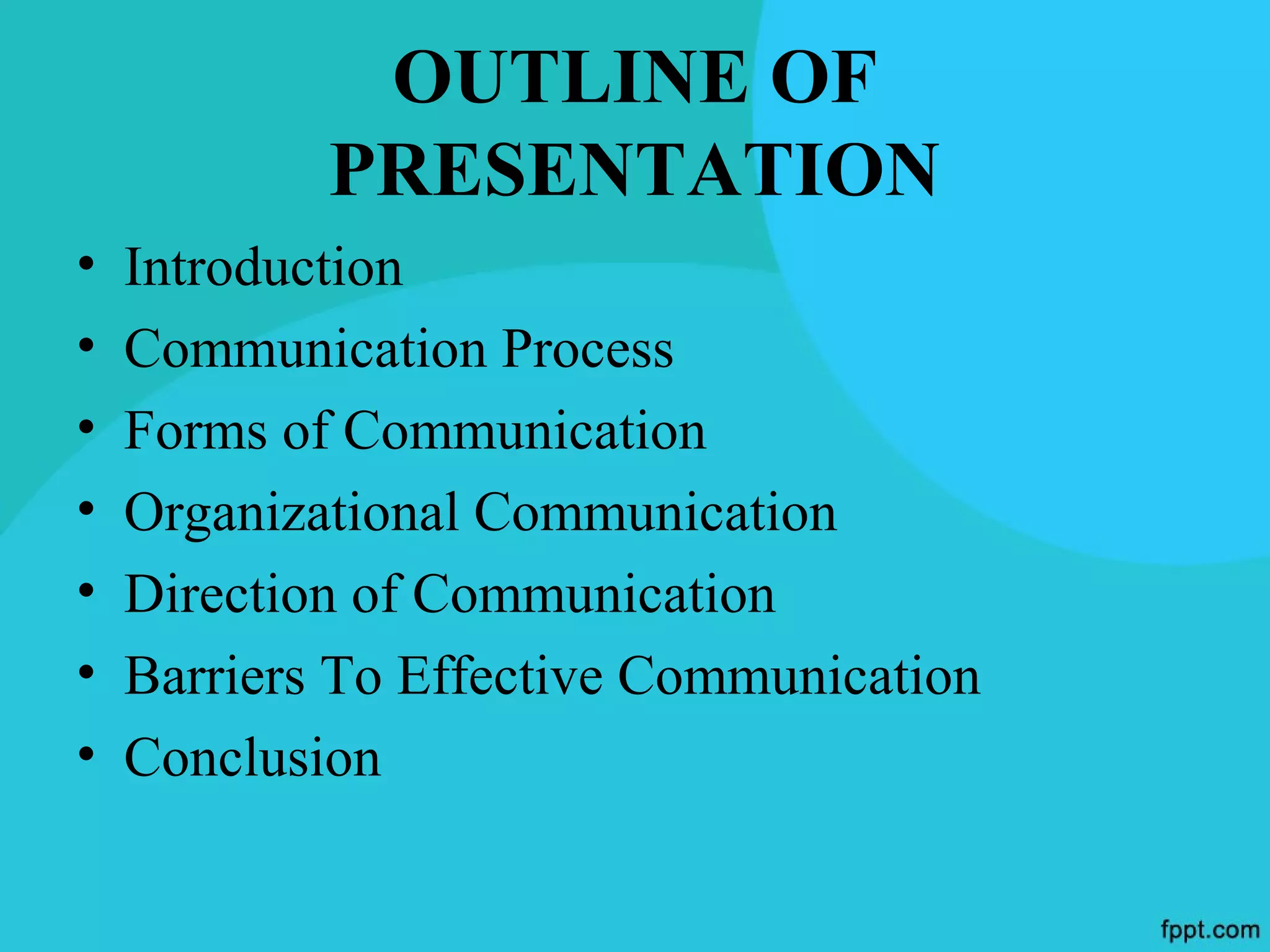
COMMUNICATION QUIZ

Test Your Communication Skills?
OUTLINE OF
            PRESENTATION
•   Introduction
•   Communication Process
•   Forms of Communication
•   Organizational Communication
•   Direction of Communication
•   Barriers To Effective Communication
•   Conclusion
Introduction
Communication is a natural process that involves
 at least two living things.
Communication skills are some of the most
 important skills that we need to succeed in the
 workplace.
Communication in an organization, therefore, is a
 process that involves at least two people – a
 sender and a receiver. For it to be successful, the
 receiver must understand the message in the way
 that the sender intended.
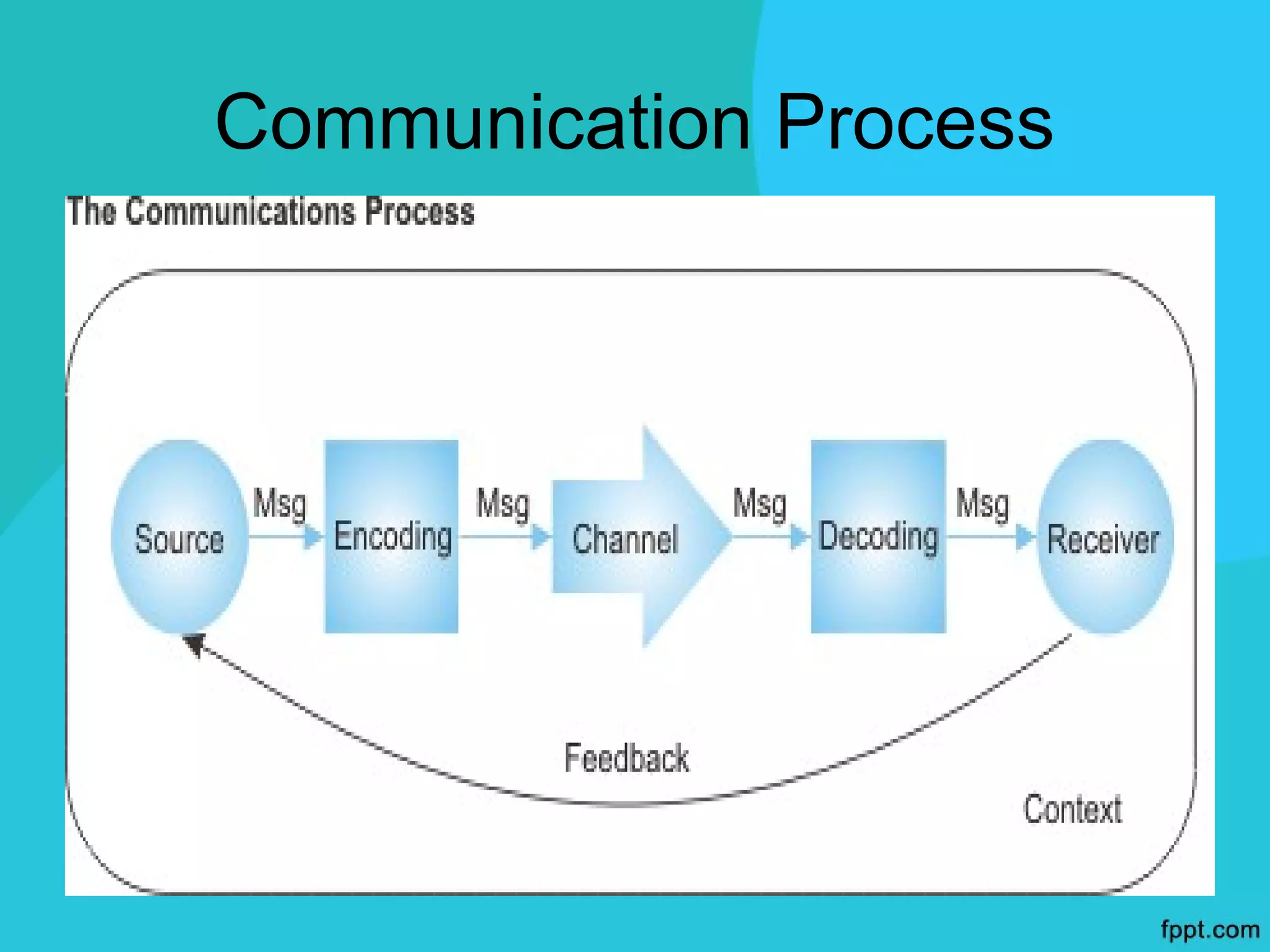
Communication Process
THE SOURCE –
PLANNING YOUR MESSAGE
The Source Cont’d

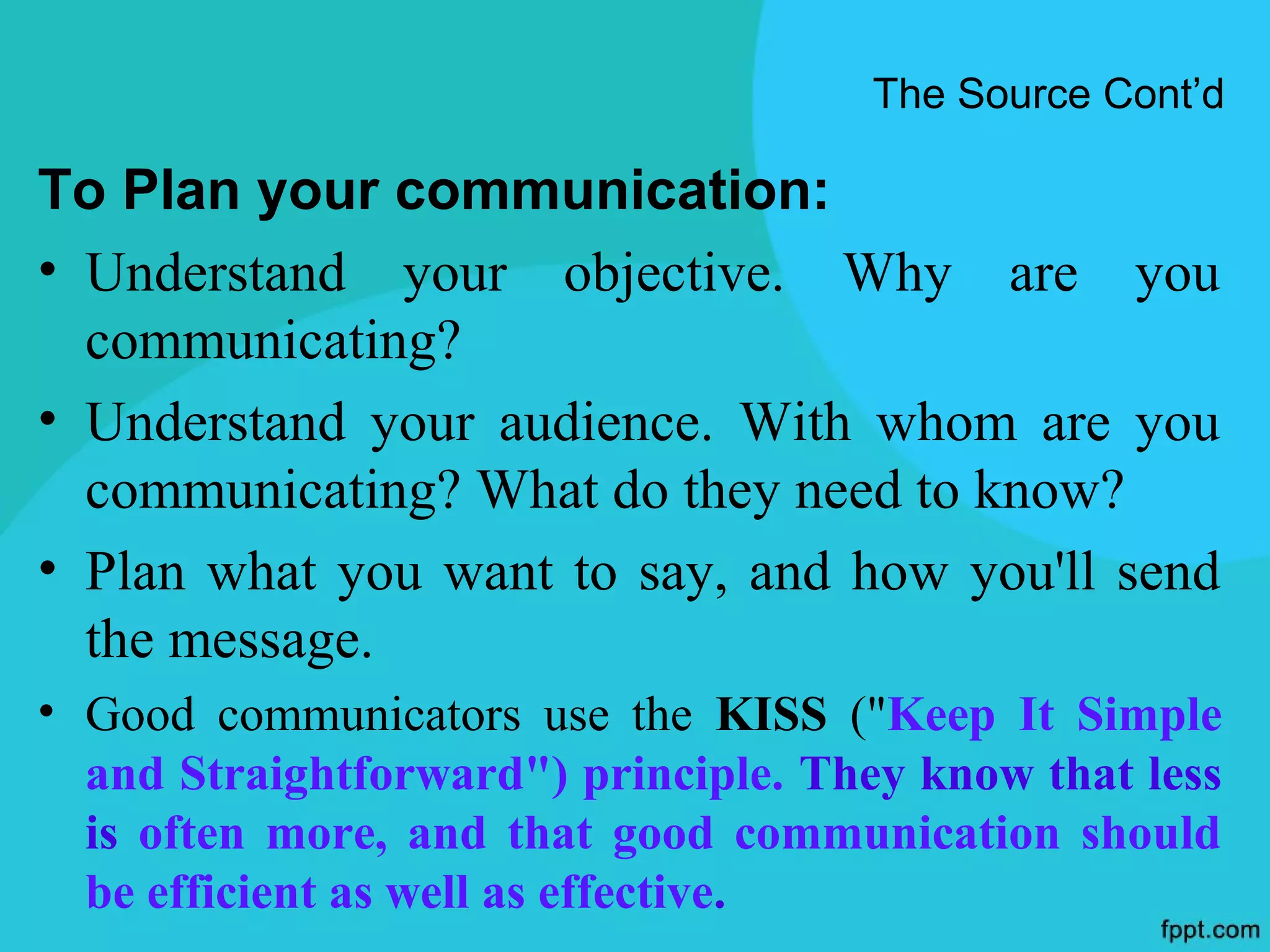
To Plan your communication:
• Understand your objective. Why are you
  communicating?
• Understand your audience. With whom are you
  communicating? What do they need to know?
• Plan what you want to say, and how you'll send
  the message.
• Good communicators use the KISS ("Keep It Simple
  and Straightforward") principle. They know that less
  is often more, and that good communication should
  be efficient as well as effective.
ENCODING
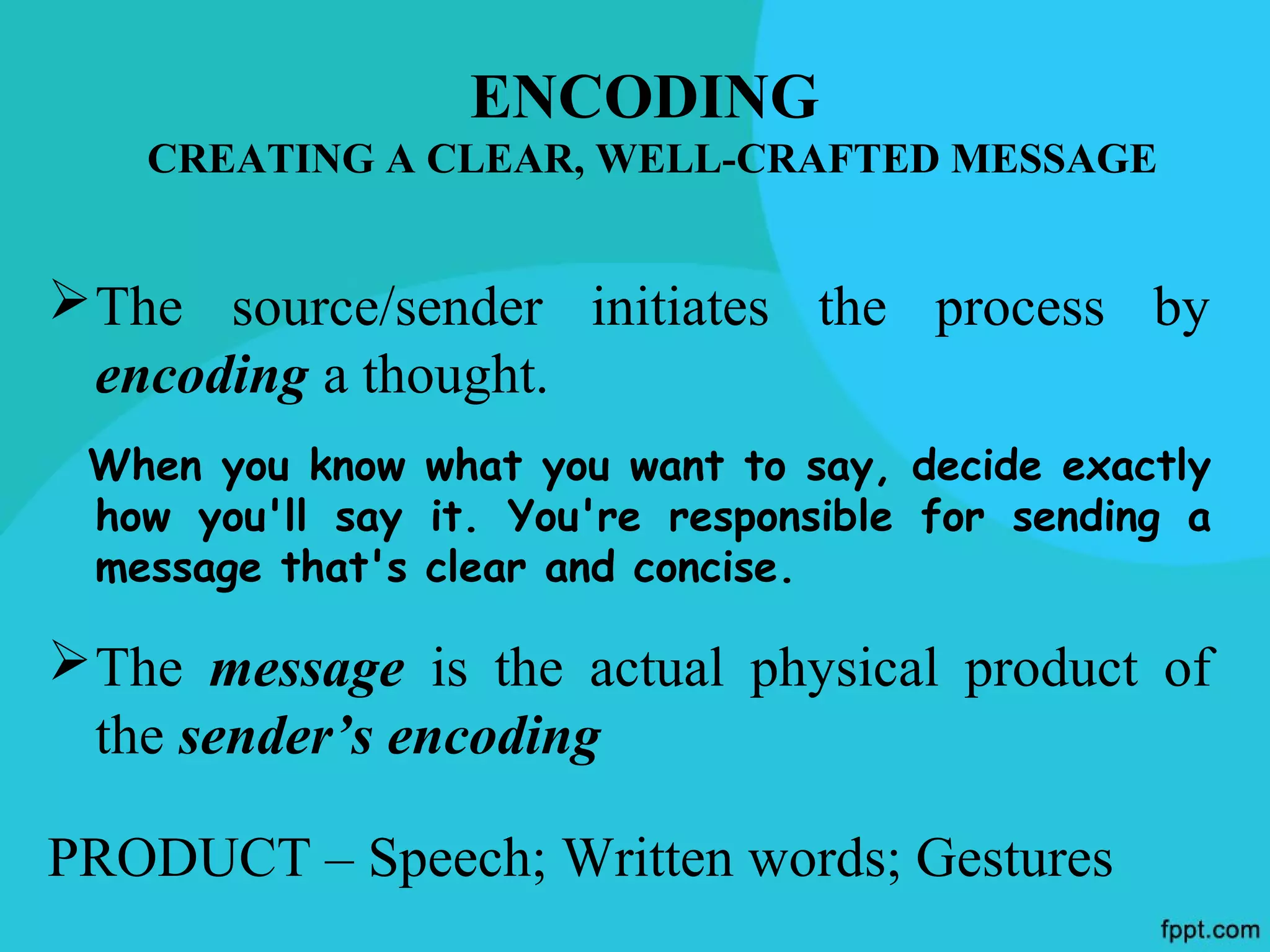
ENCODING
    CREATING A CLEAR, WELL-CRAFTED MESSAGE


 The source/sender initiates the process by
  encoding a thought.
 When you know what you want to say, decide exactly
 how you'll say it. You're responsible for sending a
 message that's clear and concise.

 The message is the actual physical product of
  the sender’s encoding

PRODUCT – Speech; Written words; Gestures
CHOOSING THE RIGHT CHANNEL
Along with encoding the message, it is important to
  choose the best communication channel to send it.
You have to be efficient, and make the most of
  your communication opportunity.
In determining the best way to send a message, we
  should consider the following:
•   The sensitivity and emotional content of the subject.
•   How easy it is to communicate detail.
•   The receiver's preferences.
•   Time constraints.
•   The need to ask and answer questions.
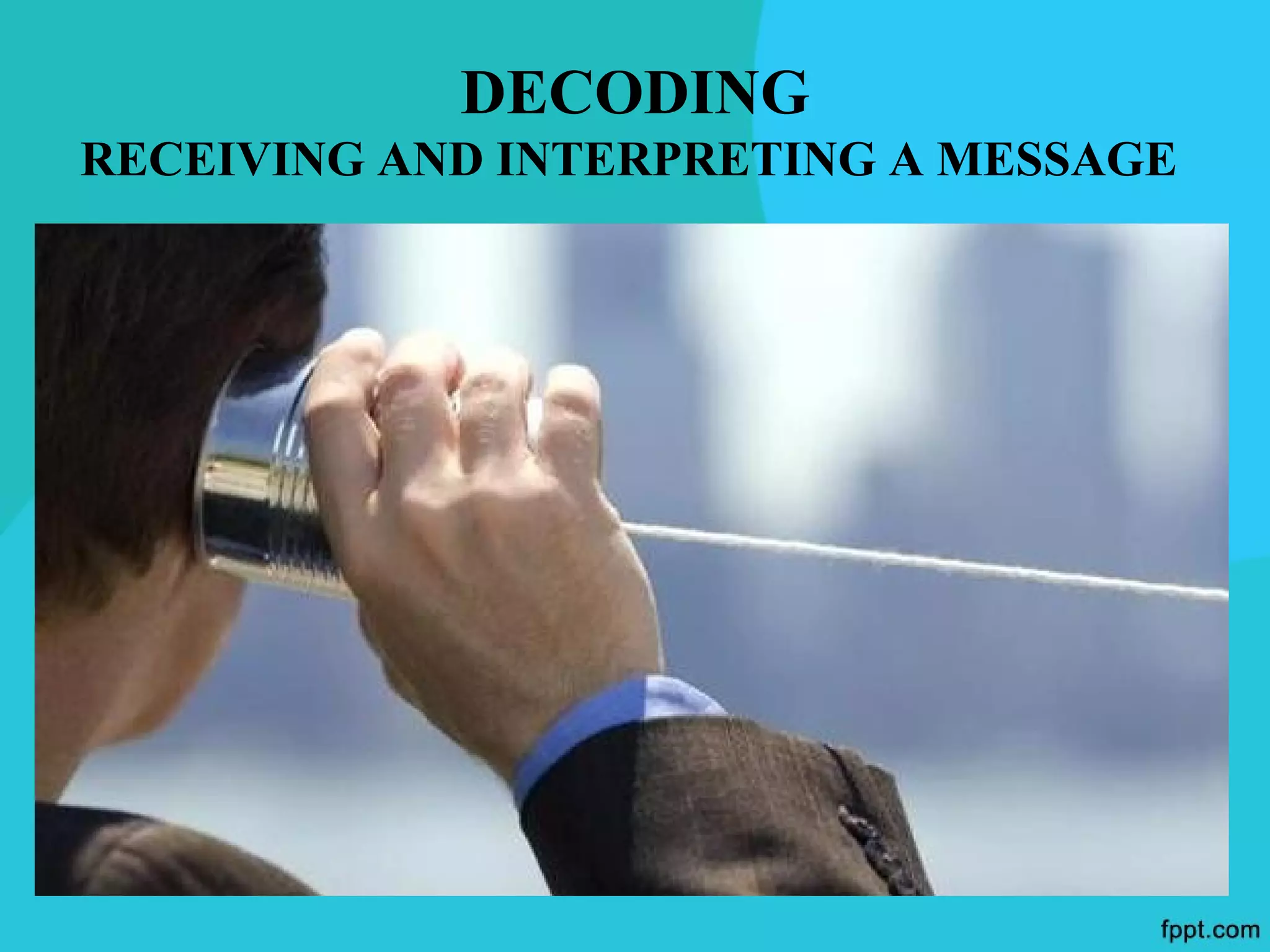
DECODING
RECEIVING AND INTERPRETING A MESSAGE
DECODING – RECEIVING AND
   INTERPRETING A MESSAGE
 The Recipient/Decoder is the person/people
  for whom the message is intended. They
  receive the message and decode it. For an
  effective communication to take place, it is
  necessary that the recipient of the message
  understands the message the way the sender
  intended.
 Both the sender and the recipient do have
  important roles to play in completing the
  process of effective communication.
FEEDBACK
Feedback is response from the receiver. Without it, you
  can't be sure that people have understood your message.
Feedback can be verbal or non-verbal, including body
  language .
By watching the facial expressions, gestures, and posture
  of the person you're communicating with, you can spot:
• Confidence levels.
• Defensiveness.
• Agreement.
• Comprehension (or lack of understanding).
• Level of interest, e.t.c
KEY NOTES
As either a speaker or a listener, or as a writer or a
  reader, you're responsible for making sure that the
  message is communicated accurately. Pay attention to
  words and actions, ask questions, and watch body
  language. These will all help you ensure that you say
  what you mean, and hear what is intended.
A properly encoded message should be correctly
  decoded by the recipient.
A properly decoded message is clear, complete and not
  be confusing.
An important aspect of encoding is knowing your
  audience.
FORMS OF COMMUNICATION
How do group members transfer meaning between and
  among each other?(Interpersonal Communication)
How do we communicate?
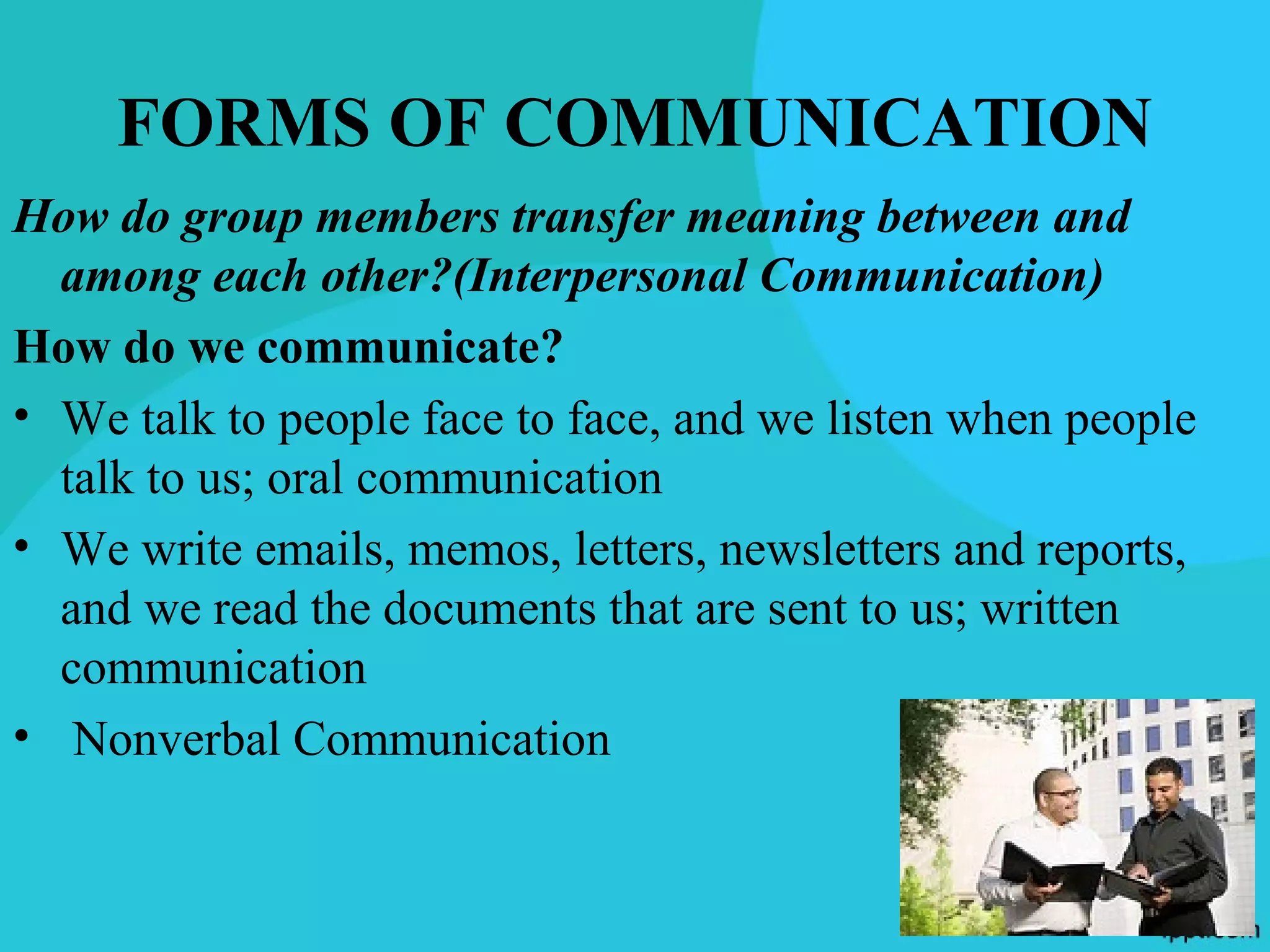
• We talk to people face to face, and we listen when people
  talk to us; oral communication
• We write emails, memos, letters, newsletters and reports,
  and we read the documents that are sent to us; written
  communication
• Nonverbal Communication
DIRECTION OF COMMUNICATON
Communication can flow vertically or laterally.
• Vertical Communication: This is information
  flow in a downward or upwards direction
• Lateral Communication: This is information
  flow amongst members of the same work group,
  managers at the same level, or any other
  horizontally equivalent workers.
ORGANISATIONAL
           COMMUNICATION
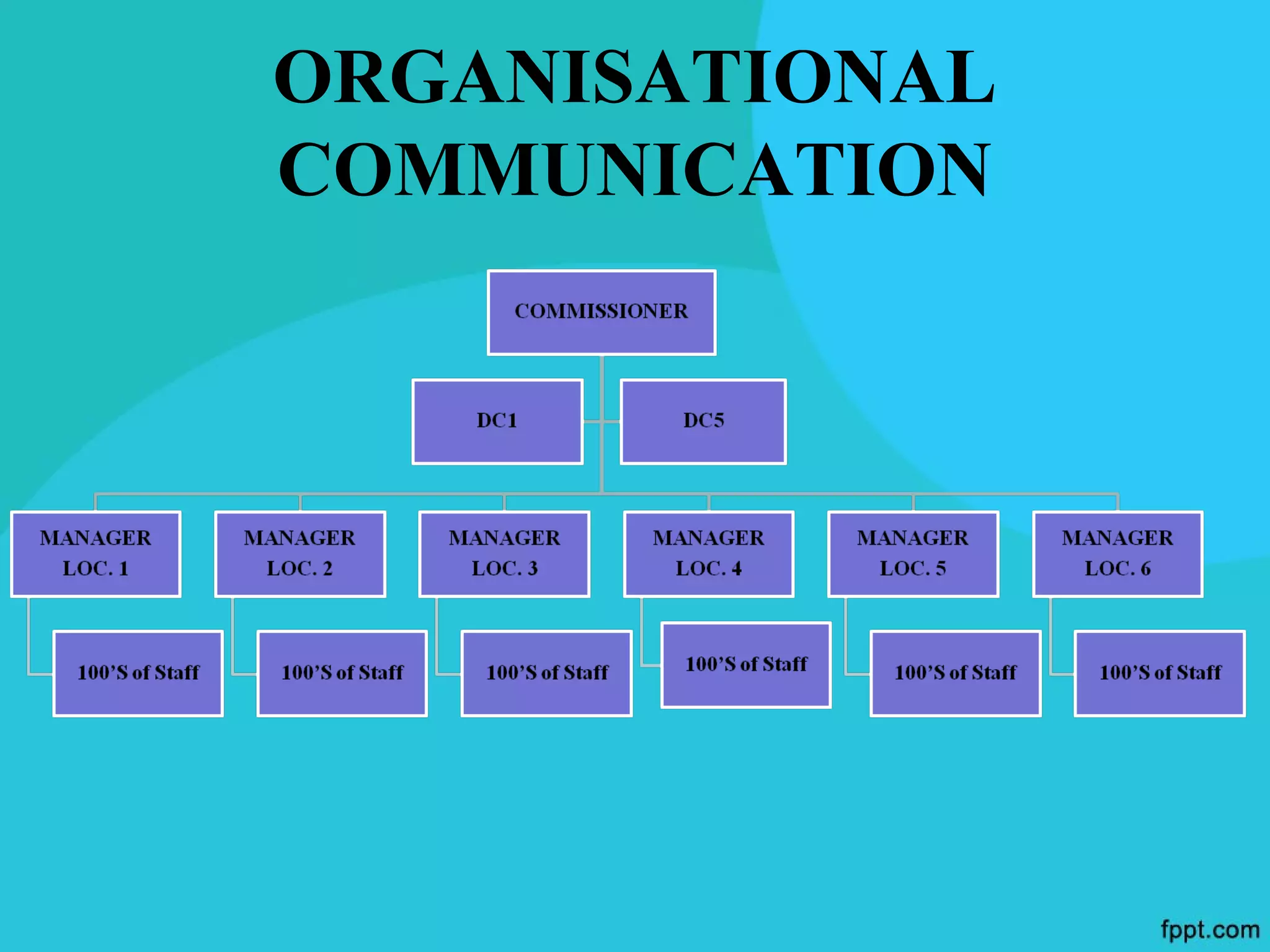
The exchange of information may be over formal
and informal channels/network. Formal networks
can however be very complicated, including
hundreds of people and a lot of hierarchical levels
depending on the size of organization.
ORGANISATIONAL
COMMUNICATION
ORGANISATIONAL
              COMMUNICATION
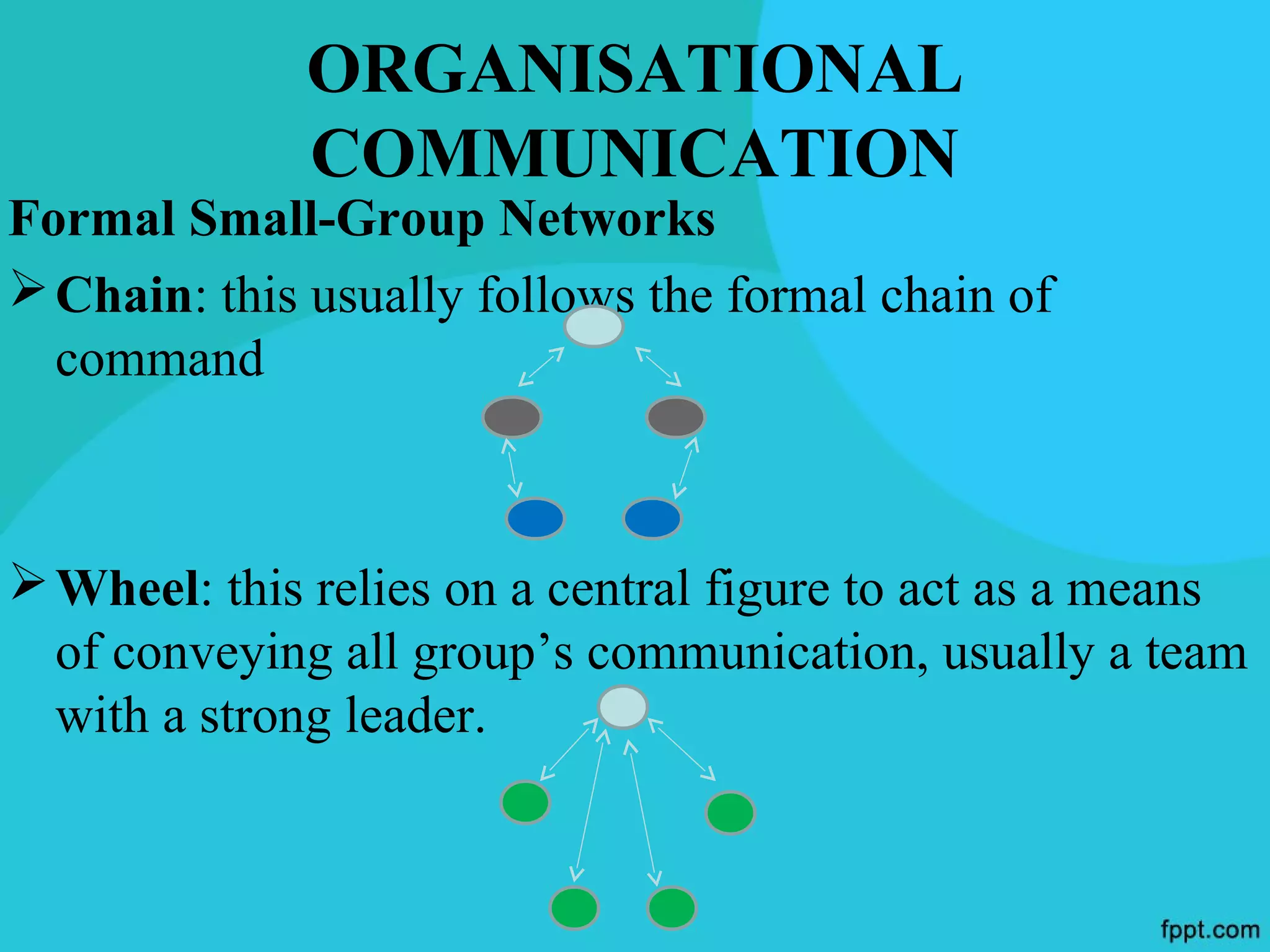
Formal Small-Group Networks
 Chain: this usually follows the formal chain of
  command


 Wheel: this relies on a central figure to act as a means
  of conveying all group’s communication, usually a team
  with a strong leader.
ORGANISATIONAL
             COMMUNICATION
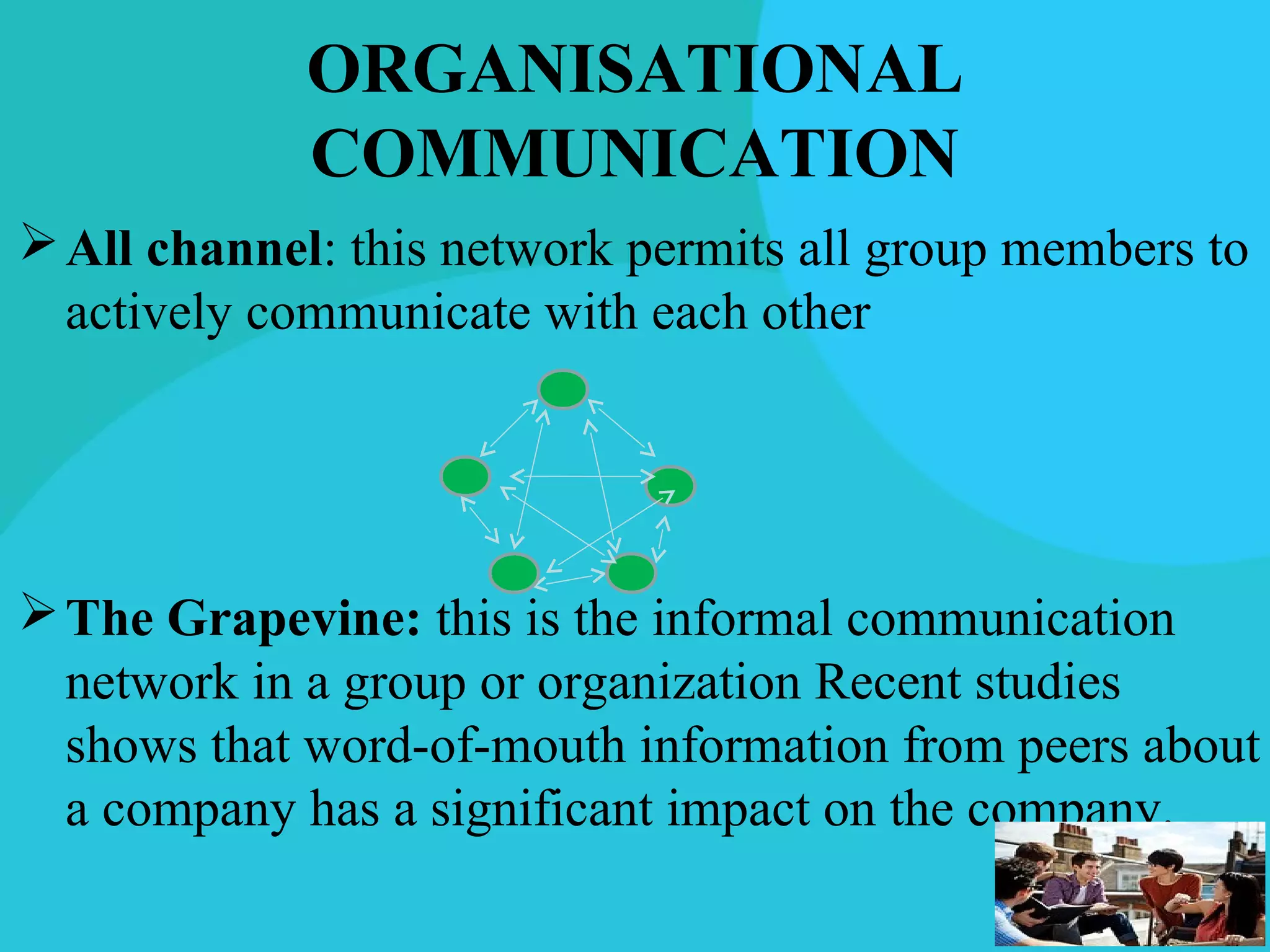
 All channel: this network permits all group members to
  actively communicate with each other


 The Grapevine: this is the informal communication
  network in a group or organization Recent studies
  shows that word-of-mouth information from peers about
  a company has a significant impact on the company.
ELECTRONIC COMMUNICATION
Communication in most organizations today is through
  electronic means
Electronic communication: E-mail, instant messaging, text
  messaging, video-conferencing.
Advantages of e-mail messages
 E-mail messages can be written quickly, edited and stored
 Distributed to one person or thousands of people same time
 Recipients can read at their own convenience
 Relatively cheaper than conventional methods
ELECTRONIC COMMUNICATION
E-mail messages has its own drawback and as managers, there
  is the need to note the following key limitations
Disadvantages of using e-mail messaging
 Misinterpreting the message
 Communicating negative messages
 Time-consuming nature of e-mails
   •   Don’t check e-mail in the morning
   •   Check in batches
   •   Unsubscribe
   •   Stop sending email
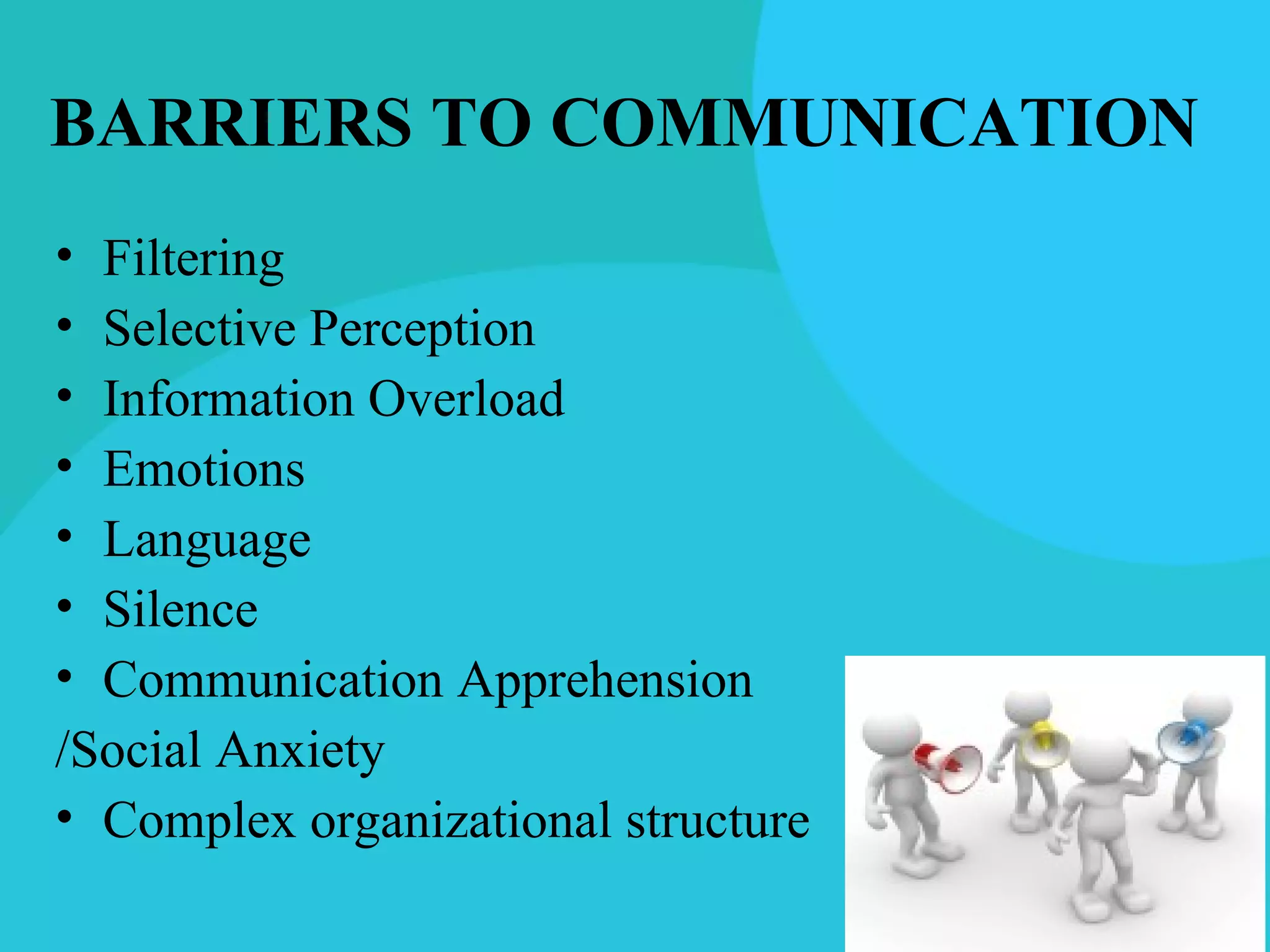
BARRIERS TO COMMUNICATION
• Filtering
• Selective Perception
• Information Overload
• Emotions
• Language
• Silence
• Communication Apprehension
/Social Anxiety
• Complex organizational structure
RESULTS OF COMMUNICATION
         FAILURE
•   Loss of Business/goodwill
•   Waste of money and time
•   Lowered productivity
•   Poor co-ordination and control
•   Frustration and hostility
•   Dissatisfaction with others
•   Lowered morale and loss of team spirit
•   Conflict and arguments
•   High employee turnover
CONCLUSION
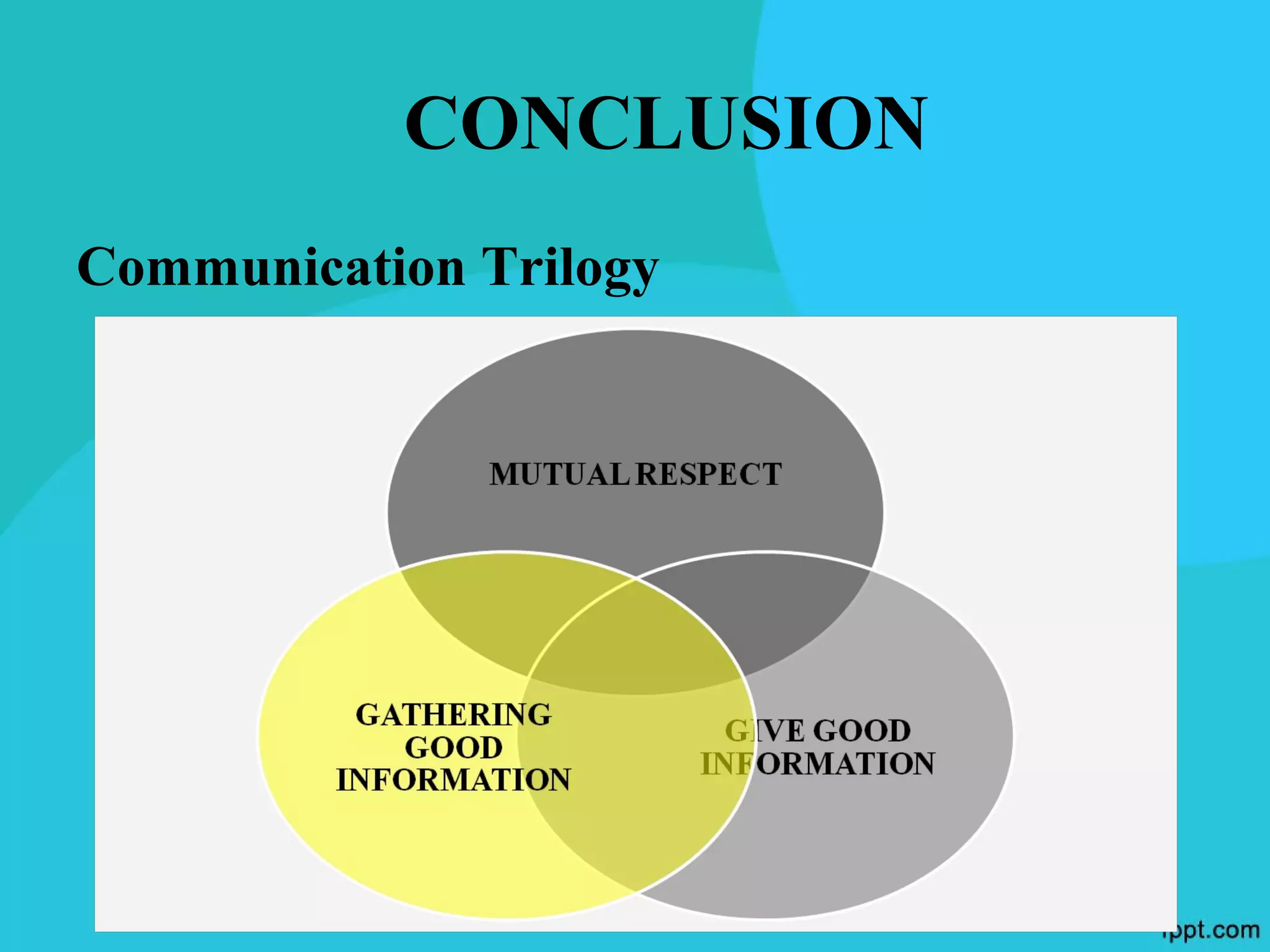
Communication Trilogy
CONCLUSION
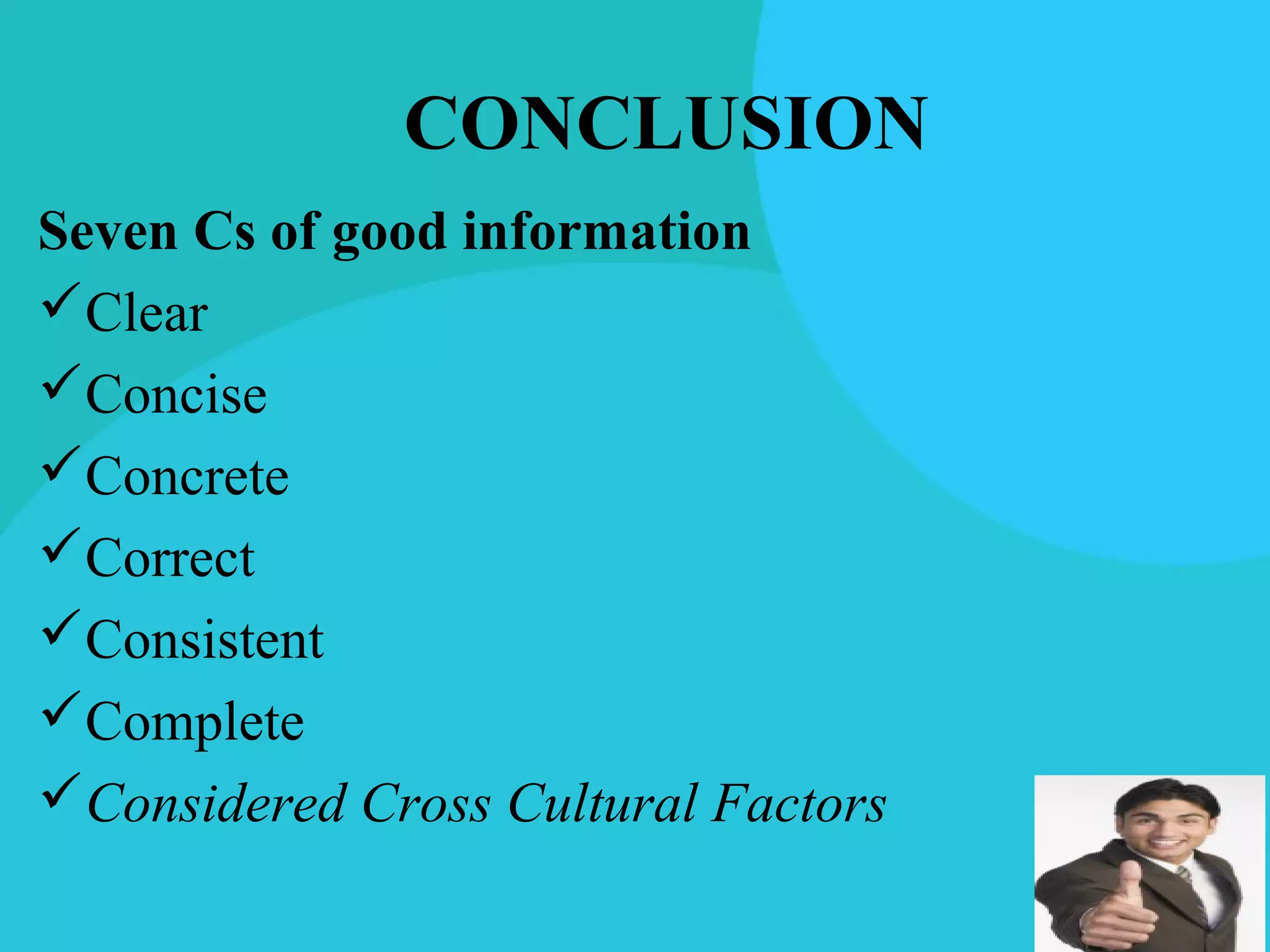
Seven Cs of good information
Clear
Concise
Concrete
Correct
Consistent
Complete
Considered Cross Cultural Factors
IS PERFECT COMMUNICATION
        ATTAINABLE?
References
• Robbins S.P. & Judge T.A. (2012).
  Essentials of Organizational Behavior. (11 th
  ed.). Edinburgh Gate, Pearson Education
  Limited
• www.mindtools.com
THANK


        YOU

Effective Organisational Communication

  • 1.
    EFFECTIVE ORGANISATIONAL COMMUNICATION BY: DIANA O. AYORKOR ADJEI
  • 2.
    COMMUNICATION QUIZ Test YourCommunication Skills?
  • 3.
    OUTLINE OF PRESENTATION • Introduction • Communication Process • Forms of Communication • Organizational Communication • Direction of Communication • Barriers To Effective Communication • Conclusion
  • 5.
    Introduction Communication is anatural process that involves at least two living things. Communication skills are some of the most important skills that we need to succeed in the workplace. Communication in an organization, therefore, is a process that involves at least two people – a sender and a receiver. For it to be successful, the receiver must understand the message in the way that the sender intended.
  • 6.
  • 7.
  • 8.
    The Source Cont’d ToPlan your communication: • Understand your objective. Why are you communicating? • Understand your audience. With whom are you communicating? What do they need to know? • Plan what you want to say, and how you'll send the message. • Good communicators use the KISS ("Keep It Simple and Straightforward") principle. They know that less is often more, and that good communication should be efficient as well as effective.
  • 9.
  • 10.
    ENCODING CREATING A CLEAR, WELL-CRAFTED MESSAGE  The source/sender initiates the process by encoding a thought. When you know what you want to say, decide exactly how you'll say it. You're responsible for sending a message that's clear and concise.  The message is the actual physical product of the sender’s encoding PRODUCT – Speech; Written words; Gestures
  • 11.
    CHOOSING THE RIGHTCHANNEL Along with encoding the message, it is important to choose the best communication channel to send it. You have to be efficient, and make the most of your communication opportunity. In determining the best way to send a message, we should consider the following: • The sensitivity and emotional content of the subject. • How easy it is to communicate detail. • The receiver's preferences. • Time constraints. • The need to ask and answer questions.
  • 12.
  • 13.
    DECODING – RECEIVINGAND INTERPRETING A MESSAGE  The Recipient/Decoder is the person/people for whom the message is intended. They receive the message and decode it. For an effective communication to take place, it is necessary that the recipient of the message understands the message the way the sender intended.  Both the sender and the recipient do have important roles to play in completing the process of effective communication.
  • 14.
    FEEDBACK Feedback is responsefrom the receiver. Without it, you can't be sure that people have understood your message. Feedback can be verbal or non-verbal, including body language . By watching the facial expressions, gestures, and posture of the person you're communicating with, you can spot: • Confidence levels. • Defensiveness. • Agreement. • Comprehension (or lack of understanding). • Level of interest, e.t.c
  • 15.
    KEY NOTES As eithera speaker or a listener, or as a writer or a reader, you're responsible for making sure that the message is communicated accurately. Pay attention to words and actions, ask questions, and watch body language. These will all help you ensure that you say what you mean, and hear what is intended. A properly encoded message should be correctly decoded by the recipient. A properly decoded message is clear, complete and not be confusing. An important aspect of encoding is knowing your audience.
  • 16.
    FORMS OF COMMUNICATION Howdo group members transfer meaning between and among each other?(Interpersonal Communication) How do we communicate? • We talk to people face to face, and we listen when people talk to us; oral communication • We write emails, memos, letters, newsletters and reports, and we read the documents that are sent to us; written communication • Nonverbal Communication
  • 17.
    DIRECTION OF COMMUNICATON Communicationcan flow vertically or laterally. • Vertical Communication: This is information flow in a downward or upwards direction • Lateral Communication: This is information flow amongst members of the same work group, managers at the same level, or any other horizontally equivalent workers.
  • 18.
    ORGANISATIONAL COMMUNICATION The exchange of information may be over formal and informal channels/network. Formal networks can however be very complicated, including hundreds of people and a lot of hierarchical levels depending on the size of organization.
  • 19.
  • 20.
    ORGANISATIONAL COMMUNICATION Formal Small-Group Networks  Chain: this usually follows the formal chain of command  Wheel: this relies on a central figure to act as a means of conveying all group’s communication, usually a team with a strong leader.
  • 21.
    ORGANISATIONAL COMMUNICATION  All channel: this network permits all group members to actively communicate with each other  The Grapevine: this is the informal communication network in a group or organization Recent studies shows that word-of-mouth information from peers about a company has a significant impact on the company.
  • 22.
    ELECTRONIC COMMUNICATION Communication inmost organizations today is through electronic means Electronic communication: E-mail, instant messaging, text messaging, video-conferencing. Advantages of e-mail messages  E-mail messages can be written quickly, edited and stored  Distributed to one person or thousands of people same time  Recipients can read at their own convenience  Relatively cheaper than conventional methods
  • 23.
    ELECTRONIC COMMUNICATION E-mail messageshas its own drawback and as managers, there is the need to note the following key limitations Disadvantages of using e-mail messaging  Misinterpreting the message  Communicating negative messages  Time-consuming nature of e-mails • Don’t check e-mail in the morning • Check in batches • Unsubscribe • Stop sending email
  • 24.
    BARRIERS TO COMMUNICATION •Filtering • Selective Perception • Information Overload • Emotions • Language • Silence • Communication Apprehension /Social Anxiety • Complex organizational structure
  • 25.
    RESULTS OF COMMUNICATION FAILURE • Loss of Business/goodwill • Waste of money and time • Lowered productivity • Poor co-ordination and control • Frustration and hostility • Dissatisfaction with others • Lowered morale and loss of team spirit • Conflict and arguments • High employee turnover
  • 26.
  • 27.
    CONCLUSION Seven Cs ofgood information Clear Concise Concrete Correct Consistent Complete Considered Cross Cultural Factors
  • 28.
  • 29.
    References • Robbins S.P.& Judge T.A. (2012). Essentials of Organizational Behavior. (11 th ed.). Edinburgh Gate, Pearson Education Limited • www.mindtools.com
  • 30.
    THANK YOU