


Sepideh Vafadar, Camelia Baher,
Lucia Martinez, Jeannen Ly
• A professional and client relationship is a
relationship between an expert in a field and a
patron who is using their services.
Characteristics of Professional & Client
relationship:
Low in interdependence.
Could be personal or impersonal
• Agency: where the client is reliant on the professional for
their expertise. The client holds the responsibility and
authority and the professional takes direction to better suit
the needs of the client. Example of relationship:
professional is a lawyer.
• Friendship: where both client and professional are mutually
trusting of one another. There's also an equal
understanding; relationship becomes much more personal.
When both parties act upon shared interests. Many
professional relationships can have this potential.
• Paternalism: where the professional is placed on a
superior level in the relationship because of their
expertise and knowledge. Example of relationship:
professional is a lawyer.
• Fiduciary: where the professional is allowed to make
decisions provided that the client consents to the
action. The client has authority equally to the
professional. This differs from friendship in a way
where it is equal without having personal involvement
and focuses on tasks and objectives. This professional
client relationship is the most ideal.
• As communicative interactions are habitual in
individuals, a relationship like the
Professional-Client relationship can transcend
into other relationships:
• - Coworkers
• - Subordinate Roles
• - Leadership Roles
• -Interpersonal Relationships
• Career involving interactions with people necessitates these skills to
facilitate healthy environments.
• Employers have identified these skills as highly desirable. Effectiveness
of communication is very important.
These professions include but aren't limited to:
• Social Workers
• Contractors
• Doctors
• Athletes
• Lawyers
• Teachers and professors
• There is endless potential for these skills as they help in honing
personal abilities to communicate in other settings.
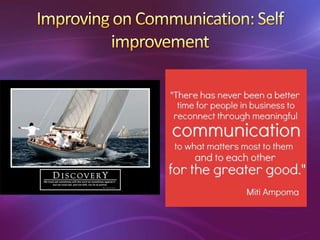
• A desire in wanting to improve interpersonal
communication skills for career advancement
is highly encouraged.
• Develop your self concept
-Reflect on your needs as a professional.
-Ask people what your strengths are in
communication.
-Ask people what your weaknesses are in
communication.
• It is important that you're ready to see other
people as equal persons in order to collaborate
with them best.
*Weaknesses in perceiving others include:
snap judgments (stereotyping)
-holding onto first impressions as an overall
representation of that individual
-being influenced by expectations
-being overly focuses on shortcomings
• Engage in active listening
• Paraphrasing to reflect understanding
• Having a neutral viewpoint about situations
that seem personal
• Confirming Communication:
-Expressing Acknowledgement
-Recognition
-Engaged in Listening
• Always going to be involved an interpersonal
relationship of any type
• Striving for better human connection
• Building better mutual understanding
between yourself and others
• Inspired to make a change in your own and
other people’s lives
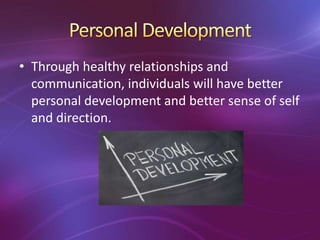
• Through healthy relationships and
communication, individuals will have better
personal development and better sense of self
and direction.
• We hope that our presentation has inspired
the class to evaluate your communication
style
• We also hope that the class has learned these
concepts of stylistic communication
We would like to leave the class with an
inspiring message of resilience and
persistence.

Professional client relationship

  • 1.
    Sepideh Vafadar, CameliaBaher, Lucia Martinez, Jeannen Ly
  • 2.
    • A professionaland client relationship is a relationship between an expert in a field and a patron who is using their services. Characteristics of Professional & Client relationship: Low in interdependence. Could be personal or impersonal
  • 3.
    • Agency: wherethe client is reliant on the professional for their expertise. The client holds the responsibility and authority and the professional takes direction to better suit the needs of the client. Example of relationship: professional is a lawyer. • Friendship: where both client and professional are mutually trusting of one another. There's also an equal understanding; relationship becomes much more personal. When both parties act upon shared interests. Many professional relationships can have this potential.
  • 5.
    • Paternalism: wherethe professional is placed on a superior level in the relationship because of their expertise and knowledge. Example of relationship: professional is a lawyer. • Fiduciary: where the professional is allowed to make decisions provided that the client consents to the action. The client has authority equally to the professional. This differs from friendship in a way where it is equal without having personal involvement and focuses on tasks and objectives. This professional client relationship is the most ideal.
  • 7.
    • As communicativeinteractions are habitual in individuals, a relationship like the Professional-Client relationship can transcend into other relationships: • - Coworkers • - Subordinate Roles • - Leadership Roles • -Interpersonal Relationships
  • 9.
    • Career involvinginteractions with people necessitates these skills to facilitate healthy environments. • Employers have identified these skills as highly desirable. Effectiveness of communication is very important. These professions include but aren't limited to: • Social Workers • Contractors • Doctors • Athletes • Lawyers • Teachers and professors • There is endless potential for these skills as they help in honing personal abilities to communicate in other settings.
  • 11.
    • A desirein wanting to improve interpersonal communication skills for career advancement is highly encouraged. • Develop your self concept -Reflect on your needs as a professional. -Ask people what your strengths are in communication. -Ask people what your weaknesses are in communication.
  • 12.
    • It isimportant that you're ready to see other people as equal persons in order to collaborate with them best. *Weaknesses in perceiving others include: snap judgments (stereotyping) -holding onto first impressions as an overall representation of that individual -being influenced by expectations -being overly focuses on shortcomings
  • 14.
    • Engage inactive listening • Paraphrasing to reflect understanding • Having a neutral viewpoint about situations that seem personal • Confirming Communication: -Expressing Acknowledgement -Recognition -Engaged in Listening
  • 16.
    • Always goingto be involved an interpersonal relationship of any type • Striving for better human connection • Building better mutual understanding between yourself and others • Inspired to make a change in your own and other people’s lives
  • 18.
    • Through healthyrelationships and communication, individuals will have better personal development and better sense of self and direction.
  • 19.
    • We hopethat our presentation has inspired the class to evaluate your communication style • We also hope that the class has learned these concepts of stylistic communication
  • 20.
    We would liketo leave the class with an inspiring message of resilience and persistence.