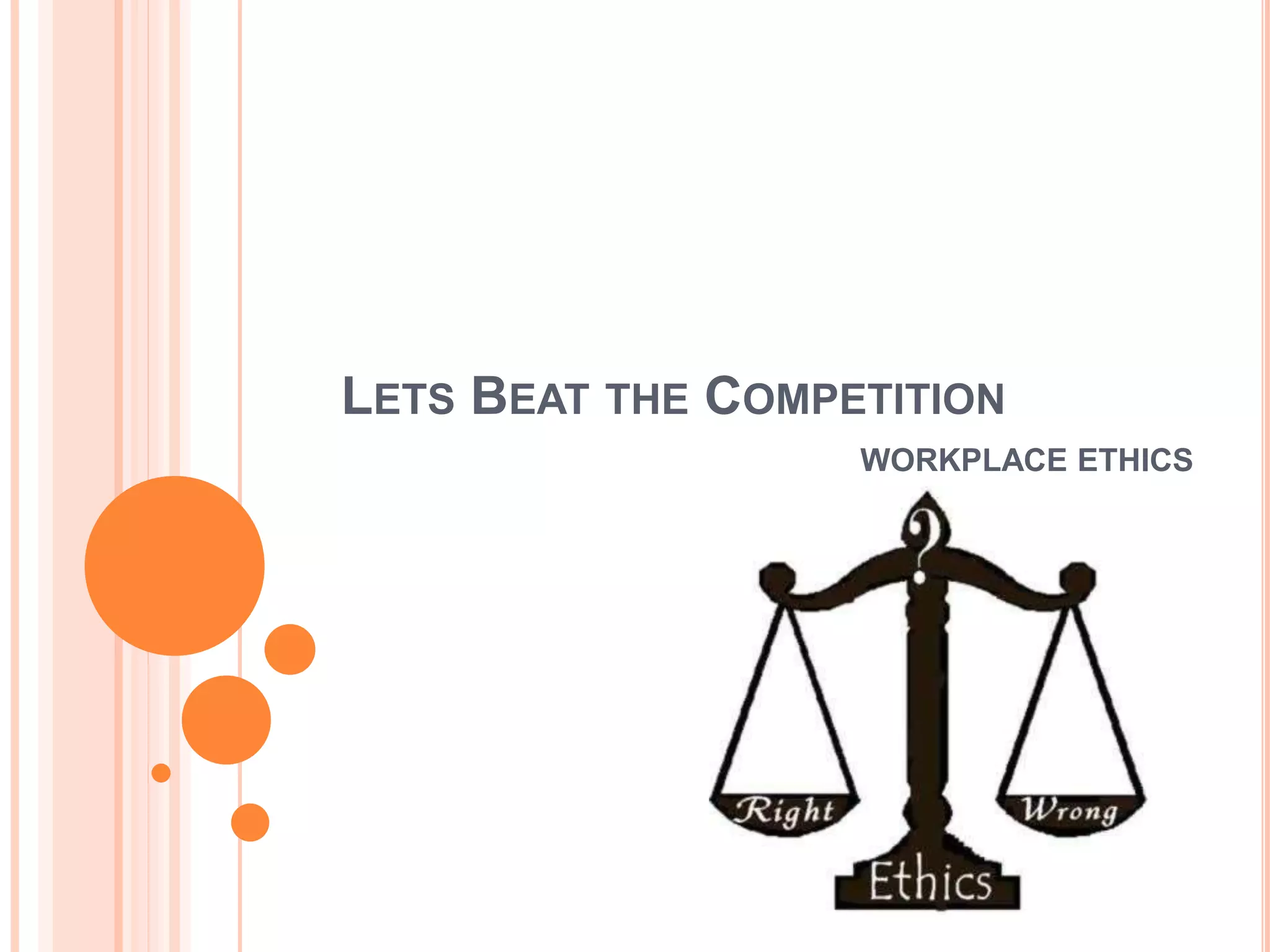
LETS BEAT THE COMPETITION
WORKPLACE ETHICS
 Understand what workplace ethics compasses
 Why to be ethical and what you get out of being
ethical?
 Identify how ethics affect organization culture,
teamwork, productivity and public image
2
Objective
 Have poor personal hygiene
 Don’t clean up after using the office kitchen, sink, wash
room, or appliances
 Leaves trash or personal belongings in other people’s
work spaces
 Don’t acknowledge you unless you speak to them
directly
 Wear clothing that is dirty, too casual or distracting in
some other way
What Bothers you the Most?
 Flirt with co-workers or clients
 Habitually arrive late at
meetings
 Gossip
 Borrow things but forget to
return
 Speak too loudly on the
telephone
What Bothers you the Most?
 They are the basic beliefs and guiding principles that
mould a persons behavior all his life Every individual
has a set of values through which he looks at all things
and also at the world.
 Value’ can be defined as a bridge by which an individual
makes a decision regarding good and bad, right or
wrong, and most important or less important.
What is Value ?
6
What is Work Ethics?
-Ethics can be defined as a set of
rules formulated by a country or a
company or some institutions.
-Ethics is guidelines or rules that
are set for a society or an
organization rather than for an
individual .
-Work ethics is an invisible
employee behavior, noticeable by
its absence.
7
 Trustworthiness
 Respect
 Responsibility
 Fairness
 Caring
8
The Essentials
 Integrity
 Honesty
 Promise-keeping
 Loyalty
9
Trustworthiness
 Courtesy
 Politeness
 Dignity
 Value the differences they bring
into our workplace
 Tolerance (This can be hard)
10
Respect
It is our duty to treat everyone with respect
 Don’t make excuses
 Accept responsibility for decisions
 Fulfill all obligations
 DO NOT over-promise
11
Responsibility
“Life is full of choices—what you do and don’t do matters”
“Choosing not to choose is a choice.”
 Listen
 Make decisions based on
careful and appropriate
consideration
Who do we let go?
13
Fairness
 Compassion and concern for others
 Kindness and consideration
 Mercy and forgiveness
 Empathy
 Gratitude and Expressed Thanks
14
Caring
Attempt by the wrongdoer to justifying why
they acted a certain way.
 Everybody does it
 Its not part of my job description
 Nobody is going to notice
 I don’t get paid enough
 Unrealistic expectations of what the job entails
Unethical Excuses
 Loyalty
 Desirable work
environment
 Produce results
 Build good references
 Good Office morale
 Growth and expansion
 Recognition
Benefits of Good Ethics
What you find is that the more tough
ethical choices are between two goods
Truth versus Loyalty
Individual versus Community
Justice versus Mercy
Ethical Choices
ETHICS & ORGANIZATION
CULTURE
Identify how ethics affect organization culture,
teamwork, productivity and public image
 The characteristic set of values and ways of
behaving that employees in an organization share
Organizational Culture
 Ethics apply to any relationship between the following
individuals:
 Internal Customers
( Management/ Supervisors and colleagues/ employees)
 External Customers
Relationships and Ethics
22
HERE ARE A FEW THOUGHTS TO GET THE BALL ROLLING.
HOW TO ENCOURAGE GOOD ETHICS IN
WORKPLACE
 Fair consequences
 Fair treatment
 Recognition
 Communication (be clear and consistent)
 Constructive feedback
 Have plans of action
MANAGERS ROLE
 Through Value-based leadership
(The examples they set, type of people we hire)
 Formal structure and system
(Formal policies, codes of ethics etc.)
Leaders Values Behavior Culture Performance
How Managers shape Culture and
Ethics
Our Values
 We are customer-focused and driven to exceed our customers’
expectations.
 Quality is our signature, and we take pride in everything we do.
 We are a learning organization and are driven to maintain the highest
standards of ethical excellence.
 Our leadership is founded on talented employees effectively applying
advanced technology and sound business management.
Our Culture
We have a culture that promotes hard work and innovative thinking.
We are committed to maintainatraditionofexcellencewith distinction.
Culture & Values
DO’S AND DON’TS
 Staying productive
 Be accountable for
your actions
 Take Initiative
 Think Critically to be
able to solve problem
 Blowing the whistle
 Poor customer services
 Lying
 Gossiping
 Bribes
 Ignoring problems
 Abusing confidentiality
agreements
Good Workplace Ethics Poor Workplace Ethics
DO’S AND DON’TS
 Be punctual
 Take pride in your work
 An immediate attempt
to correct an issue
 Set the Example
 Unpunctual/poor attendance
 Ignoring procedures and
policies
 Make decisions for personal
interest
 Blackmail
 Lack of Communication
Good Workplace Ethics Poor workplace Ethics
29
 Know yourself
 Know your values
 Self Control
 Be committed
 Be consistent
 Be faithful
Final Learning
Ethics at work place

Ethics at work place

  • 1.
    LETS BEAT THECOMPETITION WORKPLACE ETHICS
  • 2.
     Understand whatworkplace ethics compasses  Why to be ethical and what you get out of being ethical?  Identify how ethics affect organization culture, teamwork, productivity and public image 2 Objective
  • 3.
     Have poorpersonal hygiene  Don’t clean up after using the office kitchen, sink, wash room, or appliances  Leaves trash or personal belongings in other people’s work spaces  Don’t acknowledge you unless you speak to them directly  Wear clothing that is dirty, too casual or distracting in some other way What Bothers you the Most?
  • 4.
     Flirt withco-workers or clients  Habitually arrive late at meetings  Gossip  Borrow things but forget to return  Speak too loudly on the telephone What Bothers you the Most?
  • 5.
     They arethe basic beliefs and guiding principles that mould a persons behavior all his life Every individual has a set of values through which he looks at all things and also at the world.  Value’ can be defined as a bridge by which an individual makes a decision regarding good and bad, right or wrong, and most important or less important. What is Value ?
  • 6.
    6 What is WorkEthics? -Ethics can be defined as a set of rules formulated by a country or a company or some institutions. -Ethics is guidelines or rules that are set for a society or an organization rather than for an individual . -Work ethics is an invisible employee behavior, noticeable by its absence.
  • 7.
  • 8.
     Trustworthiness  Respect Responsibility  Fairness  Caring 8 The Essentials
  • 9.
     Integrity  Honesty Promise-keeping  Loyalty 9 Trustworthiness
  • 10.
     Courtesy  Politeness Dignity  Value the differences they bring into our workplace  Tolerance (This can be hard) 10 Respect It is our duty to treat everyone with respect
  • 11.
     Don’t makeexcuses  Accept responsibility for decisions  Fulfill all obligations  DO NOT over-promise 11 Responsibility
  • 12.
    “Life is fullof choices—what you do and don’t do matters” “Choosing not to choose is a choice.”
  • 13.
     Listen  Makedecisions based on careful and appropriate consideration Who do we let go? 13 Fairness
  • 14.
     Compassion andconcern for others  Kindness and consideration  Mercy and forgiveness  Empathy  Gratitude and Expressed Thanks 14 Caring
  • 15.
    Attempt by thewrongdoer to justifying why they acted a certain way.  Everybody does it  Its not part of my job description  Nobody is going to notice  I don’t get paid enough  Unrealistic expectations of what the job entails Unethical Excuses
  • 16.
     Loyalty  Desirablework environment  Produce results  Build good references  Good Office morale  Growth and expansion  Recognition Benefits of Good Ethics
  • 17.
    What you findis that the more tough ethical choices are between two goods Truth versus Loyalty Individual versus Community Justice versus Mercy Ethical Choices
  • 18.
    ETHICS & ORGANIZATION CULTURE Identifyhow ethics affect organization culture, teamwork, productivity and public image
  • 19.
     The characteristicset of values and ways of behaving that employees in an organization share Organizational Culture
  • 21.
     Ethics applyto any relationship between the following individuals:  Internal Customers ( Management/ Supervisors and colleagues/ employees)  External Customers Relationships and Ethics
  • 22.
    22 HERE ARE AFEW THOUGHTS TO GET THE BALL ROLLING.
  • 23.
    HOW TO ENCOURAGEGOOD ETHICS IN WORKPLACE  Fair consequences  Fair treatment  Recognition  Communication (be clear and consistent)  Constructive feedback  Have plans of action
  • 24.
  • 25.
     Through Value-basedleadership (The examples they set, type of people we hire)  Formal structure and system (Formal policies, codes of ethics etc.) Leaders Values Behavior Culture Performance How Managers shape Culture and Ethics
  • 26.
    Our Values  Weare customer-focused and driven to exceed our customers’ expectations.  Quality is our signature, and we take pride in everything we do.  We are a learning organization and are driven to maintain the highest standards of ethical excellence.  Our leadership is founded on talented employees effectively applying advanced technology and sound business management. Our Culture We have a culture that promotes hard work and innovative thinking. We are committed to maintainatraditionofexcellencewith distinction. Culture & Values
  • 27.
    DO’S AND DON’TS Staying productive  Be accountable for your actions  Take Initiative  Think Critically to be able to solve problem  Blowing the whistle  Poor customer services  Lying  Gossiping  Bribes  Ignoring problems  Abusing confidentiality agreements Good Workplace Ethics Poor Workplace Ethics
  • 28.
    DO’S AND DON’TS Be punctual  Take pride in your work  An immediate attempt to correct an issue  Set the Example  Unpunctual/poor attendance  Ignoring procedures and policies  Make decisions for personal interest  Blackmail  Lack of Communication Good Workplace Ethics Poor workplace Ethics
  • 29.
    29  Know yourself Know your values  Self Control  Be committed  Be consistent  Be faithful Final Learning