Bioremediation
Oil and Natural Gas Corporation Ltd.
Ahmedabad Asset
Oil and Natural Gas Corporation Ltd.
Ahmedabad Asset
Total Employees : 2700
Total Installation : 63
Total Production : 4500/MT Per Day
Total Exploration Area : 70 km radius of
Ahmedabad City
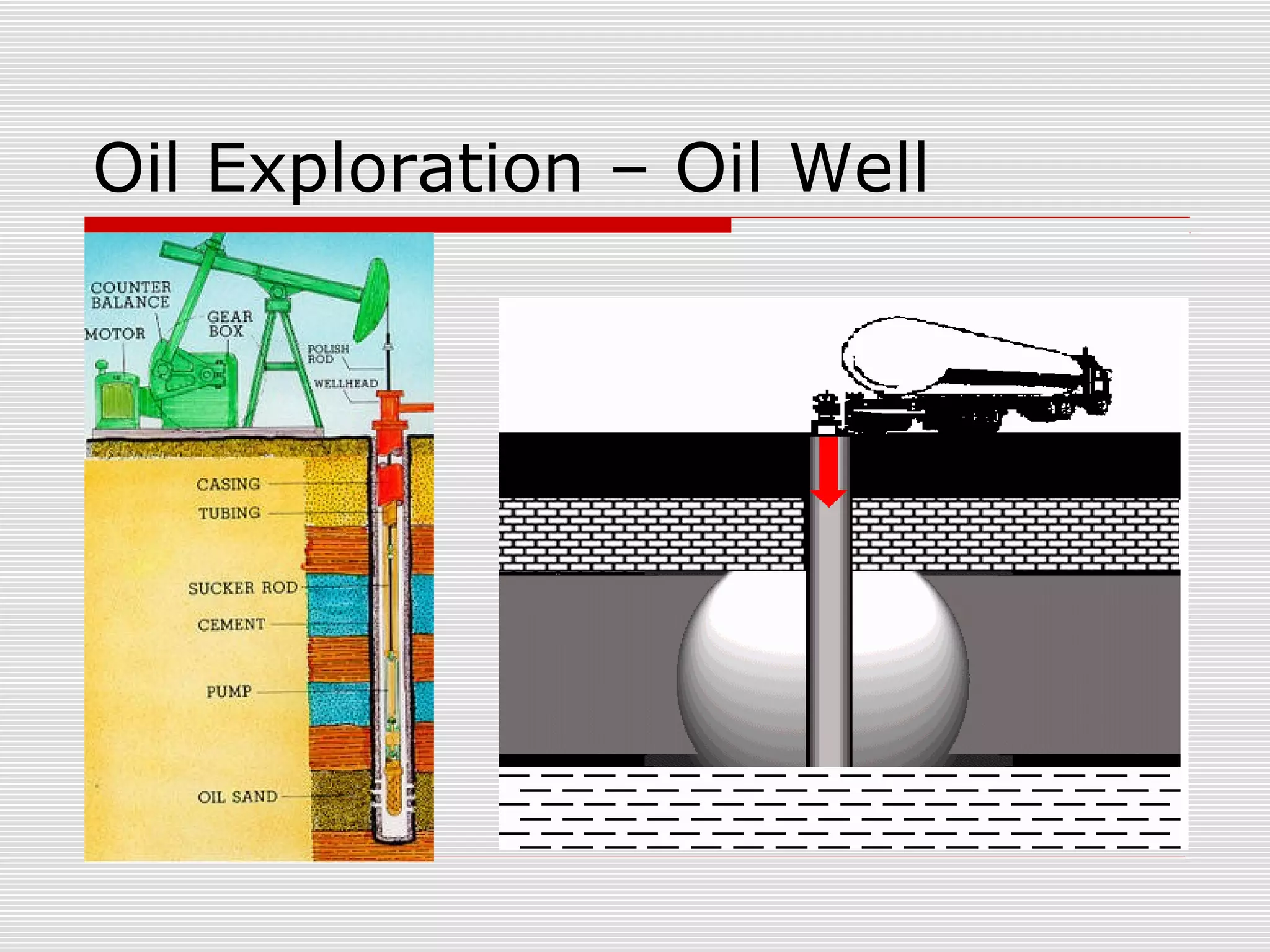
Oil Exploration - Technology
 Crude Oil – most important source of
energy.
 Exploration of oil involves Surveys, drilling
and production.
 The crude oil produced from wells is
transported through a network of pipe lines.
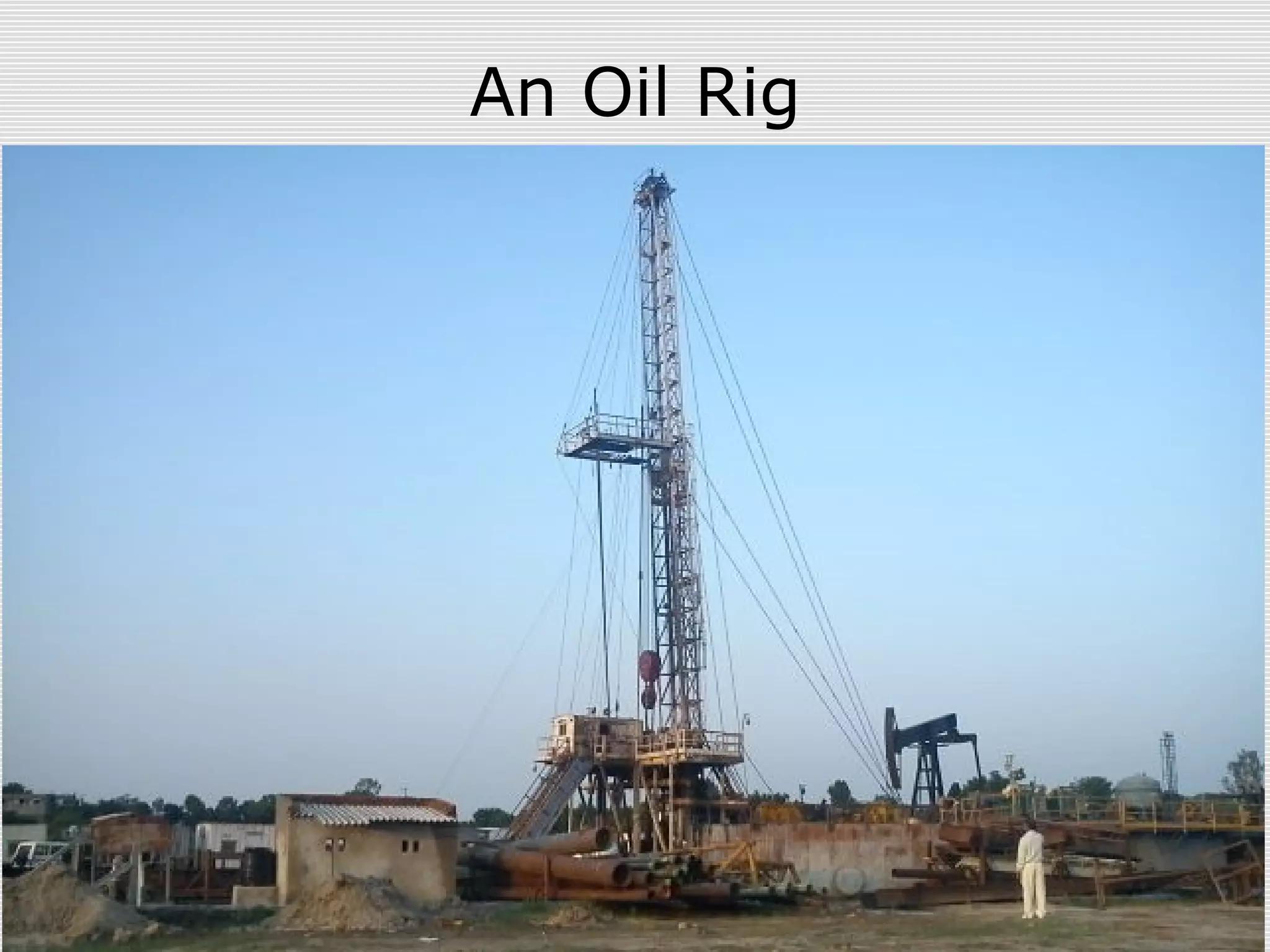
An Oil Rig
Oil Exploration – Oil Well
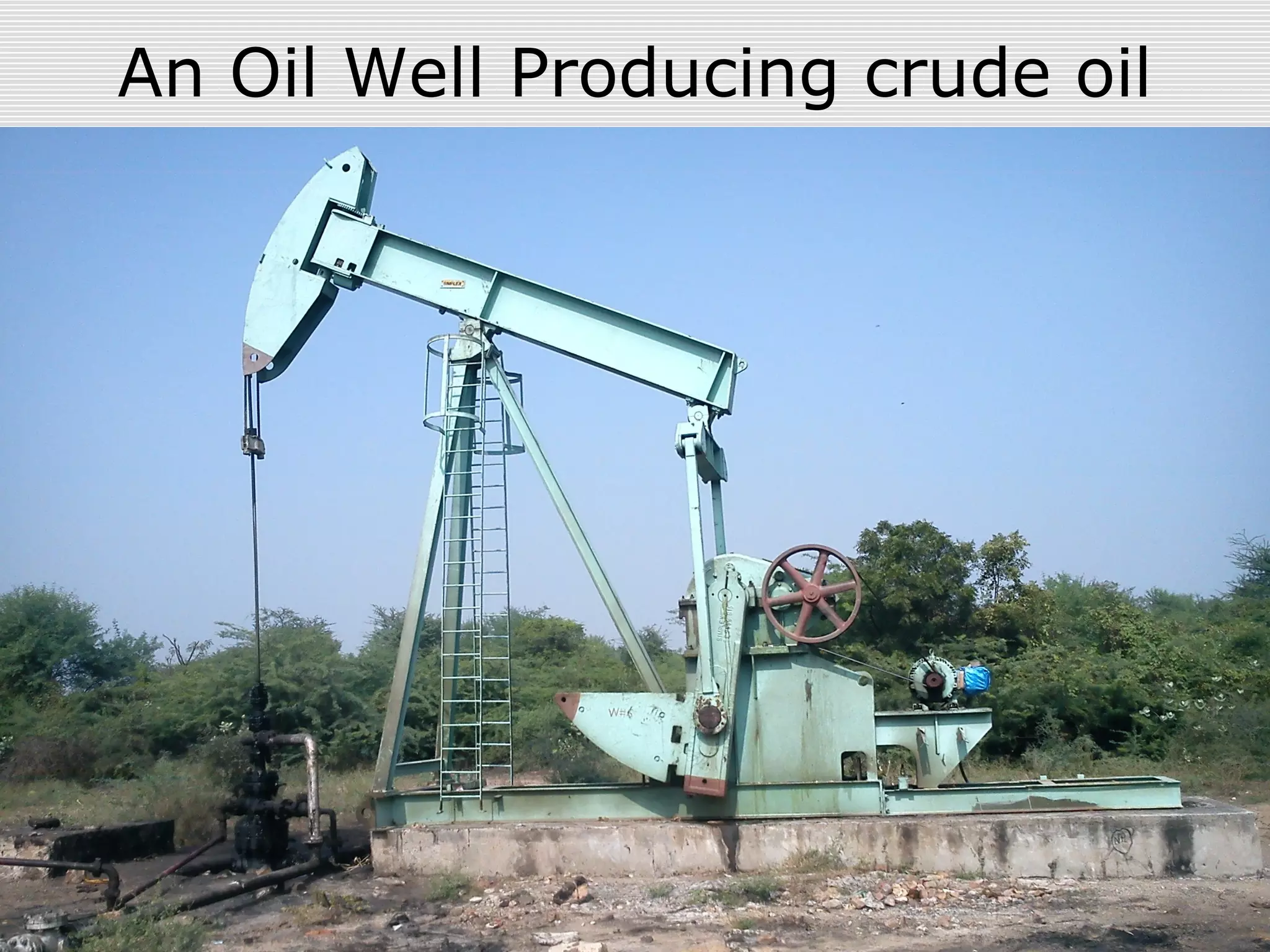
An Oil Well Producing crude oil
Oil Exploration - Transportation
 Crude Oil is also transported from many oil
wells through tankers.
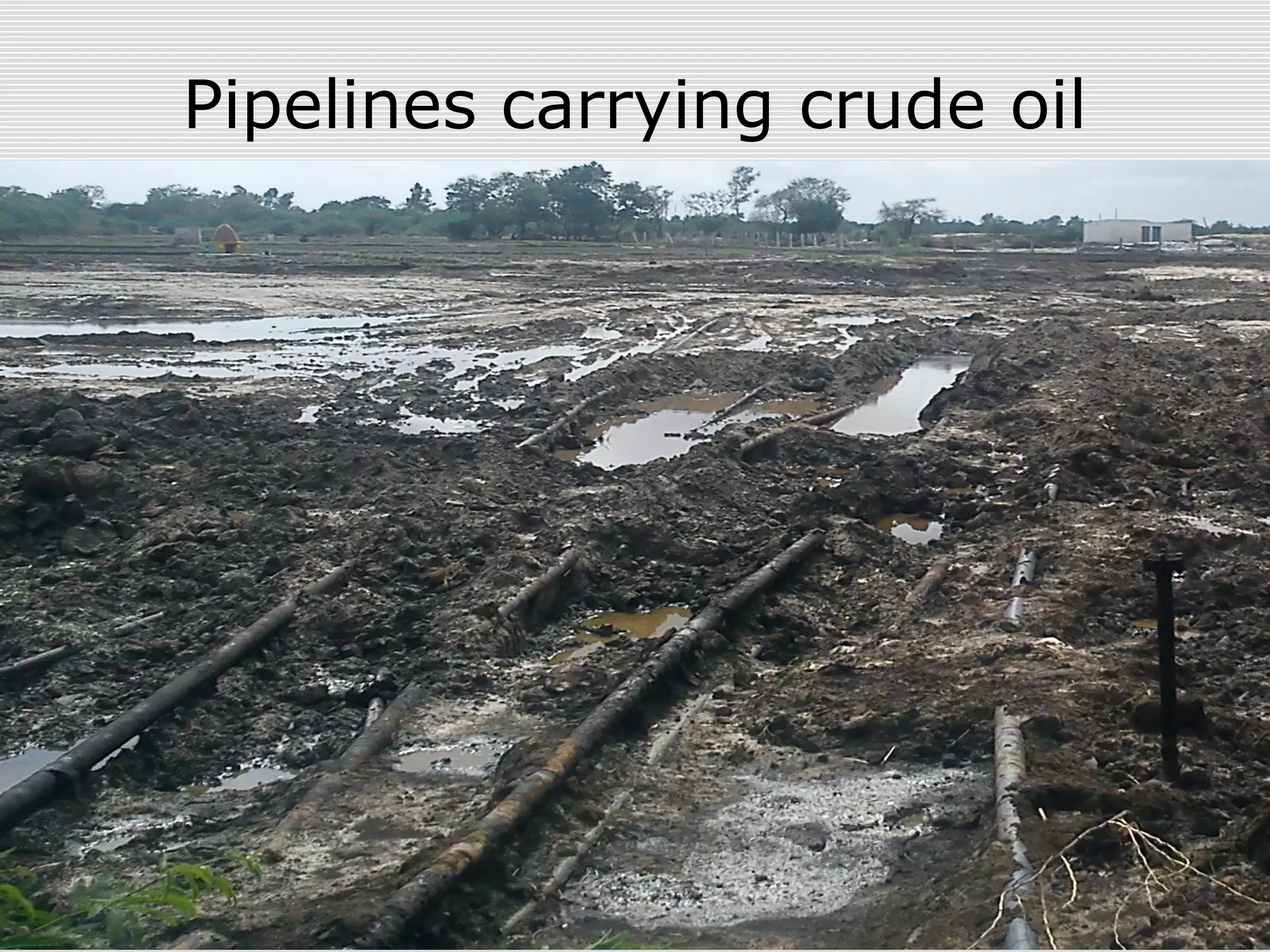
 The pipe lines carrying crude oil are mostly
buried under ground.
 These pipe lines pass through large tracts of
country side including farmlands, ponds etc.
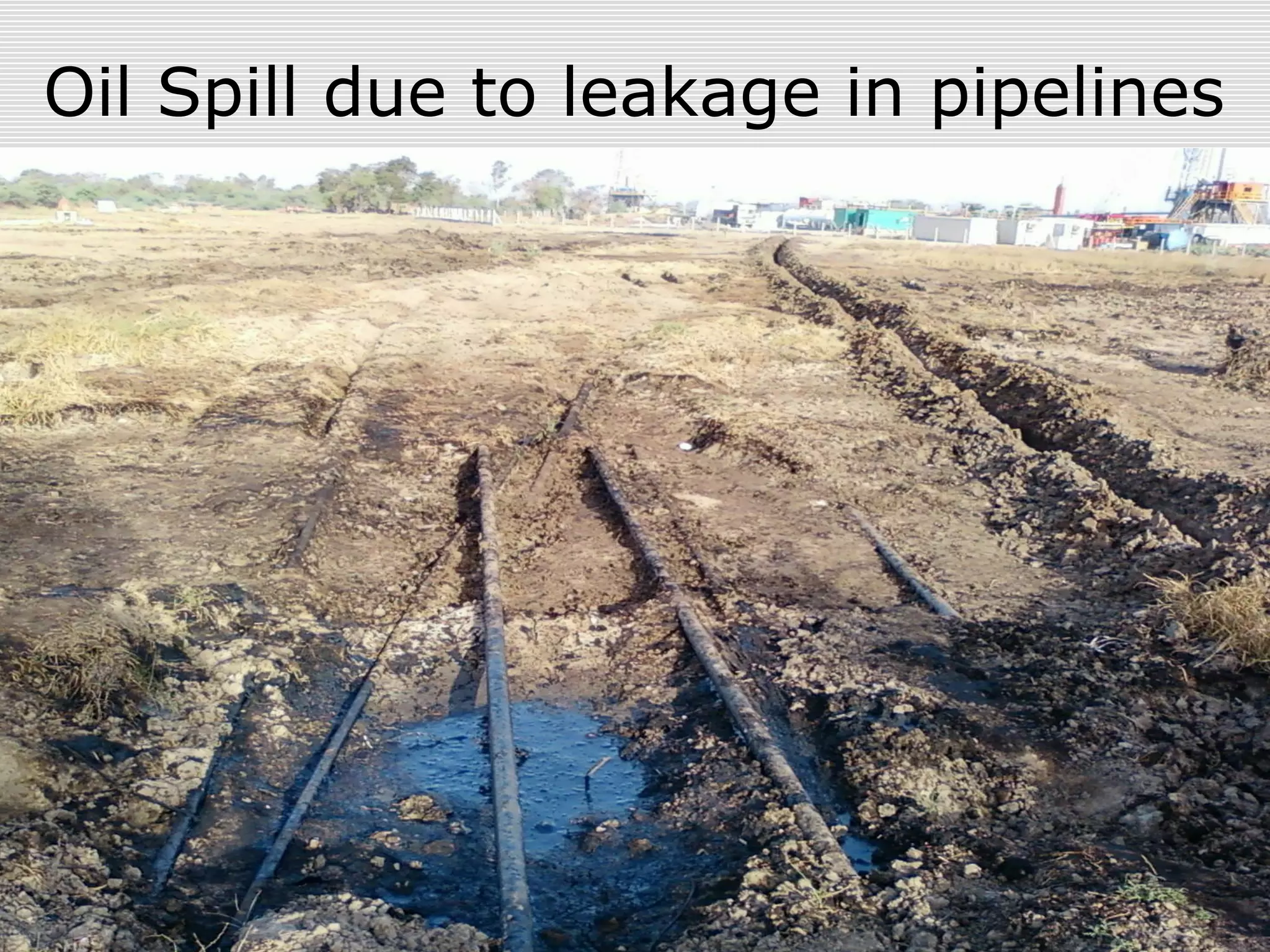
 With time these pipelines develop leakages
due to effects of wear/tear and corrosion
Pipelines carrying crude oil
Oil Spill due to leakage in pipelines
Oil Spills in the Oil Fields
 These pipe line leakages cause
environmental pollution due to oil
spills in
 Farmlands
 Water bodies
 Forests
 Water wells
 Human habitation
Oil Spills in the Oil Fields
 Oil spill can also occur due to several
other reasons :
 Theft and pilferages in pipe lines & tankers
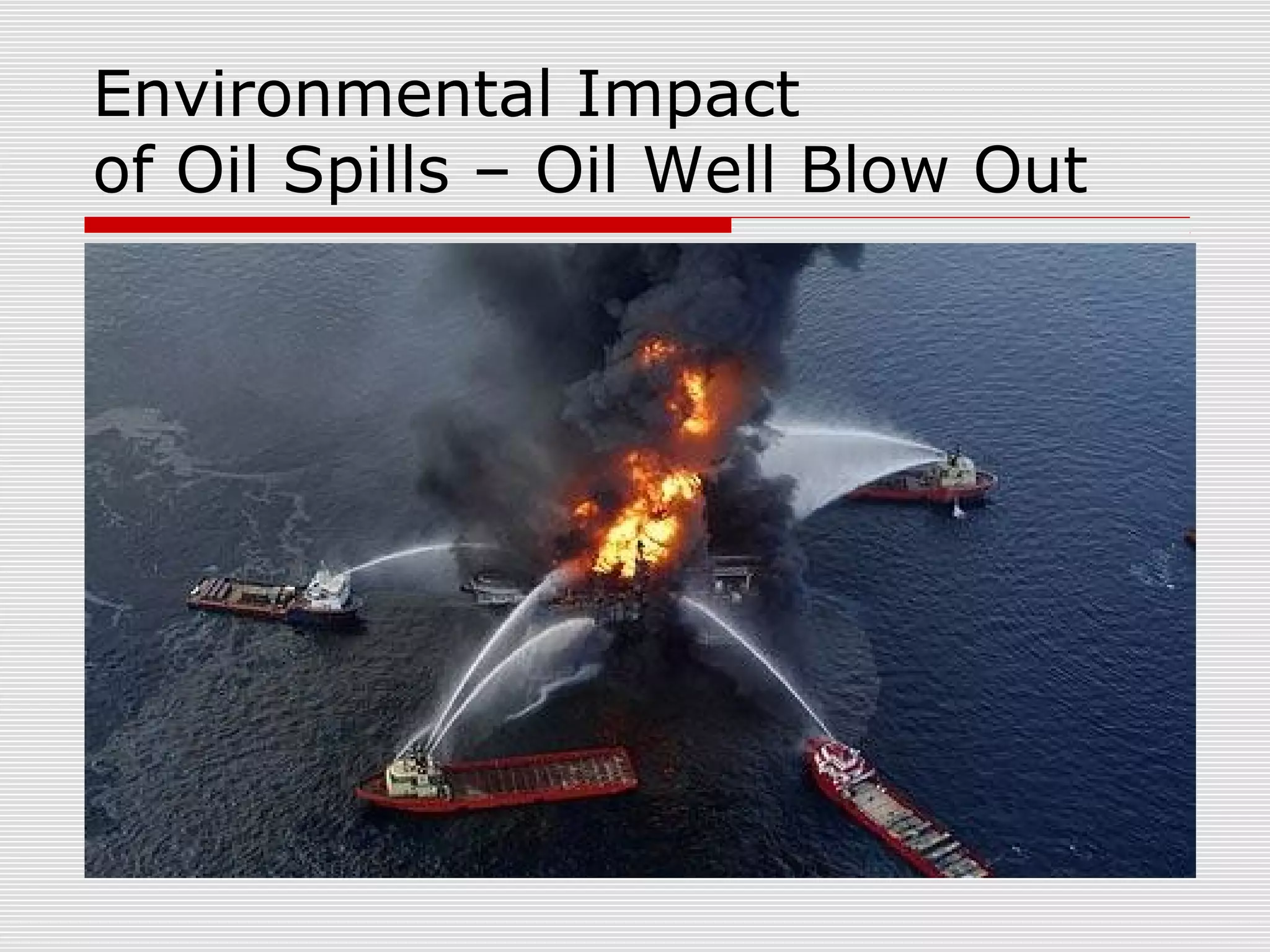
 Blow out in a well
eg; BP oil spill in the Gulf of Mexico in 2010
 War & Terrorist activity
eg; Gulf War I in 1990-91
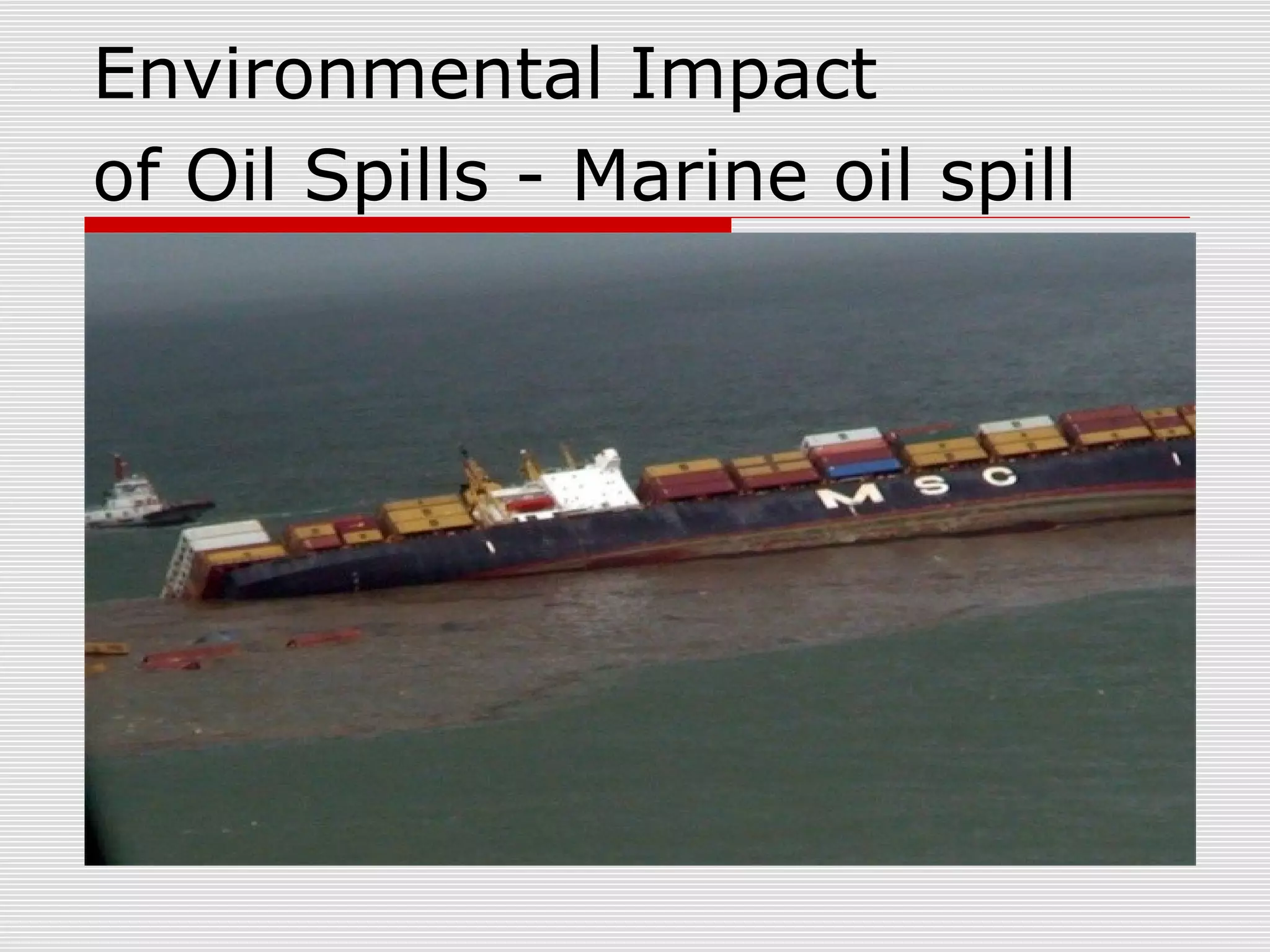
 Accidents in Oil Tanker ships
eg; MSC Chitra Mumbai 2010
Environmental Impact
of Oil Spills - Marine oil spill
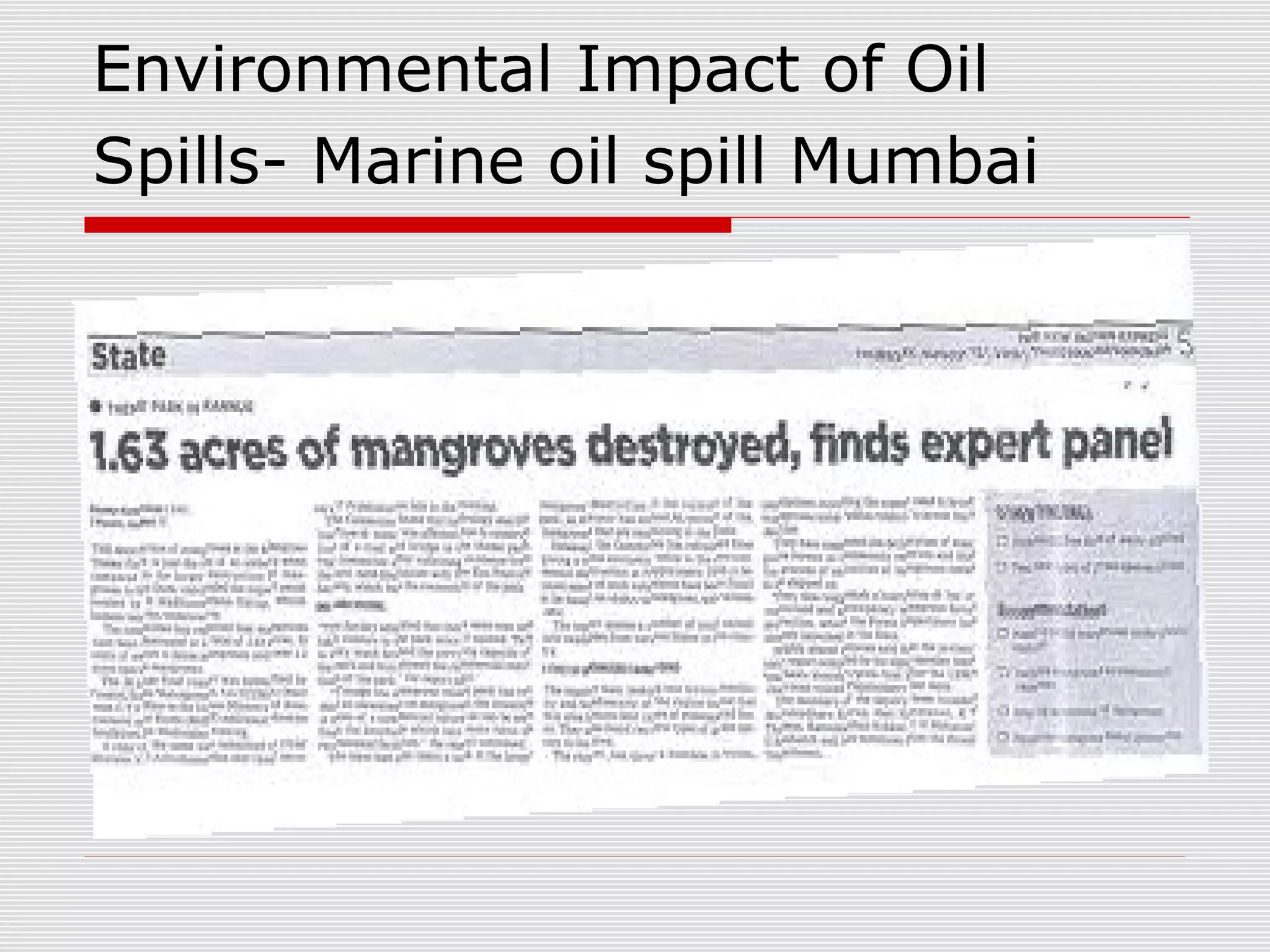
Environmental Impact of Oil
Spills- Marine oil spill Mumbai
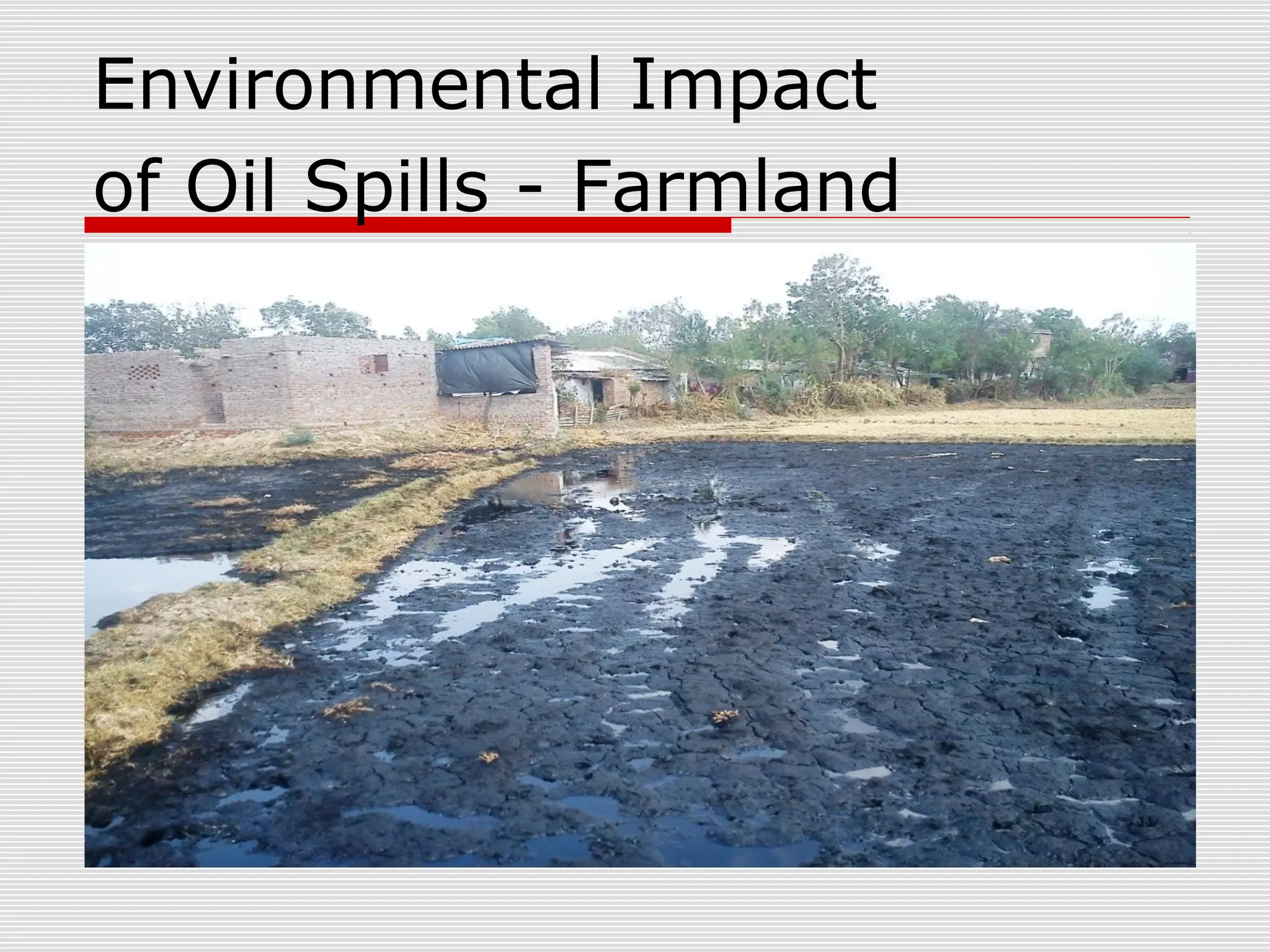
Environmental Impact
of Oil Spills - Farmland
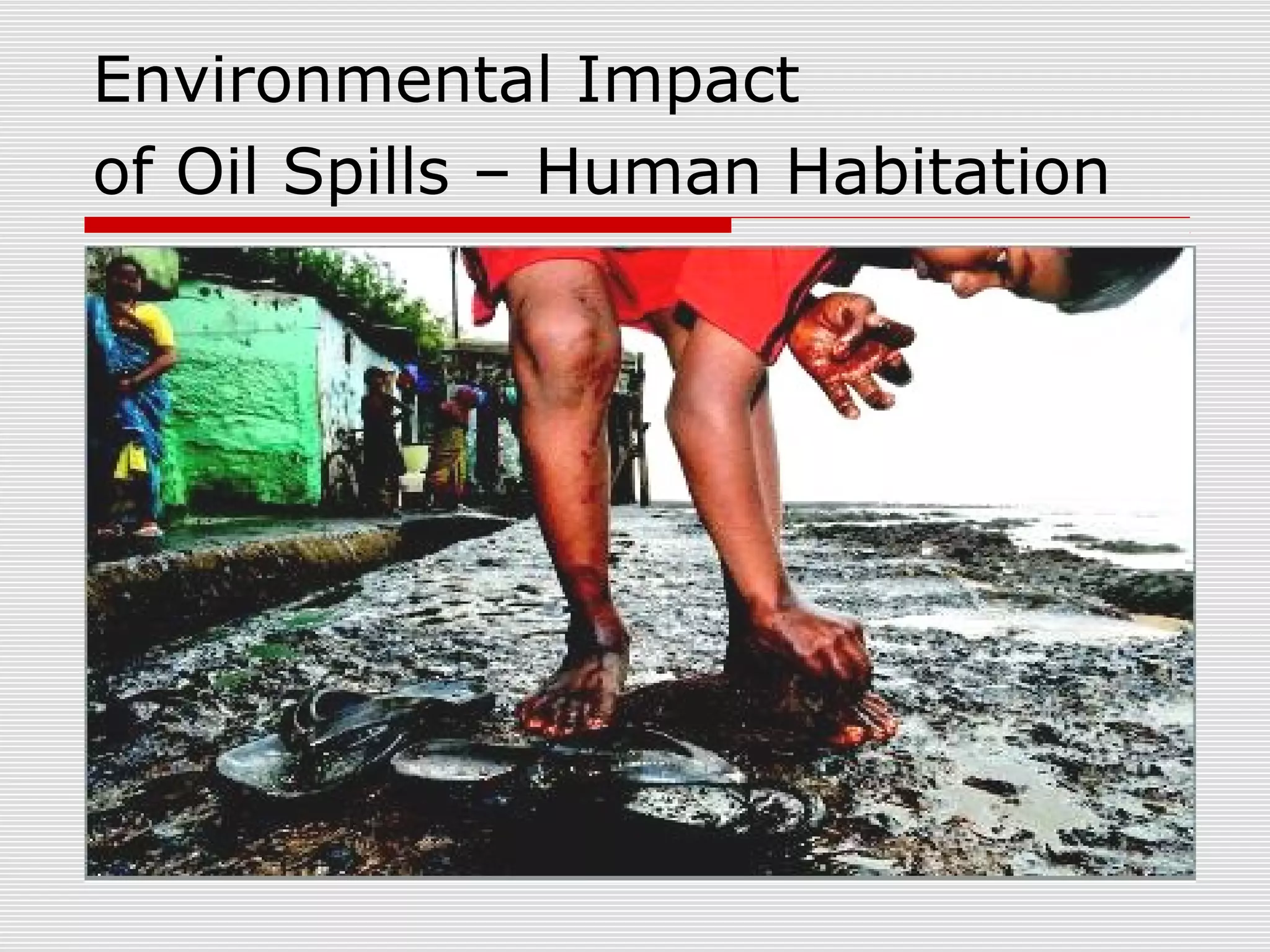
Environmental Impact
of Oil Spills – Human Habitation
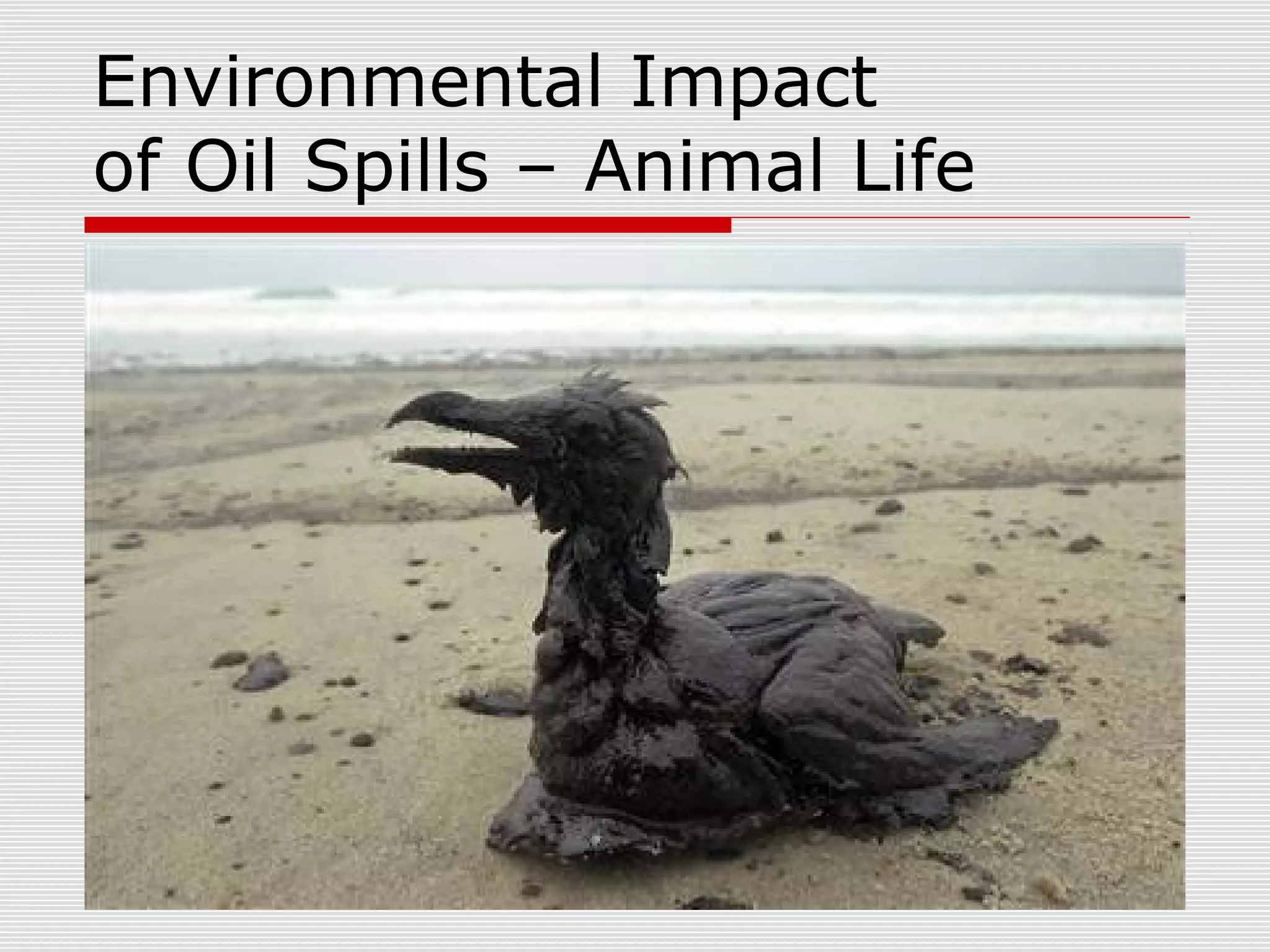
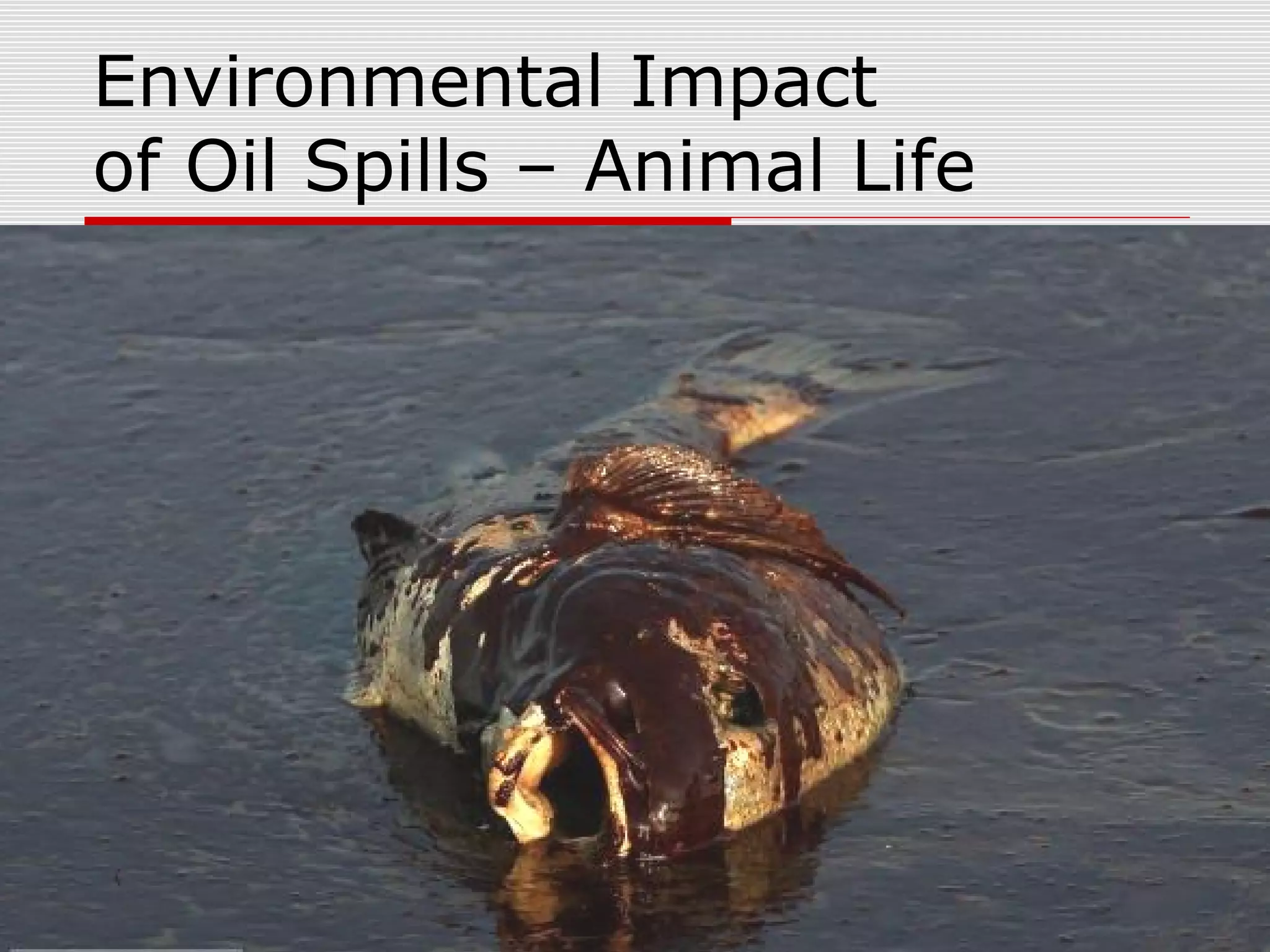
Environmental Impact
of Oil Spills – Animal Life
Environmental Impact
of Oil Spills – Animal Life
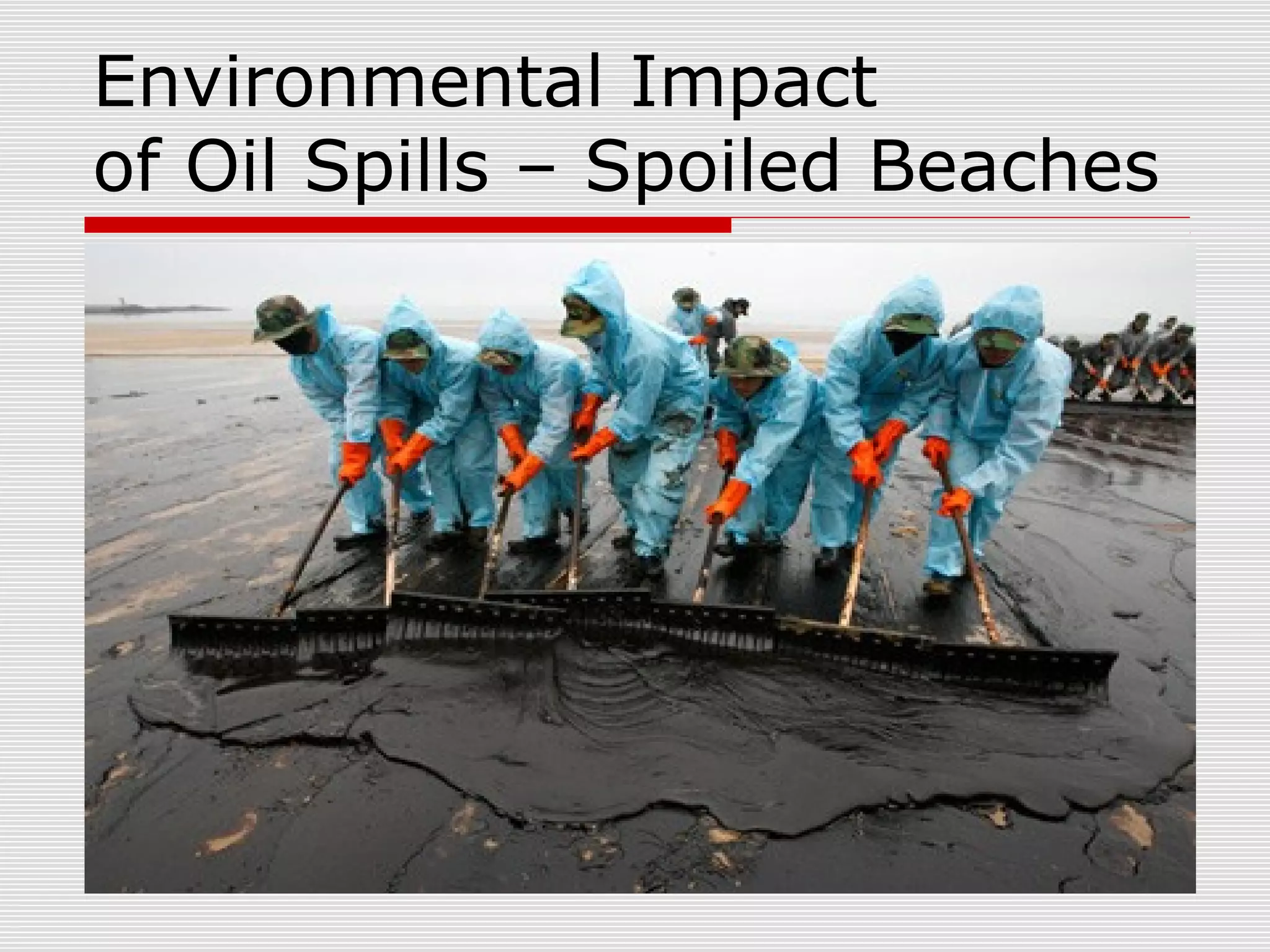
Environmental Impact
of Oil Spills – Spoiled Beaches
Environmental Impact
of Oil Spills – Oil Well Blow Out
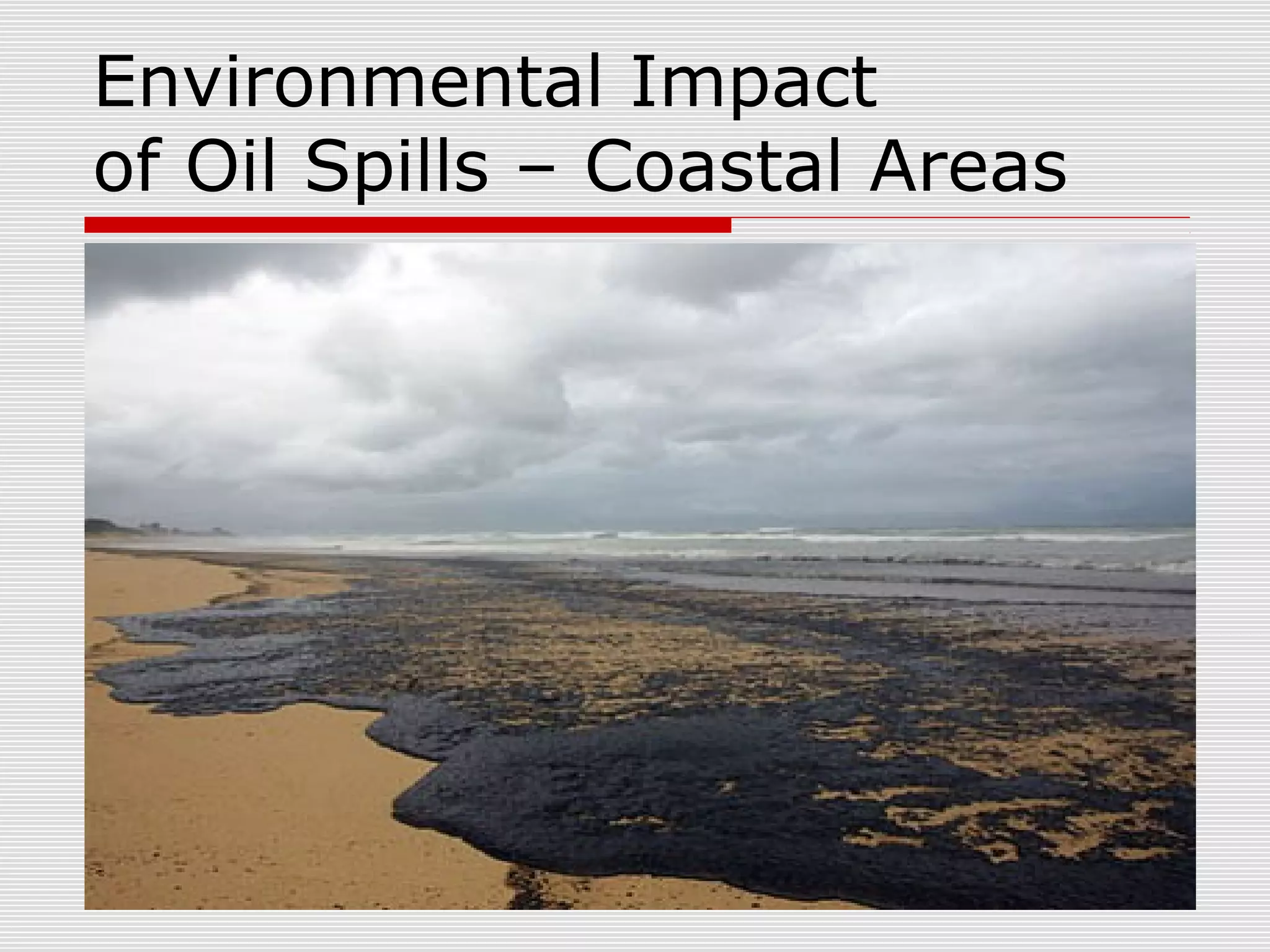
Environmental Impact
of Oil Spills – Coastal Areas
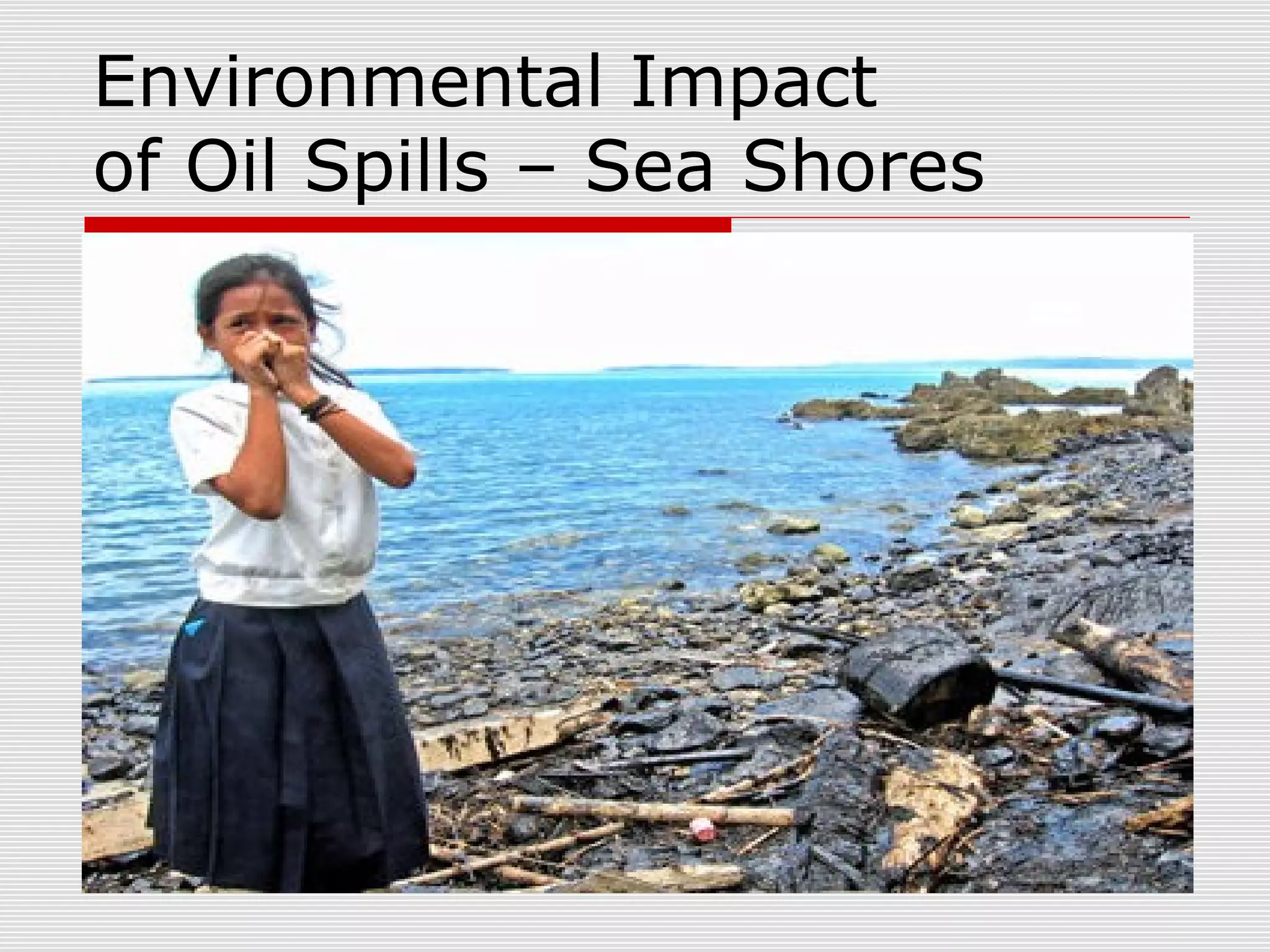
Environmental Impact
of Oil Spills – Sea Shores
Environmental Impact
of Oil Spills
 When oil comes in contact with Land the plants
and animals die and soil loses its fertility.
 When oil comes in contact with inland water
bodies and/or ground water, aquatic plants and
animals die and water becomes toxic.
 Marine Oil Spills kills marine animals, plants and
destroys marine Ecosystem.
How to clean oil spill ?
 Conventional methods –
 Land Filling
 Incineration
 Natural Remediation
 Chemical Decomposition
 New Eco-Friendly method –
 Bioremediation
Land filling: Oil contaminated Soil/Sludge is stored in
protected concrete pits and land fill sites.
Merits: Easy and immediate solution
Demerits: Confines the pollution
 Cost-intensive and leads to limitation of land
 Risk of Transportation of hazardous material
 Natural calamity can destroy Protected
pits/ landfill sites
Conventional methods
Incineration: Burning of Oil Contaminated Soil/Oily Sludge
Merits: Easy and quick disposal of Pollutant
Demerits: Emission of hazardous gases like NOx, CO, SOx etc.
 Enormous amount of poisonous fly ash generated
 Safe disposal of fly ash is a limitation
 Incomplete combustion generates highly toxic and
carcinogenic chemicals eg; polycyclic aromatic
hydrocarbons
 Requires long transportation to incineration facility
Conventional methods
Natural Remediation :
By natural degradation, leaching, evaporation,
auto oxidation, photo oxidation, etc.
Merits: Cost effective
Demerits: Increases air, soil, as well as water pollution
 Degradation is a very slow process
 Hazardous and not environment-friendly
 Time consuming
Conventional methods
Chemical decomposition:
Decomposes Polluting oil by solubilization
or making dispersions using chemicals
Merits: Easy and Quick Method
Demerits: Useful in water body only
 Increase water pollution due to chemicals.
 Hazardous to health and not environment
friendly
Conventional methods
Bioremediation- Definition
“The use of bacteria and other small
organisms to clean up or reduce
unwanted concentrations of certain
substances”.
Bioremediation was first applied in 1979 at
Minnesota, USA, to treat oil spill due to leakage
in crude oil pipeline.
Bioremediation
Advantages and Limitations
Advantages:
 Environment friendly.
 Economical in comparison to Conventional methods
 Simple to implement.
 Bye products are simple and non toxic.
Limitations:
 Being a biological process it takes time to work.
Bioremediation
Bioremediation
An Indian Innovation
 The Energy and Resources Institute, New
Delhi developed an innovative product
Oilzapper in 1996 after seven years of
extensive Laboratory Research.
 Oilzapper is a consortium of bacteria which
is known to selectively consume Petroleum
Hydrocarbons and change it to simple non
toxic substances.
Bioremediation – An Indian
Innovation
 This led to development of an innovative
technique of Bioremediation as an
environment friendly solution to the
problem of pollution due to Oil spills.
 Since its inception Bioremediation has
found many successful applications all over
the world.
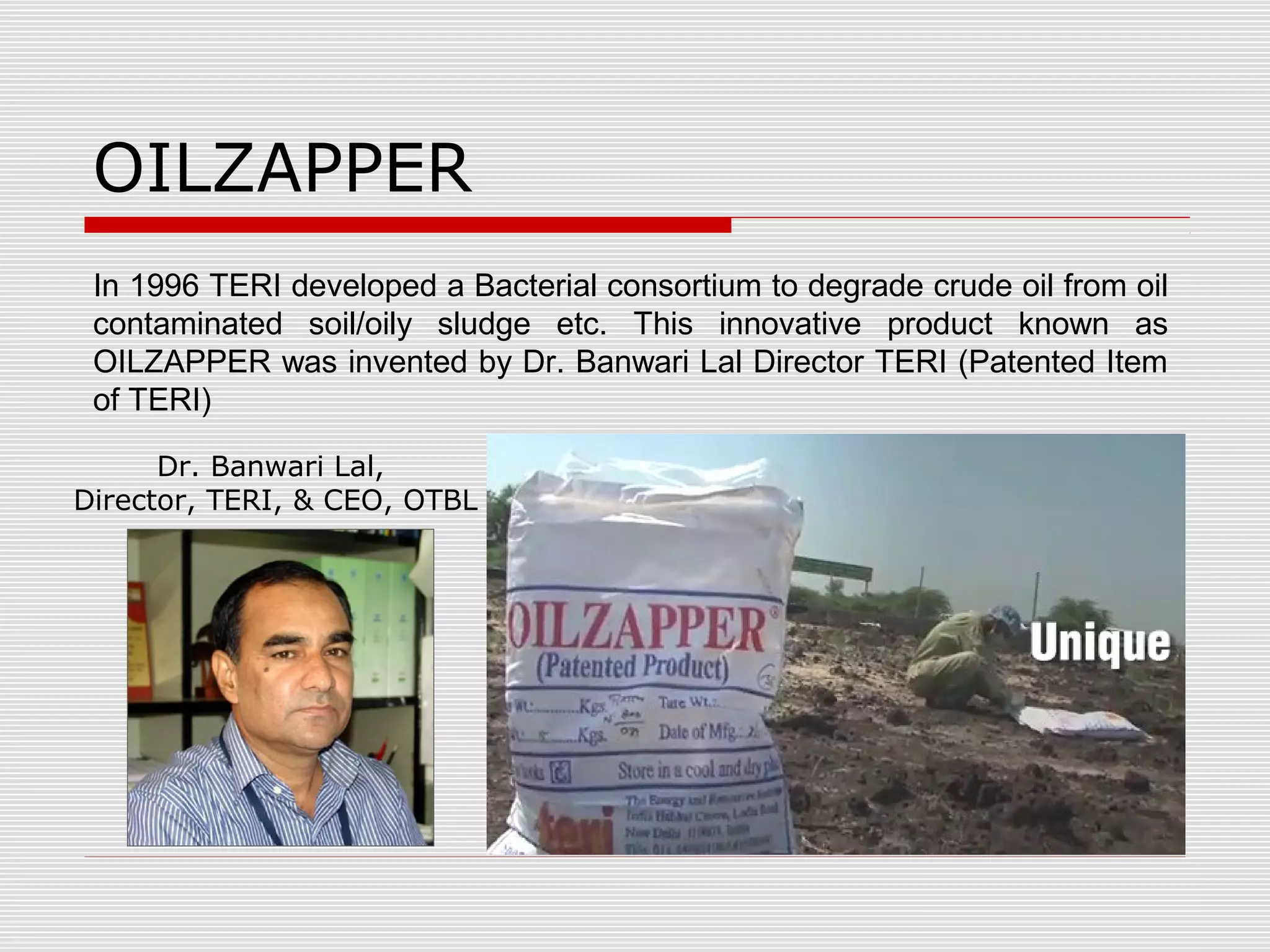
In 1996 TERI developed a Bacterial consortium to degrade crude oil from oil
contaminated soil/oily sludge etc. This innovative product known as
OILZAPPER was invented by Dr. Banwari Lal Director TERI (Patented Item
of TERI)
Dr. Banwari Lal,
Director, TERI, & CEO, OTBL
OILZAPPER
About Oilzapper
 OILZAPPER is a bacterial consortium
being manufactured in a Bioreactor
facility of TERI at Gurgaon.
 OILZAPPER also contains nutrient carrier
material and is packed in 15 Kg HDPE
bags.
 OILZAPPER is functional up to 6%
salinity and 600
C.
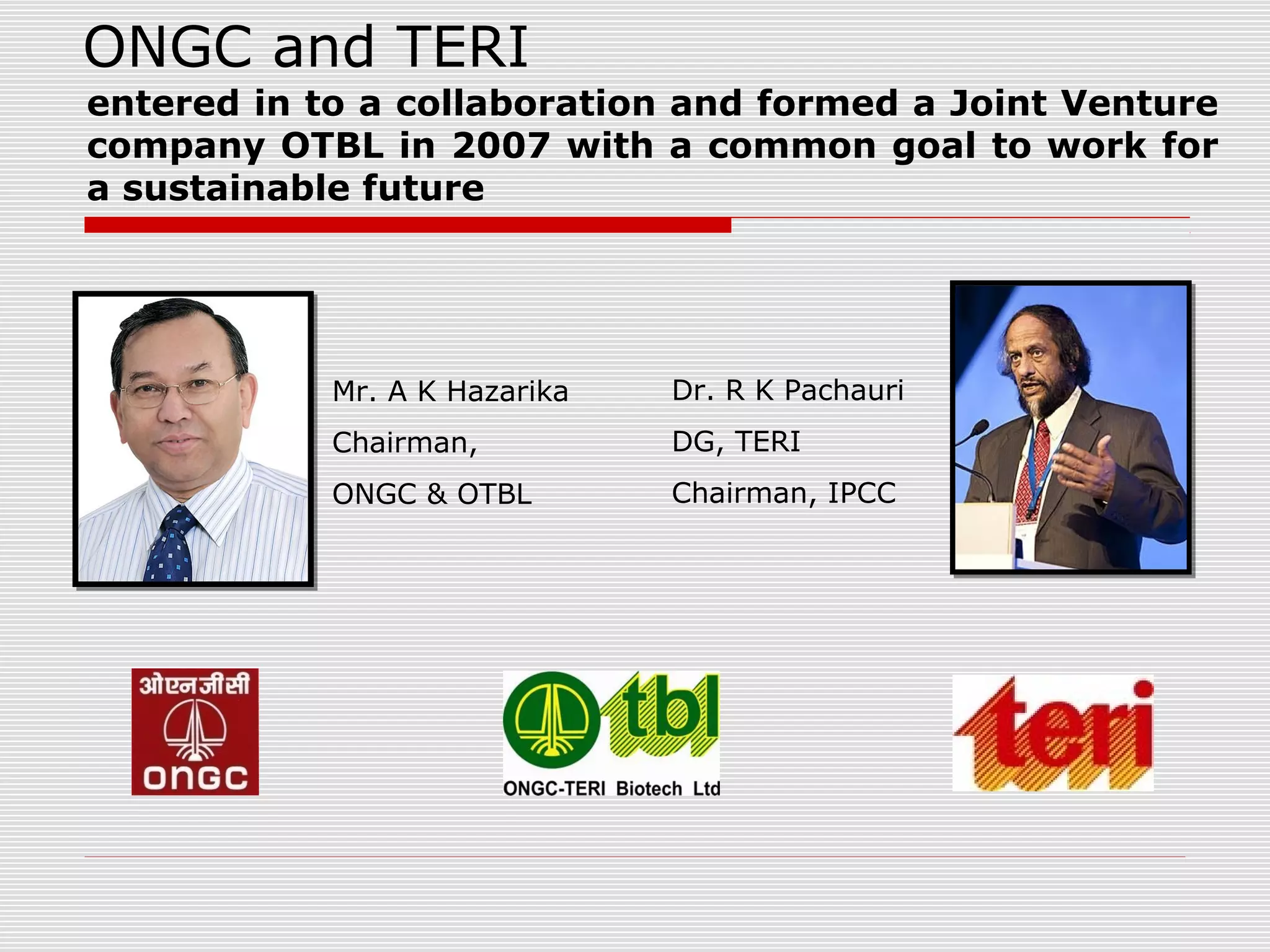
ONGC and TERI
Mr. A K Hazarika
Chairman,
ONGC & OTBL
Dr. R K Pachauri
DG, TERI
Chairman, IPCC
entered in to a collaboration and formed a Joint Venture
company OTBL in 2007 with a common goal to work for
a sustainable future
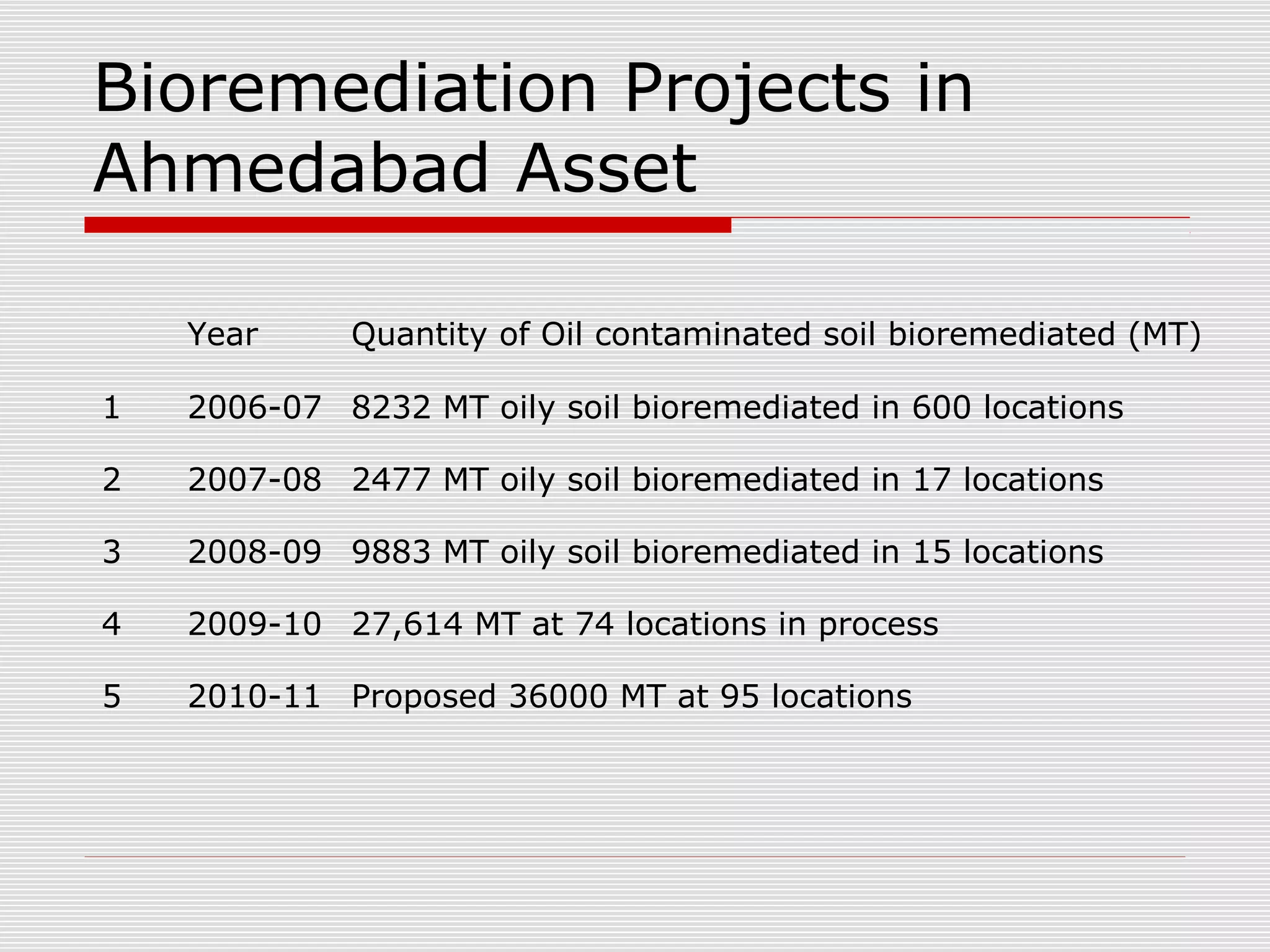
Bioremediation Projects in
Ahmedabad Asset
Year Quantity of Oil contaminated soil bioremediated (MT)
1 2006-07 8232 MT oily soil bioremediated in 600 locations
2 2007-08 2477 MT oily soil bioremediated in 17 locations
3 2008-09 9883 MT oily soil bioremediated in 15 locations
4 2009-10 27,614 MT at 74 locations in process
5 2010-11 Proposed 36000 MT at 95 locations
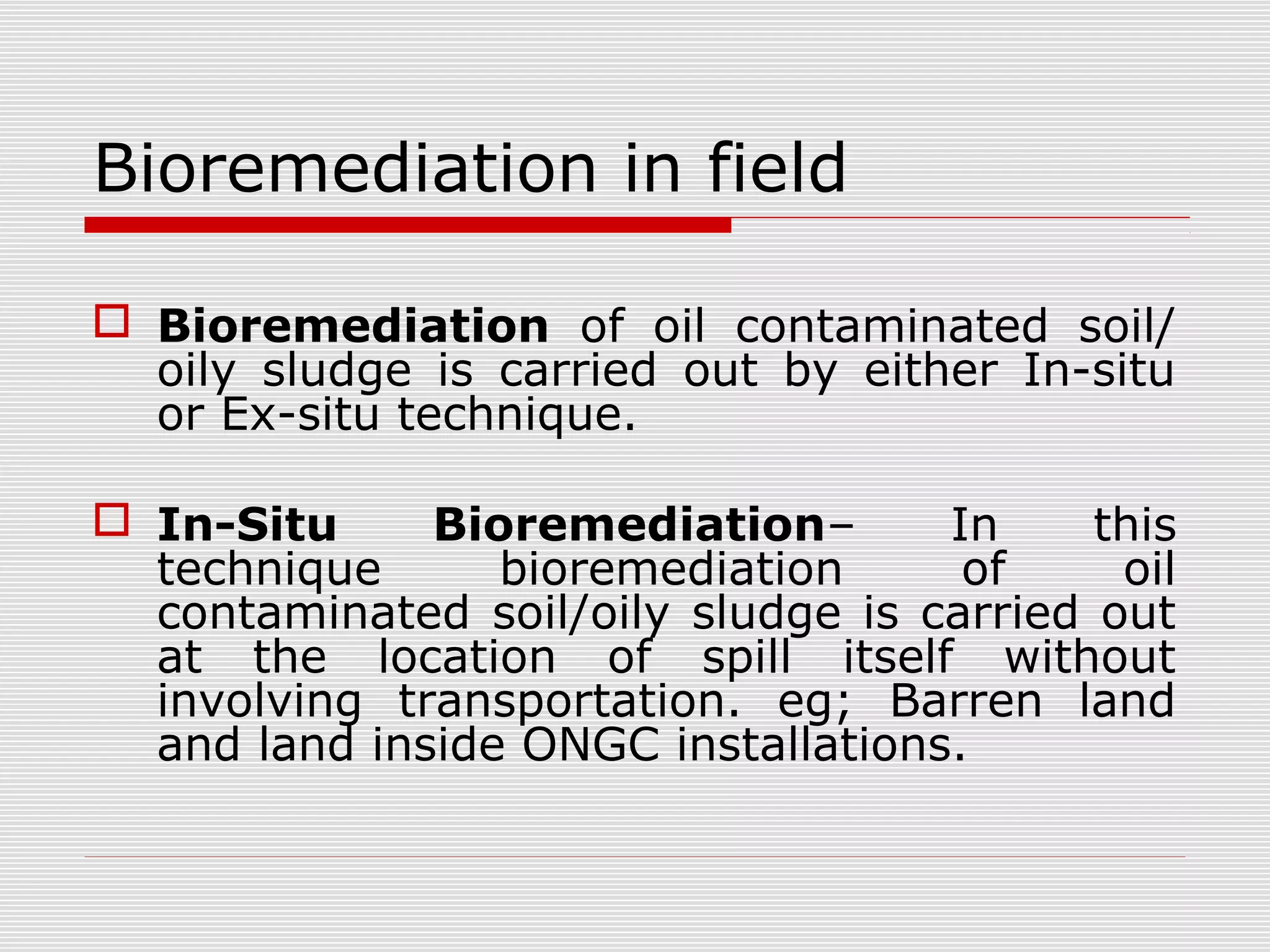
Bioremediation in field
 Bioremediation of oil contaminated soil/
oily sludge is carried out by either In-situ
or Ex-situ technique.
 In-Situ Bioremediation– In this
technique bioremediation of oil
contaminated soil/oily sludge is carried out
at the location of spill itself without
involving transportation. eg; Barren land
and land inside ONGC installations.
Bioremediation in field
 Ex-Situ Bioremediation– In this technique
bioremediation of oil contaminated soil/oily
sludge is carried out in a secure bioremediation
pit.
 Oil contaminated soil/oily sludge is transported
to these secure bioremediation pits.
 Ex-Situ Bioremediation is mainly carried out to
treat oil spills occurring in farmlands, forest
lands and other ecologically sensitive areas
from where oil contaminated soil/oily sludge is
to be removed on priority.
Bioremediation in field
 Secure Bioremediation Pit (SBP)
 It is a centralized place to collect
contaminated soil of near by area.
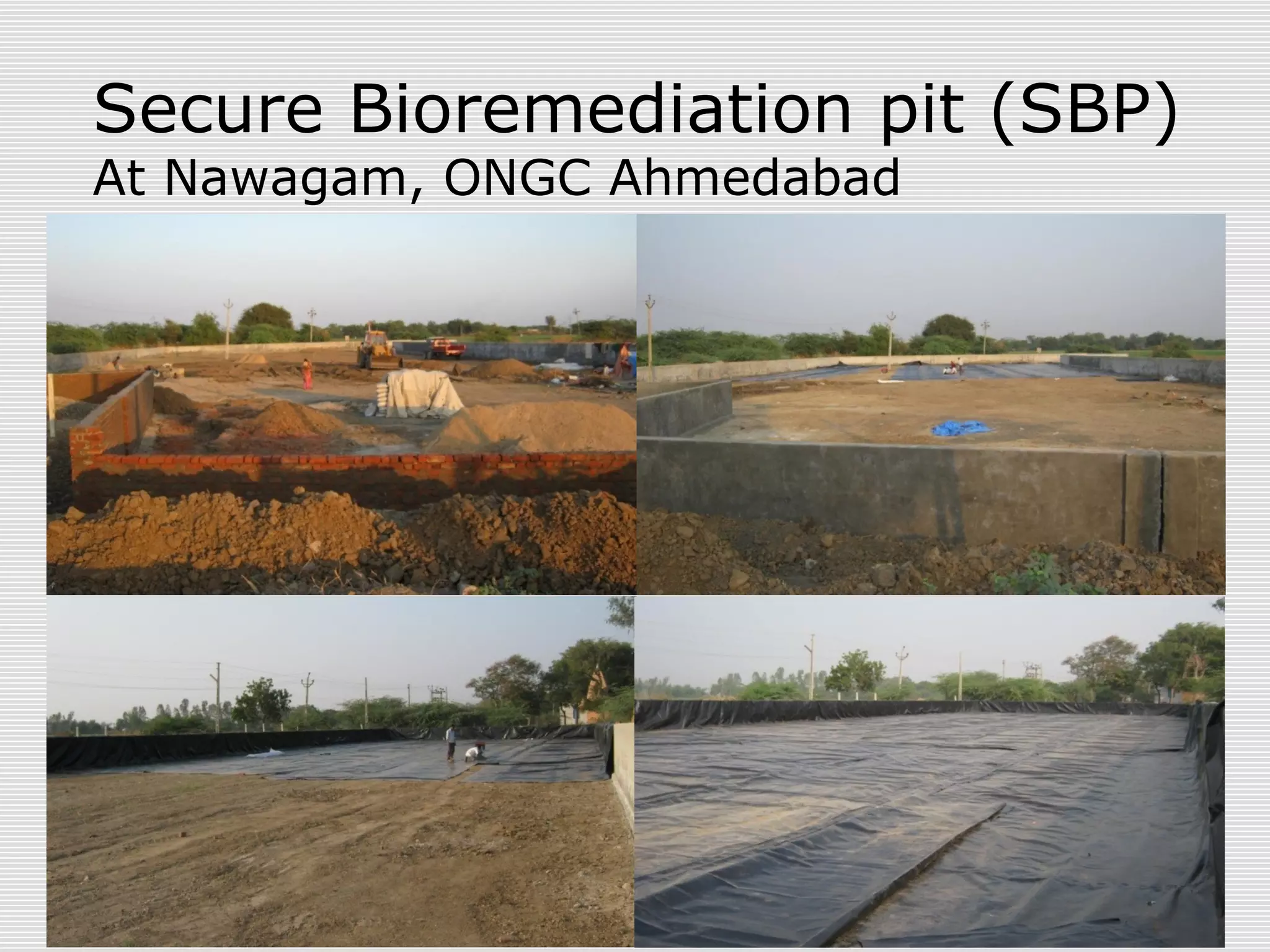
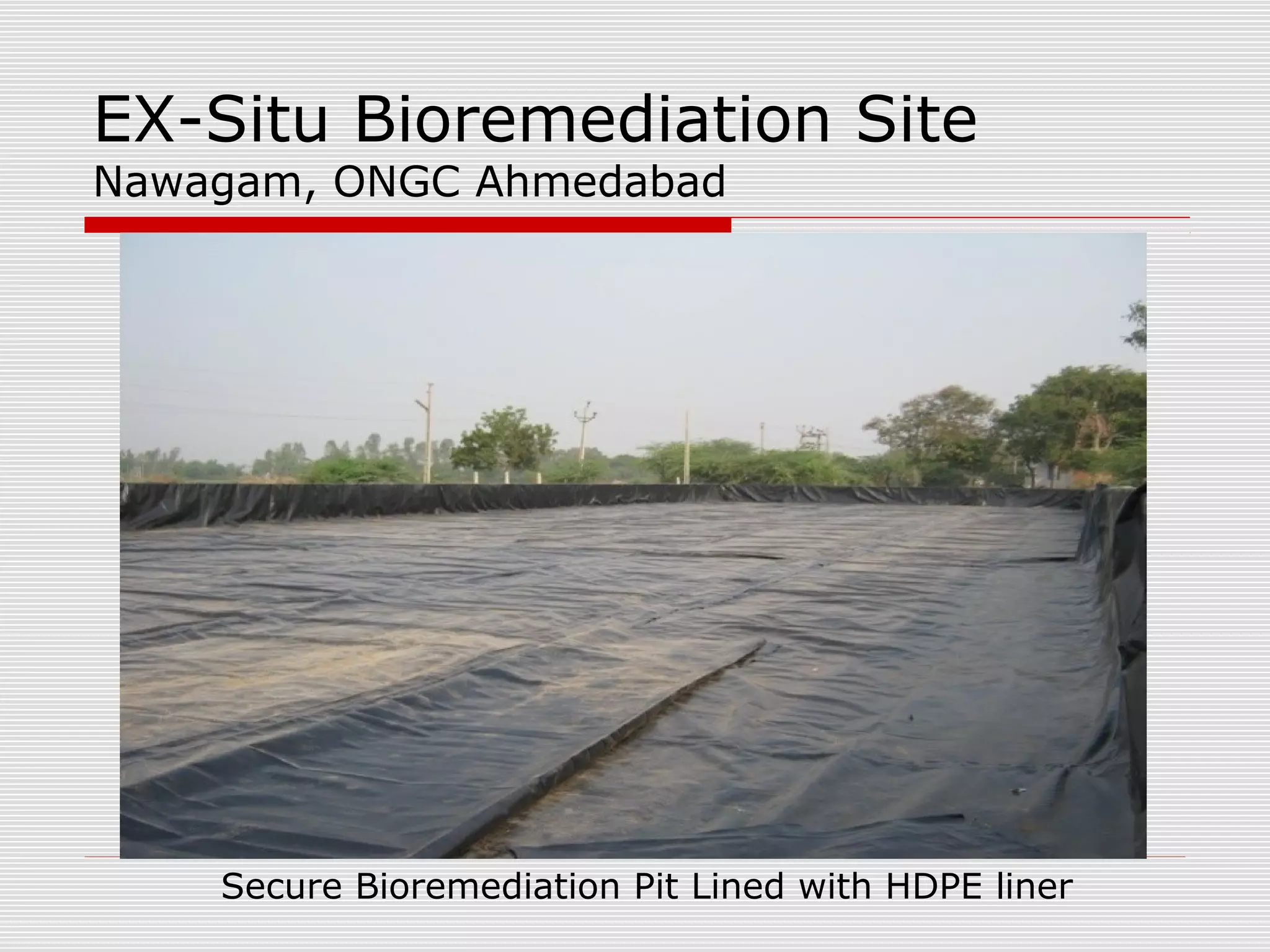
 These pits are made Leaching proof with a
liner of High Density Polythene of 500
microns laid at the bottom and side wall
boundaries.
 Once sufficient volume of oil contaminated
soil/oily sludge is accumulated
bioremediation is started.
Secure Bioremediation pit (SBP)
At Nawagam, ONGC Ahmedabad
 Ex-Situ bioremediation
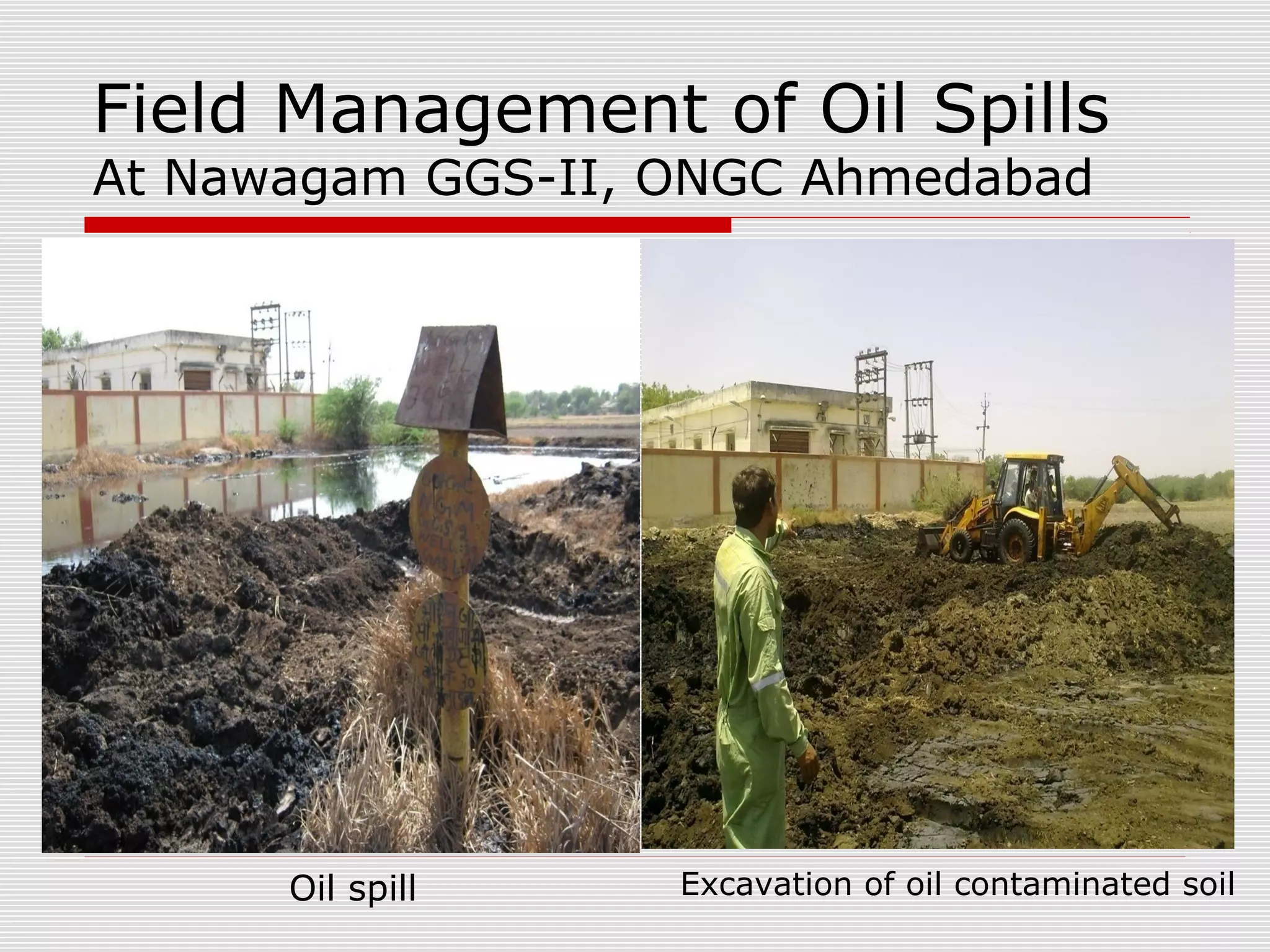
 Excavation of oil contaminated soil.
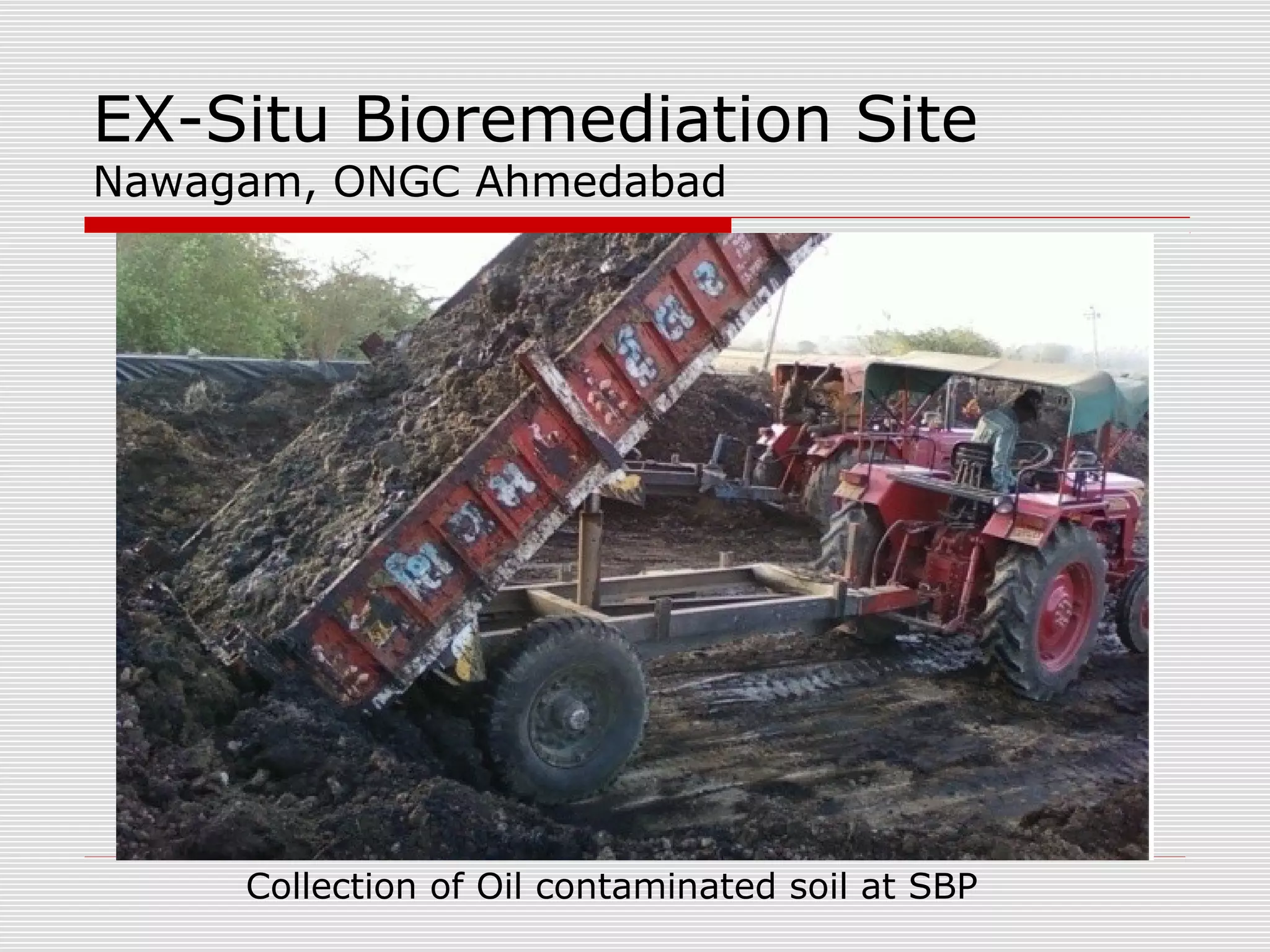
 Transportation of oil contaminated soil to
bioremediation pit.
 Refilling of Excavated land with fertile
soil.
For both In-Situ and Ex-Situ bioremediation oil
contaminated soil is thoroughly mixed before
bioremediation
Field Management of Oil Spills
At Nawagam GGS-II, ONGC Ahmedabad
Oil spill Excavation of oil contaminated soil
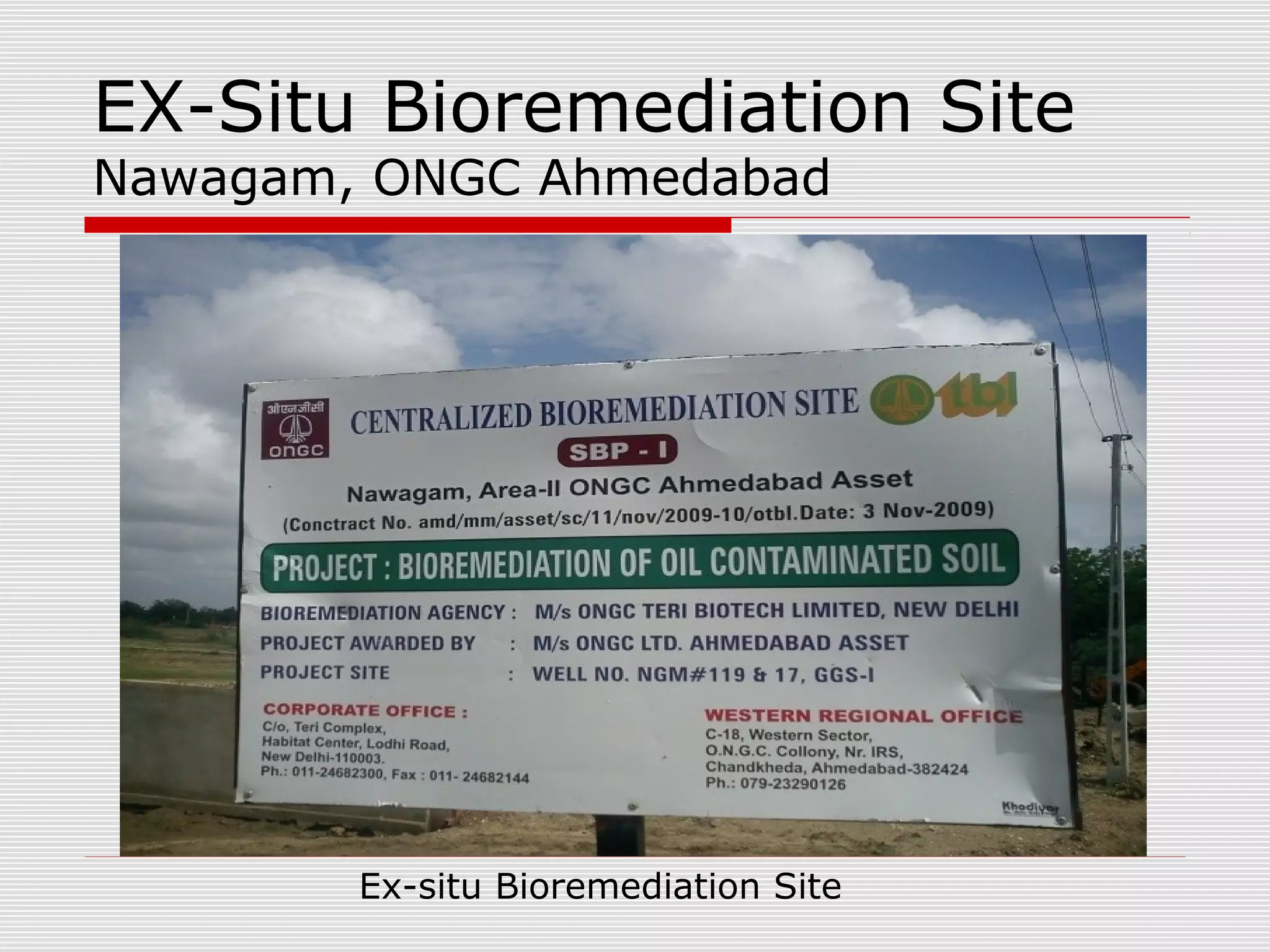
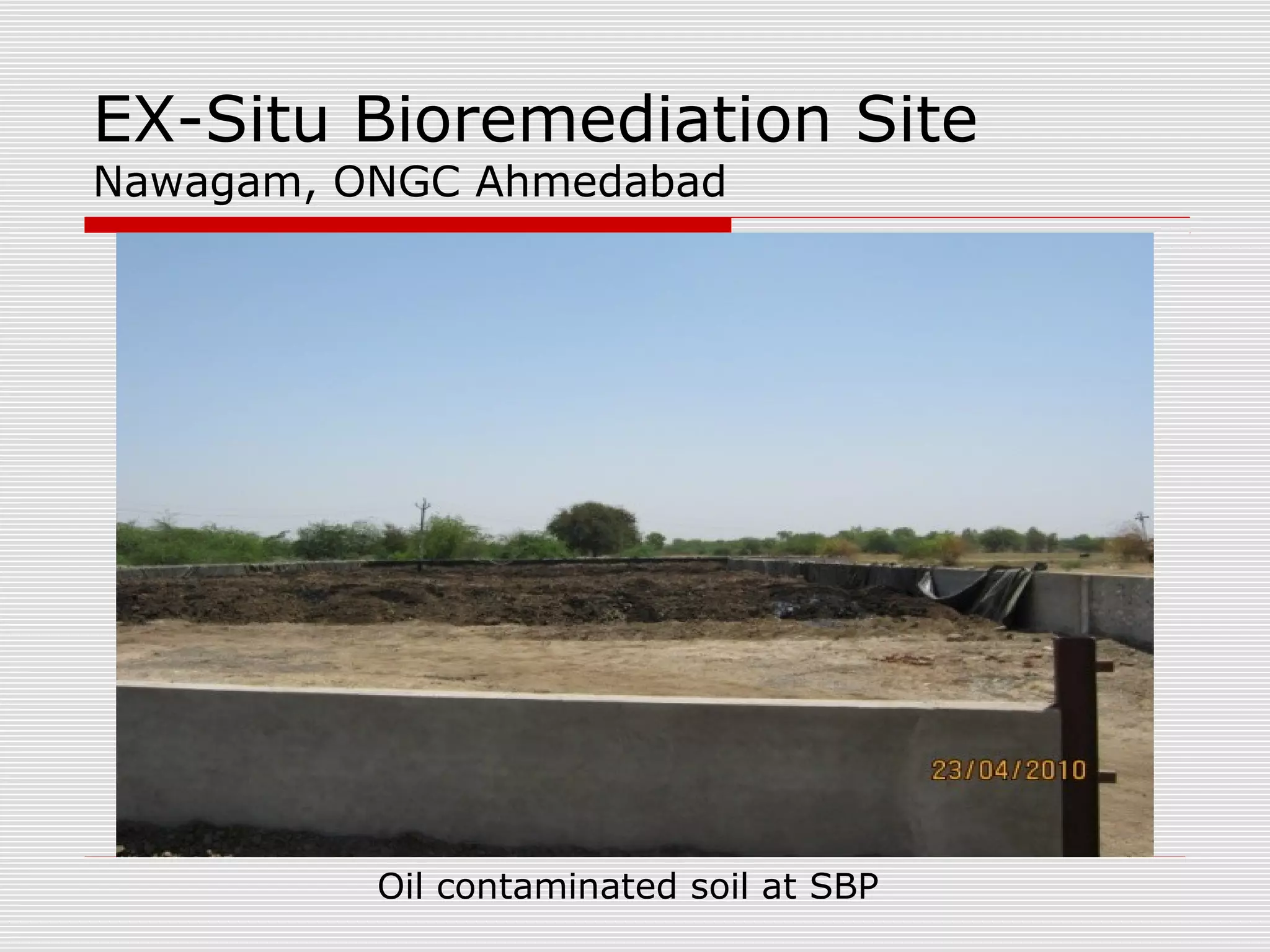
EX-Situ Bioremediation Site
Nawagam, ONGC Ahmedabad
Ex-situ Bioremediation Site
EX-Situ Bioremediation Site
Nawagam, ONGC Ahmedabad
Secure Bioremediation Pit Lined with HDPE liner
Collection of Oil contaminated soil at SBP
EX-Situ Bioremediation Site
Nawagam, ONGC Ahmedabad
EX-Situ Bioremediation Site
Nawagam, ONGC Ahmedabad
Oil contaminated soil at SBP
 Testing of soil samples to detect initial oil
concentration as Total Petroleum
Hydrocarbons (TPH).
 First Application of OILZAPPER.
 Periodic monitoring of bioremediation
progress.
 Tilling of soil & nutrient addition at fixed
intervals.
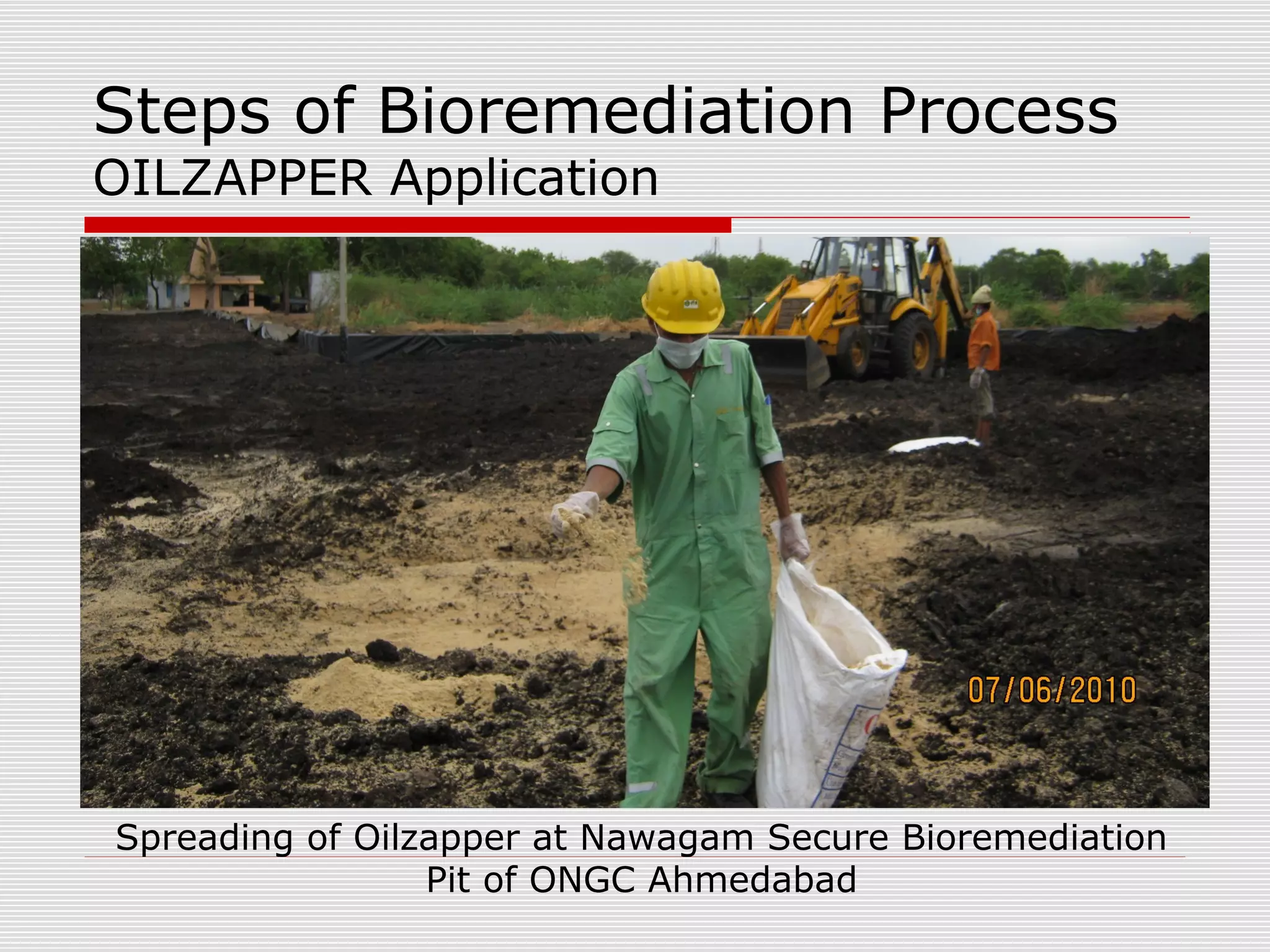
Steps of Bioremediation Process
 Second and third application of OILZAPPER
if required.
 Approximately 5 Kgs of OILZAPPER is
applied for every 1000 kg of oil
contaminated soil.
 Final sampling and testing of soil samples.
Steps of Bioremediation Process
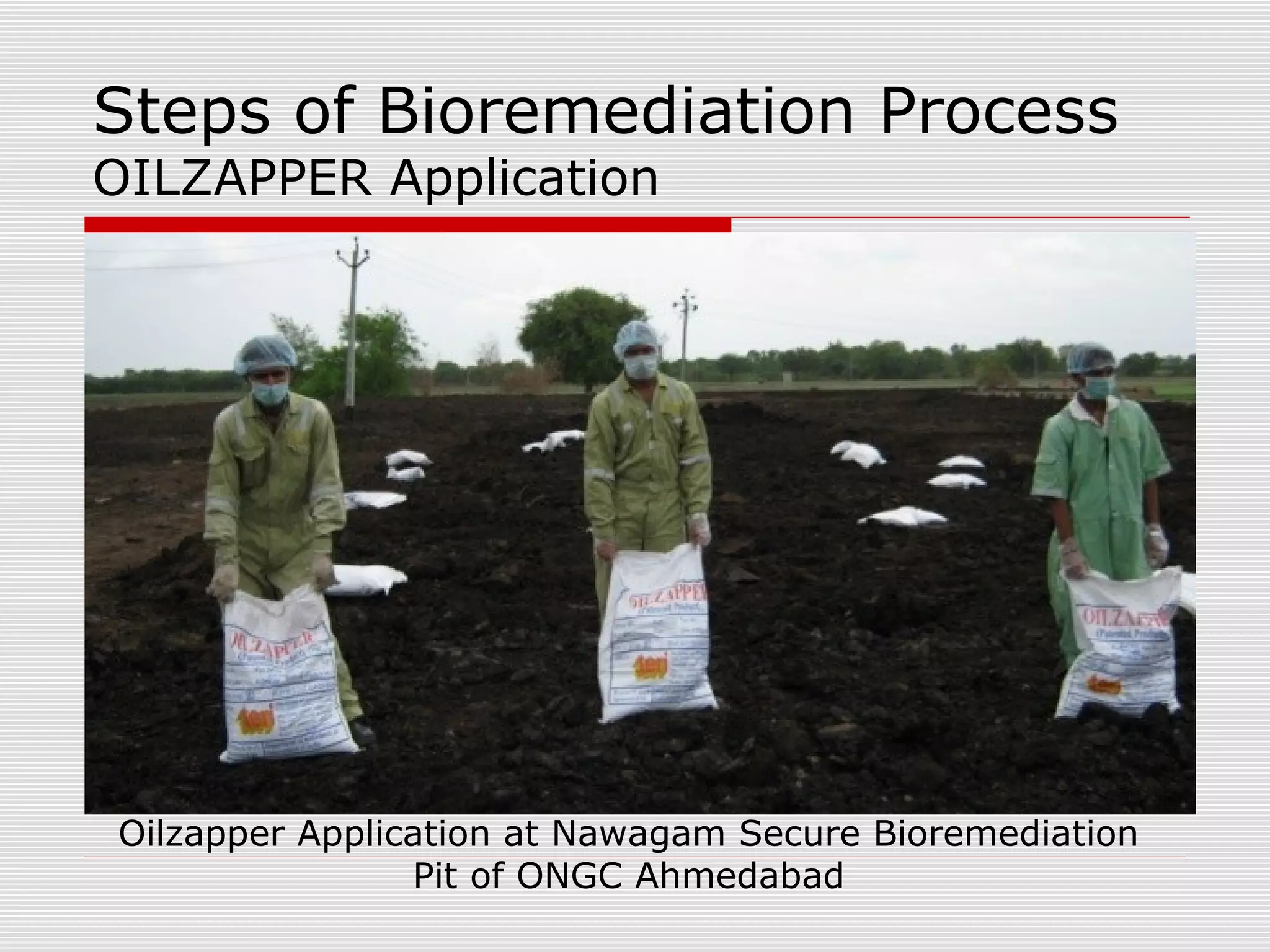
OILZAPPER Application
Oilzapper Application at Nawagam Secure Bioremediation
Pit of ONGC Ahmedabad
Steps of Bioremediation Process
OILZAPPER Application
Spreading of Oilzapper at Nawagam Secure Bioremediation
Pit of ONGC Ahmedabad
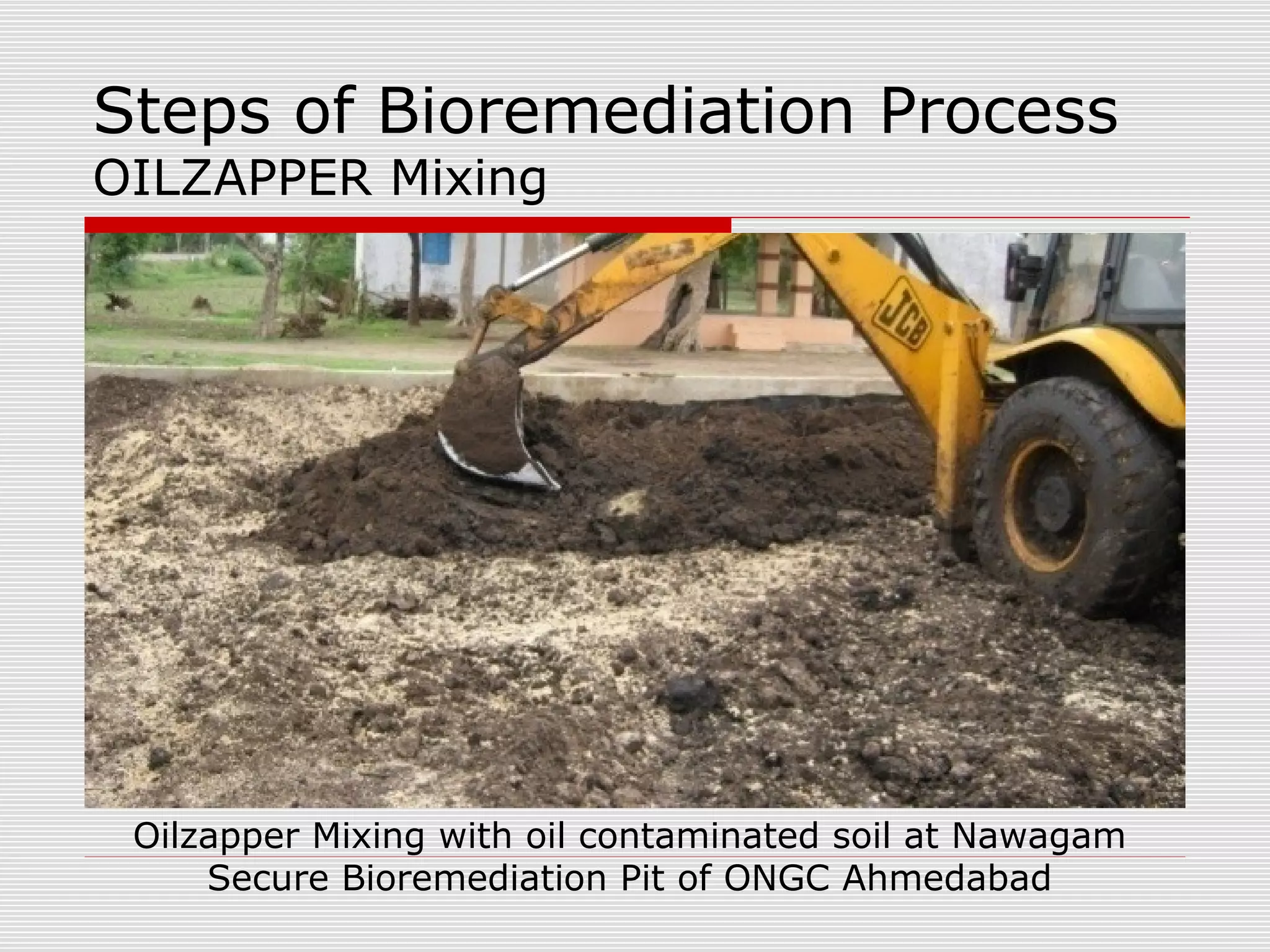
Steps of Bioremediation Process
OILZAPPER Mixing
Oilzapper Mixing with oil contaminated soil at Nawagam
Secure Bioremediation Pit of ONGC Ahmedabad
Sampling and Testing
 Soil Samples are collected before and during
bioremediation to measure Total
Petroleum Hydrocarbon (TPH), Moisture
percentage and bacterial count.
 Samples are tested in approved laboratories
using internationally used testing methods.
 Decline in Total Petroleum Hydrocarbon
(TPH) indicates progress of bioremediation
work.
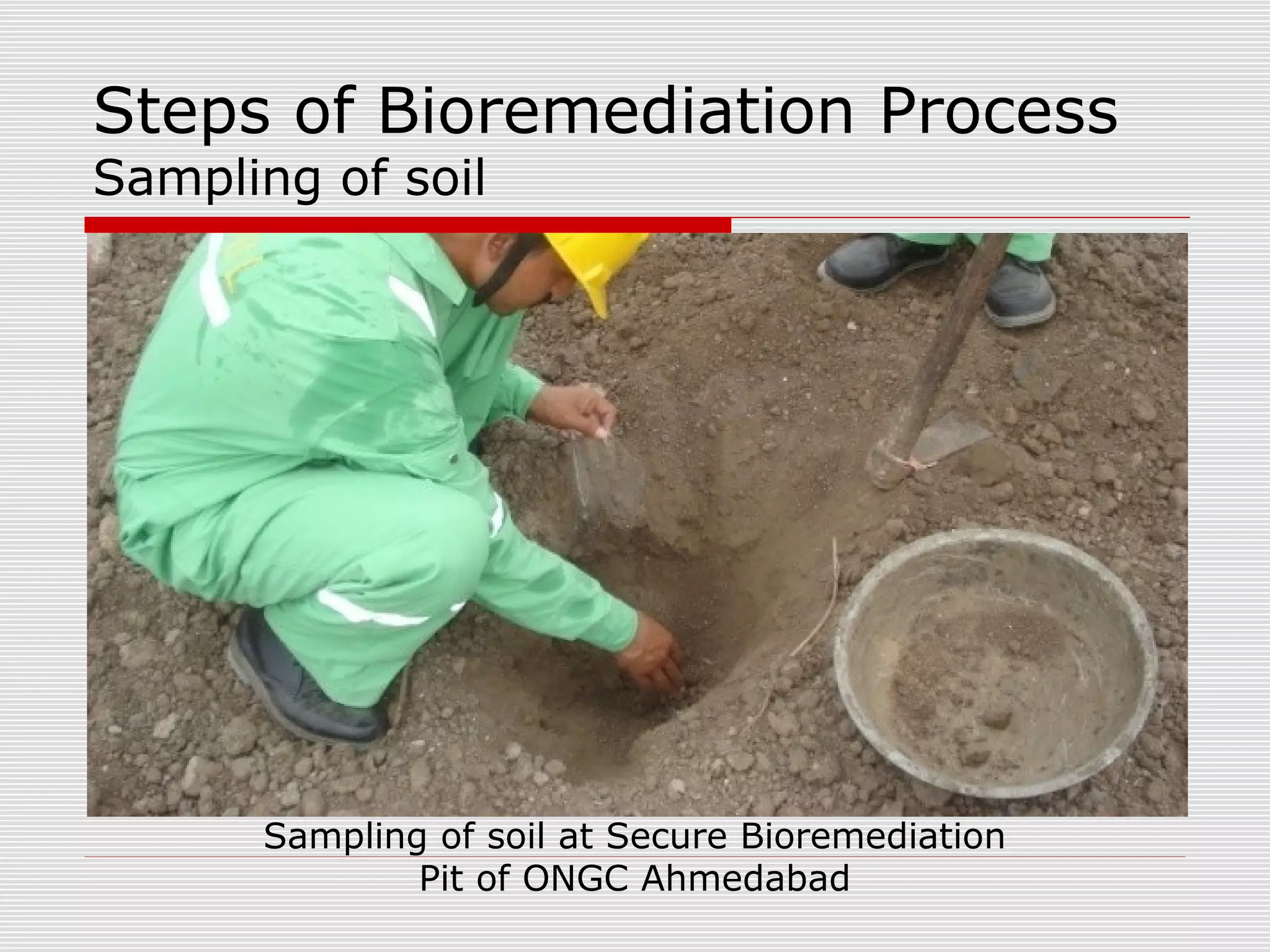
Steps of Bioremediation Process
Sampling of soil
Sampling of soil at Secure Bioremediation
Pit of ONGC Ahmedabad
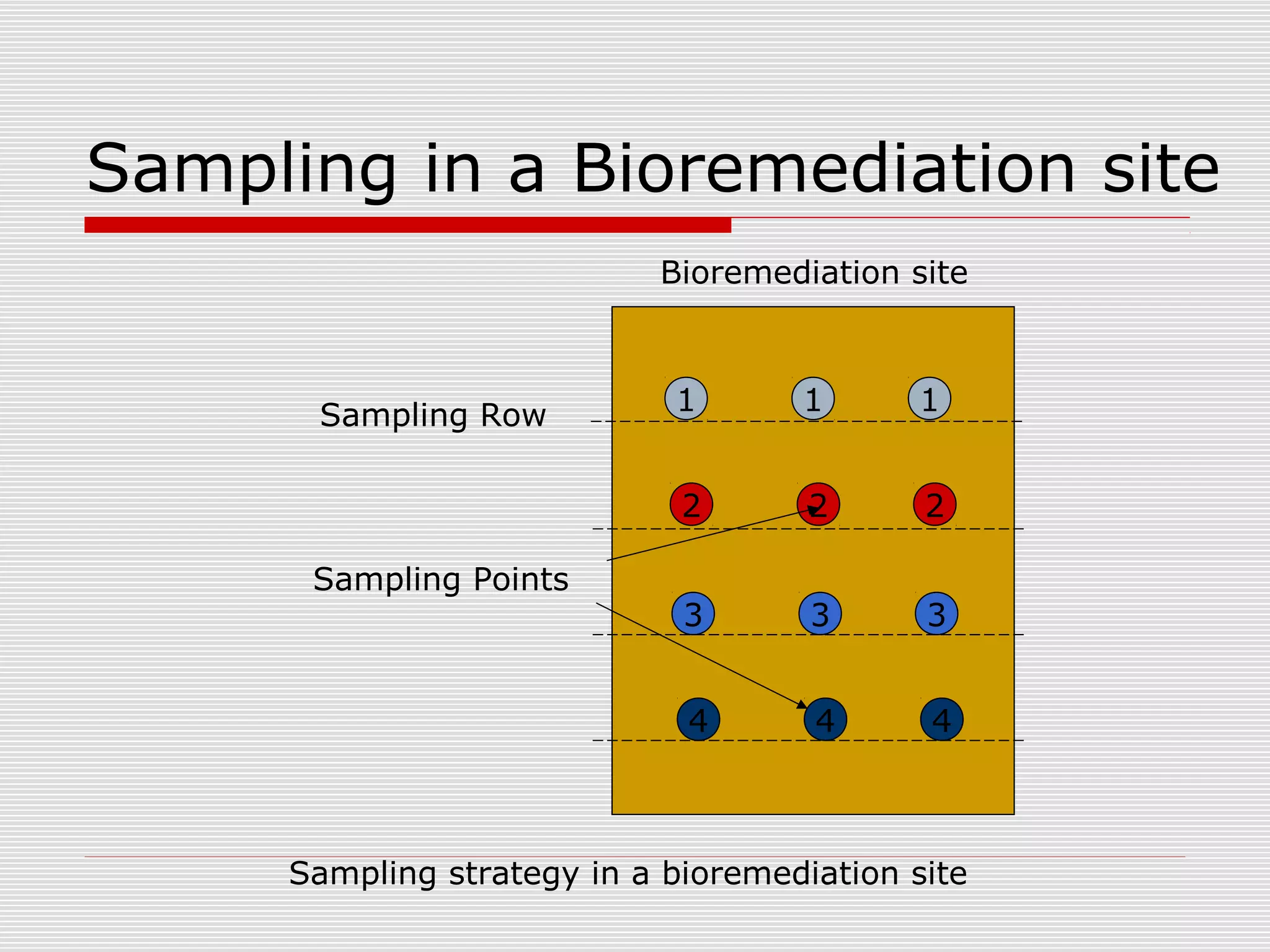
Sampling in a Bioremediation site
Bioremediation site
Sampling Row
Sampling Points
1 11
2 22
3 33
4 44
Sampling strategy in a bioremediation site
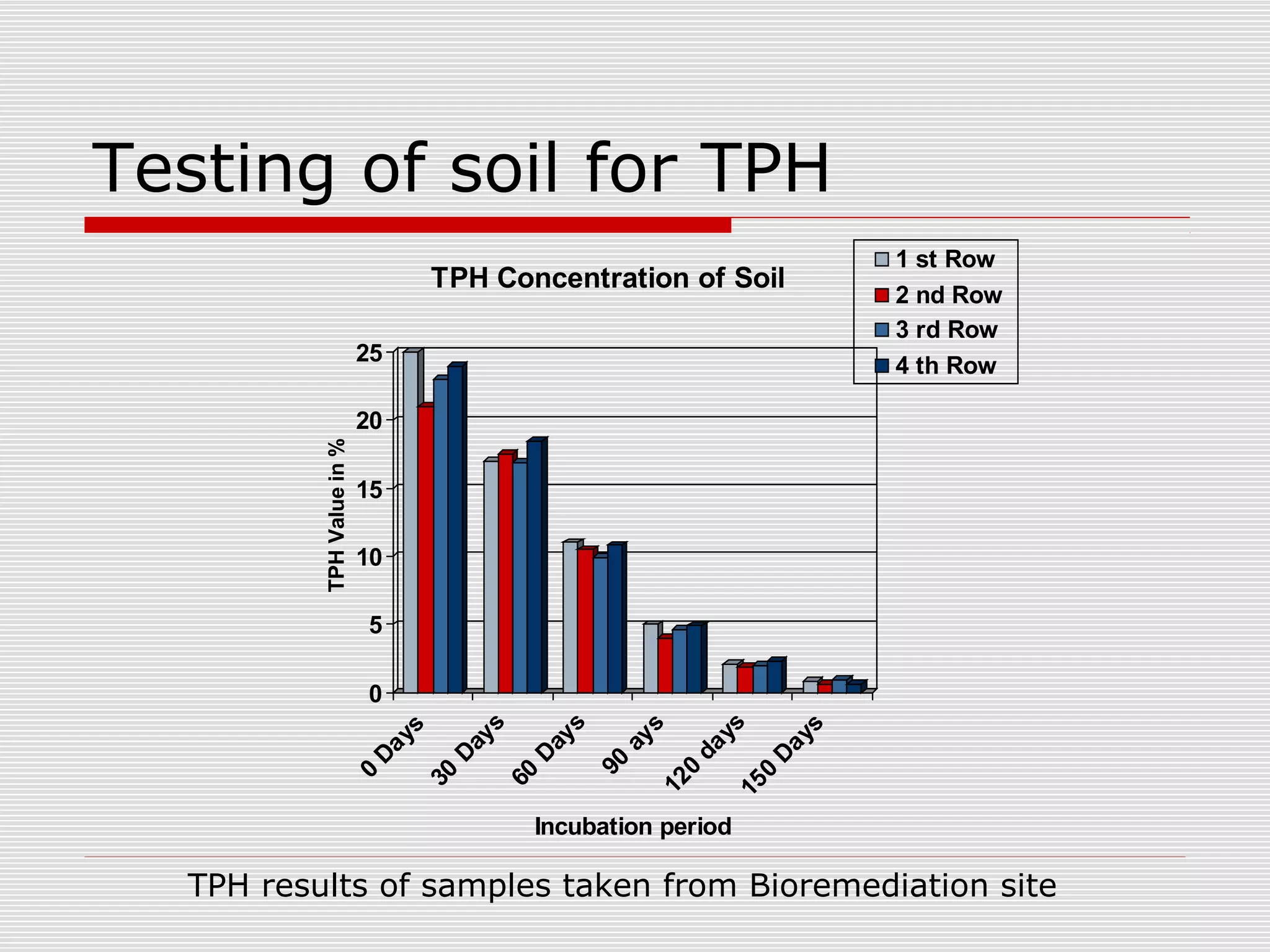
Testing of soil for TPH
0
5
10
15
20
25
TPHValuein%
0
Days
30
Days
60
D
ays
90
ays
120
days
150
D
ays
Incubation period
TPH Concentration of Soil
1 st Row
2 nd Row
3 rd Row
4 th Row
TPH results of samples taken from Bioremediation site
Bioremediation Completion
 Bioremediation of Oil contaminated soil is
considered as “COMPLETE” When TPH of
Oil contaminated soil becomes <1%.
 This treated and restored soil is full of
biomass and organic compounds
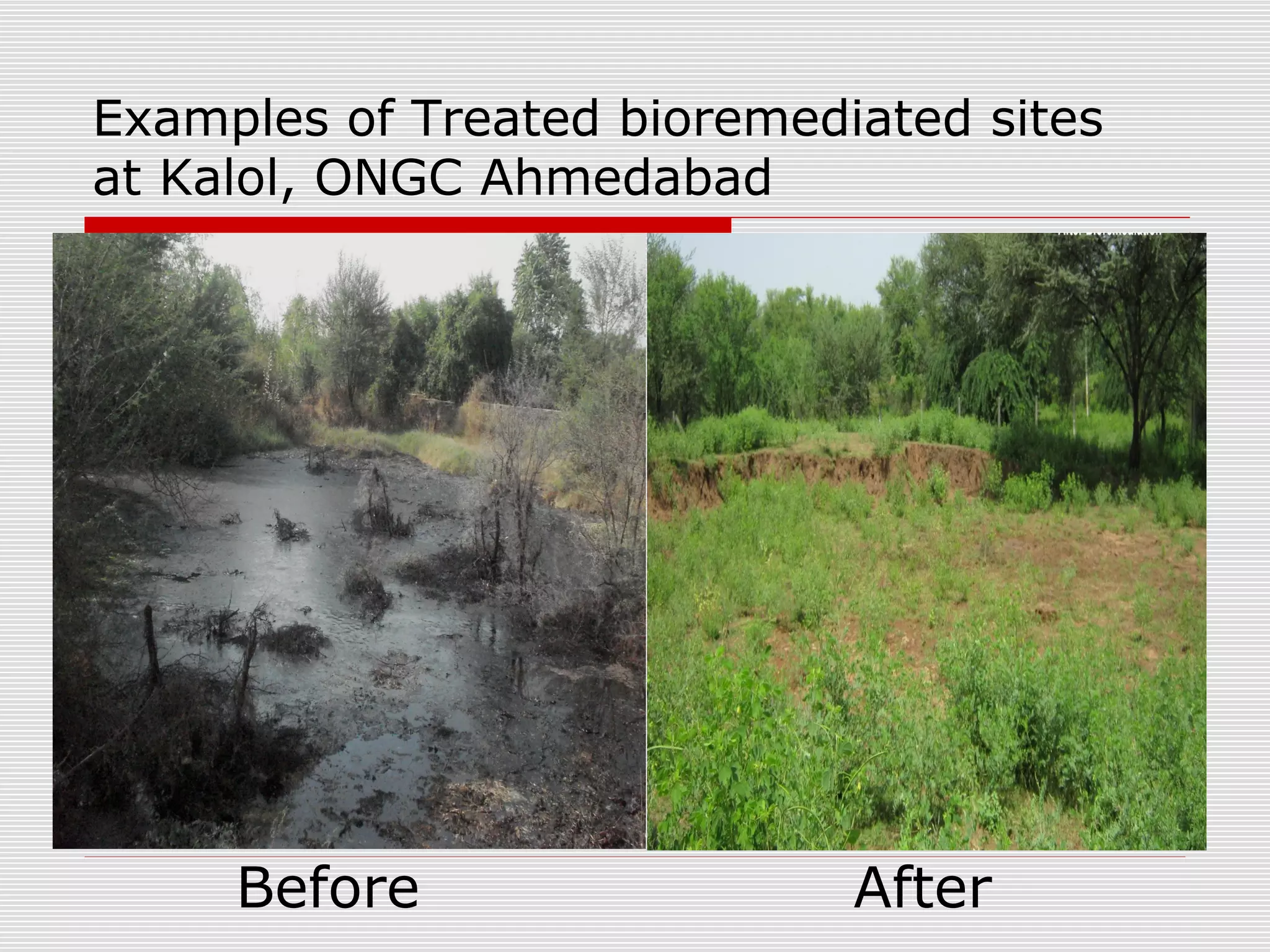
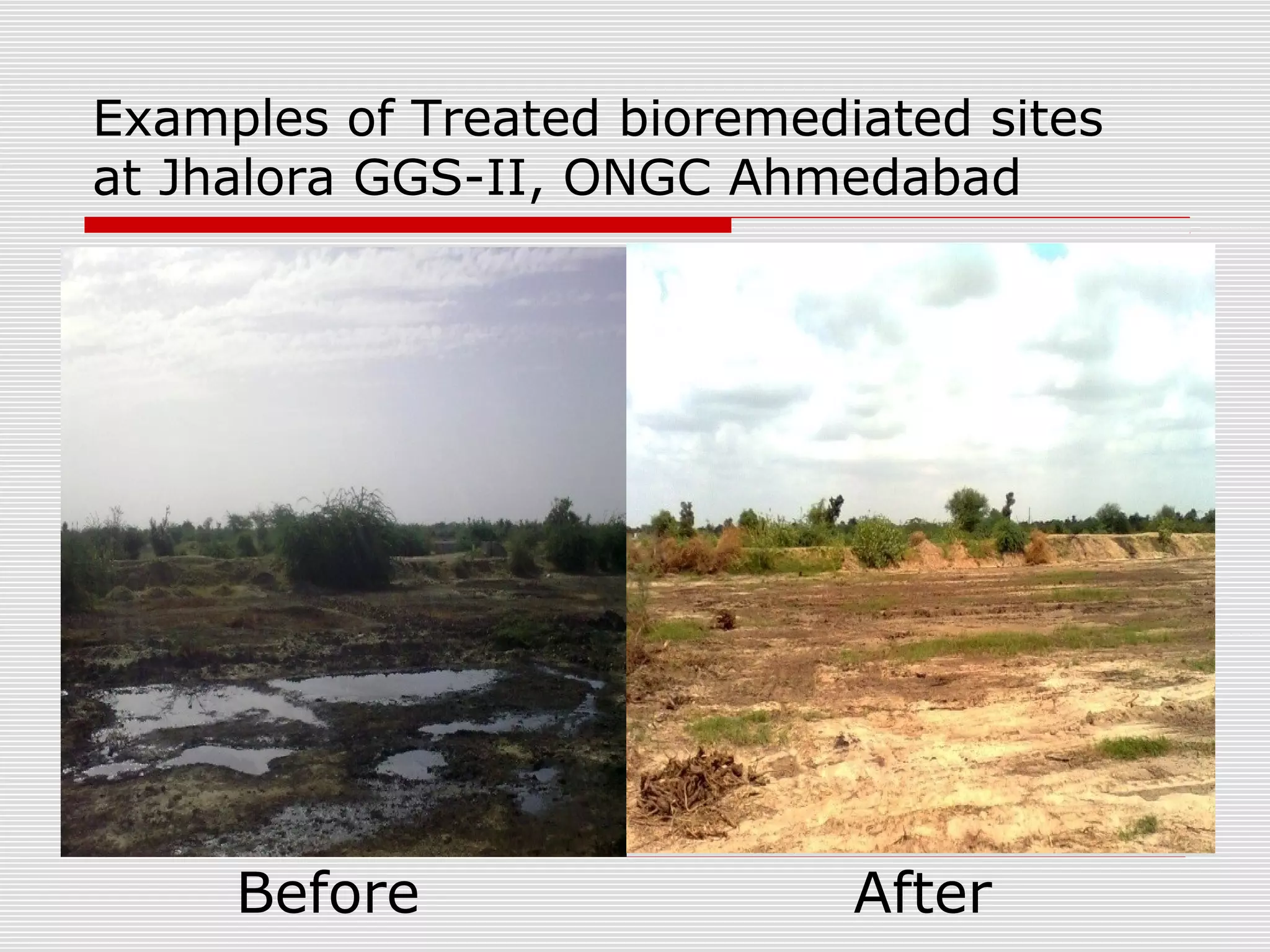
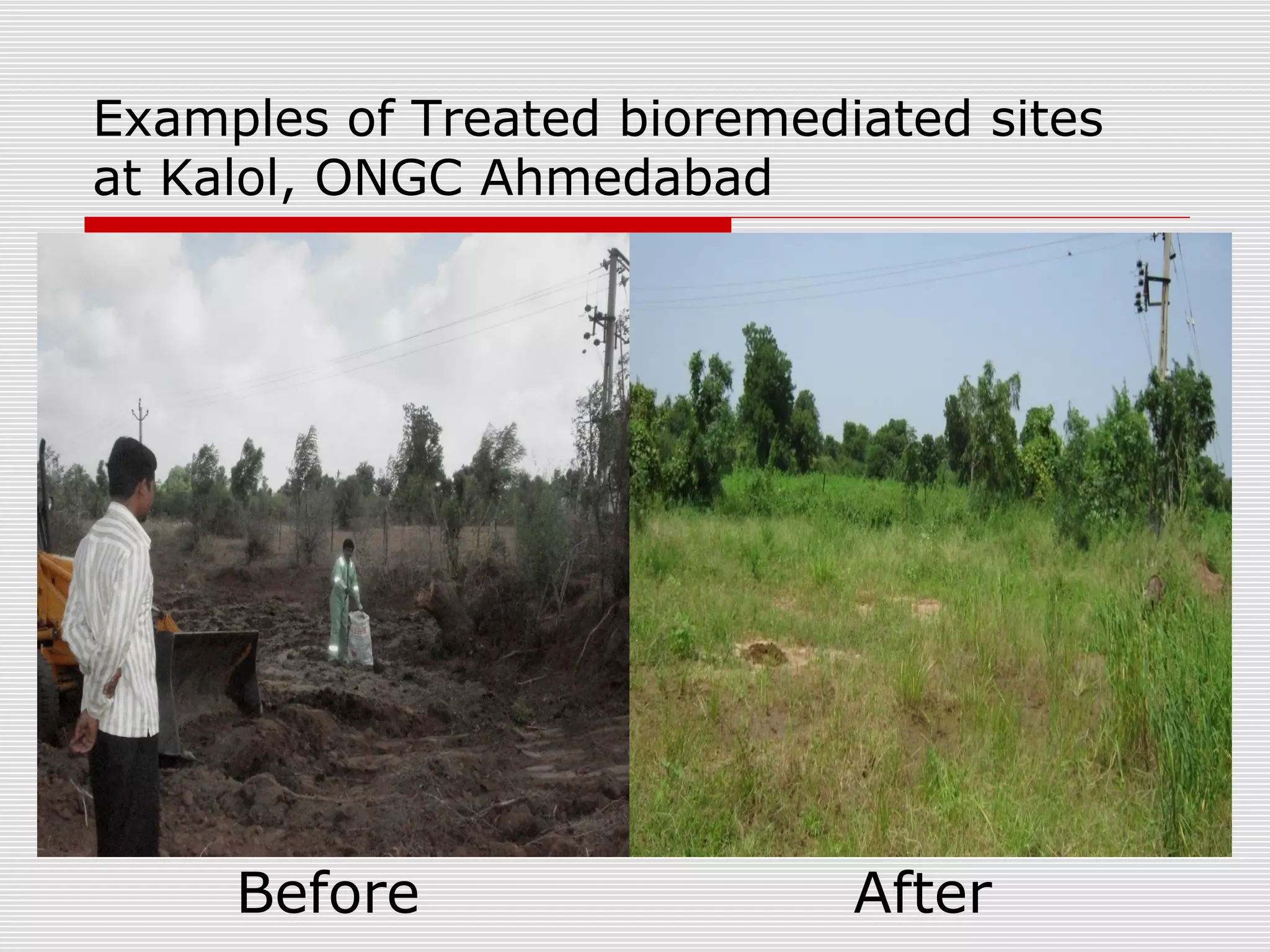
 Local Plants or any other crop may be
grown on bioremediated soil.
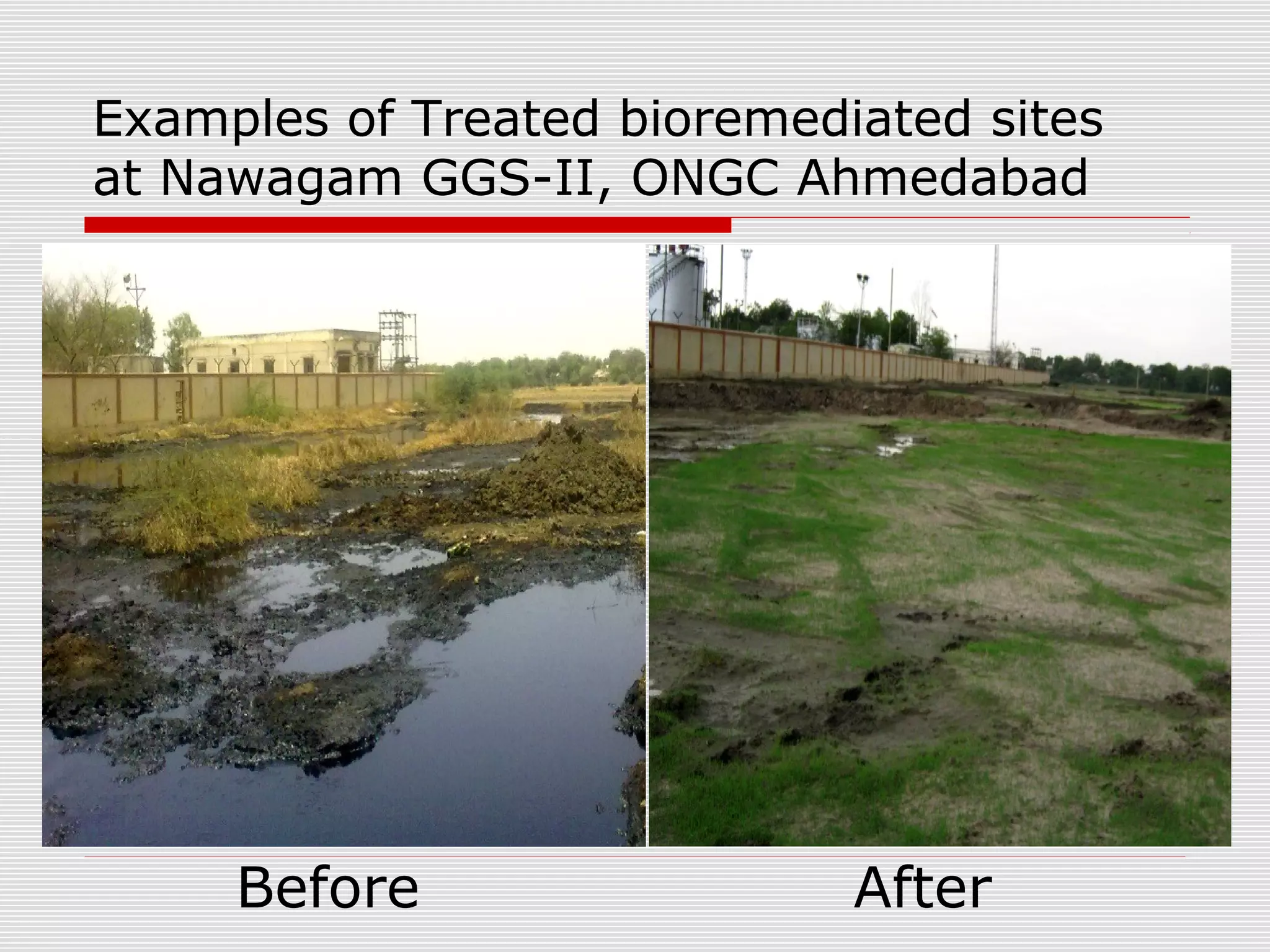
Examples of Treated bioremediated sites
at Nawagam GGS-II, ONGC Ahmedabad
Before After
Before After
Examples of Treated bioremediated sites
at Kalol, ONGC Ahmedabad
Before After
Examples of Treated bioremediated sites
at Jhalora GGS-II, ONGC Ahmedabad
Examples of Treated bioremediated sites
at Kalol, ONGC Ahmedabad
Before After
Who are Using Bioremediation
 Abu Dhabi National Oil Company, UAE
 Kuwait Oil Company.
 Numaligarh Refinery Limited (NRL)
 Reliance Industries Limited.
 Hindustan Petroleum Corporation Limited.
 TATA Power Limited.
 Jindal Petroleum Limited.
 Oil India Limited.
BIOREMEDIATION - A STEP
TOWARDS A GREENER FUTURE
Thank You

Details OF bioremediation and Oilzapper Technology

  • 1.
    Bioremediation Oil and NaturalGas Corporation Ltd. Ahmedabad Asset
  • 2.
    Oil and NaturalGas Corporation Ltd. Ahmedabad Asset Total Employees : 2700 Total Installation : 63 Total Production : 4500/MT Per Day Total Exploration Area : 70 km radius of Ahmedabad City
  • 3.
    Oil Exploration -Technology  Crude Oil – most important source of energy.  Exploration of oil involves Surveys, drilling and production.  The crude oil produced from wells is transported through a network of pipe lines.
  • 4.
  • 5.
  • 6.
    An Oil WellProducing crude oil
  • 7.
    Oil Exploration -Transportation  Crude Oil is also transported from many oil wells through tankers.  The pipe lines carrying crude oil are mostly buried under ground.  These pipe lines pass through large tracts of country side including farmlands, ponds etc.  With time these pipelines develop leakages due to effects of wear/tear and corrosion
  • 8.
  • 9.
    Oil Spill dueto leakage in pipelines
  • 10.
    Oil Spills inthe Oil Fields  These pipe line leakages cause environmental pollution due to oil spills in  Farmlands  Water bodies  Forests  Water wells  Human habitation
  • 11.
    Oil Spills inthe Oil Fields  Oil spill can also occur due to several other reasons :  Theft and pilferages in pipe lines & tankers  Blow out in a well eg; BP oil spill in the Gulf of Mexico in 2010  War & Terrorist activity eg; Gulf War I in 1990-91  Accidents in Oil Tanker ships eg; MSC Chitra Mumbai 2010
  • 12.
    Environmental Impact of OilSpills - Marine oil spill
  • 13.
    Environmental Impact ofOil Spills- Marine oil spill Mumbai
  • 14.
    Environmental Impact of OilSpills - Farmland
  • 15.
    Environmental Impact of OilSpills – Human Habitation
  • 16.
    Environmental Impact of OilSpills – Animal Life
  • 17.
    Environmental Impact of OilSpills – Animal Life
  • 18.
    Environmental Impact of OilSpills – Spoiled Beaches
  • 19.
    Environmental Impact of OilSpills – Oil Well Blow Out
  • 20.
    Environmental Impact of OilSpills – Coastal Areas
  • 21.
    Environmental Impact of OilSpills – Sea Shores
  • 22.
    Environmental Impact of OilSpills  When oil comes in contact with Land the plants and animals die and soil loses its fertility.  When oil comes in contact with inland water bodies and/or ground water, aquatic plants and animals die and water becomes toxic.  Marine Oil Spills kills marine animals, plants and destroys marine Ecosystem.
  • 23.
    How to cleanoil spill ?  Conventional methods –  Land Filling  Incineration  Natural Remediation  Chemical Decomposition  New Eco-Friendly method –  Bioremediation
  • 24.
    Land filling: Oilcontaminated Soil/Sludge is stored in protected concrete pits and land fill sites. Merits: Easy and immediate solution Demerits: Confines the pollution  Cost-intensive and leads to limitation of land  Risk of Transportation of hazardous material  Natural calamity can destroy Protected pits/ landfill sites Conventional methods
  • 25.
    Incineration: Burning ofOil Contaminated Soil/Oily Sludge Merits: Easy and quick disposal of Pollutant Demerits: Emission of hazardous gases like NOx, CO, SOx etc.  Enormous amount of poisonous fly ash generated  Safe disposal of fly ash is a limitation  Incomplete combustion generates highly toxic and carcinogenic chemicals eg; polycyclic aromatic hydrocarbons  Requires long transportation to incineration facility Conventional methods
  • 26.
    Natural Remediation : Bynatural degradation, leaching, evaporation, auto oxidation, photo oxidation, etc. Merits: Cost effective Demerits: Increases air, soil, as well as water pollution  Degradation is a very slow process  Hazardous and not environment-friendly  Time consuming Conventional methods
  • 27.
    Chemical decomposition: Decomposes Pollutingoil by solubilization or making dispersions using chemicals Merits: Easy and Quick Method Demerits: Useful in water body only  Increase water pollution due to chemicals.  Hazardous to health and not environment friendly Conventional methods
  • 28.
    Bioremediation- Definition “The useof bacteria and other small organisms to clean up or reduce unwanted concentrations of certain substances”. Bioremediation was first applied in 1979 at Minnesota, USA, to treat oil spill due to leakage in crude oil pipeline.
  • 29.
    Bioremediation Advantages and Limitations Advantages: Environment friendly.  Economical in comparison to Conventional methods  Simple to implement.  Bye products are simple and non toxic. Limitations:  Being a biological process it takes time to work. Bioremediation
  • 30.
    Bioremediation An Indian Innovation The Energy and Resources Institute, New Delhi developed an innovative product Oilzapper in 1996 after seven years of extensive Laboratory Research.  Oilzapper is a consortium of bacteria which is known to selectively consume Petroleum Hydrocarbons and change it to simple non toxic substances.
  • 31.
    Bioremediation – AnIndian Innovation  This led to development of an innovative technique of Bioremediation as an environment friendly solution to the problem of pollution due to Oil spills.  Since its inception Bioremediation has found many successful applications all over the world.
  • 32.
    In 1996 TERIdeveloped a Bacterial consortium to degrade crude oil from oil contaminated soil/oily sludge etc. This innovative product known as OILZAPPER was invented by Dr. Banwari Lal Director TERI (Patented Item of TERI) Dr. Banwari Lal, Director, TERI, & CEO, OTBL OILZAPPER
  • 33.
    About Oilzapper  OILZAPPERis a bacterial consortium being manufactured in a Bioreactor facility of TERI at Gurgaon.  OILZAPPER also contains nutrient carrier material and is packed in 15 Kg HDPE bags.  OILZAPPER is functional up to 6% salinity and 600 C.
  • 34.
    ONGC and TERI Mr.A K Hazarika Chairman, ONGC & OTBL Dr. R K Pachauri DG, TERI Chairman, IPCC entered in to a collaboration and formed a Joint Venture company OTBL in 2007 with a common goal to work for a sustainable future
  • 35.
    Bioremediation Projects in AhmedabadAsset Year Quantity of Oil contaminated soil bioremediated (MT) 1 2006-07 8232 MT oily soil bioremediated in 600 locations 2 2007-08 2477 MT oily soil bioremediated in 17 locations 3 2008-09 9883 MT oily soil bioremediated in 15 locations 4 2009-10 27,614 MT at 74 locations in process 5 2010-11 Proposed 36000 MT at 95 locations
  • 36.
    Bioremediation in field Bioremediation of oil contaminated soil/ oily sludge is carried out by either In-situ or Ex-situ technique.  In-Situ Bioremediation– In this technique bioremediation of oil contaminated soil/oily sludge is carried out at the location of spill itself without involving transportation. eg; Barren land and land inside ONGC installations.
  • 37.
    Bioremediation in field Ex-Situ Bioremediation– In this technique bioremediation of oil contaminated soil/oily sludge is carried out in a secure bioremediation pit.  Oil contaminated soil/oily sludge is transported to these secure bioremediation pits.  Ex-Situ Bioremediation is mainly carried out to treat oil spills occurring in farmlands, forest lands and other ecologically sensitive areas from where oil contaminated soil/oily sludge is to be removed on priority.
  • 38.
    Bioremediation in field Secure Bioremediation Pit (SBP)  It is a centralized place to collect contaminated soil of near by area.  These pits are made Leaching proof with a liner of High Density Polythene of 500 microns laid at the bottom and side wall boundaries.  Once sufficient volume of oil contaminated soil/oily sludge is accumulated bioremediation is started.
  • 39.
    Secure Bioremediation pit(SBP) At Nawagam, ONGC Ahmedabad
  • 40.
     Ex-Situ bioremediation Excavation of oil contaminated soil.  Transportation of oil contaminated soil to bioremediation pit.  Refilling of Excavated land with fertile soil. For both In-Situ and Ex-Situ bioremediation oil contaminated soil is thoroughly mixed before bioremediation Field Management of Oil Spills
  • 41.
    Field Management ofOil Spills At Nawagam GGS-II, ONGC Ahmedabad Oil spill Excavation of oil contaminated soil
  • 42.
    EX-Situ Bioremediation Site Nawagam,ONGC Ahmedabad Ex-situ Bioremediation Site
  • 43.
    EX-Situ Bioremediation Site Nawagam,ONGC Ahmedabad Secure Bioremediation Pit Lined with HDPE liner
  • 44.
    Collection of Oilcontaminated soil at SBP EX-Situ Bioremediation Site Nawagam, ONGC Ahmedabad
  • 45.
    EX-Situ Bioremediation Site Nawagam,ONGC Ahmedabad Oil contaminated soil at SBP
  • 46.
     Testing ofsoil samples to detect initial oil concentration as Total Petroleum Hydrocarbons (TPH).  First Application of OILZAPPER.  Periodic monitoring of bioremediation progress.  Tilling of soil & nutrient addition at fixed intervals. Steps of Bioremediation Process
  • 47.
    Steps of BioremediationProcess  Second and third application of OILZAPPER if required.  Approximately 5 Kgs of OILZAPPER is applied for every 1000 kg of oil contaminated soil.  Final sampling and testing of soil samples.
  • 48.
    Steps of BioremediationProcess OILZAPPER Application Oilzapper Application at Nawagam Secure Bioremediation Pit of ONGC Ahmedabad
  • 49.
    Steps of BioremediationProcess OILZAPPER Application Spreading of Oilzapper at Nawagam Secure Bioremediation Pit of ONGC Ahmedabad
  • 50.
    Steps of BioremediationProcess OILZAPPER Mixing Oilzapper Mixing with oil contaminated soil at Nawagam Secure Bioremediation Pit of ONGC Ahmedabad
  • 51.
    Sampling and Testing Soil Samples are collected before and during bioremediation to measure Total Petroleum Hydrocarbon (TPH), Moisture percentage and bacterial count.  Samples are tested in approved laboratories using internationally used testing methods.  Decline in Total Petroleum Hydrocarbon (TPH) indicates progress of bioremediation work.
  • 52.
    Steps of BioremediationProcess Sampling of soil Sampling of soil at Secure Bioremediation Pit of ONGC Ahmedabad
  • 53.
    Sampling in aBioremediation site Bioremediation site Sampling Row Sampling Points 1 11 2 22 3 33 4 44 Sampling strategy in a bioremediation site
  • 54.
    Testing of soilfor TPH 0 5 10 15 20 25 TPHValuein% 0 Days 30 Days 60 D ays 90 ays 120 days 150 D ays Incubation period TPH Concentration of Soil 1 st Row 2 nd Row 3 rd Row 4 th Row TPH results of samples taken from Bioremediation site
  • 55.
    Bioremediation Completion  Bioremediationof Oil contaminated soil is considered as “COMPLETE” When TPH of Oil contaminated soil becomes <1%.  This treated and restored soil is full of biomass and organic compounds  Local Plants or any other crop may be grown on bioremediated soil.
  • 56.
    Examples of Treatedbioremediated sites at Nawagam GGS-II, ONGC Ahmedabad Before After
  • 57.
    Before After Examples ofTreated bioremediated sites at Kalol, ONGC Ahmedabad
  • 58.
    Before After Examples ofTreated bioremediated sites at Jhalora GGS-II, ONGC Ahmedabad
  • 59.
    Examples of Treatedbioremediated sites at Kalol, ONGC Ahmedabad Before After
  • 60.
    Who are UsingBioremediation  Abu Dhabi National Oil Company, UAE  Kuwait Oil Company.  Numaligarh Refinery Limited (NRL)  Reliance Industries Limited.  Hindustan Petroleum Corporation Limited.  TATA Power Limited.  Jindal Petroleum Limited.  Oil India Limited.
  • 61.
    BIOREMEDIATION - ASTEP TOWARDS A GREENER FUTURE Thank You