Welcome
Bioremediation
 Definition: Use of living organisms to transform,
destroy or immobilize contaminants
 Goal: Detoxification of the parent compound(s)
and conversion to products that are no longer
hazardous to human health and the environment.
Forms of Bioremediation
 In situ Bioremediation: treating contamination at the
site often used ( less movement )
 Bioventing
 biodegradation
 Biosparging
 Bioaugmentation
 Ex situ Bioremediation
 Remove contamination and treat elsewhere
 Land farming
 Composting
 Biopiles
Forms of Bioremediation
 Phytoremediation
 Phytoextraction or phytoaccumulation
 Phytodegradation or phytotransformation
 Phytostabilization
 Rhizodegradation
 Rhizofiltration
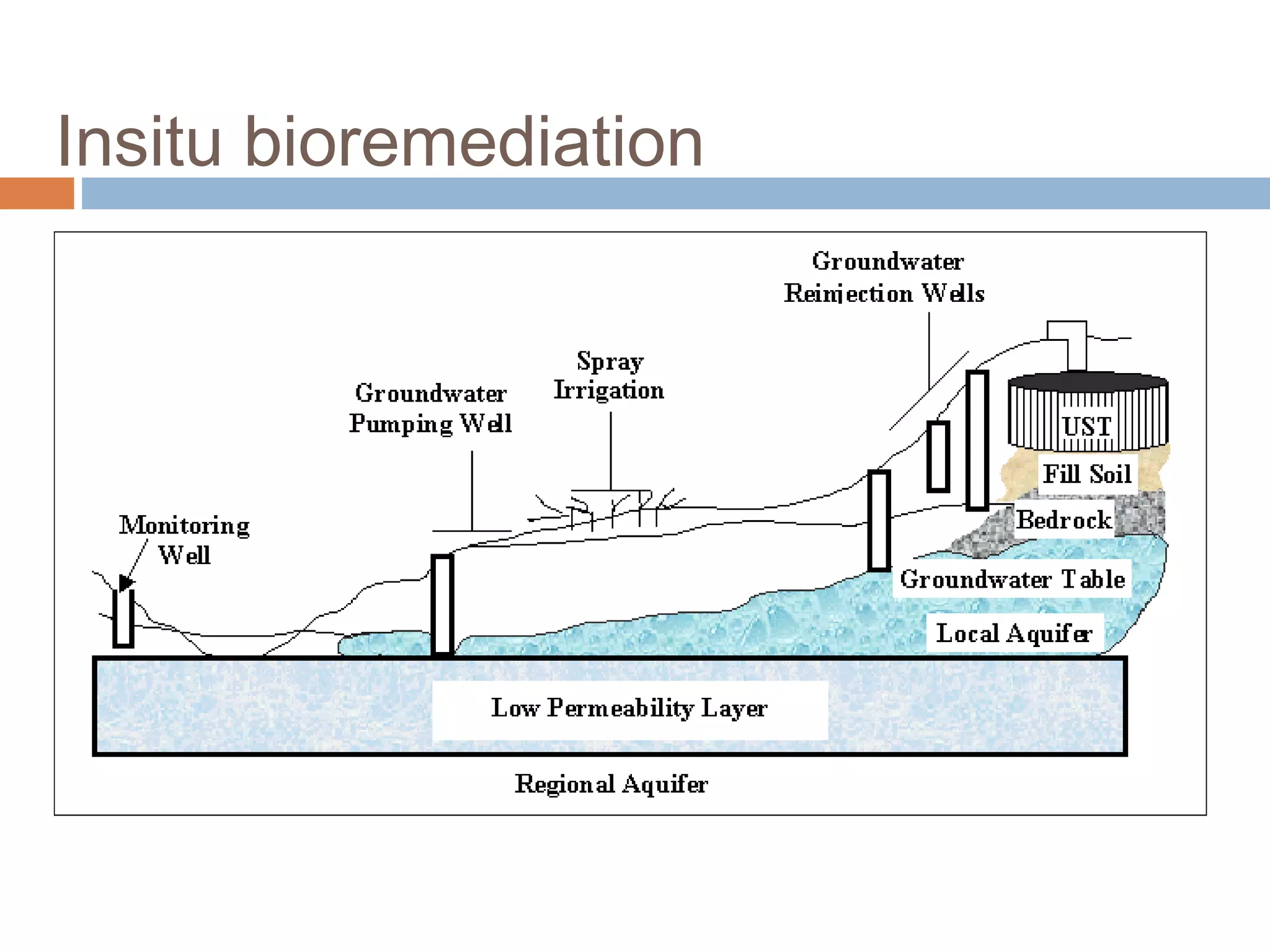
In Situ Bioremediation
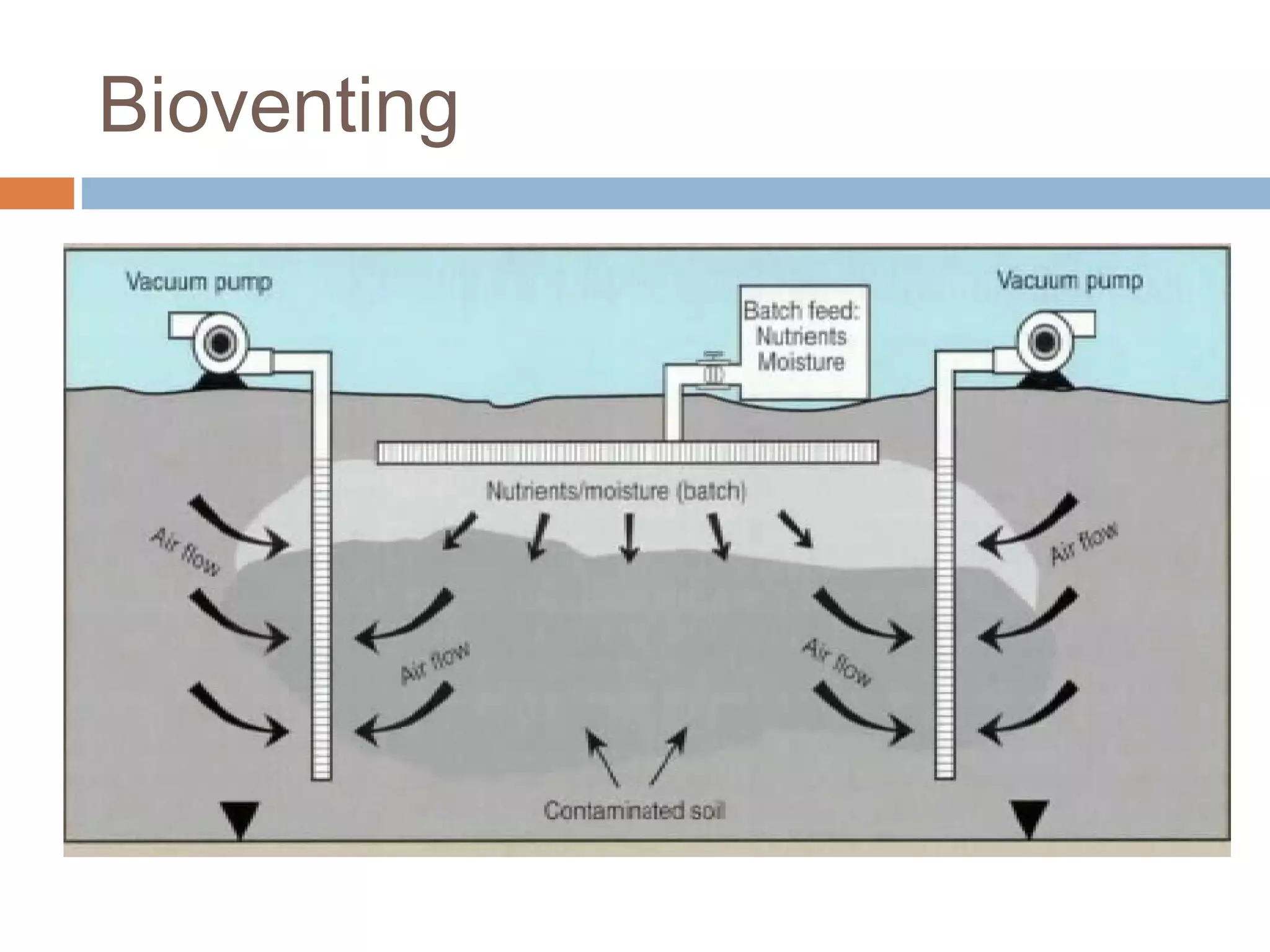
 Bioventing
 One of the most common approaches in soil
 Supply air and nutrients via wells
 Takes advantage of indigenous microorganisms
 In situ biodegradation
 Supply air and nutrients by circulating aqueous solutions
through contaminated soils or groundwater
 Biosparging
 Injection of air below the water table  increases groundwater
oxygen concentrations and mixing in saturated zone
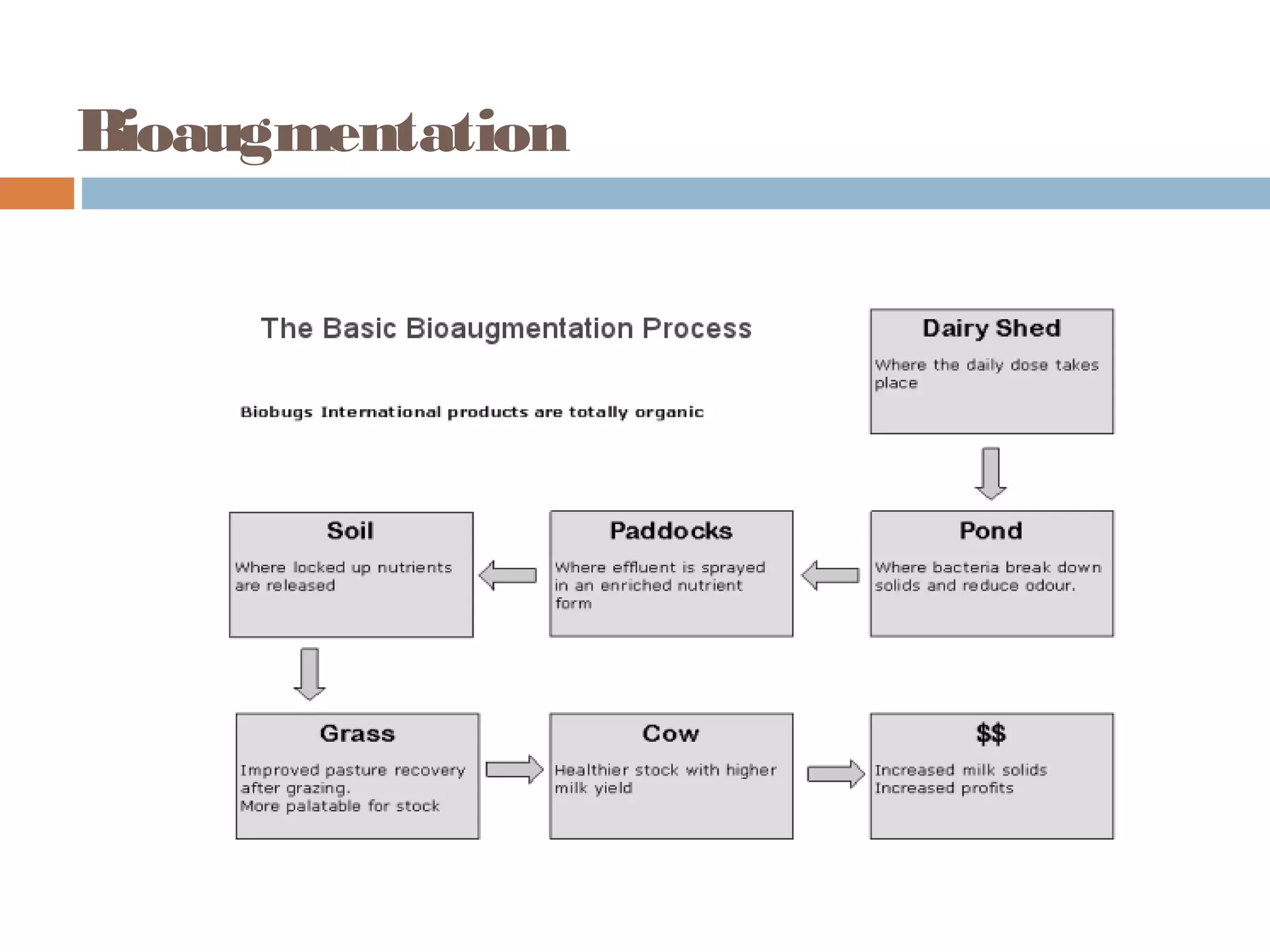
 Bioaugmentation
 Addition of indigenous or exogenous microorganisms
 Limits to use: competition and necessity
 Biostimulation
 Natural Attenuation orIntrinsic Bioremediation
Insitu bioremediation
Bioventing
Application of bioinventing
• Successful method for treating petroleum hydrocarbons and some
chlorinated solvents.
• Applicable in permeable soils (sand aquifers).
 Limitation
• Possible limitation of nutrient.
• Change in soil moisture can affect the load-bearing capacity.
• Significant masses of contaminants in low permeability zone.
 Advantage over conventional pump-and-treat approach
•
A greater ease of circulating air compared to circulating water.
• Easy transport of oxygen in air than in water.
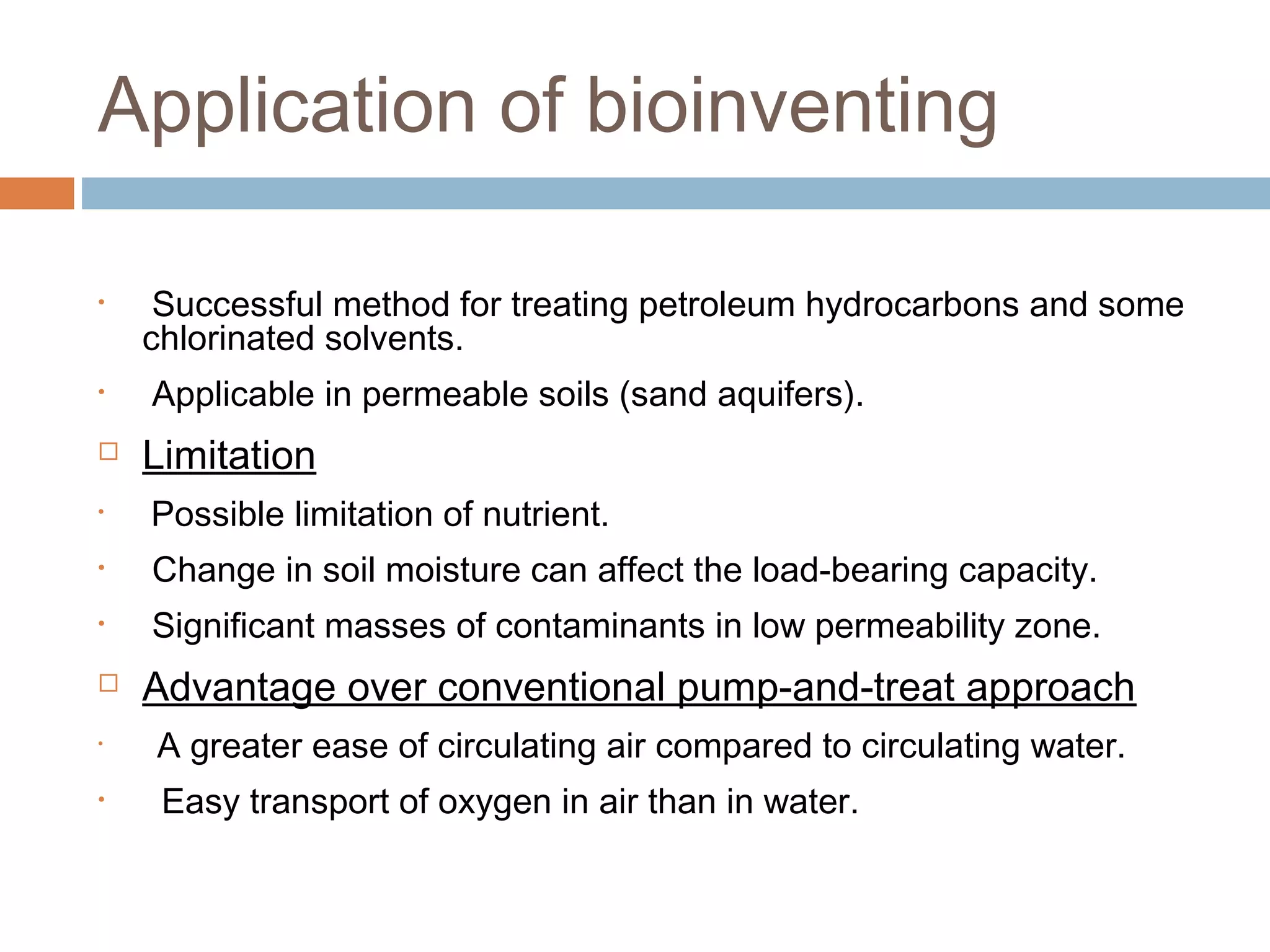
Biosparging
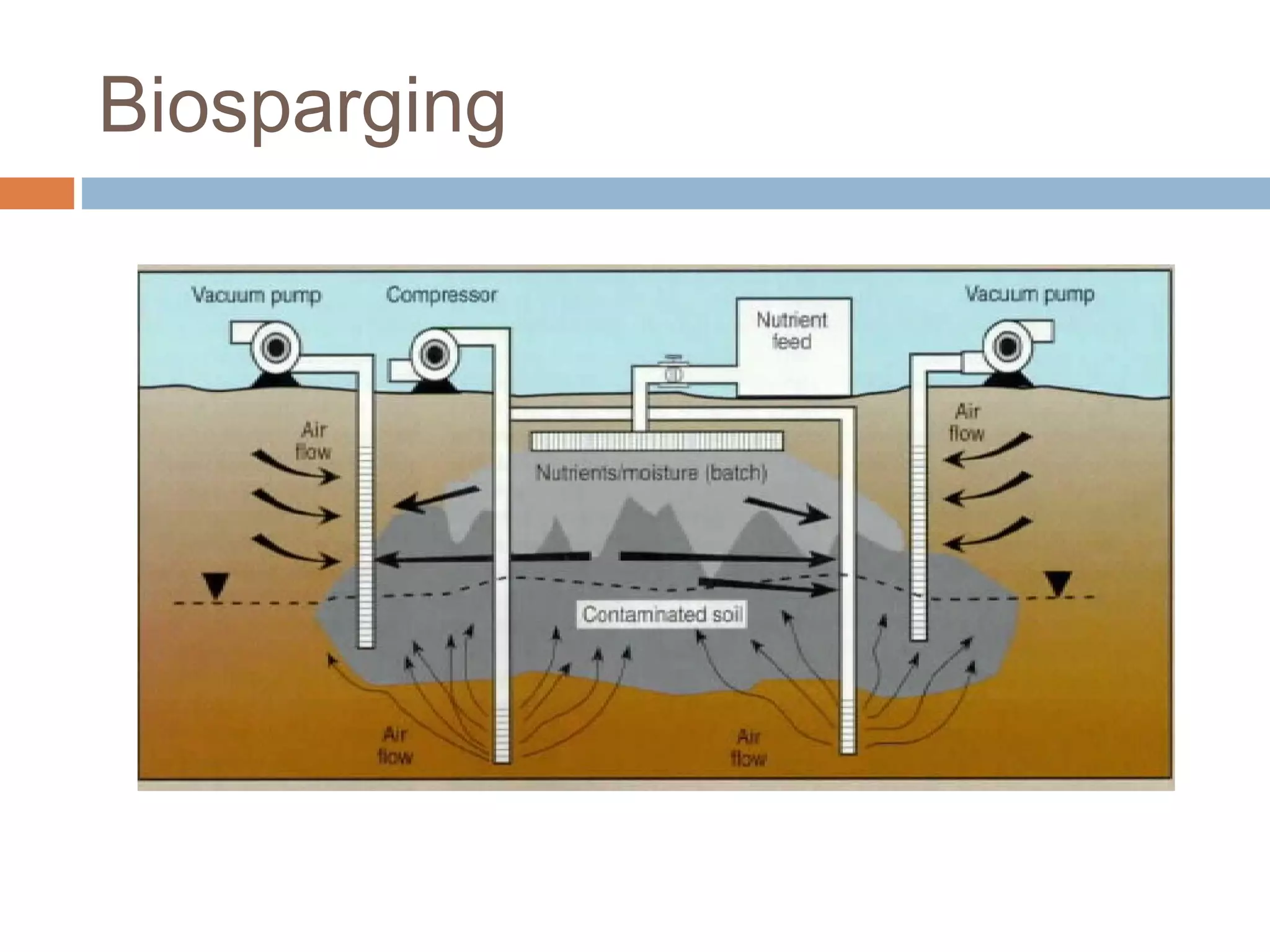
Biosparging
 Biosparging is an in-situ remediation
technology that uses indigenous
microorganisms to biodegrade organic
constituents in the saturated zone.
 In biosparging, air (or oxygen) and nutrients (if
needed) are injected into the saturated zone to
increase the biological activity of the
indigenous microorganisms.
Bioaugmentation
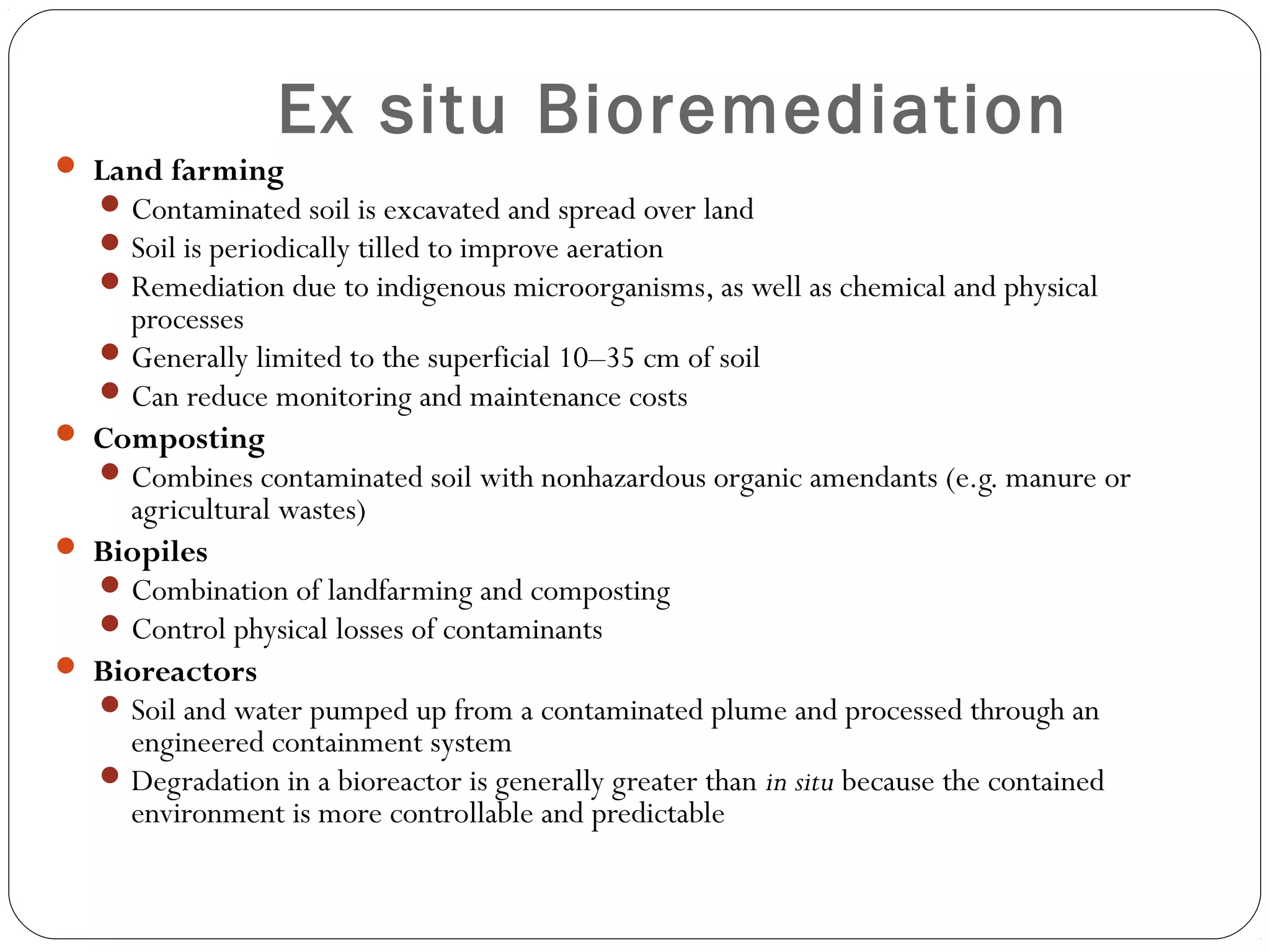
Ex situ Bioremediation
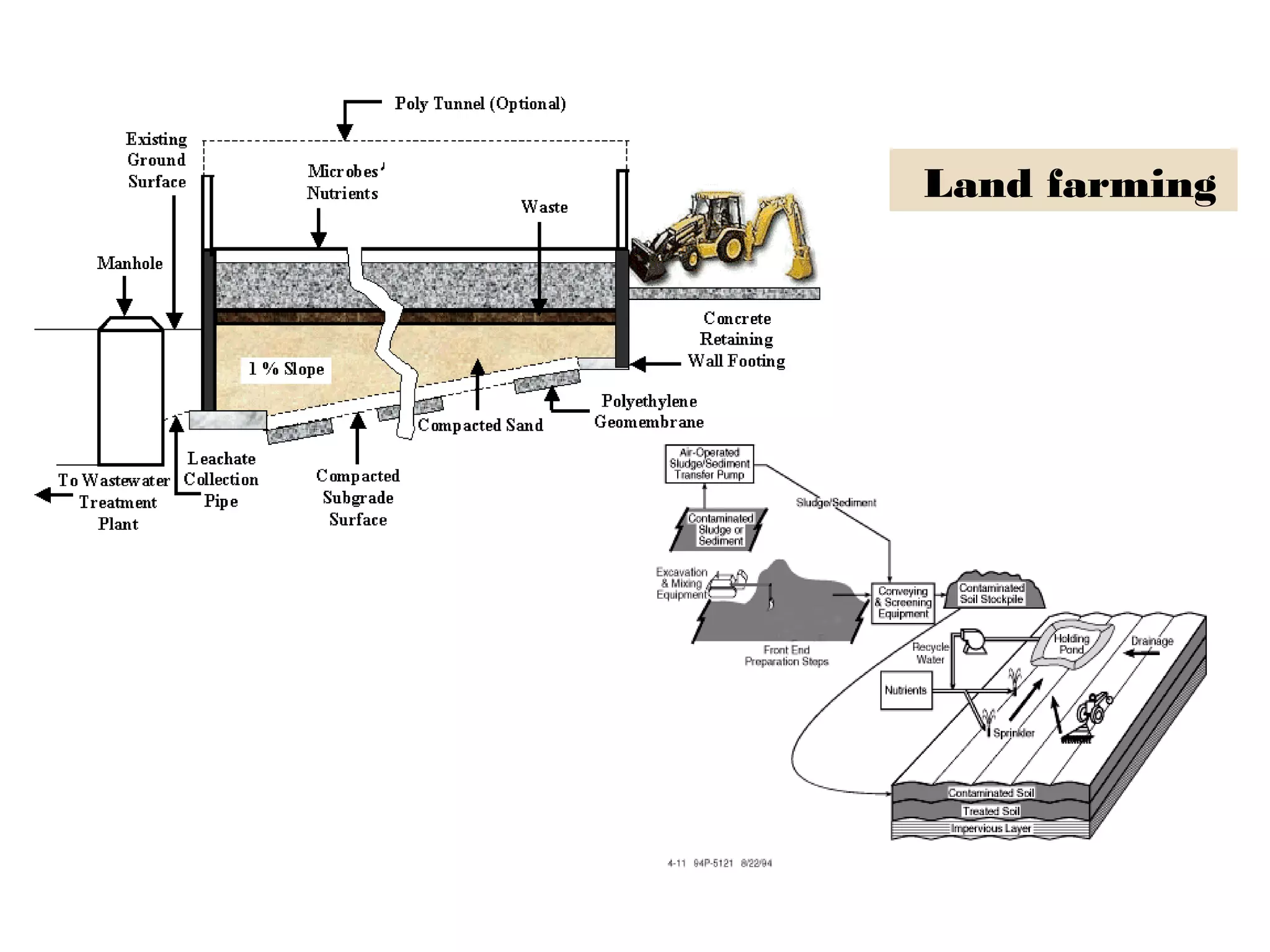
 Land farming
Contaminated soil is excavated and spread over land
Soil is periodically tilled to improve aeration
Remediation due to indigenous microorganisms, as well as chemical and physical
processes
Generally limited to the superficial 10–35 cm of soil
Can reduce monitoring and maintenance costs
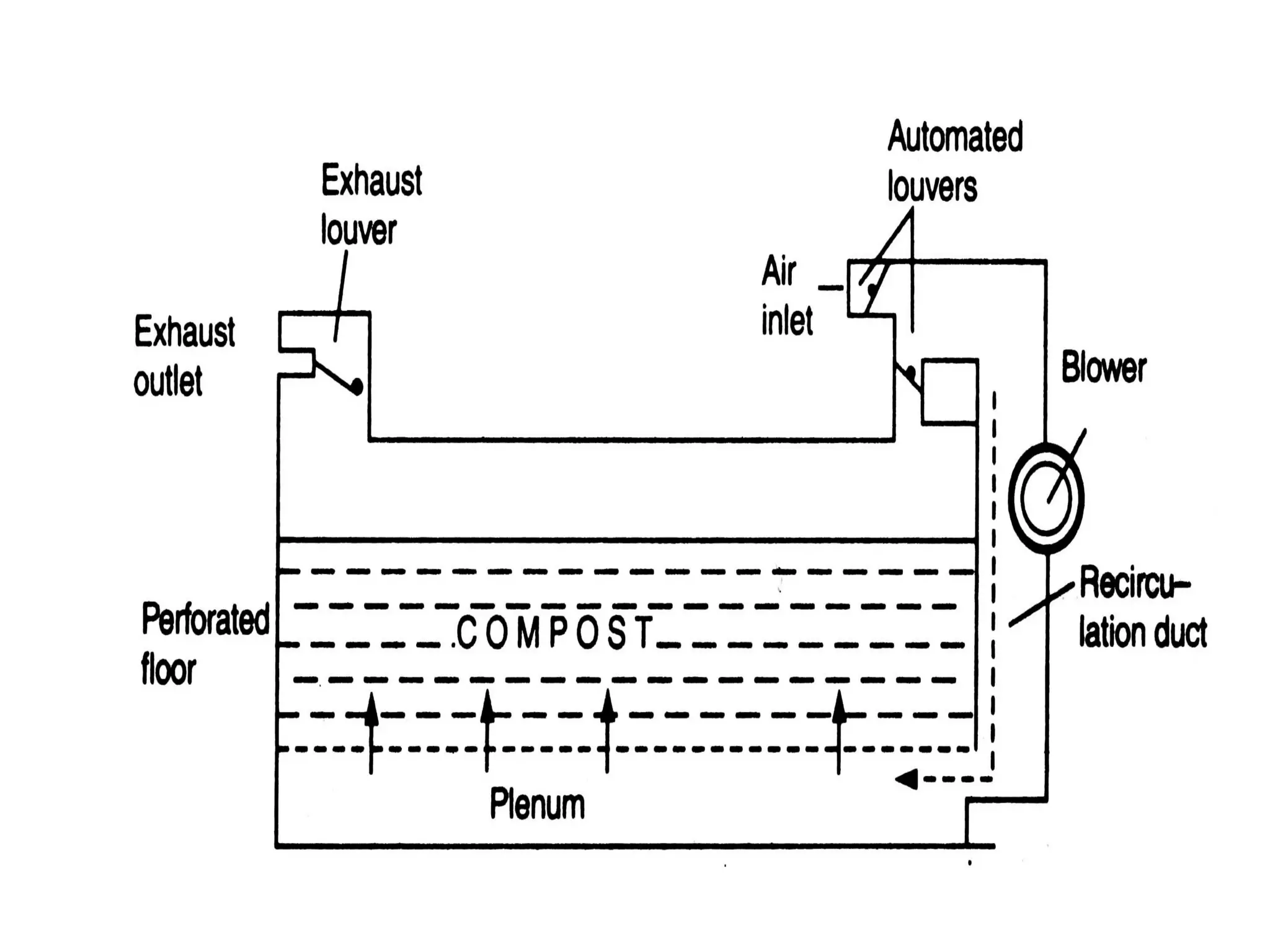
 Composting
Combines contaminated soil with nonhazardous organic amendants (e.g. manure or
agricultural wastes)
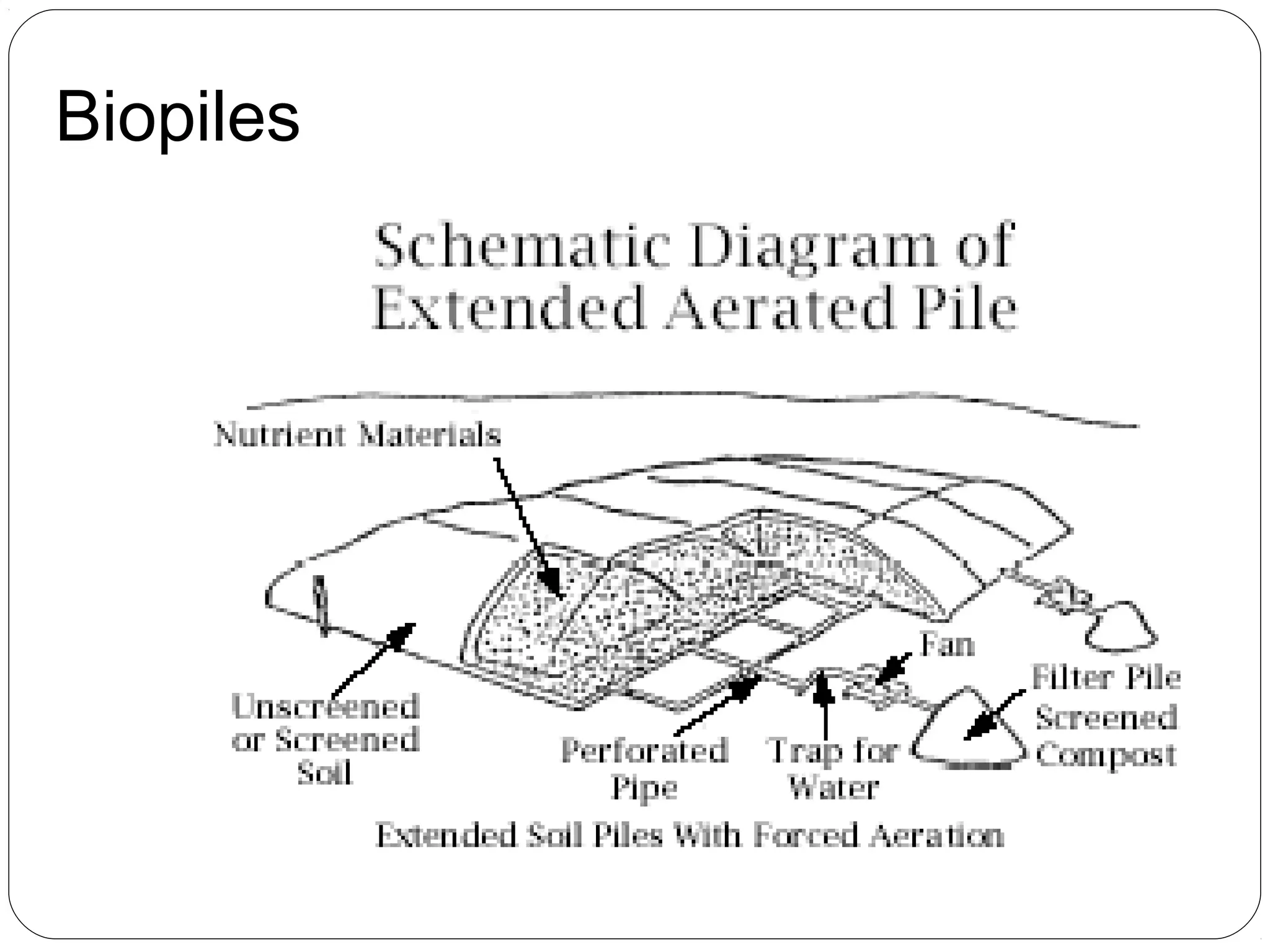
 Biopiles
Combination of landfarming and composting
Control physical losses of contaminants
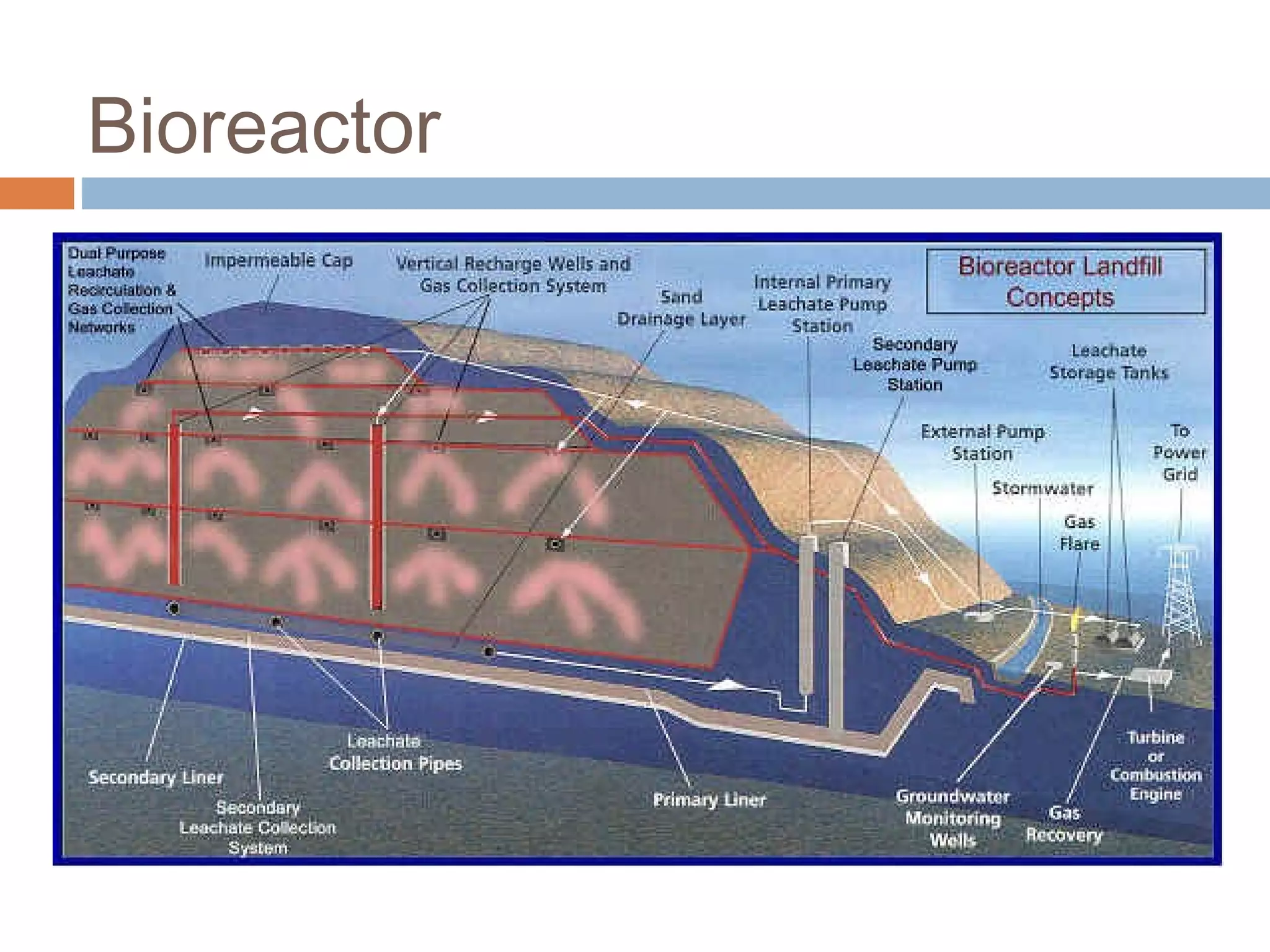
 Bioreactors
Soil and water pumped up from a contaminated plume and processed through an
engineered containment system
Degradation in a bioreactor is generally greater than in situ because the contained
environment is more controllable and predictable
Land farming
Biopiles
Composting
 Composting is not generally employed to treat
heavy metals or other inorganics,although it
may be applicable to inorganic cyanides. Other
studies have indicated that composting is
potentially effective in degrading or transforming
petroleum hydrocarbons and pesticides to
environmentally acceptable or less mobile
compounds
Bioreactor
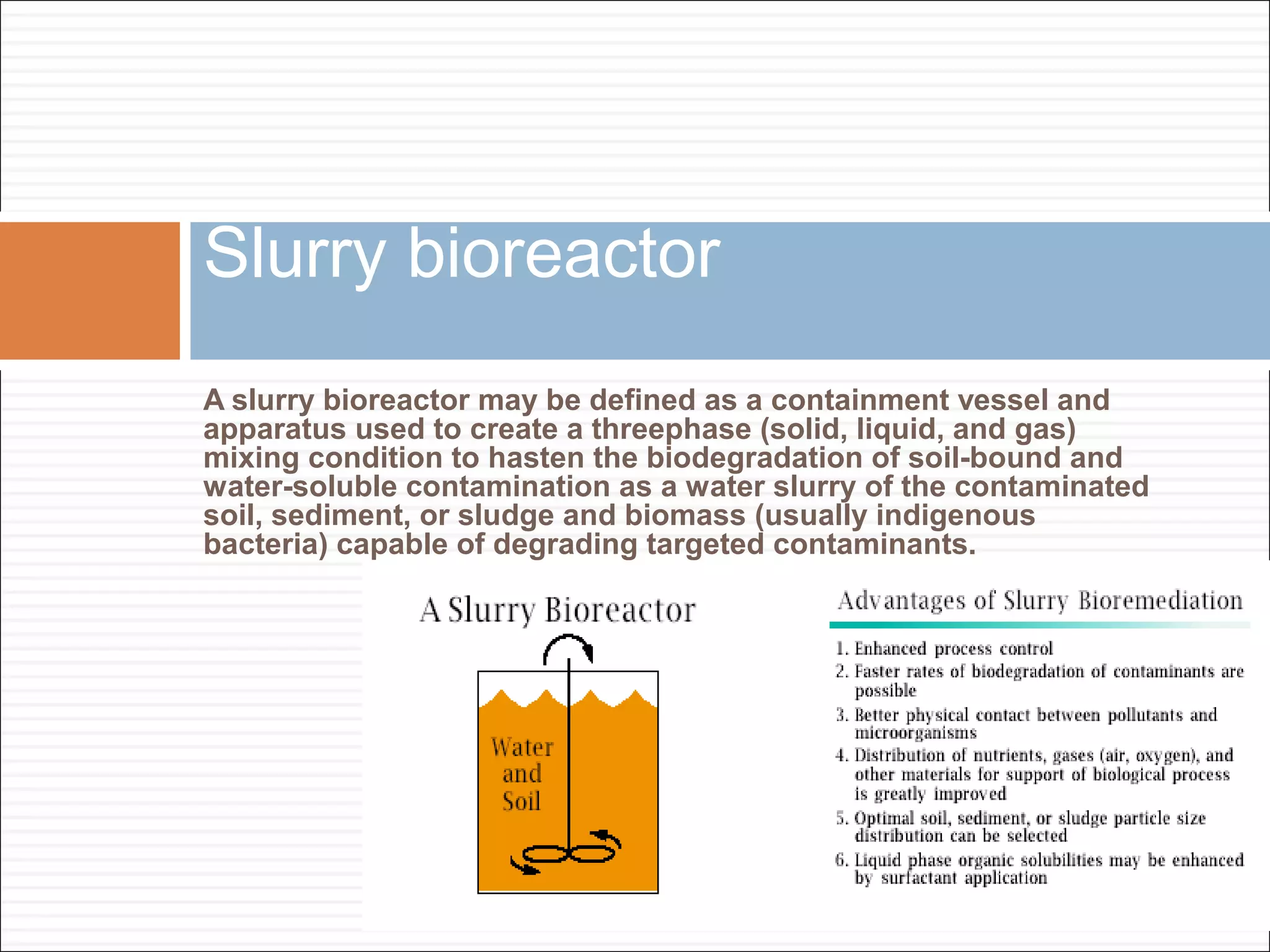
A slurry bioreactor may be defined as a containment vessel and
apparatus used to create a threephase (solid, liquid, and gas)
mixing condition to hasten the biodegradation of soil-bound and
water-soluble contamination as a water slurry of the contaminated
soil, sediment, or sludge and biomass (usually indigenous
bacteria) capable of degrading targeted contaminants.
Slurry bioreactor
Abhimanyu chauhan
By

introduction to Bioremediation and its type

  • 1.
  • 2.
    Bioremediation  Definition: Useof living organisms to transform, destroy or immobilize contaminants  Goal: Detoxification of the parent compound(s) and conversion to products that are no longer hazardous to human health and the environment.
  • 3.
    Forms of Bioremediation In situ Bioremediation: treating contamination at the site often used ( less movement )  Bioventing  biodegradation  Biosparging  Bioaugmentation  Ex situ Bioremediation  Remove contamination and treat elsewhere  Land farming  Composting  Biopiles
  • 4.
    Forms of Bioremediation Phytoremediation  Phytoextraction or phytoaccumulation  Phytodegradation or phytotransformation  Phytostabilization  Rhizodegradation  Rhizofiltration
  • 5.
    In Situ Bioremediation Bioventing  One of the most common approaches in soil  Supply air and nutrients via wells  Takes advantage of indigenous microorganisms  In situ biodegradation  Supply air and nutrients by circulating aqueous solutions through contaminated soils or groundwater  Biosparging  Injection of air below the water table  increases groundwater oxygen concentrations and mixing in saturated zone  Bioaugmentation  Addition of indigenous or exogenous microorganisms  Limits to use: competition and necessity  Biostimulation  Natural Attenuation orIntrinsic Bioremediation
  • 6.
  • 7.
  • 8.
    Application of bioinventing •Successful method for treating petroleum hydrocarbons and some chlorinated solvents. • Applicable in permeable soils (sand aquifers).  Limitation • Possible limitation of nutrient. • Change in soil moisture can affect the load-bearing capacity. • Significant masses of contaminants in low permeability zone.  Advantage over conventional pump-and-treat approach • A greater ease of circulating air compared to circulating water. • Easy transport of oxygen in air than in water.
  • 9.
  • 10.
    Biosparging  Biosparging is anin-situ remediation technology that uses indigenous microorganisms to biodegrade organic constituents in the saturated zone.  In biosparging, air (or oxygen) and nutrients (if needed) are injected into the saturated zone to increase the biological activity of the indigenous microorganisms.
  • 11.
  • 12.
    Ex situ Bioremediation Land farming Contaminated soil is excavated and spread over land Soil is periodically tilled to improve aeration Remediation due to indigenous microorganisms, as well as chemical and physical processes Generally limited to the superficial 10–35 cm of soil Can reduce monitoring and maintenance costs  Composting Combines contaminated soil with nonhazardous organic amendants (e.g. manure or agricultural wastes)  Biopiles Combination of landfarming and composting Control physical losses of contaminants  Bioreactors Soil and water pumped up from a contaminated plume and processed through an engineered containment system Degradation in a bioreactor is generally greater than in situ because the contained environment is more controllable and predictable
  • 13.
  • 14.
  • 15.
    Composting  Composting isnot generally employed to treat heavy metals or other inorganics,although it may be applicable to inorganic cyanides. Other studies have indicated that composting is potentially effective in degrading or transforming petroleum hydrocarbons and pesticides to environmentally acceptable or less mobile compounds
  • 17.
  • 18.
    A slurry bioreactormay be defined as a containment vessel and apparatus used to create a threephase (solid, liquid, and gas) mixing condition to hasten the biodegradation of soil-bound and water-soluble contamination as a water slurry of the contaminated soil, sediment, or sludge and biomass (usually indigenous bacteria) capable of degrading targeted contaminants. Slurry bioreactor
  • 20.