



1
Divya srivastava
BIOREMEDIATION
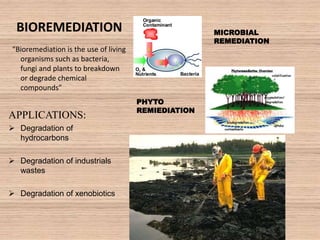
“Bioremediation is the use of living
organisms such as bacteria,
fungi and plants to breakdown
or degrade chemical
compounds”
APPLICATIONS:
 Degradation of
hydrocarbons
 Degradation of industrials
wastes
 Degradation of xenobiotics
MICROBIAL
REMEDIATION
PHYTO
REMIEDIATION
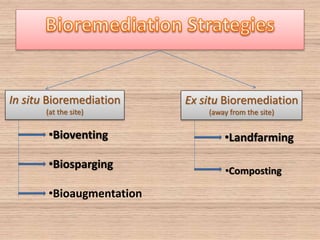
In situ Bioremediation
(at the site)
Ex situ Bioremediation
(away from the site)
•Biosparging
•Bioventing
•Bioaugmentation
•Landfarming
•Composting
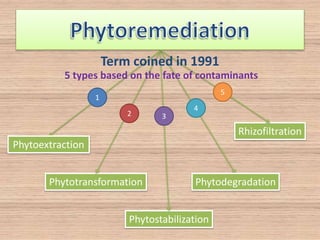
Phytoextraction
1
Phytotransformation
2
Phytostabilization
3
Phytodegradation
Rhizofiltration
4
5
Term coined in 1991
5 types based on the fate of contaminants
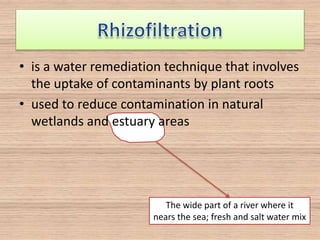
• is a water remediation technique that involves
the uptake of contaminants by plant roots
• used to reduce contamination in natural
wetlands and estuary areas
The wide part of a river where it
nears the sea; fresh and salt water mix
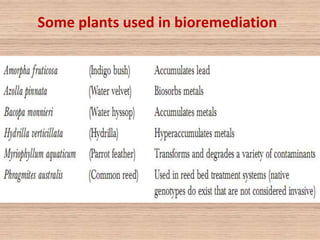
Some plants used in bioremediation
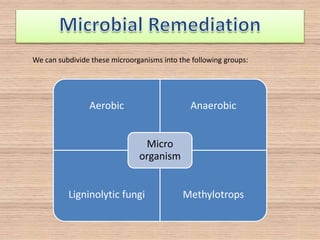
We can subdivide these microorganisms into the following groups:
Aerobic Anaerobic
Ligninolytic fungi Methylotrops
Micro
organism
ESSENTIAL FACTORS FOR MICROBIAL BIOREMEDIATION
Factor Desired Conditions
Microbial population
Suitable kinds of organisms that can
biodegrade all of the contaminants
Oxygen
Enough to support aerobic biodegradation
(about 2% oxygen in the gas phase or 0.4
mg/liter in the soil water)
Water
Soil moisture should be from 50–70% of the
water holding capacity of the soil
Nutrients
Nitrogen, phosphorus, sulfur, and other
nutrients to support good microbial growth
Temperature
Appropriate temperatures for microbial
growth (0–40˚C)
pH Best range is from 6.5 to 7.5
Case Study
• There is a new technique developed by TERI(The
Energy and Resource Institute, Govt of India) to clean
the oil spill by using a bacteria.This process Oil
zapping is used for bio-remediation process.It was
most recently used to clean oil spill at Mumbai
shore.There was a oil spill happened there in August
2010.There was collision between a cargo and
merchant ship resulting in 400 tons of oil leaked in
the sea.
A project relating to cleaning of Railadevi
Lake in Thane District in Maharashtra using
bio-remediation technique has been
sponsored to Thane Municipal Corporation.
Bio-remediation of Railadevi Lake in
Thane, Maharashtra
long duration of time for remediation
potential contamination of the vegetation and
food chain
difficulty establishing and maintaining
vegetation at some sites with high toxic levels
As per the Hazardous Wastes (M&H) Rules, 1989
and 2000, all hazardous wastes are required to be
treated and disposed off in the manner prescribed.
In the absence of common disposal facilities in the
country, permission has been granted to the
hazardous waste generating units in the small scale
sector, for storing their wastes temporarily in a
secure, lined pit/facility within their premises.
The scheme for “Registration of Recyclers/Reprocessors
of Wastes as Actual Users having Environmentally Sound
Management facilities” initiated in 1999, was continued
during the year and two meetings of the Registration
Committee were held. A total of 130 proposals were
considered in these meetings.
As on date, 234 units have been registered with the
Ministry, out of which 78 are used/waste oil reprocessors,
71 are lead scrap processing units while the remaining 83
are non-ferrous metal waste processing units.
Bioremediation
Bioremediation

Bioremediation

  • 1.
  • 2.
    BIOREMEDIATION “Bioremediation is theuse of living organisms such as bacteria, fungi and plants to breakdown or degrade chemical compounds” APPLICATIONS:  Degradation of hydrocarbons  Degradation of industrials wastes  Degradation of xenobiotics MICROBIAL REMEDIATION PHYTO REMIEDIATION
  • 3.
    In situ Bioremediation (atthe site) Ex situ Bioremediation (away from the site) •Biosparging •Bioventing •Bioaugmentation •Landfarming •Composting
  • 5.
  • 6.
    • is awater remediation technique that involves the uptake of contaminants by plant roots • used to reduce contamination in natural wetlands and estuary areas The wide part of a river where it nears the sea; fresh and salt water mix
  • 7.
    Some plants usedin bioremediation
  • 8.
    We can subdividethese microorganisms into the following groups: Aerobic Anaerobic Ligninolytic fungi Methylotrops Micro organism
  • 9.
    ESSENTIAL FACTORS FORMICROBIAL BIOREMEDIATION Factor Desired Conditions Microbial population Suitable kinds of organisms that can biodegrade all of the contaminants Oxygen Enough to support aerobic biodegradation (about 2% oxygen in the gas phase or 0.4 mg/liter in the soil water) Water Soil moisture should be from 50–70% of the water holding capacity of the soil Nutrients Nitrogen, phosphorus, sulfur, and other nutrients to support good microbial growth Temperature Appropriate temperatures for microbial growth (0–40˚C) pH Best range is from 6.5 to 7.5
  • 11.
    Case Study • Thereis a new technique developed by TERI(The Energy and Resource Institute, Govt of India) to clean the oil spill by using a bacteria.This process Oil zapping is used for bio-remediation process.It was most recently used to clean oil spill at Mumbai shore.There was a oil spill happened there in August 2010.There was collision between a cargo and merchant ship resulting in 400 tons of oil leaked in the sea.
  • 12.
    A project relatingto cleaning of Railadevi Lake in Thane District in Maharashtra using bio-remediation technique has been sponsored to Thane Municipal Corporation. Bio-remediation of Railadevi Lake in Thane, Maharashtra
  • 13.
    long duration oftime for remediation potential contamination of the vegetation and food chain difficulty establishing and maintaining vegetation at some sites with high toxic levels
  • 14.
    As per theHazardous Wastes (M&H) Rules, 1989 and 2000, all hazardous wastes are required to be treated and disposed off in the manner prescribed. In the absence of common disposal facilities in the country, permission has been granted to the hazardous waste generating units in the small scale sector, for storing their wastes temporarily in a secure, lined pit/facility within their premises.
  • 15.
    The scheme for“Registration of Recyclers/Reprocessors of Wastes as Actual Users having Environmentally Sound Management facilities” initiated in 1999, was continued during the year and two meetings of the Registration Committee were held. A total of 130 proposals were considered in these meetings. As on date, 234 units have been registered with the Ministry, out of which 78 are used/waste oil reprocessors, 71 are lead scrap processing units while the remaining 83 are non-ferrous metal waste processing units.