Strain Improvement
By
Hanif Alfavian
Improvement of strains
selecting suitable producing strains from a natural
population;
manipulation of the existing genetic apparatus in a
producing organism;
introducing new genetic properties into the organism by
recombinant DNA technology or genetic engineering.
Selection from Naturally
Occurring Variants
 Selection from natural variants is a regular feature of
industrial microbiology and biotechnology.
 Selection of this type is not only slow but its course is
largely outside the control of the biotechnologist, an
intolerable condition in the highly competitive world of
modern industry.
Methods of manipulating the genetic
apparatus of industrial organisms
A. Methods not involving foreign DNA
1. Conventional mutation
B. Methods involving DNA foreign to the
organism (i.e. recombination)
2. Transduction
3. Conjugation
4. Transformation
5. Heterokaryosis
6. Protoplast fusion
7. Genetic engineering
8. Metabolic engineering
9. Site-directed mutation
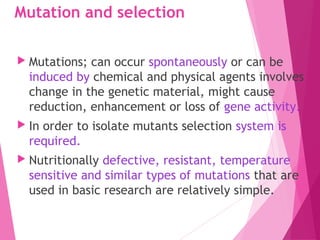
Mutation and selection
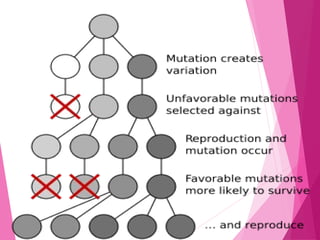
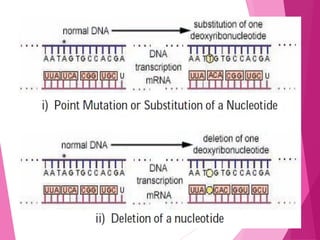
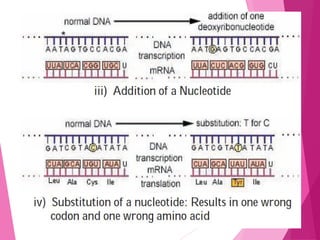
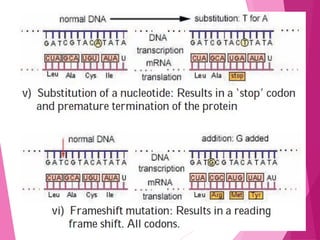
 Mutations; can occur spontaneously or can be
induced by chemical and physical agents involves
change in the genetic material, might cause
reduction, enhancement or loss of gene activity.
 In order to isolate mutants selection system is
required.
 Nutritionally defective, resistant, temperature
sensitive and similar types of mutations that are
used in basic research are relatively simple.
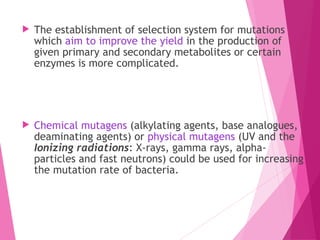
 The establishment of selection system for mutations
which aim to improve the yield in the production of
given primary and secondary metabolites or certain
enzymes is more complicated.
 Chemical mutagens (alkylating agents, base analogues,
deaminating agents) or physical mutagens (UV and the
Ionizing radiations: X-rays, gamma rays, alpha-
particles and fast neutrons) could be used for increasing
the mutation rate of bacteria.
Choice of mutagen
 Mutagenic agents are numerous but not
necessarily equally effective in all organisms.
 Other factors besides effectiveness to be borne
in mind are
(a)the safety of the mutagen: many mutagens are
carcinogens,
(b)simplicity of technique, and
(c)ready availability of the necessary equipment
and chemicals.
 Among physical agents, UV is to be preferred since it
does not require much equipment, and is relatively
effective and has been widely used in industry.
 Chemical methods other than NTG (nitrosoguanidine)
are probably best used in combination with UV.
 The disadvantage of UV is that it is absorbed by glass;
The practical isolation of
mutants
 There are three stages before a mutant can
come into use:
(i) Exposing organisms to the mutagen:
 The organism undergoing mutation should be in
the haploid stage during the exposure.
 Bacterial cells are haploid; in fungi and
actinomycetes the haploid stage is found in the
spores.
(ii) Selection for mutants:
 The selection of mutants is greatly facilitated by
relying on the morphology of the mutants or on
some selectivity in the medium.
 When morphological mutants are selected, it is
in the hope that the desired mutation is
pleotropic (i.e., a mutation in which change in
one property is linked with a mutation in
another character).
 The classic example of a pleotropic mutation
is to be seen in the development of penicillin-
yielding strains of Penicillium chrysogenum.
 It was found in the early days of the
development work on penicillin production
that after irradiation, strains of Penicillium
chrysogenum with smaller colonies and which
also sporulated poorly were better producers
of penicillin.
 Similar increases of metabolite production
associated with a morphological change have
been observed in organisms producing other
antibiotics: cycloheximide, nystatin, and
tetracyclines.
 In-built selectivity of the medium for mutants
over the parent cells may be achieved by
manipulating the medium.
 If, for example, it is desired to select for
mutants able to stand a higher concentration of
alcohol, an antibiotic, or some other chemical
substance, then the desired level of the material
is added to the medium on which the organisms
are plated.
 Only mutants able to survive the higher
concentration will develop.
 For example, we need special bacteria to
degrade specific pollutant substance.
 To find the most efficient one among them, we
can grow them on selective media, which
contain increasing concentrations of pollutant.
 However, as the concentration increase, the
number of surviving bacteria will decrease.
 The concentration of the toxic pollutant could
be gradually increased in the growth medium
thus selecting the most resistant ones. This
method is called acclimatization.
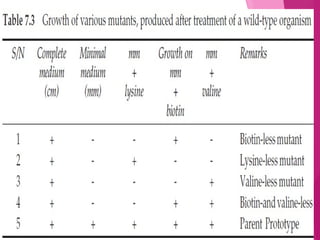
Isolation of auxotrophic mutants
 Auxotrophic mutants are those which lack the
enzymes to manufacture certain required
nutrients; consequently, such nutrients must
therefore be added to the growth medium.
 In contrast the wild-type or prototrophic
organisms possess all the enzymes needed to
synthesize all growth requirements.
 As auxotrophic mutants are often used in
industrial microbiology, e.g., for the production
of amino acids, nucleotides, etc., their
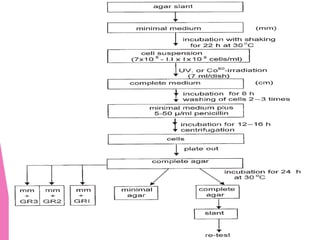
production will be described briefly below (Fig.
7.4).
 The organism (prototroph) is transferred from a
slant to a broth of the minimal medium (mm)
which is the basic medium that will support the
growth of the prototroph but not that of the
auxotroph.
 The auxotroph will only grow on the complete
medium, i.e., the minimal medium plus the
growth factor, amino-acid or vitamin which the
auxotroph cannot synthesize.
 The prototroph is shaken in the minimal broth for
22–24 hours, at the end of which period it is
subjected to mutagenic treatment.
 The mutagenized cells are now grown on the
complete medium for about 8 hours after which
they are washed several times.
 The washed cells are then shaken again in
minimal medium to which penicillin is added.
 The reason for the addition of penicillin is that
the antibiotic kills only dividing cells; as only
prototrophs will grow in the minimal medium
these are killed off leaving the auxotrophs.
 The cells are washed and plated out on the
complete agar medium.
 The composition of the medium on which the
auxotroph will grow indicates the metabolite it
cannot synthesize; for example when the
auxotroph requires lysine it is designated a
‘lysineless’ mutant.
Genetic engineering
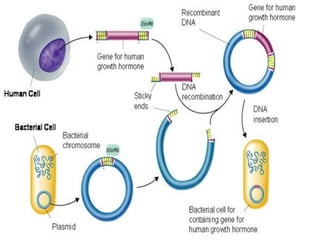
 Genetic engineering, also known as recombinant
DNA technology, molecular cloning or gene cloning
Recombinant DNA Technology enables isolation
of genes from an organism, this gene can be
amplified, studied, altered & put into another
organism  
 Recombinant DNA procedure:
i. Cutting of donor DNA : Restriction endonucleases
cut DNA molecule at specific sites and desired
fragment is isolated by gel electrophoresis.  
ii. Cloning of a gene : DNA fragment, which wanted
to be cloned, is joined to one of vectors (plasmid,
phage, cosmid). For this purpose, vector and donor
DNA are first cleaved with the same restriction
endonuclease, or with the ones producing the same
ends.
 Then using DNA ligase, DNA fragment and vector
DNA is joined. If fragment has no sticky ends,
homopolymer tailing or linker DNA segments can
be applied for this step.
iii. Transformation : Recombinant vector is put
into suitable host organism, like; bacteria,
yeast, plant or animal cells, by several physical
or chemical methods. Transformed cells are
identified by several ways:
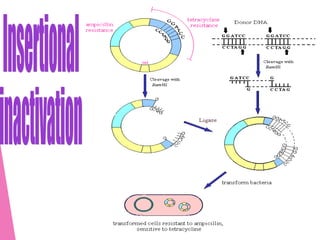
a. Insertional inactivation (of antibiotic resistant
genes on plasmids),
b. nucleic acid hybridization
c. labeled Ab's for specific proteins
(immunological test) are helpful for screening
recombinant colonies.
b. Nucleic acid hybridization 
 Probe is nucleic acid sequence of the gene
of interest, can be whole or partial
sequence, can be RNA or DNA
 C . probes
 If nucleic acid sequence of interested gene is
known, synthetic probes can be designed
easily, also amino acid sequence is used for
probe preparation.
Vectors
•small, circular, dispensable genetic elements, found in
most prokaryotic and some eukaryotic species.
•have replication origin and can replicate autonomously
in the host cell.
•can be beneficial to host cell, since it can provide drug
or heavy metal resistance or produce some toxic
proteins.
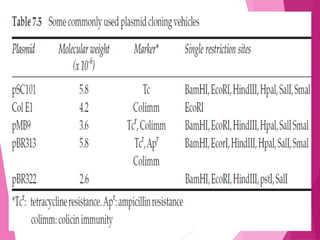
•artificial plasmids can be constructed with useful
characteristics of natural plasmids for the purpose of
cloning
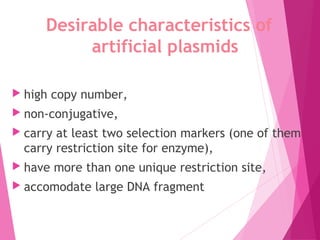
Desirable characteristics of
artificial plasmids
 high copy number,
 non-conjugative,
 carry at least two selection markers (one of them
carry restriction site for enzyme),
 have more than one unique restriction site,
 accomodate large DNA fragment
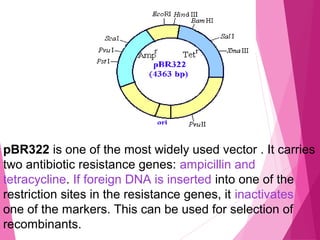
pBR322 is one of the most widely used vector . It carries
two antibiotic resistance genes: ampicillin and
tetracycline. If foreign DNA is inserted into one of the
restriction sites in the resistance genes, it inactivates
one of the markers. This can be used for selection of
recombinants.
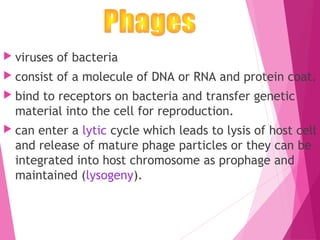
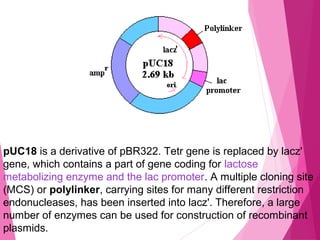
pUC18 is a derivative of pBR322. Tetr gene is replaced by lacz'
gene, which contains a part of gene coding for lactose
metabolizing enzyme and the lac promoter. A multiple cloning site
(MCS) or polylinker, carrying sites for many different restriction
endonucleases, has been inserted into lacz'. Therefore, a large
number of enzymes can be used for construction of recombinant
plasmids.
 viruses of bacteria
 consist of a molecule of DNA or RNA and protein coat.
 bind to receptors on bacteria and transfer genetic
material into the cell for reproduction.
 can enter a lytic cycle which leads to lysis of host cell
and release of mature phage particles or they can be
integrated into host chromosome as prophage and
maintained (lysogeny).
M13
Phage lambda
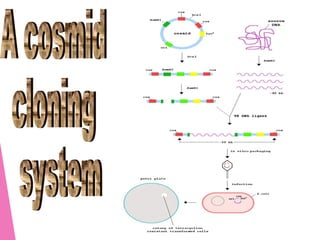
 are artificial vectors prepared by DNA segments
from plasmids and phages.
 replicate in the host cell like plasmids at a high
copy number.
 like phage vectors, contain cos sequences, in vitro
packaging is possible.
 transformation efficiency is higher than plasmid
vectors since transformation occurs by infection.
 carry a selectable genetic marker and cloning sites.
 ~40 kb fragments can be inserted between cos sites
•In cloning vectors aim is to increase the copy of foreign
gene in the host organism. However, purpose of using
expression vectors is to synthesize specific protein from
inserted DNA fragment.
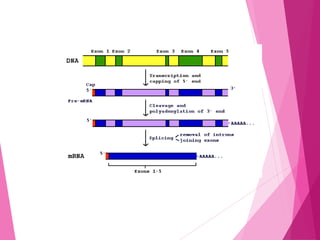
•During expression of genes, mRNA is processed by
eucaryotic systems via splicing, polyadenylation and
capping, which are not performed by procaryotic
species.
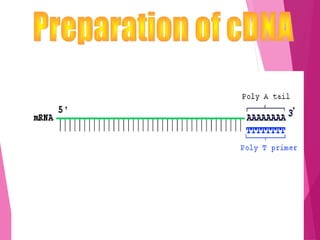
•For expression of eucaryotic genes in procaryotic
systems cDNA is used, since no processing is possible
like eucaryotes.
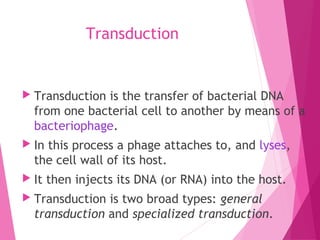
Transduction
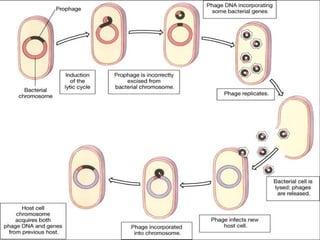
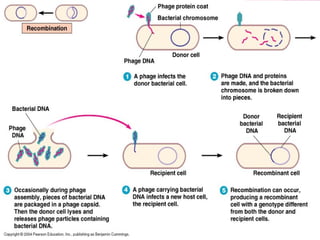
 Transduction is the transfer of bacterial DNA
from one bacterial cell to another by means of a
bacteriophage.
 In this process a phage attaches to, and lyses,
the cell wall of its host.
 It then injects its DNA (or RNA) into the host.
 Transduction is two broad types: general
transduction and specialized transduction.
 In general transduction, host DNA from any
part of the host’s genetic apparatus is
integrated into the virus DNA.
 In specialized transduction, which occurs only
in some temperate phages, DNA from a specific
region of the host DNA is integrated into the
viral DNA and replaces some of the virus’
genes.
 The method is a well-established research tool
in bacteria including actinomycetes but
prospects for its use in fungi appear limited.
Transformation
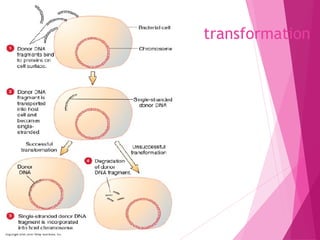
 When foreign DNA is absorbed by, and
integrates with the genome of, the donor cell.
 Cells in which transformation can occur are
‘competent’ cells.
 In some cases competence is artificially induced
by treatment with a calcium salt.
 The method has also been used to increase the
level of protease and amylase production in
Bacillus spp.
 The method therefore has good industrial
potential.
transformation
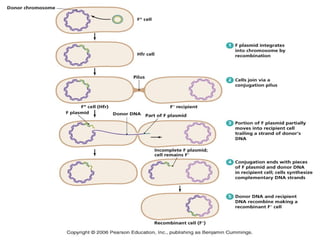
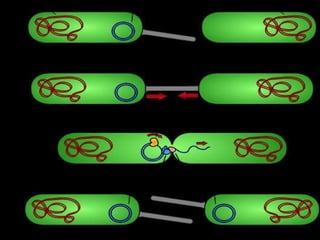
Conjugation
 Conjugation involves cell to cell contact or
through sex pili (singular, pilus) and the transfer
of plasmids.
 The donor strain’s plasmid must possess a sex
factor as a prerequisite for conjugation; only
donor cells produce pili.
 The sex factor may on occasion transfer part of
the hosts’ DNA.
 Mycelial ‘conjugation’ takes place among
actinomycetes with DNA transfer as in the case of
eubacteria.
 Plasmids play an important role in the formation
of some industrial products, including many
antibiotics.
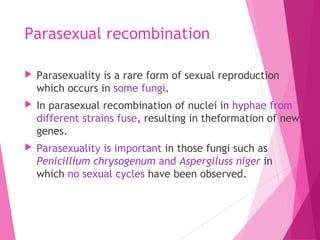
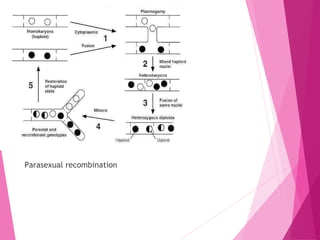
Parasexual recombination
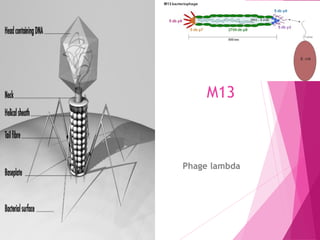
 Parasexuality is a rare form of sexual reproduction
which occurs in some fungi.
 In parasexual recombination of nuclei in hyphae from
different strains fuse, resulting in theformation of new
genes.
 Parasexuality is important in those fungi such as
Penicillium chrysogenum and Aspergiluss niger in
which no sexual cycles have been observed.
 It has been used to select organisms with higher yields
of various industrial product such as phenoxy methyl
penicillin, citric acid, and gluconic acid.
 Parasexuality has not become widely successful in
industry because the diploid strains are unstable and
tend to revert to their lower-yielding wild-type
parents.
 More importantly is that the diploids are not always as
high yielding as the parents.
Parasexual recombination
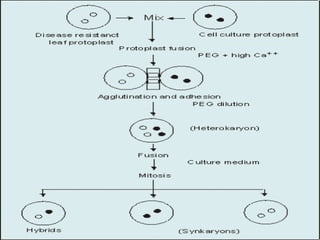
Protoplast fusion
 Protoplasts are formed from bacteria, fungi, yeasts and
actinomycetes when dividing cells are caused to lose their cell
walls.
 Protoplast fusion enables recombination in strains without
efficient means of conjugation such as actinomycetes.
 Fusion from mixed populations of protoplasts is greatly
enhanced by the use of polyethylene glycol (PEG).
 Protoplast fusion has been successfully done
with Bacillus subtilis and B. megaterium and
among several species of Streptomyces (S.
coeli-color, S. acrimycini, S. olividans, S.
pravulies) has been done between the fungi
Geotrichum and Aspergillus.
 The method has great industrial potential and
experimentally has been used to achieve
higher yields of antibiotics through fusion with
protoplasts from different fungi.
Site-directed mutation
 The mutation is caused by in vitro change
directed at a specific site in a DNA molecule.
 The DNA of the specific gene to be mutated is
isolated, and the sequence of bases in the gene
determined.
 Certain pre-determined bases are replaced and
the ‘new’ gene is reinserted into the organism.
 It has helped to raise the industrial production of
enzymes, as well as to produce specific enzymes.
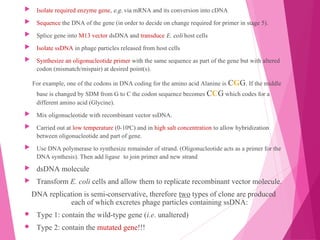
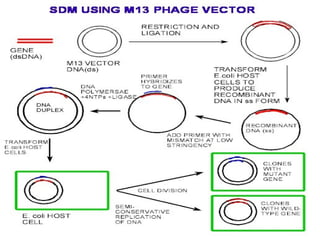
 Isolate required enzyme gene, e.g. via mRNA and its conversion into cDNA
 Sequence the DNA of the gene (in order to decide on change required for primer in stage 5).
 Splice gene into M13 vector dsDNA and transduce E. coli host cells
 Isolate ssDNA in phage particles released from host cells
 Synthesize an oligonucleotide primer with the same sequence as part of the gene but with altered
codon (mismatch/mispair) at desired point(s).
For example, one of the codons in DNA coding for the amino acid Alanine is CGG. If the middle
base is changed by SDM from G to C the codon sequence becomes CCG which codes for a
different amino acid (Glycine).
 Mix oligonucleotide with recombinant vector ssDNA.
 Carried out at low temperature (0-10o
C) and in high salt concentration to allow hybridization
between oligonucleotide and part of gene.
 Use DNA polymerase to synthesize remainder of strand. (Oligonucleotide acts as a primer for the
DNA synthesis). Then add ligase to join primer and new strand 
 dsDNA molecule
 Transform E. coli cells and allow them to replicate recombinant vector molecule.
DNA replication is semi-conservative, therefore two types of clone are produced
each of which excretes phage particles containing ssDNA:
 Type 1: contain the wild-type gene (i.e. unaltered)
 Type 2: contain the mutated gene!!!
Metabolic engineering
 Enables the rational designing or
redesigning of metabolic pathways
of an organism through the
manipulation of the genes so as to
maximize the production of
biotechnological goods.
 The existing pathways are modified,
or entirely new ones introduced
through the manipulation of the
genes so as to improve the yields of
the microbial product, eliminate or
reduce undesirable side products or
shift to the production of an
entirely new product.
 Metabolic engineering is the logical end of
site-directed mutagenesis.
 It has been used to overproduce the amino
acid isoluecine in Corynebacterium
glutamicum, and ethanol by E. coli and has
been employed to introduce the gene for
utilizing lactose into Corynebacterium
glutamicum thus making it possible for the
organism to utilize whey which is plentiful and
cheap.

Strain improvement-main

  • 1.
  • 3.
    Improvement of strains selectingsuitable producing strains from a natural population; manipulation of the existing genetic apparatus in a producing organism; introducing new genetic properties into the organism by recombinant DNA technology or genetic engineering.
  • 4.
    Selection from Naturally OccurringVariants  Selection from natural variants is a regular feature of industrial microbiology and biotechnology.  Selection of this type is not only slow but its course is largely outside the control of the biotechnologist, an intolerable condition in the highly competitive world of modern industry.
  • 5.
    Methods of manipulatingthe genetic apparatus of industrial organisms A. Methods not involving foreign DNA 1. Conventional mutation B. Methods involving DNA foreign to the organism (i.e. recombination) 2. Transduction 3. Conjugation 4. Transformation 5. Heterokaryosis 6. Protoplast fusion 7. Genetic engineering 8. Metabolic engineering 9. Site-directed mutation
  • 6.
    Mutation and selection Mutations; can occur spontaneously or can be induced by chemical and physical agents involves change in the genetic material, might cause reduction, enhancement or loss of gene activity.  In order to isolate mutants selection system is required.  Nutritionally defective, resistant, temperature sensitive and similar types of mutations that are used in basic research are relatively simple.
  • 8.
     The establishmentof selection system for mutations which aim to improve the yield in the production of given primary and secondary metabolites or certain enzymes is more complicated.  Chemical mutagens (alkylating agents, base analogues, deaminating agents) or physical mutagens (UV and the Ionizing radiations: X-rays, gamma rays, alpha- particles and fast neutrons) could be used for increasing the mutation rate of bacteria.
  • 12.
    Choice of mutagen Mutagenic agents are numerous but not necessarily equally effective in all organisms.  Other factors besides effectiveness to be borne in mind are (a)the safety of the mutagen: many mutagens are carcinogens, (b)simplicity of technique, and (c)ready availability of the necessary equipment and chemicals.
  • 13.
     Among physicalagents, UV is to be preferred since it does not require much equipment, and is relatively effective and has been widely used in industry.  Chemical methods other than NTG (nitrosoguanidine) are probably best used in combination with UV.  The disadvantage of UV is that it is absorbed by glass;
  • 14.
    The practical isolationof mutants  There are three stages before a mutant can come into use: (i) Exposing organisms to the mutagen:  The organism undergoing mutation should be in the haploid stage during the exposure.  Bacterial cells are haploid; in fungi and actinomycetes the haploid stage is found in the spores.
  • 15.
    (ii) Selection formutants:  The selection of mutants is greatly facilitated by relying on the morphology of the mutants or on some selectivity in the medium.  When morphological mutants are selected, it is in the hope that the desired mutation is pleotropic (i.e., a mutation in which change in one property is linked with a mutation in another character).
  • 16.
     The classicexample of a pleotropic mutation is to be seen in the development of penicillin- yielding strains of Penicillium chrysogenum.  It was found in the early days of the development work on penicillin production that after irradiation, strains of Penicillium chrysogenum with smaller colonies and which also sporulated poorly were better producers of penicillin.  Similar increases of metabolite production associated with a morphological change have been observed in organisms producing other antibiotics: cycloheximide, nystatin, and tetracyclines.
  • 17.
     In-built selectivityof the medium for mutants over the parent cells may be achieved by manipulating the medium.  If, for example, it is desired to select for mutants able to stand a higher concentration of alcohol, an antibiotic, or some other chemical substance, then the desired level of the material is added to the medium on which the organisms are plated.  Only mutants able to survive the higher concentration will develop.  For example, we need special bacteria to degrade specific pollutant substance.
  • 18.
     To findthe most efficient one among them, we can grow them on selective media, which contain increasing concentrations of pollutant.  However, as the concentration increase, the number of surviving bacteria will decrease.  The concentration of the toxic pollutant could be gradually increased in the growth medium thus selecting the most resistant ones. This method is called acclimatization.
  • 19.
    Isolation of auxotrophicmutants  Auxotrophic mutants are those which lack the enzymes to manufacture certain required nutrients; consequently, such nutrients must therefore be added to the growth medium.  In contrast the wild-type or prototrophic organisms possess all the enzymes needed to synthesize all growth requirements.  As auxotrophic mutants are often used in industrial microbiology, e.g., for the production of amino acids, nucleotides, etc., their production will be described briefly below (Fig. 7.4).
  • 21.
     The organism(prototroph) is transferred from a slant to a broth of the minimal medium (mm) which is the basic medium that will support the growth of the prototroph but not that of the auxotroph.  The auxotroph will only grow on the complete medium, i.e., the minimal medium plus the growth factor, amino-acid or vitamin which the auxotroph cannot synthesize.  The prototroph is shaken in the minimal broth for 22–24 hours, at the end of which period it is subjected to mutagenic treatment.  The mutagenized cells are now grown on the complete medium for about 8 hours after which they are washed several times.  The washed cells are then shaken again in minimal medium to which penicillin is added.
  • 22.
     The reasonfor the addition of penicillin is that the antibiotic kills only dividing cells; as only prototrophs will grow in the minimal medium these are killed off leaving the auxotrophs.  The cells are washed and plated out on the complete agar medium.  The composition of the medium on which the auxotroph will grow indicates the metabolite it cannot synthesize; for example when the auxotroph requires lysine it is designated a ‘lysineless’ mutant.
  • 24.
    Genetic engineering  Geneticengineering, also known as recombinant DNA technology, molecular cloning or gene cloning Recombinant DNA Technology enables isolation of genes from an organism, this gene can be amplified, studied, altered & put into another organism    Recombinant DNA procedure: i. Cutting of donor DNA : Restriction endonucleases cut DNA molecule at specific sites and desired fragment is isolated by gel electrophoresis.   ii. Cloning of a gene : DNA fragment, which wanted to be cloned, is joined to one of vectors (plasmid, phage, cosmid). For this purpose, vector and donor DNA are first cleaved with the same restriction endonuclease, or with the ones producing the same ends.
  • 26.
     Then usingDNA ligase, DNA fragment and vector DNA is joined. If fragment has no sticky ends, homopolymer tailing or linker DNA segments can be applied for this step. iii. Transformation : Recombinant vector is put into suitable host organism, like; bacteria, yeast, plant or animal cells, by several physical or chemical methods. Transformed cells are identified by several ways: a. Insertional inactivation (of antibiotic resistant genes on plasmids), b. nucleic acid hybridization c. labeled Ab's for specific proteins (immunological test) are helpful for screening recombinant colonies.
  • 28.
    b. Nucleic acidhybridization   Probe is nucleic acid sequence of the gene of interest, can be whole or partial sequence, can be RNA or DNA  C . probes  If nucleic acid sequence of interested gene is known, synthetic probes can be designed easily, also amino acid sequence is used for probe preparation.
  • 29.
    Vectors •small, circular, dispensablegenetic elements, found in most prokaryotic and some eukaryotic species. •have replication origin and can replicate autonomously in the host cell. •can be beneficial to host cell, since it can provide drug or heavy metal resistance or produce some toxic proteins. •artificial plasmids can be constructed with useful characteristics of natural plasmids for the purpose of cloning
  • 30.
    Desirable characteristics of artificialplasmids  high copy number,  non-conjugative,  carry at least two selection markers (one of them carry restriction site for enzyme),  have more than one unique restriction site,  accomodate large DNA fragment
  • 32.
    pBR322 is oneof the most widely used vector . It carries two antibiotic resistance genes: ampicillin and tetracycline. If foreign DNA is inserted into one of the restriction sites in the resistance genes, it inactivates one of the markers. This can be used for selection of recombinants.
  • 33.
    pUC18 is aderivative of pBR322. Tetr gene is replaced by lacz' gene, which contains a part of gene coding for lactose metabolizing enzyme and the lac promoter. A multiple cloning site (MCS) or polylinker, carrying sites for many different restriction endonucleases, has been inserted into lacz'. Therefore, a large number of enzymes can be used for construction of recombinant plasmids.
  • 34.
     viruses ofbacteria  consist of a molecule of DNA or RNA and protein coat.  bind to receptors on bacteria and transfer genetic material into the cell for reproduction.  can enter a lytic cycle which leads to lysis of host cell and release of mature phage particles or they can be integrated into host chromosome as prophage and maintained (lysogeny).
  • 35.
  • 36.
     are artificialvectors prepared by DNA segments from plasmids and phages.  replicate in the host cell like plasmids at a high copy number.  like phage vectors, contain cos sequences, in vitro packaging is possible.  transformation efficiency is higher than plasmid vectors since transformation occurs by infection.  carry a selectable genetic marker and cloning sites.  ~40 kb fragments can be inserted between cos sites
  • 38.
    •In cloning vectorsaim is to increase the copy of foreign gene in the host organism. However, purpose of using expression vectors is to synthesize specific protein from inserted DNA fragment. •During expression of genes, mRNA is processed by eucaryotic systems via splicing, polyadenylation and capping, which are not performed by procaryotic species. •For expression of eucaryotic genes in procaryotic systems cDNA is used, since no processing is possible like eucaryotes.
  • 41.
    Transduction  Transduction isthe transfer of bacterial DNA from one bacterial cell to another by means of a bacteriophage.  In this process a phage attaches to, and lyses, the cell wall of its host.  It then injects its DNA (or RNA) into the host.  Transduction is two broad types: general transduction and specialized transduction.
  • 44.
     In generaltransduction, host DNA from any part of the host’s genetic apparatus is integrated into the virus DNA.  In specialized transduction, which occurs only in some temperate phages, DNA from a specific region of the host DNA is integrated into the viral DNA and replaces some of the virus’ genes.  The method is a well-established research tool in bacteria including actinomycetes but prospects for its use in fungi appear limited.
  • 45.
    Transformation  When foreignDNA is absorbed by, and integrates with the genome of, the donor cell.  Cells in which transformation can occur are ‘competent’ cells.  In some cases competence is artificially induced by treatment with a calcium salt.  The method has also been used to increase the level of protease and amylase production in Bacillus spp.  The method therefore has good industrial potential.
  • 46.
  • 47.
    Conjugation  Conjugation involvescell to cell contact or through sex pili (singular, pilus) and the transfer of plasmids.  The donor strain’s plasmid must possess a sex factor as a prerequisite for conjugation; only donor cells produce pili.  The sex factor may on occasion transfer part of the hosts’ DNA.  Mycelial ‘conjugation’ takes place among actinomycetes with DNA transfer as in the case of eubacteria.  Plasmids play an important role in the formation of some industrial products, including many antibiotics.
  • 50.
    Parasexual recombination  Parasexualityis a rare form of sexual reproduction which occurs in some fungi.  In parasexual recombination of nuclei in hyphae from different strains fuse, resulting in theformation of new genes.  Parasexuality is important in those fungi such as Penicillium chrysogenum and Aspergiluss niger in which no sexual cycles have been observed.
  • 51.
     It hasbeen used to select organisms with higher yields of various industrial product such as phenoxy methyl penicillin, citric acid, and gluconic acid.  Parasexuality has not become widely successful in industry because the diploid strains are unstable and tend to revert to their lower-yielding wild-type parents.  More importantly is that the diploids are not always as high yielding as the parents.
  • 52.
  • 53.
    Protoplast fusion  Protoplastsare formed from bacteria, fungi, yeasts and actinomycetes when dividing cells are caused to lose their cell walls.  Protoplast fusion enables recombination in strains without efficient means of conjugation such as actinomycetes.  Fusion from mixed populations of protoplasts is greatly enhanced by the use of polyethylene glycol (PEG).
  • 54.
     Protoplast fusionhas been successfully done with Bacillus subtilis and B. megaterium and among several species of Streptomyces (S. coeli-color, S. acrimycini, S. olividans, S. pravulies) has been done between the fungi Geotrichum and Aspergillus.  The method has great industrial potential and experimentally has been used to achieve higher yields of antibiotics through fusion with protoplasts from different fungi.
  • 56.
    Site-directed mutation  Themutation is caused by in vitro change directed at a specific site in a DNA molecule.  The DNA of the specific gene to be mutated is isolated, and the sequence of bases in the gene determined.  Certain pre-determined bases are replaced and the ‘new’ gene is reinserted into the organism.  It has helped to raise the industrial production of enzymes, as well as to produce specific enzymes.
  • 57.
     Isolate requiredenzyme gene, e.g. via mRNA and its conversion into cDNA  Sequence the DNA of the gene (in order to decide on change required for primer in stage 5).  Splice gene into M13 vector dsDNA and transduce E. coli host cells  Isolate ssDNA in phage particles released from host cells  Synthesize an oligonucleotide primer with the same sequence as part of the gene but with altered codon (mismatch/mispair) at desired point(s). For example, one of the codons in DNA coding for the amino acid Alanine is CGG. If the middle base is changed by SDM from G to C the codon sequence becomes CCG which codes for a different amino acid (Glycine).  Mix oligonucleotide with recombinant vector ssDNA.  Carried out at low temperature (0-10o C) and in high salt concentration to allow hybridization between oligonucleotide and part of gene.  Use DNA polymerase to synthesize remainder of strand. (Oligonucleotide acts as a primer for the DNA synthesis). Then add ligase to join primer and new strand   dsDNA molecule  Transform E. coli cells and allow them to replicate recombinant vector molecule. DNA replication is semi-conservative, therefore two types of clone are produced each of which excretes phage particles containing ssDNA:  Type 1: contain the wild-type gene (i.e. unaltered)  Type 2: contain the mutated gene!!!
  • 59.
    Metabolic engineering  Enablesthe rational designing or redesigning of metabolic pathways of an organism through the manipulation of the genes so as to maximize the production of biotechnological goods.  The existing pathways are modified, or entirely new ones introduced through the manipulation of the genes so as to improve the yields of the microbial product, eliminate or reduce undesirable side products or shift to the production of an entirely new product.
  • 60.
     Metabolic engineeringis the logical end of site-directed mutagenesis.  It has been used to overproduce the amino acid isoluecine in Corynebacterium glutamicum, and ethanol by E. coli and has been employed to introduce the gene for utilizing lactose into Corynebacterium glutamicum thus making it possible for the organism to utilize whey which is plentiful and cheap.