PETROLEUM
BIODEGRADATION
BIOREMEDIATION

JOSCEL P. ENARDECIDO
Terminologies Defined:
• Petroleuma
naturally
occuring
flammable liquid consisting of a complex
mixture of hydrocarbons that are found in
geologic formations beneath the earth’s
surface.
Aliphatic Hydrocarbons- any large
class of organic compounds whose
carbon atoms are joined in straight chains
rather than in rings.
• Interface - part where oil and water meet
often occur in large scale.
• Bioremediation- refers to the process of
using microorganisms in cleaning up oil
spills and other pollutants.
• Bioaugmentation- introduction of
microorganisms to augment the process.
• Biostimulation- addition of nutrients and
oxygen to stimulate the growth of
indigenous microorganisms.
Components of petroleum
• Hydrocarbons- main component of
Petroleum;
Characteristics of Oil
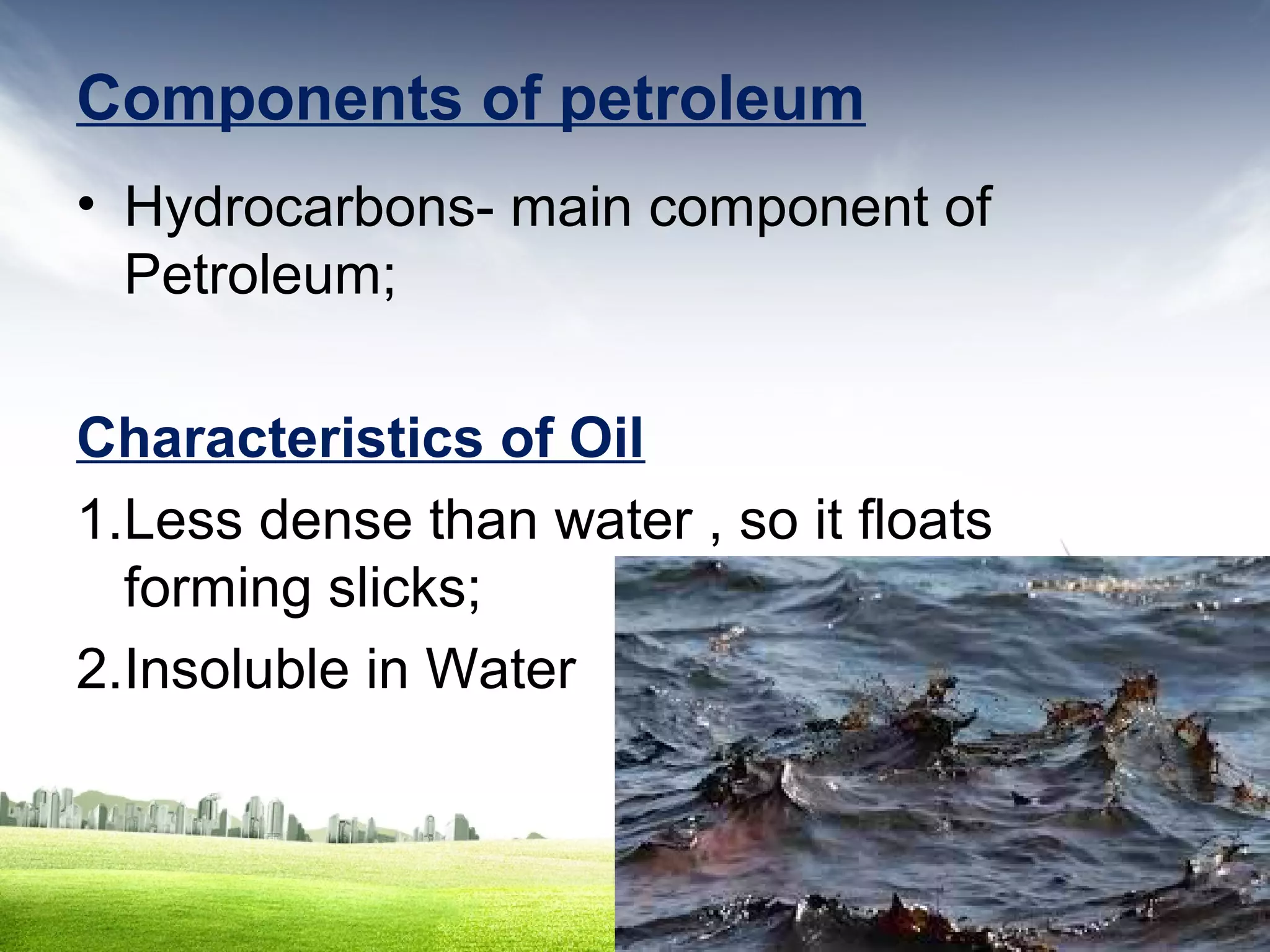
1.Less dense than water , so it floats
forming slicks;
2.Insoluble in Water
PRINCIPLES OF BIOREMEDIATION

• Bioremediation uses
microorganisms and other living
organisms to transform organic
pollutants into less toxic forms.
• Biodegradation is the initial
process that results to
bioremediation.
FACTORS IN BIOREMEDIATION
1. Existence of a microbial population
capable of degrading the pollutants;
2. The availability of contaminants to the
microbial population e.g. oil
3. The environment factors (type of soil,
temperature, pH, the presence of oxygen
or other electron acceptors, and
nutrients).
MICROBIAL POPULATIONS FOR
BIOREMEDIATION PROCESSES
Availability Microbes can be:
1.Indigenous- microorganisms are present
in the contaminated site. Biostimulation is
needed.
2.Bioaugmentation- introduction of
microorganisms from other environment.
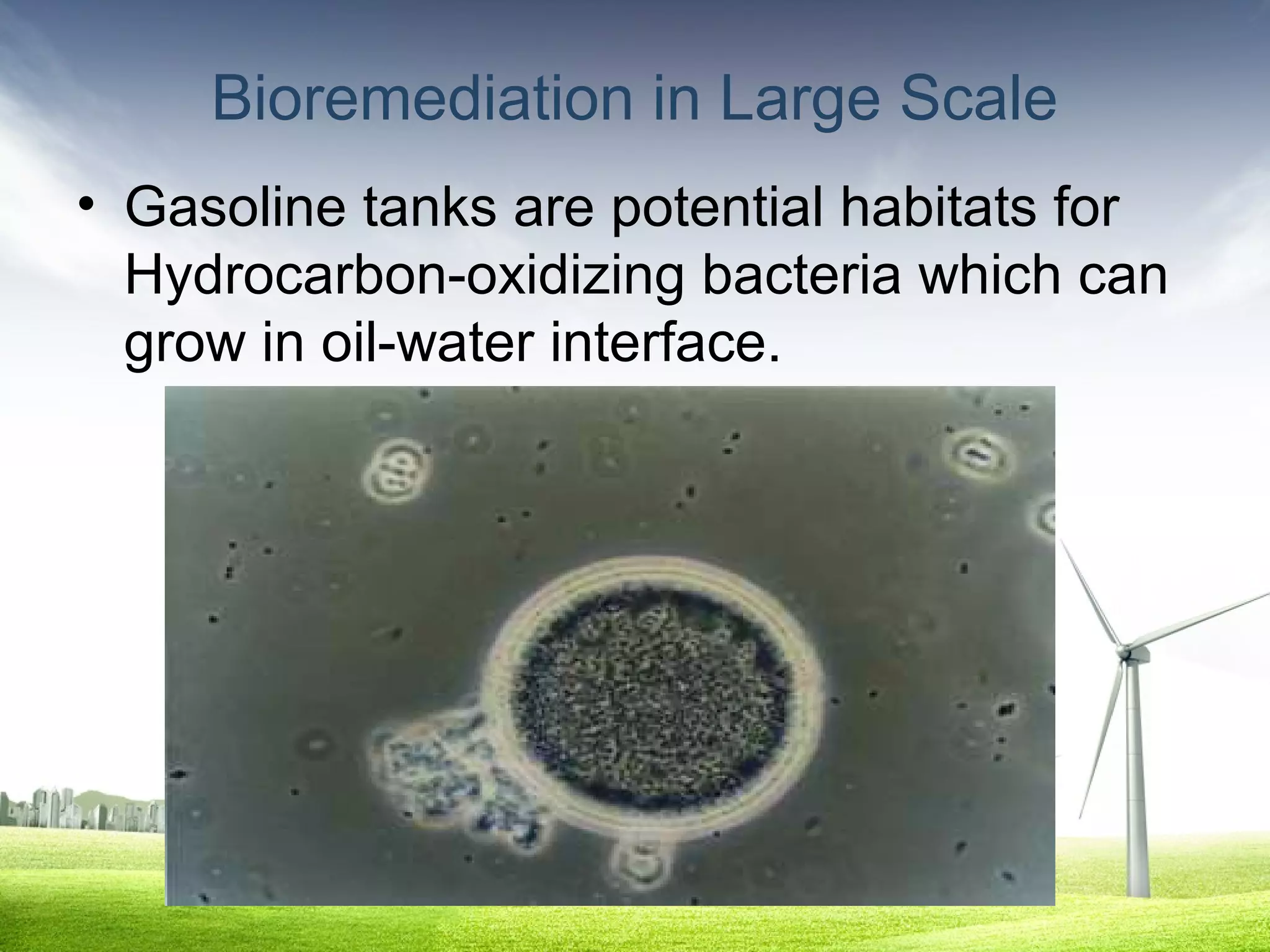
Bioremediation in Large Scale
• Gasoline tanks are potential habitats for
Hydrocarbon-oxidizing bacteria which can
grow in oil-water interface.
HYDROCARBON DEGRADATION
HYDROCARBON DECOMPOSERS:
1.Hydrocarbonoclastic Bacteria ( HCB)
- Gammaproteobacteria
Alcanivorax sp., Marinobacter)
- Alphabacteria

(Rhodobacteriaceae)
-Pseudomonas, Alcaligenes,
Sphingomonas, Rhodococcus, and

(
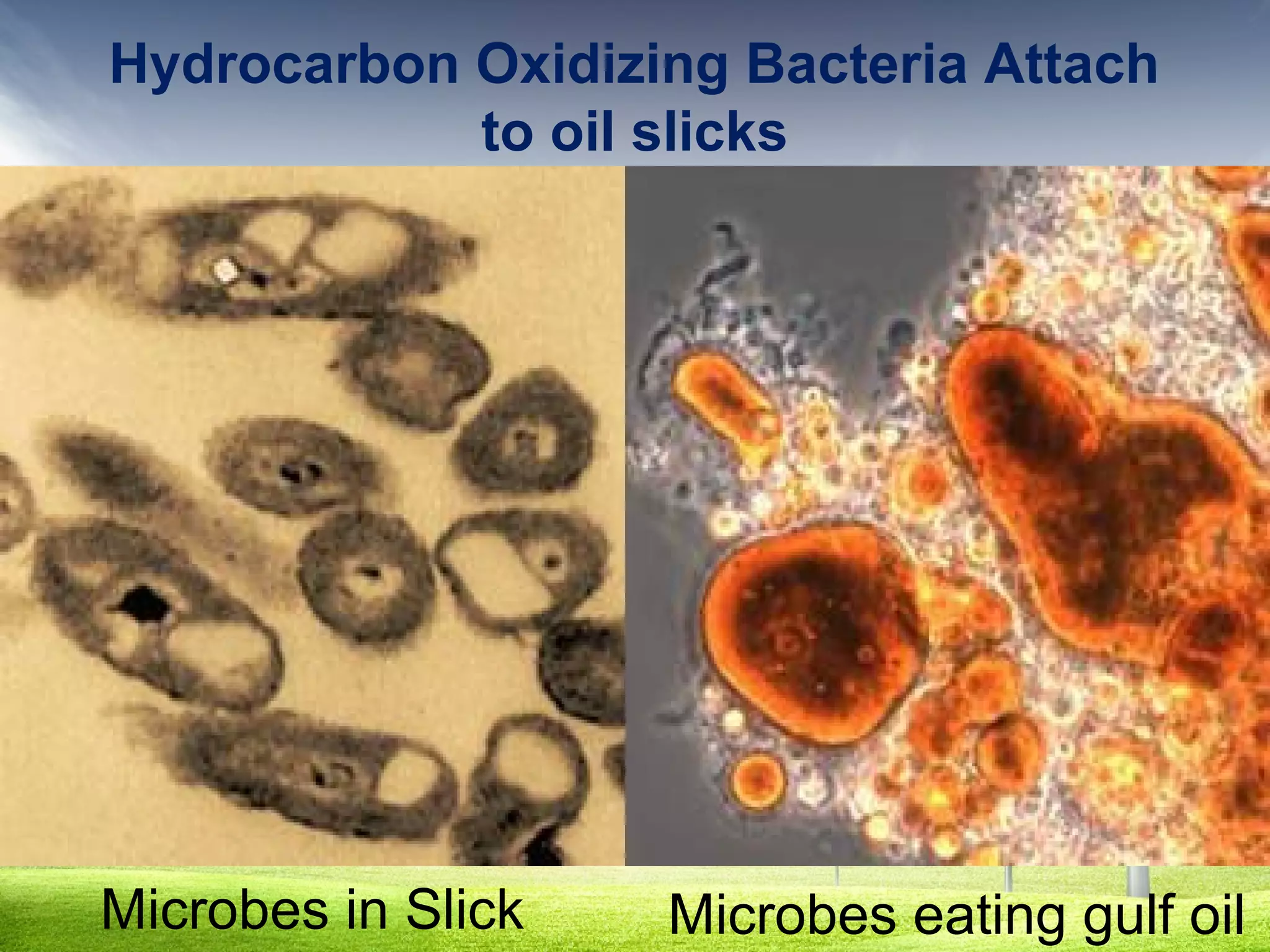
Hydrocarbon Oxidizing Bacteria Attach
to oil slicks

Microbes in Slick

Microbes eating gulf oil
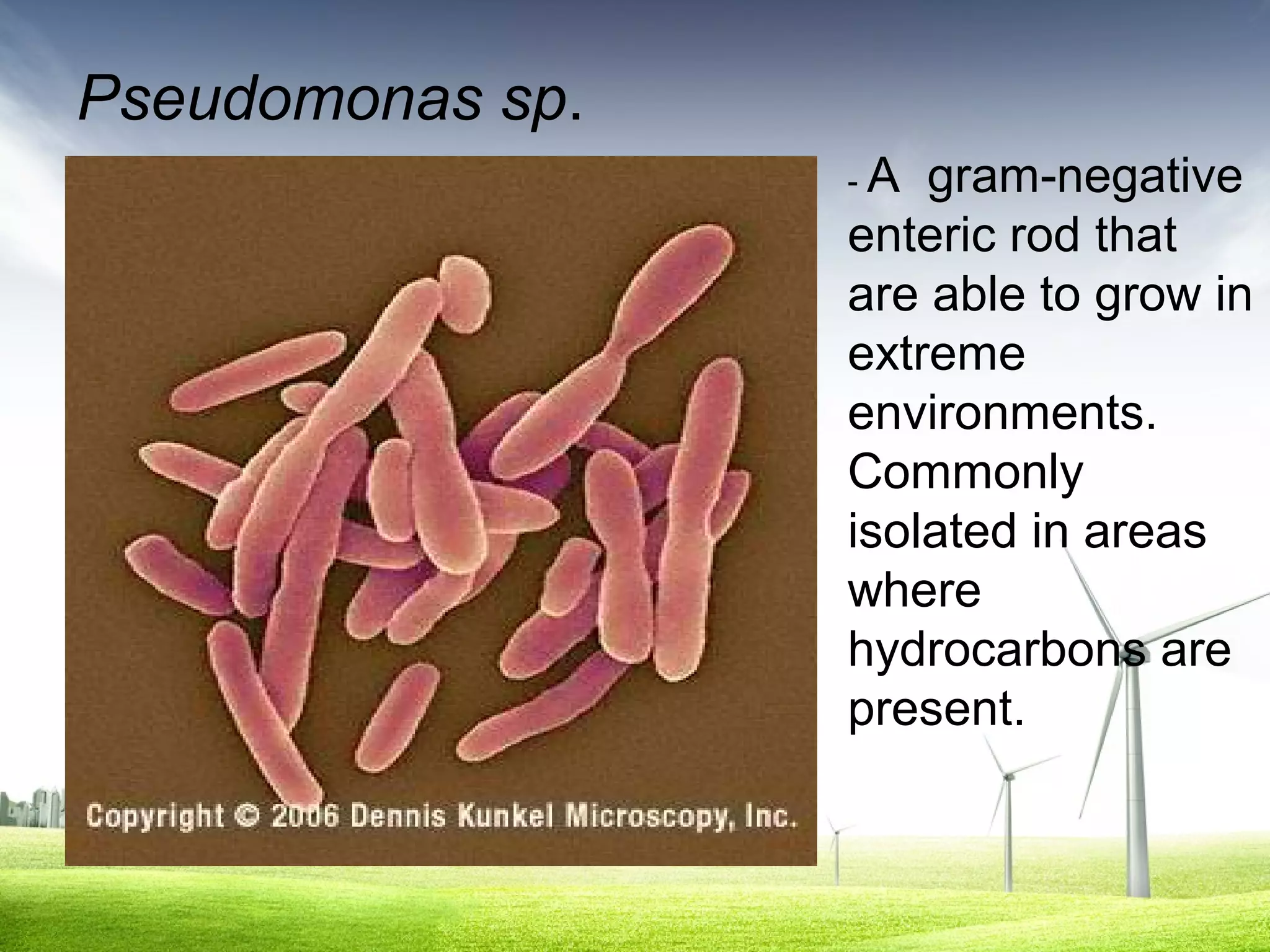
Pseudomonas sp.
• rod

-A

gram-negative
enteric rod that
are able to grow in
extreme
environments.
Commonly
isolated in areas
where
hydrocarbons are
present.
• Fungi
- Aspergillus sp.
- Mucor sp.
- Talaromyces sp.
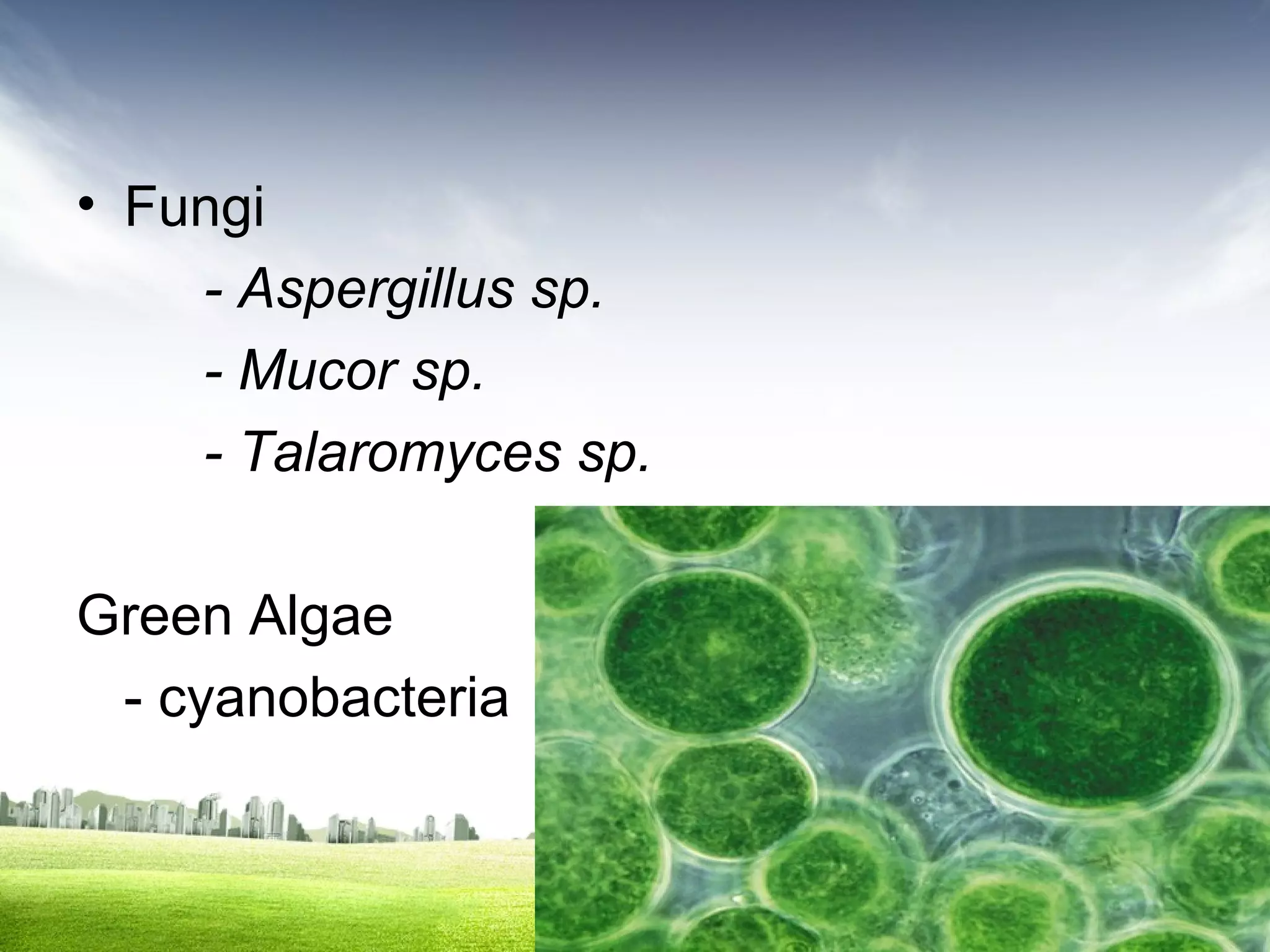
Green Algae
- cyanobacteria
KEY POINTS IN HYDROCARBON
DECOMPOSITION
Hydrocarbon decomposition is done by
hydrocarbon-oxidizing microorganisms.
The Process occurs in the presence of
oxygen.
Microorganisms participate in oil spill
cleanup by oxidizing the oil to Carbon
Dioxide.
Some factors that hasten up the process:
1. pH
3. inorganic nutrients
2. Temperature
Inorganic Nutrients such as Phosphorus
and Nitrogen are important to stimulate
microorganisms.
Evidences of Petroleum Degradation
by Microorganisms
• Dispersal of oil slicks ;
• Radioisotopic Hydrocarbons as trackers of
Oxygen uptake;
• Fungi bloom is evident if enough sources
of food is present; however , when food
sources are continously decreasing, the
growth of fungi also decreases.
• Presence of less toxic forms of
contaminants.
Case Report:
March 1989- 11-million-gal oil spill
from a tanker Exxon Valdez
devastated the shores near Prince
William Sound in Alaska.
The input of this oil spill has
devastating effects both
environmentally and economically.
Petroleum Production
Aside from the petroleum degradation,
microorganisms also aids in petroleum
production.
Botryococcus braunii – a colonial alga
is said to excrete long-chain hydrocarbons
with 30 to 36 Carbon atoms.
It is considered to be a renewable source
of petroleum.
“Bioremediation is not only about
genetics and enzymology but also
about physiology and ultimately
ecology.”—de Lorenzo V:
Systems biology approaches to
bioremediation. Curr Opin Biotechnol
2008, 19:579-589.

-END-
Evaluation: ¼ sheet of yellow paper
1. Why might the addition of Phosphorus
and Nitrogen stimulate oil degradation
while adding of glucose might not? (5pts)
2. Microorganisms can thrive anywhere,
what is the reason why microorganisms
do not degrade gasoline in storage
tanks? (5pts)

Petroleum biodegradation

  • 1.
  • 2.
    Terminologies Defined: • Petroleuma naturally occuring flammableliquid consisting of a complex mixture of hydrocarbons that are found in geologic formations beneath the earth’s surface. Aliphatic Hydrocarbons- any large class of organic compounds whose carbon atoms are joined in straight chains rather than in rings.
  • 3.
    • Interface -part where oil and water meet often occur in large scale. • Bioremediation- refers to the process of using microorganisms in cleaning up oil spills and other pollutants. • Bioaugmentation- introduction of microorganisms to augment the process. • Biostimulation- addition of nutrients and oxygen to stimulate the growth of indigenous microorganisms.
  • 4.
    Components of petroleum •Hydrocarbons- main component of Petroleum; Characteristics of Oil 1.Less dense than water , so it floats forming slicks; 2.Insoluble in Water
  • 5.
    PRINCIPLES OF BIOREMEDIATION •Bioremediation uses microorganisms and other living organisms to transform organic pollutants into less toxic forms. • Biodegradation is the initial process that results to bioremediation.
  • 6.
    FACTORS IN BIOREMEDIATION 1.Existence of a microbial population capable of degrading the pollutants; 2. The availability of contaminants to the microbial population e.g. oil 3. The environment factors (type of soil, temperature, pH, the presence of oxygen or other electron acceptors, and nutrients).
  • 7.
    MICROBIAL POPULATIONS FOR BIOREMEDIATIONPROCESSES Availability Microbes can be: 1.Indigenous- microorganisms are present in the contaminated site. Biostimulation is needed. 2.Bioaugmentation- introduction of microorganisms from other environment.
  • 8.
    Bioremediation in LargeScale • Gasoline tanks are potential habitats for Hydrocarbon-oxidizing bacteria which can grow in oil-water interface.
  • 9.
    HYDROCARBON DEGRADATION HYDROCARBON DECOMPOSERS: 1.HydrocarbonoclasticBacteria ( HCB) - Gammaproteobacteria Alcanivorax sp., Marinobacter) - Alphabacteria (Rhodobacteriaceae) -Pseudomonas, Alcaligenes, Sphingomonas, Rhodococcus, and (
  • 10.
    Hydrocarbon Oxidizing BacteriaAttach to oil slicks Microbes in Slick Microbes eating gulf oil
  • 11.
    Pseudomonas sp. • rod -A gram-negative entericrod that are able to grow in extreme environments. Commonly isolated in areas where hydrocarbons are present.
  • 12.
    • Fungi - Aspergillussp. - Mucor sp. - Talaromyces sp. Green Algae - cyanobacteria
  • 13.
    KEY POINTS INHYDROCARBON DECOMPOSITION Hydrocarbon decomposition is done by hydrocarbon-oxidizing microorganisms. The Process occurs in the presence of oxygen. Microorganisms participate in oil spill cleanup by oxidizing the oil to Carbon Dioxide.
  • 14.
    Some factors thathasten up the process: 1. pH 3. inorganic nutrients 2. Temperature Inorganic Nutrients such as Phosphorus and Nitrogen are important to stimulate microorganisms.
  • 15.
    Evidences of PetroleumDegradation by Microorganisms • Dispersal of oil slicks ; • Radioisotopic Hydrocarbons as trackers of Oxygen uptake; • Fungi bloom is evident if enough sources of food is present; however , when food sources are continously decreasing, the growth of fungi also decreases. • Presence of less toxic forms of contaminants.
  • 16.
    Case Report: March 1989-11-million-gal oil spill from a tanker Exxon Valdez devastated the shores near Prince William Sound in Alaska. The input of this oil spill has devastating effects both environmentally and economically.
  • 17.
    Petroleum Production Aside fromthe petroleum degradation, microorganisms also aids in petroleum production. Botryococcus braunii – a colonial alga is said to excrete long-chain hydrocarbons with 30 to 36 Carbon atoms. It is considered to be a renewable source of petroleum.
  • 18.
    “Bioremediation is notonly about genetics and enzymology but also about physiology and ultimately ecology.”—de Lorenzo V: Systems biology approaches to bioremediation. Curr Opin Biotechnol 2008, 19:579-589. -END-
  • 19.
    Evaluation: ¼ sheetof yellow paper 1. Why might the addition of Phosphorus and Nitrogen stimulate oil degradation while adding of glucose might not? (5pts) 2. Microorganisms can thrive anywhere, what is the reason why microorganisms do not degrade gasoline in storage tanks? (5pts)