Specialization
 Behavioral Approaches to Job
Design
 Teams
 Methods Analysis
 Motions Study
 Working conditions

 Job

design involves specifying the
content and methods of job

•
•
•
•

What will be done?
Who will do the job?
How the job will be done?
Where the job will be done?
Successful Job Design must be:
 Carried

out by experienced personnel
with the necessary training and
background
 Consistent with the goals of the
organization
 In

written form
 Understood and agreed to by both
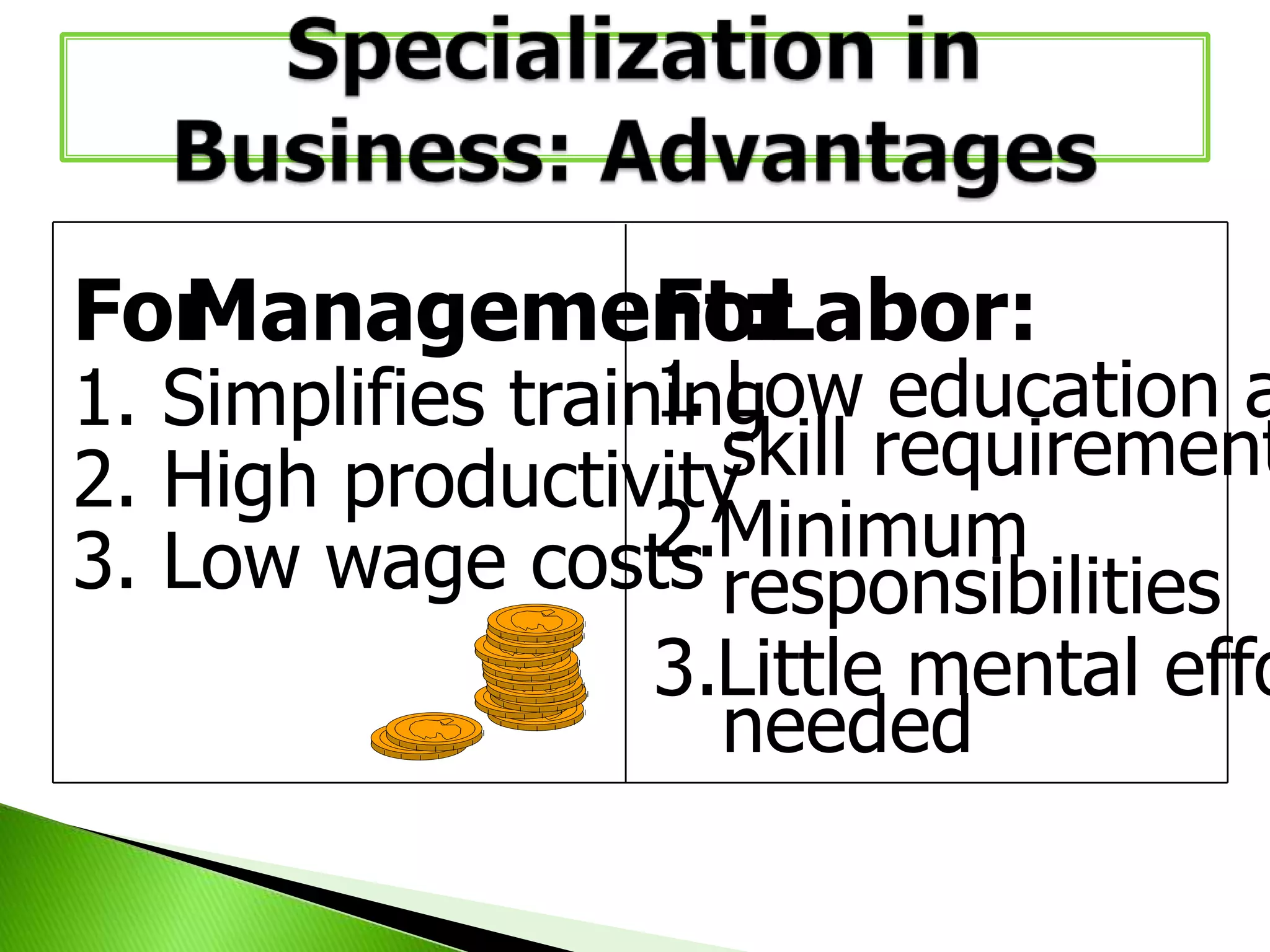
For
Management:Labor:
For
1. Low education a
1. Simplifies training

skill requirement
2. High productivity
2.Minimum
3. Low wage costs responsibilities
3.Little mental effo
needed
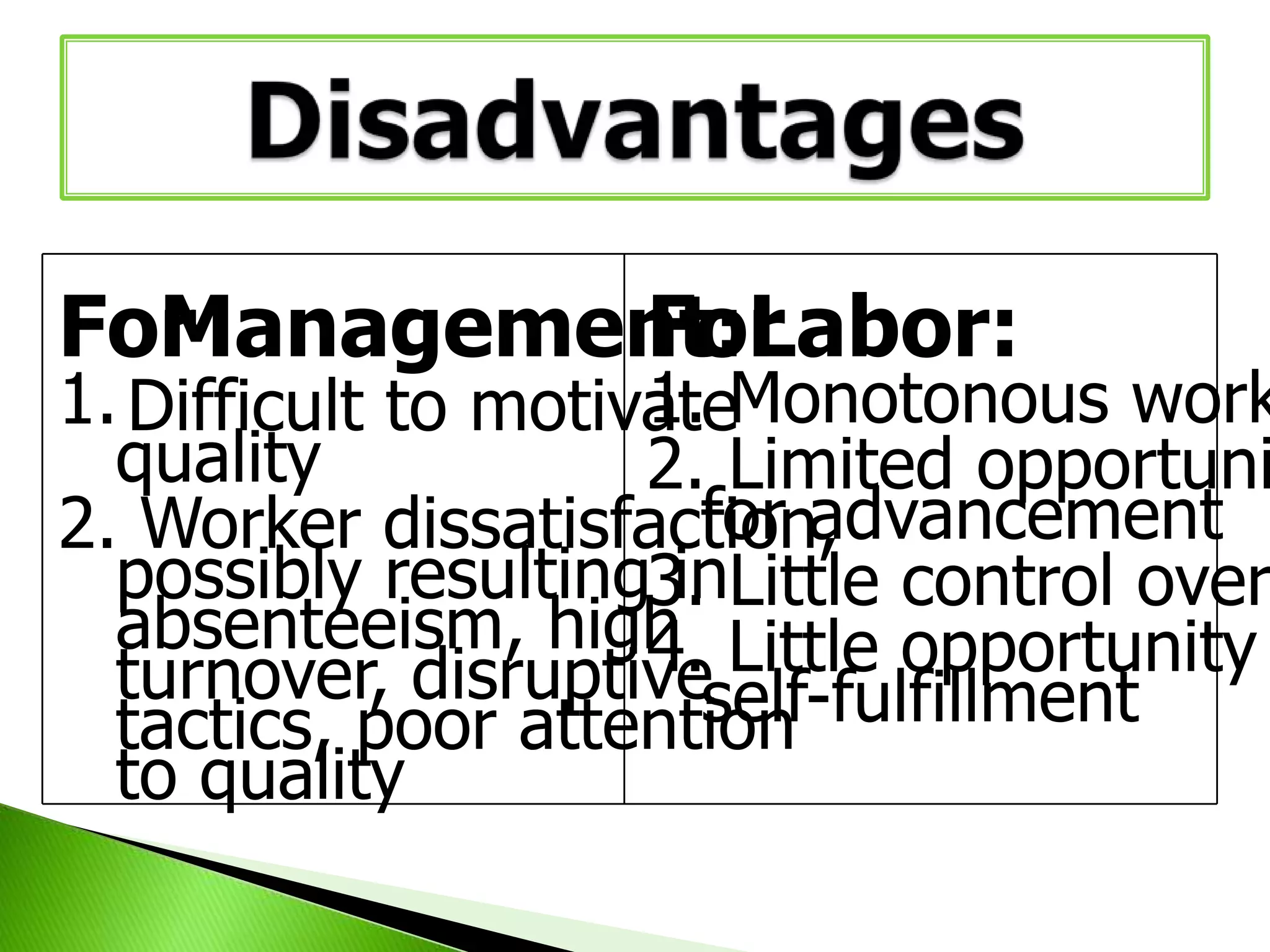
For anagement: Labor:
M
For

1.
1. Difficult to motivateMonotonous work
quality
2. Limited opportuni
for advancement
2. Worker dissatisfaction,
possibly resulting3. Little control over
in
absenteeism, high Little opportunity
4.
turnover, disruptiveself-fulfillment
tactics, poor attention
to quality


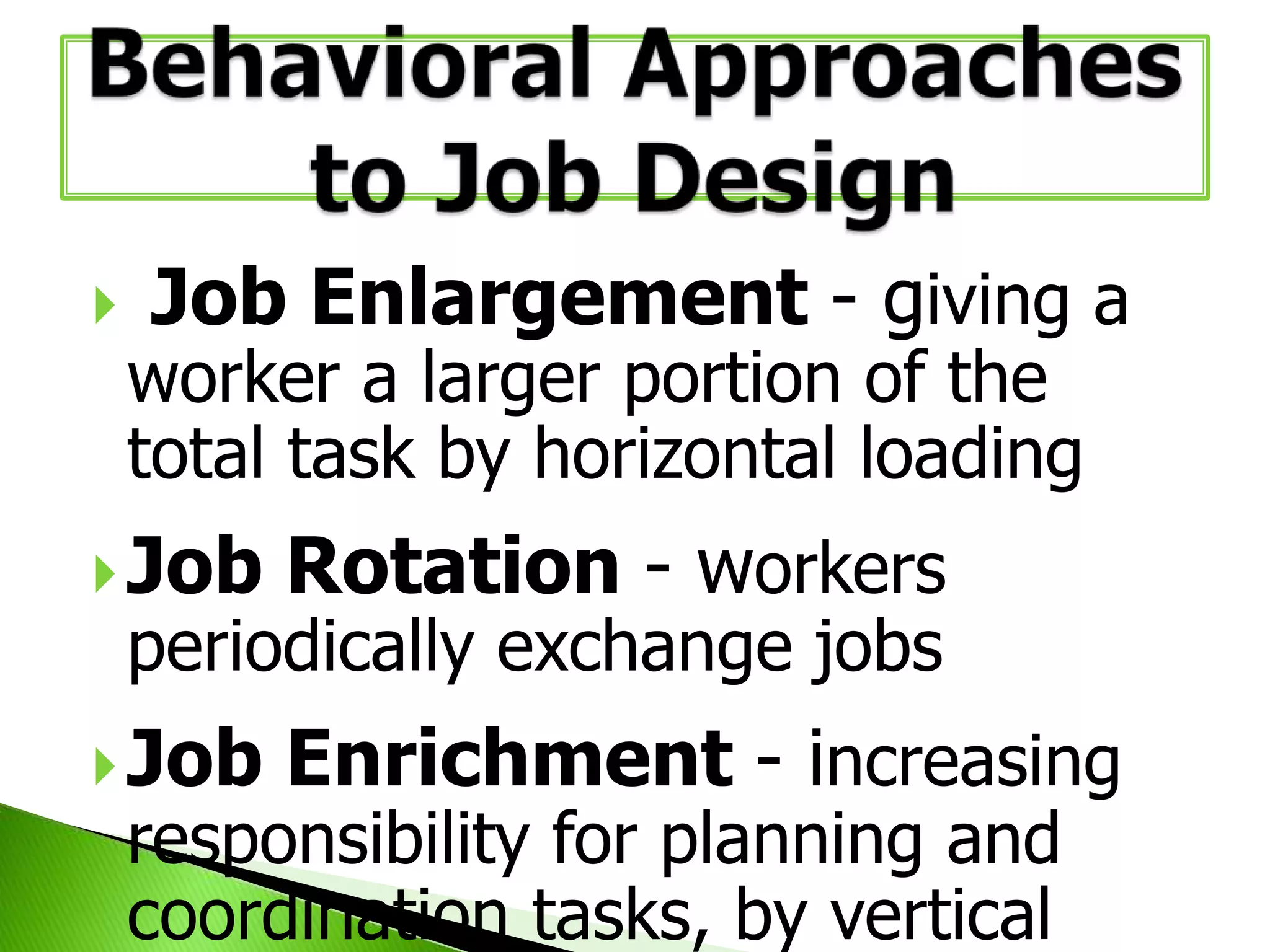
Job Enlargement - giving a

worker a larger portion of the
total task by horizontal loading

 Job

Rotation - workers

 Job

Enrichment - increasing

periodically exchange jobs

responsibility for planning and
coordination tasks, by vertical


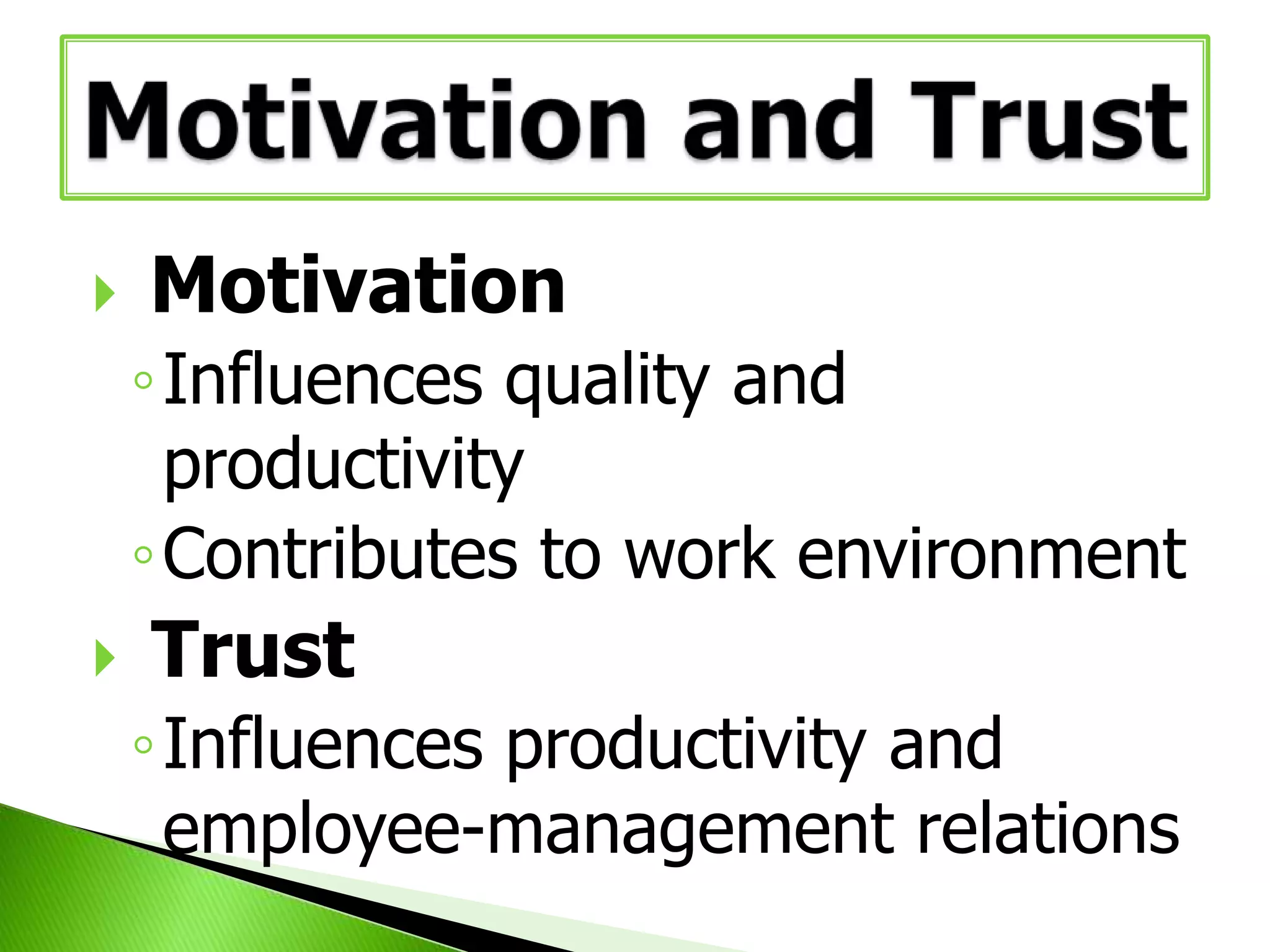
Motivation
◦Influences quality and
productivity
◦Contributes to work environment



Trust
◦Influences productivity and
employee-management relations


Benefits of teams
◦Higher quality
◦Higher productivity
◦Greater worker satisfaction



Self-directed teams
◦Groups of empowered to make
certain changes in their work
process
Analyzing how a job
gets done
Begins with overall
analysis
Moves to specific
details
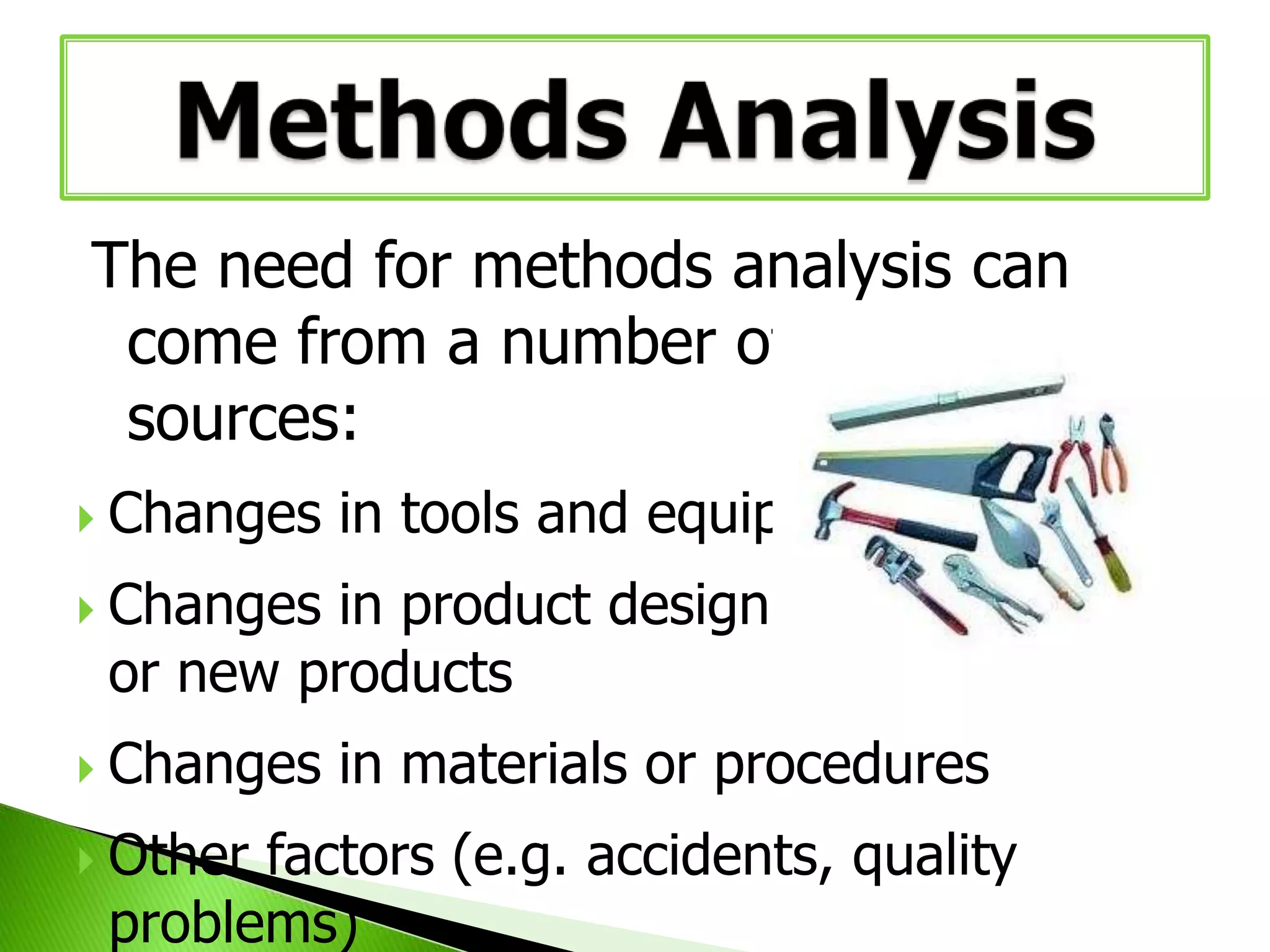
The need for methods analysis can
come from a number of different
sources:






Changes in tools and equipment
Changes in product design
or new products

Changes in materials or procedures
Other factors (e.g. accidents, quality
problems)
Identify the operation to be studied
2.Get employee input
3.Study and document current method
4.Analyze the job
5.Propose new methods
6.Install new methods
7.Follow-up to ensure improvements
have been achieved
1.
Selecting a job to study consider:
◦ High labor content
◦ Done frequently
◦ Unsafe
◦ Tiring
◦ Unpleasant
◦ Noisy
◦ Designated problem


Flow process chart
◦ Chart used to examine the overall
sequence of an operation by
focusing on movements of the
operator or flow of materials



Worker-machine chart
◦ Chart used to determine portions of
a work cycle during which an
operator and equipment are busy or
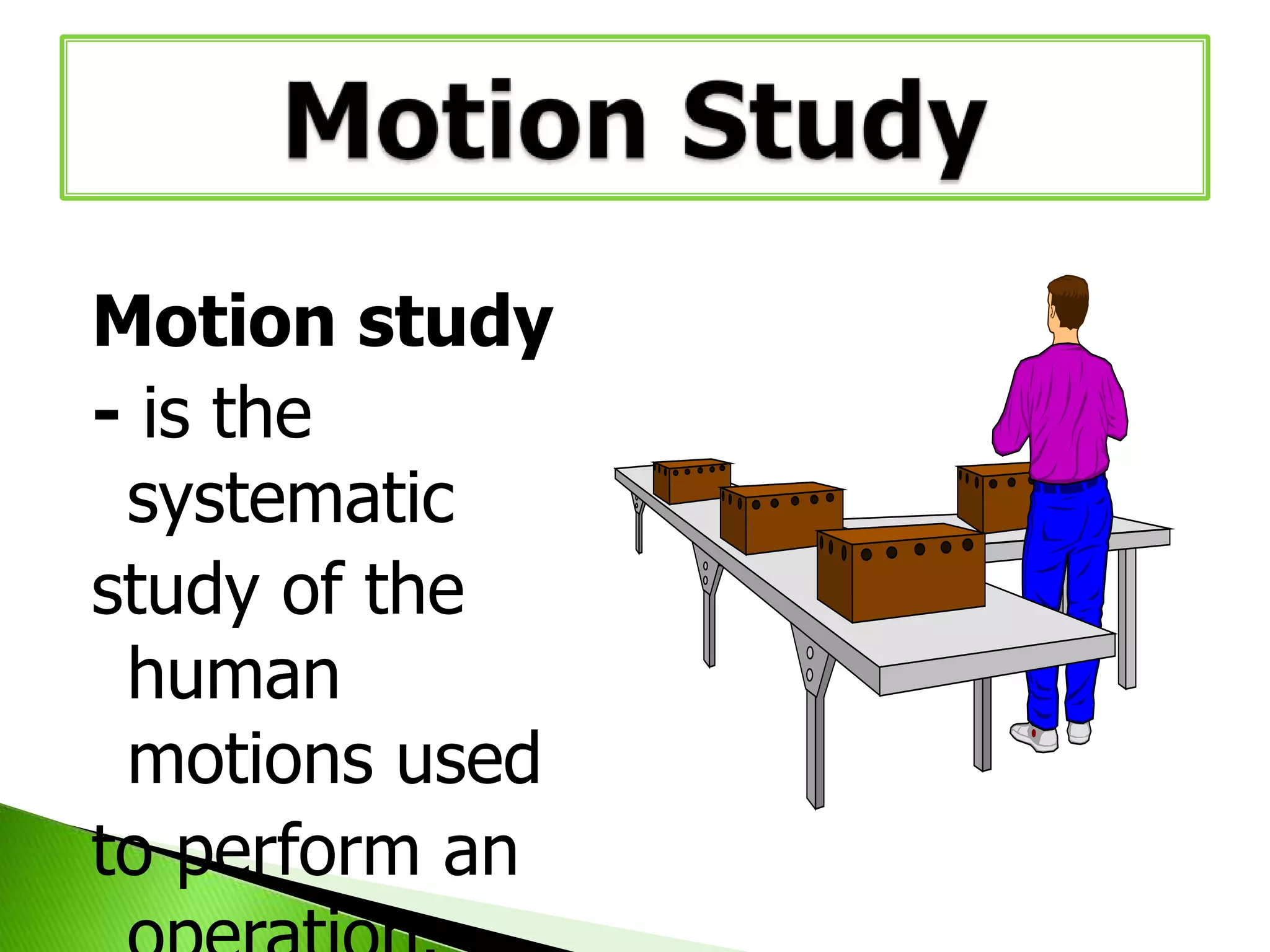
Motion study
- is the
systematic
study of the
human
motions used
to perform an






Motion study principles - guidelines
for designing motion-efficient work
procedures
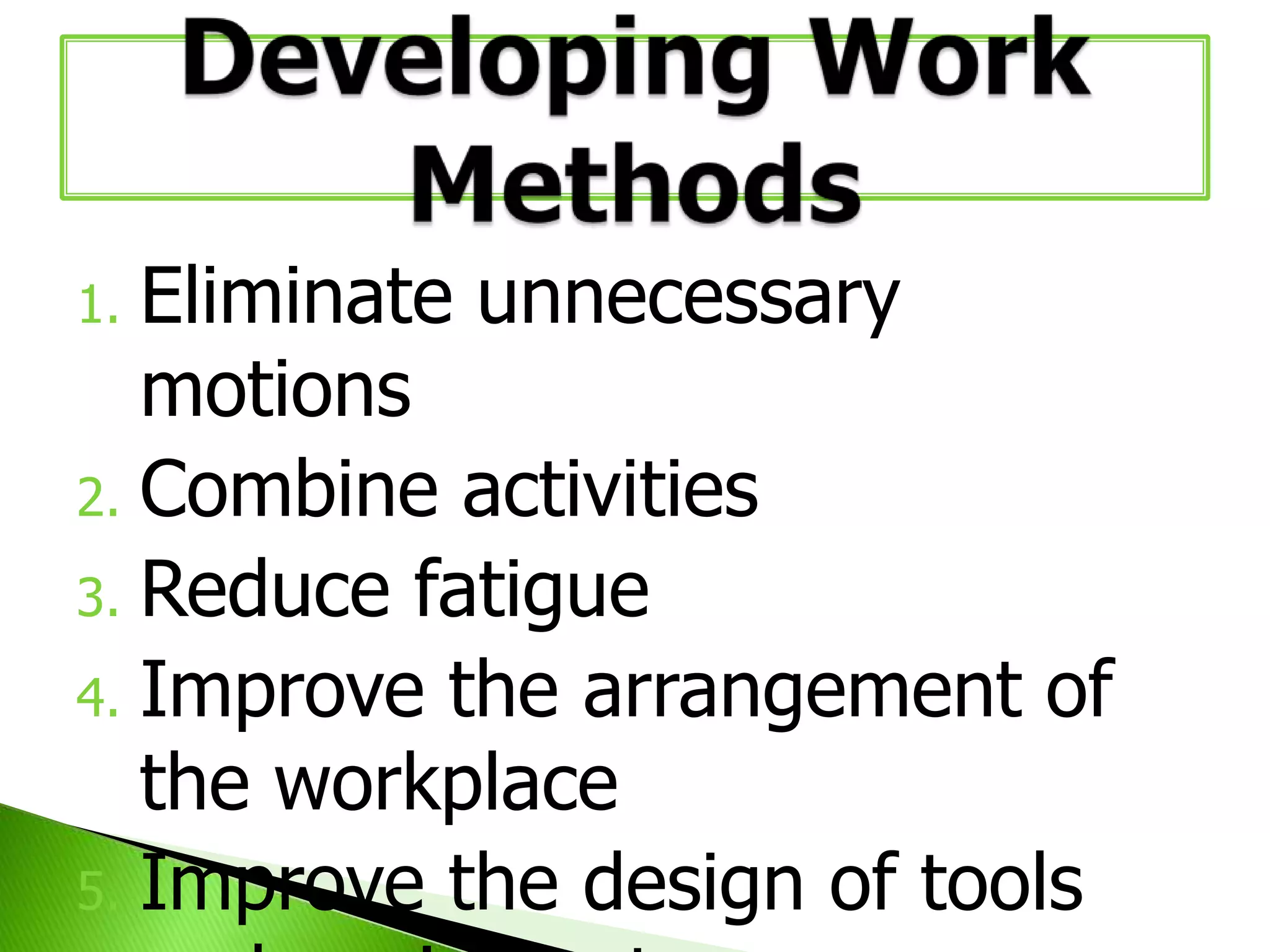
Analysis of therbligs - basic elemental
motions into which a job can be broken
down
Micromotion study - use of motion
pictures and slow motion to study motions
that otherwise would be too rapid to
analyze
Eliminate unnecessary
motions
2. Combine activities
3. Reduce fatigue
4. Improve the arrangement of
the workplace
5. Improve the design of tools
1.
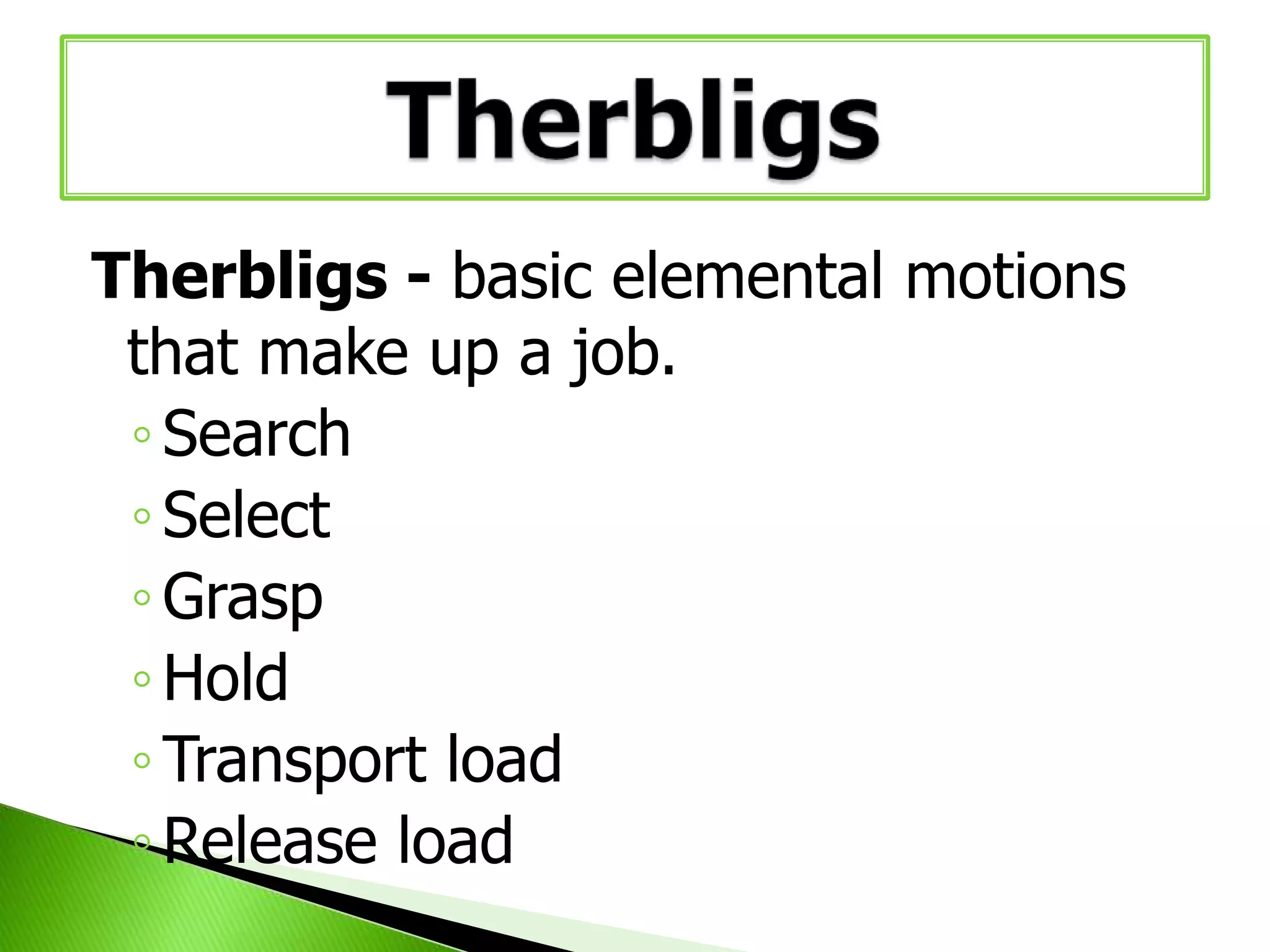
Therbligs - basic elemental motions
that make up a job.
◦ Search
◦ Select
◦ Grasp
◦ Hold
◦ Transport load
◦ Release load
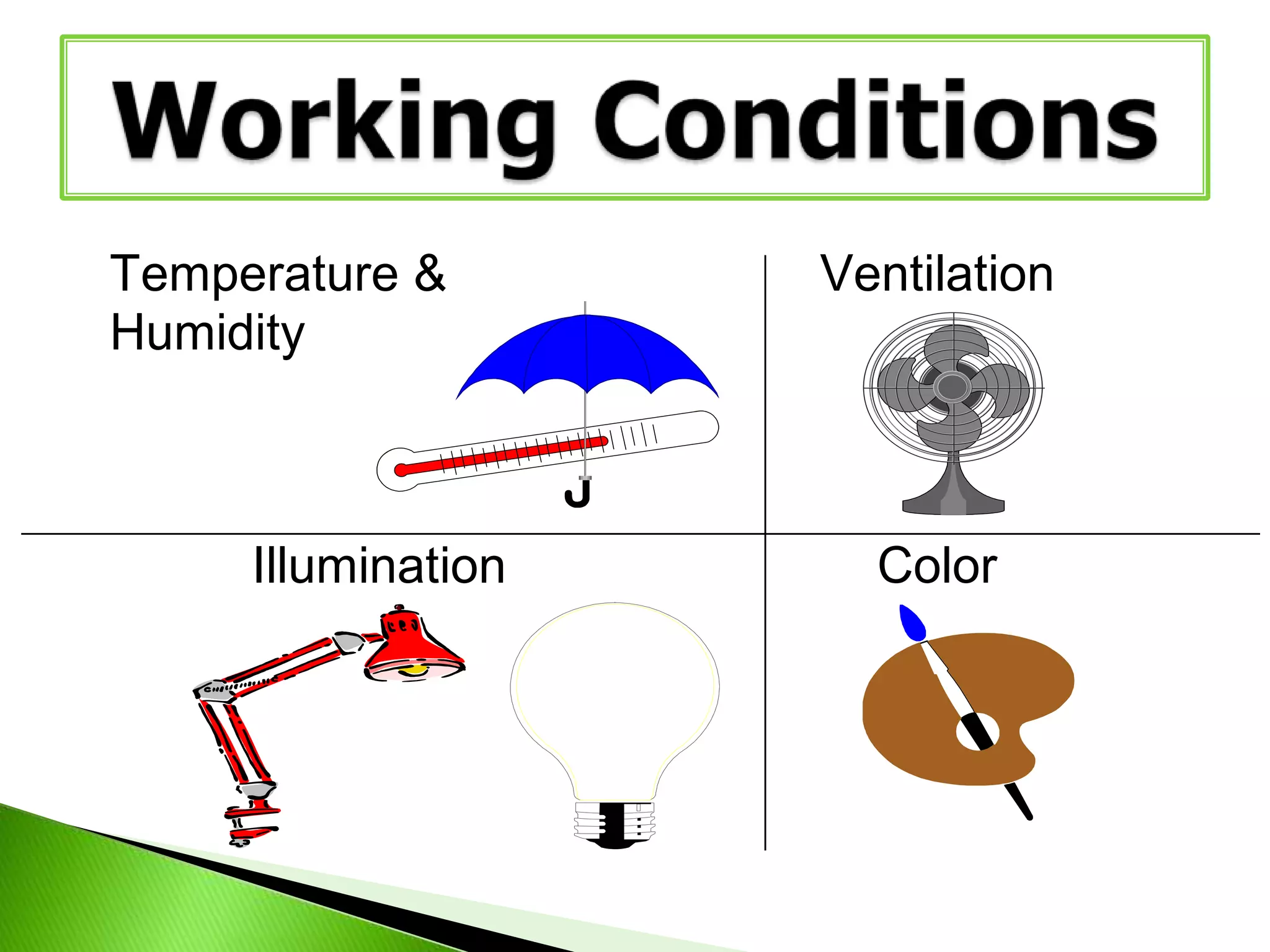
Temperature &
Humidity

Illumination

Ventilation

Color
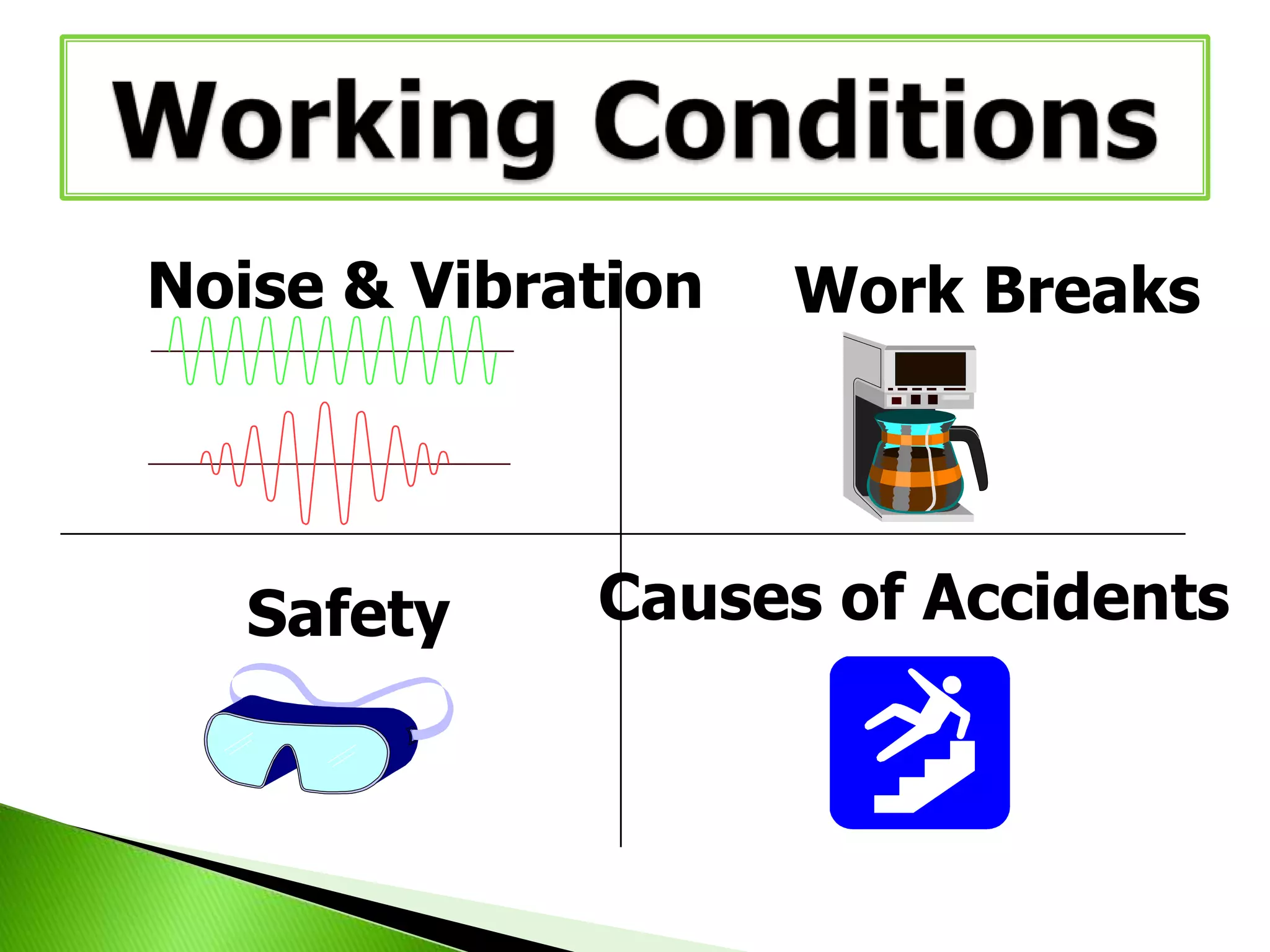
Noise & Vibration

Safety

Work Breaks

Causes of Accidents
Work measurement - determining how
long it should take to do a job.
◦ Standard time
◦ Stopwatch time study
◦ Historical times
◦ Predetermined data
◦ Work Sampling
The amount of time it should
take a qualified worker to
complete a specific
task, working at a
sustainable rate, using given
methods, tools and
equipment, raw
Stopwatch Time Study - development of
a time standard based on observations
of one worker taken over a number of
cycles.
The basic steps in a time study
1.
2.
3.
4.

Define the task to be studied
Determine the number of cycles to observe
Time the job
Compute the standard time
Standard elemental times - time
standards derived from a firm’s
historical data.
Steps for standard elemental
times
1. Analyze the job
2. Check file for historical times
3. Modify file times if necessary
Predetermined time standards published data based on extensive
research to determine standard
elemental times.
Advantages
1. Based on large number of workers
under controlled conditions
2. Analyst not requires to rate
Work sampling - technique for
estimating the proportion of time that
a worker or machine spends on
various activities and idle time.
- involves making brief observations of
a worker or machine at random
intervals
Work sampling does not require
◦ timing an activity


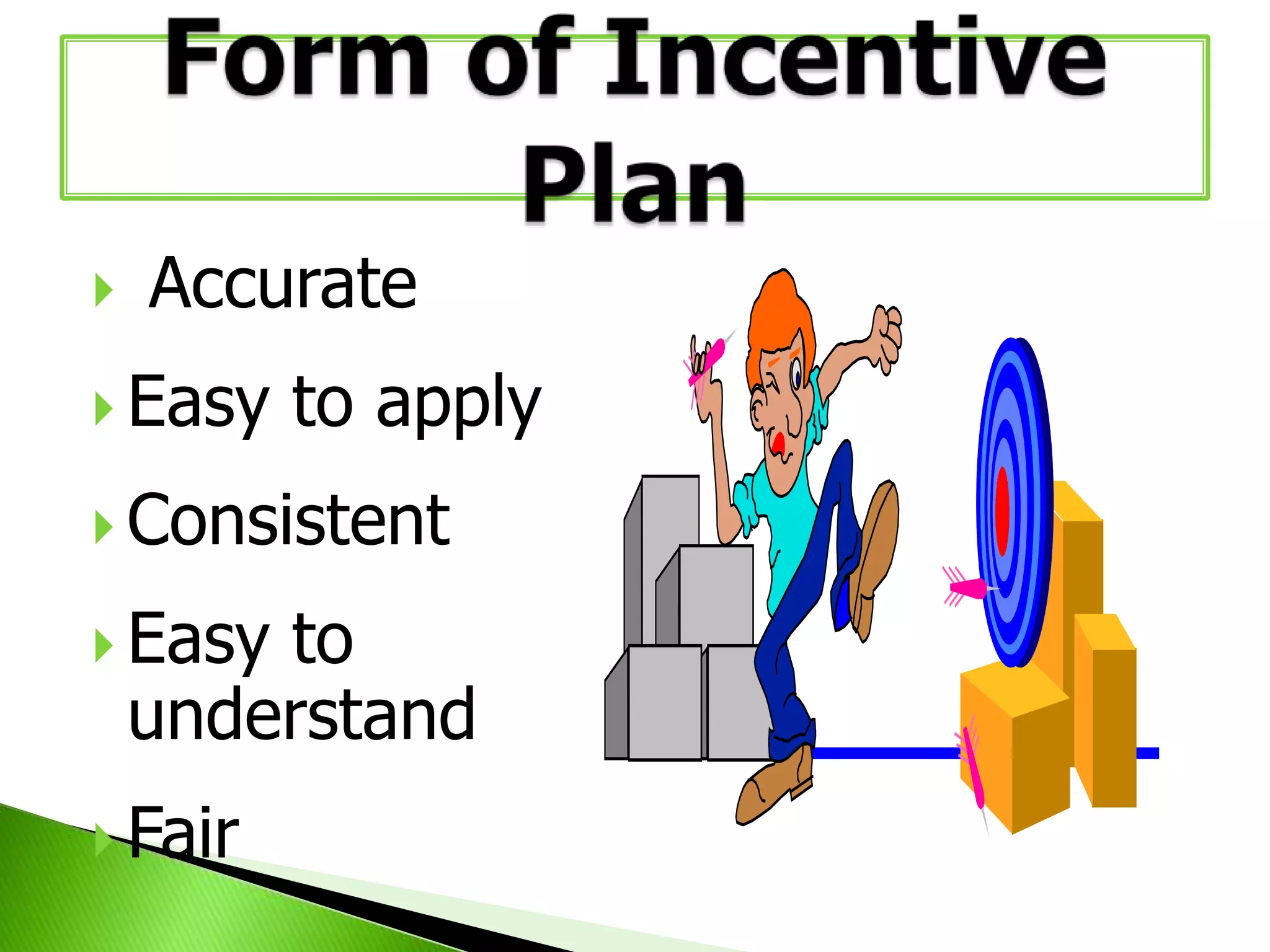
Accurate

 Easy

to apply

 Consistent
 Easy

to
understand

 Fair


Time-based system
◦Compensation based on time an
employee has worked during a
pay period



Output-based (incentive)
system
◦Compensation based on the
 Individual

Incentive Plans

 Group

Plans

Incentive

 Knowledge-Based

Pay System

 Management

Design of Work Systems

  • 2.
    Specialization  Behavioral Approachesto Job Design  Teams  Methods Analysis  Motions Study  Working conditions 
  • 3.
     Job design involvesspecifying the content and methods of job • • • • What will be done? Who will do the job? How the job will be done? Where the job will be done?
  • 4.
    Successful Job Designmust be:  Carried out by experienced personnel with the necessary training and background  Consistent with the goals of the organization  In written form  Understood and agreed to by both
  • 5.
    For Management:Labor: For 1. Low educationa 1. Simplifies training skill requirement 2. High productivity 2.Minimum 3. Low wage costs responsibilities 3.Little mental effo needed
  • 6.
    For anagement: Labor: M For 1. 1.Difficult to motivateMonotonous work quality 2. Limited opportuni for advancement 2. Worker dissatisfaction, possibly resulting3. Little control over in absenteeism, high Little opportunity 4. turnover, disruptiveself-fulfillment tactics, poor attention to quality
  • 7.
     Job Enlargement -giving a worker a larger portion of the total task by horizontal loading  Job Rotation - workers  Job Enrichment - increasing periodically exchange jobs responsibility for planning and coordination tasks, by vertical
  • 8.
     Motivation ◦Influences quality and productivity ◦Contributesto work environment  Trust ◦Influences productivity and employee-management relations
  • 9.
     Benefits of teams ◦Higherquality ◦Higher productivity ◦Greater worker satisfaction  Self-directed teams ◦Groups of empowered to make certain changes in their work process
  • 10.
    Analyzing how ajob gets done Begins with overall analysis Moves to specific details
  • 11.
    The need formethods analysis can come from a number of different sources:     Changes in tools and equipment Changes in product design or new products Changes in materials or procedures Other factors (e.g. accidents, quality problems)
  • 12.
    Identify the operationto be studied 2.Get employee input 3.Study and document current method 4.Analyze the job 5.Propose new methods 6.Install new methods 7.Follow-up to ensure improvements have been achieved 1.
  • 13.
    Selecting a jobto study consider: ◦ High labor content ◦ Done frequently ◦ Unsafe ◦ Tiring ◦ Unpleasant ◦ Noisy ◦ Designated problem
  • 14.
     Flow process chart ◦Chart used to examine the overall sequence of an operation by focusing on movements of the operator or flow of materials  Worker-machine chart ◦ Chart used to determine portions of a work cycle during which an operator and equipment are busy or
  • 15.
    Motion study - isthe systematic study of the human motions used to perform an
  • 16.
       Motion study principles- guidelines for designing motion-efficient work procedures Analysis of therbligs - basic elemental motions into which a job can be broken down Micromotion study - use of motion pictures and slow motion to study motions that otherwise would be too rapid to analyze
  • 17.
    Eliminate unnecessary motions 2. Combineactivities 3. Reduce fatigue 4. Improve the arrangement of the workplace 5. Improve the design of tools 1.
  • 18.
    Therbligs - basicelemental motions that make up a job. ◦ Search ◦ Select ◦ Grasp ◦ Hold ◦ Transport load ◦ Release load
  • 19.
  • 20.
    Noise & Vibration Safety WorkBreaks Causes of Accidents
  • 21.
    Work measurement -determining how long it should take to do a job. ◦ Standard time ◦ Stopwatch time study ◦ Historical times ◦ Predetermined data ◦ Work Sampling
  • 22.
    The amount oftime it should take a qualified worker to complete a specific task, working at a sustainable rate, using given methods, tools and equipment, raw
  • 23.
    Stopwatch Time Study- development of a time standard based on observations of one worker taken over a number of cycles. The basic steps in a time study 1. 2. 3. 4. Define the task to be studied Determine the number of cycles to observe Time the job Compute the standard time
  • 24.
    Standard elemental times- time standards derived from a firm’s historical data. Steps for standard elemental times 1. Analyze the job 2. Check file for historical times 3. Modify file times if necessary
  • 25.
    Predetermined time standardspublished data based on extensive research to determine standard elemental times. Advantages 1. Based on large number of workers under controlled conditions 2. Analyst not requires to rate
  • 26.
    Work sampling -technique for estimating the proportion of time that a worker or machine spends on various activities and idle time. - involves making brief observations of a worker or machine at random intervals Work sampling does not require ◦ timing an activity
  • 27.
     Accurate  Easy to apply Consistent  Easy to understand  Fair
  • 28.
     Time-based system ◦Compensation basedon time an employee has worked during a pay period  Output-based (incentive) system ◦Compensation based on the
  • 29.
     Individual Incentive Plans Group Plans Incentive  Knowledge-Based Pay System  Management