Aizell A. Bernal
BSBA 3
HRM 8
Mrs. Fe De Castro


refers to a
parent not living
with a spouse or
partner that has
most of the day
to day
responsibilities
in raising the
child or children


common cause of single parenting


Divorce Statistics

69 %

30 %

4%

23 %

4%

6%

1%


Children and divorce

PARALLEL
PARENTING


Children and divorce

Child Custody
– refers to which parent
is allowed to make
important decisions about
the children involved.


Children and divorce

Physical Custody
 refers to
which parent the child
lives with.


Children and divorce

Parallel Parenting
 refers to parenting
after divorce in which
each parent does so
independently;
most common.


Children and divorce

Cooperative Parenting
 occurs when the parents
involved in the child’s life
work together around
all involved parties’
schedules and activities,
and this is for less common.
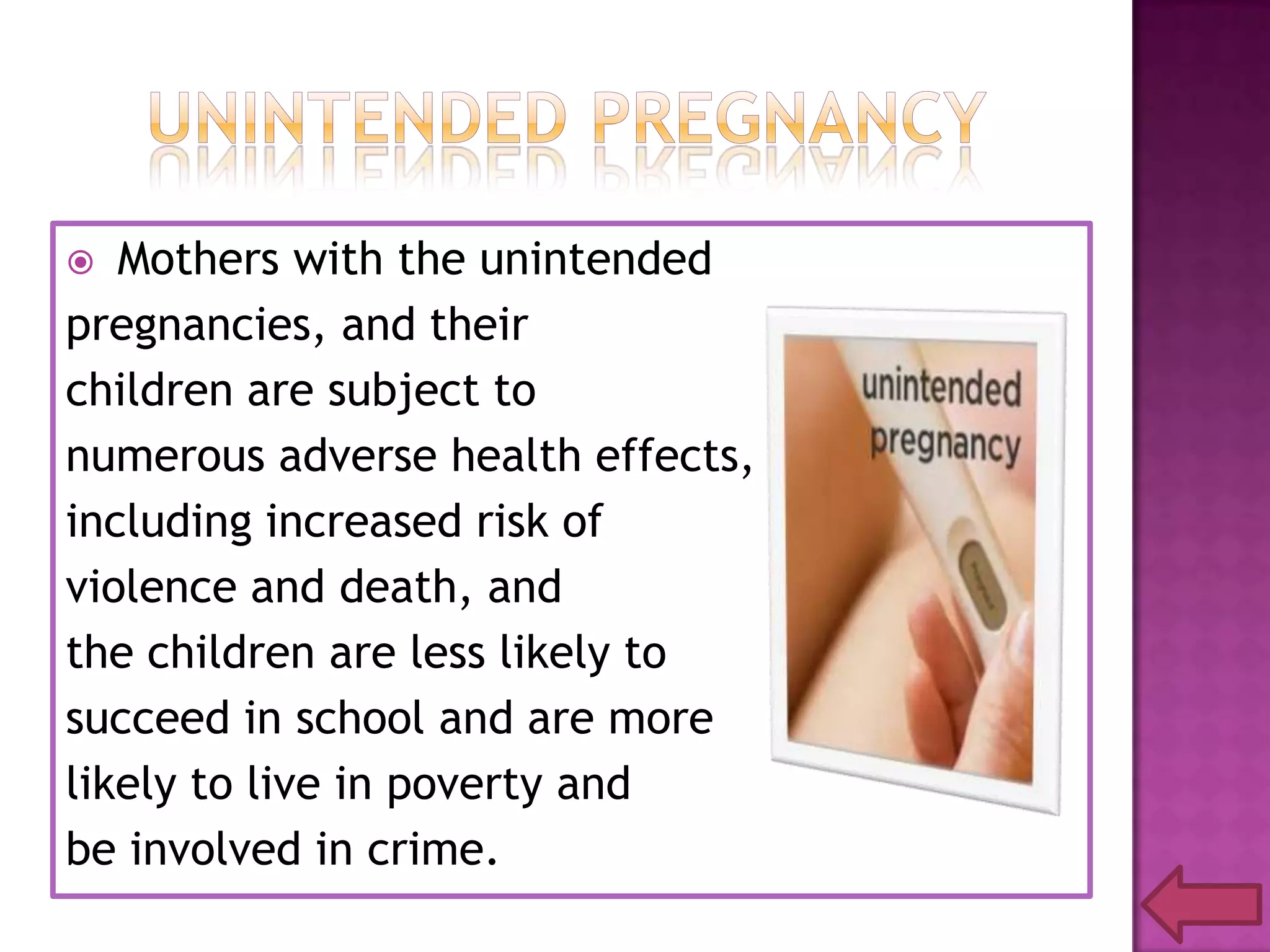
Mothers with the unintended
pregnancies, and their
children are subject to
numerous adverse health effects,
including increased risk of
violence and death, and
the children are less likely to
succeed in school and are more
likely to live in poverty and
be involved in crime.



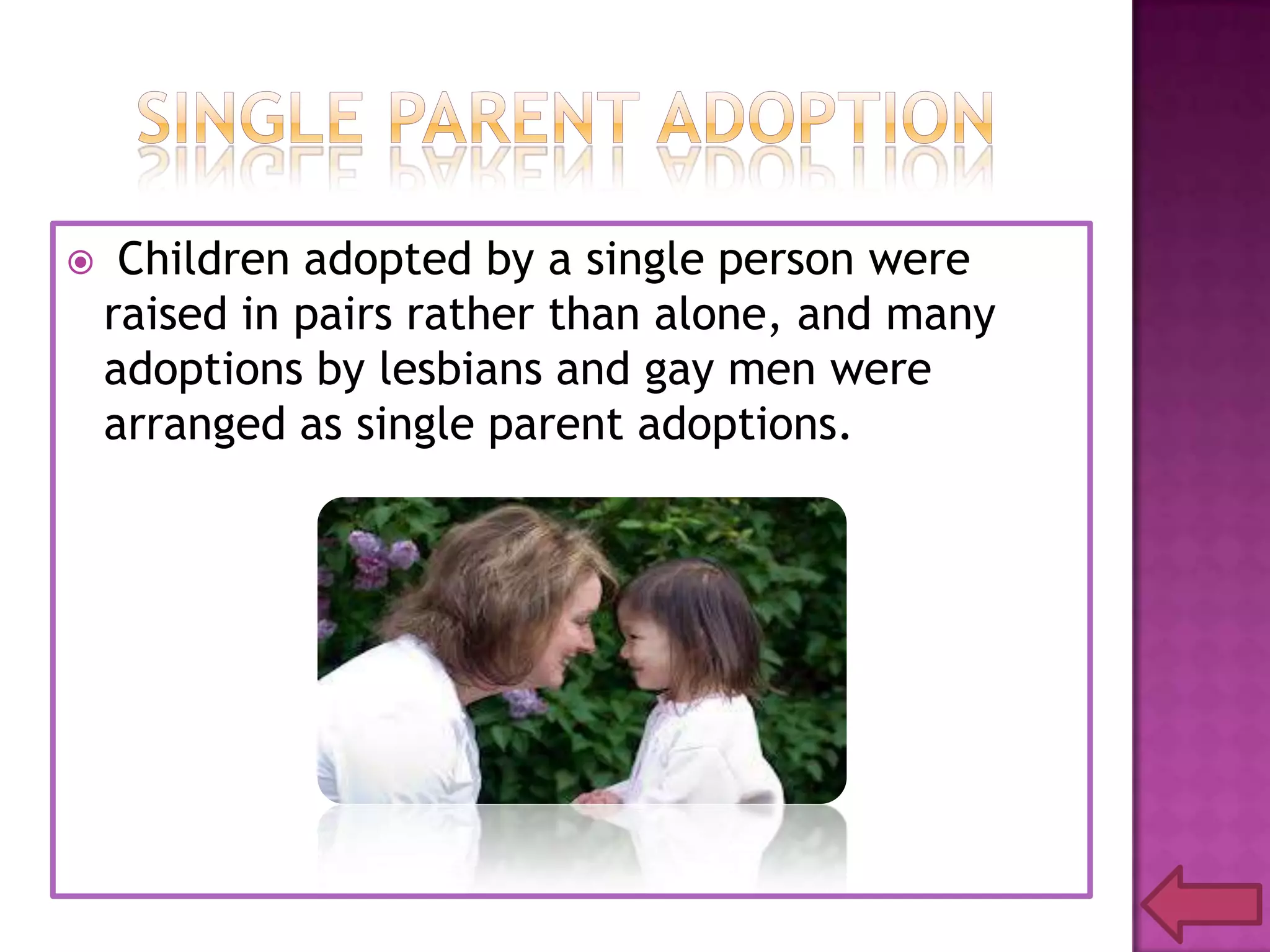
Children adopted by a single person were
raised in pairs rather than alone, and many
adoptions by lesbians and gay men were
arranged as single parent adoptions.
 Greater

control
 Manipulative children
 Total financial control
 Less people to care for
 More time to the child
 Lack

of support
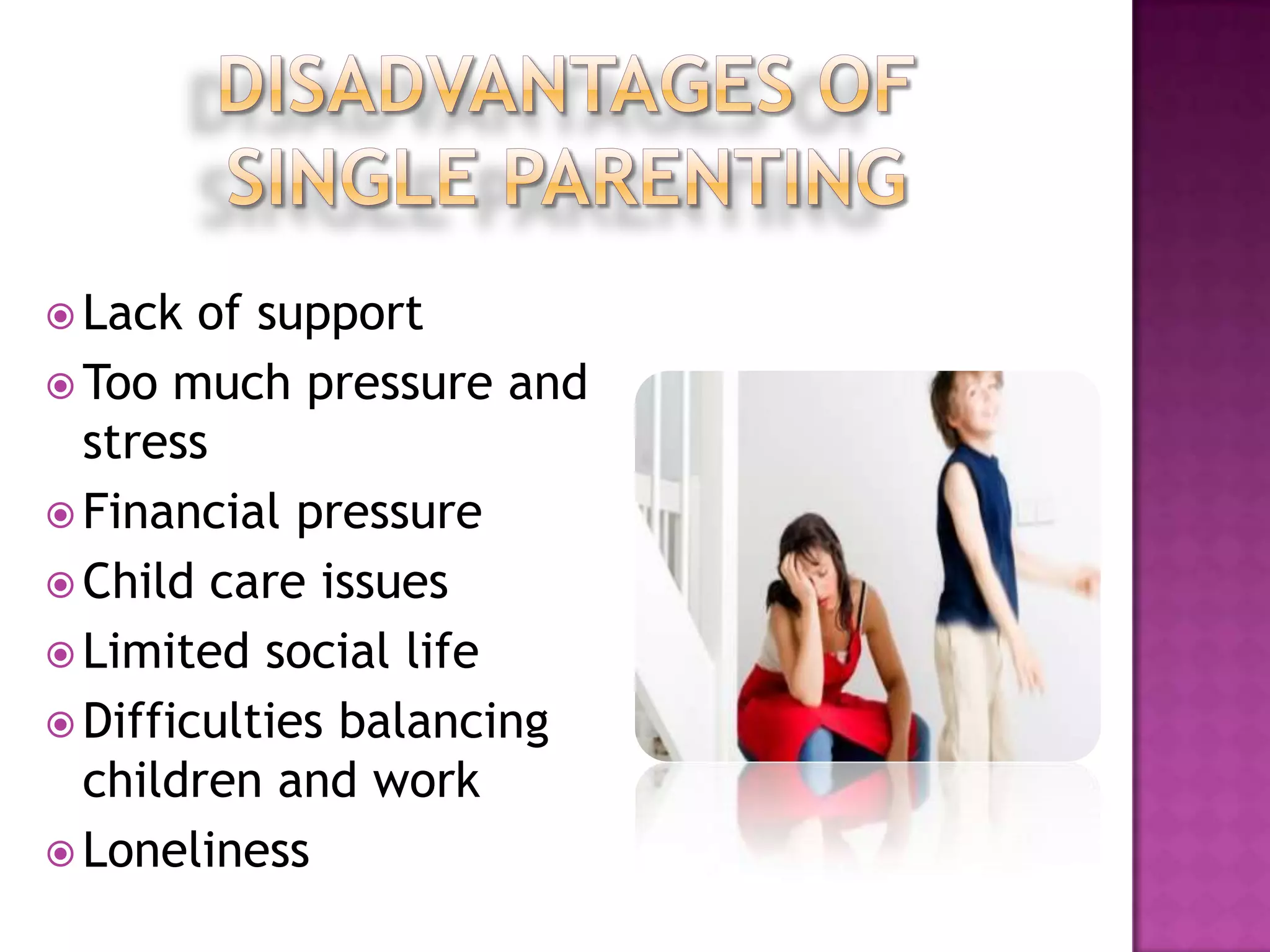
 Too much pressure and
stress
 Financial pressure
 Child care issues
 Limited social life
 Difficulties balancing
children and work
 Loneliness
Pregnancy
No Anti-Discrimination Laws
Religious Organizations
Worker’s Schedules
 It

is illegal to refuse to hire a woman because
she is pregnant or may become pregnant , and
a woman cannot be fired because of her
pregnancy.
 Pregnancy must be treated like a temporary
disability; employers must give pregnant
women leave once they are unable to work due
to their pregnancy.
 Employers cannot force a pregnant woman to
take leave if she feels she is still able to work.
 According

to Workplace Fairness, there are
no federal laws prohibiting discrimination
based on family status.
 It is legal for an employer to discriminate in
hiring or promoting single parents.
 However, employers may not discriminate
based on sex. Therefore, if an employer
schedules a single mother for longer hours
than the men in her department, he could be
sued for sex discrimination.
 Workplace

Fairness reports that some courts
have ruled that religious organizations may
engage in practices such as firing single
parents because of religious prohibitions
against sex outside of marriage.
 These organizations must hold both men and
women to the same standards.
 An

employer may schedule another employee
to work overtime to compensate for hours
that a single parent cannot work due to
child-care commitments or require another
employee to cover the single parent’s job
while he picks up children from school or
attends to other child-care issues.
 Workplace Fairness reports that these types
of scheduling discrepancies are not
considered discriminatory in most cases.
Single parent should do if he/she experiences
discrimination in the workplace
1. At the interview, try to relax but be
straightforward. When you are asked questions
about your status as a single parent, ask the
interviewer why they are asking those questions.
Then tell them that you would be happy to talk
about that but you would like to talk about your
skills and accomplishments first.
2. Challenge the interviewer’s assumptions.
Politely ask why the interviewer thinks that being
single and a parent matters in connection to the
job. Answer their concerns so as to dispel any
preconceptions they have against single parents.
3.

4.

Talk to your supervisor or manager. At
work, if faced with a situation where you
feel that you are being discriminated, talk
to your superior and tell them that you want
the opportunity to advance just like other
members of the team.
Get support from other single parents in
your workplace. Seek out other single
parents in your office. Meet with them and
put together ideas on how you can address
issues that you have with the company.
Managing Talent

Improving Leadership Development

Managing Demographics
Single Parenthood

Single Parenthood

  • 1.
    Aizell A. Bernal BSBA3 HRM 8 Mrs. Fe De Castro
  • 2.
     refers to a parentnot living with a spouse or partner that has most of the day to day responsibilities in raising the child or children
  • 4.
     common cause ofsingle parenting
  • 5.
  • 6.
  • 7.
     Children and divorce ChildCustody – refers to which parent is allowed to make important decisions about the children involved.
  • 8.
     Children and divorce PhysicalCustody  refers to which parent the child lives with.
  • 9.
     Children and divorce ParallelParenting  refers to parenting after divorce in which each parent does so independently; most common.
  • 10.
     Children and divorce CooperativeParenting  occurs when the parents involved in the child’s life work together around all involved parties’ schedules and activities, and this is for less common.
  • 11.
    Mothers with theunintended pregnancies, and their children are subject to numerous adverse health effects, including increased risk of violence and death, and the children are less likely to succeed in school and are more likely to live in poverty and be involved in crime. 
  • 12.
     Children adopted bya single person were raised in pairs rather than alone, and many adoptions by lesbians and gay men were arranged as single parent adoptions.
  • 13.
     Greater control  Manipulativechildren  Total financial control  Less people to care for  More time to the child
  • 14.
     Lack of support Too much pressure and stress  Financial pressure  Child care issues  Limited social life  Difficulties balancing children and work  Loneliness
  • 15.
    Pregnancy No Anti-Discrimination Laws ReligiousOrganizations Worker’s Schedules
  • 16.
     It is illegalto refuse to hire a woman because she is pregnant or may become pregnant , and a woman cannot be fired because of her pregnancy.  Pregnancy must be treated like a temporary disability; employers must give pregnant women leave once they are unable to work due to their pregnancy.  Employers cannot force a pregnant woman to take leave if she feels she is still able to work.
  • 17.
     According to WorkplaceFairness, there are no federal laws prohibiting discrimination based on family status.  It is legal for an employer to discriminate in hiring or promoting single parents.  However, employers may not discriminate based on sex. Therefore, if an employer schedules a single mother for longer hours than the men in her department, he could be sued for sex discrimination.
  • 18.
     Workplace Fairness reportsthat some courts have ruled that religious organizations may engage in practices such as firing single parents because of religious prohibitions against sex outside of marriage.  These organizations must hold both men and women to the same standards.
  • 19.
     An employer mayschedule another employee to work overtime to compensate for hours that a single parent cannot work due to child-care commitments or require another employee to cover the single parent’s job while he picks up children from school or attends to other child-care issues.  Workplace Fairness reports that these types of scheduling discrepancies are not considered discriminatory in most cases.
  • 20.
    Single parent shoulddo if he/she experiences discrimination in the workplace 1. At the interview, try to relax but be straightforward. When you are asked questions about your status as a single parent, ask the interviewer why they are asking those questions. Then tell them that you would be happy to talk about that but you would like to talk about your skills and accomplishments first. 2. Challenge the interviewer’s assumptions. Politely ask why the interviewer thinks that being single and a parent matters in connection to the job. Answer their concerns so as to dispel any preconceptions they have against single parents.
  • 21.
    3. 4. Talk to yoursupervisor or manager. At work, if faced with a situation where you feel that you are being discriminated, talk to your superior and tell them that you want the opportunity to advance just like other members of the team. Get support from other single parents in your workplace. Seek out other single parents in your office. Meet with them and put together ideas on how you can address issues that you have with the company.
  • 23.
    Managing Talent Improving LeadershipDevelopment Managing Demographics