
Management Information
Systems
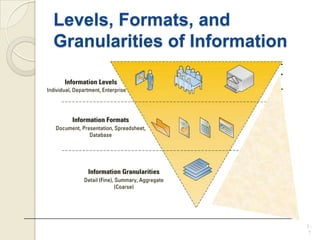
Information Everywhere
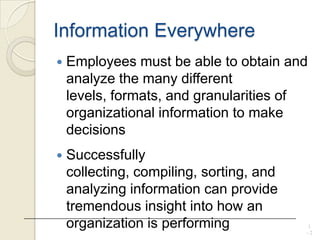
 Employees must be able to obtain and
analyze the many different
levels, formats, and granularities of
organizational information to make
decisions
 Successfully
collecting, compiling, sorting, and
analyzing information can provide
tremendous insight into how an
organization is performing 1
- 2
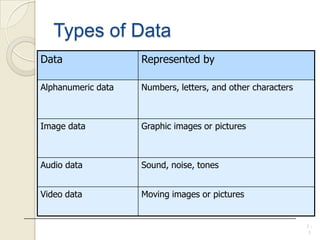
Types of Data
1 -
3
Data Represented by
Alphanumeric data Numbers, letters, and other characters
Image data Graphic images or pictures
Audio data Sound, noise, tones
Video data Moving images or pictures
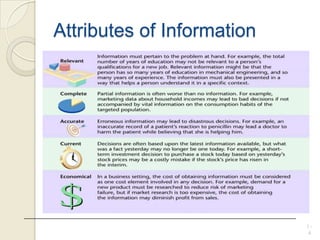
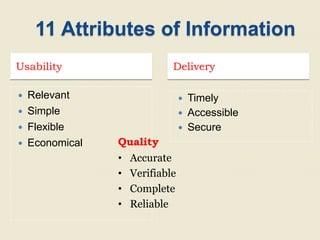
Attributes of Information
1 -
4
Usability Delivery
 Relevant
 Simple
 Flexible
 Economical
 Timely
 Accessible
 Secure
11 Attributes of Information
Quality
• Accurate
• Verifiable
• Complete
• Reliable
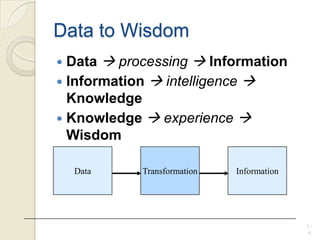
Data to Wisdom
 Data  processing  Information
 Information  intelligence 
Knowledge
 Knowledge  experience 
Wisdom
1 -
6
Data InformationTransformation
Levels, Formats, and
Granularities of Information
1 -
7
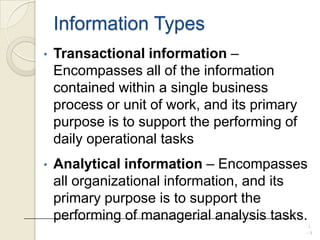
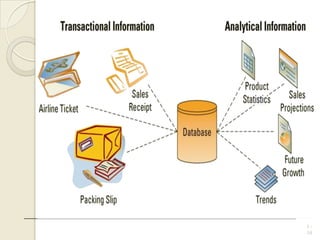
Information Types
• Transactional information –
Encompasses all of the information
contained within a single business
process or unit of work, and its primary
purpose is to support the performing of
daily operational tasks
• Analytical information – Encompasses
all organizational information, and its
primary purpose is to support the
performing of managerial analysis tasks.
1
- 8
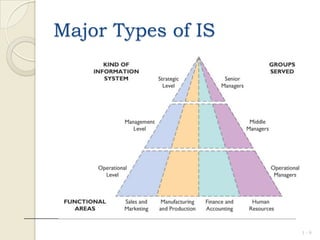
Major Types of IS
1 - 9
1 -
10
Primary sources of low quality
information
1. Customers intentionally enter
inaccurate information to protect their
privacy
2. Different entry standards and formats
3. Operators enter abbreviated or
erroneous information by accident or to
save time
4. Third party and external information
contains
inconsistencies, inaccuracies, and errors
1 -
11
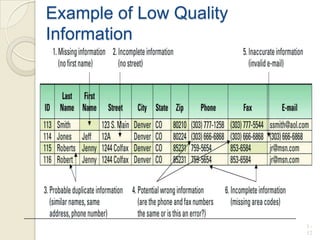
Example of Low Quality
Information
1 -
12
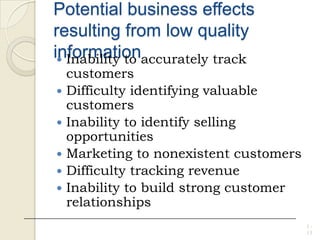
Potential business effects
resulting from low quality
information Inability to accurately track
customers
 Difficulty identifying valuable
customers
 Inability to identify selling
opportunities
 Marketing to nonexistent customers
 Difficulty tracking revenue
 Inability to build strong customer
relationships
1 -
13
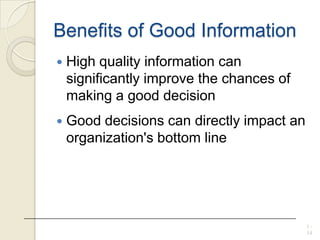
Benefits of Good Information
 High quality information can
significantly improve the chances of
making a good decision
 Good decisions can directly impact an
organization's bottom line
1 -
14
1 -
15

Data, information & its attributes uwsb

  • 1.
  • 2.
    Information Everywhere  Employeesmust be able to obtain and analyze the many different levels, formats, and granularities of organizational information to make decisions  Successfully collecting, compiling, sorting, and analyzing information can provide tremendous insight into how an organization is performing 1 - 2
  • 3.
    Types of Data 1- 3 Data Represented by Alphanumeric data Numbers, letters, and other characters Image data Graphic images or pictures Audio data Sound, noise, tones Video data Moving images or pictures
  • 4.
  • 5.
    Usability Delivery  Relevant Simple  Flexible  Economical  Timely  Accessible  Secure 11 Attributes of Information Quality • Accurate • Verifiable • Complete • Reliable
  • 6.
    Data to Wisdom Data  processing  Information  Information  intelligence  Knowledge  Knowledge  experience  Wisdom 1 - 6 Data InformationTransformation
  • 7.
  • 8.
    Information Types • Transactionalinformation – Encompasses all of the information contained within a single business process or unit of work, and its primary purpose is to support the performing of daily operational tasks • Analytical information – Encompasses all organizational information, and its primary purpose is to support the performing of managerial analysis tasks. 1 - 8
  • 9.
  • 10.
  • 11.
    Primary sources oflow quality information 1. Customers intentionally enter inaccurate information to protect their privacy 2. Different entry standards and formats 3. Operators enter abbreviated or erroneous information by accident or to save time 4. Third party and external information contains inconsistencies, inaccuracies, and errors 1 - 11
  • 12.
    Example of LowQuality Information 1 - 12
  • 13.
    Potential business effects resultingfrom low quality information Inability to accurately track customers  Difficulty identifying valuable customers  Inability to identify selling opportunities  Marketing to nonexistent customers  Difficulty tracking revenue  Inability to build strong customer relationships 1 - 13
  • 14.
    Benefits of GoodInformation  High quality information can significantly improve the chances of making a good decision  Good decisions can directly impact an organization's bottom line 1 - 14
  • 15.