Management Information
Systems
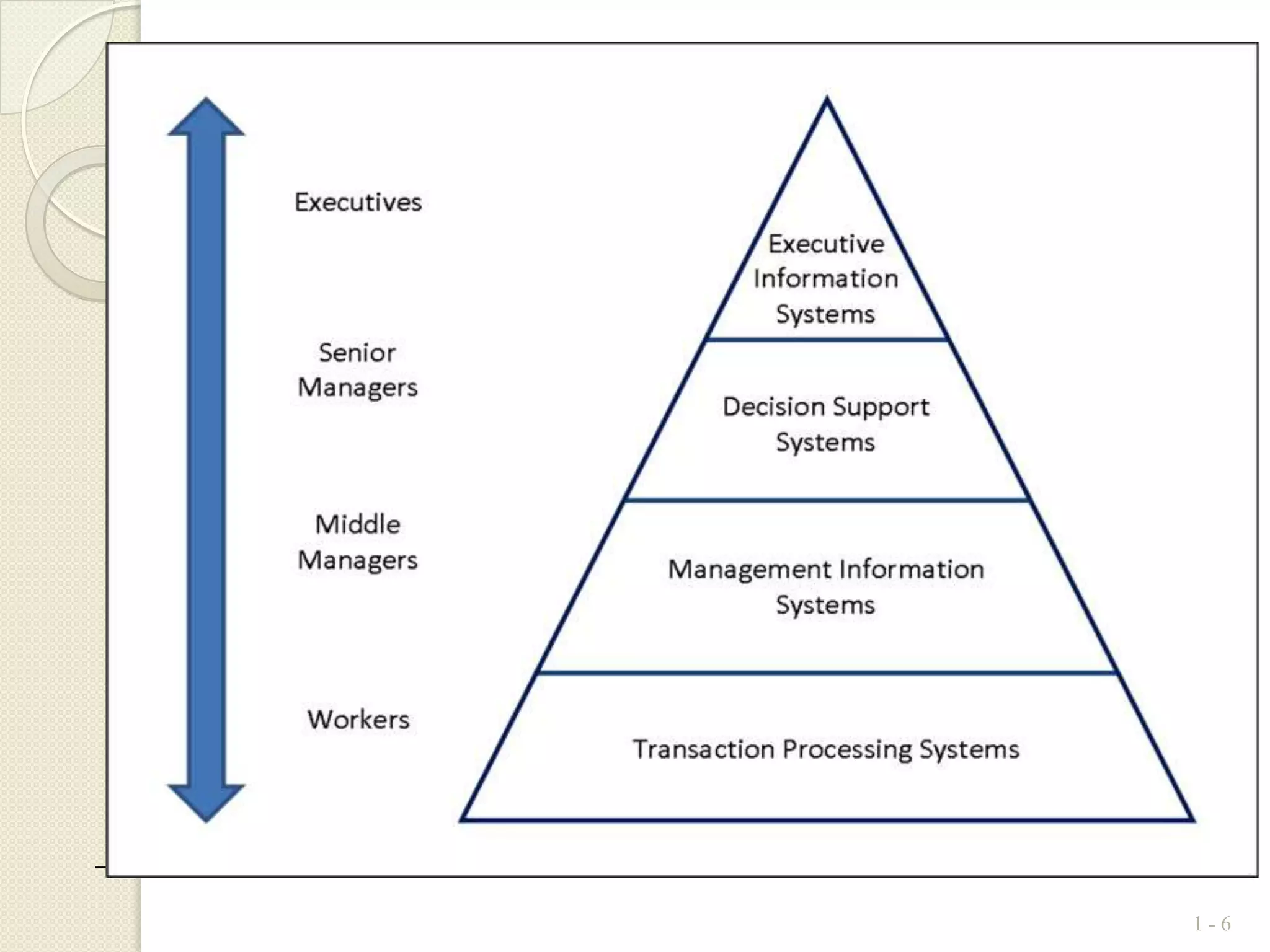
Types of information systems
 For different types of
organizations
 For different functions within
organizations
 For different business needs
 and at different management
levels of an organization
1 - 2
1 - 3
Major
Functional
Subsystem
Some typical uses
Marketing Sales forecasting, sales planning, customer and
sales analysis
Manufacturing Production planning and scheduling, cost
control analysis.
Logistics Planning and control of purchasing, inventories,
distribution
Personnel Planning personnel requirements, analyzing
performance, salary administration.
Finance and
Accounting
Financial analysis, cost analysis, capital
requirements planning, income measurement
Information
processing
Information system planning, cost-effectiveness
analysis
Top management Strategic Planning, resource allocation
Value Chain and IS
1 - 4
1 - 5
Activity
Subsystem
Some typical uses
Transaction
Processing
Processing of orders, shipments
and receipts
Operational control Scheduling of activities and
performance reports
Management
control
Formulation of budgets and
resource allocation
Strategic planning Formulation of objectives and
strategic plans
1 - 6
1 - 7
Time
Scales
Level of
Detail
Source
Degree of
Uncertainty
Frequency
Operational Middle Strategic
Management Management Management
Immediate
Highly
detailed
Internal
Certain
Frequent
Long
Term
Summarised
External
Uncertain
Infrequent
How MIS Obtains Data from
TPS
1 - 8
9
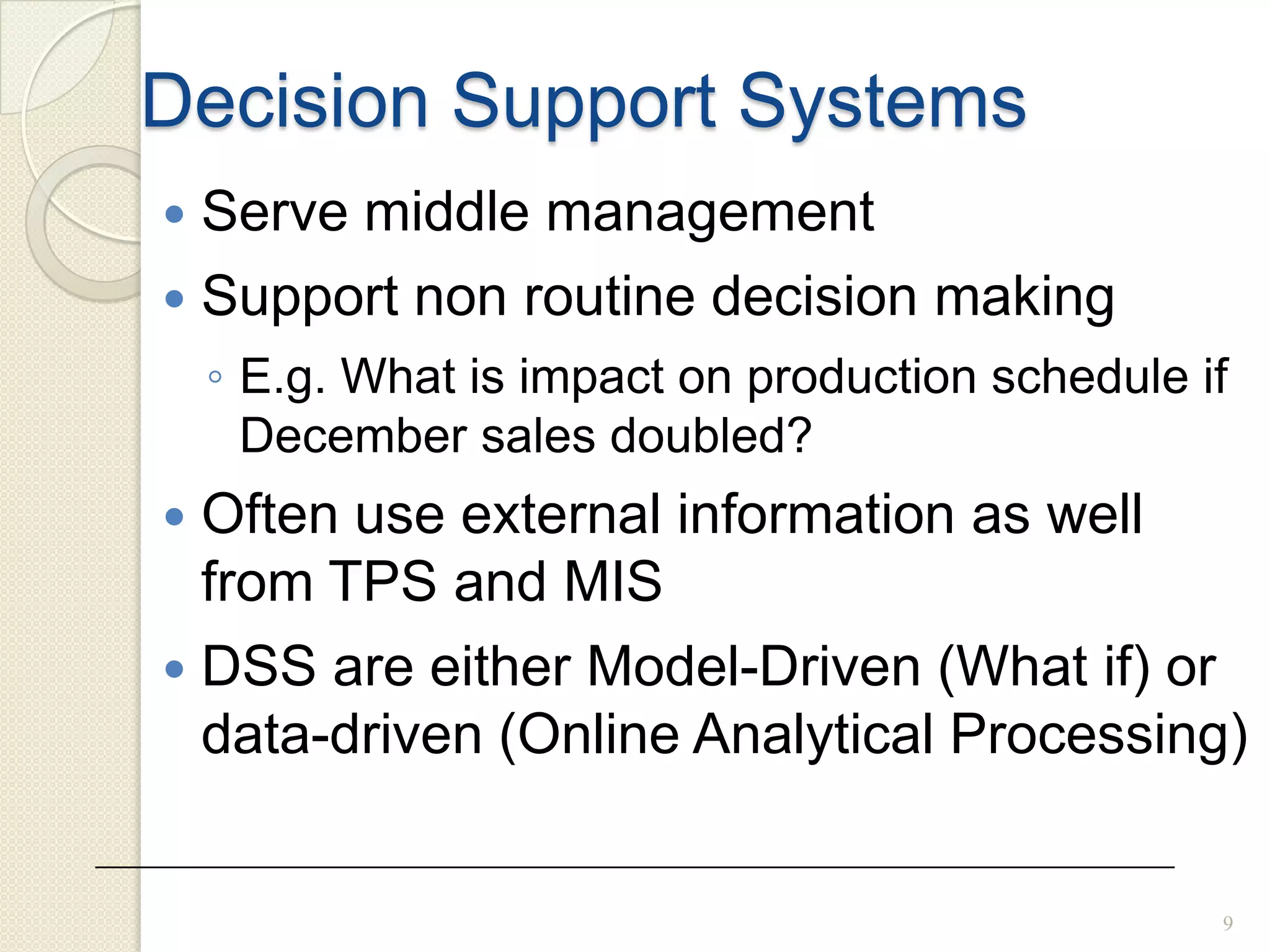
Decision Support Systems
 Serve middle management
 Support non routine decision making
◦ E.g. What is impact on production schedule if
December sales doubled?
 Often use external information as well
from TPS and MIS
 DSS are either Model-Driven (What if) or
data-driven (Online Analytical Processing)
10
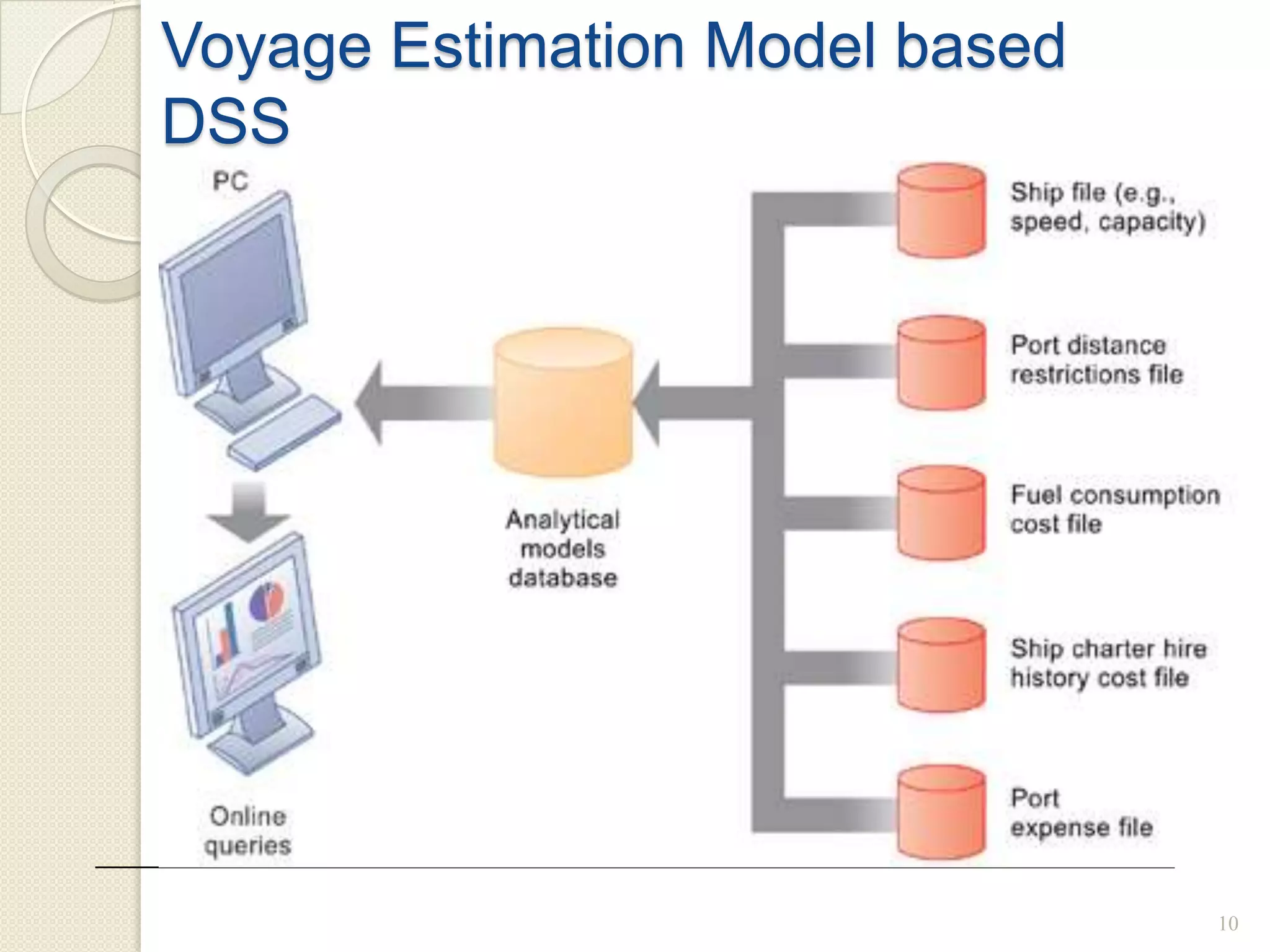
Voyage Estimation Model based
DSS
11
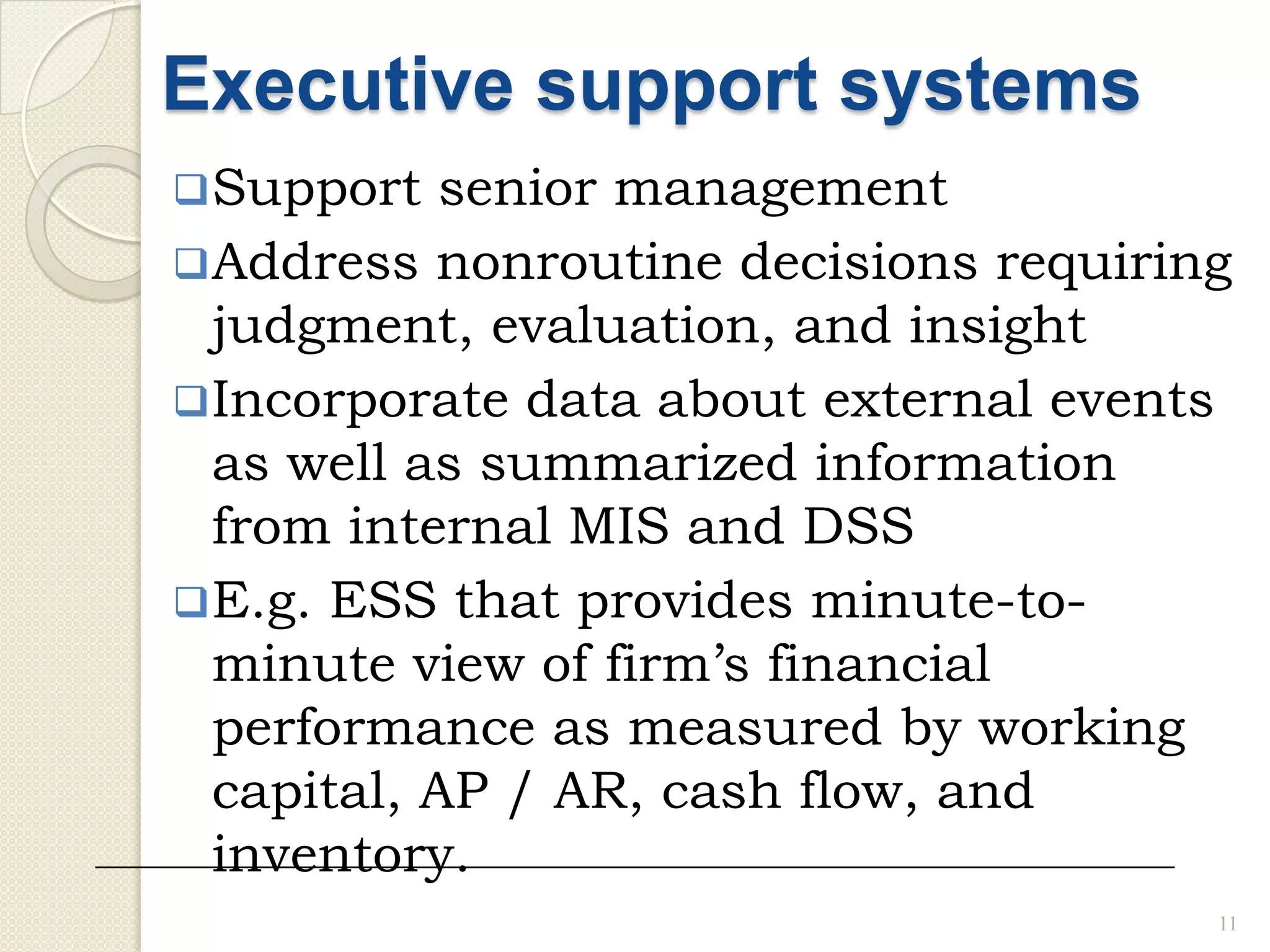
Executive support systems
Support senior management
Address nonroutine decisions requiring
judgment, evaluation, and insight
Incorporate data about external events
as well as summarized information
from internal MIS and DSS
E.g. ESS that provides minute-to-
minute view of firm’s financial
performance as measured by working
capital, AP / AR, cash flow, and
inventory.
12
Model of an ESS
This system pools data from
diverse internal and external
sources and makes them
available to executives in an
easy-to-use form.
13
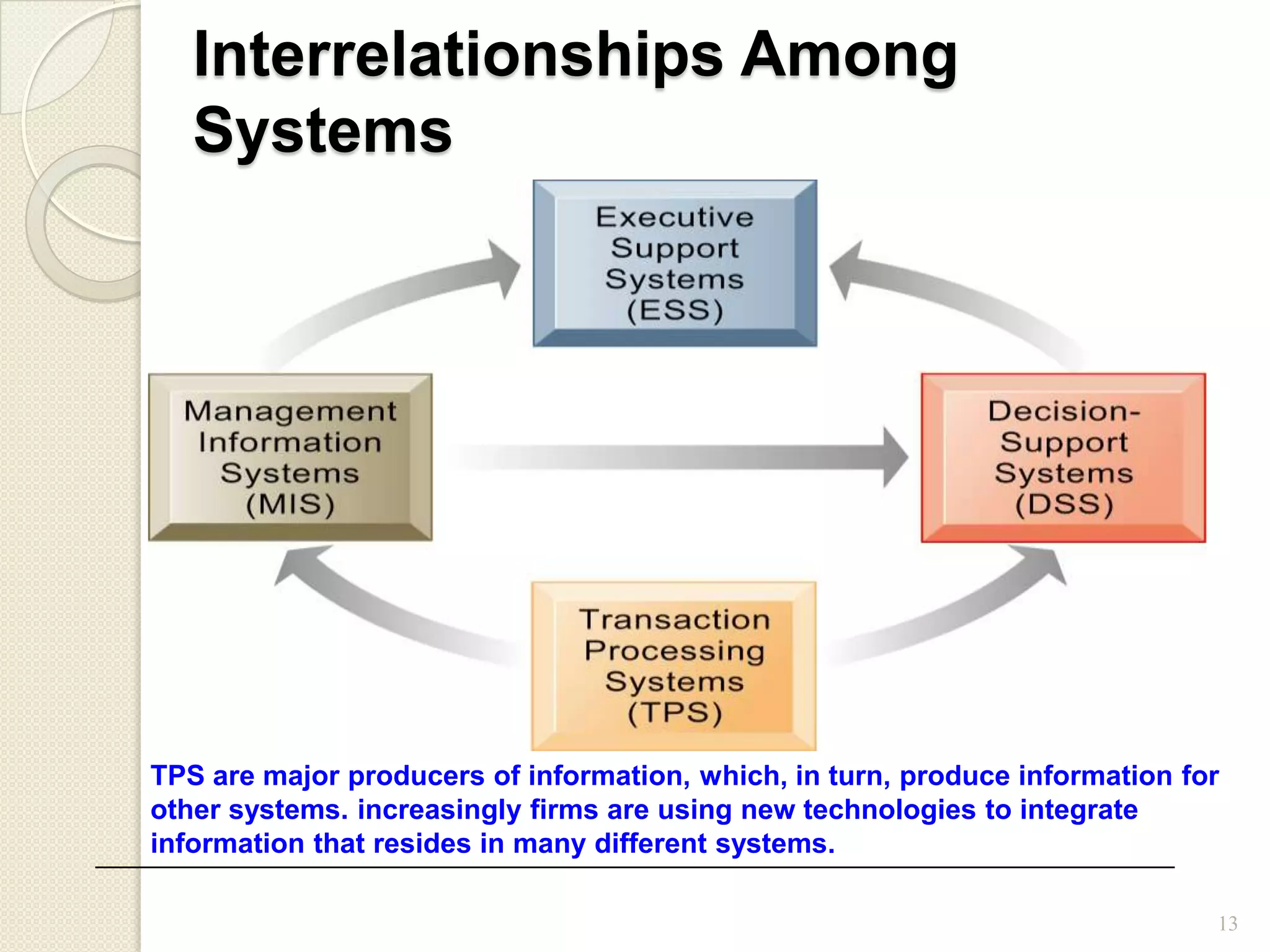
Interrelationships Among
Systems
TPS are major producers of information, which, in turn, produce information for
other systems. increasingly firms are using new technologies to integrate
information that resides in many different systems.
1 - 14
15
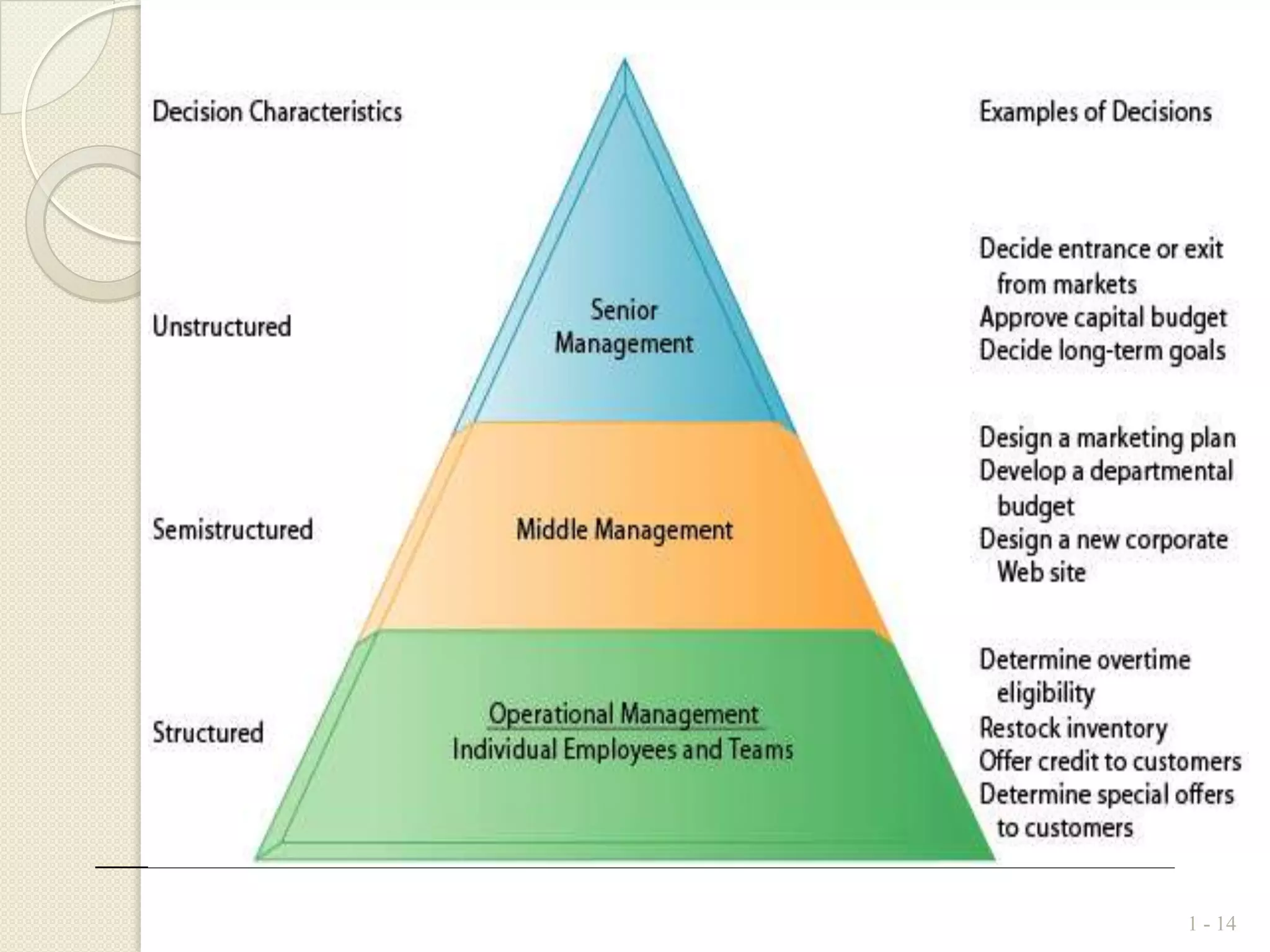
Types of Decisions
Level Operational
Control
Management
Control
Strategic
Planning
Structured
Decisions
Inventory
Reorder,
Production
Scheduling
Pricing of
Bids,
Selection of
credit line
Institutions
Acquisition of
a company,
addition of new
product line
Unstructured
Decisions
Vendor
Selection,
hiring new
supervisor
Allocation of
advertising,
Internal
organization
of a deptt
Entry into new
market, new
organization of
company
16
Information
CharacteristicsStructured Unstructured
Prespecified Ad Hoc
Scheduled Unscheduled
Detailed Summarized
Frequent Infrequent
Historical Forward Looking
Internal External
Narrow Focus Wide Scope
1 -
17

Level of people and their information needs - Unitedworld School of Business

  • 1.
  • 2.
    Types of informationsystems  For different types of organizations  For different functions within organizations  For different business needs  and at different management levels of an organization 1 - 2
  • 3.
    1 - 3 Major Functional Subsystem Sometypical uses Marketing Sales forecasting, sales planning, customer and sales analysis Manufacturing Production planning and scheduling, cost control analysis. Logistics Planning and control of purchasing, inventories, distribution Personnel Planning personnel requirements, analyzing performance, salary administration. Finance and Accounting Financial analysis, cost analysis, capital requirements planning, income measurement Information processing Information system planning, cost-effectiveness analysis Top management Strategic Planning, resource allocation
  • 4.
  • 5.
    1 - 5 Activity Subsystem Sometypical uses Transaction Processing Processing of orders, shipments and receipts Operational control Scheduling of activities and performance reports Management control Formulation of budgets and resource allocation Strategic planning Formulation of objectives and strategic plans
  • 6.
  • 7.
    1 - 7 Time Scales Levelof Detail Source Degree of Uncertainty Frequency Operational Middle Strategic Management Management Management Immediate Highly detailed Internal Certain Frequent Long Term Summarised External Uncertain Infrequent
  • 8.
    How MIS ObtainsData from TPS 1 - 8
  • 9.
    9 Decision Support Systems Serve middle management  Support non routine decision making ◦ E.g. What is impact on production schedule if December sales doubled?  Often use external information as well from TPS and MIS  DSS are either Model-Driven (What if) or data-driven (Online Analytical Processing)
  • 10.
  • 11.
    11 Executive support systems Supportsenior management Address nonroutine decisions requiring judgment, evaluation, and insight Incorporate data about external events as well as summarized information from internal MIS and DSS E.g. ESS that provides minute-to- minute view of firm’s financial performance as measured by working capital, AP / AR, cash flow, and inventory.
  • 12.
    12 Model of anESS This system pools data from diverse internal and external sources and makes them available to executives in an easy-to-use form.
  • 13.
    13 Interrelationships Among Systems TPS aremajor producers of information, which, in turn, produce information for other systems. increasingly firms are using new technologies to integrate information that resides in many different systems.
  • 14.
  • 15.
    15 Types of Decisions LevelOperational Control Management Control Strategic Planning Structured Decisions Inventory Reorder, Production Scheduling Pricing of Bids, Selection of credit line Institutions Acquisition of a company, addition of new product line Unstructured Decisions Vendor Selection, hiring new supervisor Allocation of advertising, Internal organization of a deptt Entry into new market, new organization of company
  • 16.
    16 Information CharacteristicsStructured Unstructured Prespecified AdHoc Scheduled Unscheduled Detailed Summarized Frequent Infrequent Historical Forward Looking Internal External Narrow Focus Wide Scope
  • 17.