


Training, Development and
Career Management
Inputs in T & D
• Skills
• Education
• Development
• Ethics
• Attitudinal changes
• Decision making skills
Training Process
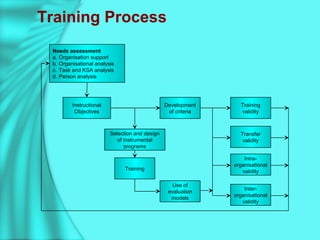
Needs assessment
a. Organisation support
b. Organisational analysis
c. Task and KSA analysis
d. Person analysis
Instructional
Objectives
Development
of criteria
Training
validity
Transfer
validity
Intra-
organisational
validity
Inter-
organisational
validity
Use of
evaluation
models
Selection and design
of instrumental
programs
Training
Training Process
• Needs assessment
• Deciding on objectives of T&D
• Designing T&D programme
• Implementation of the programme
• Evaluation
Needs Assessment
• Issues in assessment
• Benefits from assessment
• Outcomes of not assessing
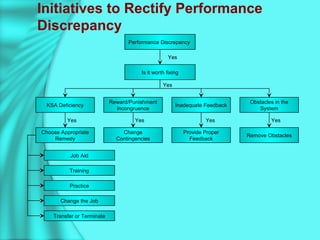
Initiatives to Rectify Performance
Discrepancy
Performance Discrepancy
Is it worth fixing
Inadequate Feedback
Reward/Punishment
Incongruence
Obstacles in the
System
KSA Deficiency
Provide Proper
Feedback
Change
Contingencies
Remove Obstacles
Choose Appropriate
Remedy
Job Aid
Training
Practice
Change the Job
Transfer or Terminate
Yes
Yes
Yes Yes Yes Yes
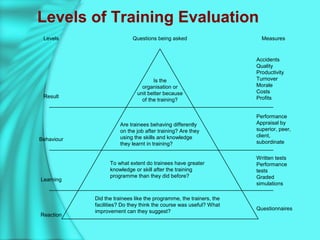
Levels of Training Evaluation
Levels Questions being asked Measures
Result
Behaviour
Learning
Reaction
Accidents
Quality
Productivity
Turnover
Morale
Costs
Profits
Performance
Appraisal by
superior, peer,
client,
subordinate
Written tests
Performance
tests
Graded
simulations
Questionnaires
Is the
organisation or
unit better because
of the training?
Are trainees behaving differently
on the job after training? Are they
using the skills and knowledge
they learnt in training?
To what extent do trainees have greater
knowledge or skill after the training
programme than they did before?
Did the trainees like the programme, the trainers, the
facilities? Do they think the course was useful? What
improvement can they suggest?
Career Development Initiatives
• Career planning workshops
• Career counselling
• Mentoring
• Personal development
• Career workbooks

Training and developement - Unitedworld School of Business

  • 1.
  • 2.
    Inputs in T& D • Skills • Education • Development • Ethics • Attitudinal changes • Decision making skills
  • 3.
    Training Process Needs assessment a.Organisation support b. Organisational analysis c. Task and KSA analysis d. Person analysis Instructional Objectives Development of criteria Training validity Transfer validity Intra- organisational validity Inter- organisational validity Use of evaluation models Selection and design of instrumental programs Training
  • 4.
    Training Process • Needsassessment • Deciding on objectives of T&D • Designing T&D programme • Implementation of the programme • Evaluation
  • 5.
    Needs Assessment • Issuesin assessment • Benefits from assessment • Outcomes of not assessing
  • 6.
    Initiatives to RectifyPerformance Discrepancy Performance Discrepancy Is it worth fixing Inadequate Feedback Reward/Punishment Incongruence Obstacles in the System KSA Deficiency Provide Proper Feedback Change Contingencies Remove Obstacles Choose Appropriate Remedy Job Aid Training Practice Change the Job Transfer or Terminate Yes Yes Yes Yes Yes Yes
  • 7.
    Levels of TrainingEvaluation Levels Questions being asked Measures Result Behaviour Learning Reaction Accidents Quality Productivity Turnover Morale Costs Profits Performance Appraisal by superior, peer, client, subordinate Written tests Performance tests Graded simulations Questionnaires Is the organisation or unit better because of the training? Are trainees behaving differently on the job after training? Are they using the skills and knowledge they learnt in training? To what extent do trainees have greater knowledge or skill after the training programme than they did before? Did the trainees like the programme, the trainers, the facilities? Do they think the course was useful? What improvement can they suggest?
  • 8.
    Career Development Initiatives •Career planning workshops • Career counselling • Mentoring • Personal development • Career workbooks

Editor's Notes

  • #2 Human Resource Management, 5E Human Resource Management, 5E