BY,
LOKESWARI B,
III BSC
BIOTECHNOLOGY
BON SECOURS COLLEGE FOR WOMEN,
THANJAVUR..
 INTRODUCTION
 PRINCIPLE
 EXAMPLES
 USES
 ADVANTAGES
 DISADVANTAGES
In 1830 J.J.Lister
(Joseph Lister)
invented the dark field
microscope.
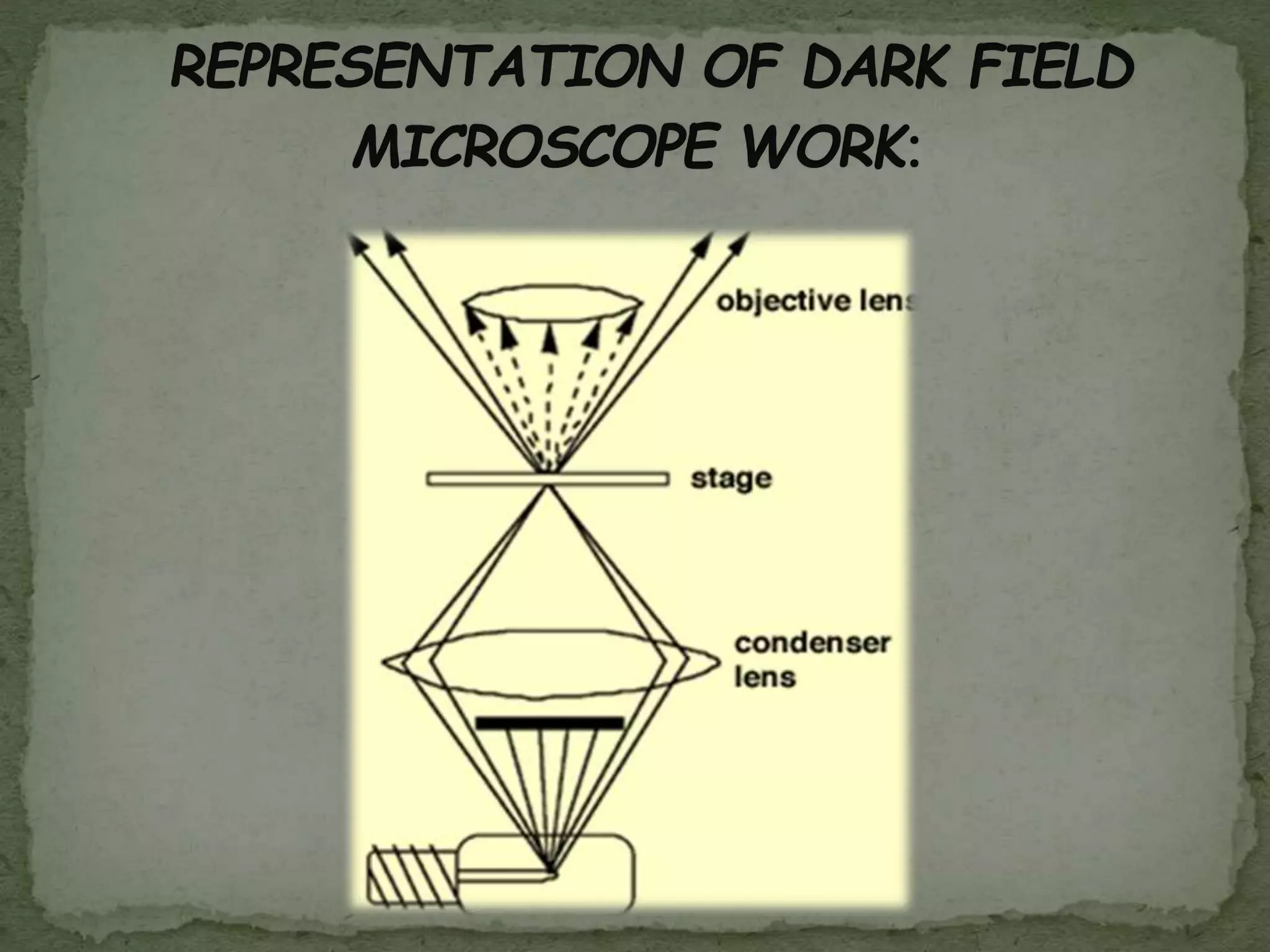
To view a specimen in dark
field an opaque an opaque disc
is placed underneath the
condenser lens, so that only
light that is scattered by
objects on the slide can reach
pigmented objects are often
seen in false colors.
USED
FOR:
Initial examination
of suspension cells(
yeast, bacteria,
etc.,)
Initial survey and
observation at low
power of pond
water and samples.
Examination of
lightly stained
prepared slides.
Determination
of mobility in
cultures.
A dark field microscope is ideal
for viewing objects that are
unstained, transparent and absorb
little or no light.
These specimens often have
similar refractive indices as their
surroundings, making them hard to
distinguish with other illumination
techniques.
A dark field microscope
can result in beautiful and
amazing images; this
technique also comes with
a number of
disadvantages.
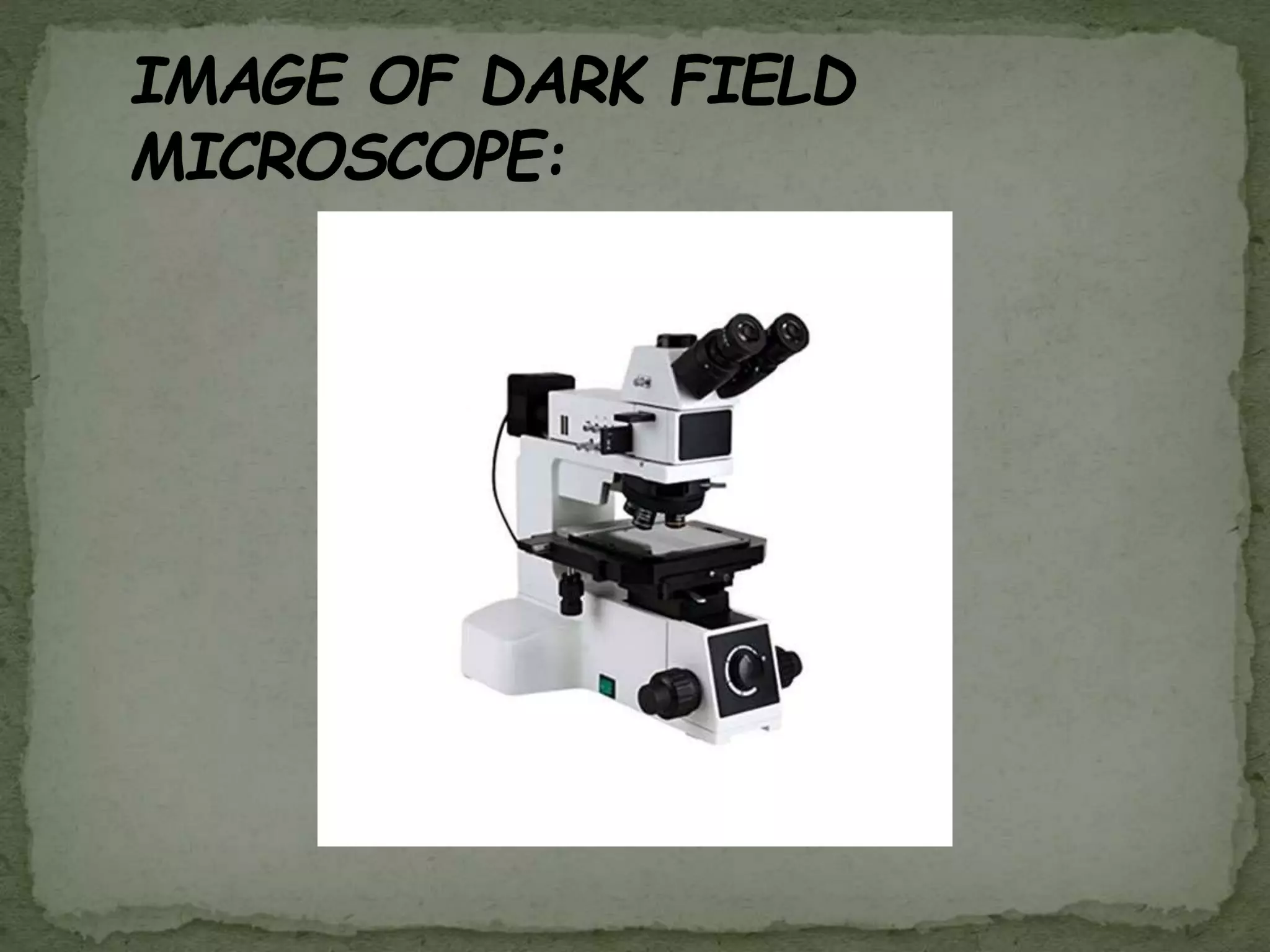
Dark field microscope

Dark field microscope

  • 1.
    BY, LOKESWARI B, III BSC BIOTECHNOLOGY BONSECOURS COLLEGE FOR WOMEN, THANJAVUR..
  • 3.
     INTRODUCTION  PRINCIPLE EXAMPLES  USES  ADVANTAGES  DISADVANTAGES
  • 4.
    In 1830 J.J.Lister (JosephLister) invented the dark field microscope.
  • 6.
    To view aspecimen in dark field an opaque an opaque disc is placed underneath the condenser lens, so that only light that is scattered by objects on the slide can reach pigmented objects are often seen in false colors.
  • 8.
    USED FOR: Initial examination of suspensioncells( yeast, bacteria, etc.,) Initial survey and observation at low power of pond water and samples. Examination of lightly stained prepared slides. Determination of mobility in cultures.
  • 9.
    A dark fieldmicroscope is ideal for viewing objects that are unstained, transparent and absorb little or no light. These specimens often have similar refractive indices as their surroundings, making them hard to distinguish with other illumination techniques.
  • 10.
    A dark fieldmicroscope can result in beautiful and amazing images; this technique also comes with a number of disadvantages.