Forma&ve	
  Assessment	
  

…ge0ng	
  the	
  best	
  possible	
  evidence	
  about	
  what	
  
 students	
  have	
  learned	
  and	
  using	
  this	
  evidence	
  
 to	
  decide	
  what	
  to	
  do	
  next.	
  

Dylan	
  Wiliam,	
  2011	
  
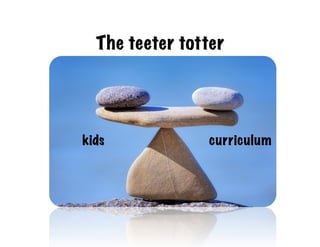
The teeter totter


  kids                curriculum


kids
Who?	
  	
  the	
  learners	
  and	
  the	
  teachers	
  

How?	
  	
  descrip&ve	
  feedback,	
  NO	
  marks	
  

Why?	
  	
  guide	
  learning	
  and	
  teaching	
  

When?	
  	
  minute	
  by	
  minute,	
  day	
  by	
  day,	
  with	
  
 occasional	
  grand	
  events	
  
A	
  Grand	
  Event:	
  
Performance	
  based	
  assessment	
  
                     Forma&ve	
  
       Assess	
  to	
  guide	
  instruc&on	
  
            Elementary	
  –	
  4-­‐5	
  /year	
  
               Middle	
  –	
  2-­‐3/year	
  
    Secondary	
  –	
  gr.	
  9	
  –	
  1-­‐2/semester	
  
      A	
  few	
  open-­‐ended	
  ques&ons	
  
   Analyze	
  for	
  a	
  paXern	
  of	
  strengths/
                   areas	
  of	
  need	
  
•  What	
  can	
  my	
  students	
  do?	
  
•  What	
  is	
  missing?	
  
•  What	
  do	
  I	
  need	
  to	
  teach?	


•  Did	
  my	
  teaching	
  make	
  a	
  difference?	
  
    –  If	
  not,	
  what	
  will	
  I	
  do	
  next?	
  
Minute	
  by	
  Minute,	
  Day	
  by	
  Day:	
  
            6	
  strategies	
  
1)	
  Learning	
  Inten&ons	
  
•  I	
  can…statements	
  
   –  I	
  can	
  pose	
  ques&ons	
  based	
  on	
  an	
  image.	
  
   –  I	
  can	
  build	
  a	
  theory	
  from	
  my	
  ques&ons	
  and	
  others’	
  
      ques&ons.	
  
•  Essen&al	
  ques&on	
  
   –  How	
  do	
  we	
  use	
  the	
  past	
  loca&on	
  and	
  mo&on	
  of	
  object	
  
      to	
  predict	
  the	
  future	
  loca&on	
  and	
  mo&on	
  of	
  objects?	
  
•  An&cipa&on	
  guide	
  
   –  Before	
  and	
  Aaer	
  Statements	
  
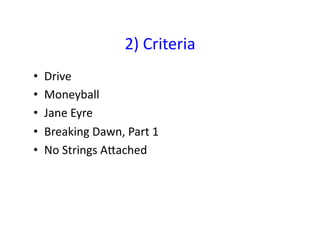
2)	
  Criteria	
  	
  
•    Drive	
  
•    Moneyball	
  
•    Jane	
  Eyre	
  
•    Breaking	
  Dawn,	
  Part	
  1	
  
•    No	
  Strings	
  AXached	
  
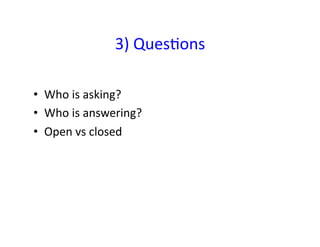
3)	
  Ques&ons	


•  Who	
  is	
  asking?	
  
•  Who	
  is	
  answering?	
  
•  Open	
  vs	
  closed	
  
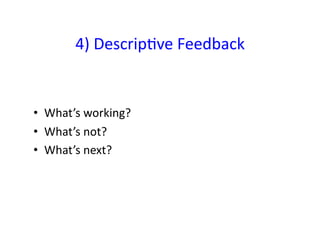
4)	
  Descrip&ve	
  Feedback	


•  What’s	
  working?	
  
•  What’s	
  not?	
  
•  What’s	
  next?	
  
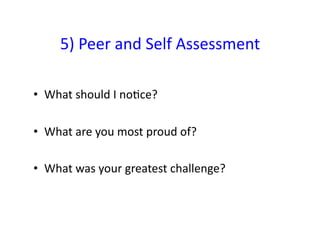
5)	
  Peer	
  and	
  Self	
  Assessment	
  

•  What	
  should	
  I	
  no&ce?	
  

•  What	
  are	
  you	
  most	
  proud	
  of?	
  

•  What	
  was	
  your	
  greatest	
  challenge?	
  
6)	
  Ownership	
  

•    Engagement	
  
•    Mo&va&on	
  
•    Caring	
  
•    Voice	
  and	
  choice	
  
•  What	
  am	
  I	
  doing	
  to	
  increase	
  all	
  learners	
  
   engaging	
  in	
  work	
  that	
  moves	
  the	
  learning	
  
   forward?	
  

•  How	
  am	
  I	
  crea&ng	
  space	
  in	
  the	
  classroom	
  to	
  
   engage	
  small	
  groups	
  of	
  students	
  and	
  
   individuals	
  in	
  conversa&on?	
  

Cta20min

  • 1.
    Forma&ve  Assessment   …ge0ng  the  best  possible  evidence  about  what   students  have  learned  and  using  this  evidence   to  decide  what  to  do  next.   Dylan  Wiliam,  2011  
  • 2.
    The teeter totter kids curriculum kids
  • 3.
    Who?    the  learners  and  the  teachers   How?    descrip&ve  feedback,  NO  marks   Why?    guide  learning  and  teaching   When?    minute  by  minute,  day  by  day,  with   occasional  grand  events  
  • 4.
    A  Grand  Event:   Performance  based  assessment   Forma&ve   Assess  to  guide  instruc&on   Elementary  –  4-­‐5  /year   Middle  –  2-­‐3/year   Secondary  –  gr.  9  –  1-­‐2/semester   A  few  open-­‐ended  ques&ons   Analyze  for  a  paXern  of  strengths/ areas  of  need  
  • 5.
    •  What  can  my  students  do?   •  What  is  missing?   •  What  do  I  need  to  teach?   •  Did  my  teaching  make  a  difference?   –  If  not,  what  will  I  do  next?  
  • 6.
    Minute  by  Minute,  Day  by  Day:   6  strategies  
  • 7.
    1)  Learning  Inten&ons   •  I  can…statements   –  I  can  pose  ques&ons  based  on  an  image.   –  I  can  build  a  theory  from  my  ques&ons  and  others’   ques&ons.   •  Essen&al  ques&on   –  How  do  we  use  the  past  loca&on  and  mo&on  of  object   to  predict  the  future  loca&on  and  mo&on  of  objects?   •  An&cipa&on  guide   –  Before  and  Aaer  Statements  
  • 8.
    2)  Criteria     •  Drive   •  Moneyball   •  Jane  Eyre   •  Breaking  Dawn,  Part  1   •  No  Strings  AXached  
  • 9.
    3)  Ques&ons     •  Who  is  asking?   •  Who  is  answering?   •  Open  vs  closed  
  • 10.
    4)  Descrip&ve  Feedback   •  What’s  working?   •  What’s  not?   •  What’s  next?  
  • 11.
    5)  Peer  and  Self  Assessment   •  What  should  I  no&ce?   •  What  are  you  most  proud  of?   •  What  was  your  greatest  challenge?  
  • 12.
    6)  Ownership   •  Engagement   •  Mo&va&on   •  Caring   •  Voice  and  choice  
  • 13.
    •  What  am  I  doing  to  increase  all  learners   engaging  in  work  that  moves  the  learning   forward?   •  How  am  I  crea&ng  space  in  the  classroom  to   engage  small  groups  of  students  and   individuals  in  conversa&on?