Current and Effective Teaching
Strategies across the Curriculum	
  

              Bulkley Valley
           November 23, 2012
        Presented by Faye Brownlie
           www.slideshare.net
Learning	
  Inten+ons	
  
•  I	
  can	
  iden+fy	
  ‘what	
  counts’	
  in	
  different	
  
   teaching	
  sequences	
  
•  I	
  have	
  a	
  plan	
  to	
  implement	
  a	
  strategy	
  that	
  is	
  
   new	
  to	
  me	
  and	
  to	
  my	
  students	
  
•  I	
  have	
  a	
  plan	
  to	
  con+nue	
  to	
  ask	
  the	
  ques+ons,	
  
   ”How	
  is	
  what	
  I	
  am	
  doing	
  suppor+ng	
  the	
  
   learning	
  of	
  all	
  my	
  students?”	
  and	
  “How	
  do	
  I	
  
   know?”	
  
•  American	
  5th	
  graders	
  spend	
  91%	
  of	
  their	
  day	
  
   either	
  listening	
  to	
  a	
  teacher	
  talk	
  or	
  working	
  
   alone	
  (Pianta	
  &	
  Belsky,	
  2007).	
  
•  10	
  years	
  aQer	
  high	
  school,	
  graduates	
  who	
  had	
  
   honed	
  their	
  teamwork	
  skills	
  while	
  s+ll	
  in	
  high	
  
   school	
  had	
  significantly	
  higher	
  earnings	
  than	
  
   those	
  who	
  failed	
  to	
  do	
  so	
  (Science	
  Daily	
  2008).	
  
Questioning


•  Math	
  
•  Closed	
  vs	
  open	
  
•  1	
  +	
  4	
  =	


•  2	
  +	
  3	
  =	
  

•  4	
  +	
  1	
  =	
  

•  0	
  +	
  5	
  =	
  
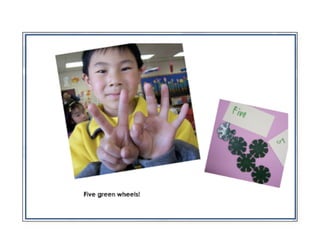
How can you show your
number for our number
        book?
Questioning


•  Who	
  is	
  answering	
  your	
  ques+ons?	
  

•  Who	
  is	
  asking	
  the	
  ques+ons?	
  
What? So What?
•  2	
  column	
  notes	
  

•  Essen+al	
  ques+on:	
  
    –  How	
  does	
  where	
  you	
  live	
  affect	
  how	
  you	
  live?	
  
Yearly	
  17,655,265	
  passengers	
  in	
  Brussels	
  
                       Airport.	
  
  93%	
  of	
  them	
  are	
  visi+ng	
  the	
  toilets.	
  
               www.face2face.aero	
  
Powerful	
  Learning:	
  	
  What	
  We	
  Know	
  
 about	
  Teaching	
  for	
  Understanding	
  
                 (2008)	
  
Darling-­‐Hammond,	
  Pearson,	
  Barron,	
  
              Schoenfeld	


    As	
  discussed	
  in	
  It’s	
  All	
  About	
  
 Thinking	
  –	
  Math	
  and	
  Science,	
  2011	
  
1.  Crea+ng	
  meaningful	
  and	
  ambiguous	
  
    tasks	
  that	
  reflect	
  how	
  knowledge	
  is	
  
    used	
  in	
  the	
  field	
  
2.	
  Engaging	
  students	
  in	
  ac+ve	
  learning	
  
       so	
  they	
  will	
  apply	
  and	
  test	
  what	
  
       they	
  know	
  
Sarah	
  says	
  that	
  when	
  she	
  babysits,	
  she	
  earns	
  $5	
  
  an	
  hour	
  plus	
  a	
  flat	
  rate	
  of	
  $10	
  to	
  feed	
  the	
  
  children	
  dinner.	
  	
  How	
  can	
  you	
  represent	
  
  rela+on	
  this	
  in	
  an	
  equa+on?	
  Sarah	
  earned	
  $45	
  
  for	
  babysihng	
  on	
  Saturday.	
  	
  How	
  many	
  hours	
  
  did	
  she	
  work?	
  	
  How	
  did	
  you	
  figure	
  it	
  out?	
  
Brian	
  babysits	
  as	
  well.	
  	
  He	
  earns	
  $7.50	
  an	
  hour.	
  	
  
  Show	
  Sarah's	
  wage	
  and	
  Brian's	
  wage	
  on	
  a	
  
  graph.	
  	
  Which	
  mode	
  of	
  payment	
  would	
  you	
  
  prefer,	
  and	
  why?	
  	
  Use	
  the	
  graph	
  to	
  explain	
  
  your	
  thinking.	
  
3.	
  Drawing	
  connec+ons	
  to	
  students’	
  
  prior	
  knowledge	
  and	
  experiences	
  
Caitlin.	
  	
  If	
  you	
  ever	
  want	
  to	
  talk	
  about	
  what	
  
      happened	
  you	
  just	
  let	
  me	
  know,	
  Mrs.	
  Johnson	
  
      says.	
  
That’s	
  what	
  Mrs.	
  Brook	
  is	
  for,	
  I	
  tell	
  her.	
  
Maybe	
  we	
  could	
  all	
  sit	
  down	
  together.	
  
Why?	
  
So	
  we	
  know	
  where	
  you’re	
  coming	
  from.	
  	
  
I	
  look	
  around	
  the	
  living	
  room.	
  	
  I	
  come	
  from	
  here.	
  
I’m	
  sorry.	
  	
  I	
  meant	
  so	
  we	
  all	
  know	
  how	
  you’re	
  
      feeling.	
  
Oh.	
  	
  Mrs.	
  Brook	
  know	
  how	
  I’m	
  feeling	
  so	
  you	
  can	
  
      find	
  out	
  from	
  her.	
  I	
  would	
  be	
  superfluous.	
  	
  My	
  
      DicJonary	
  says	
  suPERfluous	
  means	
  exceeding	
  
      what	
  is	
  sufficient	
  or	
  necessary.	
  
I	
  just	
  thought	
  it	
  would	
  be	
  nice	
  to	
  take	
  some	
  Jme	
  
      to	
  sit	
  and	
  chat.	
  
I	
  shake	
  my	
  head.	
  	
  SuPERfluous	
  also	
  means	
  
      marked	
  by	
  wastefulness.	
  
Well…okay	
  then,	
  she	
  says.	
  	
  I	
  suppose	
  I	
  can	
  talk	
  
      with	
  Mrs.	
  Brook.	
  
Mockingbird	
  –	
  Kathryn	
  Erskine	
  
Choice	
  Beginnings	
  
•  Choose	
  15-­‐20	
  words	
  
•  Read	
  these	
  words	
  while	
  the	
  students	
  sketch,	
  
   predict,	
  or	
  write	
  ques+ons	
  
•  Reread	
  the	
  words	
  several	
  +mes	
  
•  In	
  2’s	
  and	
  3’s,	
  students	
  discuss	
  what	
  they	
  
   believe	
  they	
  know	
  and	
  what	
  they	
  wonder	
  
•  Present	
  informa+on	


•  Student	
  Diversity,	
  2nd	
  ed.	
  -­‐	
  Brownlie,	
  Feniak,	
  
   Schnellert	
  
•  Previously:	
  	
  Big	
  Bang	
  Theory	
  
•  Topic:	
  	
  Life	
  cycle	
  of	
  stars	
  and	
  the	
  sun	
  

•  Key	
  Idea:	
  	
  Nuclear	
  fusion	
  powers	
  stars	
  and	
  is	
  
   the	
  force	
  behind	
  solar	
  flares,	
  prominences,	
  
   sunspots,	
  solar	
  wind.	
  
•    Choice	
  beginnings	
  
•    Read	
  and	
  discuss	
  
•    Create	
  a	
  graphic	
  of	
  nuclear	
  fusion	
  
•    What	
  do	
  you	
  know?	
  
      –  Alone	
  and	
  with	
  a	
  partner	
  
•  Exit	
  slip	
  
      –  What	
  ques+ons	
  do	
  you	
  have?	
  
      –  What	
  are	
  you	
  unsure	
  of?	
  

Bulkley valley.nov23.2012

  • 1.
    Current and EffectiveTeaching Strategies across the Curriculum   Bulkley Valley November 23, 2012 Presented by Faye Brownlie www.slideshare.net
  • 2.
    Learning  Inten+ons   • I  can  iden+fy  ‘what  counts’  in  different   teaching  sequences   •  I  have  a  plan  to  implement  a  strategy  that  is   new  to  me  and  to  my  students   •  I  have  a  plan  to  con+nue  to  ask  the  ques+ons,   ”How  is  what  I  am  doing  suppor+ng  the   learning  of  all  my  students?”  and  “How  do  I   know?”  
  • 3.
    •  American  5th  graders  spend  91%  of  their  day   either  listening  to  a  teacher  talk  or  working   alone  (Pianta  &  Belsky,  2007).  
  • 4.
    •  10  years  aQer  high  school,  graduates  who  had   honed  their  teamwork  skills  while  s+ll  in  high   school  had  significantly  higher  earnings  than   those  who  failed  to  do  so  (Science  Daily  2008).  
  • 5.
    Questioning •  Math   • Closed  vs  open  
  • 6.
    •  1  +  4  =     •  2  +  3  =   •  4  +  1  =   •  0  +  5  =  
  • 7.
    How can youshow your number for our number book?
  • 10.
    Questioning •  Who  is  answering  your  ques+ons?   •  Who  is  asking  the  ques+ons?  
  • 11.
    What? So What? • 2  column  notes   •  Essen+al  ques+on:   –  How  does  where  you  live  affect  how  you  live?  
  • 13.
    Yearly  17,655,265  passengers  in  Brussels   Airport.   93%  of  them  are  visi+ng  the  toilets.   www.face2face.aero  
  • 18.
    Powerful  Learning:    What  We  Know   about  Teaching  for  Understanding   (2008)   Darling-­‐Hammond,  Pearson,  Barron,   Schoenfeld   As  discussed  in  It’s  All  About   Thinking  –  Math  and  Science,  2011  
  • 19.
    1.  Crea+ng  meaningful  and  ambiguous   tasks  that  reflect  how  knowledge  is   used  in  the  field  
  • 20.
    2.  Engaging  students  in  ac+ve  learning   so  they  will  apply  and  test  what   they  know  
  • 21.
    Sarah  says  that  when  she  babysits,  she  earns  $5   an  hour  plus  a  flat  rate  of  $10  to  feed  the   children  dinner.    How  can  you  represent   rela+on  this  in  an  equa+on?  Sarah  earned  $45   for  babysihng  on  Saturday.    How  many  hours   did  she  work?    How  did  you  figure  it  out?  
  • 22.
    Brian  babysits  as  well.    He  earns  $7.50  an  hour.     Show  Sarah's  wage  and  Brian's  wage  on  a   graph.    Which  mode  of  payment  would  you   prefer,  and  why?    Use  the  graph  to  explain   your  thinking.  
  • 23.
    3.  Drawing  connec+ons  to  students’   prior  knowledge  and  experiences  
  • 24.
    Caitlin.    If  you  ever  want  to  talk  about  what   happened  you  just  let  me  know,  Mrs.  Johnson   says.   That’s  what  Mrs.  Brook  is  for,  I  tell  her.   Maybe  we  could  all  sit  down  together.   Why?   So  we  know  where  you’re  coming  from.     I  look  around  the  living  room.    I  come  from  here.  
  • 25.
    I’m  sorry.    I  meant  so  we  all  know  how  you’re   feeling.   Oh.    Mrs.  Brook  know  how  I’m  feeling  so  you  can   find  out  from  her.  I  would  be  superfluous.    My   DicJonary  says  suPERfluous  means  exceeding   what  is  sufficient  or  necessary.   I  just  thought  it  would  be  nice  to  take  some  Jme   to  sit  and  chat.   I  shake  my  head.    SuPERfluous  also  means   marked  by  wastefulness.   Well…okay  then,  she  says.    I  suppose  I  can  talk   with  Mrs.  Brook.  
  • 26.
  • 27.
    Choice  Beginnings   • Choose  15-­‐20  words   •  Read  these  words  while  the  students  sketch,   predict,  or  write  ques+ons   •  Reread  the  words  several  +mes   •  In  2’s  and  3’s,  students  discuss  what  they   believe  they  know  and  what  they  wonder   •  Present  informa+on     •  Student  Diversity,  2nd  ed.  -­‐  Brownlie,  Feniak,   Schnellert  
  • 28.
    •  Previously:    Big  Bang  Theory   •  Topic:    Life  cycle  of  stars  and  the  sun   •  Key  Idea:    Nuclear  fusion  powers  stars  and  is   the  force  behind  solar  flares,  prominences,   sunspots,  solar  wind.  
  • 29.
    •  Choice  beginnings   •  Read  and  discuss   •  Create  a  graphic  of  nuclear  fusion   •  What  do  you  know?   –  Alone  and  with  a  partner   •  Exit  slip   –  What  ques+ons  do  you  have?   –  What  are  you  unsure  of?