School Teams: a literacy
focus
Coquitlam: Central, Mundy Road, Pinetree Way
Sept 20, 2019
Faye Brownlie
www. Slideshare.net/fayebrownlie/coquitlamliteracyteams,sept2019
Learning Intentions
• I have a better idea of ‘what counts’ in effective literacy instruction.
• Every Child, Every Day
• CR4YR
• I have a plan for collecting more assessment information, formally and
informally, to use as feedback for myself in lesson planning and to
potentially use as summative information.
Ministry of Education’s Definition of
Literacy
Literacy is the ability and willingness to make meaning from text and
express oneself in a variety of modes and for a variety of purposes.
Literacy includes making connections, analyzing critically,
comprehending, creating, and communicating.
B.C. Ministry of Education, 2017
3
Collective Teacher Efficacy –
John Hattie, Collaborative Impact Conference, 2017
• …the collective belief of teachers in their ability to positively
affect students
• Effect size of d=1.57
• New #1 influence related to student achievement
• It is more than just belief; it is a collaborative conversation based
on evidence.
Who are your learners?
• Performance-based reading assessment
• Using performance standards
• Writing samples
• Using performance standards
• 1:1 reading conferences
• Choice text
• Assigned text
• Observation
• Conversation
• 1:1 and small group phonics and phonemic awareness tasks
• Work samples
K-3 phonemic awareness
• Rhyme
• Initial sounds
• Final sounds
• Blending syllables (pen cil)
• Blending phonemes (sound out, then pull back together as a word)
• Syllables
What counts?
Teachers’ Reflections
• What made a difference for vulnerable learners
(CR4YR, 2012-2013)
• 1:1 support
• Relationship
• Choice
• Focus on meaning
“Every Child, Every Day” – Richard Allington and
Rachael Gabriel
In Educational Leadership, March 2012
6 elements of instruction for ALL students!
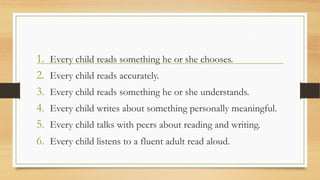
1. Every child reads something he or she chooses.
2. Every child reads accurately.
-intensity and volume count!
-98% accuracy
-less than 90% accuracy, doesn’t improve reading at all
3. Every child reads something he or she understands.
-at least 2/3 of time spent reading and rereading NOT
doing isolated skill practice or worksheets
-build background knowledge before entering the text
-read with questions in mind
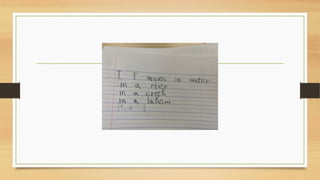
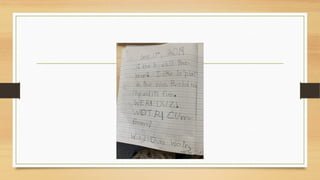
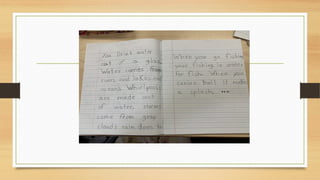
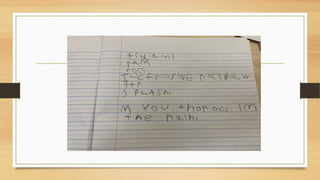
4. Every child writes about something personally
meaningful.
-connected to text
-connected to themselves
-real purpose, real audience
Writers’ Workshop – Student Diversity 3rd ed
• The foundation of your literacy programming
• Establish this first!!!!
• K/1 – begin with interactive writing, writing/drawing/creating
text in front of your learners, representing thinking with drawing,
adding letters and sounds
• 2-7 – write in front of your students, at least 2 whole class writing
in response to experiences, read alouds, classroom inquiries each
week
•When students write, they generate deeper
thinking in any content area.
• Kelly Gallagher “The Writing Journey” EL, Feb 17
• Improvement in writing is grounded in
practice, in getting words on the page – lots
of them. There are no shortcuts.
• Gallagher & Kittle, EL, April 18
• Focus on ideas
• Do not focus on transcription – punctuation,
capitalization, spacing, spelling, handwriting, high-
frequency words
• “…compositional skills develop, and are mastered,
long before transcription skills” (Flower & Hayes,
1981; Ray & Glover,2008; Roberts & Wibens,
2010)
• Auguste, “The Balancing Act of Kindergarten Writing Instruction”, EL, April
2018
5. Every child talks with peers about reading and writing.
6. Every child listens to a fluent adult read aloud.
-different kinds of text
-with some commentary
1. Every child reads something he or she chooses.
2. Every child reads accurately.
3. Every child reads something he or she understands.
4. Every child writes about something personally meaningful.
5. Every child talks with peers about reading and writing.
6. Every child listens to a fluent adult read aloud.
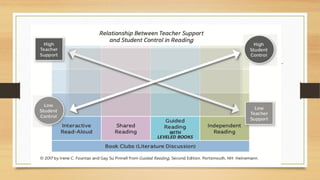
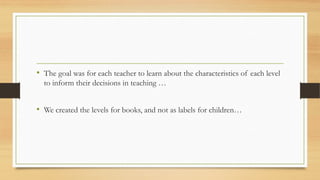
• The goal was for each teacher to learn about the characteristics of each level
to inform their decisions in teaching …
• We created the levels for books, and not as labels for children…
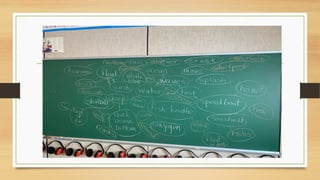
Volcano Surfing Sequence
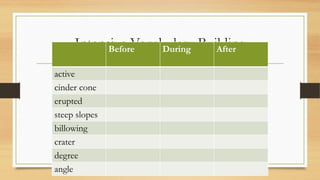
Intensive Vocabulary BuildingBefore During After
active
cinder cone
erupted
steep slopes
billowing
crater
degree
angle
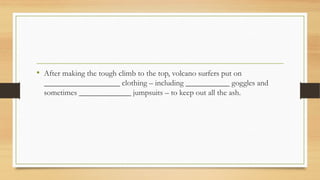
• After making the tough climb to the top, volcano surfers put on
___________________ clothing – including ___________ goggles and
sometimes _____________ jumpsuits – to keep out all the ash.
• After making the tough climb to the top, volcano surfers put on
p___________________ clothing – including p___________ goggles and
sometimes o_____________ jumpsuits – to keep out all the ash.
• After making the tough climb to the top, volcano surfers put on
pro_________(3 syllables, root word, keep you safe) clothing – including p______
(material) goggles and sometimes o______ (colour) jumpsuits – to keep out all
the ash.
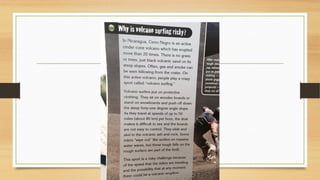
Why is volcano surfing risky?
• Read with the question in mind.
• Answer the question, with a partner, orally.
• Answer the question in writing, using as many of the key terms from the text as possible.
Can you give 3 reasons? 4?
• In Crazy Challenges – Jill Eggleton
• Key Links Literacy
Coquitlamliteracyteams,sept2019

Coquitlamliteracyteams,sept2019

  • 1.
    School Teams: aliteracy focus Coquitlam: Central, Mundy Road, Pinetree Way Sept 20, 2019 Faye Brownlie www. Slideshare.net/fayebrownlie/coquitlamliteracyteams,sept2019
  • 2.
    Learning Intentions • Ihave a better idea of ‘what counts’ in effective literacy instruction. • Every Child, Every Day • CR4YR • I have a plan for collecting more assessment information, formally and informally, to use as feedback for myself in lesson planning and to potentially use as summative information.
  • 3.
    Ministry of Education’sDefinition of Literacy Literacy is the ability and willingness to make meaning from text and express oneself in a variety of modes and for a variety of purposes. Literacy includes making connections, analyzing critically, comprehending, creating, and communicating. B.C. Ministry of Education, 2017 3
  • 4.
    Collective Teacher Efficacy– John Hattie, Collaborative Impact Conference, 2017 • …the collective belief of teachers in their ability to positively affect students • Effect size of d=1.57 • New #1 influence related to student achievement • It is more than just belief; it is a collaborative conversation based on evidence.
  • 5.
    Who are yourlearners?
  • 6.
    • Performance-based readingassessment • Using performance standards • Writing samples • Using performance standards • 1:1 reading conferences • Choice text • Assigned text • Observation • Conversation • 1:1 and small group phonics and phonemic awareness tasks • Work samples
  • 7.
    K-3 phonemic awareness •Rhyme • Initial sounds • Final sounds • Blending syllables (pen cil) • Blending phonemes (sound out, then pull back together as a word) • Syllables
  • 8.
  • 9.
    Teachers’ Reflections • Whatmade a difference for vulnerable learners (CR4YR, 2012-2013) • 1:1 support • Relationship • Choice • Focus on meaning
  • 10.
    “Every Child, EveryDay” – Richard Allington and Rachael Gabriel In Educational Leadership, March 2012 6 elements of instruction for ALL students!
  • 11.
    1. Every childreads something he or she chooses.
  • 12.
    2. Every childreads accurately. -intensity and volume count! -98% accuracy -less than 90% accuracy, doesn’t improve reading at all
  • 13.
    3. Every childreads something he or she understands. -at least 2/3 of time spent reading and rereading NOT doing isolated skill practice or worksheets -build background knowledge before entering the text -read with questions in mind
  • 14.
    4. Every childwrites about something personally meaningful. -connected to text -connected to themselves -real purpose, real audience
  • 15.
    Writers’ Workshop –Student Diversity 3rd ed • The foundation of your literacy programming • Establish this first!!!! • K/1 – begin with interactive writing, writing/drawing/creating text in front of your learners, representing thinking with drawing, adding letters and sounds • 2-7 – write in front of your students, at least 2 whole class writing in response to experiences, read alouds, classroom inquiries each week
  • 16.
    •When students write,they generate deeper thinking in any content area. • Kelly Gallagher “The Writing Journey” EL, Feb 17
  • 17.
    • Improvement inwriting is grounded in practice, in getting words on the page – lots of them. There are no shortcuts. • Gallagher & Kittle, EL, April 18
  • 18.
    • Focus onideas • Do not focus on transcription – punctuation, capitalization, spacing, spelling, handwriting, high- frequency words • “…compositional skills develop, and are mastered, long before transcription skills” (Flower & Hayes, 1981; Ray & Glover,2008; Roberts & Wibens, 2010) • Auguste, “The Balancing Act of Kindergarten Writing Instruction”, EL, April 2018
  • 19.
    5. Every childtalks with peers about reading and writing.
  • 20.
    6. Every childlistens to a fluent adult read aloud. -different kinds of text -with some commentary
  • 21.
    1. Every childreads something he or she chooses. 2. Every child reads accurately. 3. Every child reads something he or she understands. 4. Every child writes about something personally meaningful. 5. Every child talks with peers about reading and writing. 6. Every child listens to a fluent adult read aloud.
  • 23.
    • The goalwas for each teacher to learn about the characteristics of each level to inform their decisions in teaching … • We created the levels for books, and not as labels for children…
  • 29.
  • 30.
    Intensive Vocabulary BuildingBeforeDuring After active cinder cone erupted steep slopes billowing crater degree angle
  • 32.
    • After makingthe tough climb to the top, volcano surfers put on ___________________ clothing – including ___________ goggles and sometimes _____________ jumpsuits – to keep out all the ash.
  • 33.
    • After makingthe tough climb to the top, volcano surfers put on p___________________ clothing – including p___________ goggles and sometimes o_____________ jumpsuits – to keep out all the ash.
  • 34.
    • After makingthe tough climb to the top, volcano surfers put on pro_________(3 syllables, root word, keep you safe) clothing – including p______ (material) goggles and sometimes o______ (colour) jumpsuits – to keep out all the ash.
  • 36.
    Why is volcanosurfing risky? • Read with the question in mind. • Answer the question, with a partner, orally. • Answer the question in writing, using as many of the key terms from the text as possible. Can you give 3 reasons? 4? • In Crazy Challenges – Jill Eggleton • Key Links Literacy